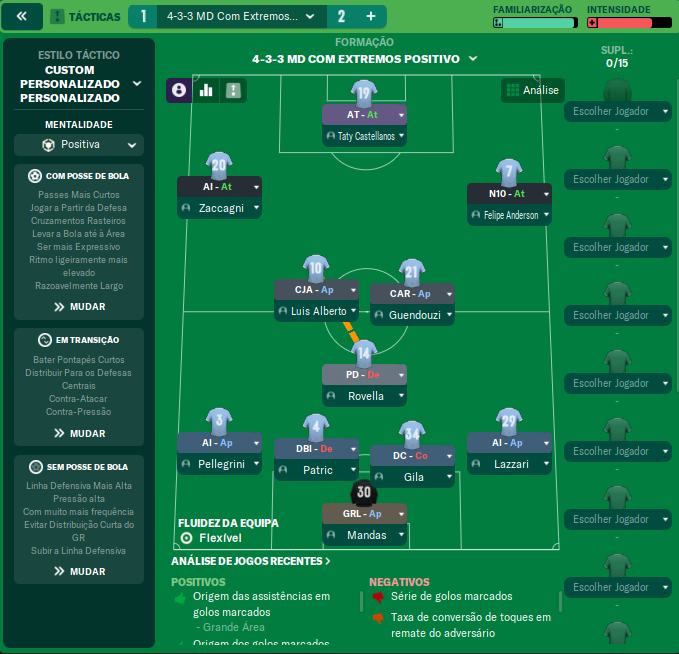
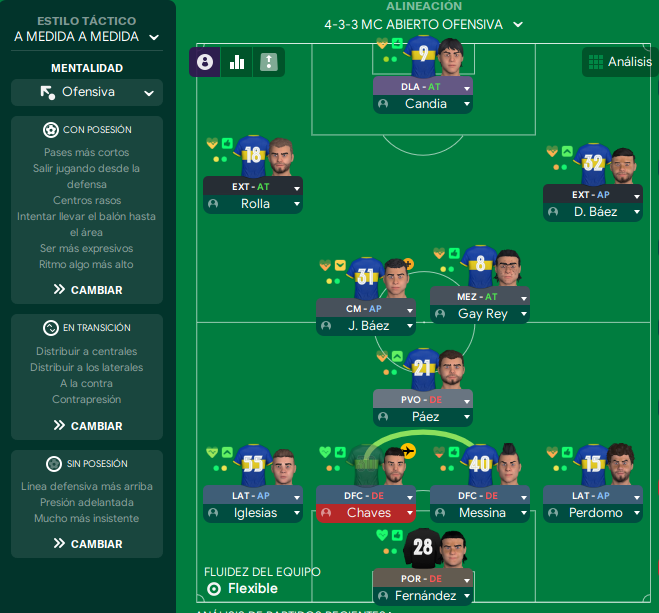
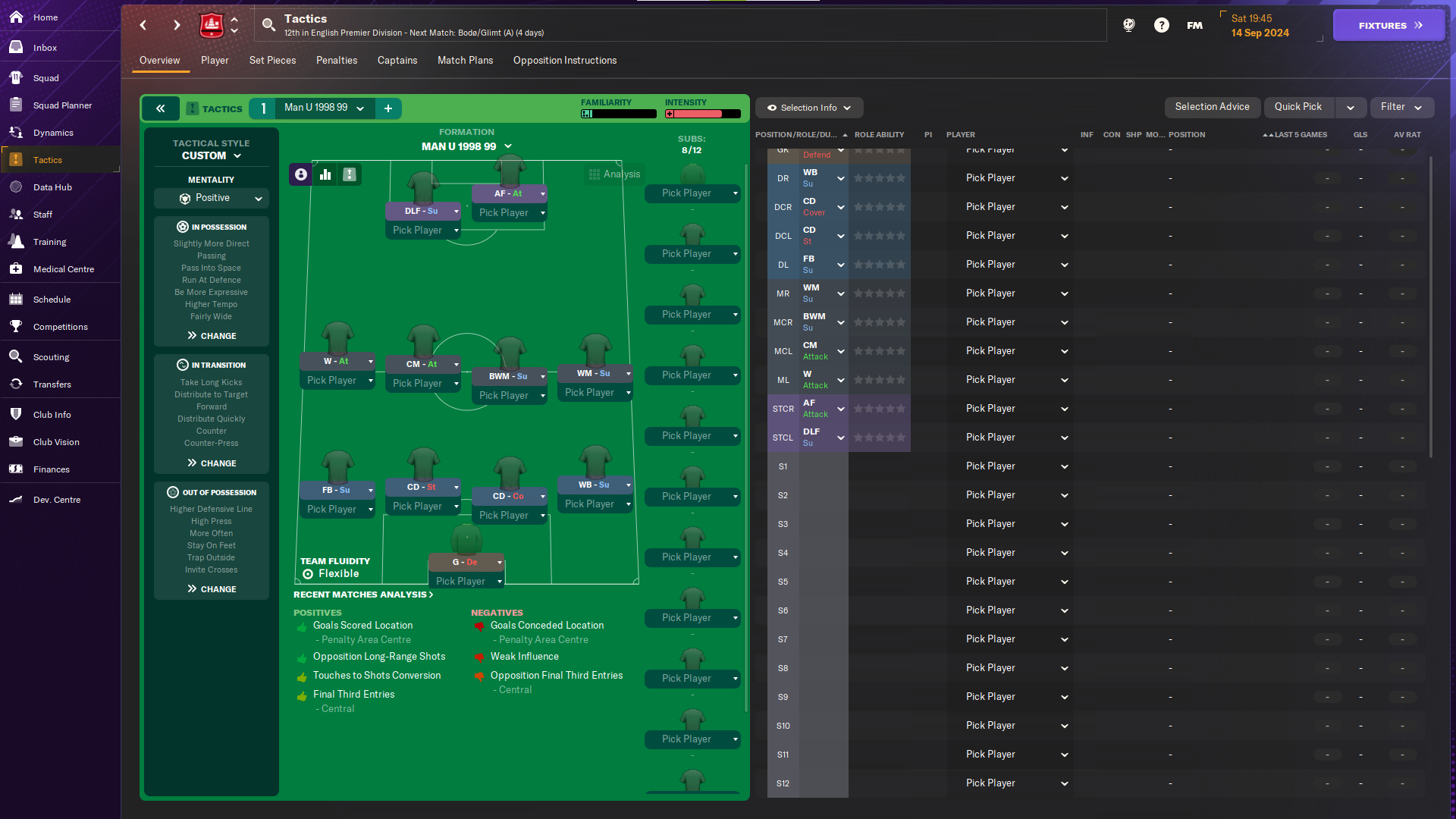
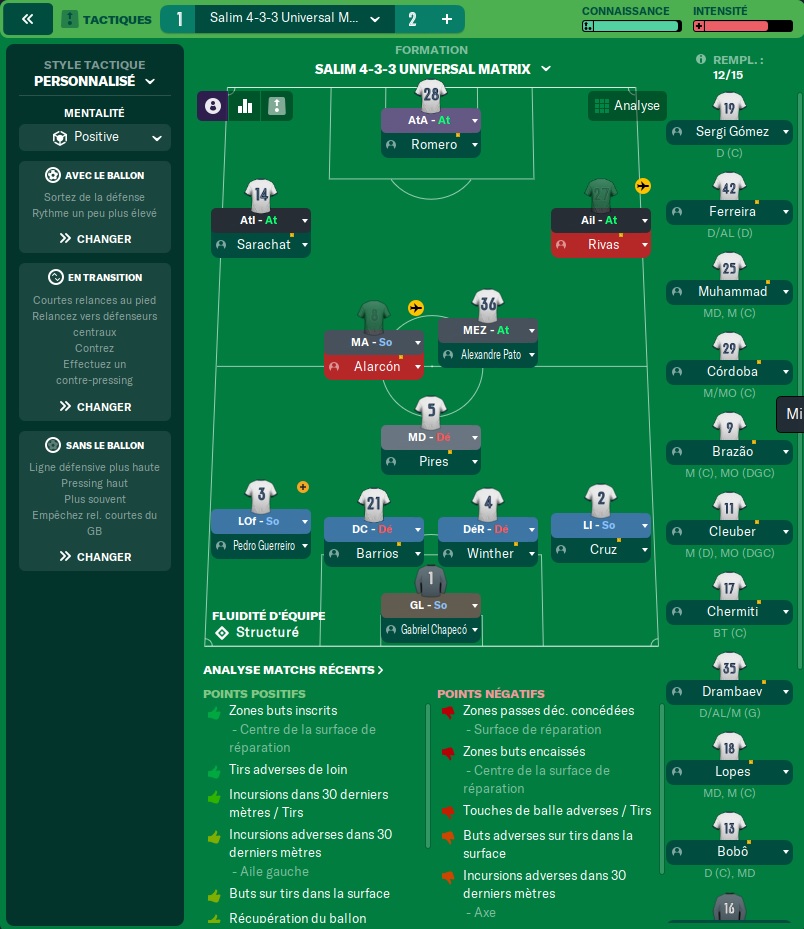
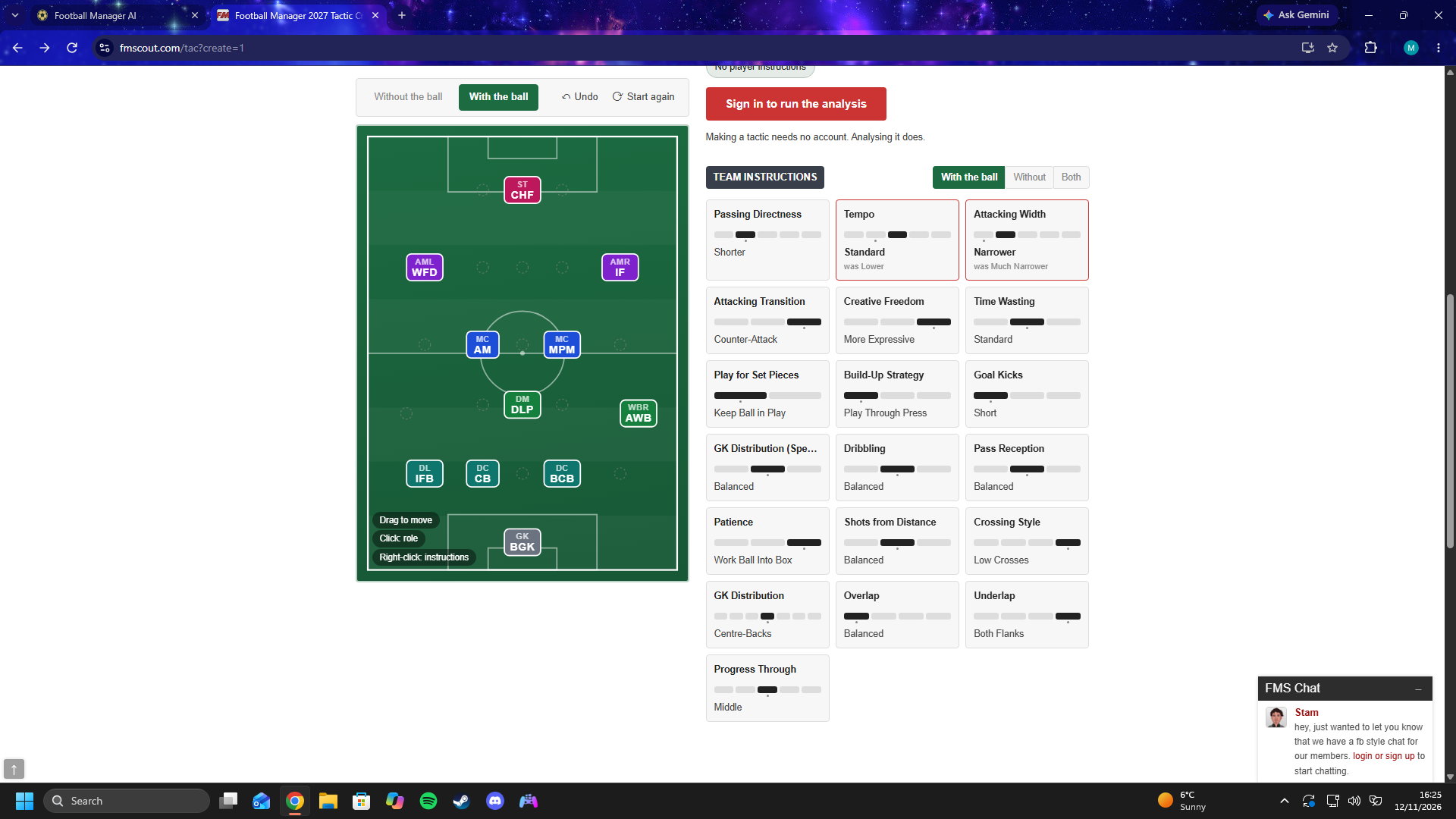
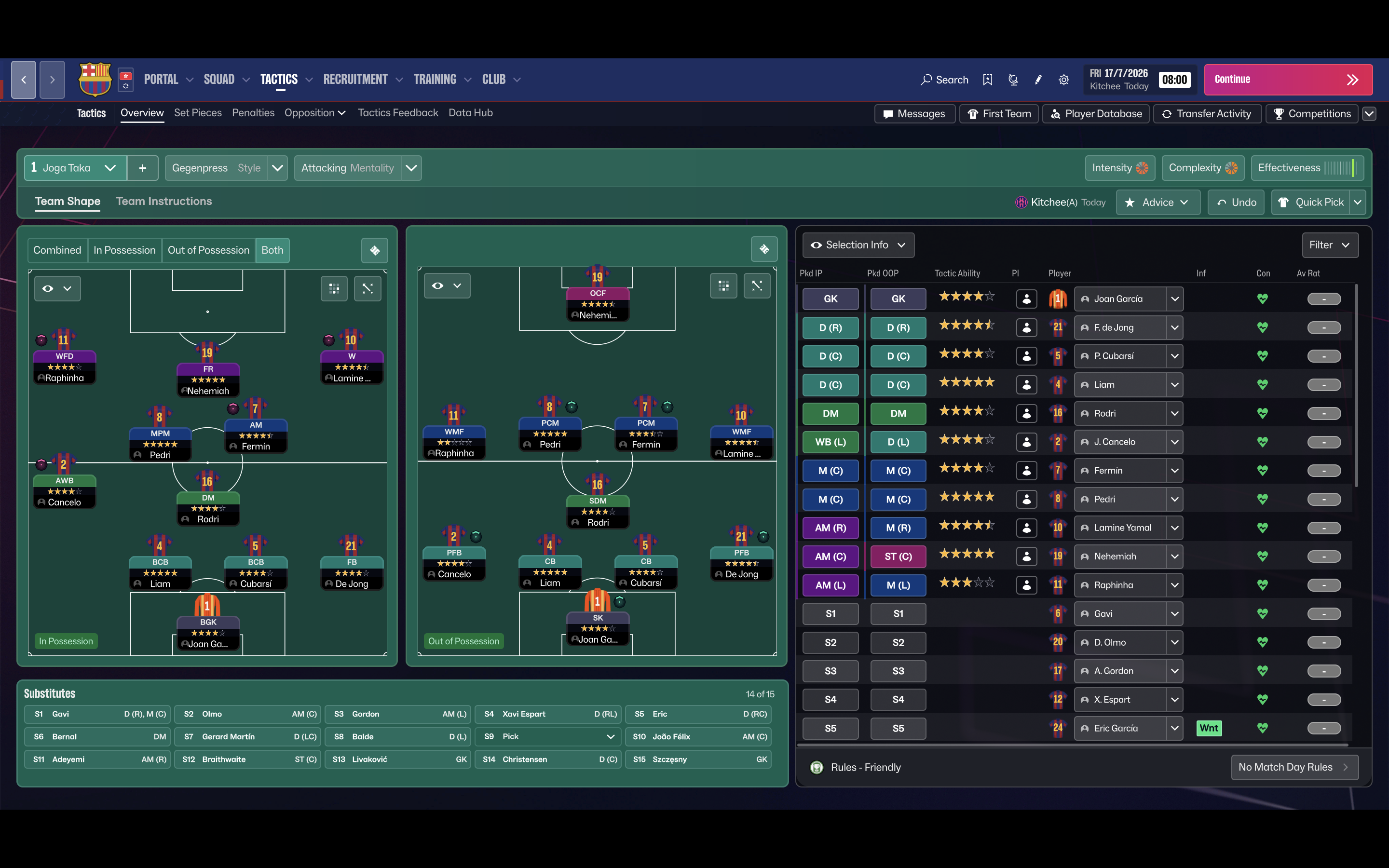
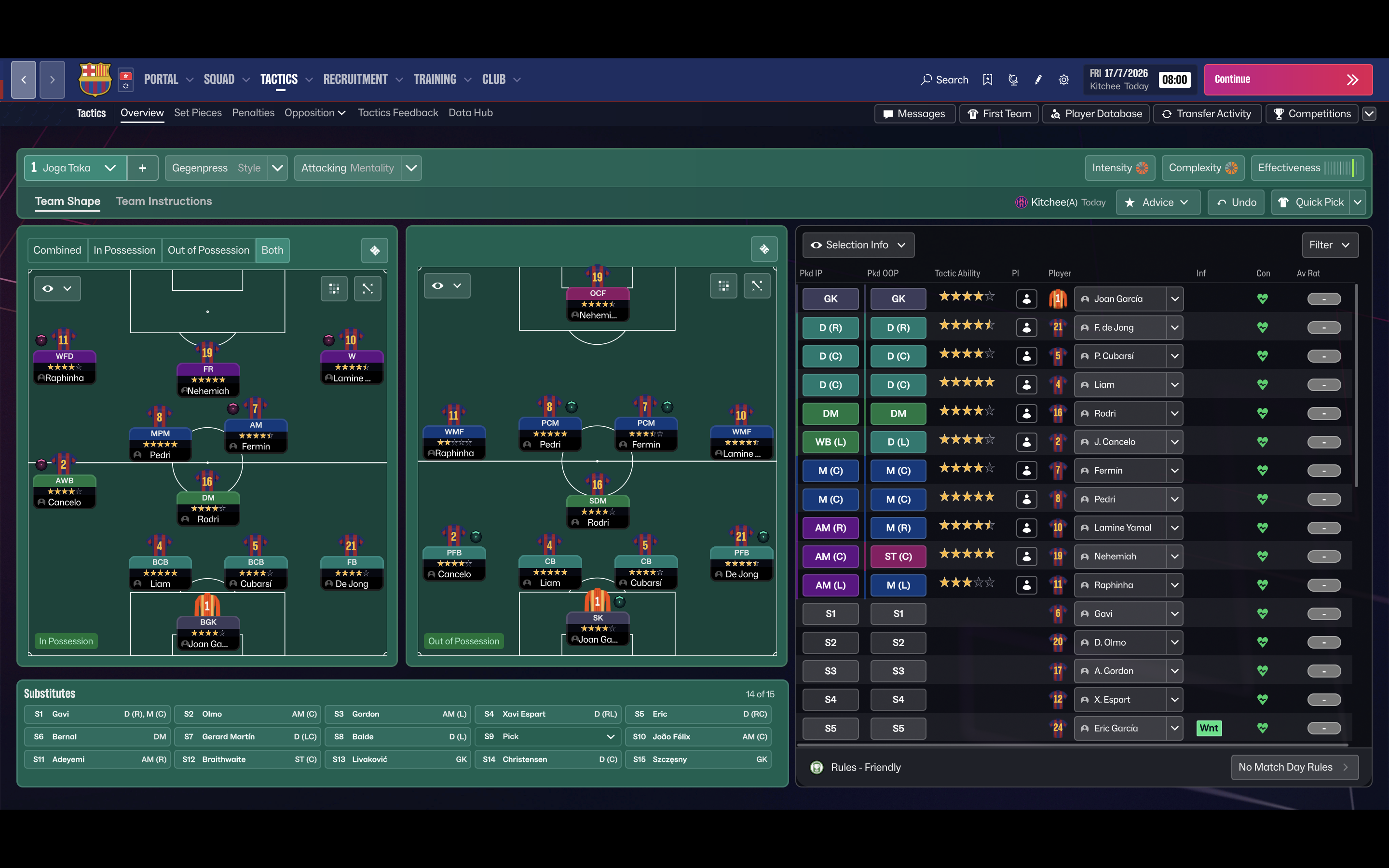
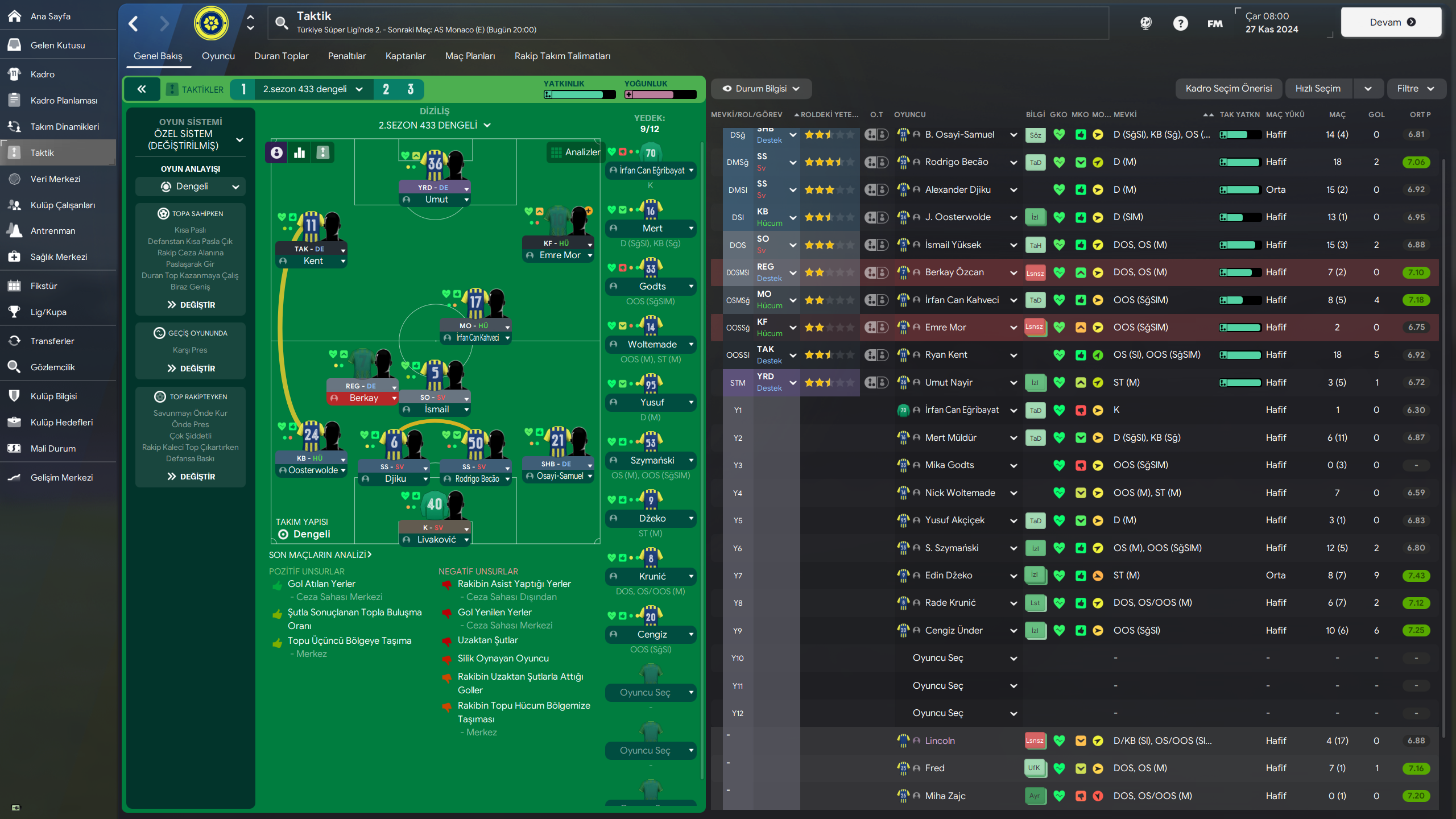
4-3-3
The tactic utilizes direct passing and a higher tempo, making it effective for quick transitions and counter-attacks.
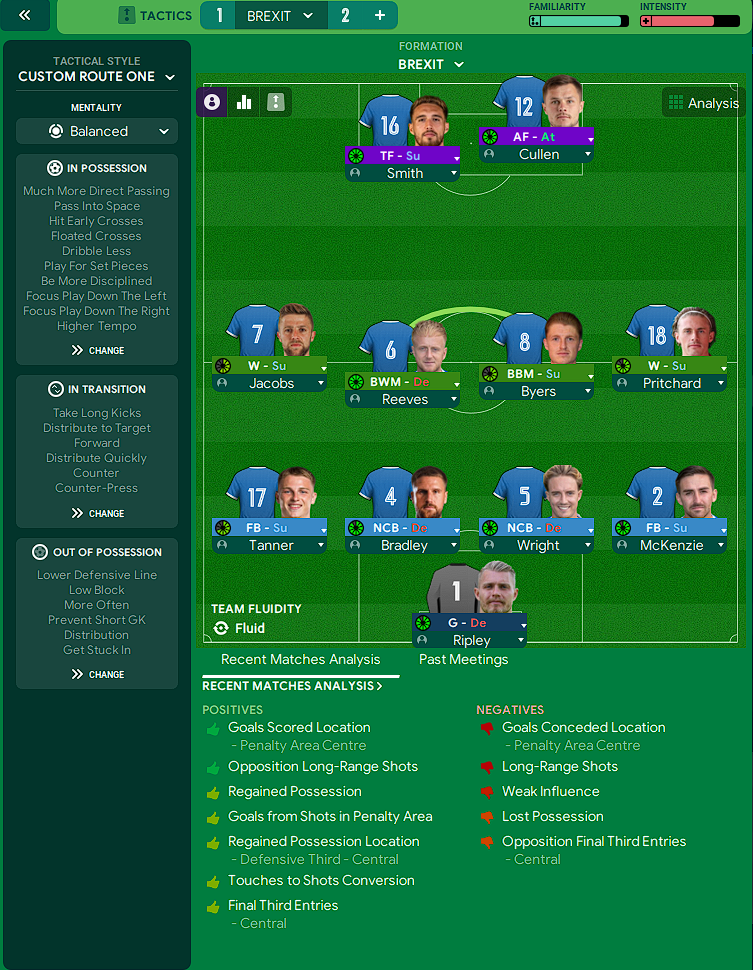
Loading tactical analysis...
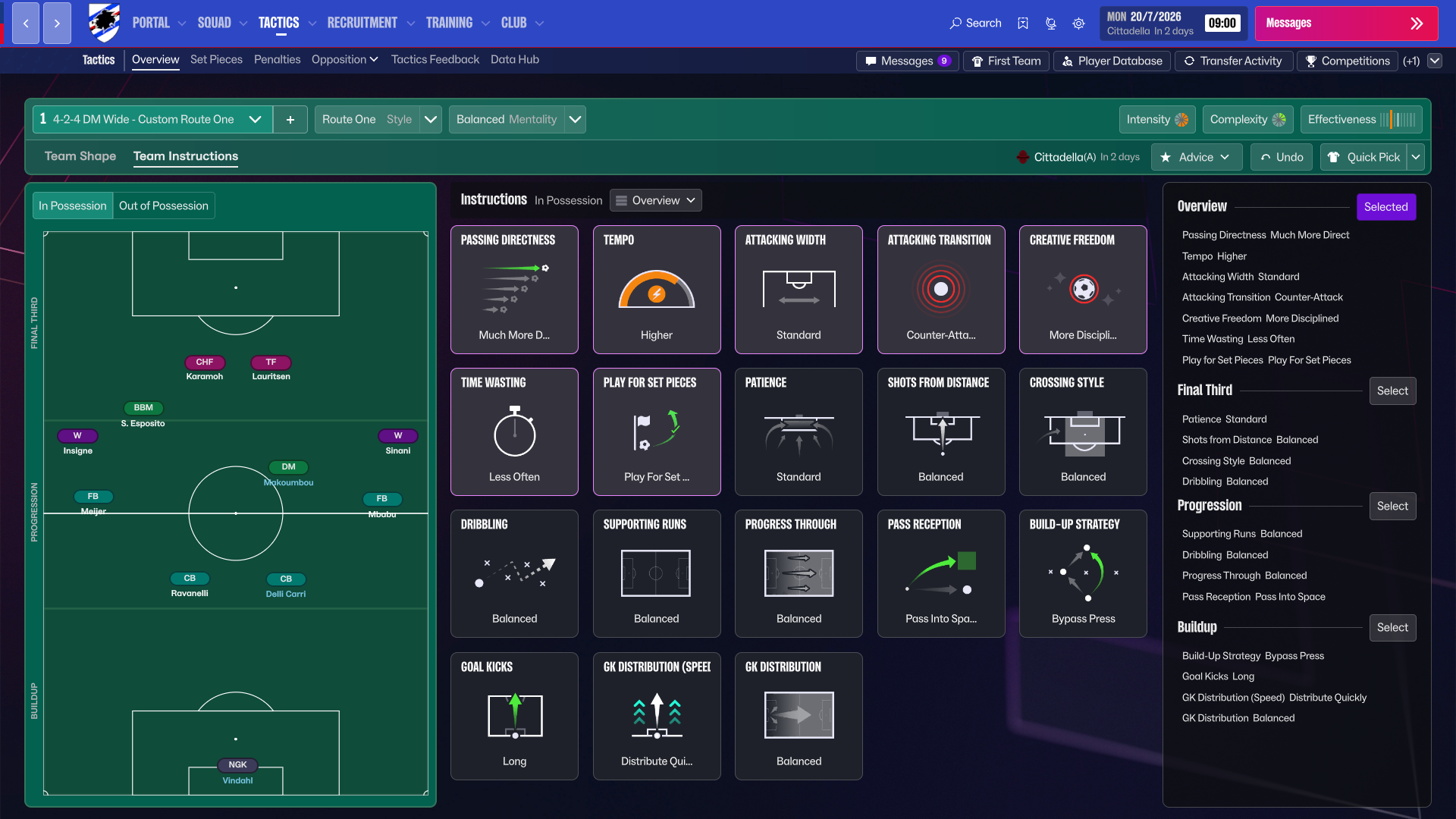
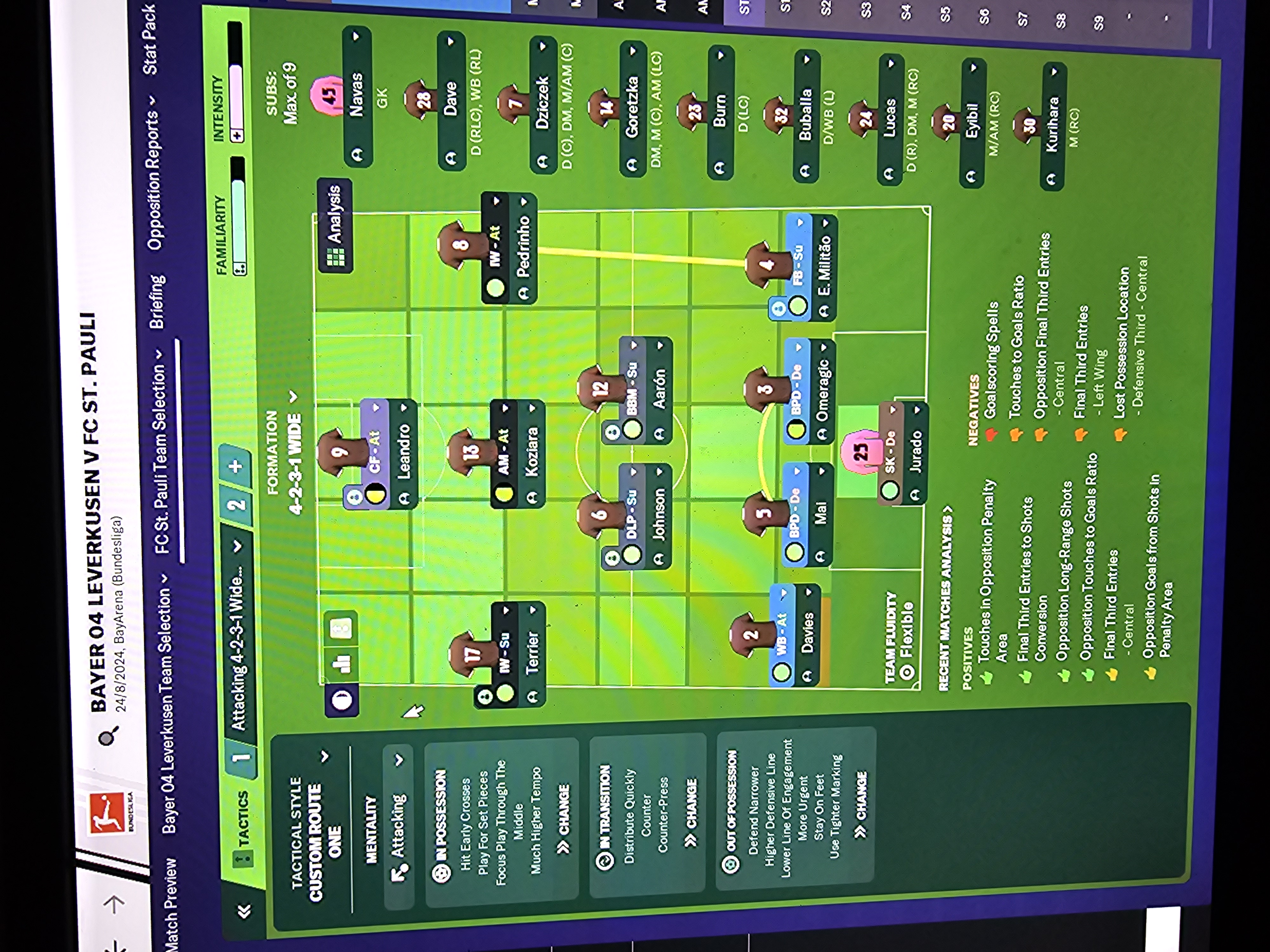
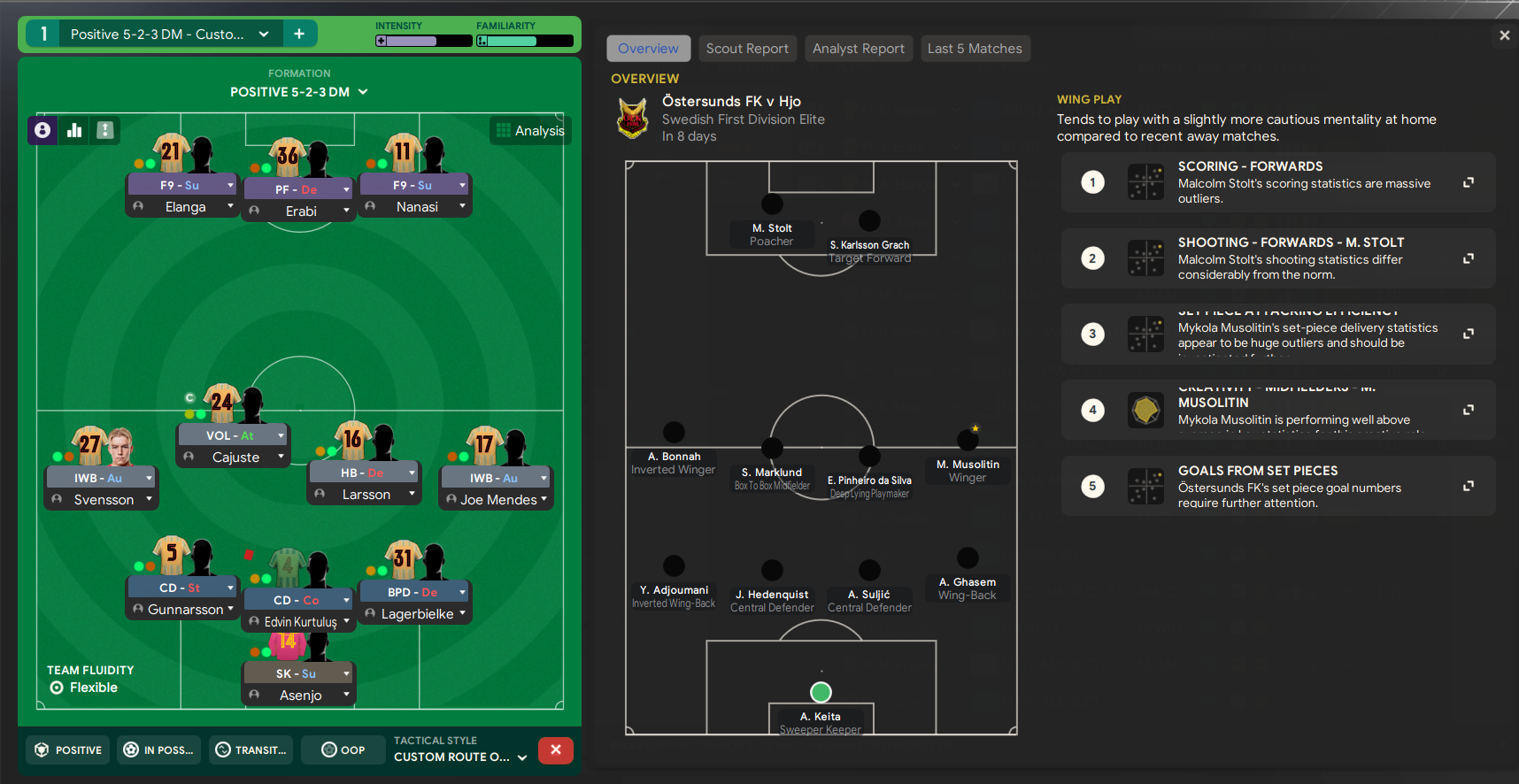
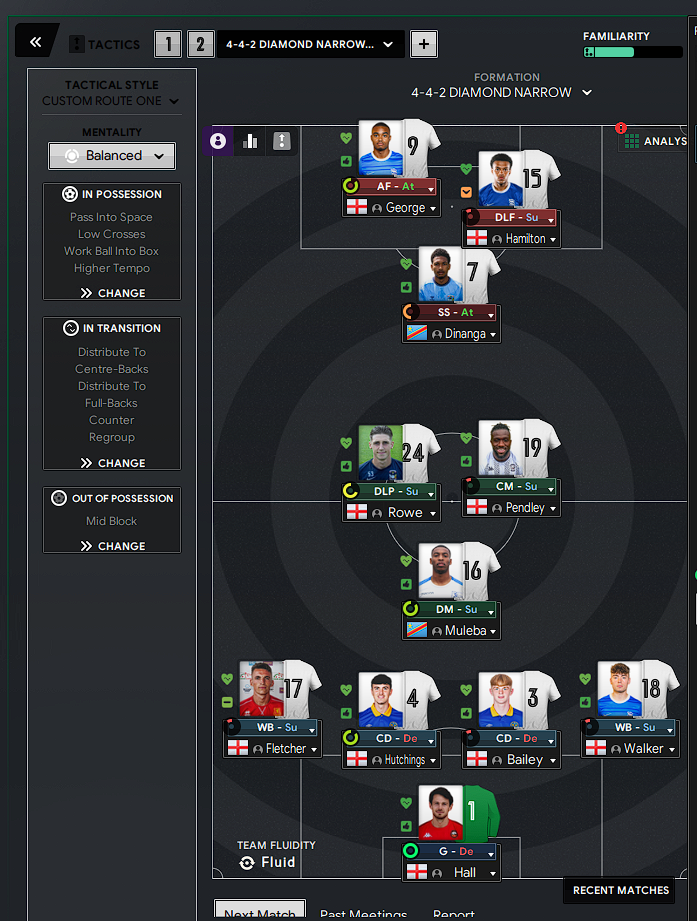
Custom Route One
Balanced
4-3-3
Fluid
Much More Direct Passing
Pass Into Space
Play For Set Pieces
Focus Play Down The Left
Higher Tempo
Distribute Quickly
Counter
Counter-Press
Lower Defensive Line
Low Block
Prevent Short GK Distribution
Get Stuck In
ST
Target Forward
Support
ST
Advanced Forward
Attack
CM
Box-to-Box Midfielder
Support
CM
Ball Winning Midfielder
Defend
CM
Central Midfielder
Support
FB
Full Back
Support
FB
Full Back
Support
DC
No-Nonsense Centre Back
Defend
DC
No-Nonsense Centre Back
Defend
GK
Goalkeeper
Defend
The tactic utilizes direct passing and a higher tempo, making it effective for quick transitions and counter-attacks.
With a focus on set pieces and a big target forward, the team is likely to pose threats during corners and free kicks.
The high tempo may conflict with the low block strategy, potentially leading to rushed decisions in defense.
The full backs’ support roles might stretch the compact nature of the low block, leaving gaps on the flanks.
How can the target forward be more effectively integrated into the attacking phase?
Is the low block approach providing enough cover against quick transitions from opponents?
What adjustments can be made to improve full backs' contributions without weakening the defensive setup?
Are the midfield roles optimizing possession and support effectively?
How can the team best utilize set pieces given the players' physical attributes?
Should adjustments be made to create more depth in the attacking third during pressing situations?
The tactical theory behind the 4-3-3: roles, instructions, and the trade-offs that decide whether the system holds up.
Why circulation density and zonal occupation aren't the same thing in FM, and the half-space occupation rule that decides build-up.
Build the patient, control-the-tempo style without watching your opponents counter through the gaps you leave behind.
What Higher Tempo, Wider, and Narrower actually do in FM, plus the dial contradictions and antipatterns players run into most often.