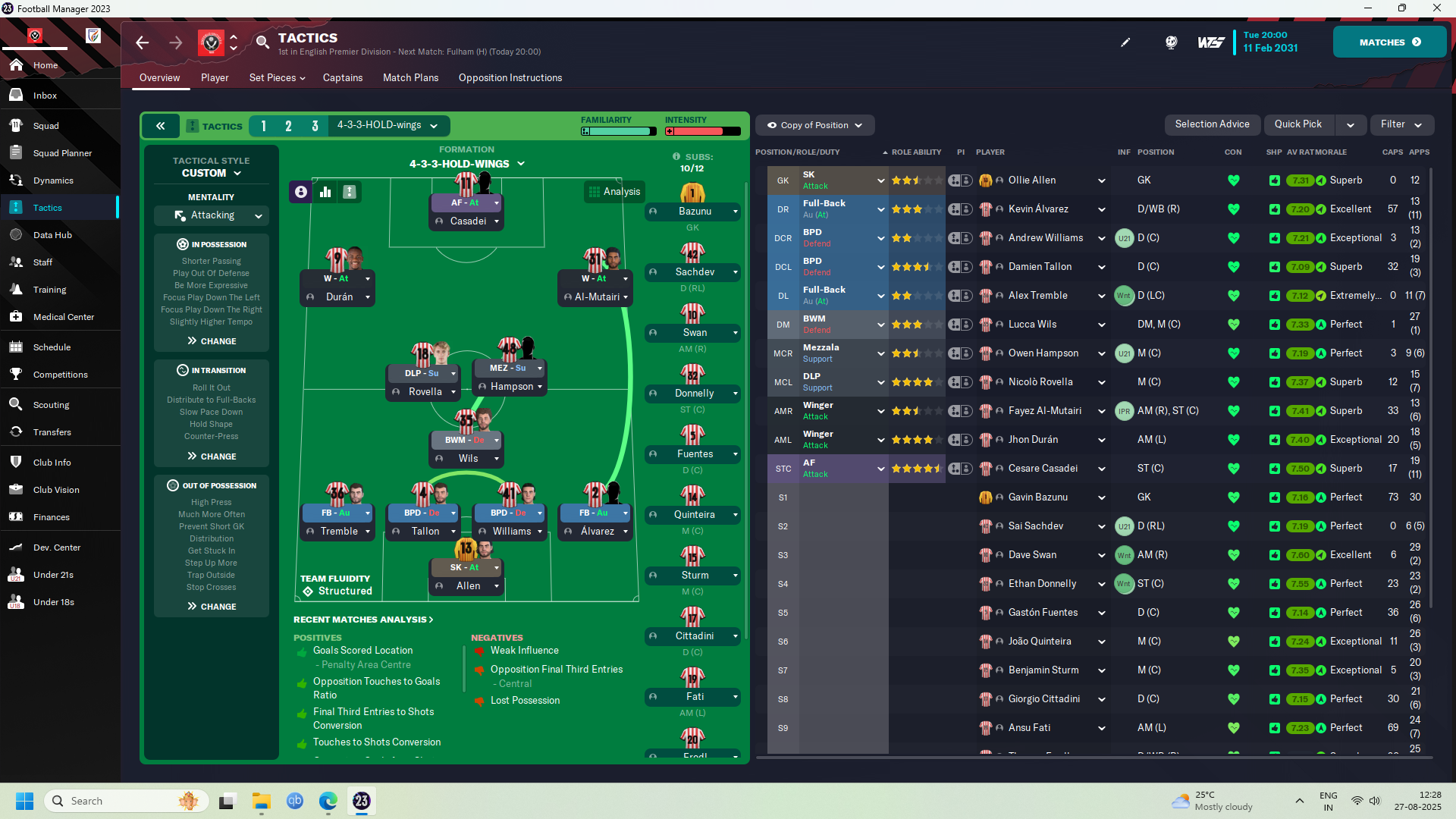
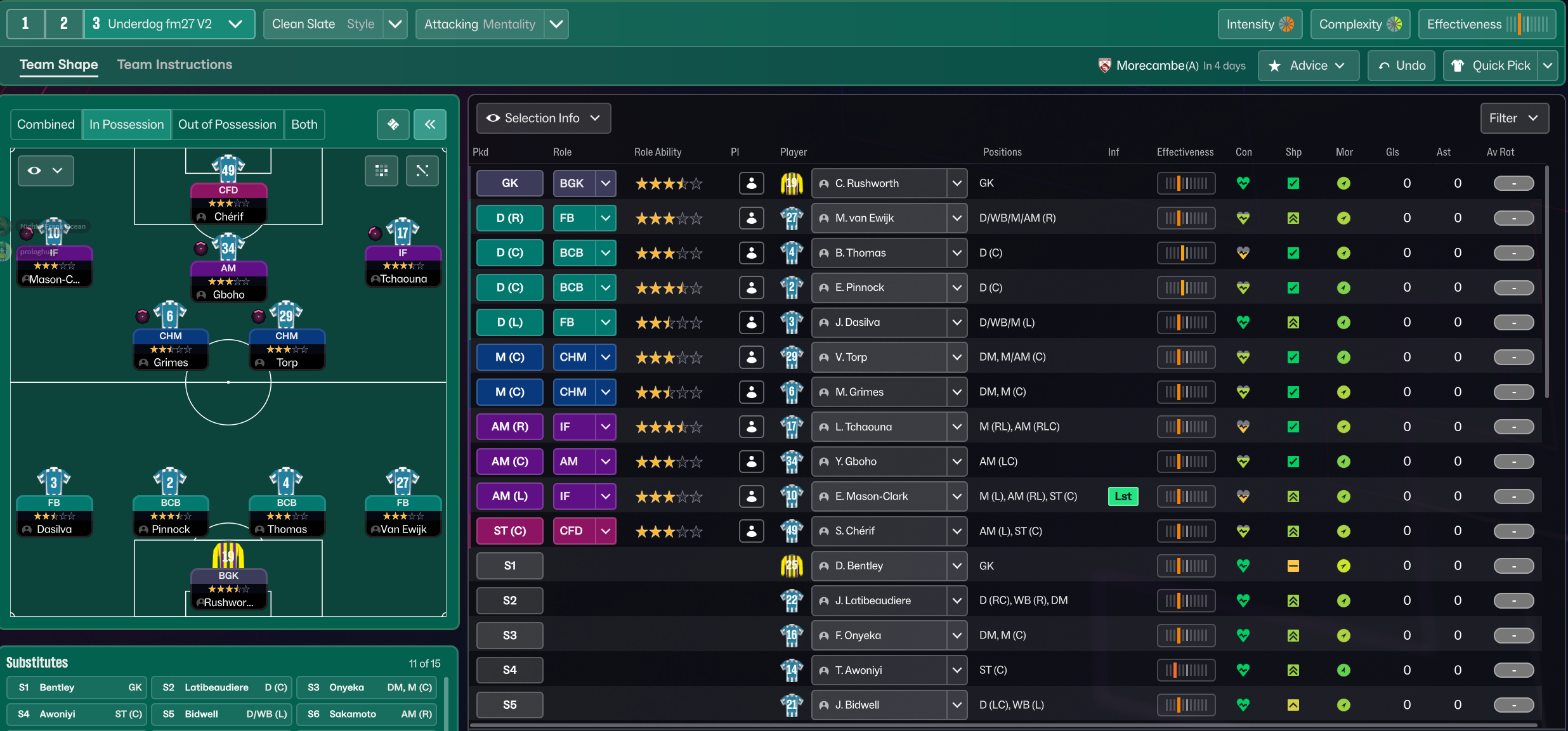
4-3-3 Hold - Wings
Utilizing wingers effectively offers wide options to stretch defenses and create space.
Loading tactical analysis...
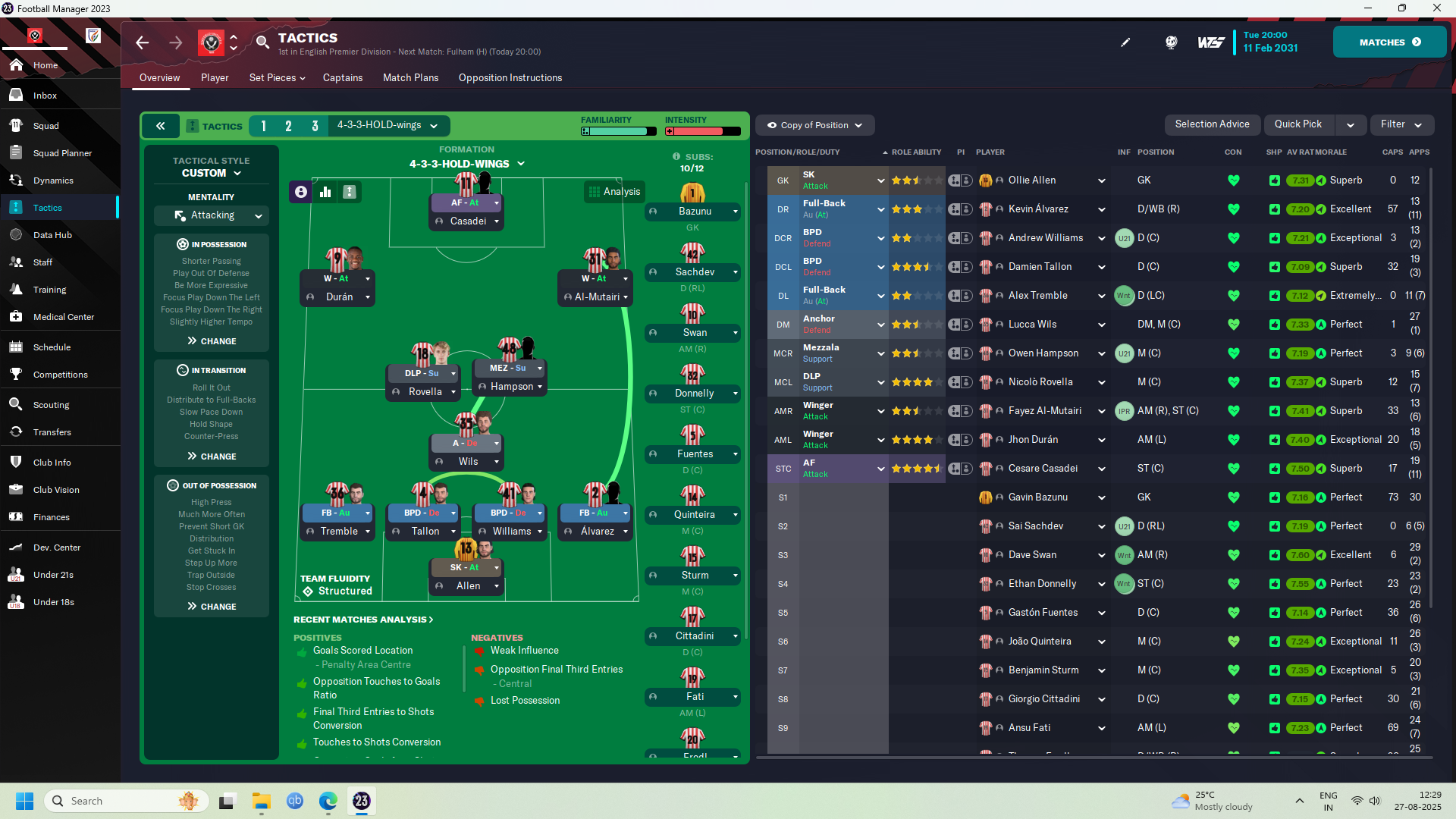
Attacking
Positive
4-3-3 Hold - Wings
Structured
Higher Passing Directness
Be More Expressive
Focus Play Down The Right
Slightly Higher Tempo
Roll It Out
Distribute To Full-Backs
Slow Pace Down
Hold Shape
Counter-Press
High Press More Often
Prevent Short GK Distribution
Get Stuck In
Step Up More
Trap Outside
GK
Sweeper Keeper
Attack
DL
Full-Back
Attack
DCL
Central Defender
Defend
DCR
Ball-Playing Defender
Defend
DM
Anchor Man
Defend
MCR
Mezzala
Support
MCL
Deep-Lying Playmaker
Support
AML
Winger
Attack
AMR
Winger
Attack
ST
Advanced Forward
Attack
Utilizing wingers effectively offers wide options to stretch defenses and create space.
A high press can win the ball back quickly and disrupt opposition build-up play.
High pressing requires significant stamina; ensure squad depth and fitness management to maintain effectiveness.
The attacking mentality could leave gaps in the midfield if the anchor man is not properly supported.
How can we improve our control in midfield during matches?
Are the current player roles maximizing our attacking potential?
What adjustments can be made to enhance our defensive solidity?
How often are we effectively transitioning from defense to attack?
Are our wingers impacting games enough or becoming too predictable?
What are the best substitutions to maintain our intensity late in matches?
The tactical theory behind the 4-3-3 Hold - Wings: roles, instructions, and the trade-offs that decide whether the system holds up.
Master the classic 4-3-3: player roles, tactical variations, and the trade-offs that decide whether it sings or stalls.
Holder, runner, creator: the role distribution rule for three-man midfields, the AMC variants, and the antipatterns that break them.
Mentality, duty, role, instruction, sub. The change hierarchy from lightest to heaviest intervention, and 60th-minute patterns by game state.