Uploaded Tactic
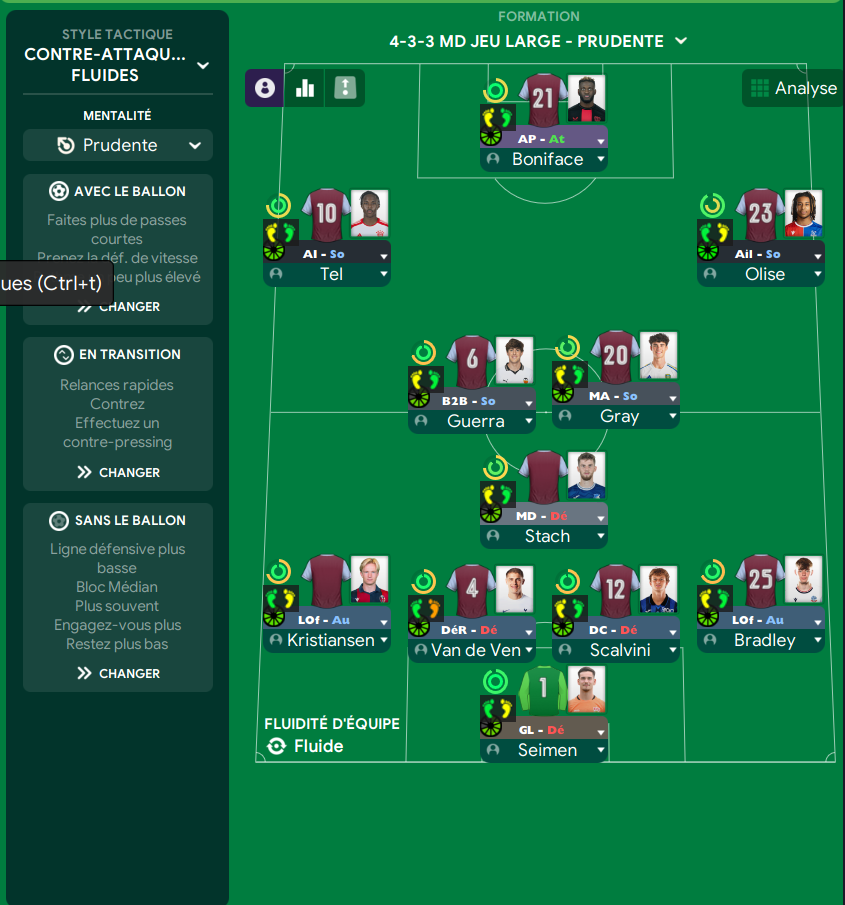
Formation & Style
Tactical Style:Contre-Attaque
Mentality:Prudente
Formation:4-3-3 MD Jeu Large
Team Fluidity:Fluide
In Possession
Faites plus de passes courtes
In Transition
Relances rapides
Contrez
Effectuez un contre-pressing
Out of Possession
Ligne défensive plus basse
Bloc Médian
Plus souvent
Engagez-vous plus bas
Team Shape Without Ball
Shape:4-4-1-1
Description:Defensive line setup with a lower block and structured support from midfielders.
Evidence:Ligne défensive plus basse, Bloc Médian
Team Shape With Ball
Shape:4-3-3
Description:Utilizes width provided by wingers to create space for the striker and attacking midfielder.
Evidence:Faites plus de passes courtes, AIL - IW
Phase Description
Attacking Play
Focus on quick transitions and utilizing the width provided by the wingers, aiming for passing combinations in the final third.
Defensive Transition
Quickly retreating to a compact shape to defend against the counter.
Main Focus
Counter-attacking play with an emphasis on quick breaks and exploiting opposition spaces.
Key Strengths
Counter-Attacking Threat
Utilizing quick transitions to exploit defensive gaps in opponent lines.
Defensive Stability
Solid structure with two central defenders and disciplined midfielders.
Fluidity in Attack
Players interchanging positions to confuse defenders and create space.
Conflicting Directions
Static Defenders
Dependence on a lower defensive line may limit high-press scenarios.
Midfield Dependency
Heavy reliance on midfielders could lead to an overload by opposition.
Inflexible Attack Structure
Wingers need to track back effectively, which can limit their attacking influence.
Tactical Suggestions
Adjust Defensive Line Height
Consider a slightly higher defensive line to apply pressure higher up the pitch.
Utilize Full-Backs More Effectively
Encourage overlapping runs from full-backs to create additional width and options.
Increase Attacking Fluidity
Encourage more interchange between attackers and midfielders to create confusion.
Ask Questions About Your Lineup
Related Tactics
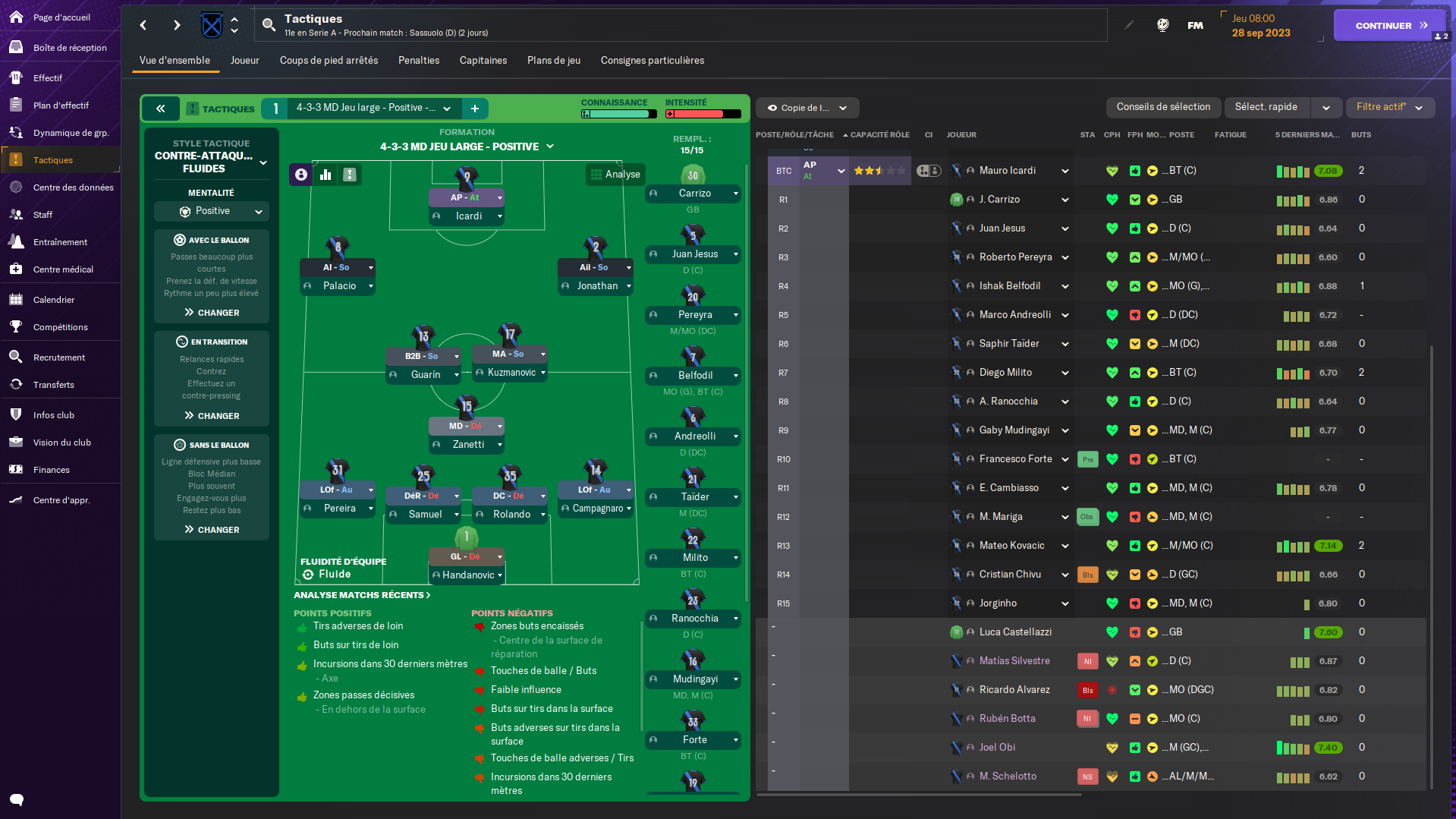
More Contre-Attaque tactics
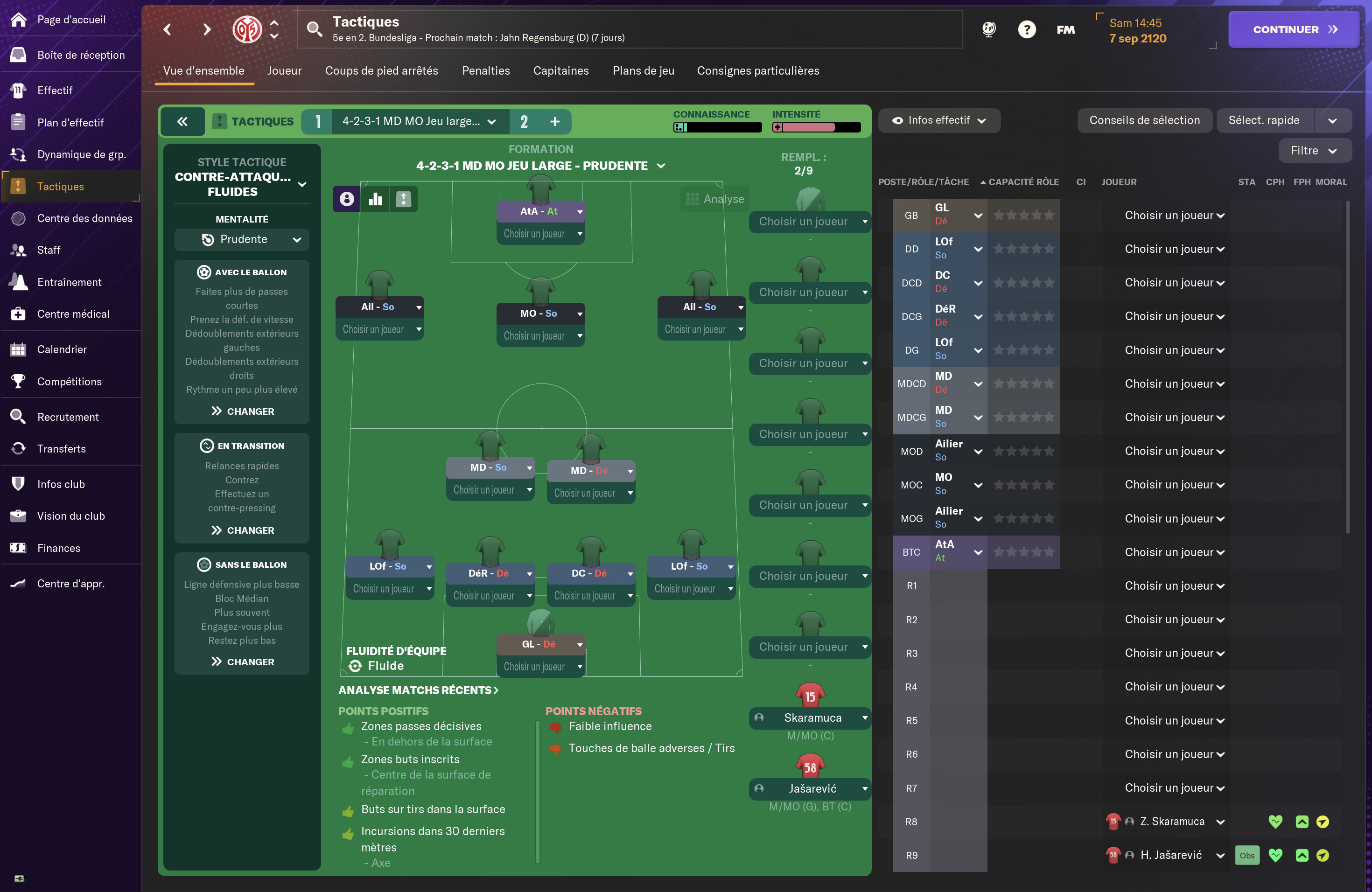
Guides for this formation
The tactical theory behind the 4-3-3 MD Jeu Large: roles, instructions, and the trade-offs that decide whether the system holds up.
Foundations
Understanding the 4-3-3 Formation
Master the classic 4-3-3: player roles, tactical variations, and the trade-offs that decide whether it sings or stalls.
Read guide
Player pairings
Midfield Trios
Holder, runner, creator: the role distribution rule for three-man midfields, the AMC variants, and the antipatterns that break them.
Read guide
Playing styles
Gegenpressing: A Full Guide
Klopp-style gegenpressing in FM, including squad profile, line-and-press pairing, sustainable workload, and the antipatterns to avoid.
Read guide