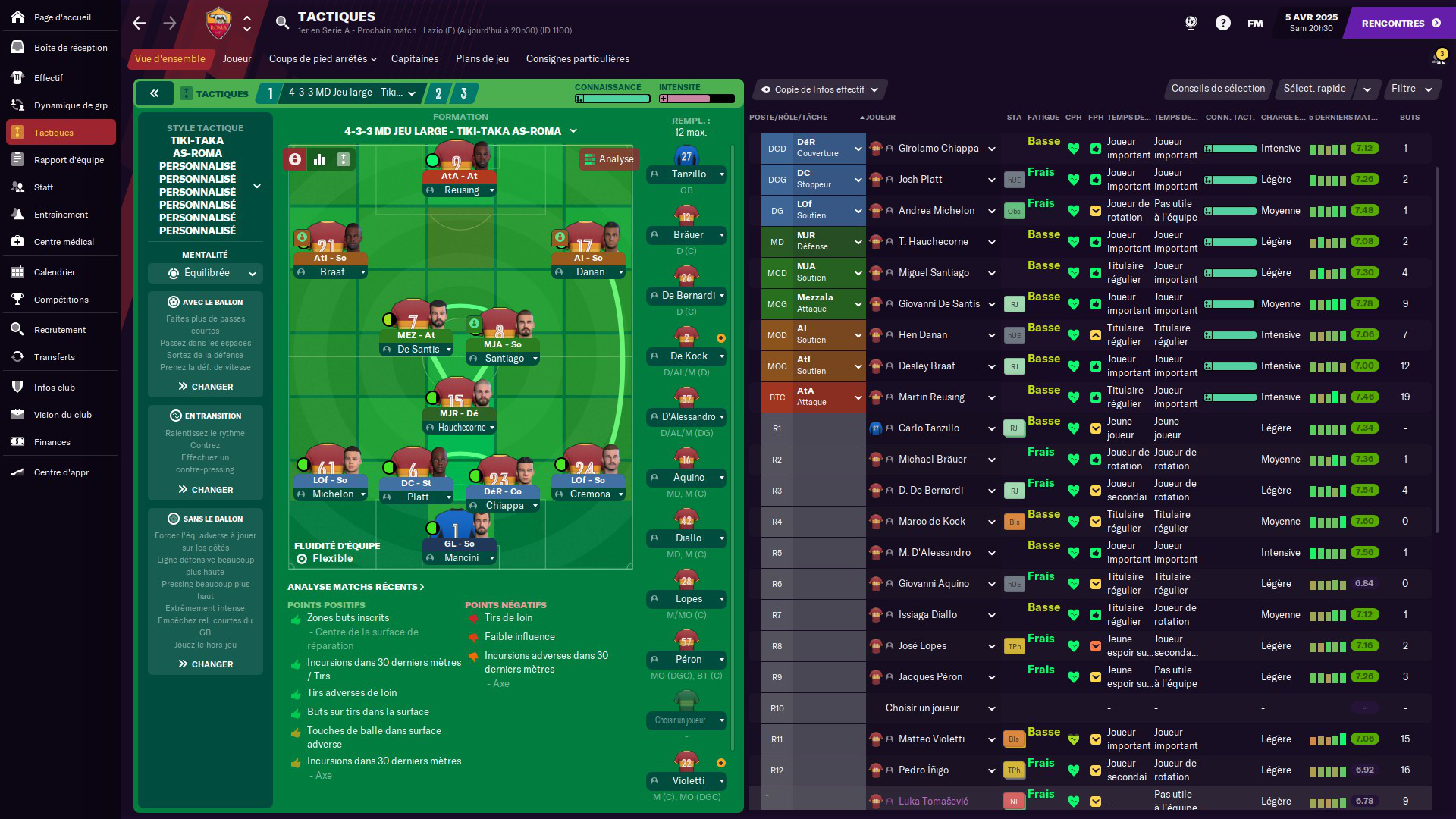
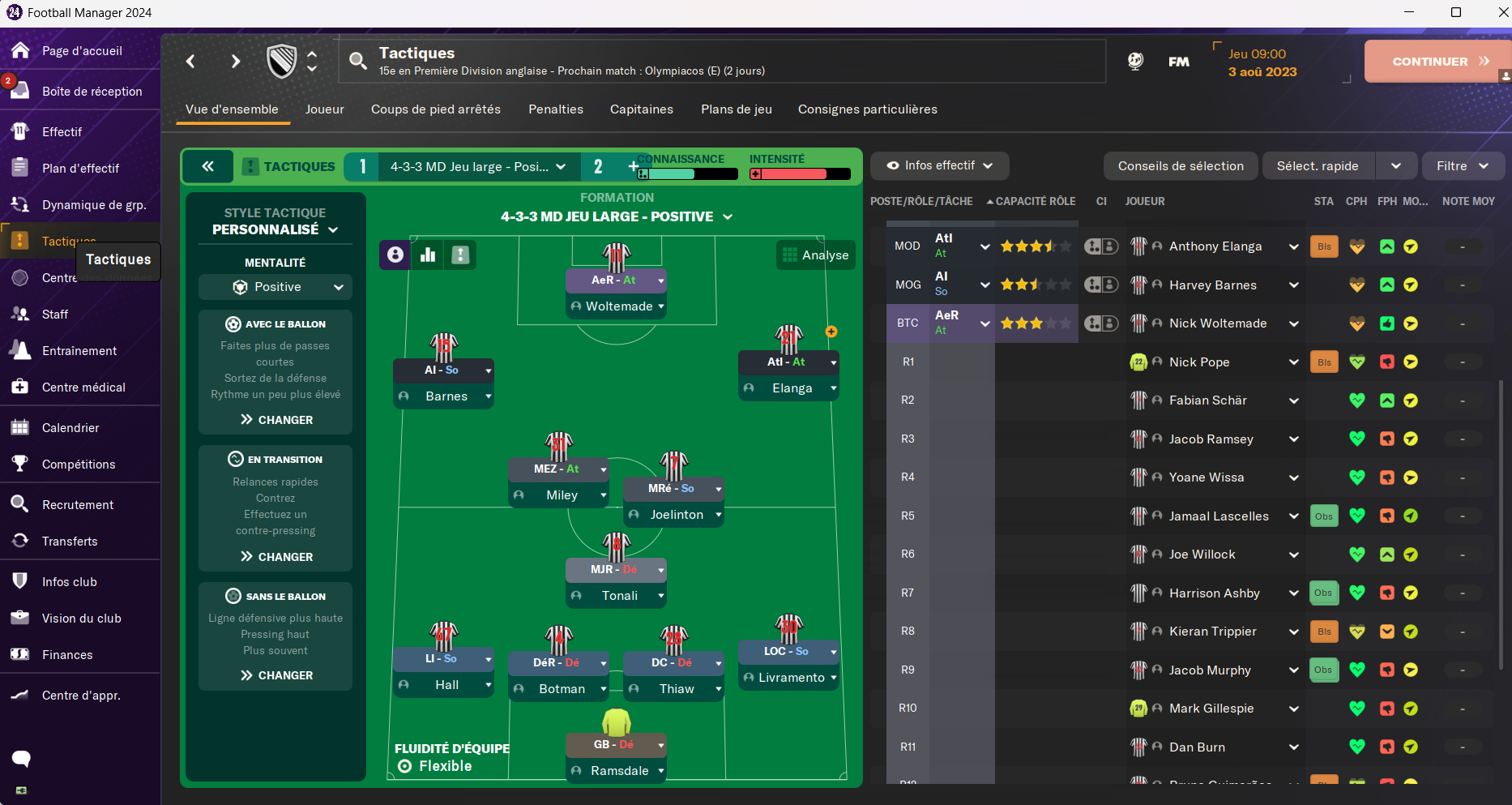
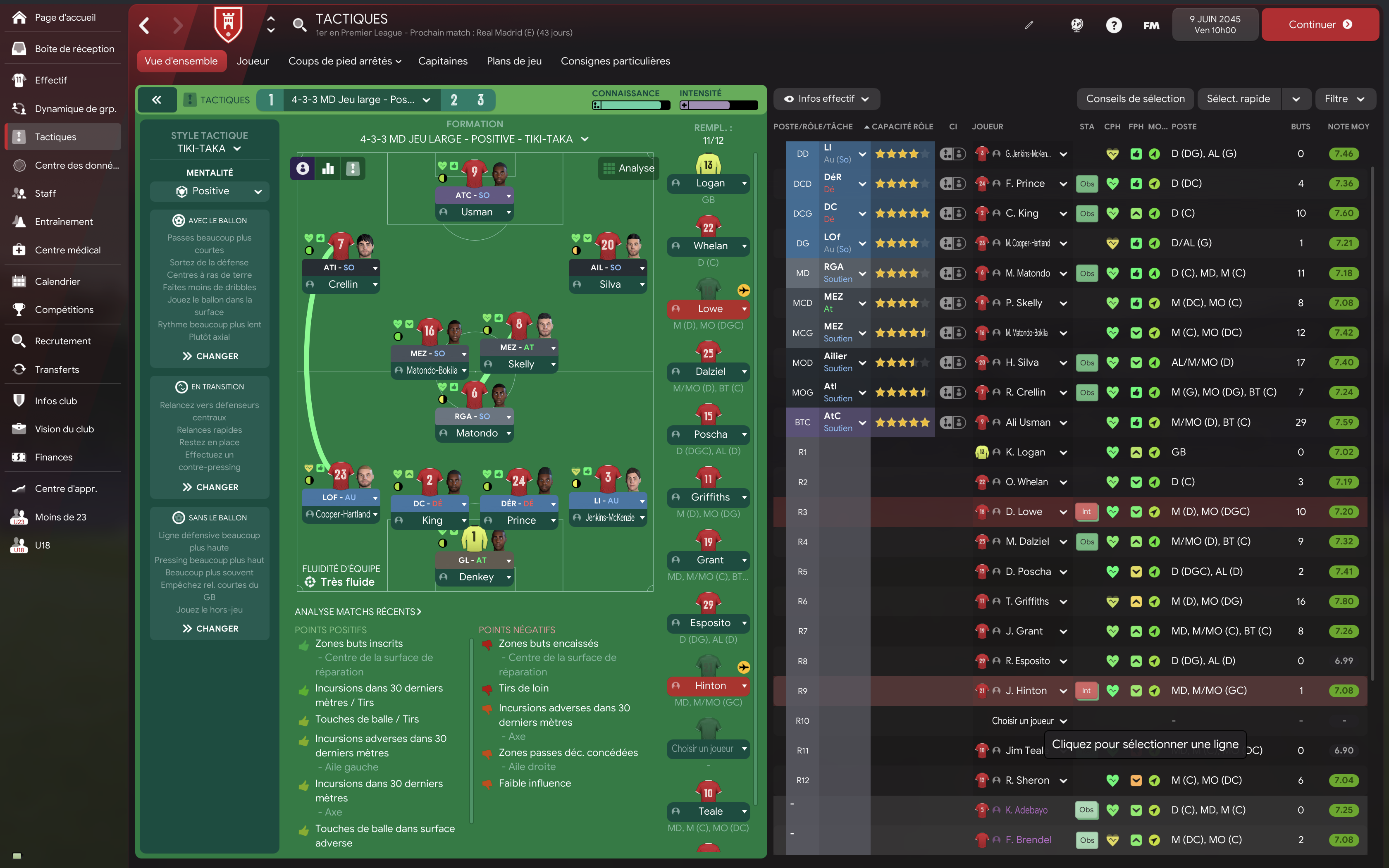
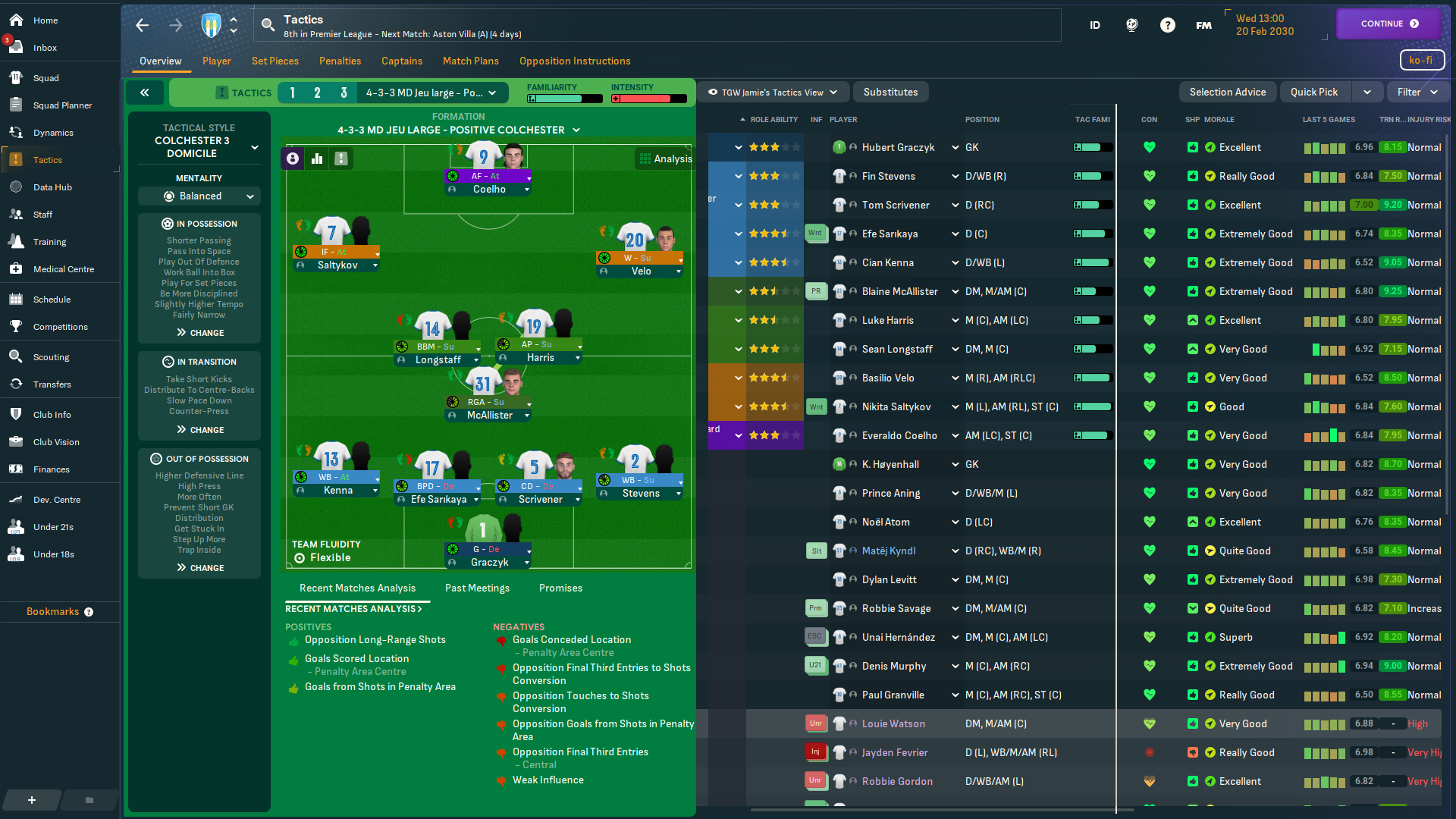
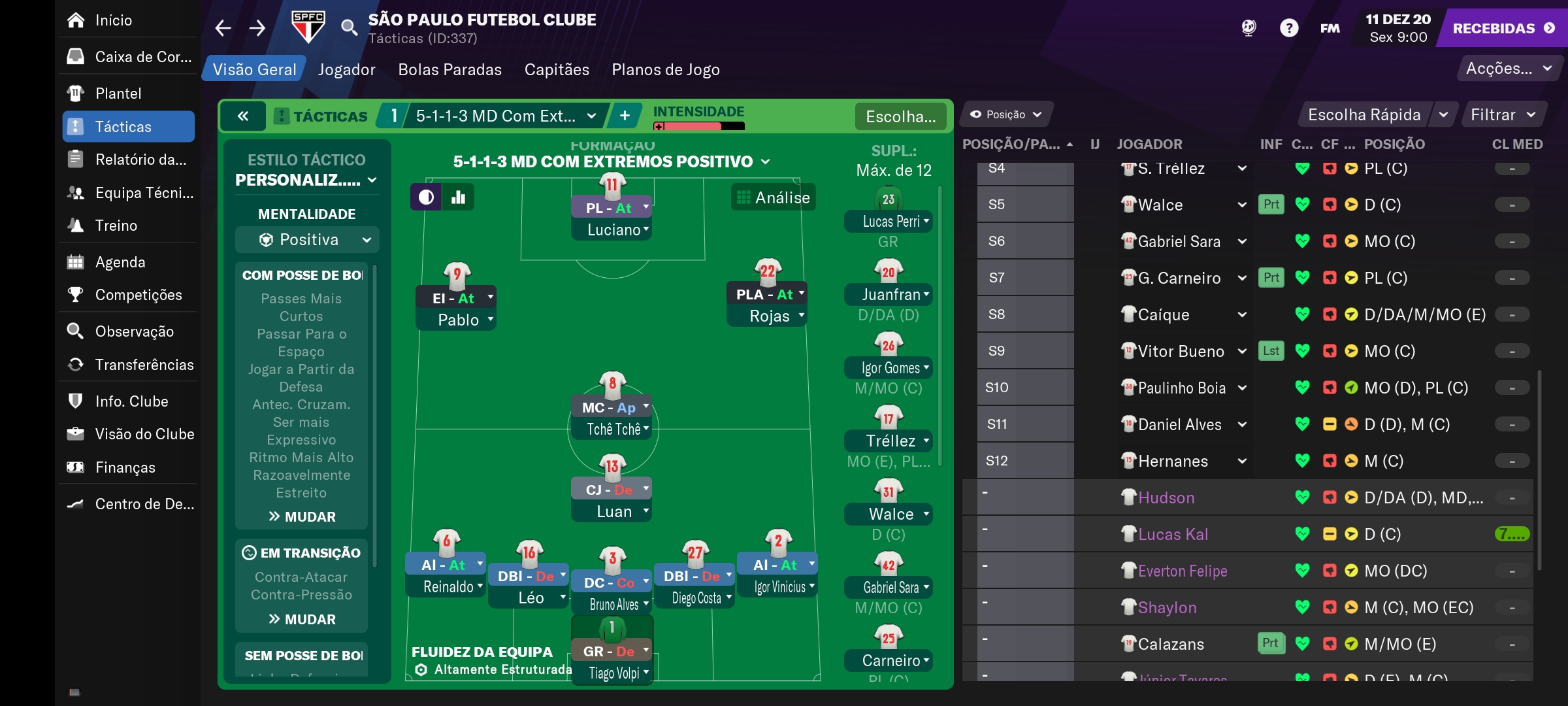
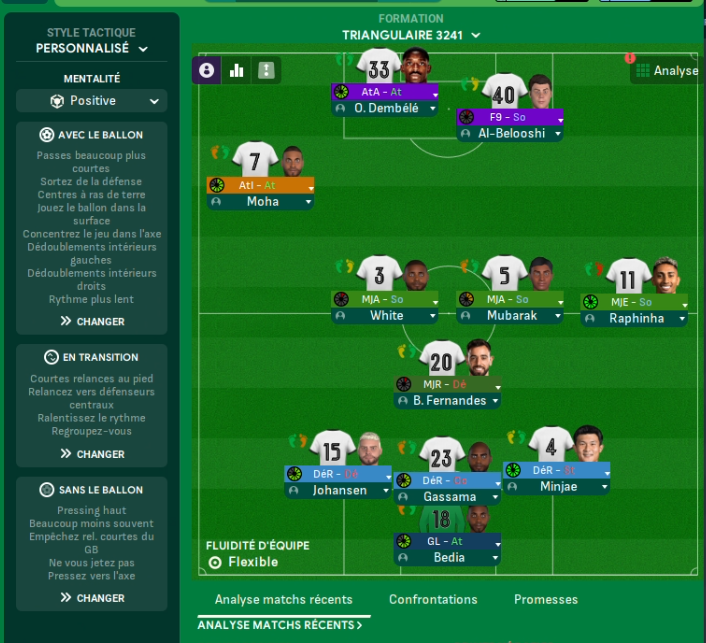
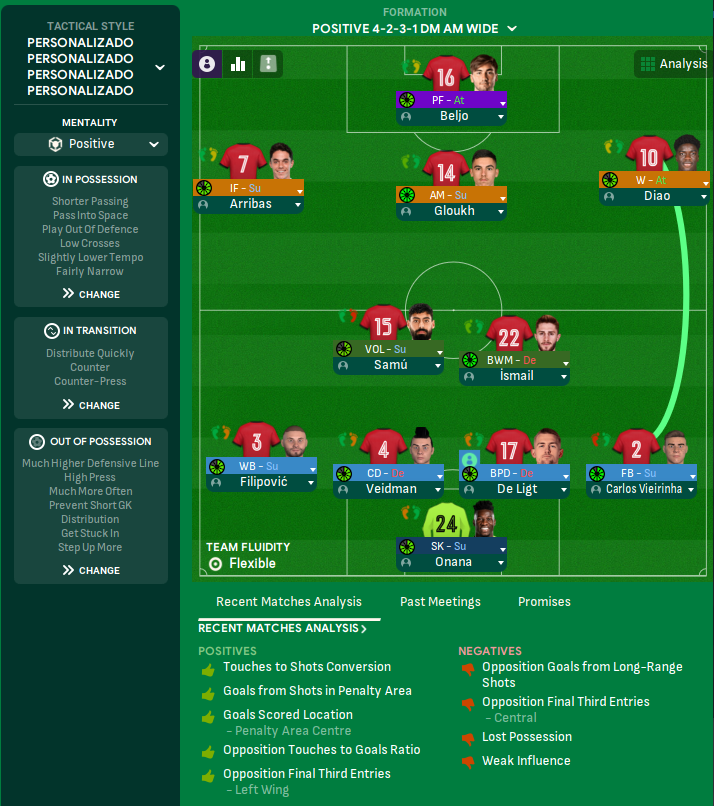
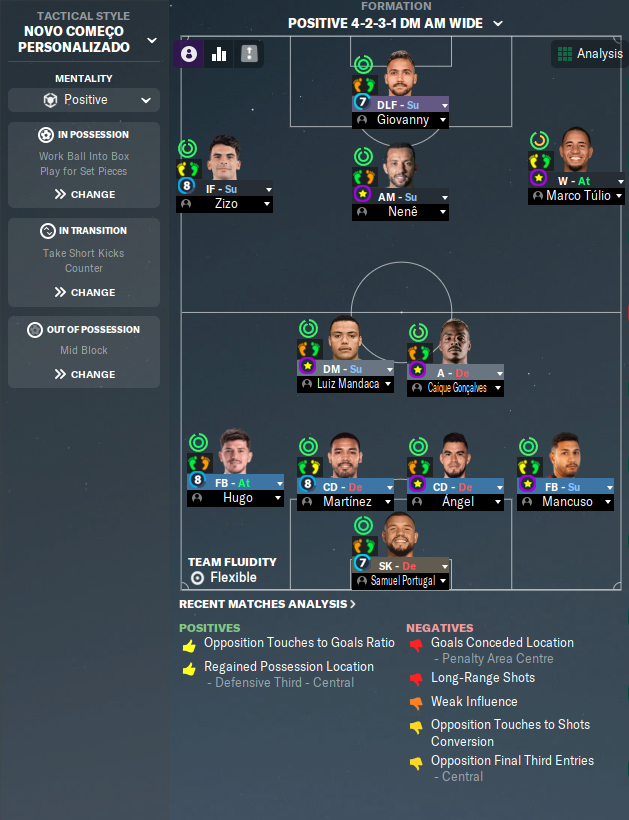
4-3-3 MD Large
Create scoring opportunities through wing play and quick counter-attacks. The formation’s wingers stretch the opposition, creating space for midfielders…
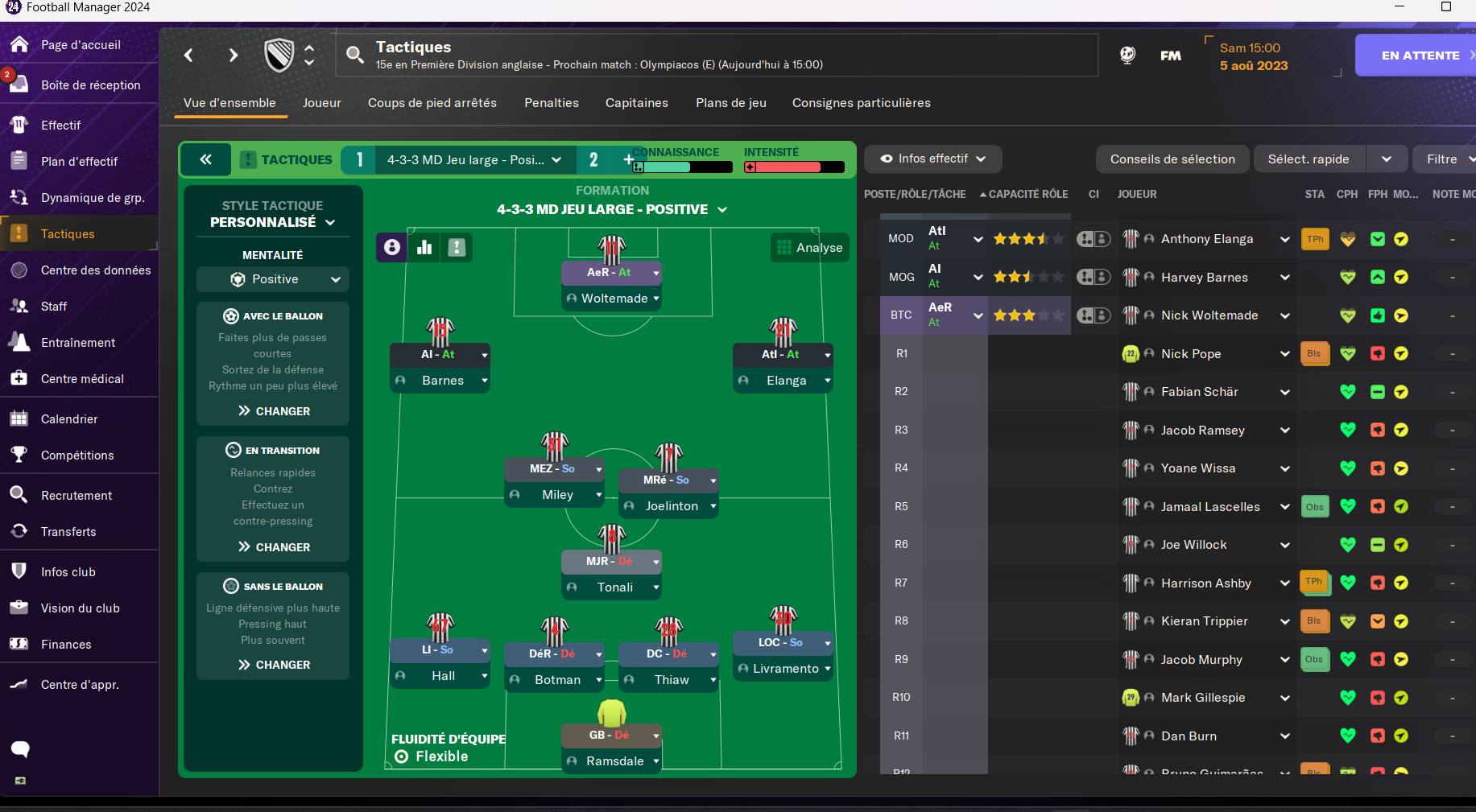
Loading tactical analysis...
Personalized
Positive
4-3-3 MD Large
Flexible
Shorter passing
Higher tempo
Play out of defence
Quick counter
Counter-pressing
Higher defensive line
High pressing
More often
GK
Goalkeeper
Defend
DC
No-Nonsense Centre-Back
Defend
DC
No-Nonsense Centre-Back
Defend
DCR
Full-Back
Defend
DCL
Full-Back
Defend
MDC
Deep-Lying Playmaker
Defend
MCR
Central Midfielder
Support
MCL
Central Midfielder
Support
AMR
Winger
Attack
AML
Winger
Attack
ST
Advanced Forward
Attack
Focuses on quick transitions with a combination of short passing and exploiting the wings.
Emphasizes swift reorganization to a high pressing shape when possession is lost.
Create scoring opportunities through wing play and quick counter-attacks.
4-3-3
A compact shape with a solid centre and width provided by the full-backs.
No-Nonsense Centre-Back at [2,3] and [2,4] combined with Full-Backs at [2,2] and [2,5].
4-3-3 Wide
Utilizes width to create space for attacking players, allowing the wingers to cross into the box.
Wingers at [6,2] and [6,5] combined with an Advanced Forward at [6,3].
The formation’s wingers stretch the opposition, creating space for midfielders to exploit.
Winger roles at [6,2] and [6,5] provide effective flank options.
The use of No-Nonsense Centre-Backs ensures a solid defensive foundation.
Defensive roles at [2,3] and [2,4] enhance defensive resilience.
A high line may expose defenders to quick counter-attacks, especially against pacy forwards.
High pressing and higher defensive line instructions could lead to vulnerabilities.
The midfield balance might become stretched if full-backs push high, leaving central areas vulnerable.
Full-backs on attack can create instability if overlapping isn't managed.
Defensive Coverage
A higher defensive line may leave space for attackers in behind.
High line setup might be exposed by through balls exploiting [2,3] and [2,4].
Midfield Overload
Opponents may overcrowd the midfield leading to loss of control.
Three central midfielders could be outnumbered if full-backs push high.
Full-Backs and Wingers
Full-backs can overlap wingers to create additional width and crossing opportunities.
Full-Backs at [2,2] and [2,5] can synergize with Wingers at [6,2] and [6,5].
Central Midfielders Support
Central Midfielders can provide defensive cover and support attacking plays.
Roles at [3,4] and [3,5] enhance support for the striker.
How can we enhance midfield control without losing defensive stability?
What adjustments should be made against teams with fast counter-attacks?
How can we vary our attacking options beyond the wings?
The tactical theory behind the 4-3-3 MD Large: roles, instructions, and the trade-offs that decide whether the system holds up.
Holder, runner, creator: the role distribution rule for three-man midfields, the AMC variants, and the antipatterns that break them.
Klopp-style gegenpressing in FM, including squad profile, line-and-press pairing, sustainable workload, and the antipatterns to avoid.
Build through the wide areas or through the middle? A working framework for picking the right one for your squad.