Uploaded Tactic
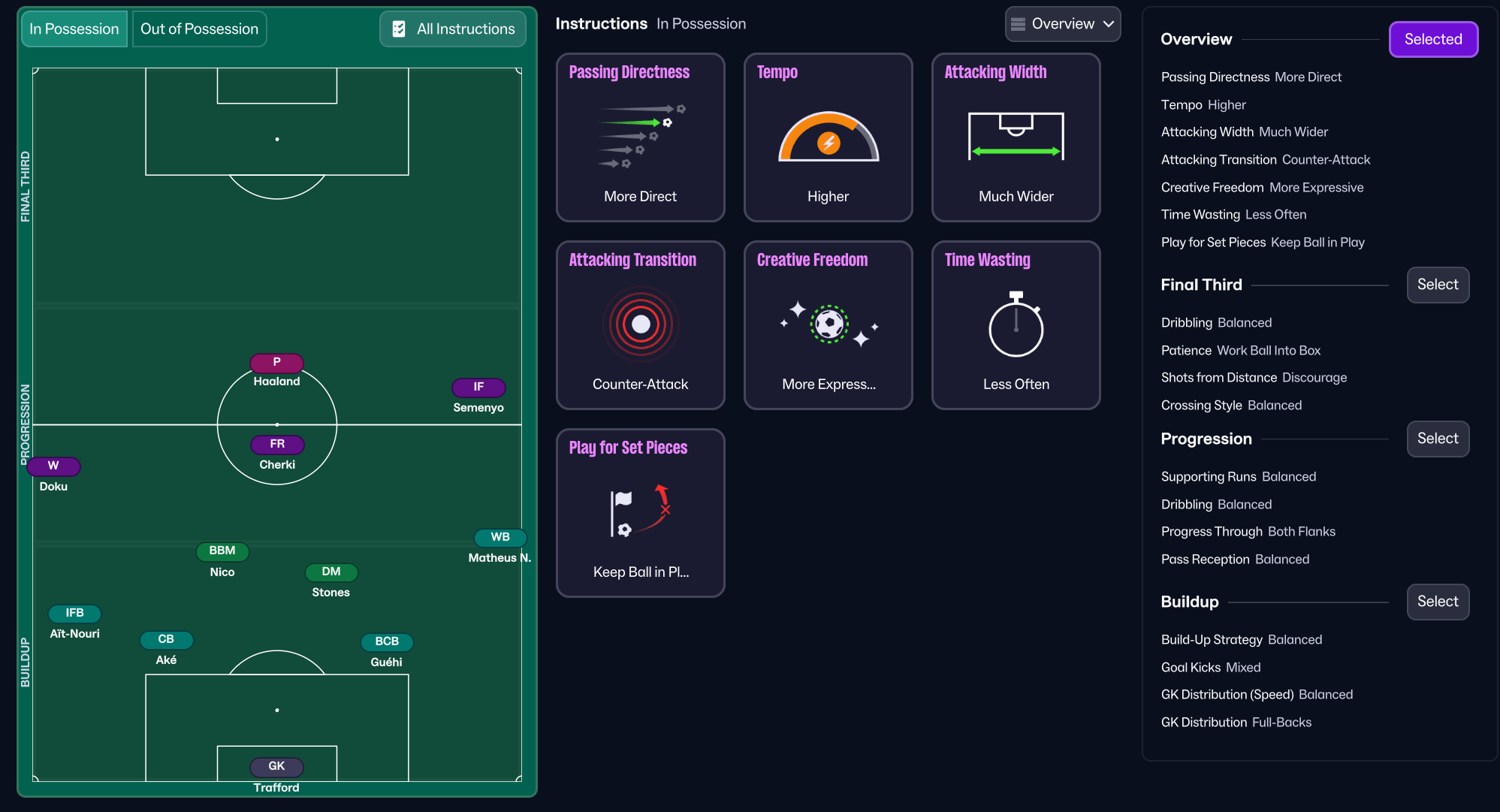
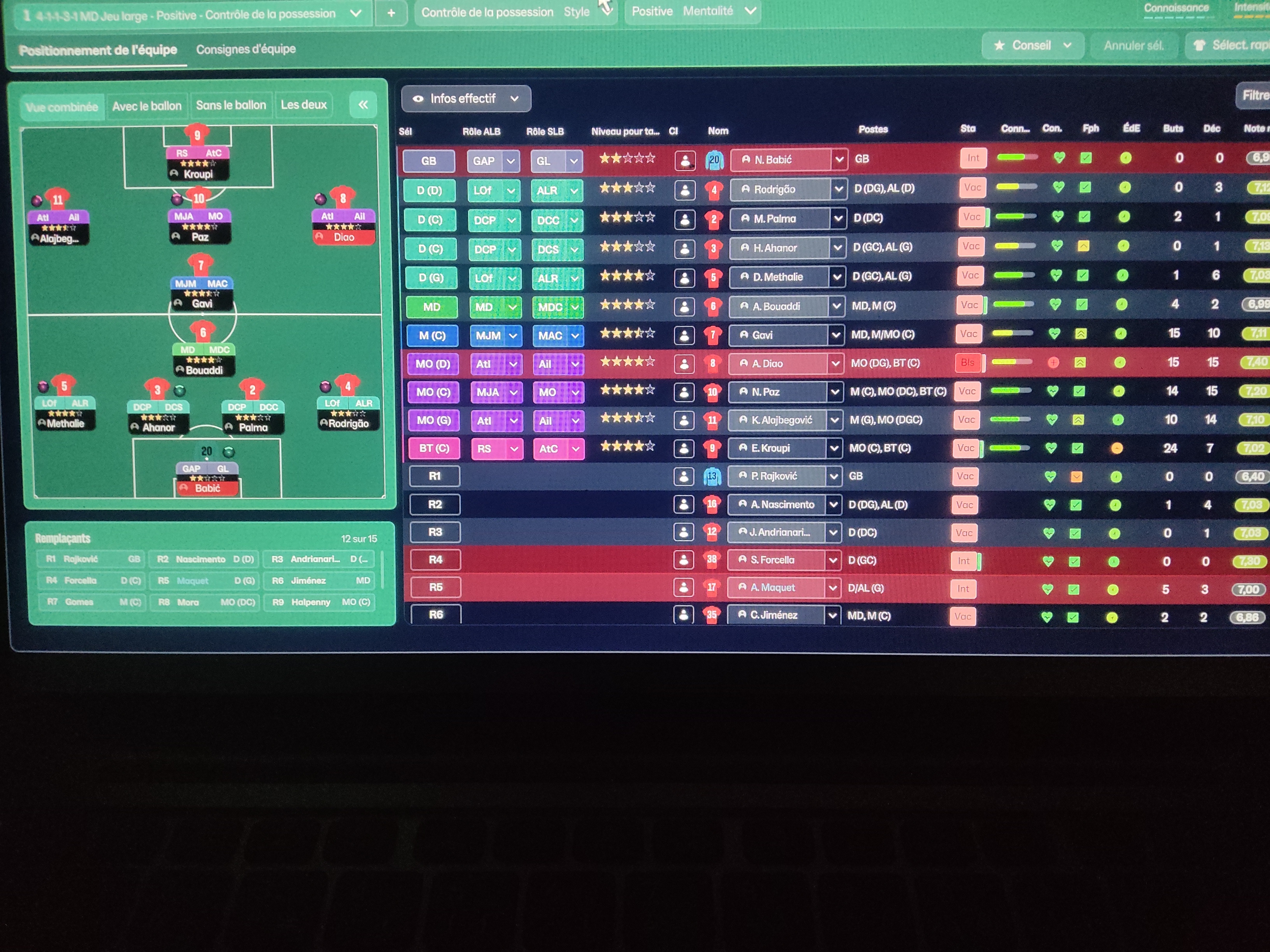
Formation & Style
Tactical Style:Balanced
Mentality:Positive
Formation:4-3-3 Wide
Team Fluidity:Structured
In Possession
More Direct
Higher
Much Wider
Counter-Attack
More Expressive
Less Often
Keep Ball in Play
In Transition
Counter-Attack:Enabled
Counter-Press:Immediate
Goalkeeper Distribution:Short
Throw-ins:Quick
Out of Possession
Defensive Line:Higher
Line of Engagement:Higher
Pressing Intensity:More Urgent
Offside Trap:Yes
Team Shape Without Ball
Shape:4-3-3
Description:The team maintains a compact shape with a solid back four.
Evidence:CB at [2,2] and [2,3], with support from the DM at [3,3].
Team Shape With Ball
Shape:4-3-3
Description:Utilizes width with wingers stretching the play and a forward leading the line.
Evidence:W at [5,1], IF at [5,2], and P at [6,3].
Phase Description
Attacking Play
The tactic utilizes width and a direct approach, focusing on quick transitions and counter-attacks.
Defensive Transition
null
Main Focus
Generating quick attacks through wide players.
Key Strengths
Direct Attacking Play
The direct passing style allows for rapid transitions and exploits space effectively.
Width and Creativity
The emphasis on width creates challenges for opponents' defensive setups.
Strong Pressing Forward
Having a Pressing Forward helps to regain possession quickly and create chances.
Conflicting Directions
Less Focus on Crosses
With a focus on direct play, relying heavily on crossing may conflict with the attacking approach.
Transition Speed
Transitioning between attacking and defending may be affected if players do not adapt well.
Defensive Balance
A higher tempo may lead to defensive vulnerabilities if pressing is not managed carefully.
Tactical Suggestions
Ensure Defensive Stability
Consider integrating a more disciplined DM to provide additional cover in critical areas.
Utilize Wing Play Effectively
Maximize the width provided by 'WB' players to stretch defenses and create space centrally.
Adjust Creative Freedom
Monitor the offensive setup to ensure players make the most of the direct approach.
Ask Questions About Your Lineup
Related Tactics
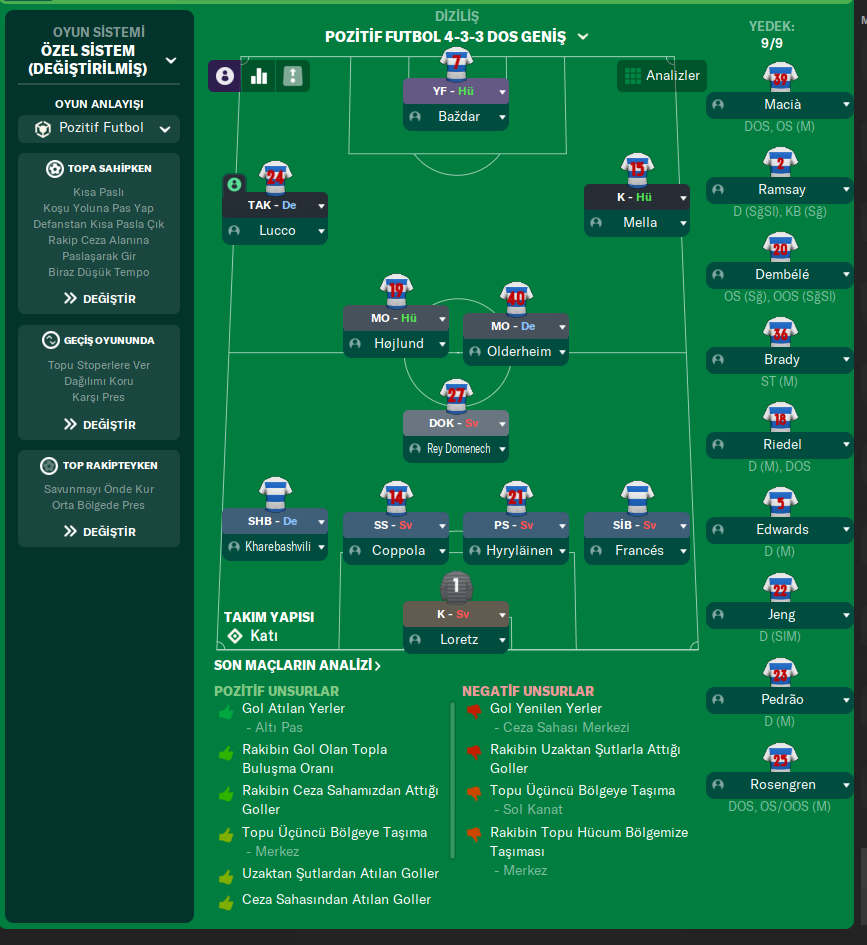
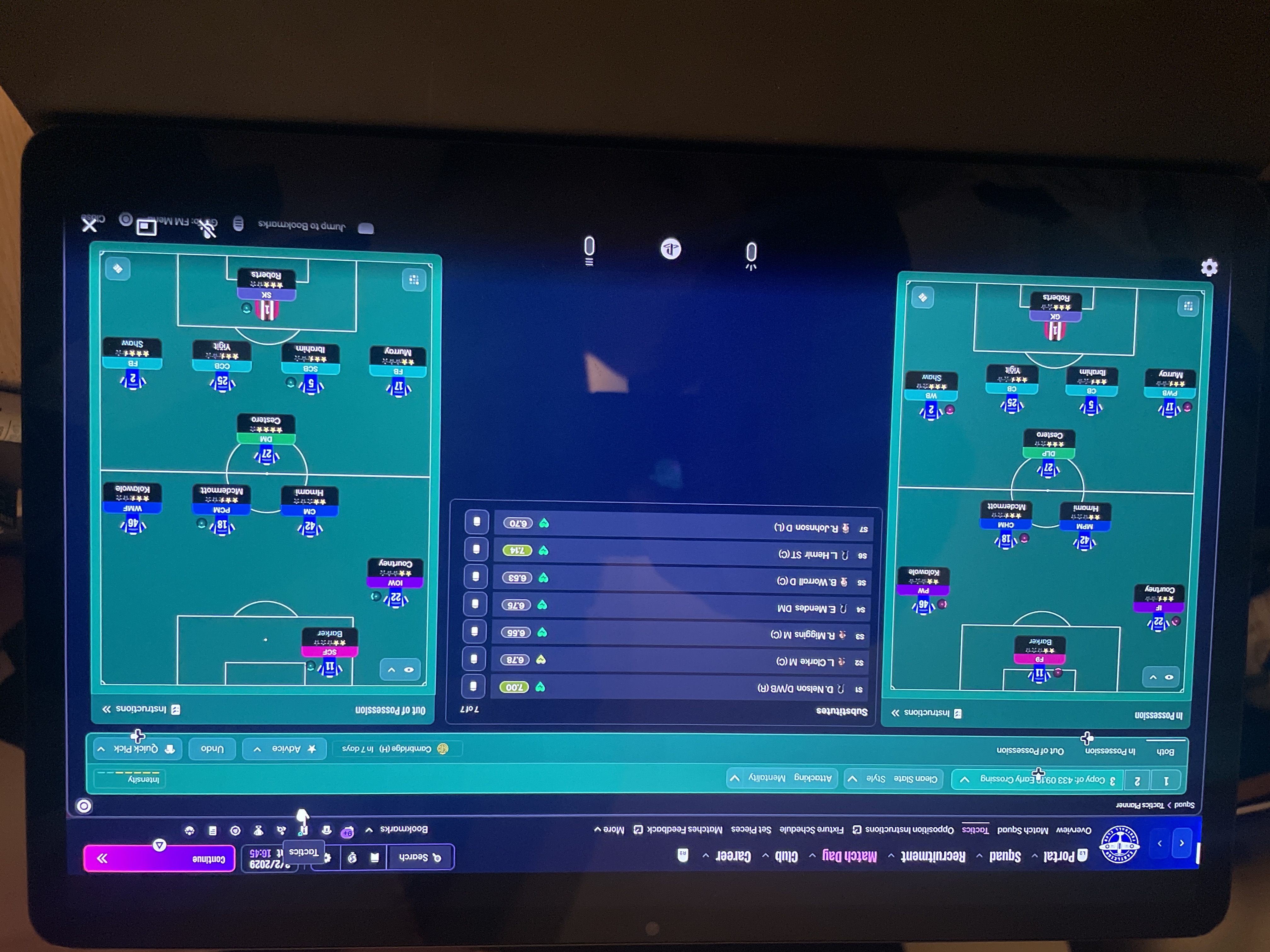
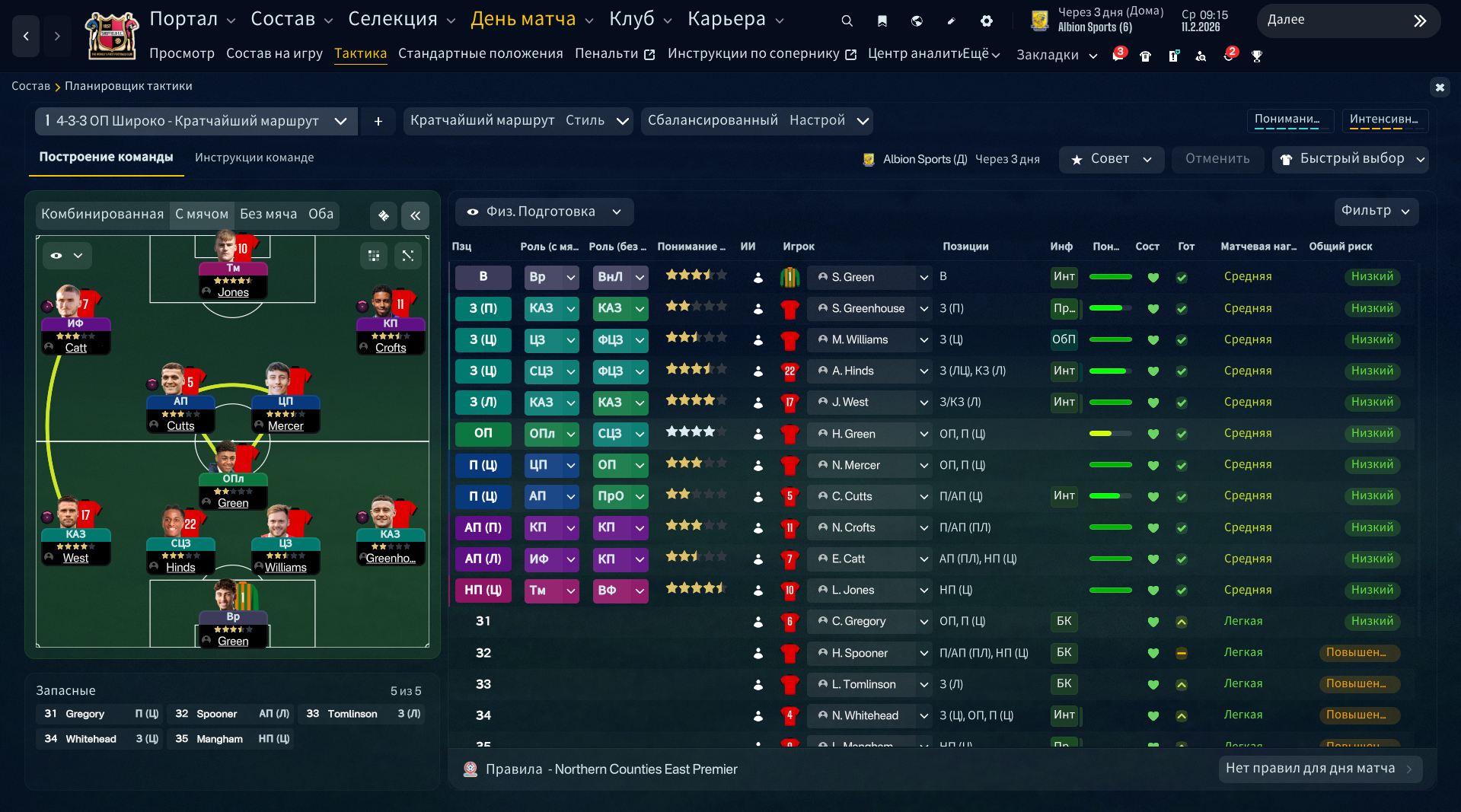
Guides for this formation
The tactical theory behind the 4-3-3 Wide: roles, instructions, and the trade-offs that decide whether the system holds up.
Foundations
Understanding the 4-3-3 Formation
Master the classic 4-3-3: player roles, tactical variations, and the trade-offs that decide whether it sings or stalls.
Read guide
Player pairings
Midfield Trios
Holder, runner, creator: the role distribution rule for three-man midfields, the AMC variants, and the antipatterns that break them.
Read guide
Playing styles
Gegenpressing: A Full Guide
Klopp-style gegenpressing in FM, including squad profile, line-and-press pairing, sustainable workload, and the antipatterns to avoid.
Read guide