Uploaded Tactic
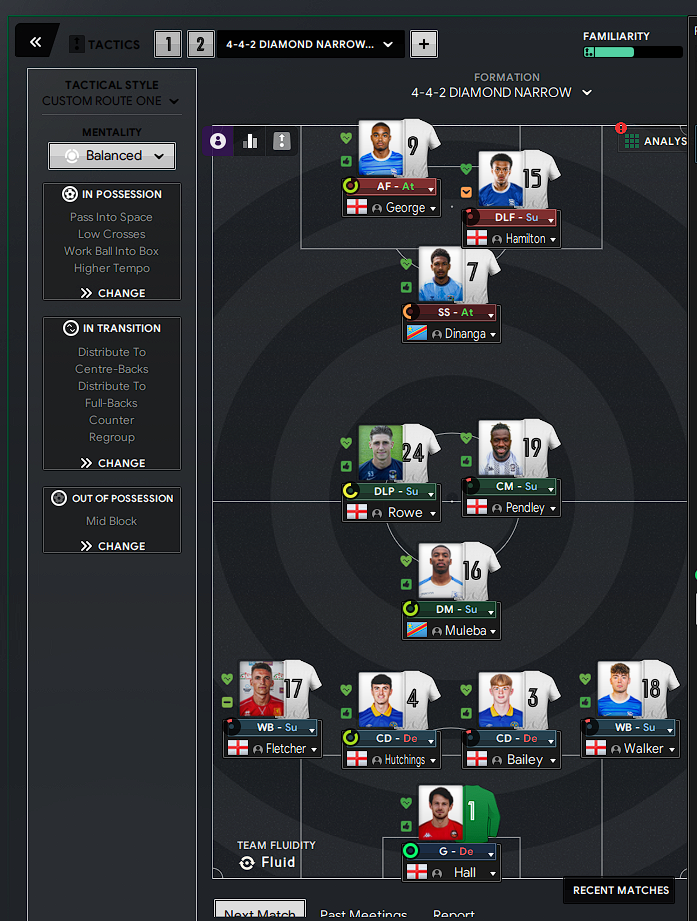
Formation & Style
Tactical Style:Custom Route One
Mentality:Balanced
Formation:4-4-2 Diamond Narrow
Team Fluidity:Fluid
In Possession
Pass Into Space
Low Crosses
Work Ball Into Box
Higher Tempo
In Transition
Distribute To Centre-Backs
Distribute To Full-Backs
Counter
Regroup
Out of Possession
Mid Block
Team Shape Without Ball
Shape:Mid Block
Description:The team remains compact and organized, looking to limit space in central areas while keeping the opposition in front.
Evidence:DM-S at [3,3], two DLP-S at [4,2] and [4,3] support defensive shape.
Team Shape With Ball
Shape:Diamond with width from wing-backs
Description:The diamond formation places emphasis in the middle with the possibility to exploit wide areas via wing-backs.
Evidence:AF-A at [6,2] and DLF-S at [6,3] provide attacking threats in combination with the midfield.
Phase Description
Attacking Play
Utilizes a direct style with an emphasis on quick counter-attacks and exploiting space behind defenses.
Defensive Transition
Focus on regaining possession quickly and reorganizing into a compact shape.
Main Focus
Creating goal-scoring opportunities through quick, high-tempo play and exploiting width provided by wing-backs.
Key Strengths
Midfield Control
The DLP and CM roles allow for maintaining possession and dictating play.
Counter-Attacking Threat
The structure allows for quick transitions into attack, especially using the AF and SS.
Defensive Midfield Shield
One defensive midfielder adds stability and coverage for the backline.
Conflicting Directions
Exposed Wide Areas
With a narrow formation, the flanks might become vulnerable if wing-backs are caught upfield.
High Press Vulnerability
The instated 'Mid Block' may hinder the team's ability to engage in high pressing.
Dependence on Wing-Backs
Heavy reliance on wing-backs for width can be problematic if they are well-contained.
Tactical Suggestions
Consider Exploiting Width
Adjust tactics to utilize full-backs more in attacking phases.
Increase Defensive Stability
Consider adopting a more defensive mentality in challenging matches.
Vary Attacking Approach
Incorporate varying attacking tactics to be less predictable.
Ask Questions About Your Lineup
Related Tactics
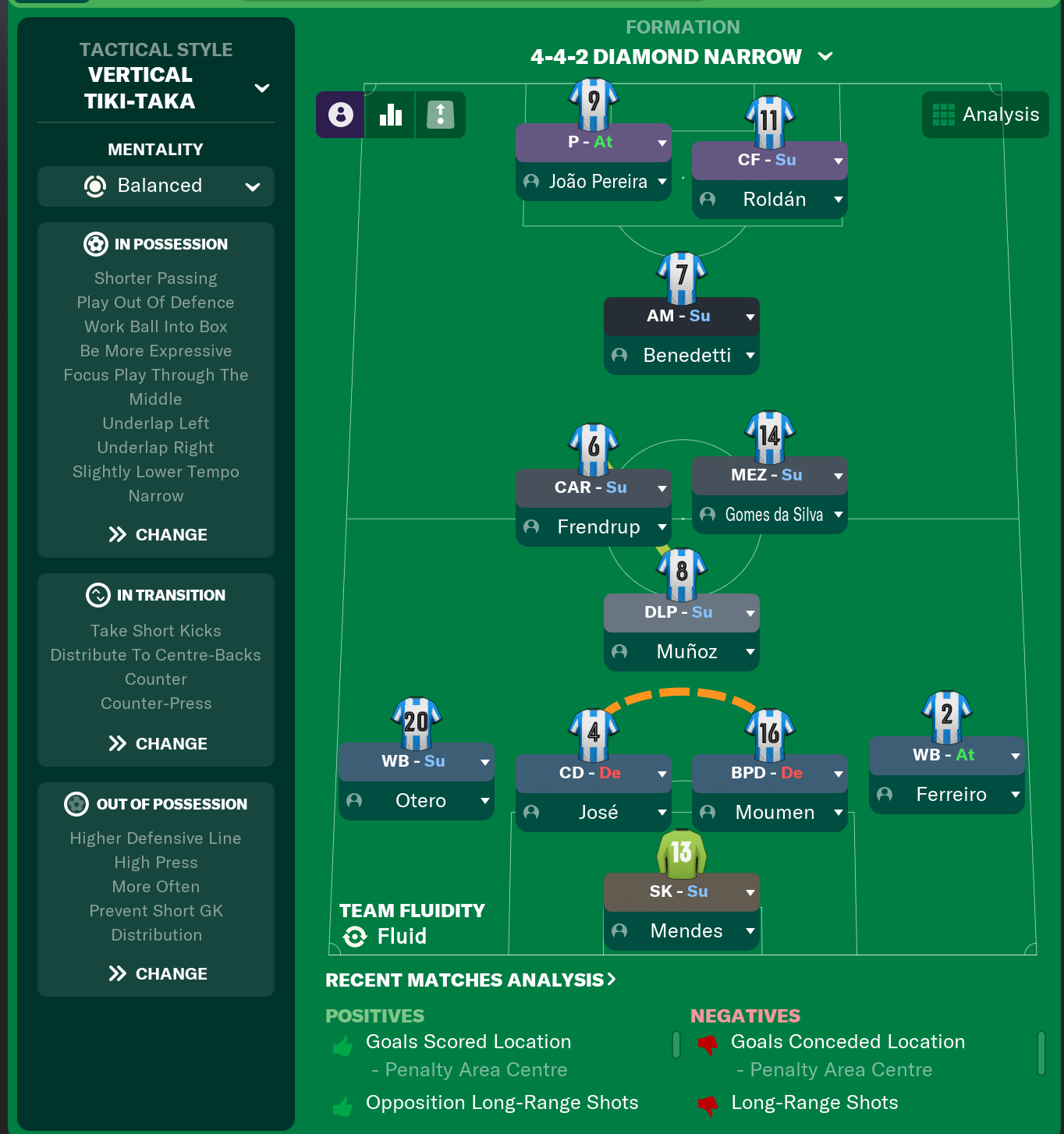
Vertical Tiki-Taka 4-4-2 Diamond Narrow
Vertical Tiki-Taka
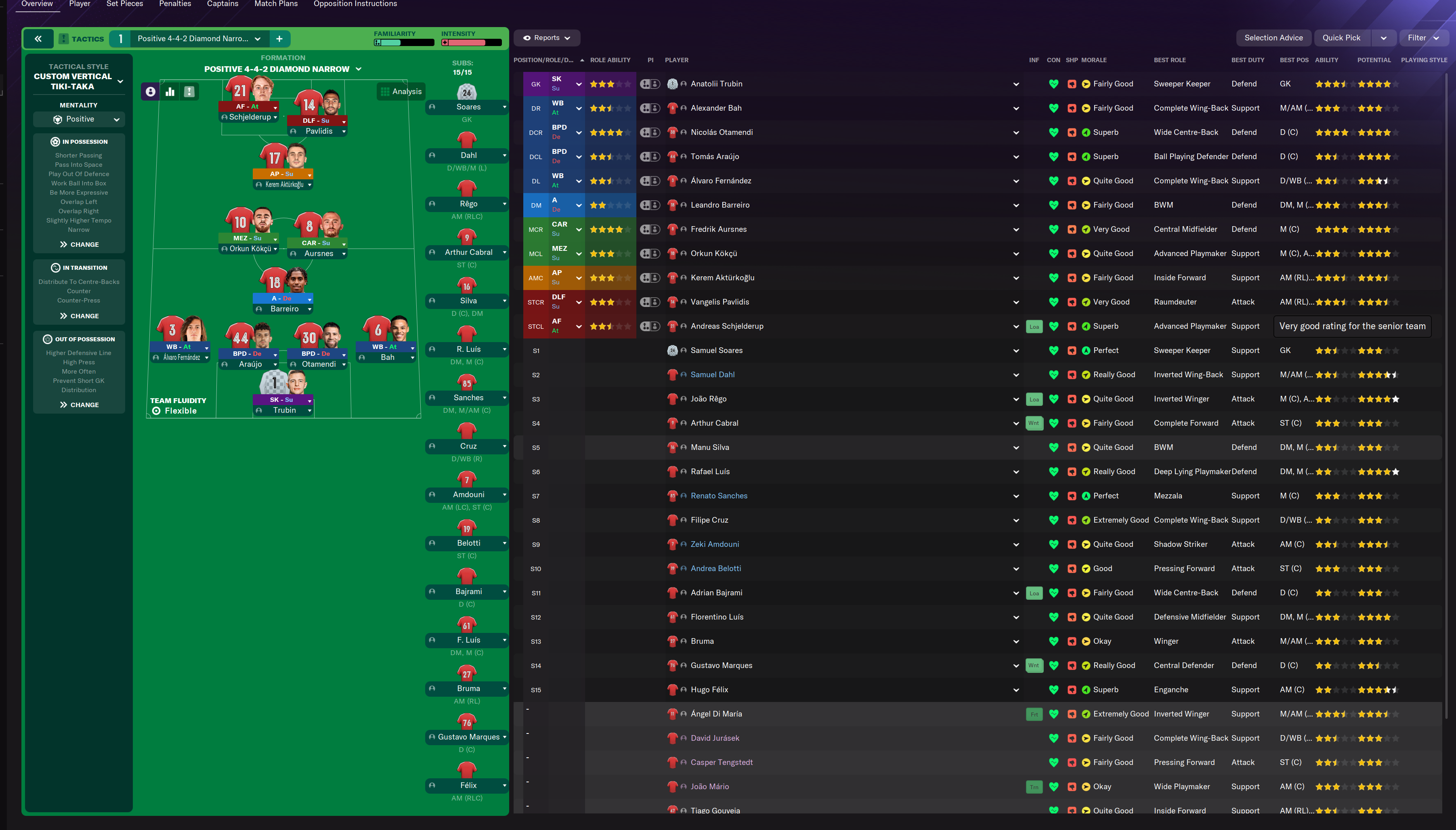
Tiki-Taka 4-4-2 Diamond Narrow
Tiki-Taka
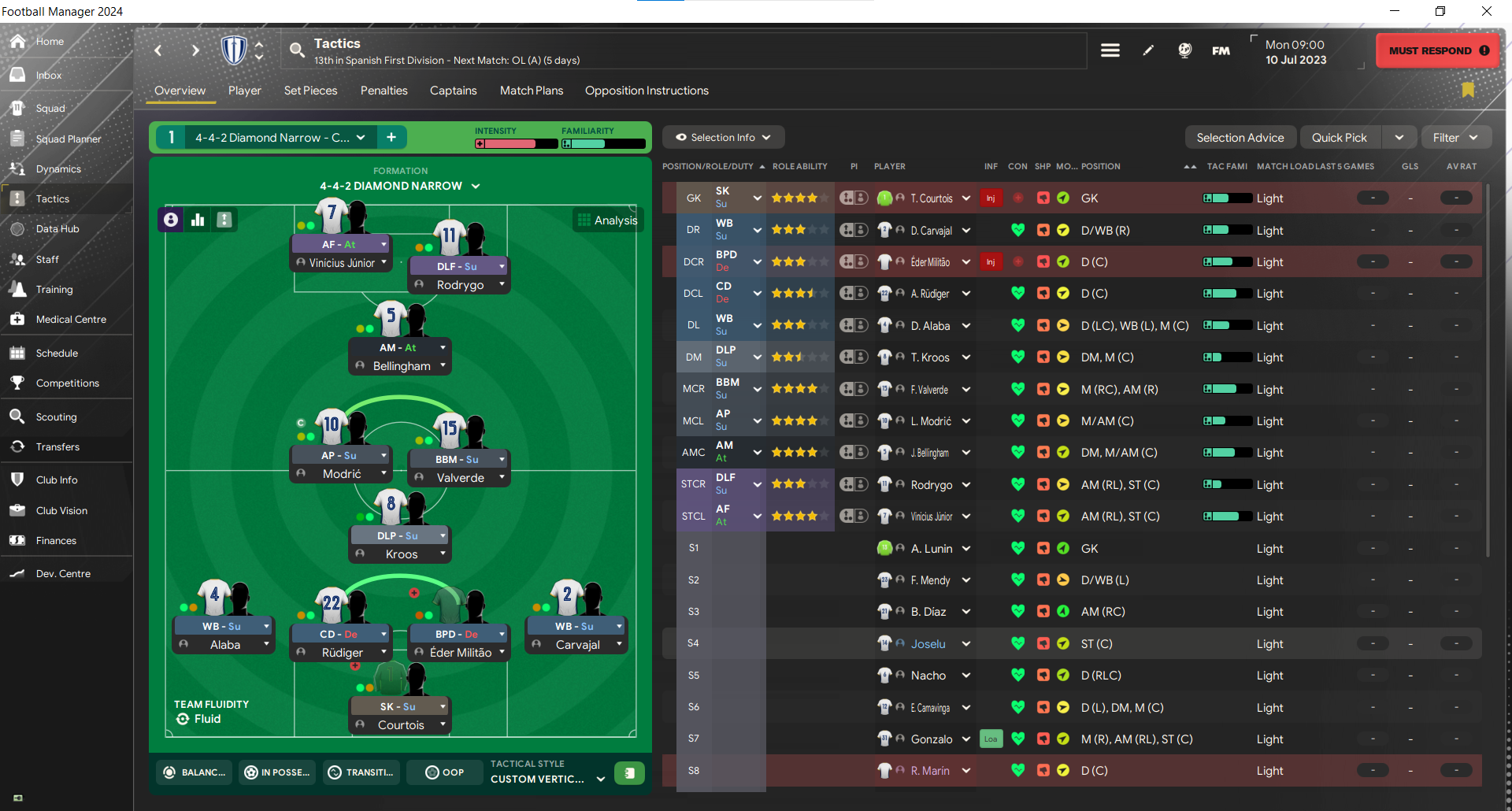
Vertical Tiki-Taka 4-4-2 Diamond Narrow
Custom Vertical Tiki-Taka
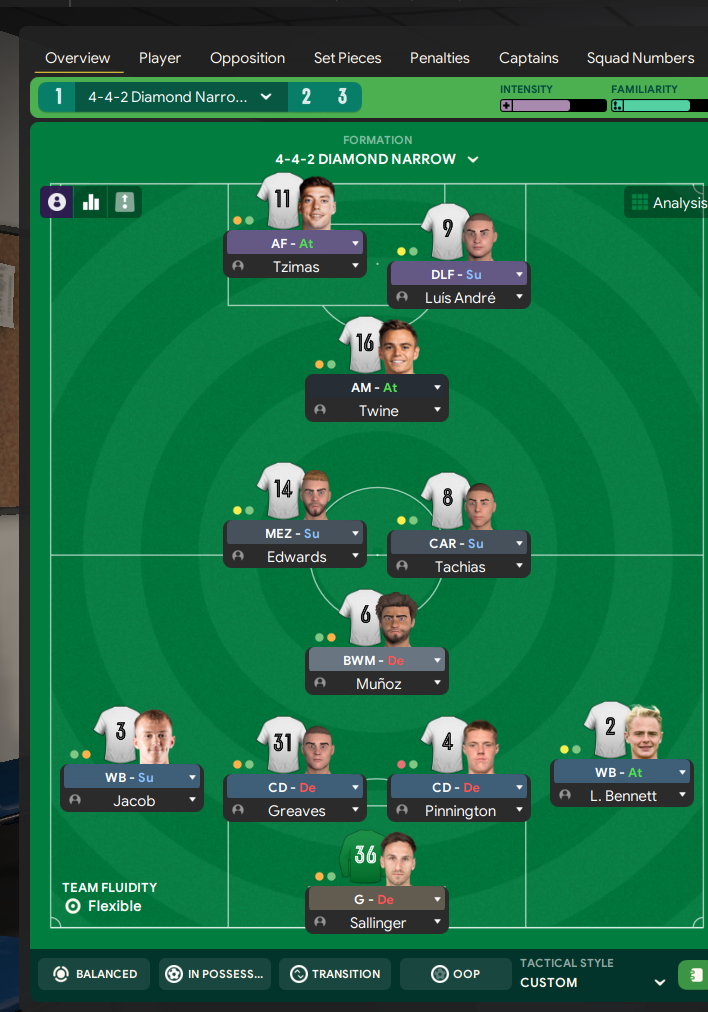
4-4-2 Diamond Narrow Formation
Custom
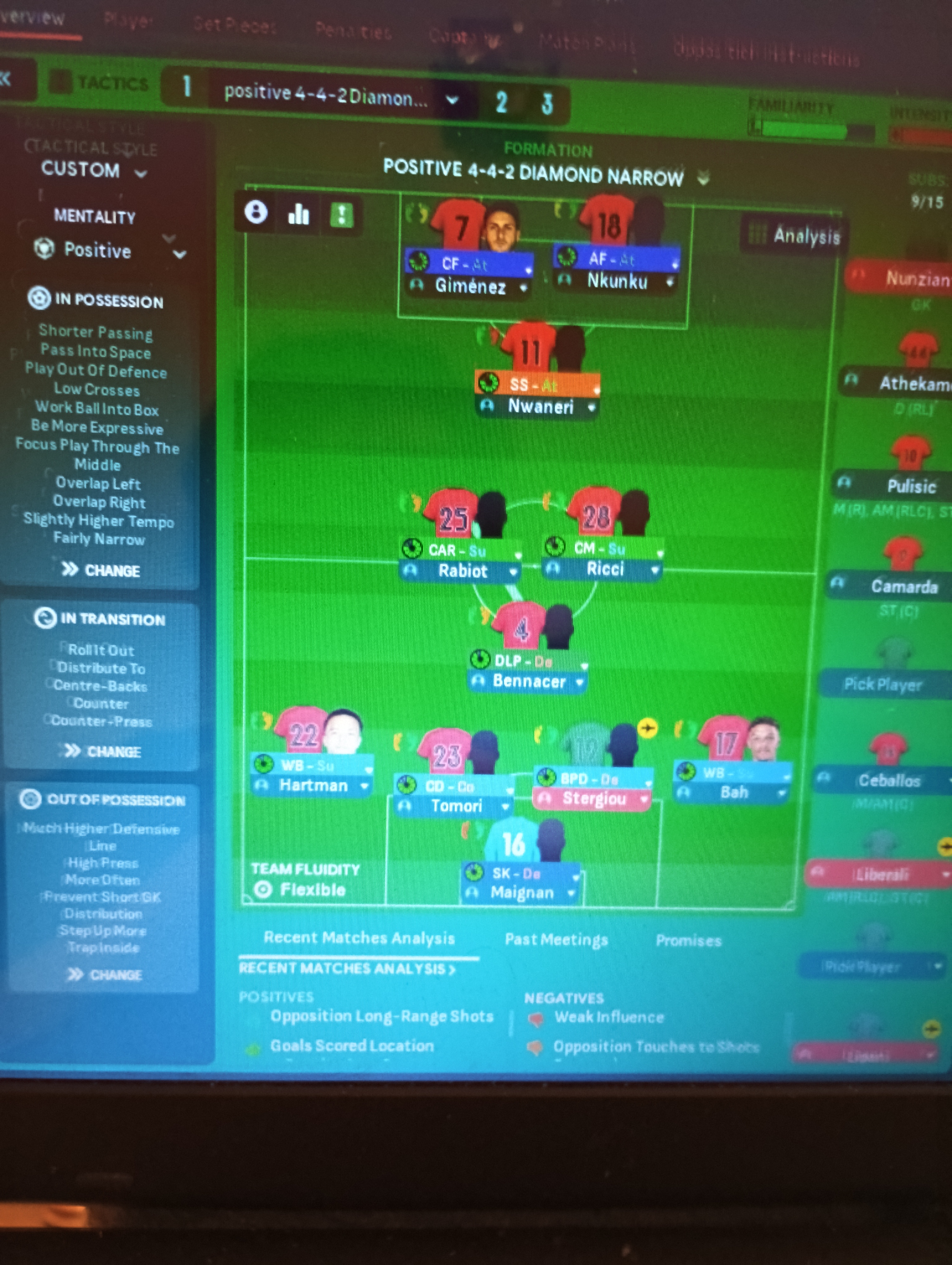
4-4-2 Diamond Narrow Formation
Custom
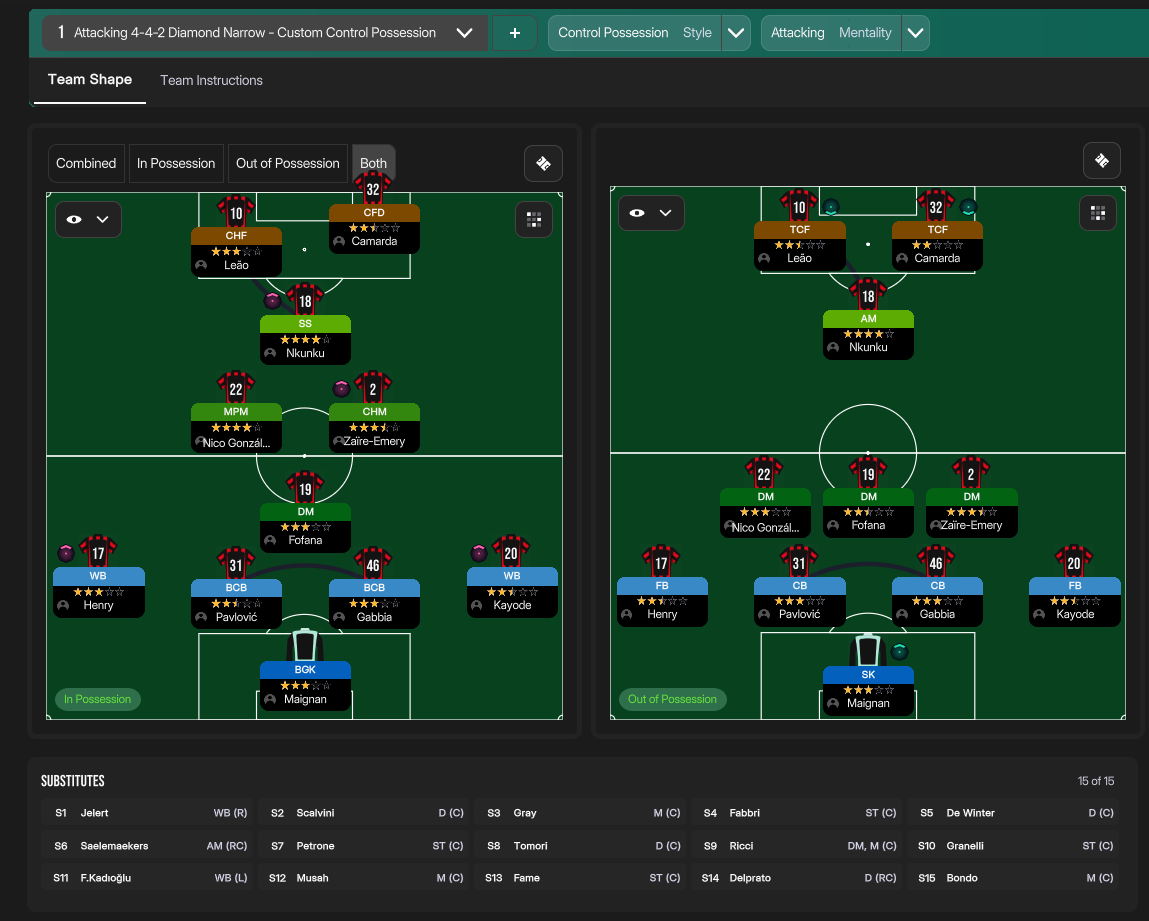
Control Possession 4-4-2 Diamond Narrow
Control Possession
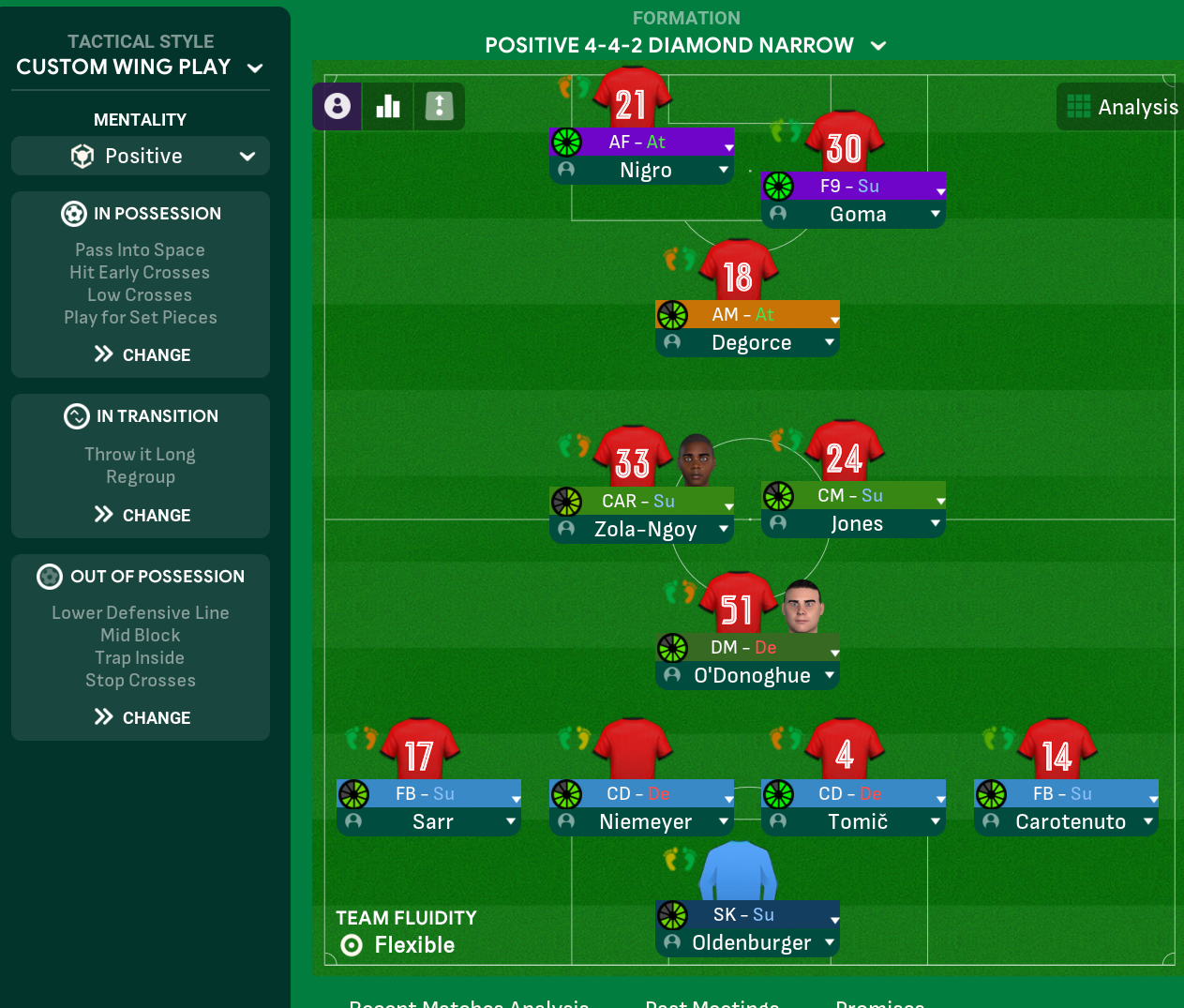
Wing Play 4-4-2 Diamond Narrow
Custom Wing Play
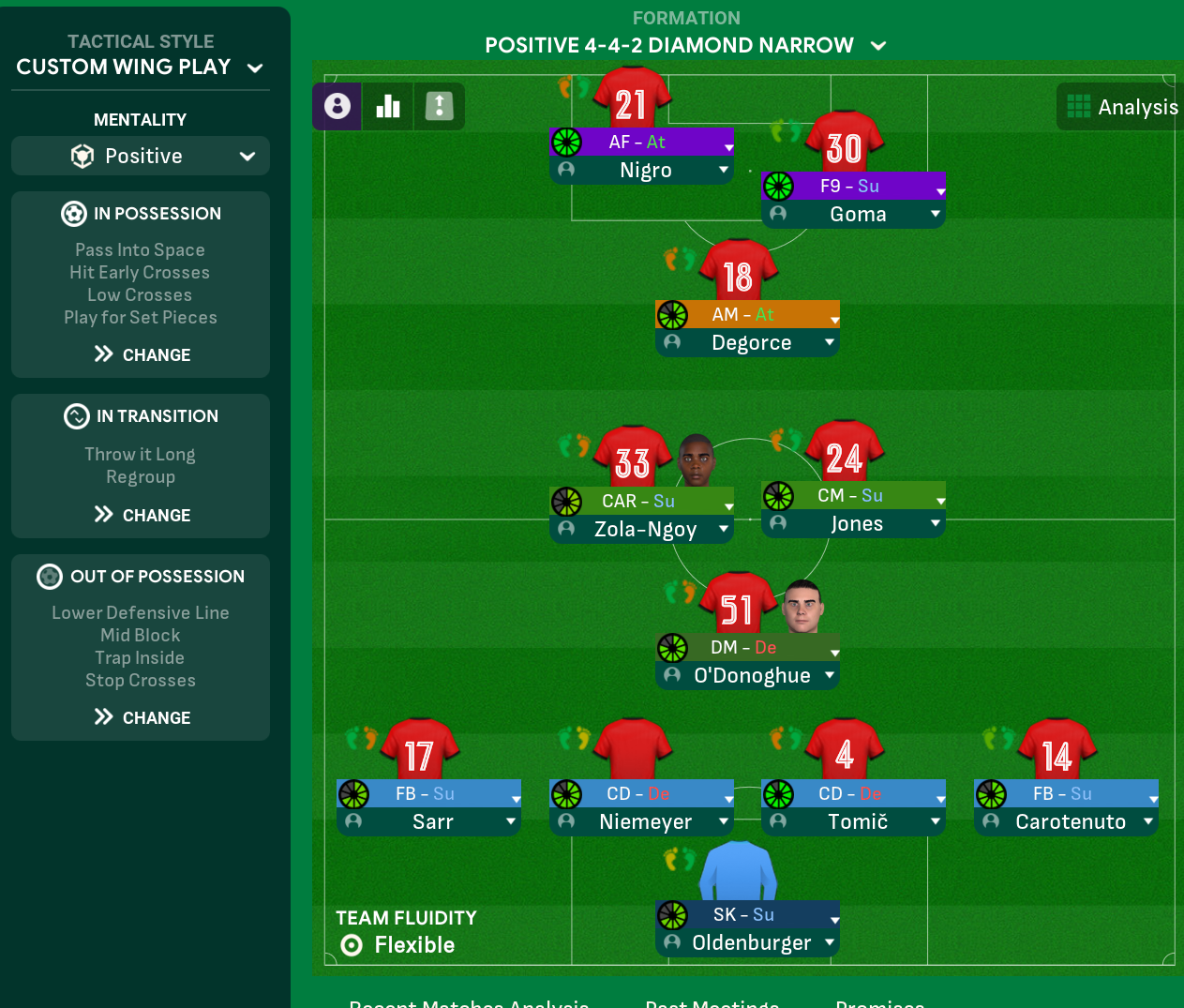
Wing Play 4-4-2 Diamond Narrow
Custom Wing Play
More Custom Route One tactics
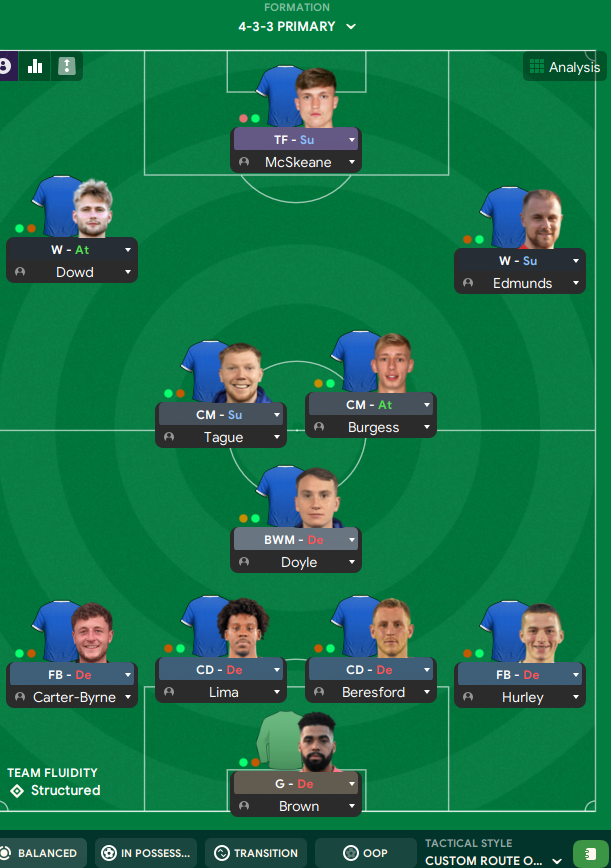
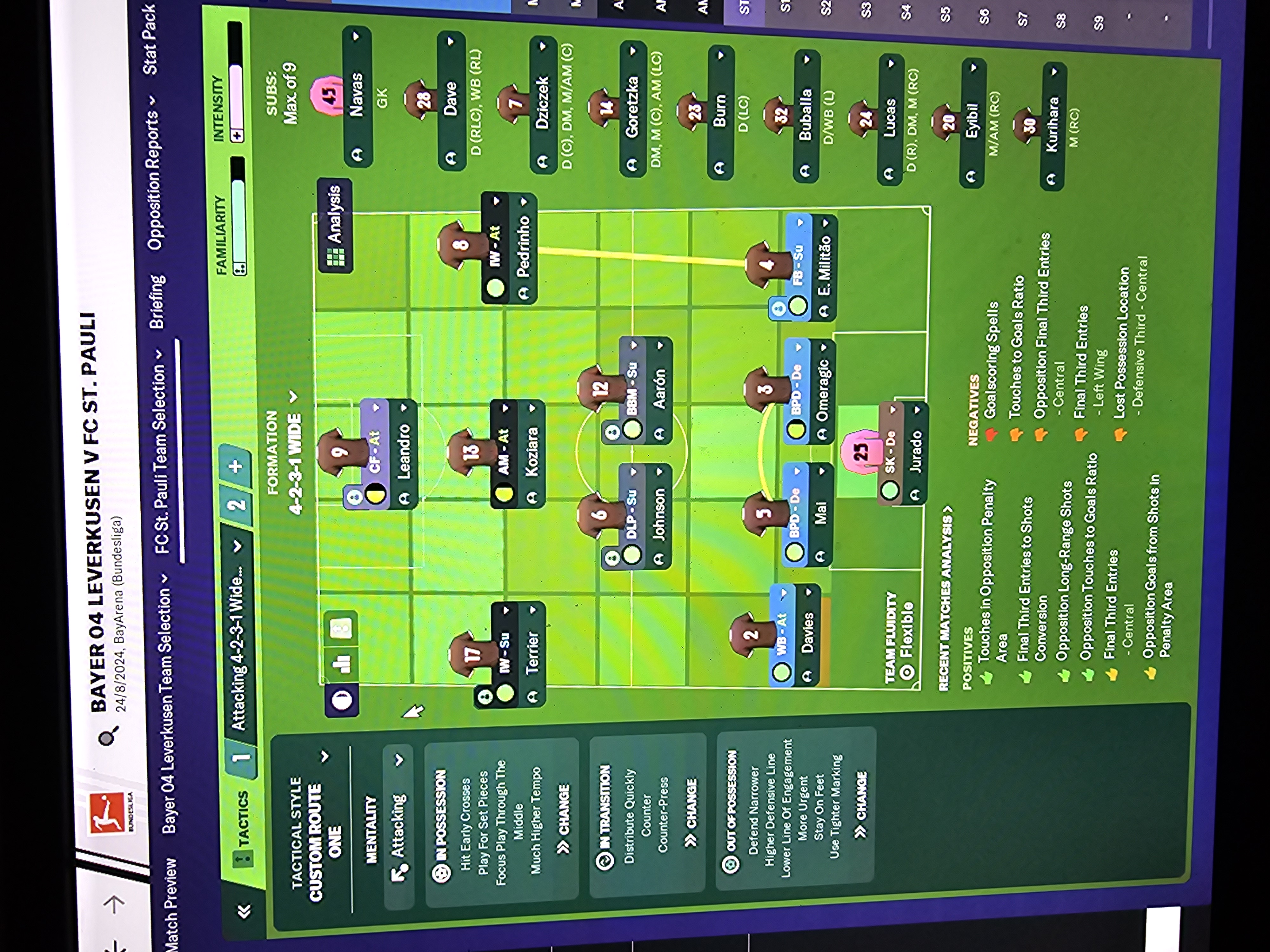
Guides for this formation
The tactical theory behind the 4-4-2 Diamond Narrow: roles, instructions, and the trade-offs that decide whether the system holds up.
Player pairings
Midfield Pairs in 4-2-3-1 and 4-4-2
Double pivots and flat pairs in 4-2-3-1 and 4-4-2: when each pairing works, when it collapses, and the AMC unicorn that rescues both.
Read guide
Playing styles
Direct, Vertical Football
Long-ball football done well in FM. When direct, vertical play is the right choice, and what the Direct Passing TI actually changes.
Read guide
Playing styles
Counter-Attacking Excellence
Sit deep, win the ball, and break in three passes. The roles, instructions, and squad profile that make it work.
Read guide