Uploaded Tactic
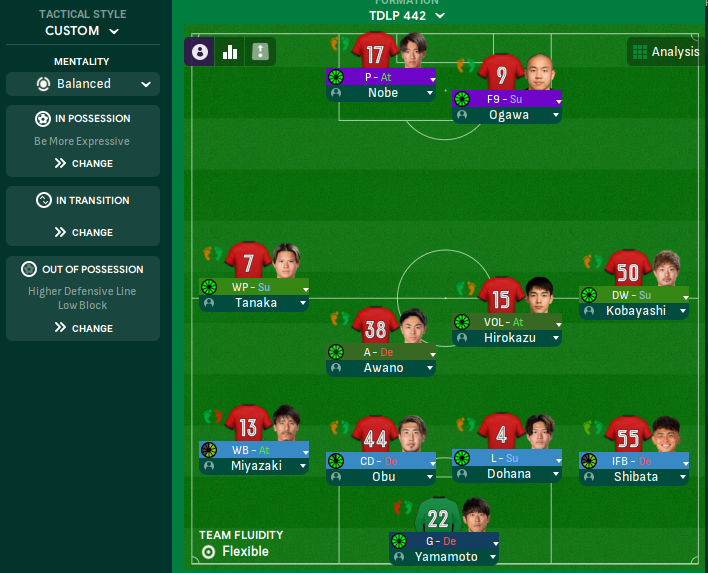
Formation & Style
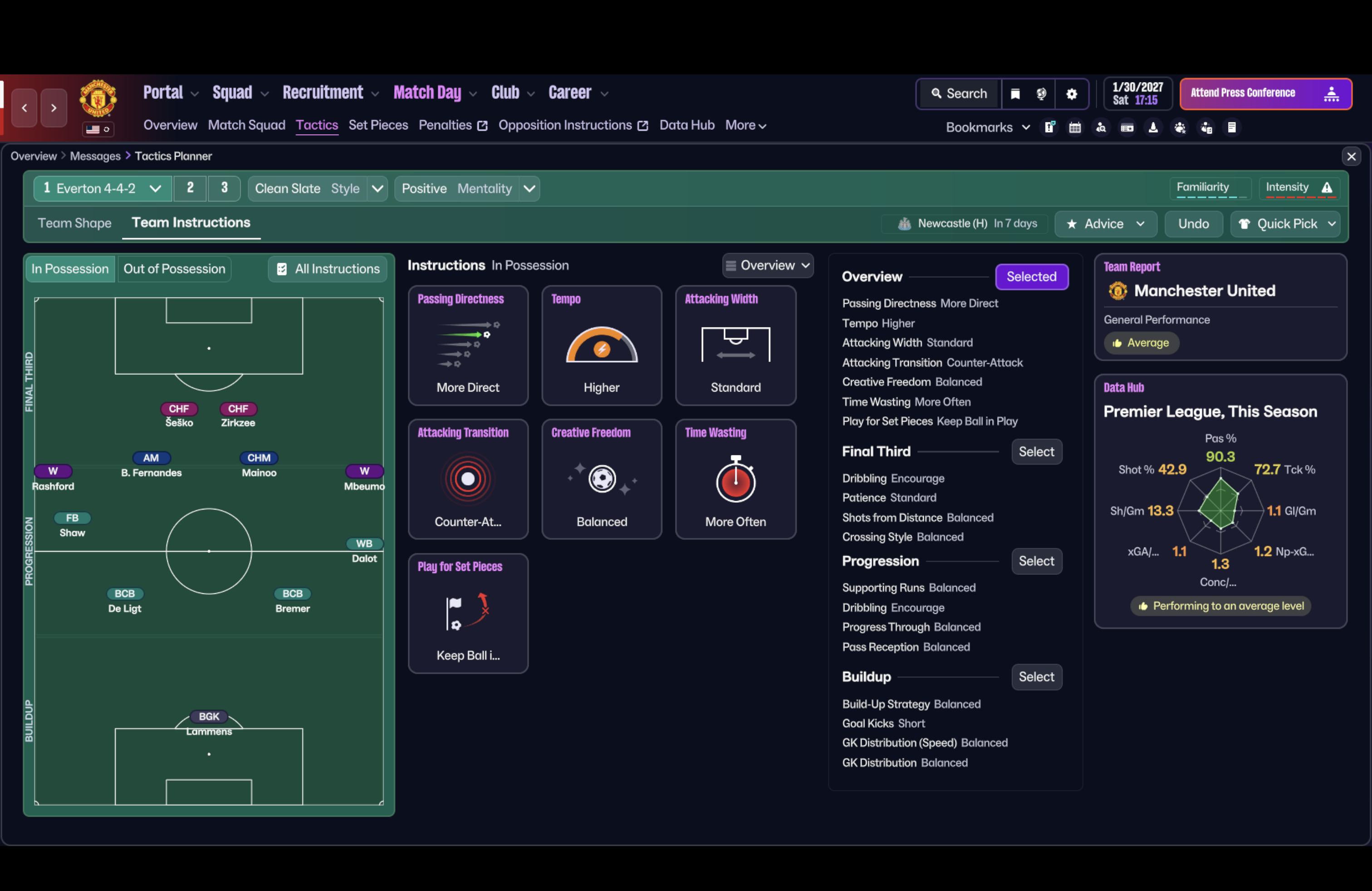
Tactical Style:TDL (Total Dominance, Low Press)
Mentality:Balanced
Formation:4-4-2
Team Fluidity:Flexible
In Possession
Be More Expressive
In Transition
Counter-Attack:Enabled
Counter-Press:Immediate
Goalkeeper Distribution:Short
Throw-ins:Quick
Out of Possession
Higher Defensive Line
Low Block
Team Shape Without Ball
Shape:4-4-2 Low Block
Description:The team maintains a compact shape with two lines of four to minimize space.
Evidence:Consistent use of Higher Defensive Line and Low Block.
Team Shape With Ball
Shape:Width in Attack
Description:The team utilizes width to create space in central areas for the strikers.
Evidence:Wide players on support and attack duties encourage flank play.
Phase Description
Attacking Play
Focus on utilizing the wide players to stretch the opposition while the central midfielders support from deep.
Defensive Transition
Quickly revert to a low block upon losing possession, focusing on maintaining structure.
Main Focus
Create scoring opportunities through wing play and central linking.
Key Strengths
Attacking Width
The presence of a Wing-Back and Winger allows for effective use of the flanks.
Dynamic Attacking Options
Use of a Poacher and False Nine creates unpredictability in the final third.
Compact Defensive Shape
Solid organization prevents easy penetration by opponents.
Conflicting Directions
Potential Defensive Vulnerability
While a higher defensive line can press opponents, it also leaves space behind.
Dependence on Width
Heavily reliant on wingers may make the attack one-dimensional.
Balance in Midfield Roles
Dual roles in midfield can lead to confusion during transitions.
Tactical Suggestions
Consider a More Central Focus
Introduce central attacking players to complement the width and lessen reliance on flanks.
Adjust Defensive Line
A lower defensive line might mitigate vulnerability from counter-attacks.
Enhance Midfield Support
Encourage deeper runs from midfield to complement strikers.
Ask Questions About Your Lineup
Related Tactics
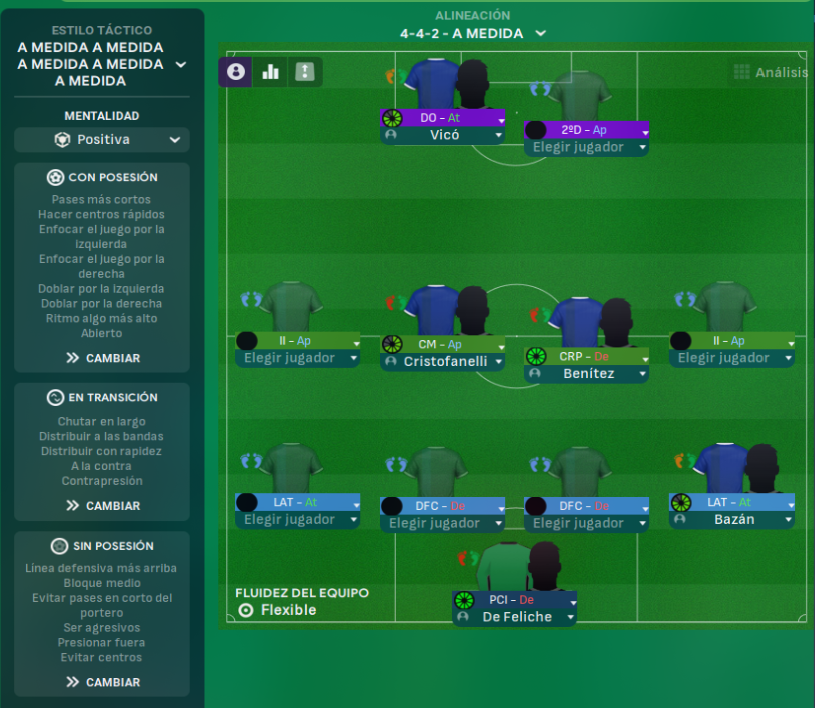
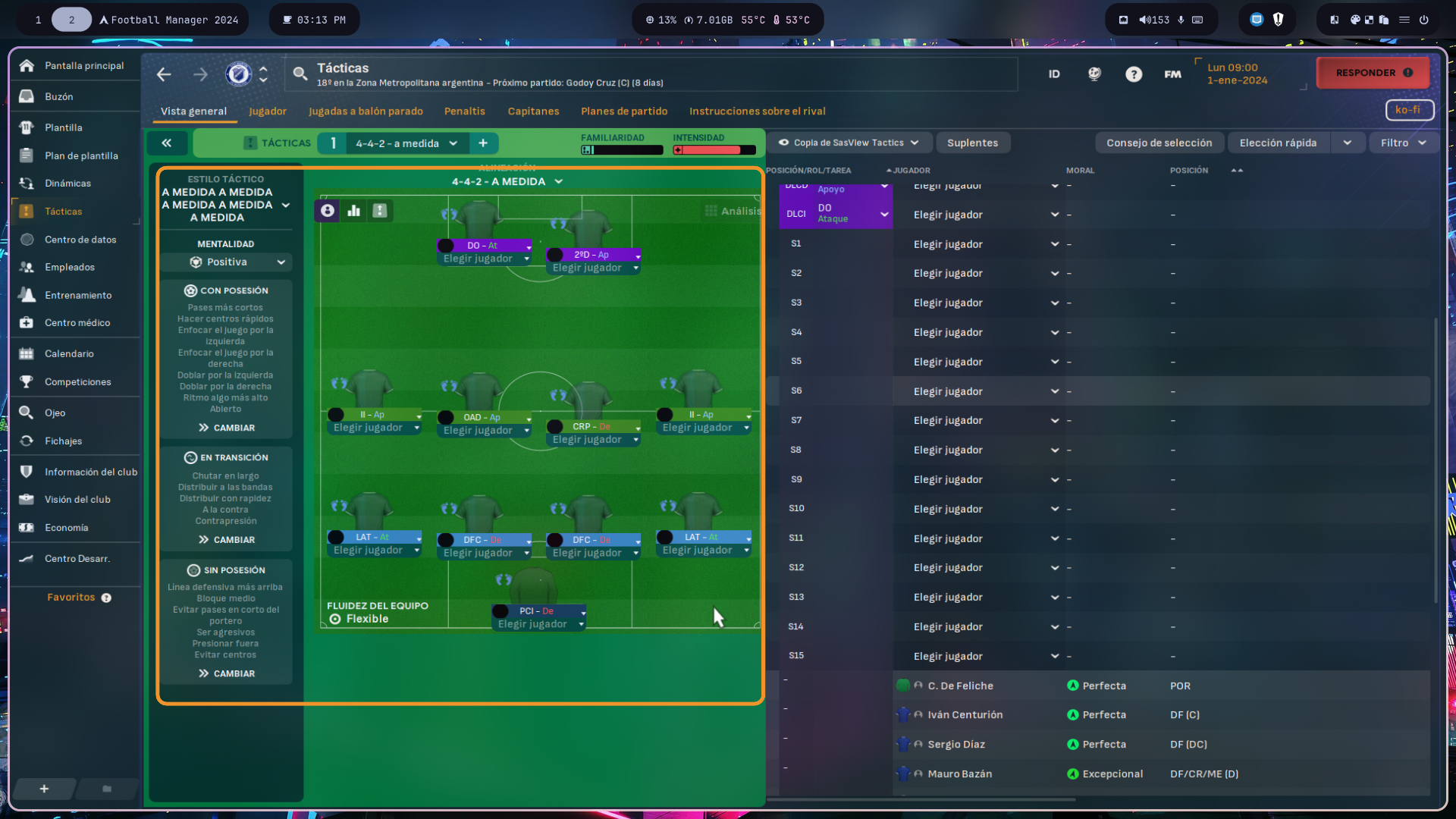
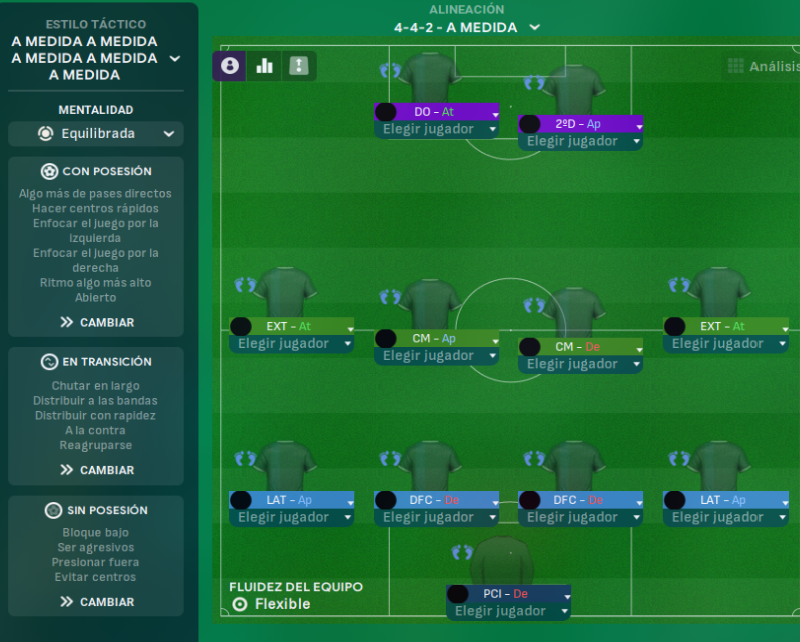
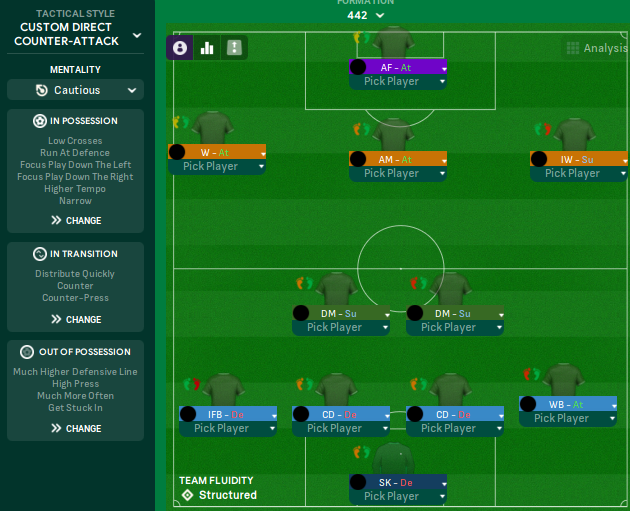
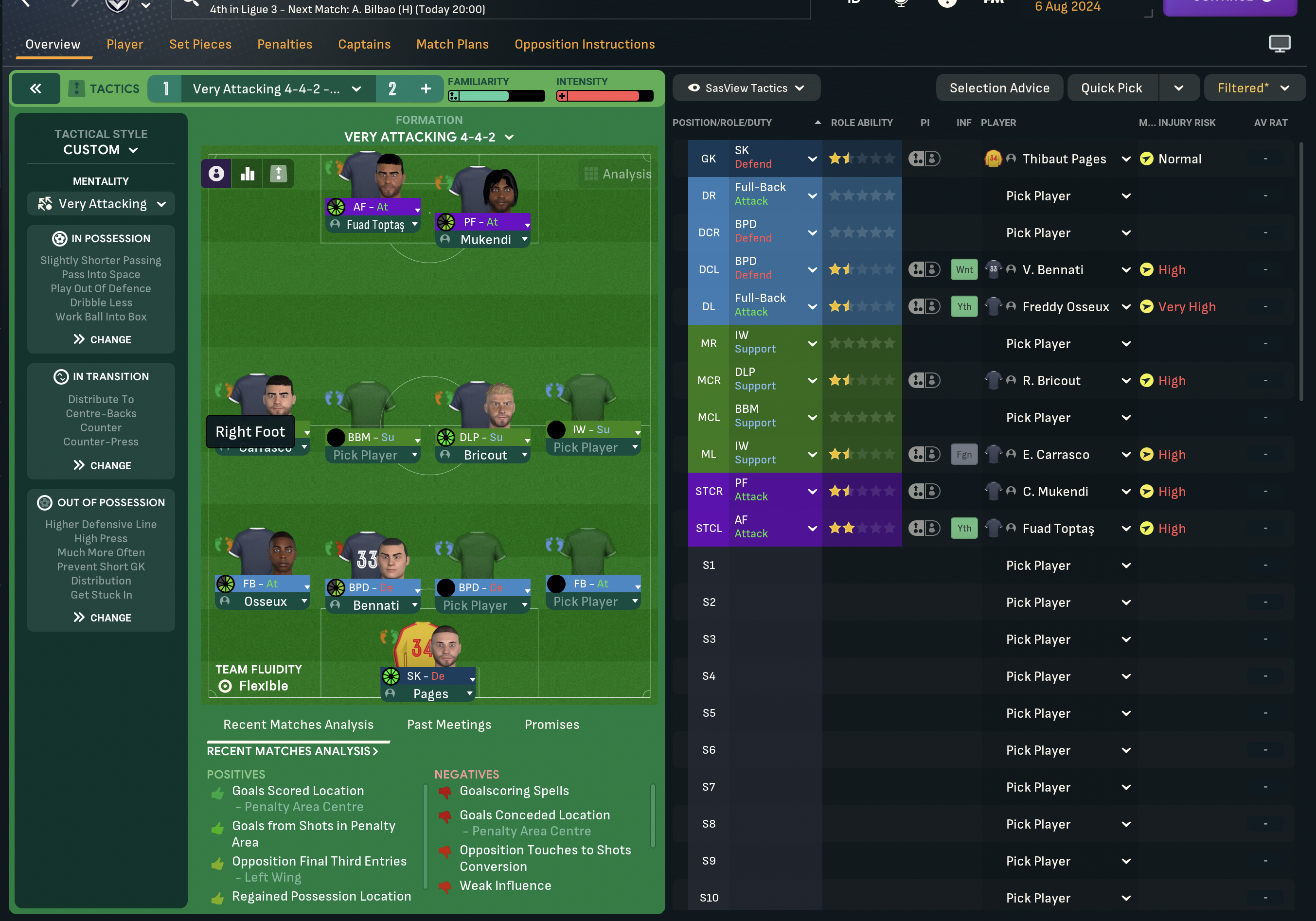
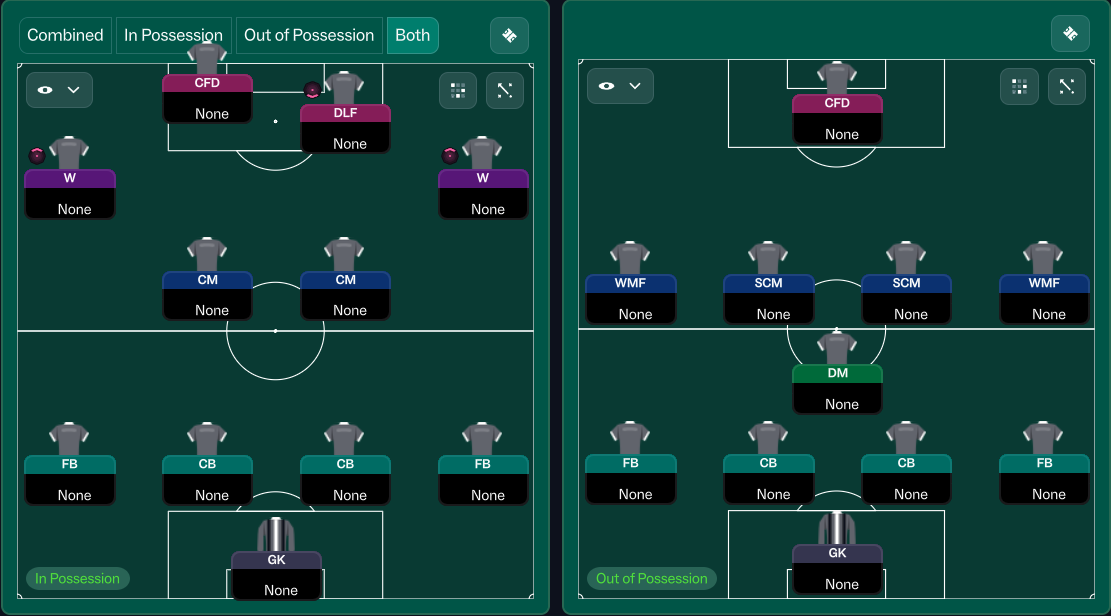
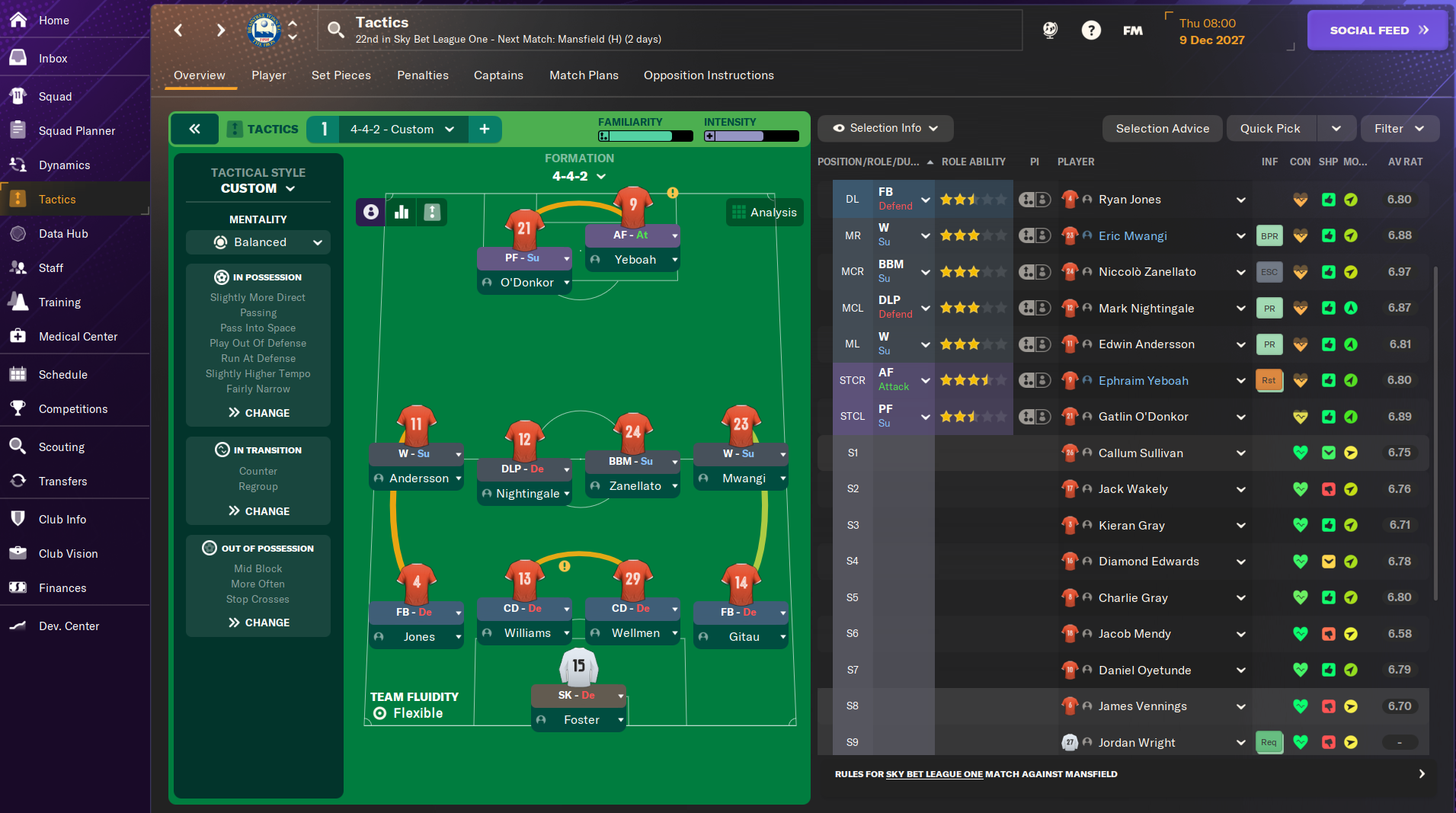
Guides for this formation
The tactical theory behind the 4-4-2: roles, instructions, and the trade-offs that decide whether the system holds up.
Player pairings
Midfield Pairs in 4-2-3-1 and 4-4-2
Double pivots and flat pairs in 4-2-3-1 and 4-4-2: when each pairing works, when it collapses, and the AMC unicorn that rescues both.
Read guide
Playing styles
Direct, Vertical Football
Long-ball football done well in FM. When direct, vertical play is the right choice, and what the Direct Passing TI actually changes.
Read guide
Playing styles
Counter-Attacking Excellence
Sit deep, win the ball, and break in three passes. The roles, instructions, and squad profile that make it work.
Read guide