Uploaded Tactic
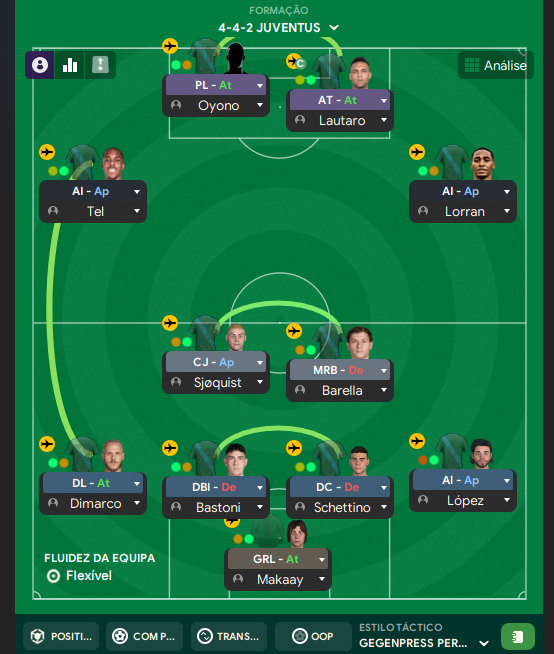
Formation & Style
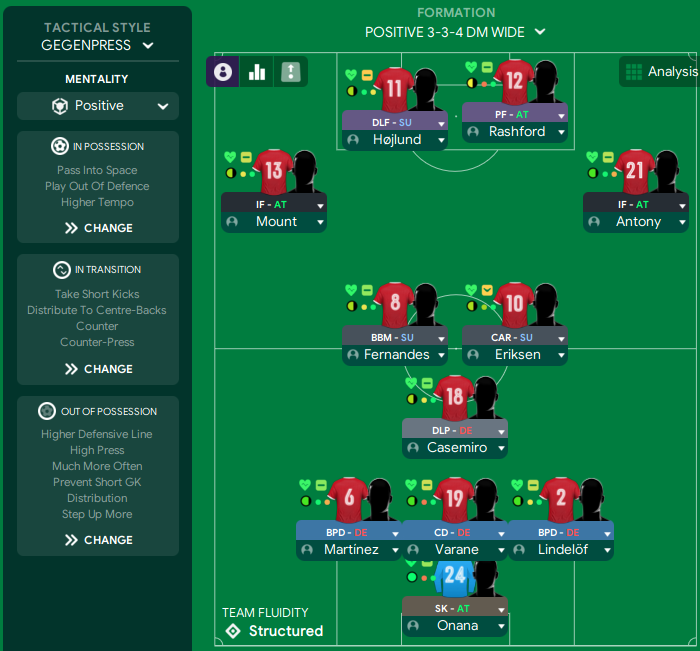
Tactical Style:Gegenpress
Mentality:Positive
Formation:4-4-2
Team Fluidity:Flexible
In Possession
Play Out of Defence
Be More Expressive
In Transition
Counter-Press
Counter
Out of Possession
Much Higher Defensive Line
Higher Intensity Pressing
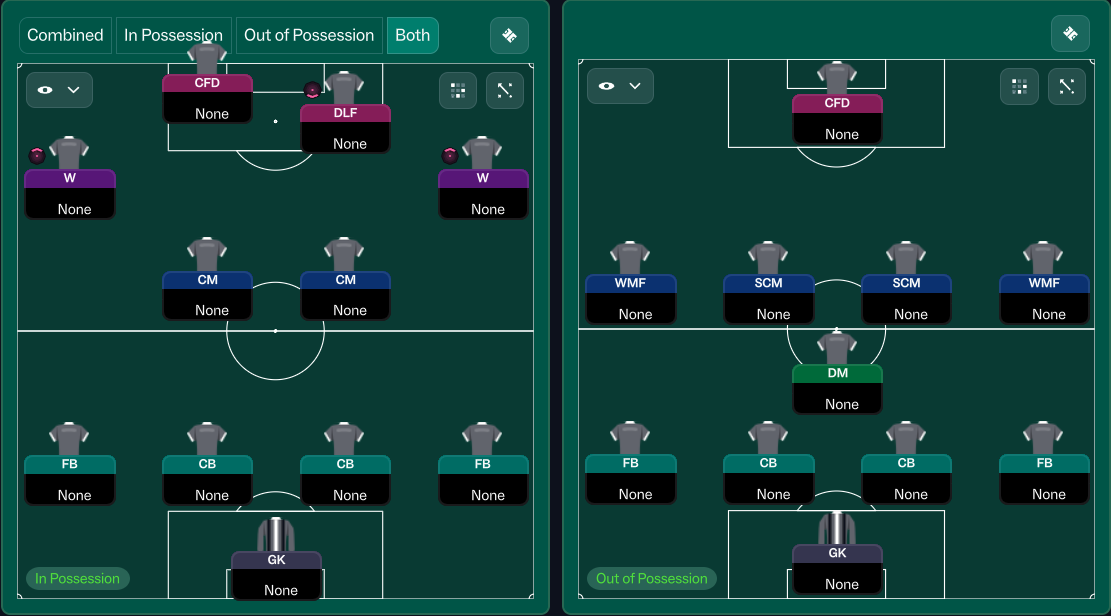
Team Shape Without Ball
Shape:4-4-2
Description:Standard defensive setup with width maintained through full-backs pushing up.
Evidence:Two banks of four, with the midfielders supporting the forwards in a compact shape.
Team Shape With Ball
Shape:4-4-2
Description:Front two apply pressure, while the midfield looks to exploit spaces left by opponents.
Evidence:Utilizes the advanced playmaker to generate opportunities, supported by pressuring forwards.
Phase Description
Attacking Play
The team focuses on ball retention while trying to create space through fluid movements and quick interchanges.
Defensive Transition
Upon losing possession, the team immediately looks to regain the ball with a high intensity approach.
Main Focus
Creating goal-scoring opportunities through pressing and counter-attacking.
Key Strengths
Defensive Solidity
A compact defensive shape minimizing spaces for the opponent's attack.
Pressing Ability
Strong emphasis on pressing creates immediate threats on the opposition’s backline.
Creative Midfield
Presence of playmakers allows for varied attacking strategies.
Conflicting Directions
Defensive Risktaking
Full-backs pushing high may leave spaces on the counter.
Midfield Overload Risk
Possible crowding in midfield can result in losses during build-up.
Pressing Limitations
Players may tire quickly under heavy pressing demands.
Tactical Suggestions
Adjust Full-Back Role
Consider reducing aggressiveness of full-backs to improve stability.
Incorporate a Holding Midfielder
A dedicated holding role may help during defensive transitions.
Manage Pressing Intensity
Introduce phases of lower pressing to maintain player stamina.
Ask Questions About Your Lineup
Related Tactics
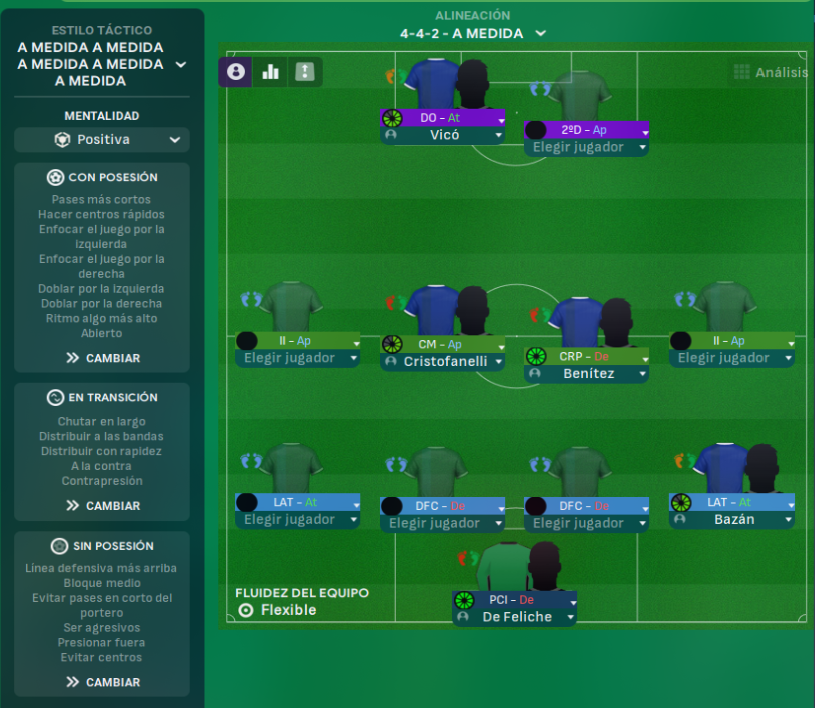
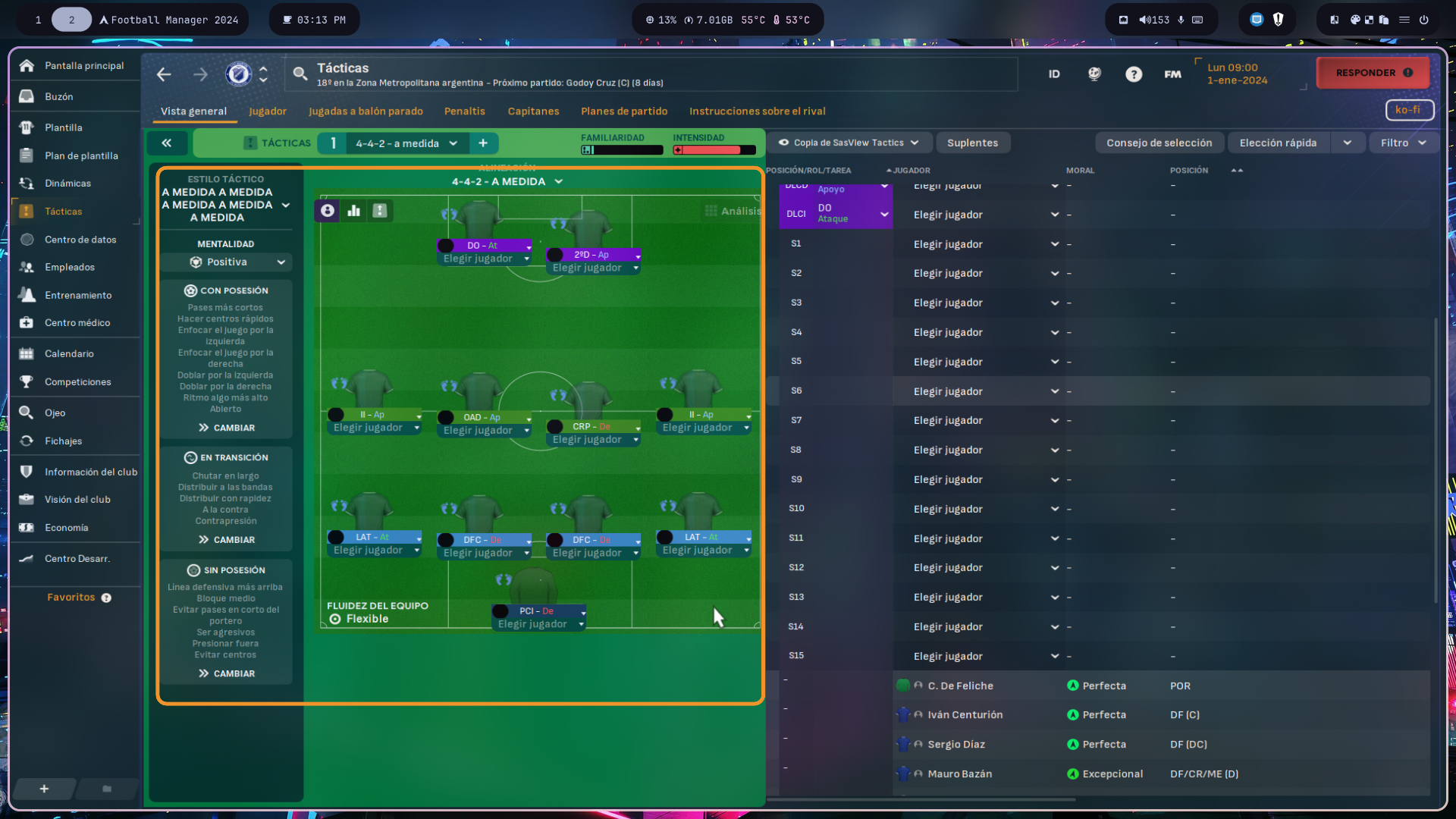
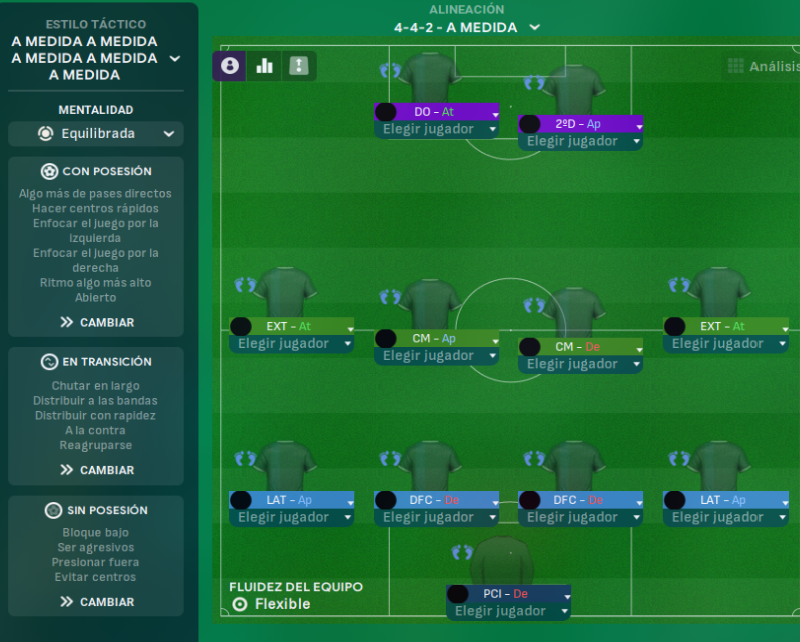
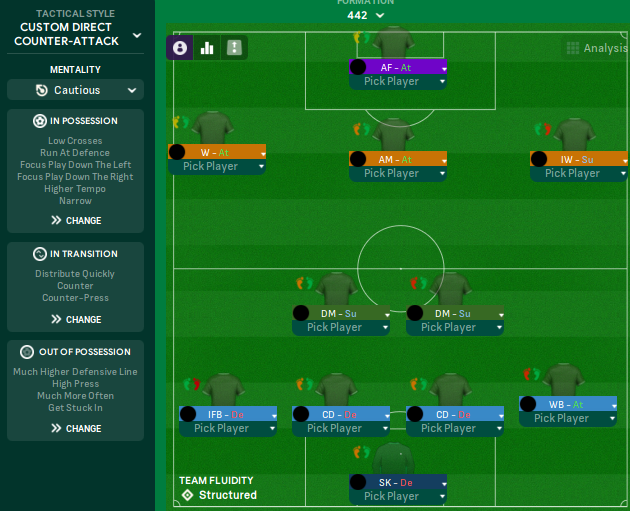
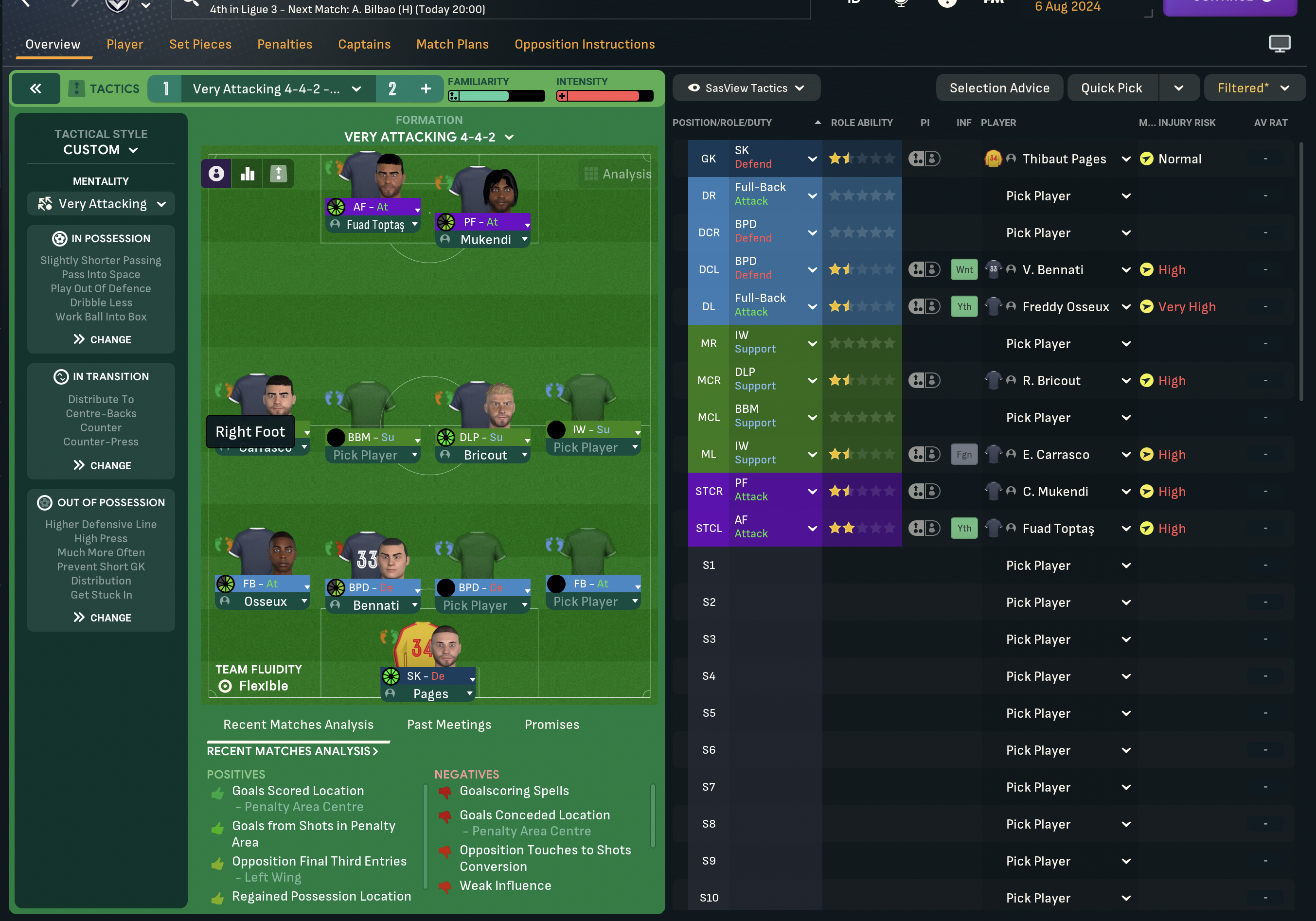
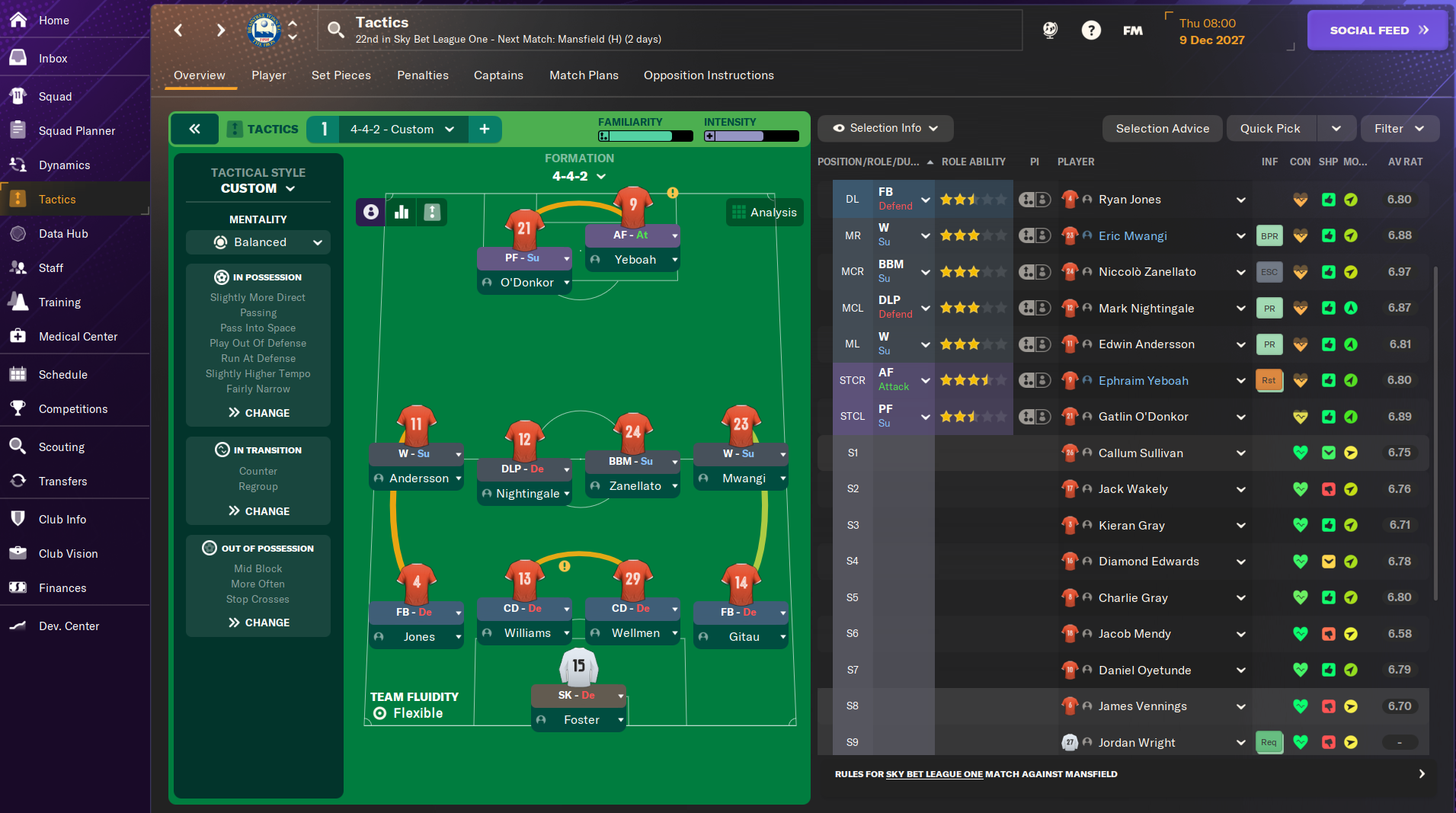
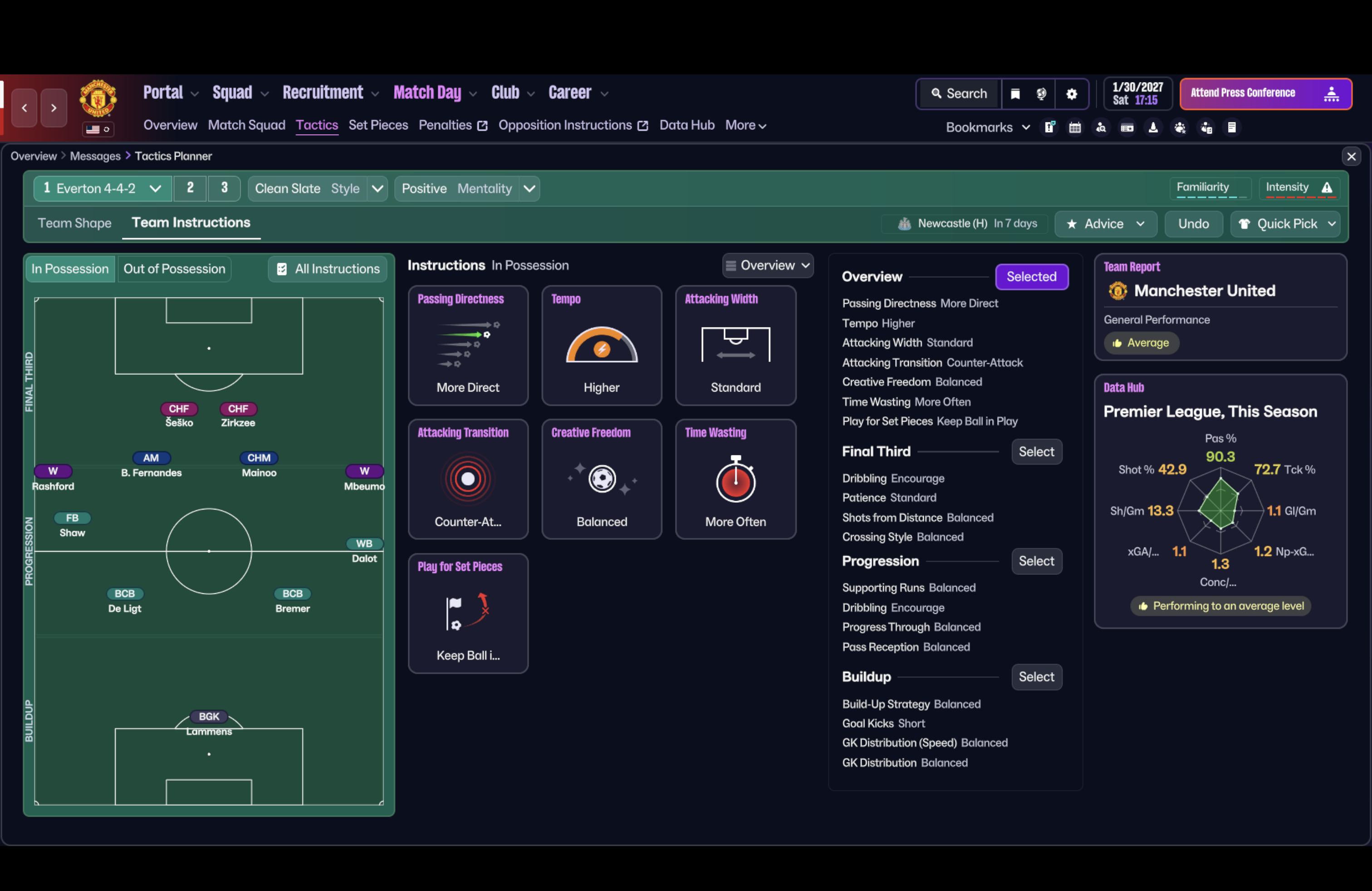
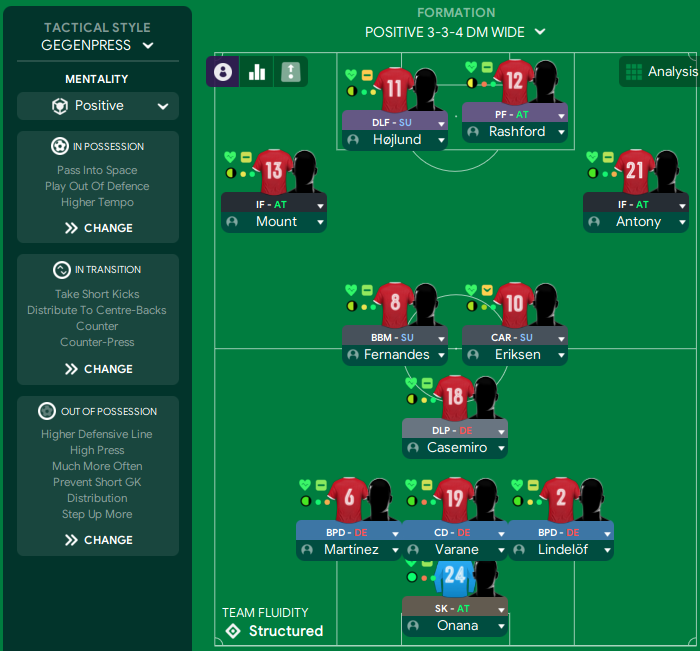
More Gegenpress tactics
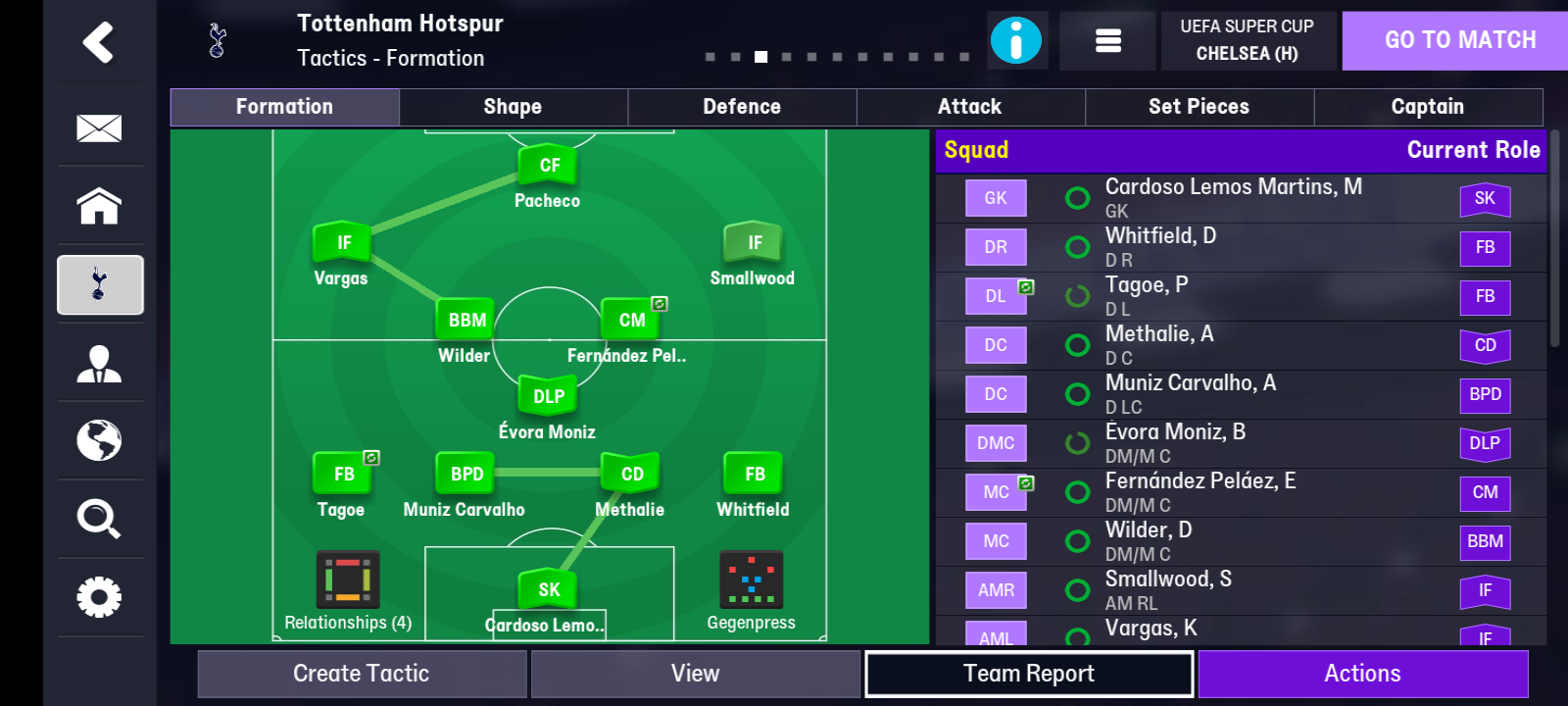
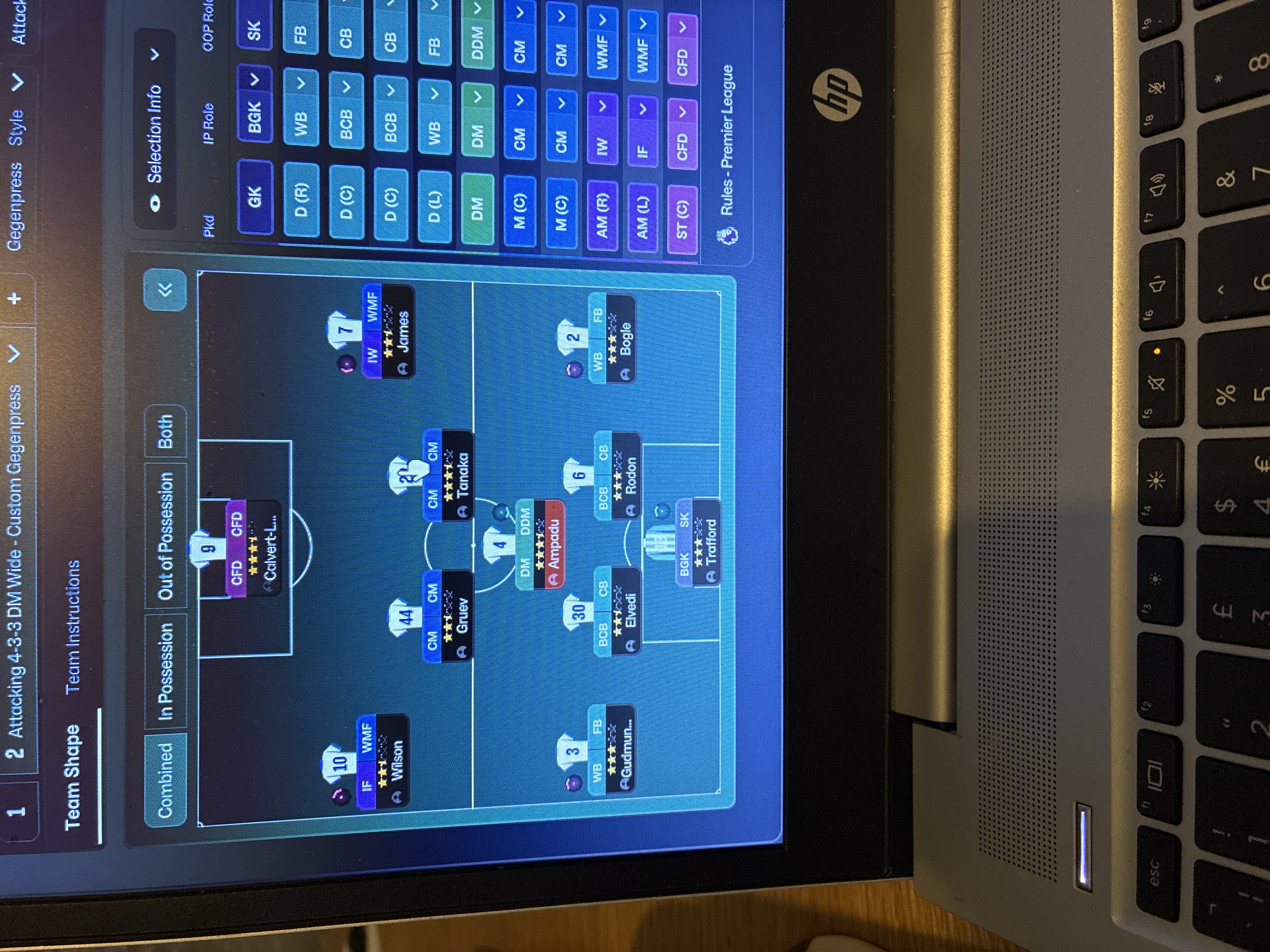
Guides for this formation
The tactical theory behind the 4-4-2: roles, instructions, and the trade-offs that decide whether the system holds up.
Player pairings
Midfield Pairs in 4-2-3-1 and 4-4-2
Double pivots and flat pairs in 4-2-3-1 and 4-4-2: when each pairing works, when it collapses, and the AMC unicorn that rescues both.
Read guide
Playing styles
Direct, Vertical Football
Long-ball football done well in FM. When direct, vertical play is the right choice, and what the Direct Passing TI actually changes.
Read guide
Playing styles
Counter-Attacking Excellence
Sit deep, win the ball, and break in three passes. The roles, instructions, and squad profile that make it work.
Read guide