Uploaded Tactic
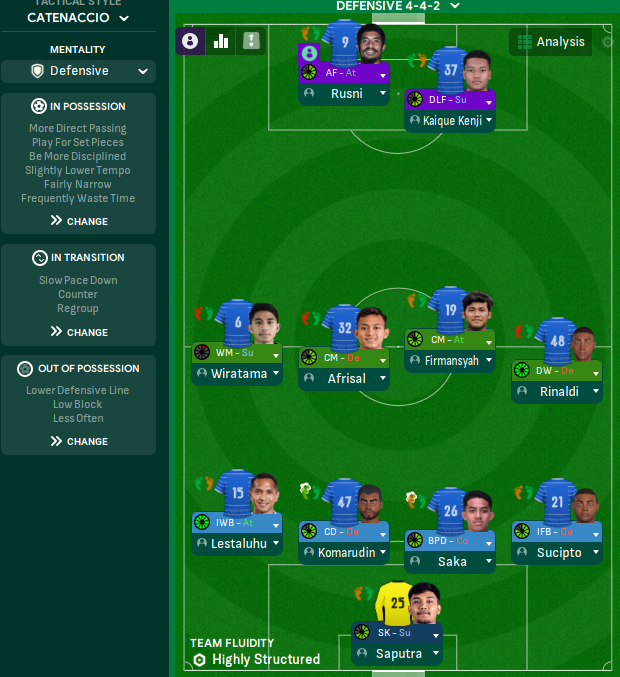
Formation & Style
Tactical Style:Catennaccio
Mentality:Defensive
Formation:4-4-2
Team Fluidity:Highly Structured
In Possession
More Direct Passing
Play For Set-Pieces
Be More Disciplined
Slightly Lower Tempo
Fairly Narrow
Frequently Waste Time
In Transition
Slow Pace Down
Counter
Regroup
Out of Possession
Lower Defensive Line
Low Block
Less Often
Team Shape Without Ball
Shape:Low Block
Description:The team sets up deep to deny space and frustrate opponents.
Evidence:Lower Defensive Line and Low Block instructions.
Team Shape With Ball
Shape:Direct Counter
Description:Utilizing fast transitions and direct passes to exploit spaces left by the opposition.
Evidence:More Direct Passing and Counter instruction.
Phase Description
Attacking Play
The team will look to exploit set-pieces and direct play, relying on the Advanced Forward and Deep-Lying Forward.
Defensive Transition
Transitioning into a solid defensive shape while looking to regroup quickly.
Main Focus
To absorb pressure and hit opponents on the counter while being defensively compact.
Key Strengths
Defensive Solidity
The 4-4-2 shape creates a strong defensive unit that is difficult to break down.
Counter-Attacking Threat
The presence of an Advanced Forward and a Deep-Lying Forward provides quick options on the break.
Set-Piece Play
Emphasizing set-pieces can provide goal-scoring opportunities, particularly from corners.
Conflicting Directions
Possession Play
The tactics do not promote ball possession, which may lead to struggles if forced to maintain possession.
Defensive Structure vs Attacking Play
The highly structured shape may struggle against teams that push heavy numbers forward.
Wide Play Utilization
Wide Midfielder roles may not fully exploit width due to the narrow tactical setup.
Tactical Suggestions
Increase Pressing Intensity
Encouraging a higher press can disrupt opponent’s buildup and regain ball high up the pitch.
Employ Overlapping Wing-backs
Using width more effectively can stretch defenses and create passing lanes.
Adjust Team Mentality Contextually
In some matches, switching to a more balanced or attacking mentality could yield better results.
Ask Questions About Your Lineup
Related Tactics
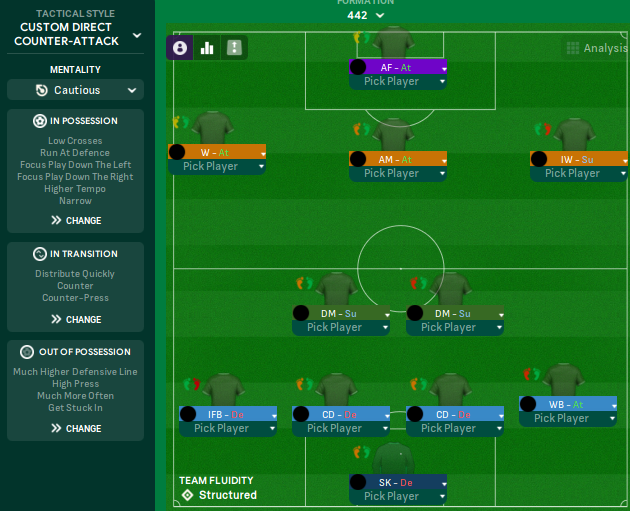
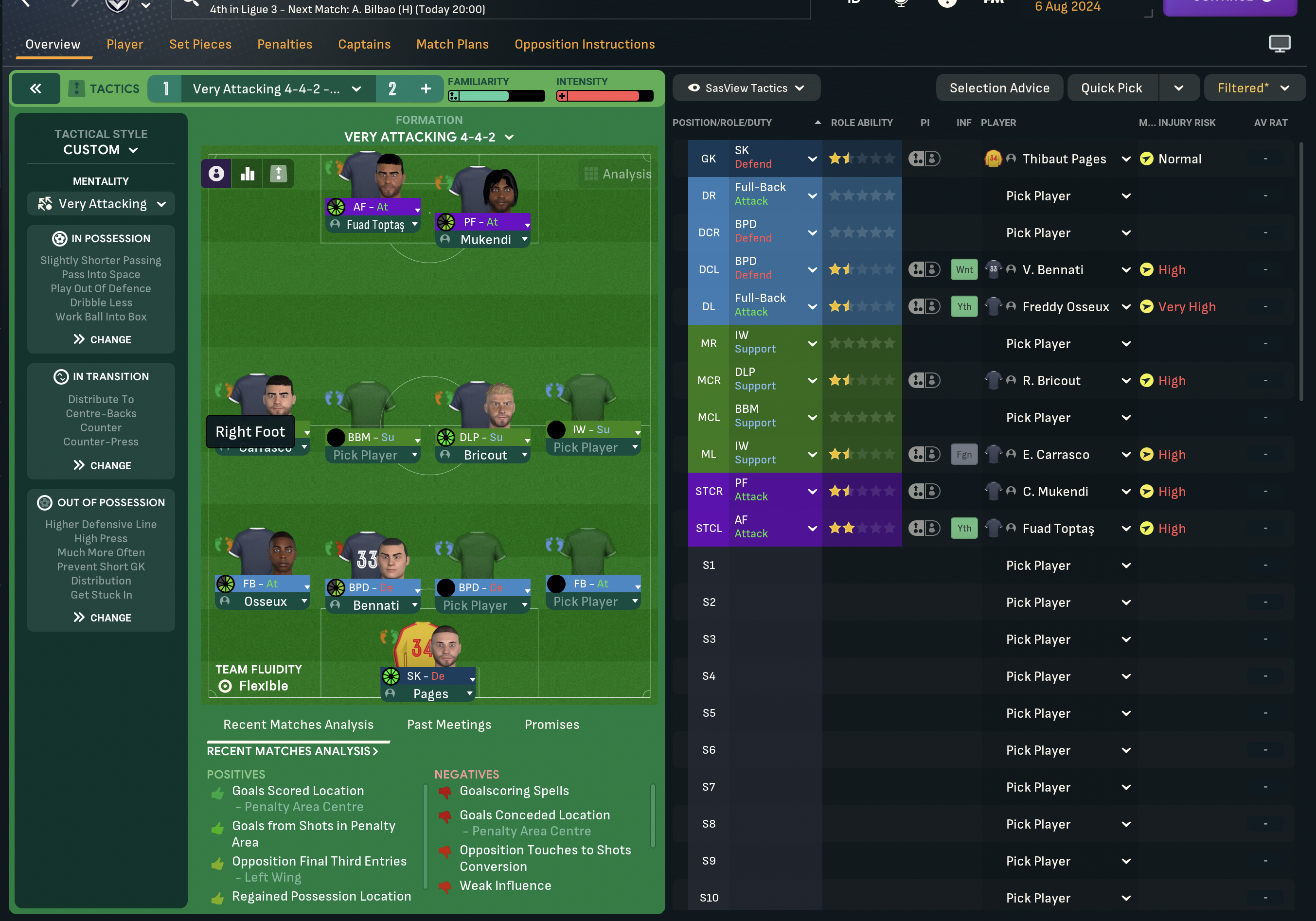
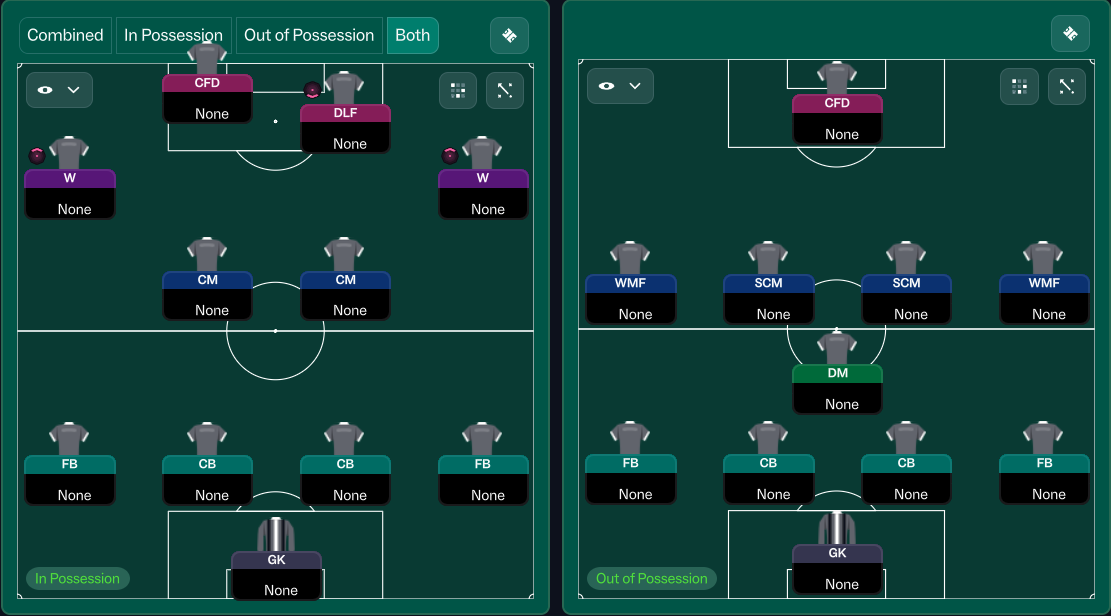
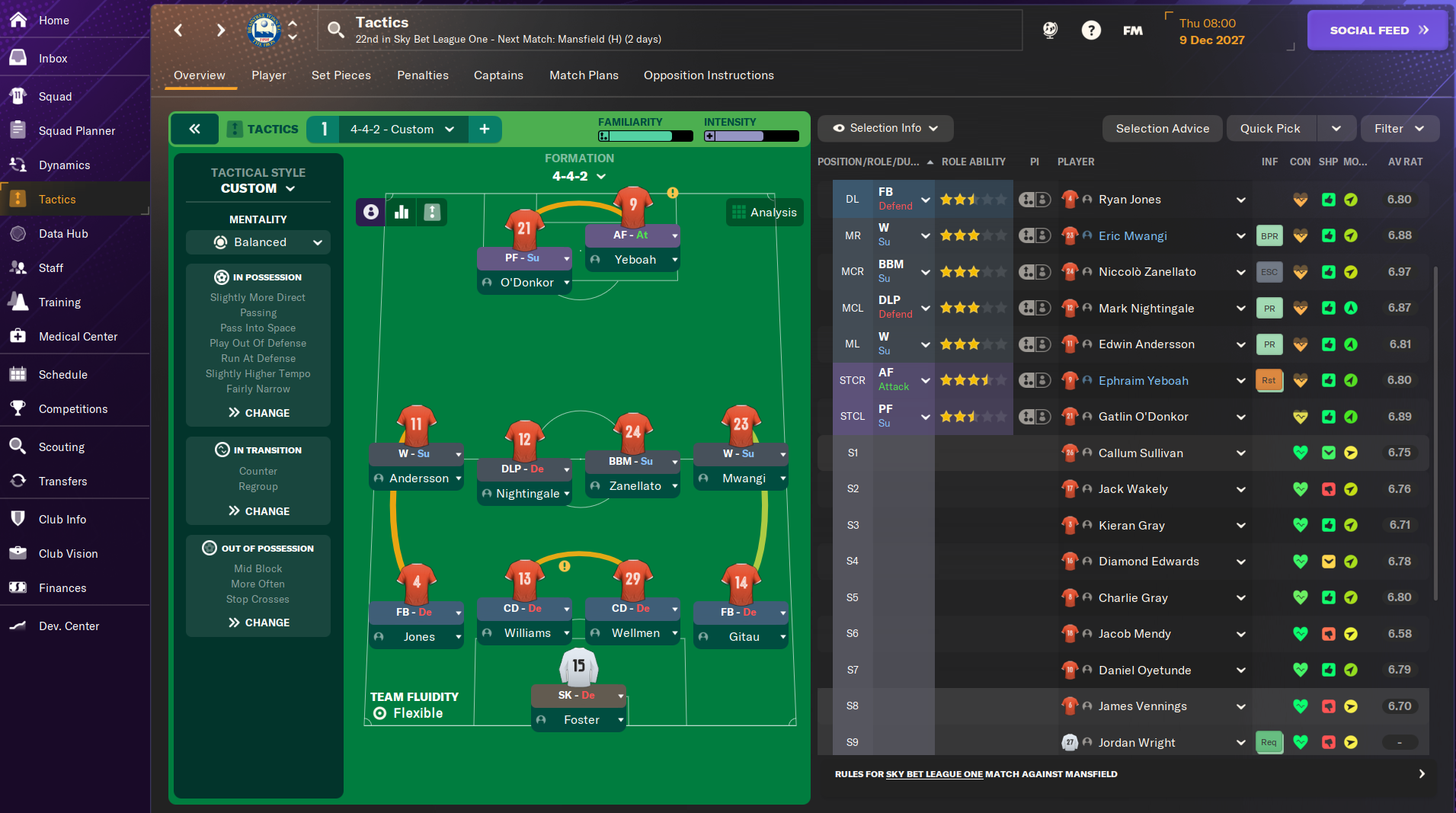
Guides for this formation
The tactical theory behind the 4-4-2: roles, instructions, and the trade-offs that decide whether the system holds up.
Player pairings
Midfield Pairs in 4-2-3-1 and 4-4-2
Double pivots and flat pairs in 4-2-3-1 and 4-4-2: when each pairing works, when it collapses, and the AMC unicorn that rescues both.
Read guide
Playing styles
Direct, Vertical Football
Long-ball football done well in FM. When direct, vertical play is the right choice, and what the Direct Passing TI actually changes.
Read guide
Playing styles
Counter-Attacking Excellence
Sit deep, win the ball, and break in three passes. The roles, instructions, and squad profile that make it work.
Read guide