Uploaded Tactic
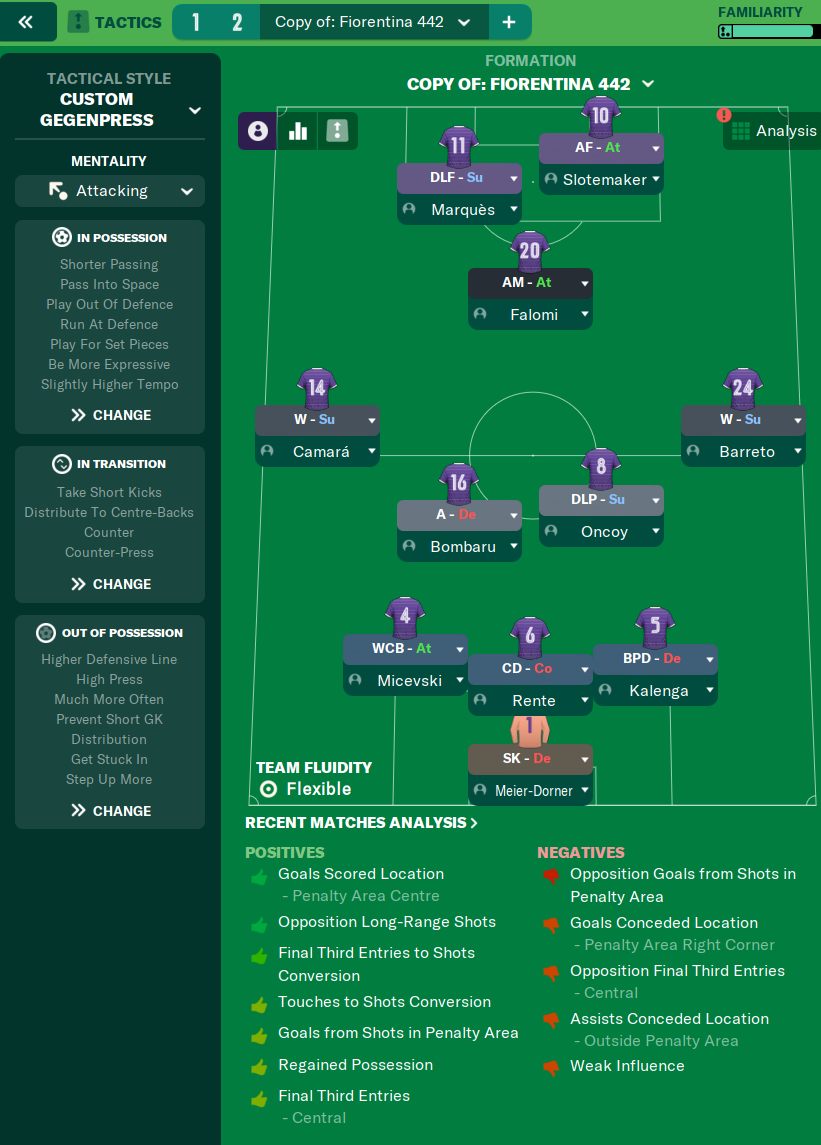
Formation & Style
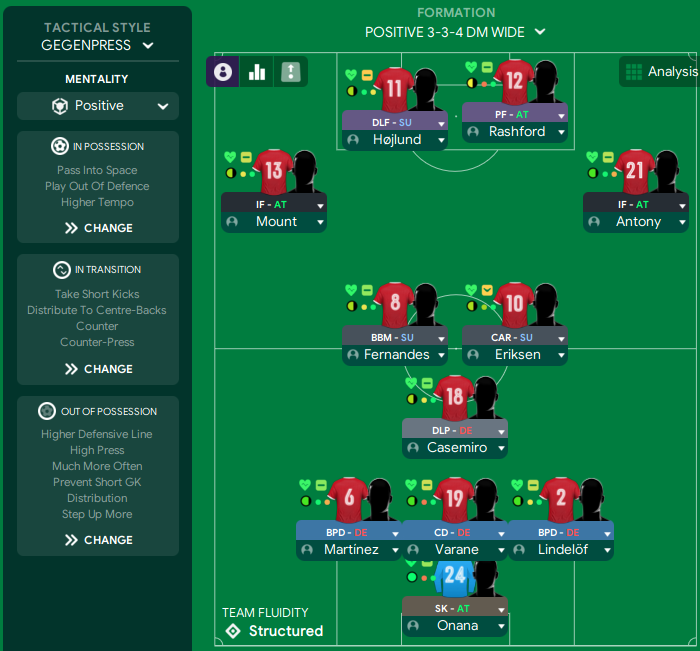
Tactical Style:Gegenpress
Mentality:Attacking
Formation:4-4-2
Team Fluidity:Flexible
In Possession
Shorter Passing
Pass Into Space
Play Out Of Defence
Run At Defence
Play For Set Pieces
Be More Expressive
Slightly Higher Tempo
In Transition
Take Short Kicks
Distribute To Centre-Backs
Counter
Counter-Press
Out of Possession
Higher Defensive Line
High Press
Much More Often Prevent Short GK Distribution
Get Stuck In
Step Up
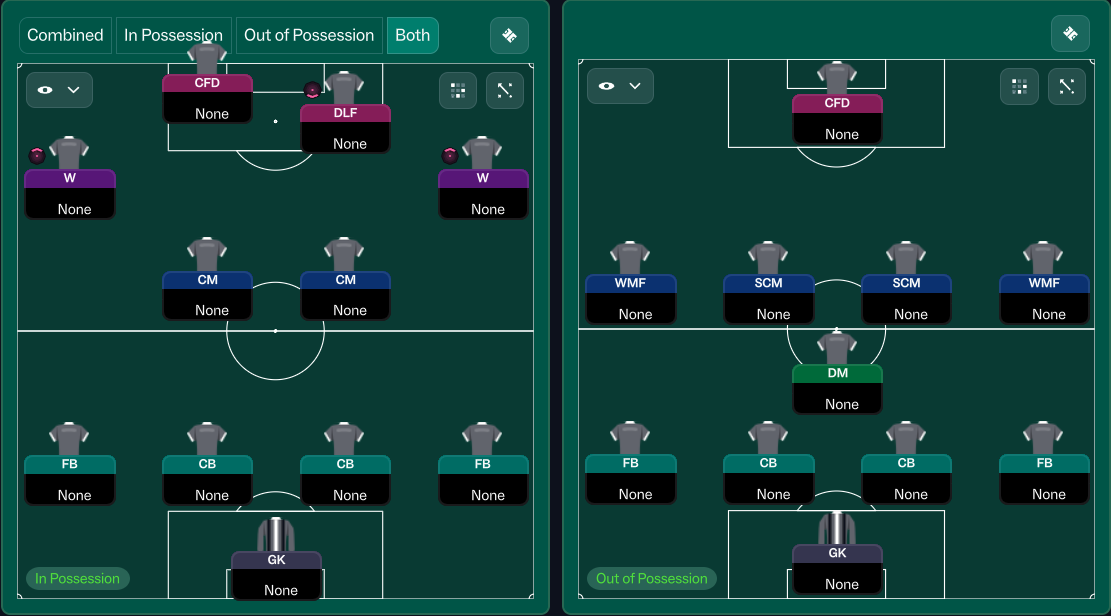
Team Shape Without Ball
Shape:4-4-2
Description:Defensive block maintains shape with four at the back, two in central midfield providing coverage.
Evidence:Defenders at [2,1] (Wide Centre-Back), [2,2] (Centre-Back), [2,3] (Ball-Playing Defender), and [2,4] (Wide Centre-Back).
Team Shape With Ball
Shape:4-4-2
Description:Utilizes width from the wide midfielders and attacking support from the forwards.
Evidence:Attackers positioned at [6,2] (Deep-Lying Forward) and [6,3] (Advanced Forward) creating penetration.
Phase Description
Attacking Play
Utilizes a high tempo and direct passing to exploit spaces behind the opposition's defense, encouraging players to run at defenders.
Defensive Transition
Emphasizes immediate pressing to regain possession quickly after losing the ball, with a focus on compactness.
Main Focus
Transitioning quickly from defence to attack to capitalize on opposition disorganization.
Key Strengths
Attacking Versatility
The combination of deep-lying and advanced forward roles allows for flexible attacking options.
Pressing Ability
High press utilized to recover possession quickly, disrupting opponents’ play.
Wide Play
Wide midfielders provide width and crossing opportunities, stretching the opponent.
Conflicting Directions
High Defensive Line exposure
While high press can win the ball back quickly, it may leave space behind for quick counter-attacks.
Vulnerability to set pieces
Noted issues with conceding from set pieces, indicating potential lack of height or positioning.
Central exposure
Overdependence on central midfield can lead to vulnerability against teams that prioritize width.
Tactical Suggestions
Adjust Defensive Line
Consider lowering the defensive line to reduce vulnerability to quick counters.
Solidify Set Piece Defense
Reinforce defensive duties of players during set pieces to minimize conceding goals.
Utilize Full-Backs in Attack
Encourage overlapping runs from full-backs to create overloads on the flanks.
Ask Questions About Your Lineup
Related Tactics
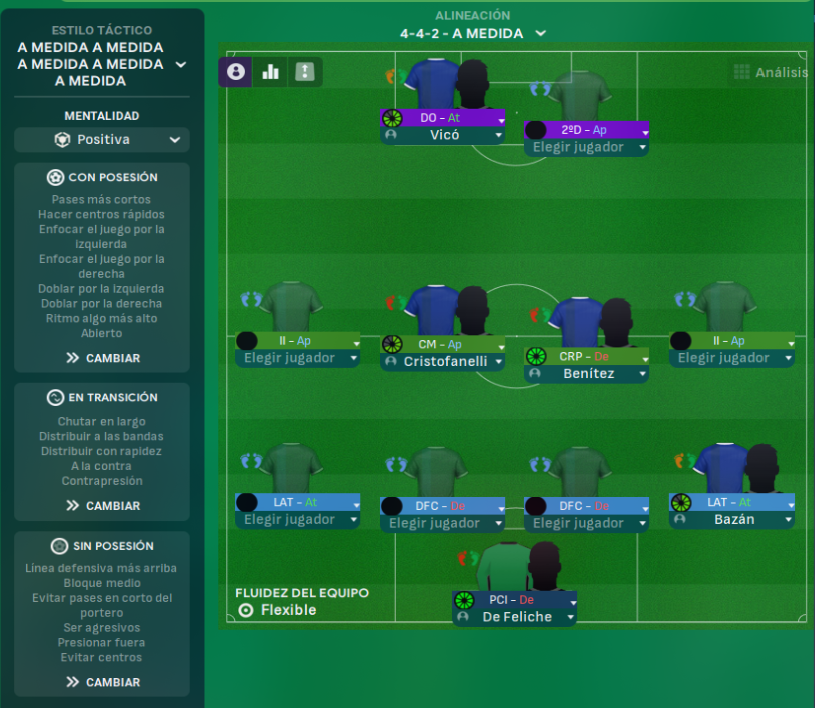
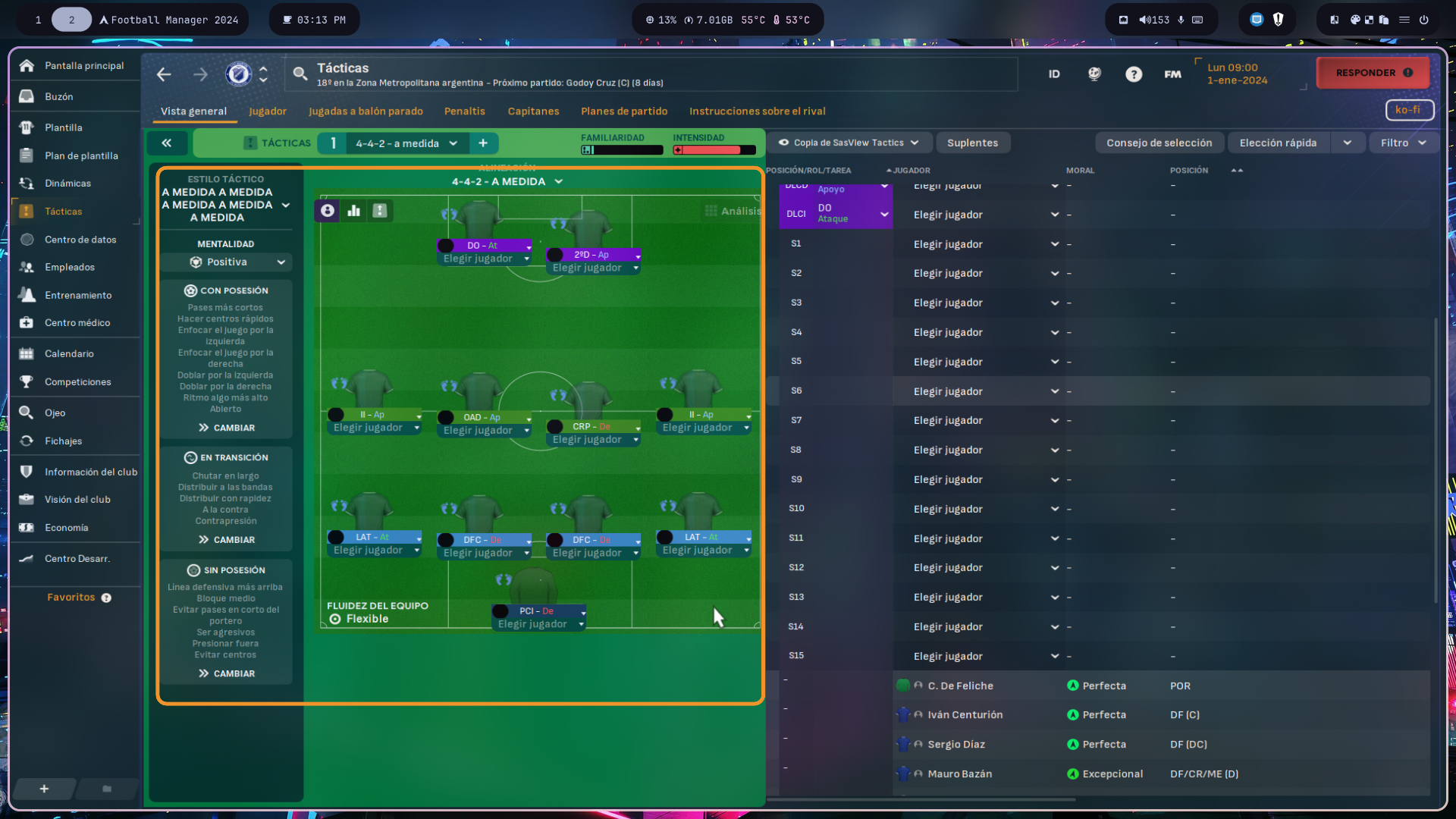
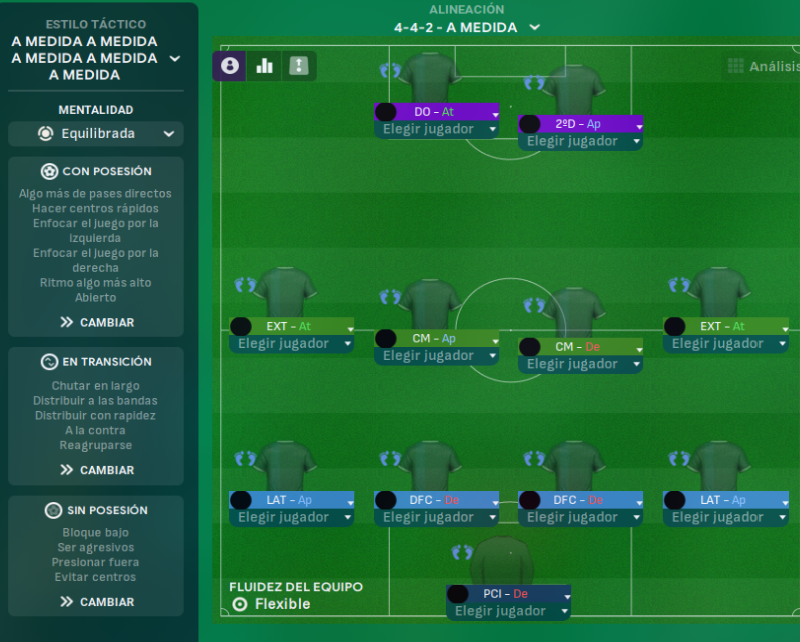
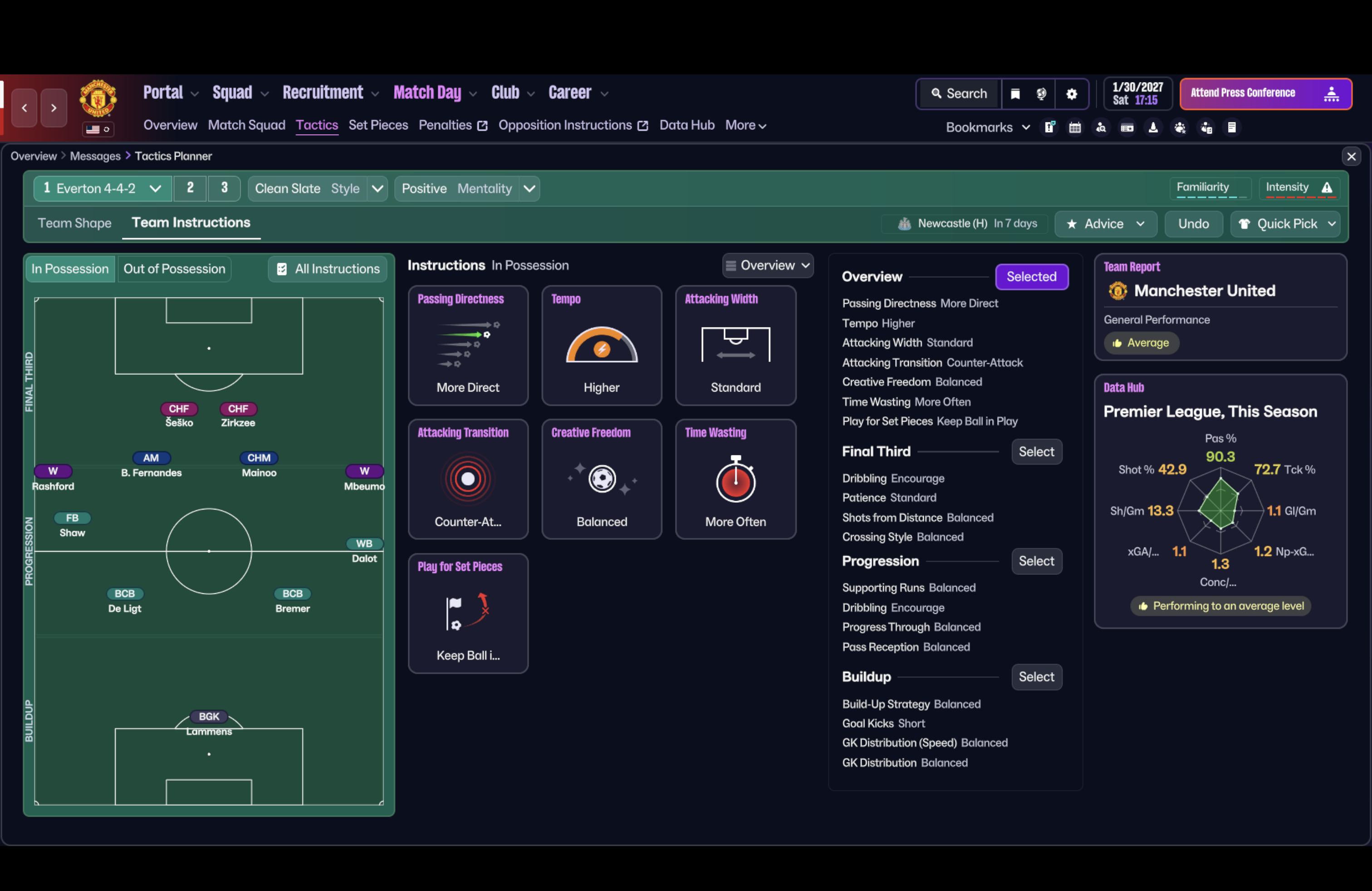
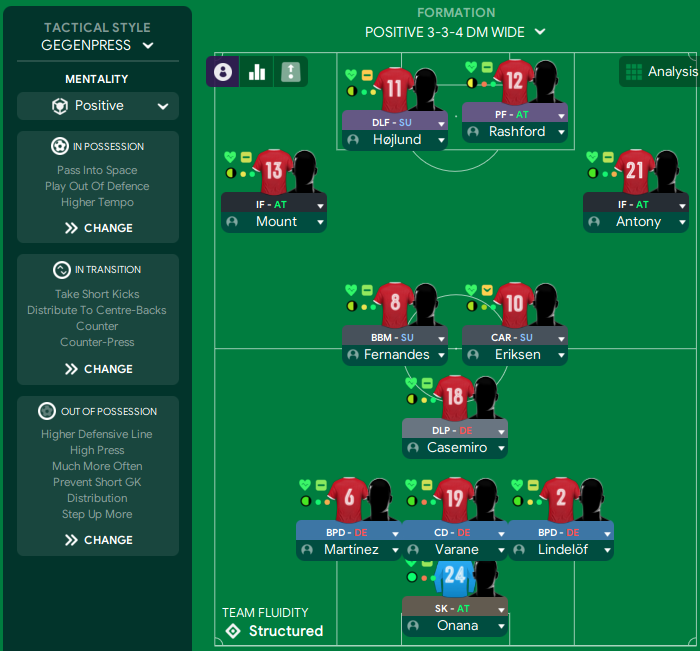
More Gegenpress tactics
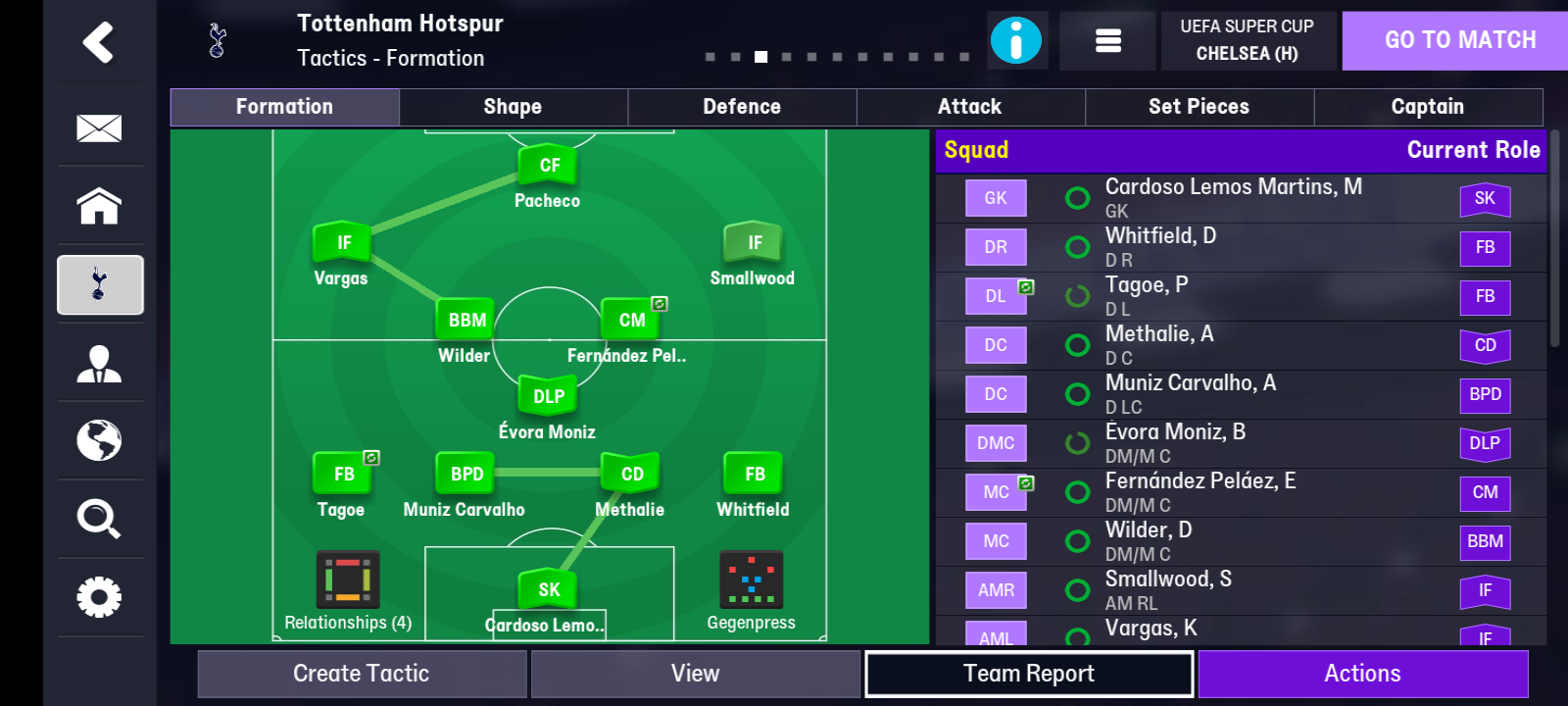
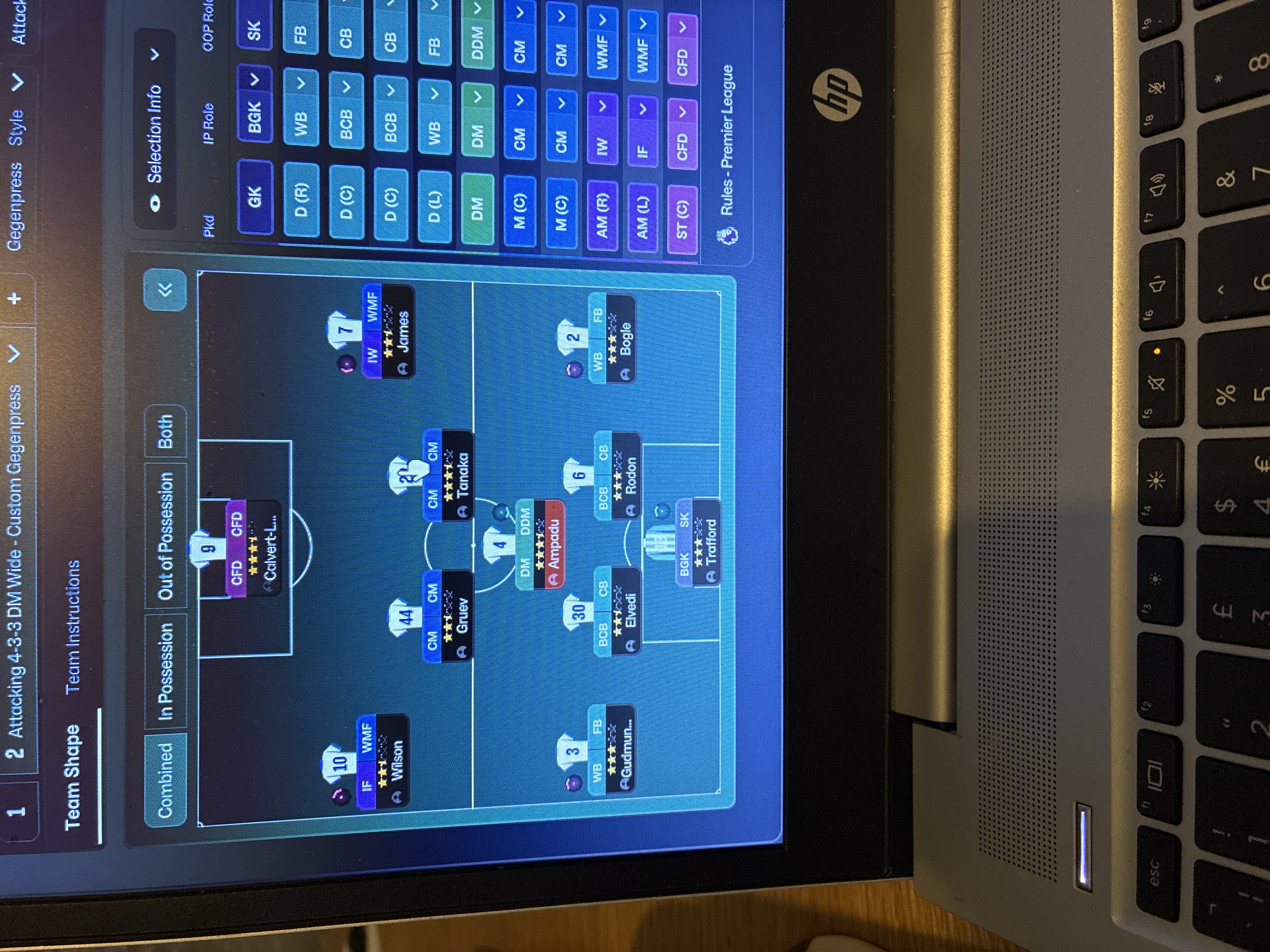
Guides for this formation
The tactical theory behind the 4-4-2: roles, instructions, and the trade-offs that decide whether the system holds up.
Player pairings
Midfield Pairs in 4-2-3-1 and 4-4-2
Double pivots and flat pairs in 4-2-3-1 and 4-4-2: when each pairing works, when it collapses, and the AMC unicorn that rescues both.
Read guide
Playing styles
Direct, Vertical Football
Long-ball football done well in FM. When direct, vertical play is the right choice, and what the Direct Passing TI actually changes.
Read guide
Playing styles
Counter-Attacking Excellence
Sit deep, win the ball, and break in three passes. The roles, instructions, and squad profile that make it work.
Read guide