Uploaded Tactic
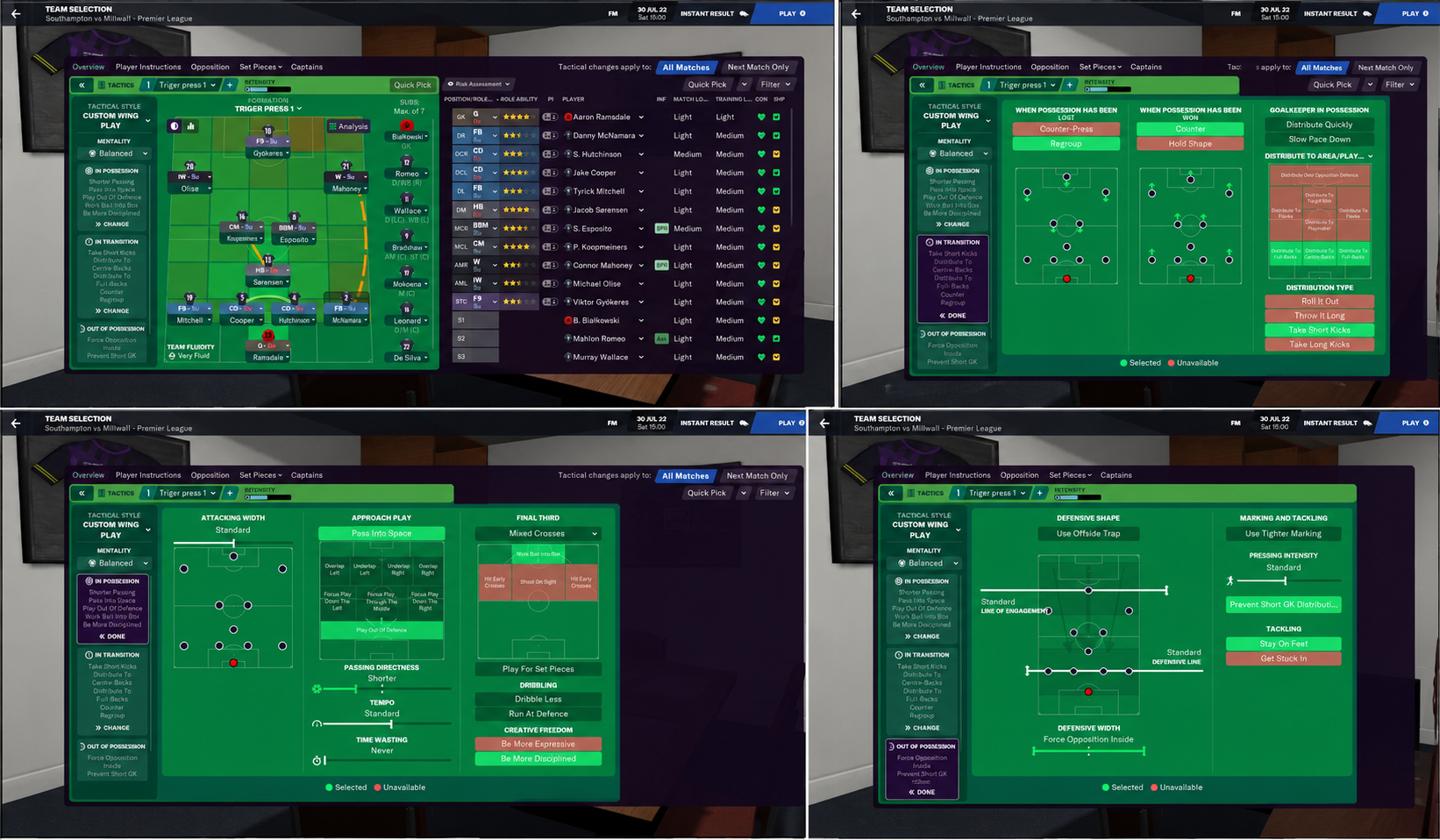
Formation & Style
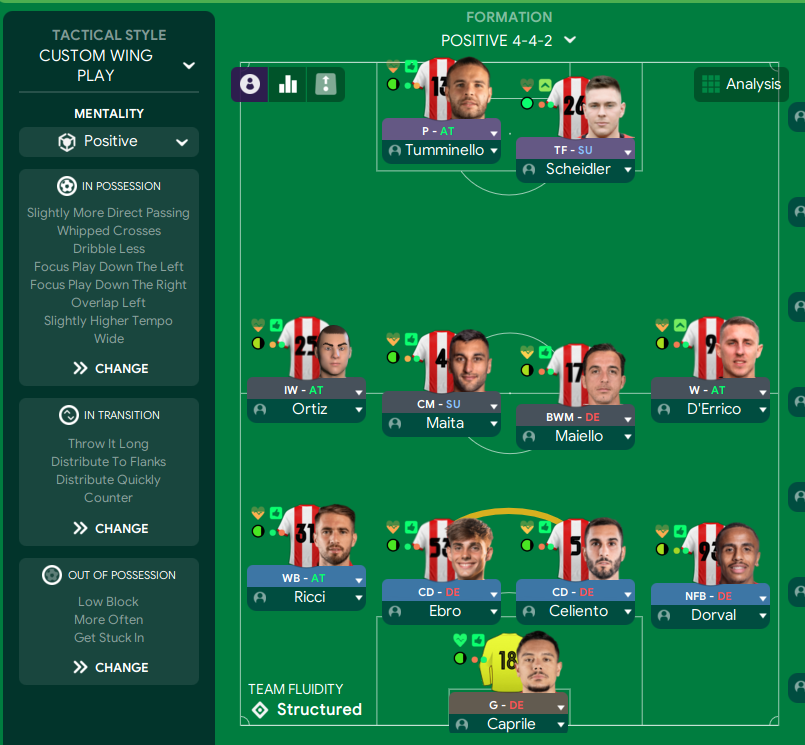
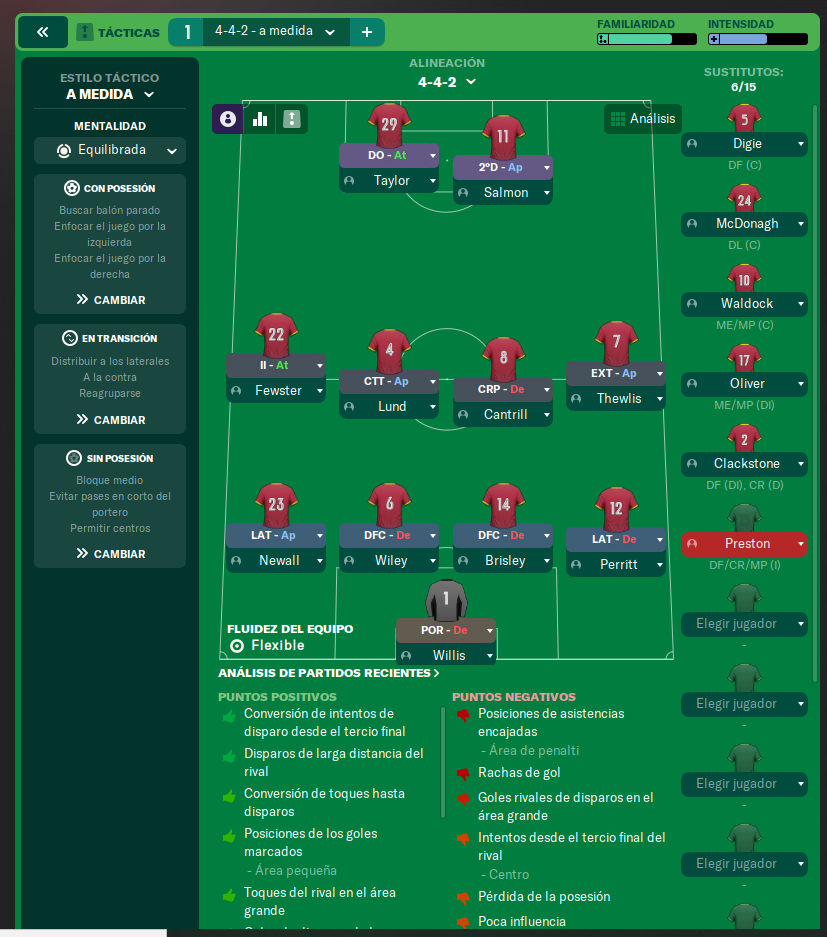
Tactical Style:Custom Wing Play
Mentality:Positive
Formation:4-4-2
Team Fluidity:Structured
In Possession
Slightly More Direct Passing
Whipped Crosses
Focus Play Down The Left
Focus Play Down The Right
Overlap Left
Slightly Higher Tempo Wide
In Transition
Throw It Long
Distribute To Flanks
Distribute Quickly
Counter
Out of Possession
Low Block
More Often
Get Stuck In
Team Shape Without Ball
No team shape without ball data available
Team Shape With Ball
No team shape with ball data available
Key Strengths
Wing Play Exploitation
The tactic emphasizes wing play, using width through inverted wingers and wing-backs to stretch the opposition's defense.
Attacking Versatility
The combination of a pressing forward and a target forward provides multiple attacking options, making it difficult for defenders to mark effectively.
Counter-Attacking Potential
The team has a clear focus on quick transitions and counter-attacks, capitalizing on opposition errors and exploiting wider spaces.
Defensive Solidity
Utilizing a low block with a structured setup can provide a robust defensive framework, making it hard for opponents to break through.
Conflicting Directions
Inverted Winger vs. Wing-Back Role
The inverted winger's role conflicts slightly with the attacking wing-back's responsibilities, leading to potential overlaps that could leave spaces exposed.
Low Block with Positive Mentality
A positive mentality may lead to an imbalance when combined with a low block, possibly resulting in passive defense.
Focus Play Left and Right
While the tactic encourages play down both flanks, relying on too many options might dilute the attacking effectiveness.
Team Fluidity with Rigid Roles
A structured team fluidity can hinder the creativity of more free-flowing attacking players, limiting offensive potential.
Tactical Suggestions
Adjust Wing-Back Role
Consider switching the wing-back definition to support duty to ensure balance between attacking and defensive duties.
Experiment with Fluidity
Try a more flexible team fluidity to encourage creative interplay among the attackers and midfielders.
Alter Mentality for Tough Matches
In tougher fixtures, shifting to a balanced mentality might yield better defensive stability while allowing for opportunistic counter-attacks.
Enhance Central Midfield Support
Changing the central midfielder's role to a more offensive option could help with linking play further up the pitch and increasing goal-scoring opportunities.
Ask Questions About Your Lineup
Related Tactics
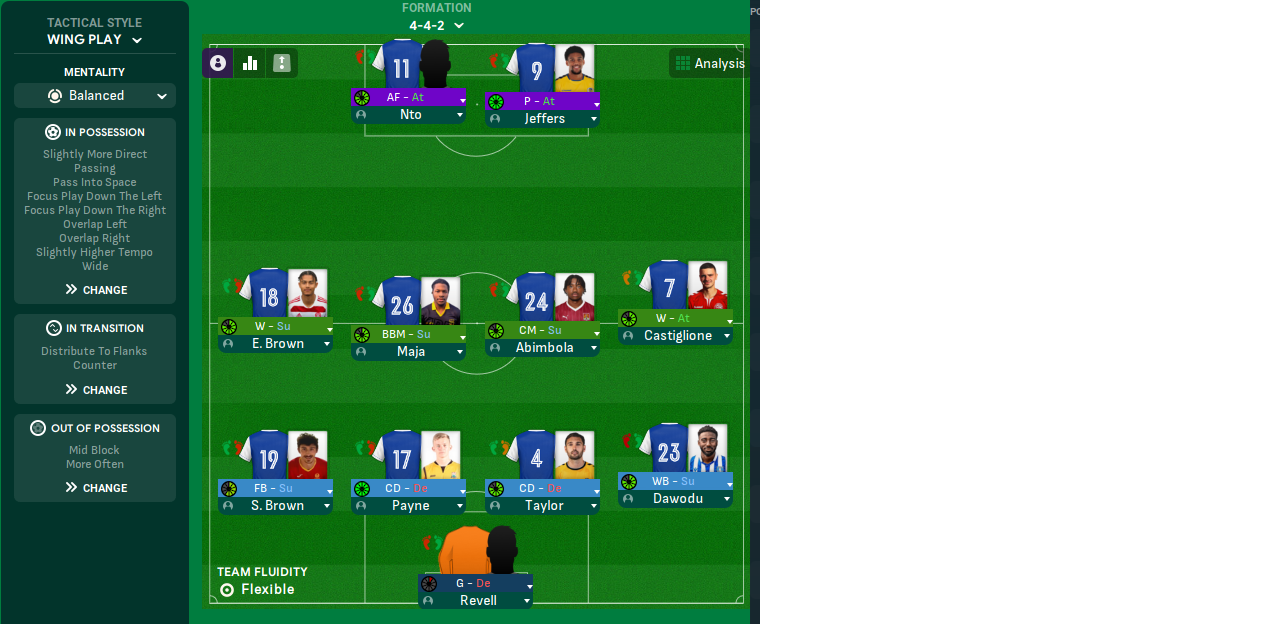
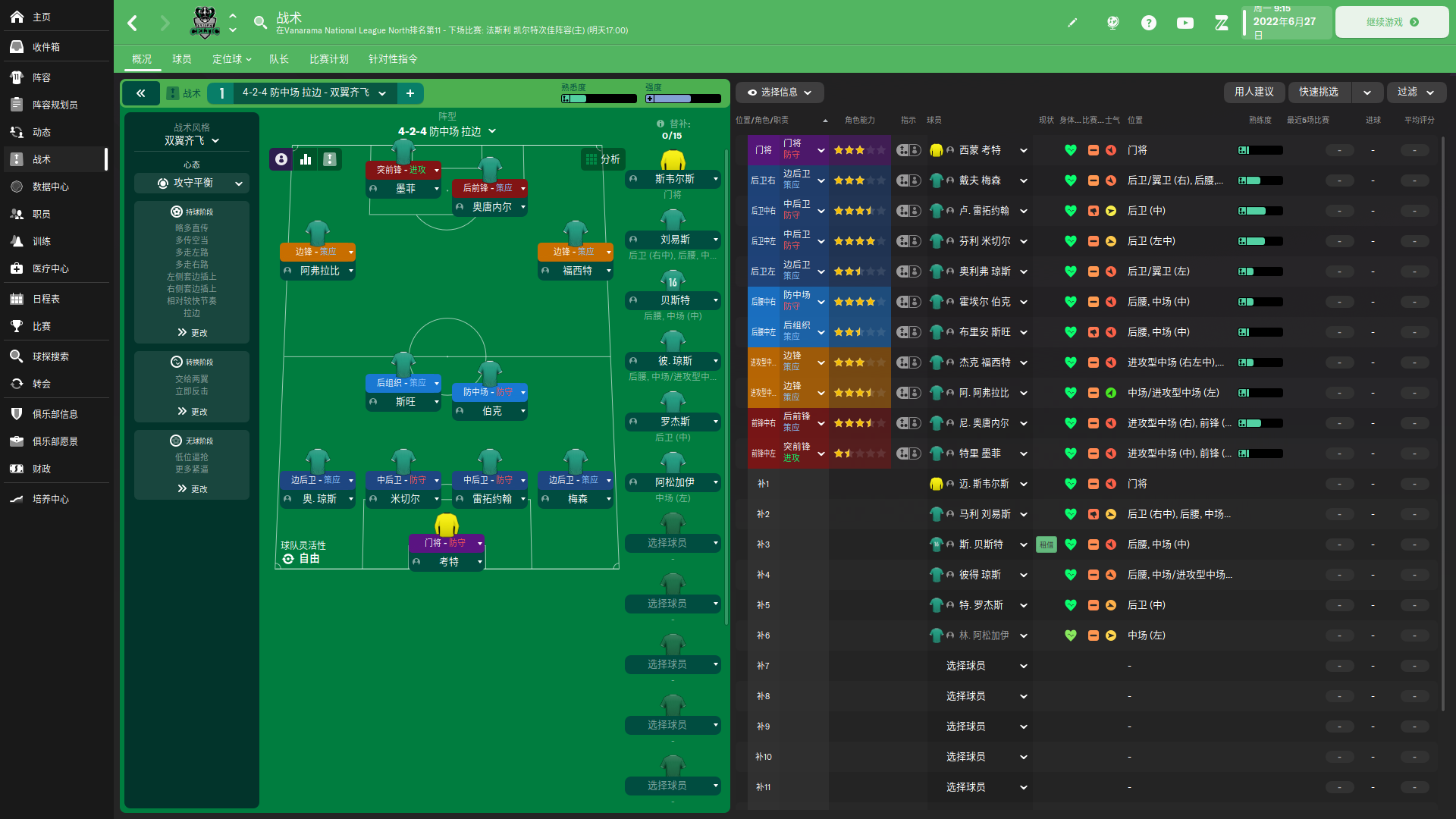
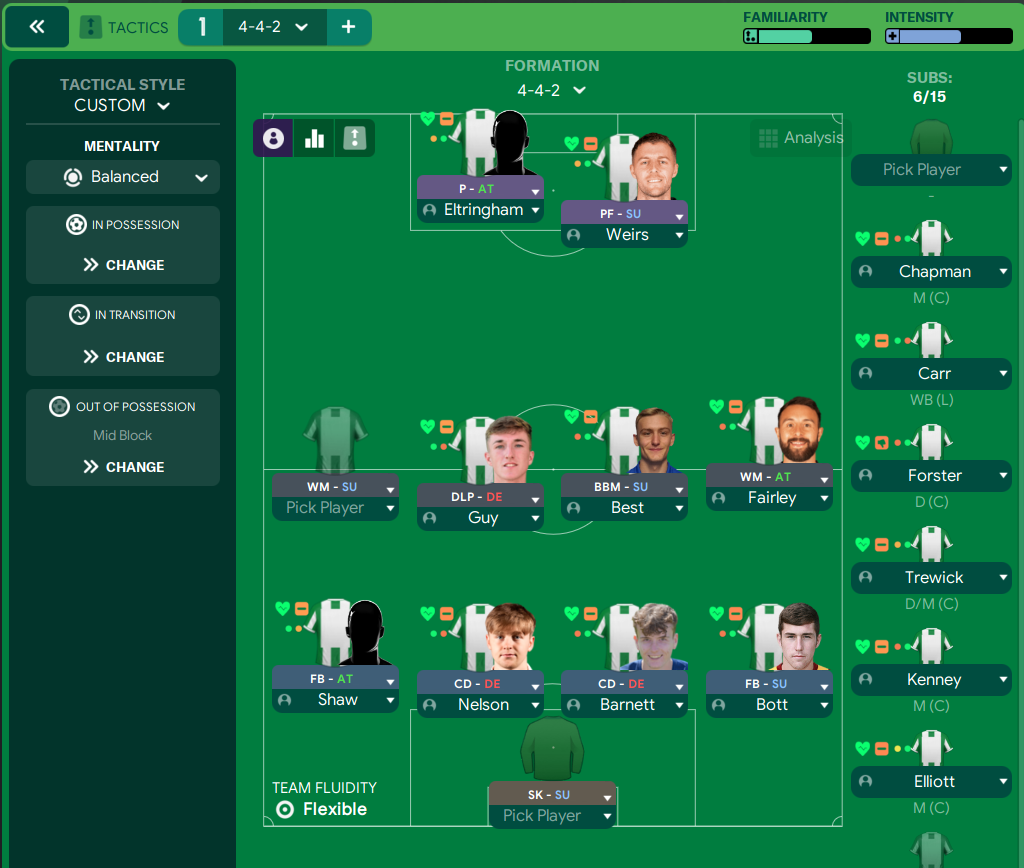
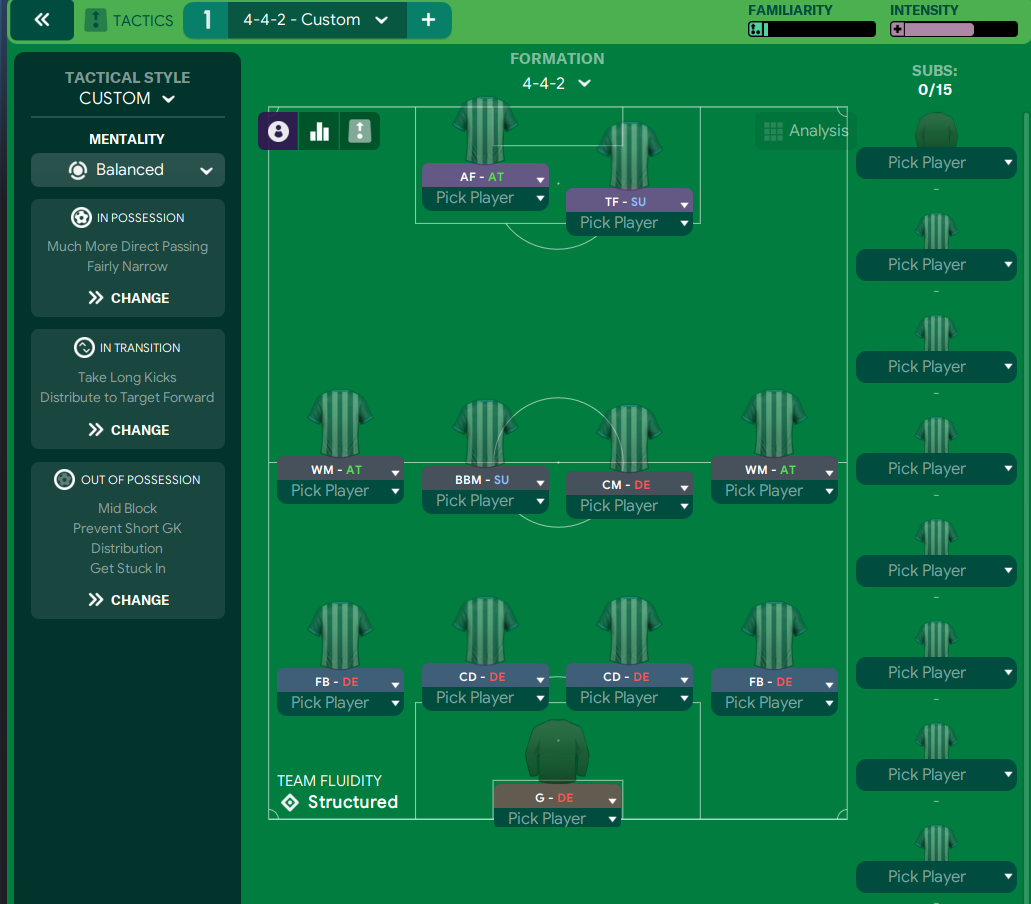
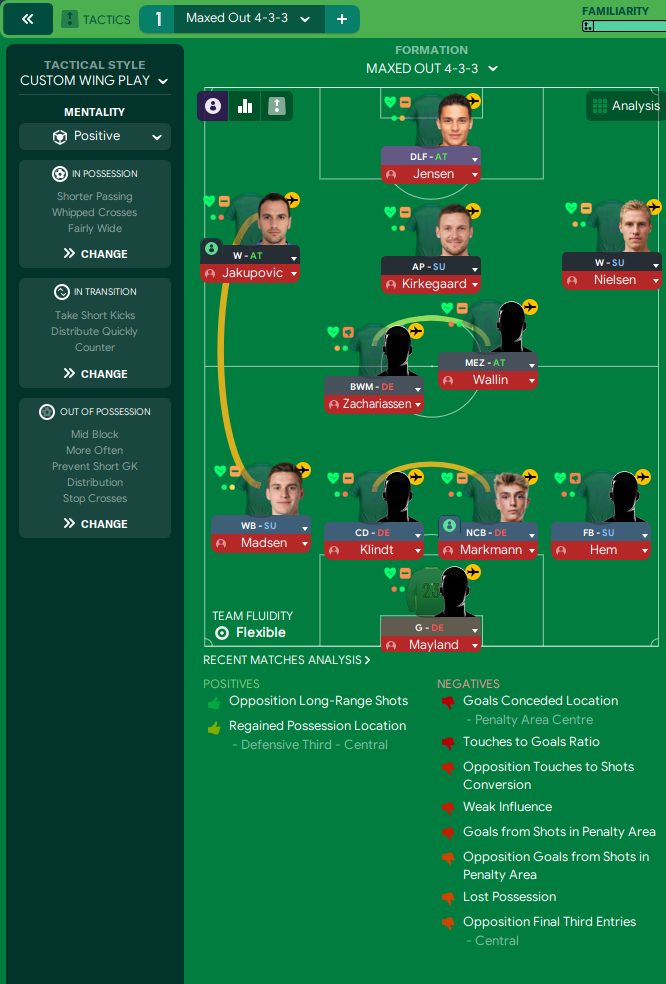
More Custom Wing Play tactics
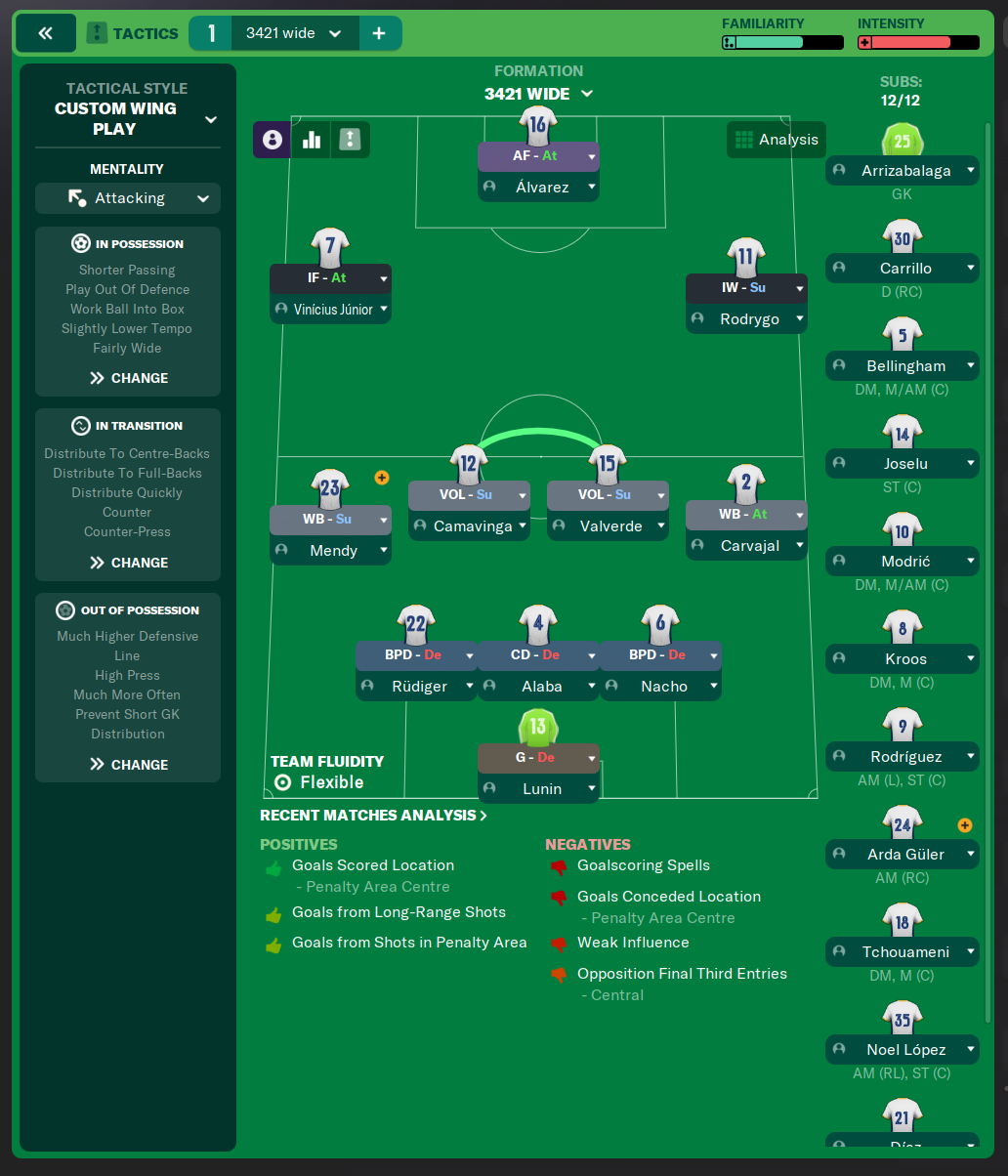
Guides for this formation
The tactical theory behind the 4-4-2: roles, instructions, and the trade-offs that decide whether the system holds up.
Player pairings
Midfield Pairs in 4-2-3-1 and 4-4-2
Double pivots and flat pairs in 4-2-3-1 and 4-4-2: when each pairing works, when it collapses, and the AMC unicorn that rescues both.
Read guide
Playing styles
Direct, Vertical Football
Long-ball football done well in FM. When direct, vertical play is the right choice, and what the Direct Passing TI actually changes.
Read guide
Playing styles
Counter-Attacking Excellence
Sit deep, win the ball, and break in three passes. The roles, instructions, and squad profile that make it work.
Read guide