Uploaded Tactic
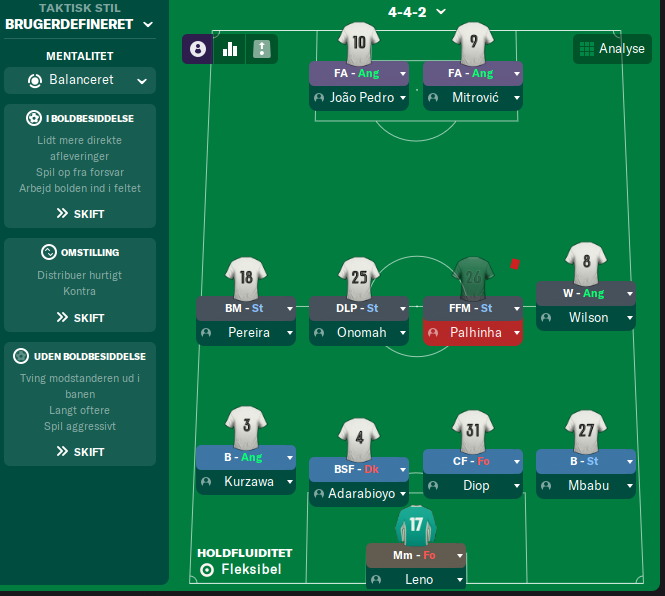
Formation & Style
Tactical Style:Balanced
Mentality:Balanced
Formation:4-4-2
Team Fluidity:Flexible
In Possession
Distribute quickly
Counter
In Transition
Press more aggressively
Counter-press
Out of Possession
Force opposition wide
Stand off
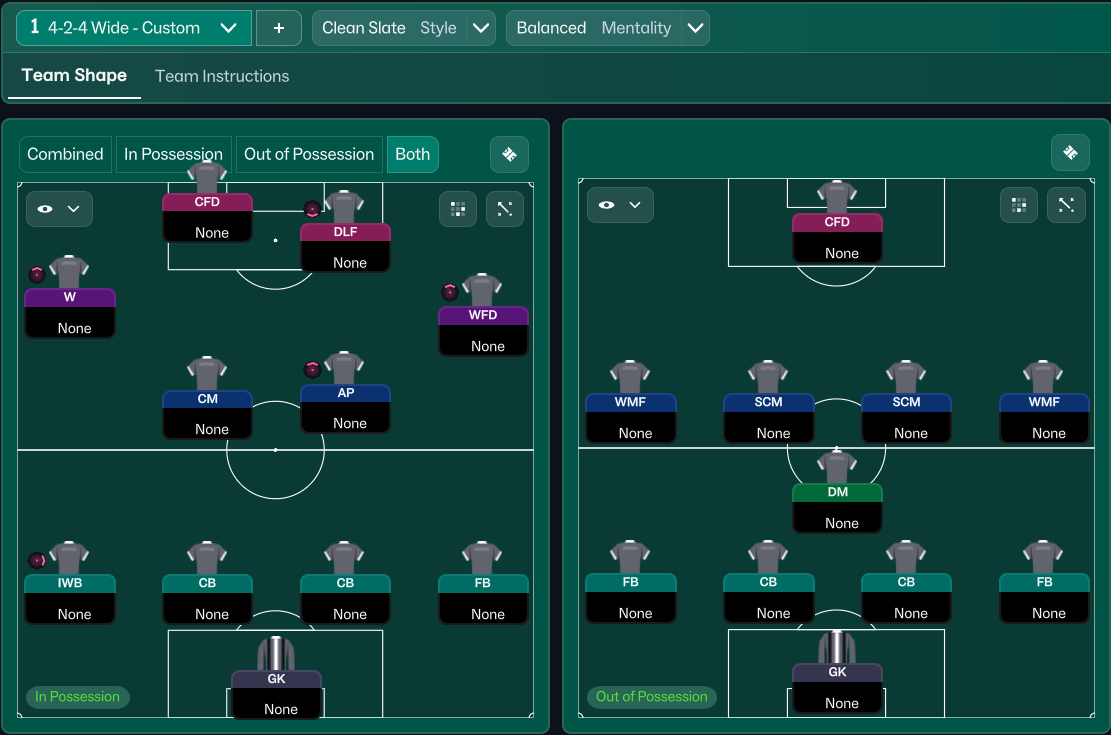
Team Shape Without Ball
Shape:Flat 4-4-2
Description:Two banks of four providing coverage across the pitch.
Evidence:4 defenders (Wing-Backs at [2,1] & [2,5] and CBs at [2,2] & [2,3])
Team Shape With Ball
Shape:Dynamic
Description:Wide players stretch the defense while the two strikers create space.
Evidence:Two STs at [6,2] & [6,4] supported by wingers at [5,1] & [5,5].
Phase Description
Attacking Play
Quick distribution to exploit opposition weaknesses on the counter.
Defensive Transition
Immediate pressing to regain possession quickly after losing the ball.
Main Focus
Utilizing width through wing play while utilizing the dual forward setup to finish attacks.
Key Strengths
Dynamic Attacking Play
With two advanced forwards and supportive wide players, the formation promotes quick attacks.
Versatile Midfield Structure
The mix of roles allows both defensive solidity and attacking impetus from the midfield.
Compact Defensive Shape
The 4-4-2 formation provides a robust defensive framework.
Conflicting Directions
Limited Directness
Too many direct passes can lead to possession loss, especially against pressing teams.
High Risk in Midfield
A strong focus on attacking with less emphasis on defensive cover can expose the midfield.
Static Wide Play
Relying heavily on width could become predictable against organized defenses.
Tactical Suggestions
Increase Midfield Support
Adding another central midfielder could provide better control in the center.
Enhance Transition Defense
Reactively setting up to counter-press can protect the defensive line.
Utilize Full-backs Effectively
Encouraging overlapping runs from full-backs could open more opportunities.
Ask Questions About Your Lineup
Related Tactics
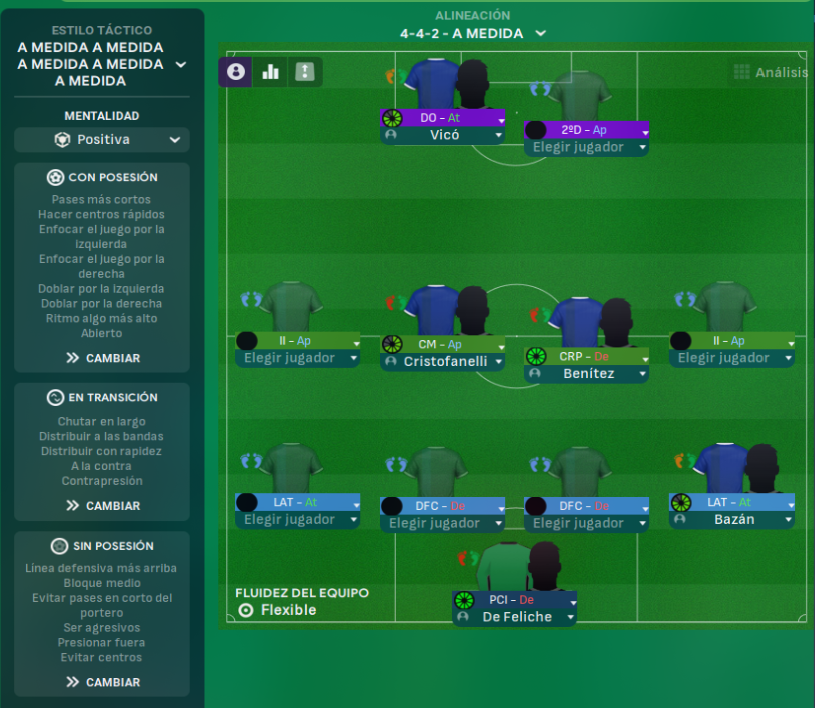
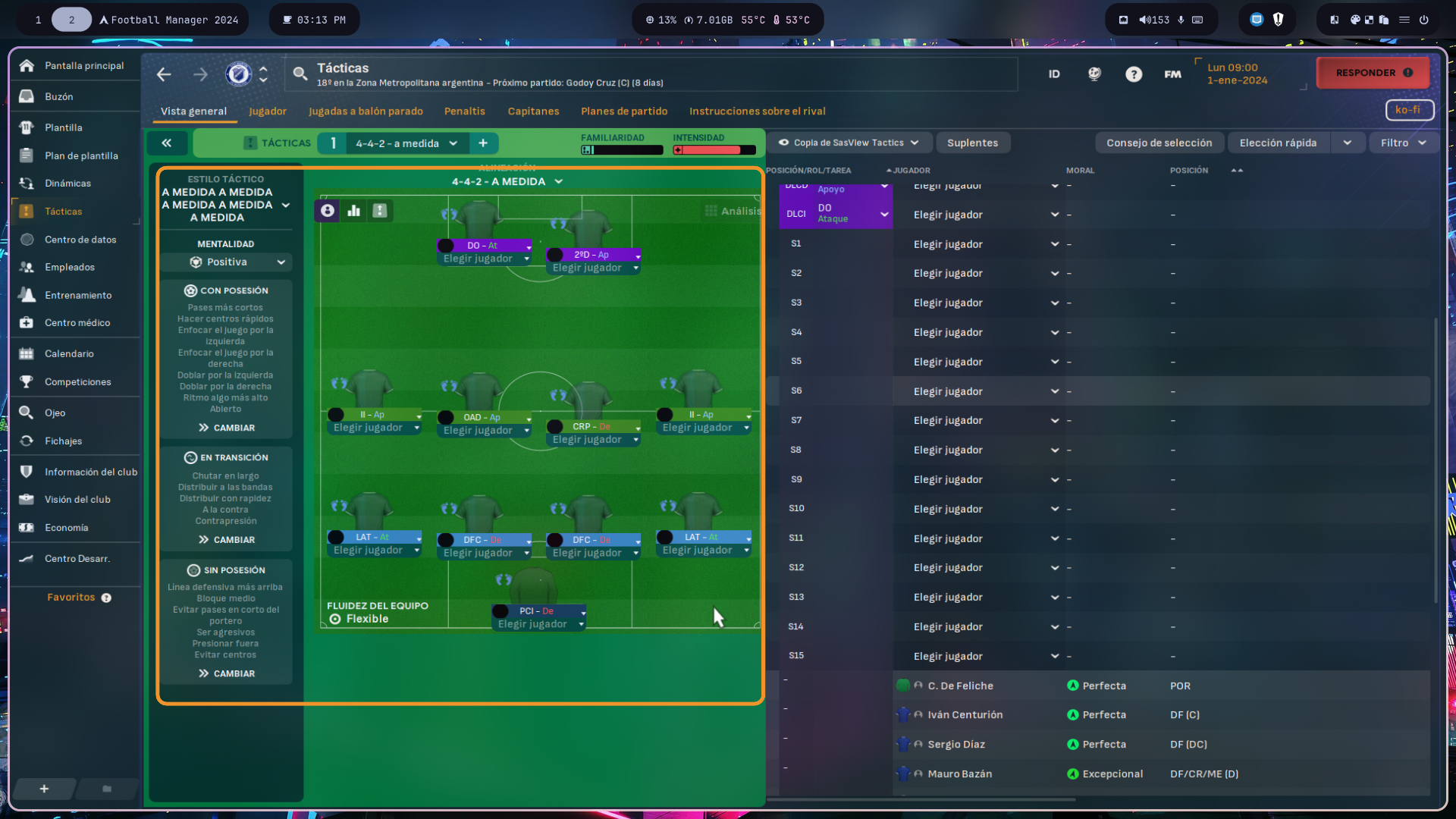
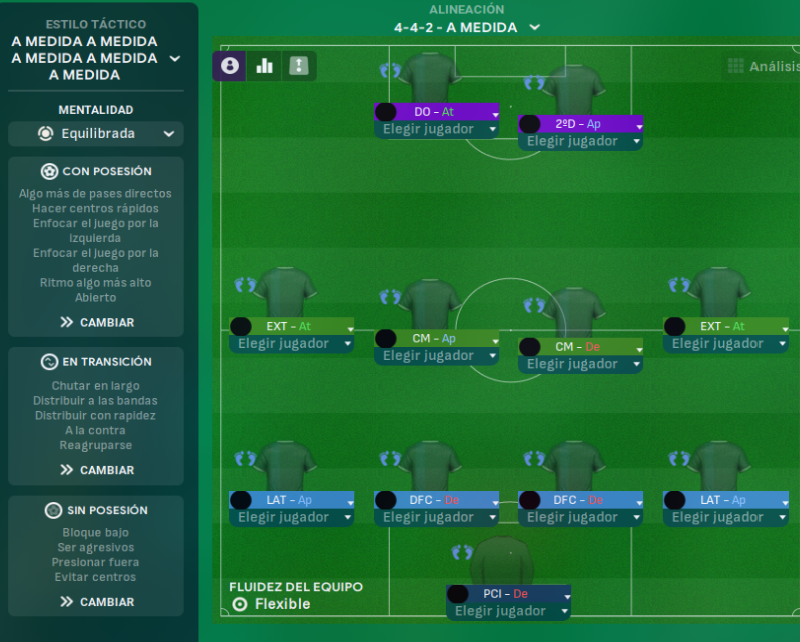

More Balanced tactics
Guides for this formation
The tactical theory behind the 4-4-2: roles, instructions, and the trade-offs that decide whether the system holds up.
Player pairings
Midfield Pairs in 4-2-3-1 and 4-4-2
Double pivots and flat pairs in 4-2-3-1 and 4-4-2: when each pairing works, when it collapses, and the AMC unicorn that rescues both.
Read guide
Playing styles
Direct, Vertical Football
Long-ball football done well in FM. When direct, vertical play is the right choice, and what the Direct Passing TI actually changes.
Read guide
Playing styles
Counter-Attacking Excellence
Sit deep, win the ball, and break in three passes. The roles, instructions, and squad profile that make it work.
Read guide