Uploaded Tactic
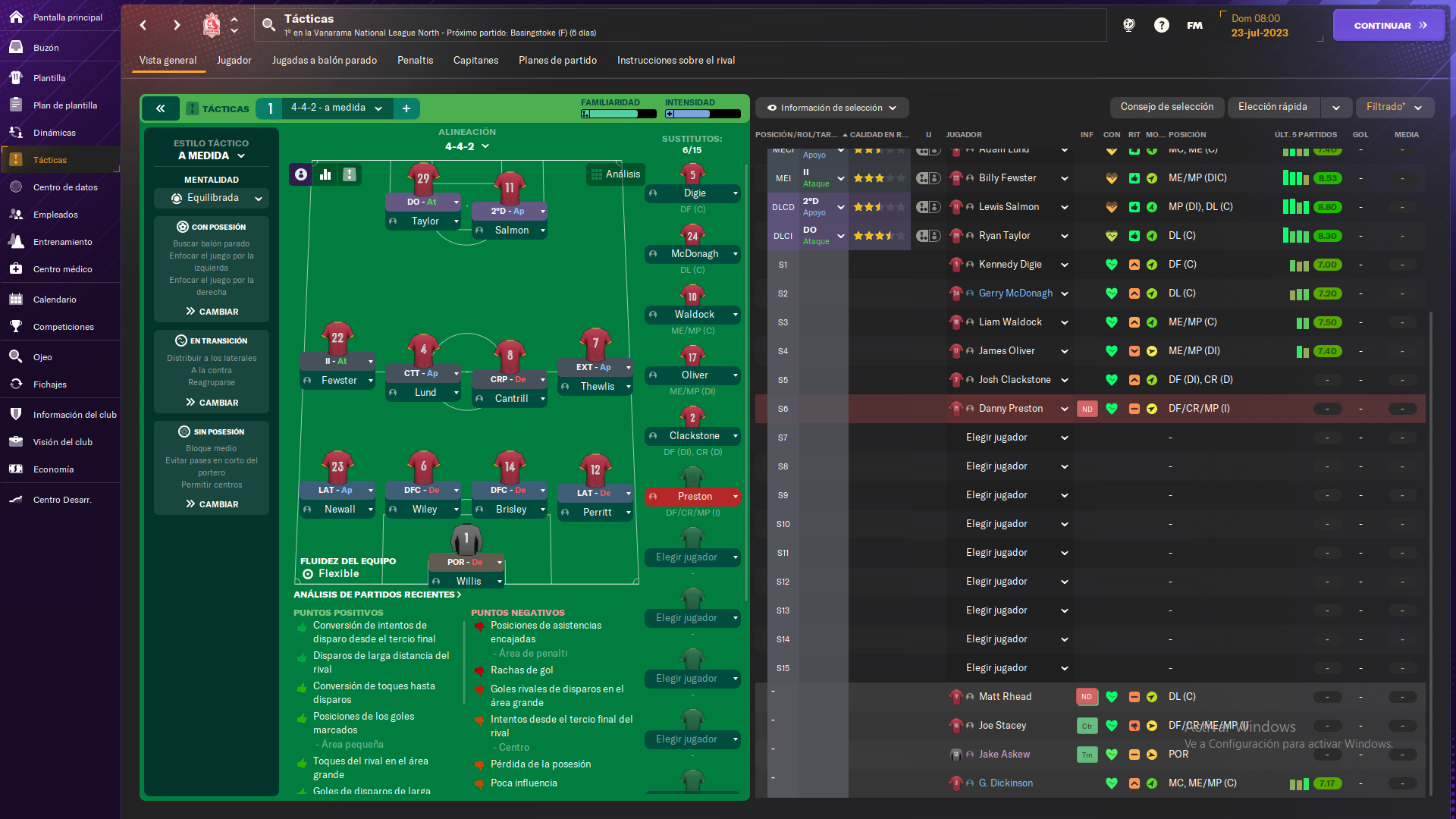
Formation & Style
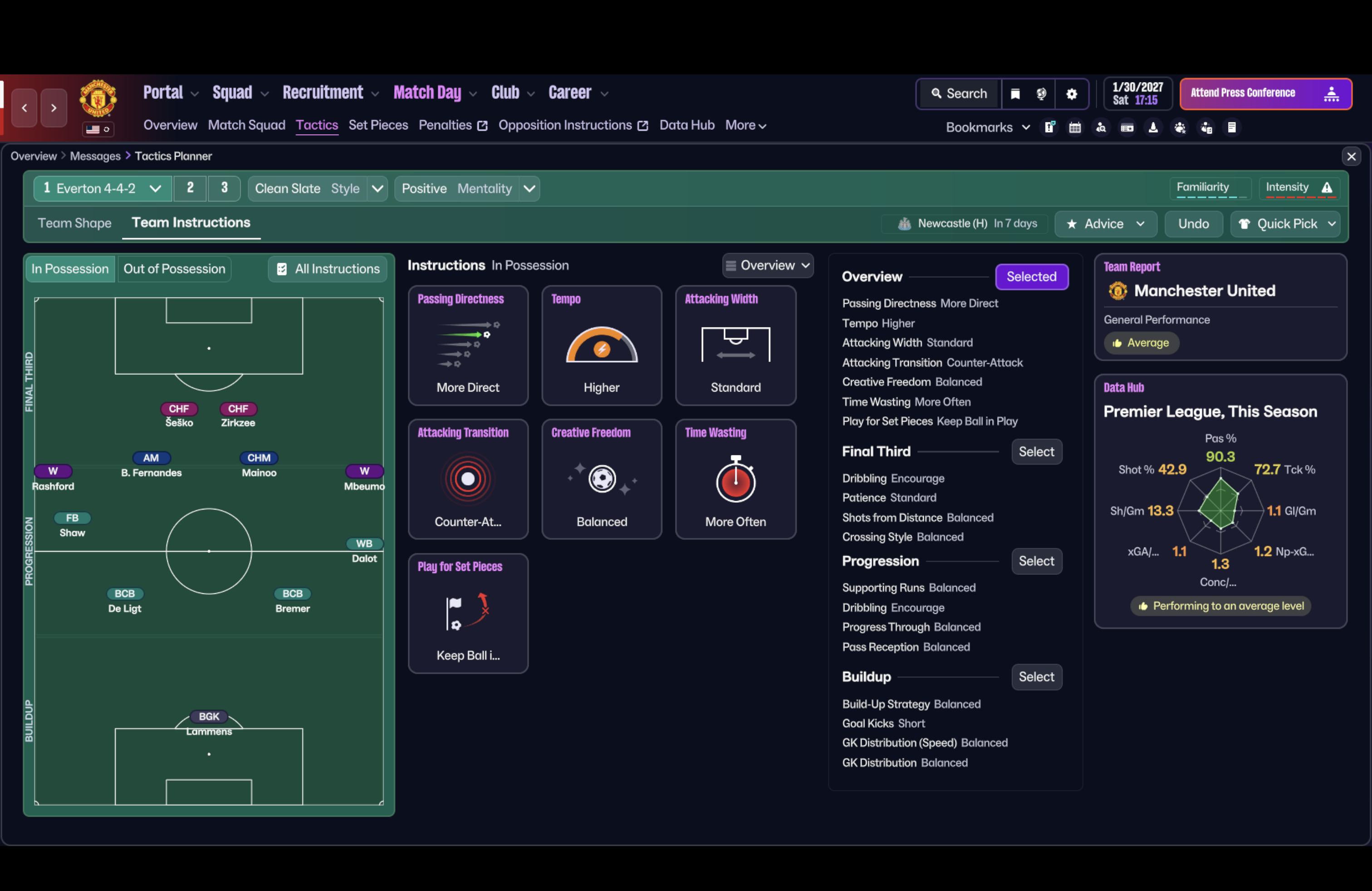
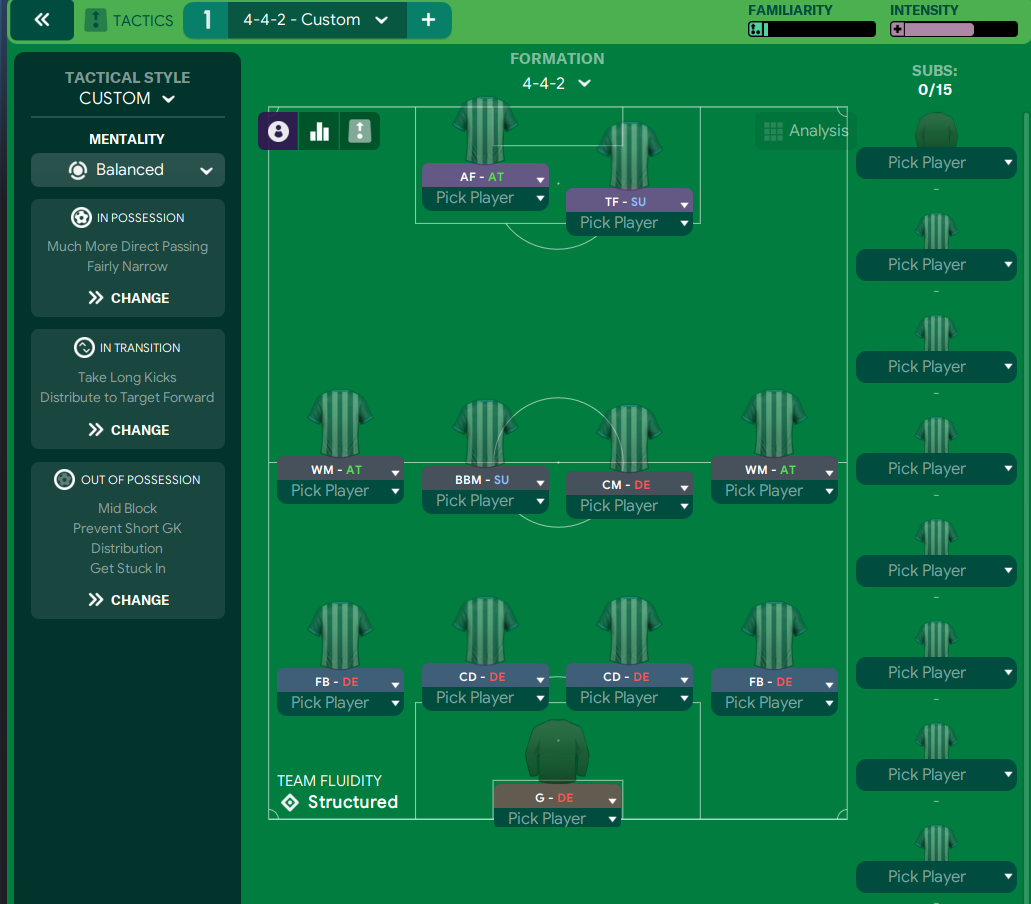
Tactical Style:Balanced
Mentality:Positive
Formation:4-4-2
Team Fluidity:Structured
In Possession
More Direct
Higher
Counter-Attack
More Often
In Transition
Counter-Attack:Enabled
Counter-Press:Immediate
Goalkeeper Distribution:Short
Throw-ins:Quick
Out of Possession
Defensive Line:Higher
Line of Engagement:Higher
Pressing Intensity:More Urgent
Offside Trap:Yes
Team Shape Without Ball
Shape:Flat 4-4-2
Description:Defensive line structured as a typical flat back four with wingers tracking back.
Evidence:4 defenders and 4 midfielders primarily set to protect the defensive third.
Team Shape With Ball
Shape:Vertical 4-4-2
Description:Utilizing two forwards supported by an attacking midfielder and wide players, aiming to stretch the defense.
Evidence:Two central strikers (CHF) combined with an AM and two wide players.
Phase Description
Attacking Play
Focus on counter-attacking with direct passing and a higher tempo, utilizing wingers for width and delivering balls to the strikers.
Defensive Transition
null
Main Focus
Quick transitions into attack, supported by higher pressing.
Key Strengths
Direct Attacking Play
The team's strategy focuses on rapid, direct attacks, capitalizing on opposing defensive gaps.
Wide Offensive Options
With wingers providing width, the squad can exploit the flanks effectively.
Striker Partnership
The dual striker setup allows for combination play and more goal-scoring opportunities.
Conflicting Directions
Defensive Instability
The setup may leave gaps in defensive transition if the team commits too heavily to attack.
Over-reliance on Wing Play
With a heavy focus on wingers, central options may become limited when wingers are isolated.
Vulnerability during Set Pieces
Potential for defensive vulnerabilities during set pieces if roles do not engage effectively.
Tactical Suggestions
Enhance Defensive Transition
Introduce pressing triggers to regain possession quickly after losing the ball.
Diversify Attacking Options
Consider introducing a more fluid attacking system with rotations or a fluid midfielder.
Setup More Specific Set-Piece Strategies
Implement clear roles and responsibilities for defensive and offensive set pieces.
Ask Questions About Your Lineup
Related Tactics
Guides for this formation
The tactical theory behind the 4-4-2: roles, instructions, and the trade-offs that decide whether the system holds up.
Player pairings
Midfield Pairs in 4-2-3-1 and 4-4-2
Double pivots and flat pairs in 4-2-3-1 and 4-4-2: when each pairing works, when it collapses, and the AMC unicorn that rescues both.
Read guide
Playing styles
Direct, Vertical Football
Long-ball football done well in FM. When direct, vertical play is the right choice, and what the Direct Passing TI actually changes.
Read guide
Playing styles
Counter-Attacking Excellence
Sit deep, win the ball, and break in three passes. The roles, instructions, and squad profile that make it work.
Read guide