Uploaded Tactic
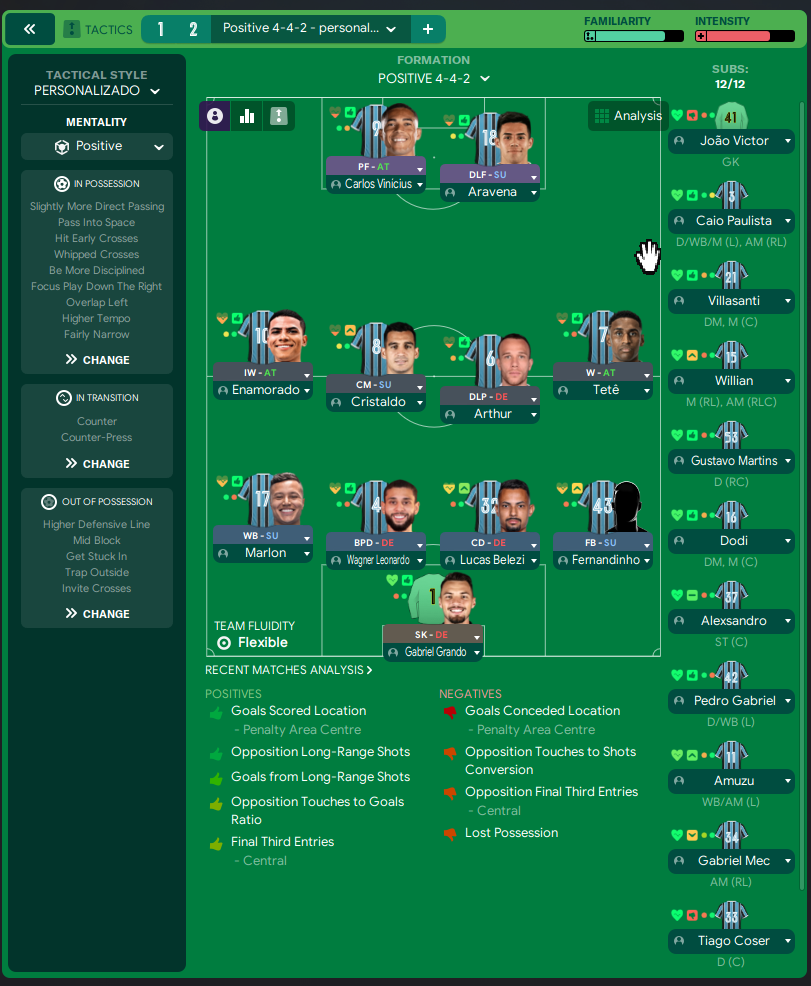
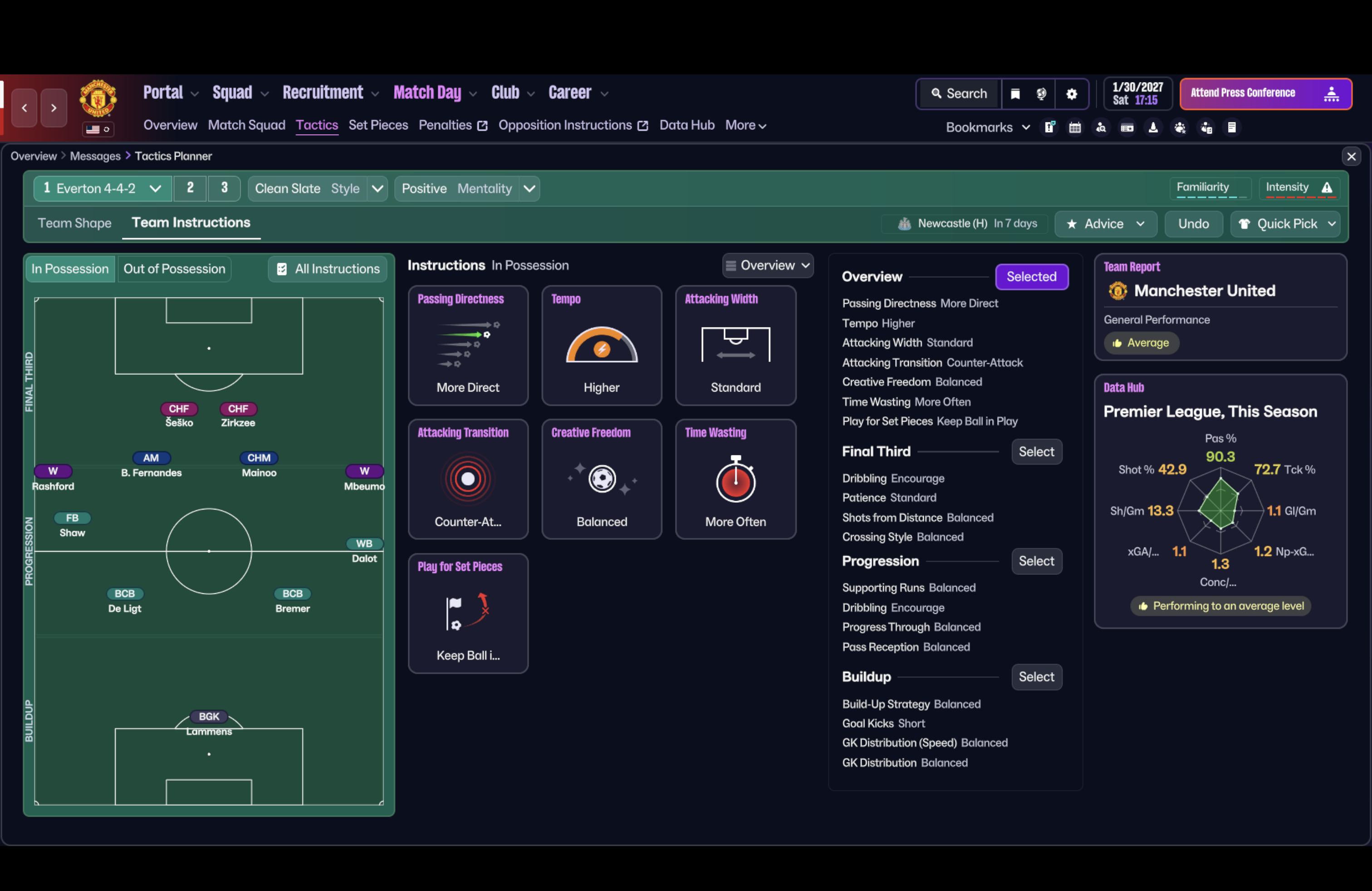
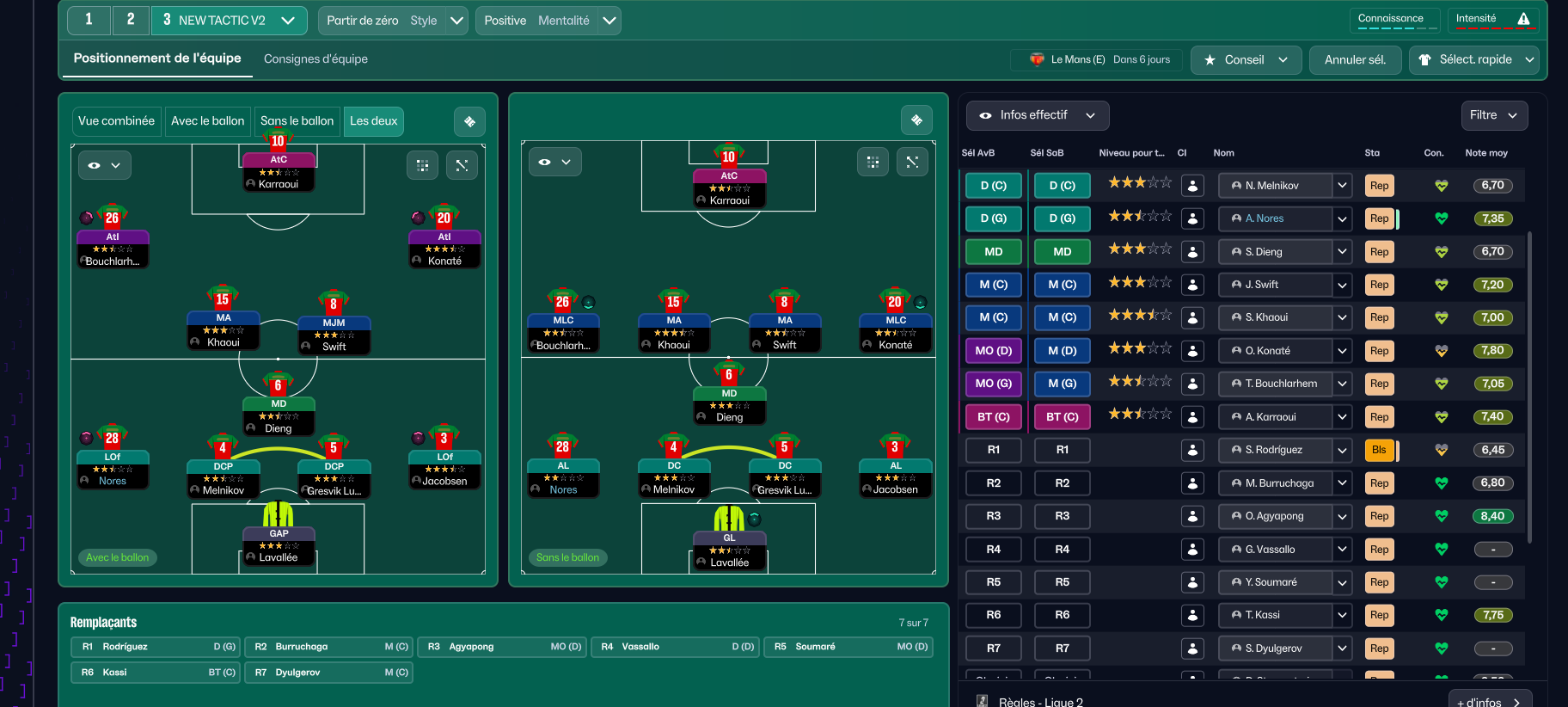
Formation & Style
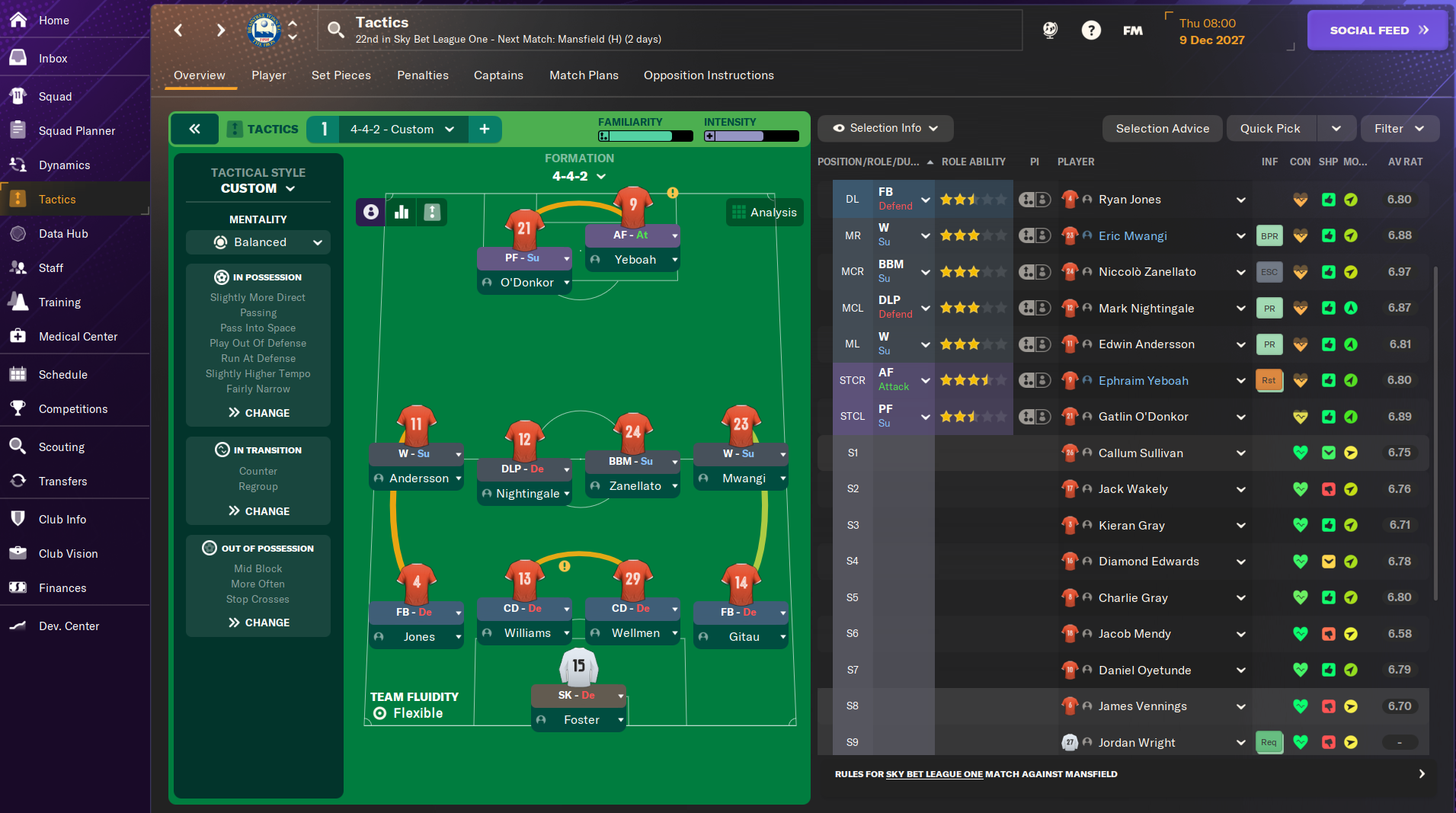
Tactical Style:Positive
Mentality:Positive
Formation:4-4-2
Team Fluidity:Flexible
In Possession
Slightly More Direct Passing
Pass Into Space
Hit Early Crosses
Whipped Crosses
Be More Disciplined
Focus Play Down The Right
Overlap Left
Higher Tempo
Fairly Narrow
In Transition
Counter
Out of Possession
Higher Defensive Line
Mid Block
Get Stuck In
Trap Outside
Invite Crosses
Team Shape Without Ball
Shape:4-4-2
Description:A compact formation with clear roles in defense that invites opponents to challenge.
Evidence:Higher Defensive Line and Mid Block indicate a proactive defensive approach, supported by the 'Get Stuck In' instruction.
Team Shape With Ball
Shape:4-4-2
Description:Attacking play focuses on exploiting space through width and quick transitions.
Evidence:Slightly More Direct Passing with Whipped Crosses emphasizes an attacking strategy through the use of inside wingers and wing-backs.
Phase Description
Attacking Play
The team looks to utilize quick, direct passing with an emphasis on width from the inside winger and wing-back roles, and aims to exploit space on the right.
Defensive Transition
A focus on a quick counter to regain possession while maintaining a mid-block structure.
Main Focus
Exploit primary weaknesses in opposition's defensive play favoring central and right flank entries.
Key Strengths
Effective Wing Play
Inside Winger and Wing-Back combination allows for dynamic movement on the flanks.
Balanced Midfield Roles
The presence of both a Central Midfielder and a Deep-Lying Playmaker creates flexibility.
Strong Counter-Attacking Threat
The tactical instruction to counter plays into the team's strengths with fast strikers.
Conflicting Directions
Vulnerable to Central Attacks
While the team has defensive structure, it could struggle against teams that penetrate centrally.
Over-reliance on Width
The heavy emphasis on wide play could lead to predictable attacks.
Inconsistent Pressing
Pressing with only a focus on the two forwards can leave midfield exposed.
Tactical Suggestions
Enhance Central Stability
Consider adding a Ball-Winning Midfielder to bolster the central area, providing support during defensive transitions.
Adjust Width in Attack
Implement a strategy to vary passing lanes, potentially reducing predictability in wide play.
Increase Defensive Cohesion
Work on closing spaces between the lines to prevent central penetration from more technical teams.
Ask Questions About Your Lineup
Related Tactics
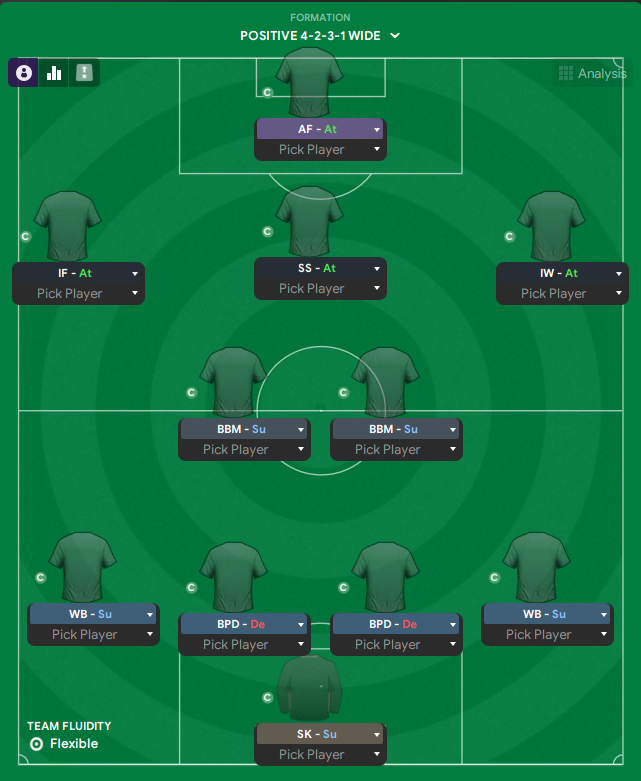
More Positive tactics
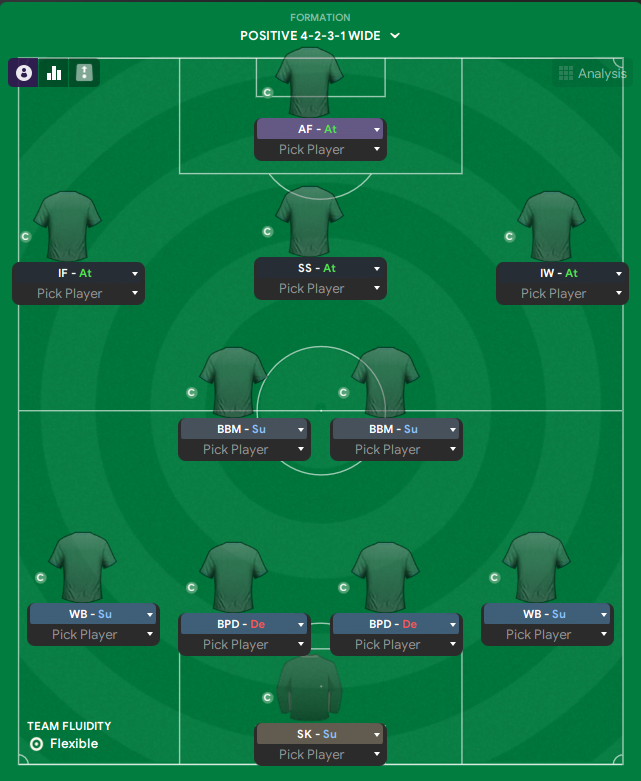
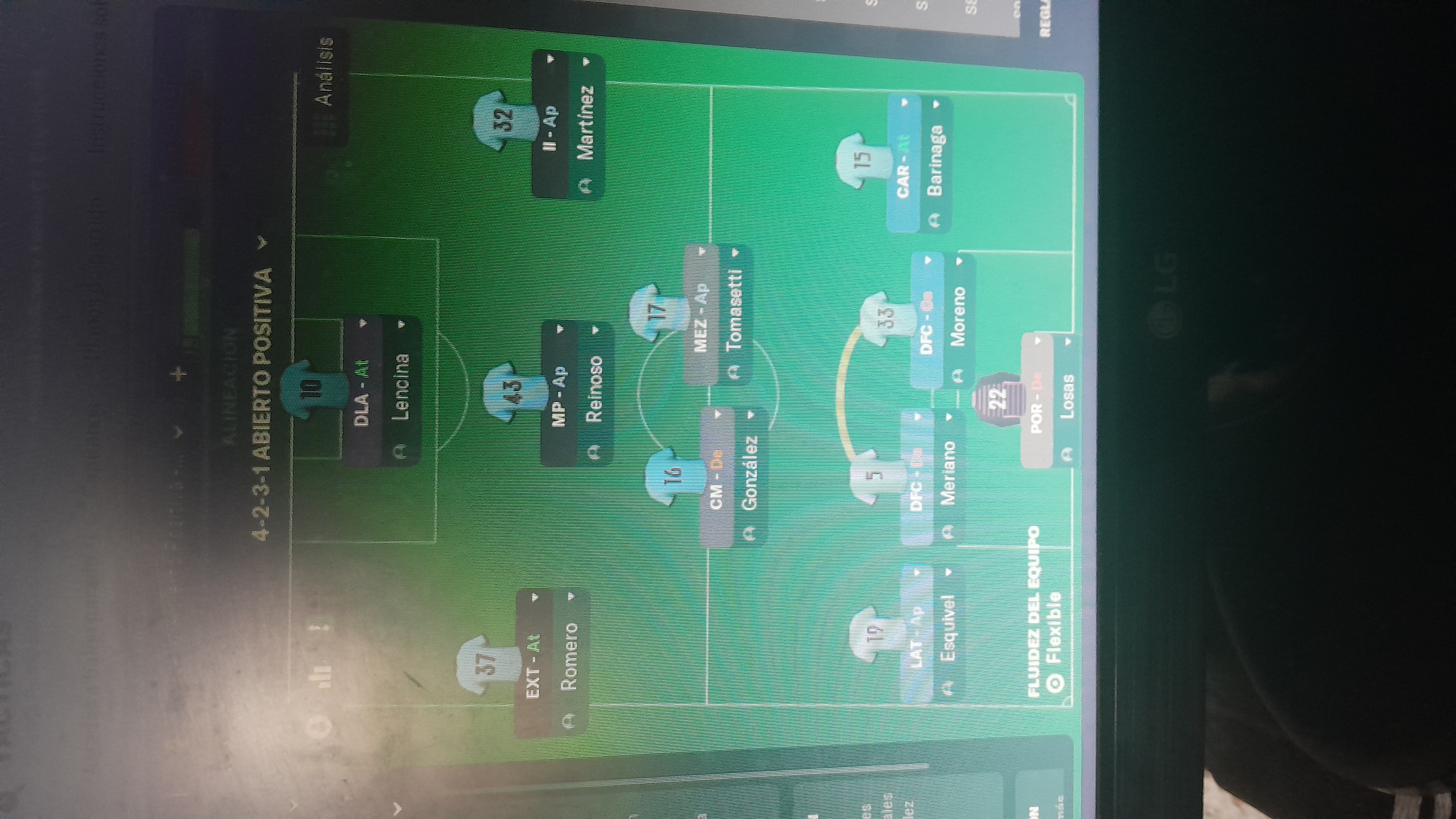
Guides for this formation
The tactical theory behind the 4-4-2: roles, instructions, and the trade-offs that decide whether the system holds up.
Player pairings
Midfield Pairs in 4-2-3-1 and 4-4-2
Double pivots and flat pairs in 4-2-3-1 and 4-4-2: when each pairing works, when it collapses, and the AMC unicorn that rescues both.
Read guide
Playing styles
Direct, Vertical Football
Long-ball football done well in FM. When direct, vertical play is the right choice, and what the Direct Passing TI actually changes.
Read guide
Playing styles
Counter-Attacking Excellence
Sit deep, win the ball, and break in three passes. The roles, instructions, and squad profile that make it work.
Read guide