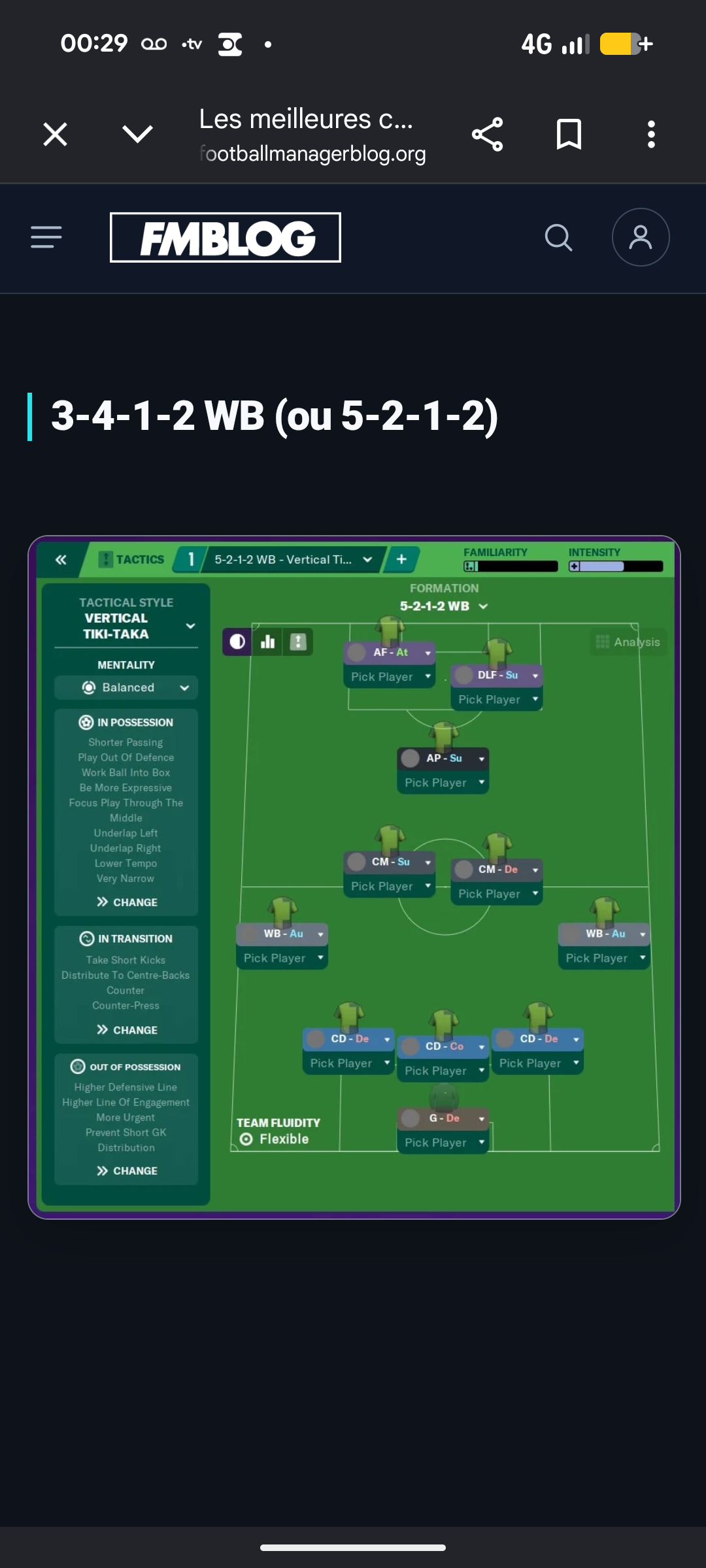
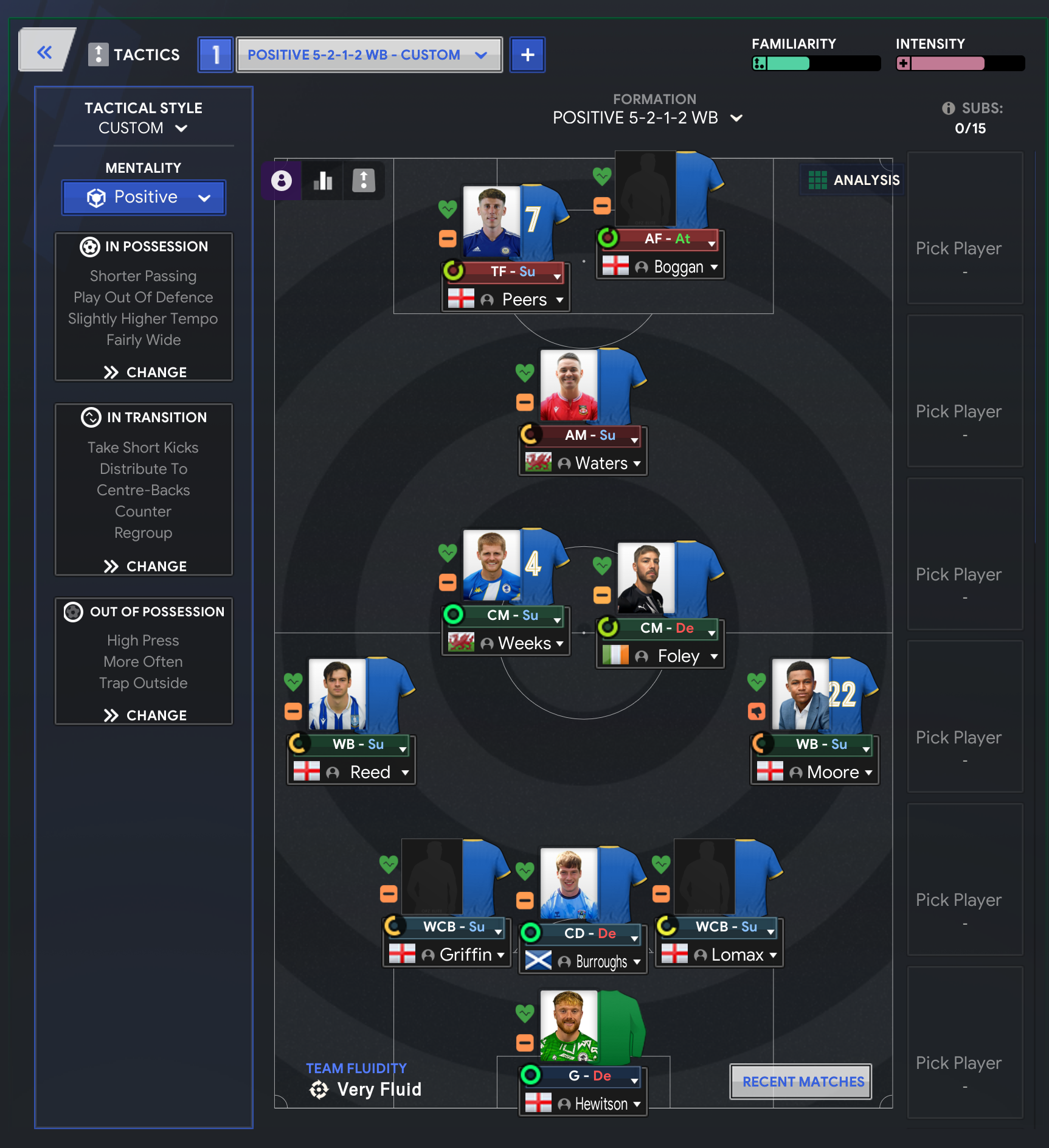
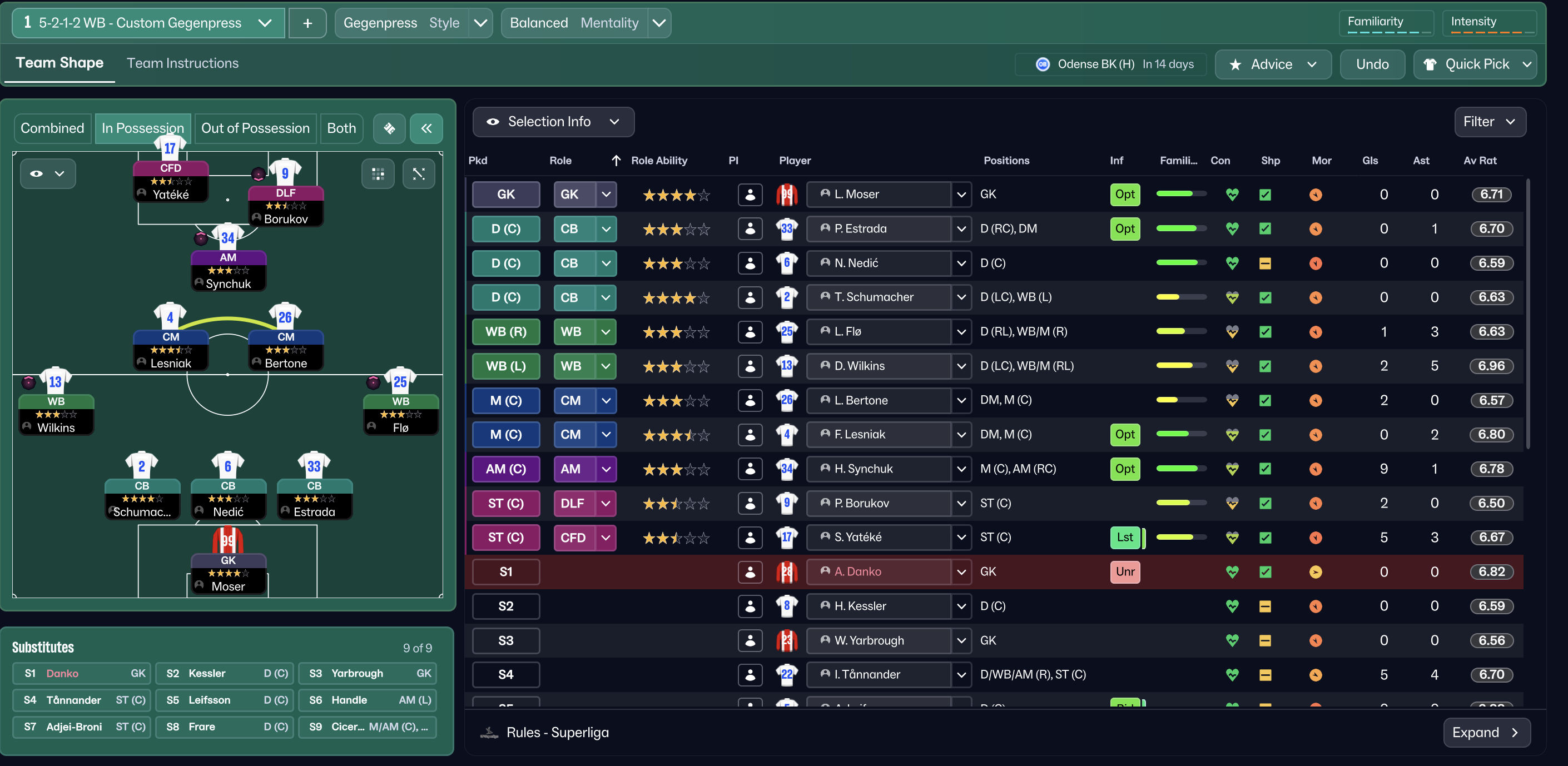
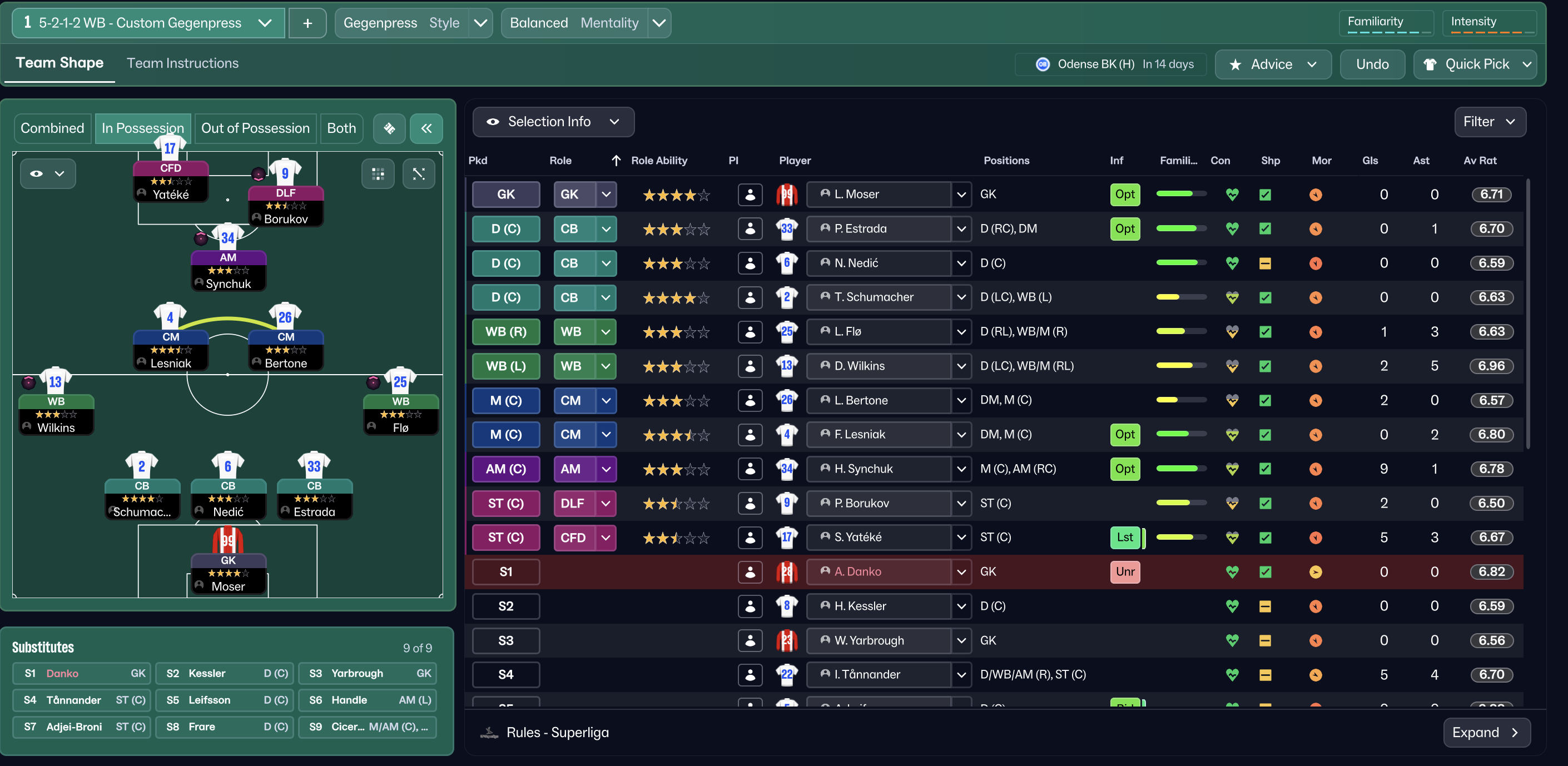
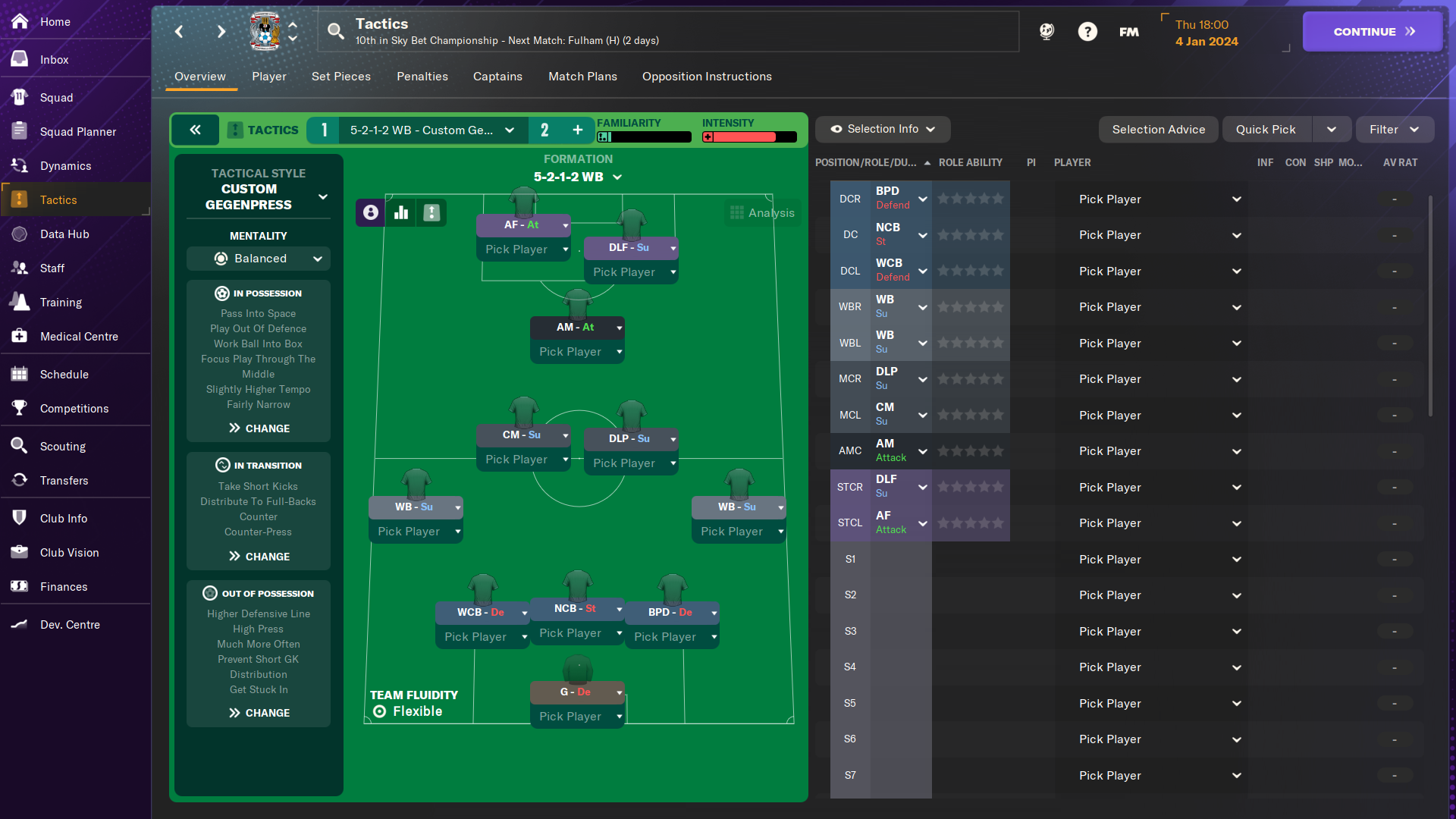
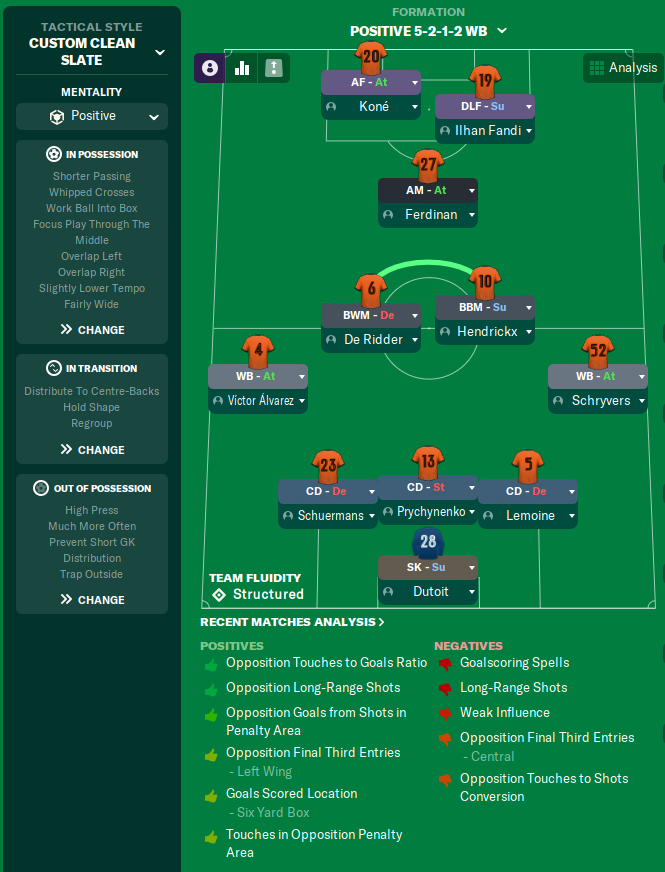
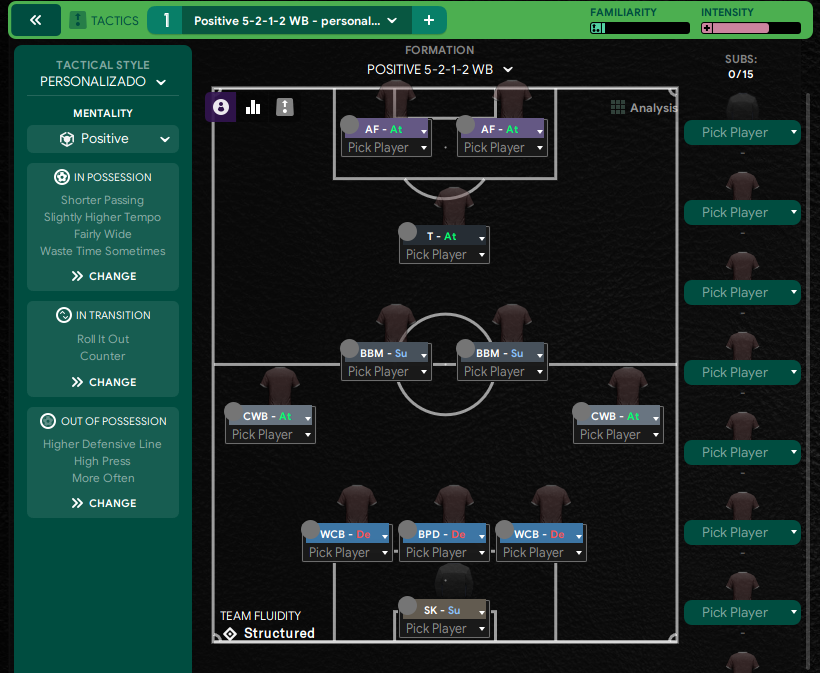
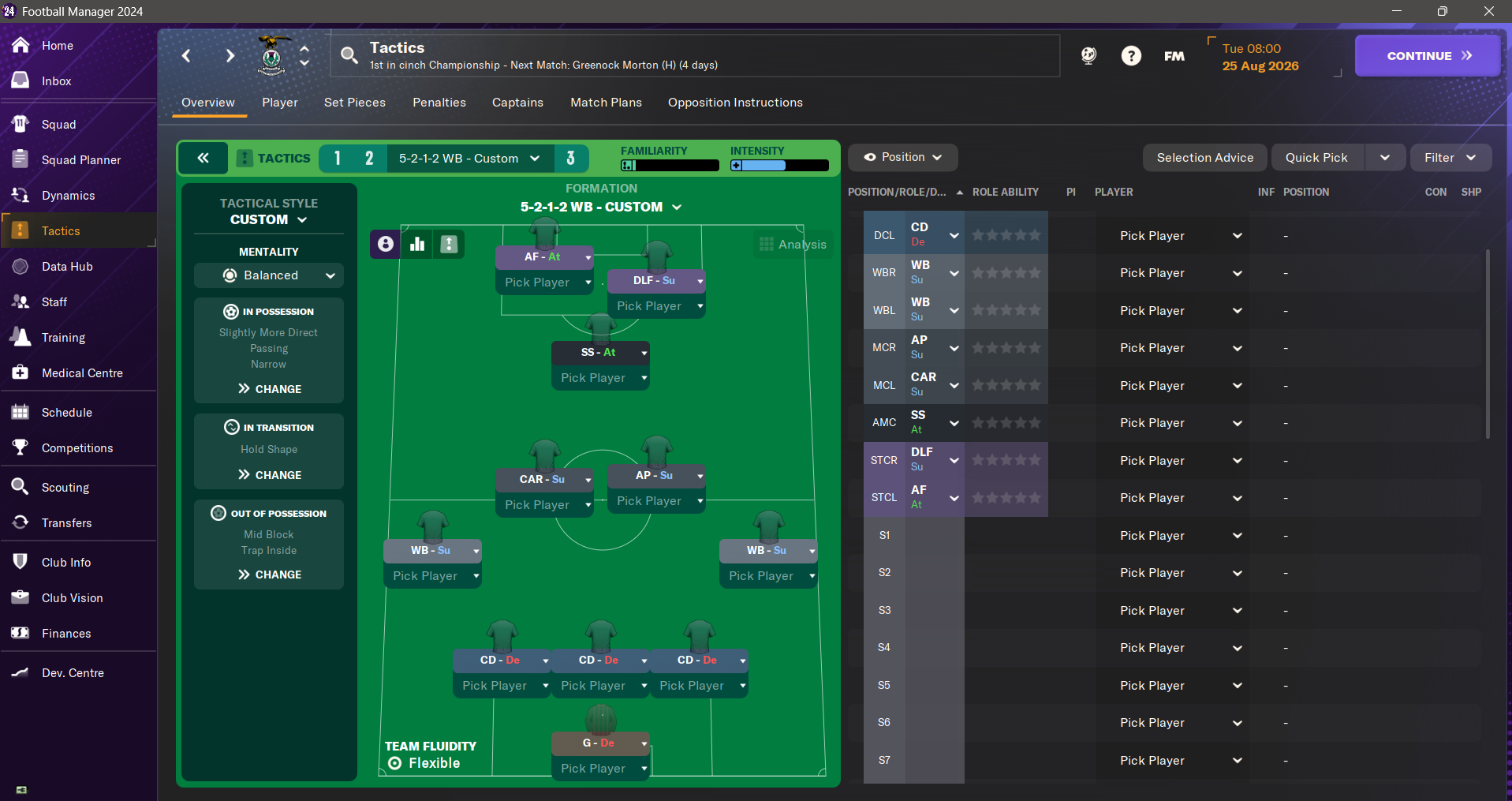
5-2-1-2 WB
Creating scoring opportunities through lateral movement and midfield interplay. Three central defenders contribute to a strong defensive unit, minimizing…
Loading tactical analysis...
Custom
Balanced
5-2-1-2 WB
Flexible
Slightly More Direct Passing
Narrow
Hold Shape
Mid Block
Trap Inside
GK
G
De
DC
CD
De
DC
CD
De
DC
CD
De
WB
WB
Su
WB
WB
Su
CM
CAR
Su
CM
AP
Su
AMC
SS
At
ST
DLF
Su
ST
AF
At
Utilizes width from wing-backs to stretch the opposition and create space for the strikers.
Maintains shape while regaining possession, prioritizing stability before committing to pressing.
Creating scoring opportunities through lateral movement and midfield interplay.
5-3-2
Compact block with emphasis on blocking central lanes while using wing-backs for width.
Defending with 5 players at the back ensures central stability.
3-5-2
Attacking phase involves wing-backs providing width with central players focusing on playmaking.
Wing-backs join the attack while three central players position themselves for varied options.
Three central defenders contribute to a strong defensive unit, minimizing vulnerabilities.
CDs at [2,2], [2,3], [2,4] provide depth.
Mix of roles allows for flexibility in transition from defense to attack.
CMs in positions [3,3] and [3,4] facilitate ball progression.
The narrow attacking approach can conflict with wide play by wing-backs.
Narrow instruction may limit full-back contributions.
Holding shape in transition could hinder pressing opportunities.
In transition strategy does not emphasize aggressive pressing.
Defensive Depth
Only three defenders might struggle against teams with multiple attackers.
3 CDs can become outnumbered during fast breaks.
Central Midfield Vulnerability
With two midfielders, there is a risk of being overrun by opposition midfielders.
Only [3,3] and [3,4] may leave gaps against three-man midfields.
CAR-Su with AP-Su
This combination allows for diverse passing options and fluid movement in midfield.
CAR at [3,4] ensures that AP at [3,3] has complementary support.
AF with DLF
Dynamic interplay between strikers creates opportunities in tight spaces.
AF at [6,3] and DLF at [6,2] allows for varied attacking runs.
How can the attack be more versatile?
What adjustments can improve midfield control?
Is the defensive structure adaptable against high-press teams?
The tactical theory behind the 5-2-1-2 WB: roles, instructions, and the trade-offs that decide whether the system holds up.
The deliberate underdog tactic in FM: formation choices, duty distribution, and why Counter-Press is exactly wrong inside a low block.
FM27 keeps FM26's tactic system. Here is what stays the same, the small changes that can catch you out, and what the new Tactical Effectiveness system asks of you.
How Mentality, Duty, and Role interact in FM, why duty trumps mentality every time, and the role-on-top-of-duty composition rules.