Uploaded Tactic
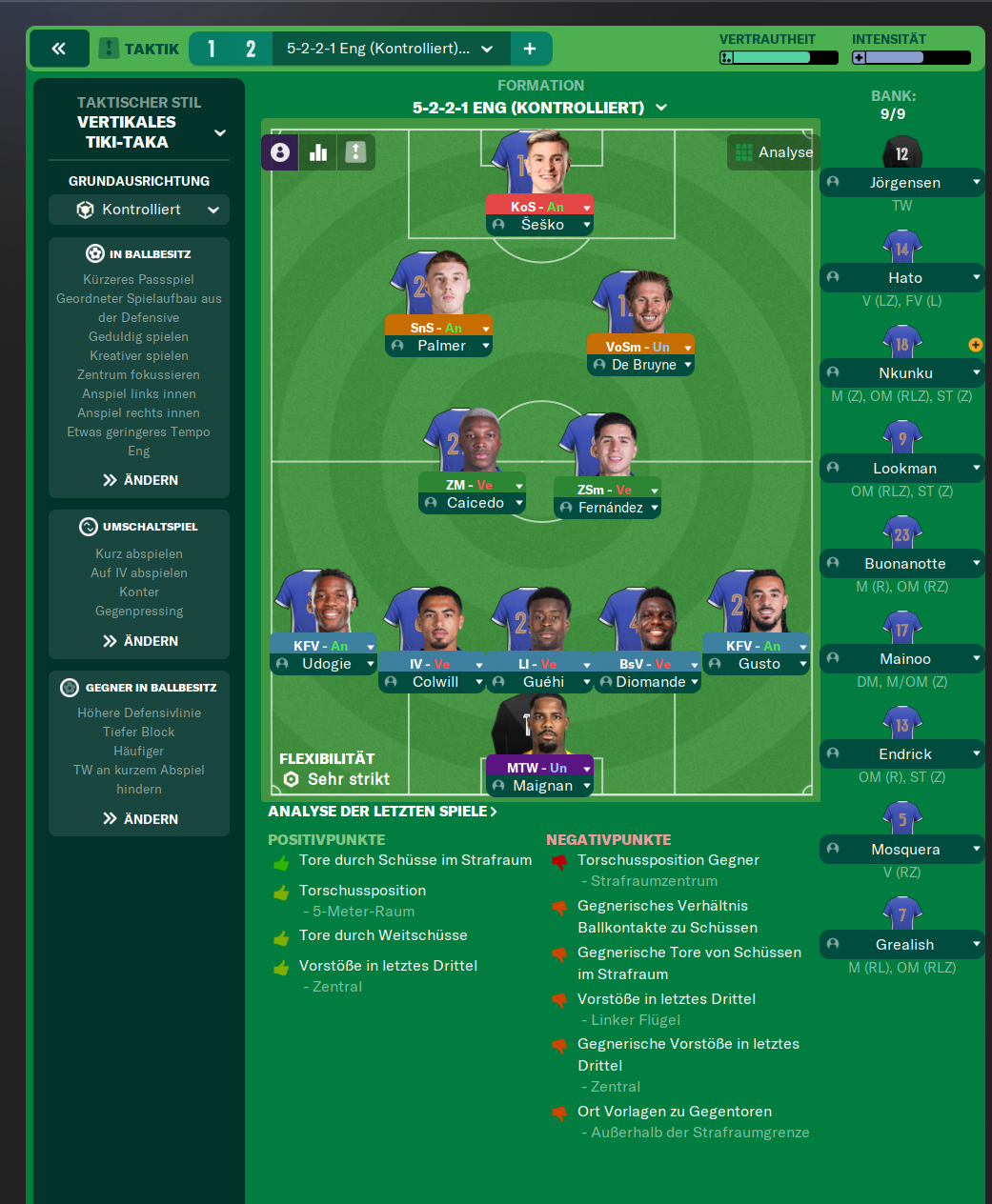
Formation & Style
Tactical Style:Tiki-Taka
Mentality:Controlled
Formation:5-2-2-1 Eng
Team Fluidity:Very Strict
In Possession
Short passing
Build-up through the middle
Patient buildup
Play out from the back
In Transition
Counter-press
Distribute to full-backs
Out of Possession
Higher defensive line
Tighter marking
Use of offside trap
Team Shape Without Ball
No team shape without ball data available
Team Shape With Ball
No team shape with ball data available
Key Strengths
Fluid Build-Up Play
Utilizing short passing and patient buildup to create space and openings in the opposition defense.
Defensive Solidity
Five-man backline provides a strong defensive structure, making it difficult for opponents to penetrate.
Wing Play
Wing-backs pushing forward adds width to the attack, creating multiple options to stretch the opponent.
Interconnected Midfield
With a combination of deep-lying and box-to-box midfielders, the team maintains control and transitions smoothly.
Conflicting Directions
Attacking Wing-Play versus Central Compactness
The inside forwards may conflict with the boxed nature of central midfielders, leading to congestion in central areas.
Strict Fluidity versus Offensive Freedom
The very strict fluidity may limit creative expressions of the players, especially in a Tiki-Taka system.
High Defensive Line with Fast Countering Opponents
Utilizing a high line can expose the defense to quick counterattacks; proper defensive recovery is crucial.
Wing-Back Roles and Defensive Responsibilities
Wing-backs may struggle to fulfill their attacking duties and defensive responsibilities simultaneously.
Tactical Suggestions
Adjust Fluidity
Consider relaxing the fluidity to encourage more movement and creativity within attacking phases.
Utilize an Advanced Playmaker
Adding an advanced playmaker role could enhance creativity in the final third, linking midfield to attack better.
Greater Role Flexibility
Allowing players to switch roles between attack and support duties can create more dynamic attacking patterns.
Tweaking Defensive Line
Adjusting the defensive line based on the opposition's speed can mitigate the risk of counters.
Ask Questions About Your Lineup
Related Tactics
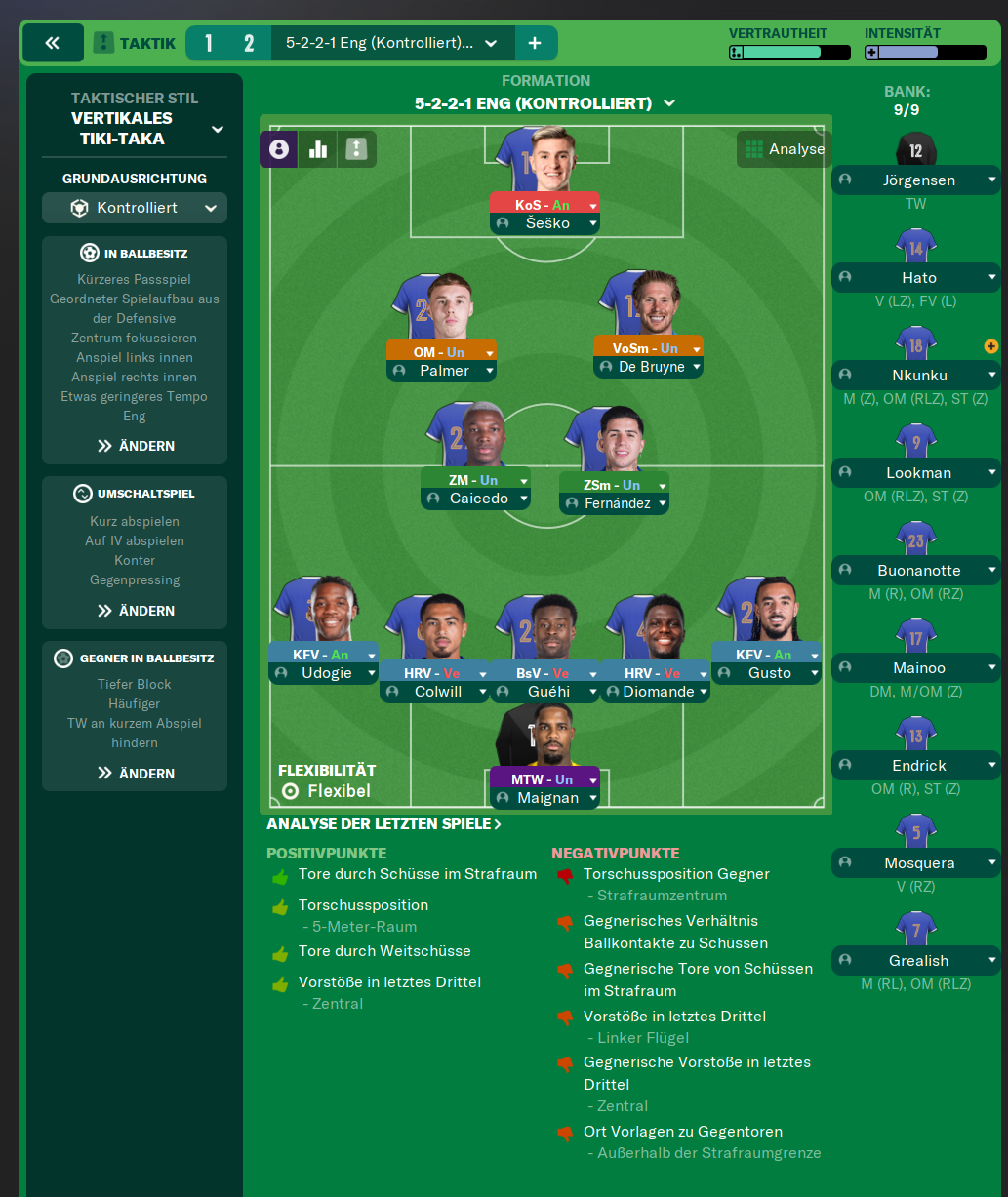
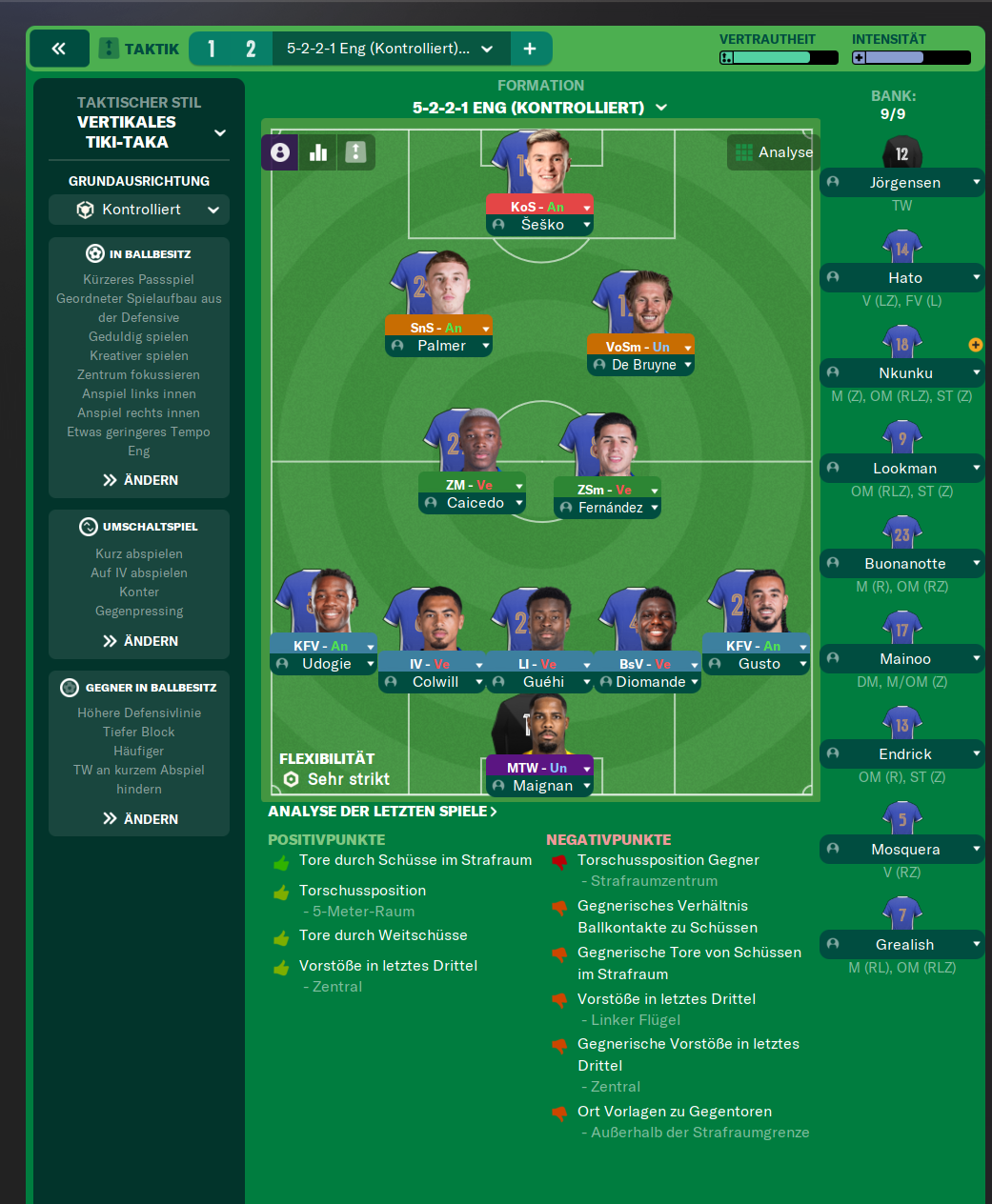
More Tiki-Taka tactics
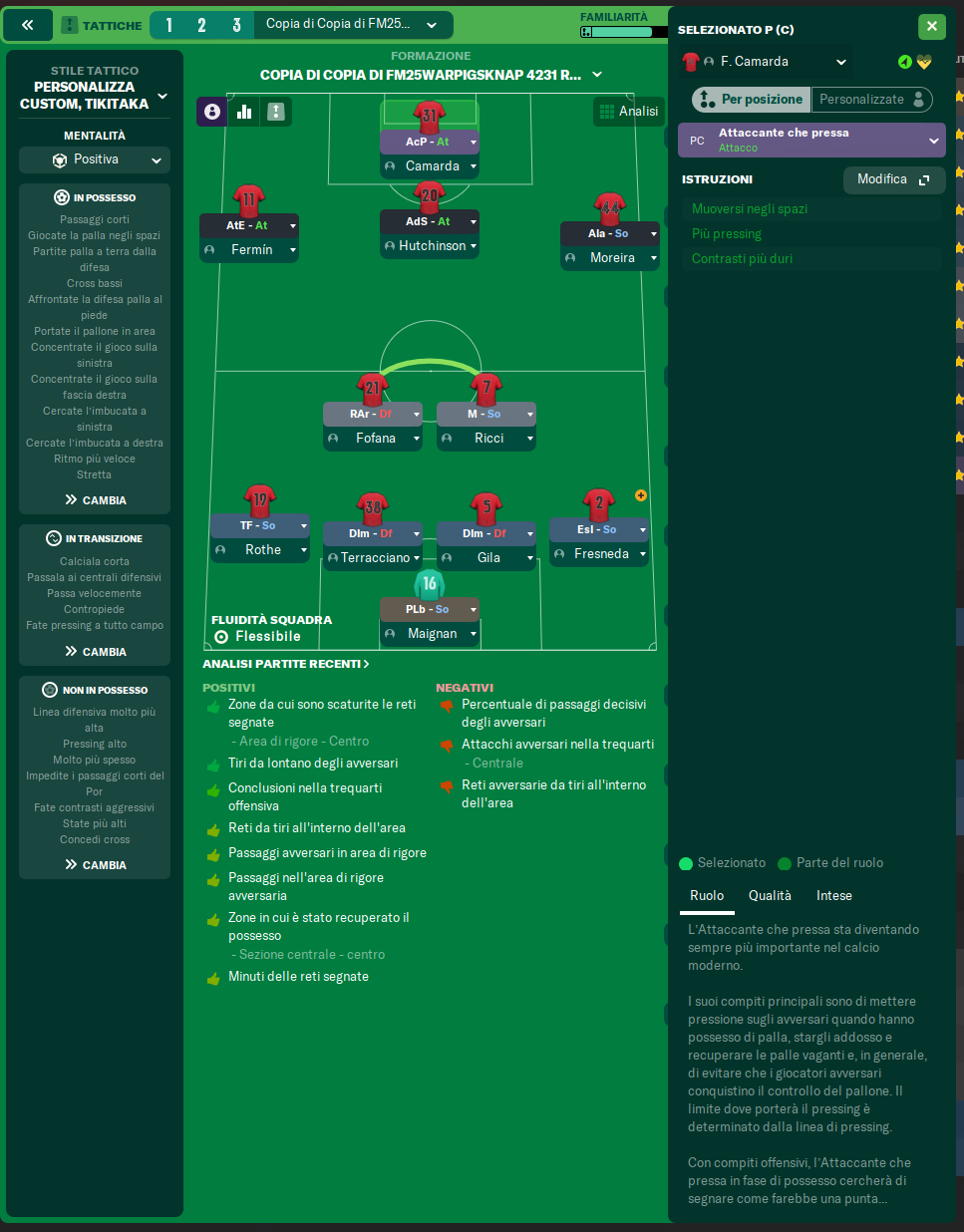
Guides for this formation
The tactical theory behind the 5-2-2-1 Eng: roles, instructions, and the trade-offs that decide whether the system holds up.