Uploaded Tactic
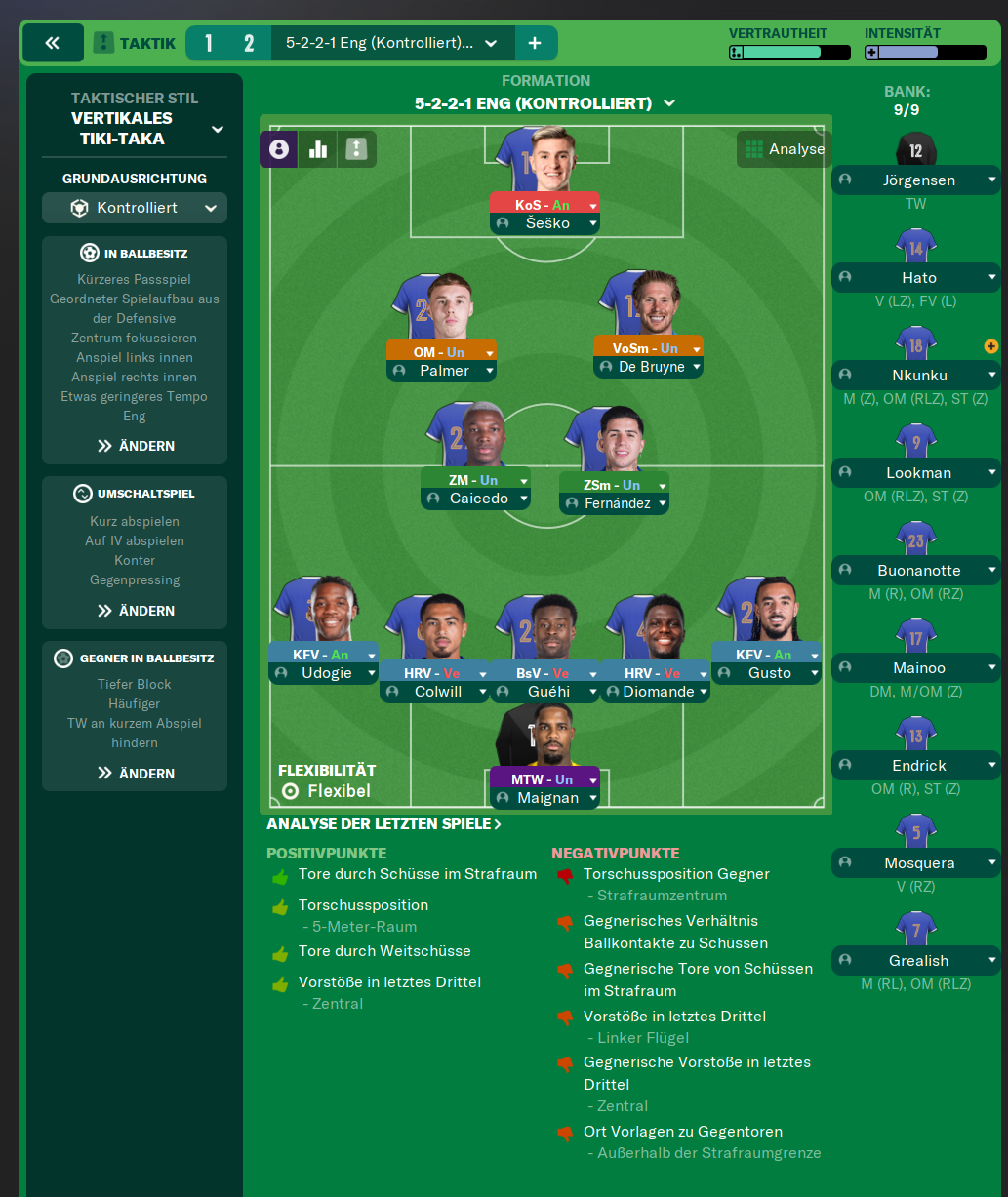
Formation & Style
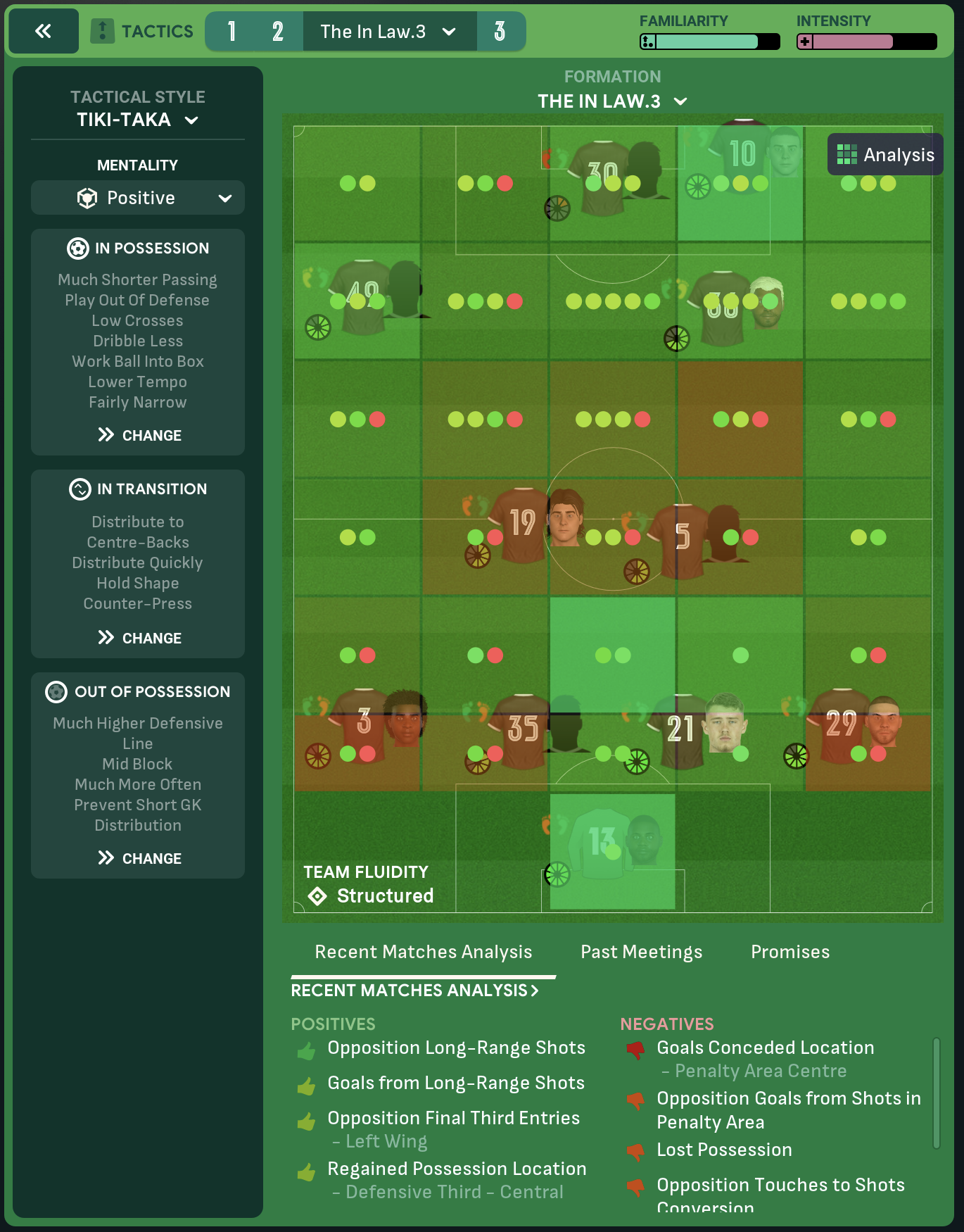
Tactical Style:Tiki-Taka
Mentality:Controlled
Formation:5-2-2-1 Eng
Team Fluidity:Flexible
In Possession
Shorter passing
Structured build-up
Work the ball into the box
Lower tempo
In Transition
Counter-press
Counter-attack
Distribute to center-backs
Out of Possession
Lower defensive line
More urgent press
Goalkeeper to prevent short goal kicks
Team Shape Without Ball
No team shape without ball data available
Team Shape With Ball
No team shape with ball data available
Key Strengths
Possession Retention
The team's passing style focuses on maintaining possession and avoiding turnovers, with shorter passes promoting controlled play.
Central Dominance
The formation utilizes a strong central presence, allowing for better ball control and distribution options.
Flexible Tactical Adjustments
The tactical fluidity allows for effective adaptation to opponents' styles, promoting versatility in gameplay.
Strong Counter-Press
The team is set up to quickly recover possession after losing the ball, disrupting opposition counter-attacks.
Conflicting Directions
Lower Defensive Line vs. High Pressure
While aiming to maintain a lower defensive line, there may be conflicts with aggressive pressing, leading to spaces behind.
Building from the Back vs. Quick Transitions
Long build-up plays may hinder quick transitions, reducing effectiveness during counters when speed is required.
Wing-Backs Role Clarity
There could be confusion over whether wing-backs should focus on support or defensive duties, impacting width in attack.
Inconsistent Player Duties
Player roles, particularly in midfield, may create overlaps or gaps that could be exploited by the opposition.
Tactical Suggestions
Clarify Wing-Back Roles
Assign clear attacking or defensive duties to wing-backs to maintain width effectively and avoid crowding the central area.
Consider Increasing Tempo When in Possession
Adjusting the team's tempo to be higher can exploit spaces against less organized defenses, facilitating quicker attacks.
Adjust Mentality Based on Opponent
Flexibility in mental approach could help counteract overly defensive or attacking stances from opponents.
Focus on Set-Piece Organization
Strengthening defensive setups on set-pieces will reduce vulnerability, as indicated by the negative points.
Ask Questions About Your Lineup
Related Tactics
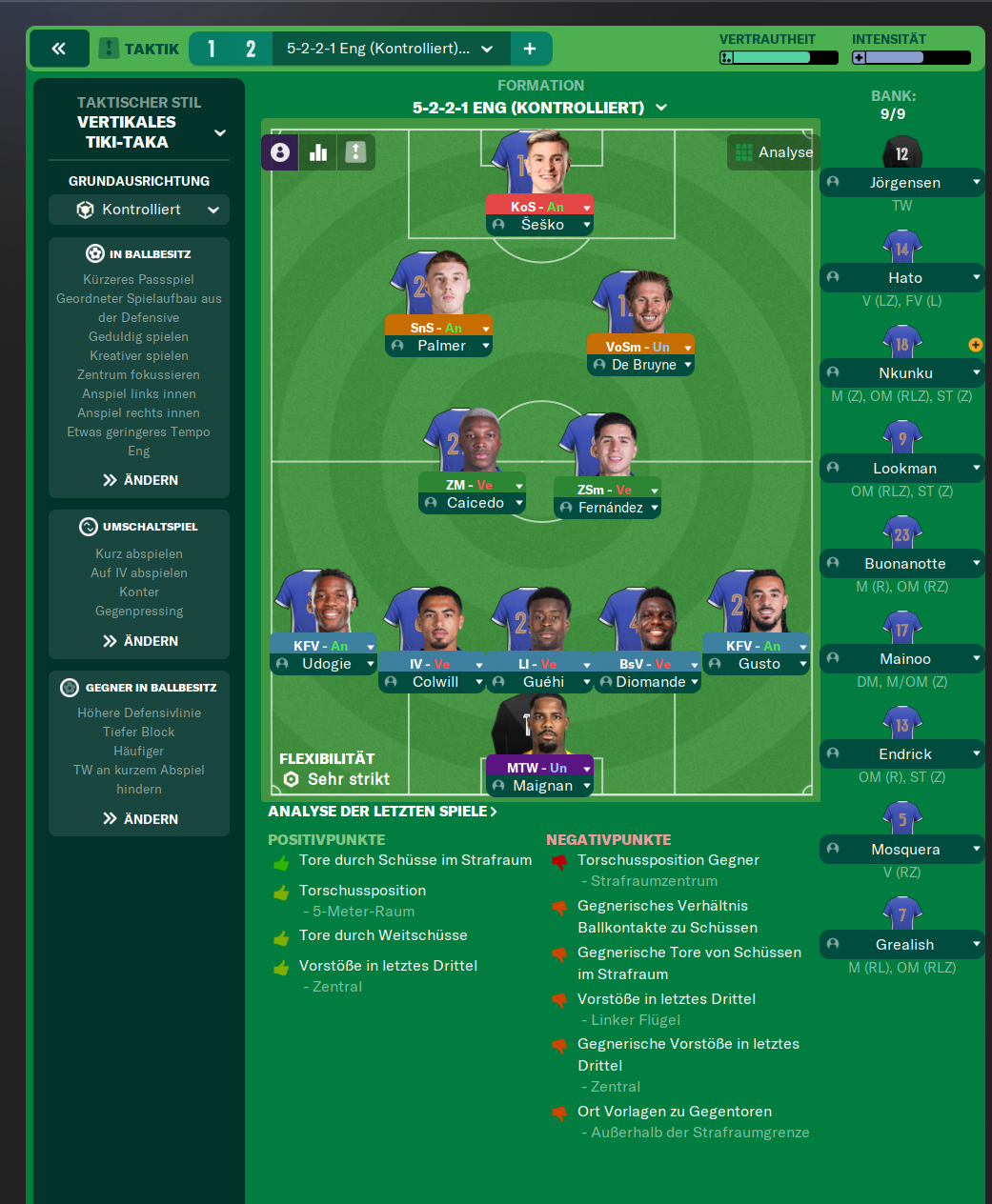
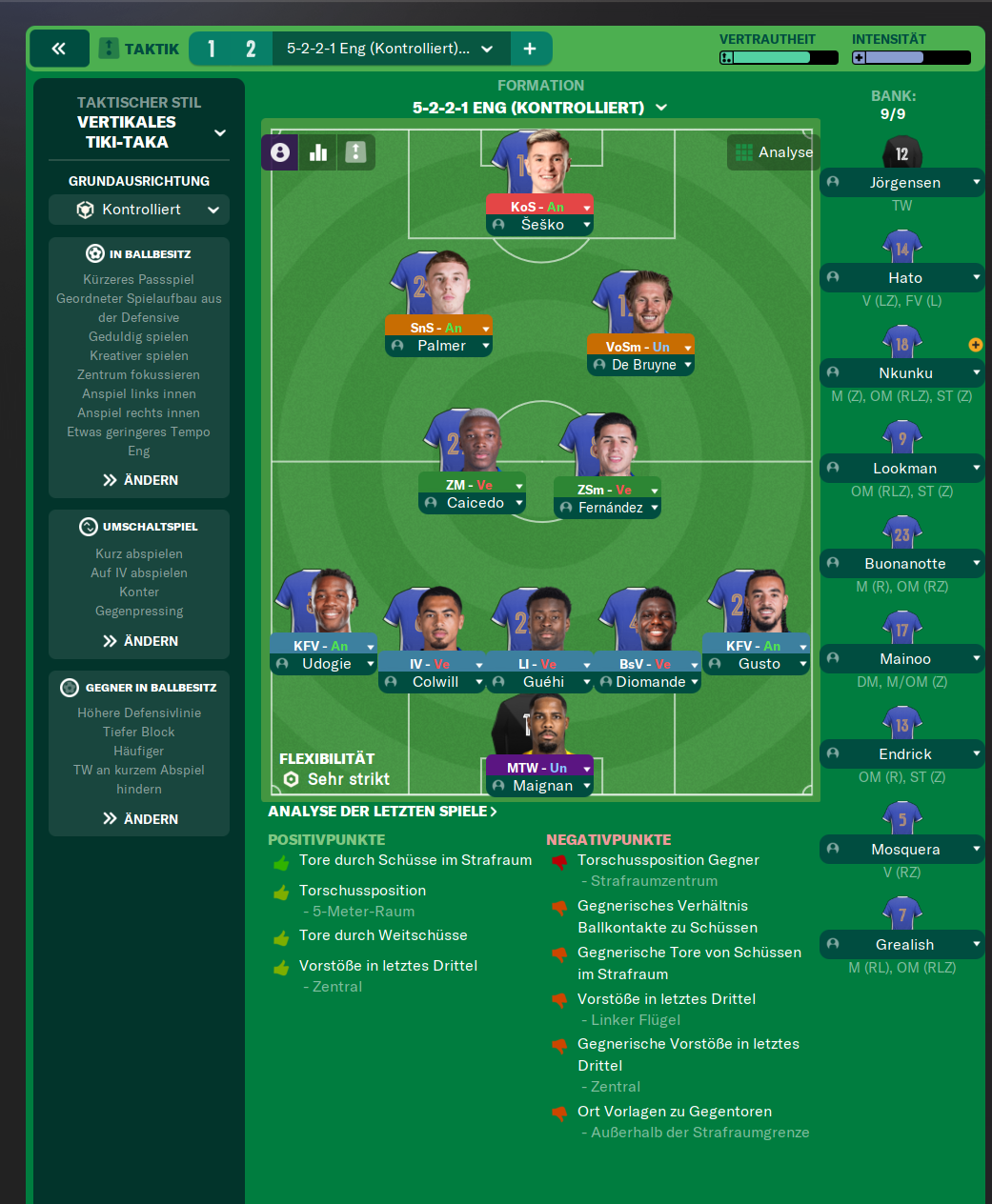
More Tiki-Taka tactics
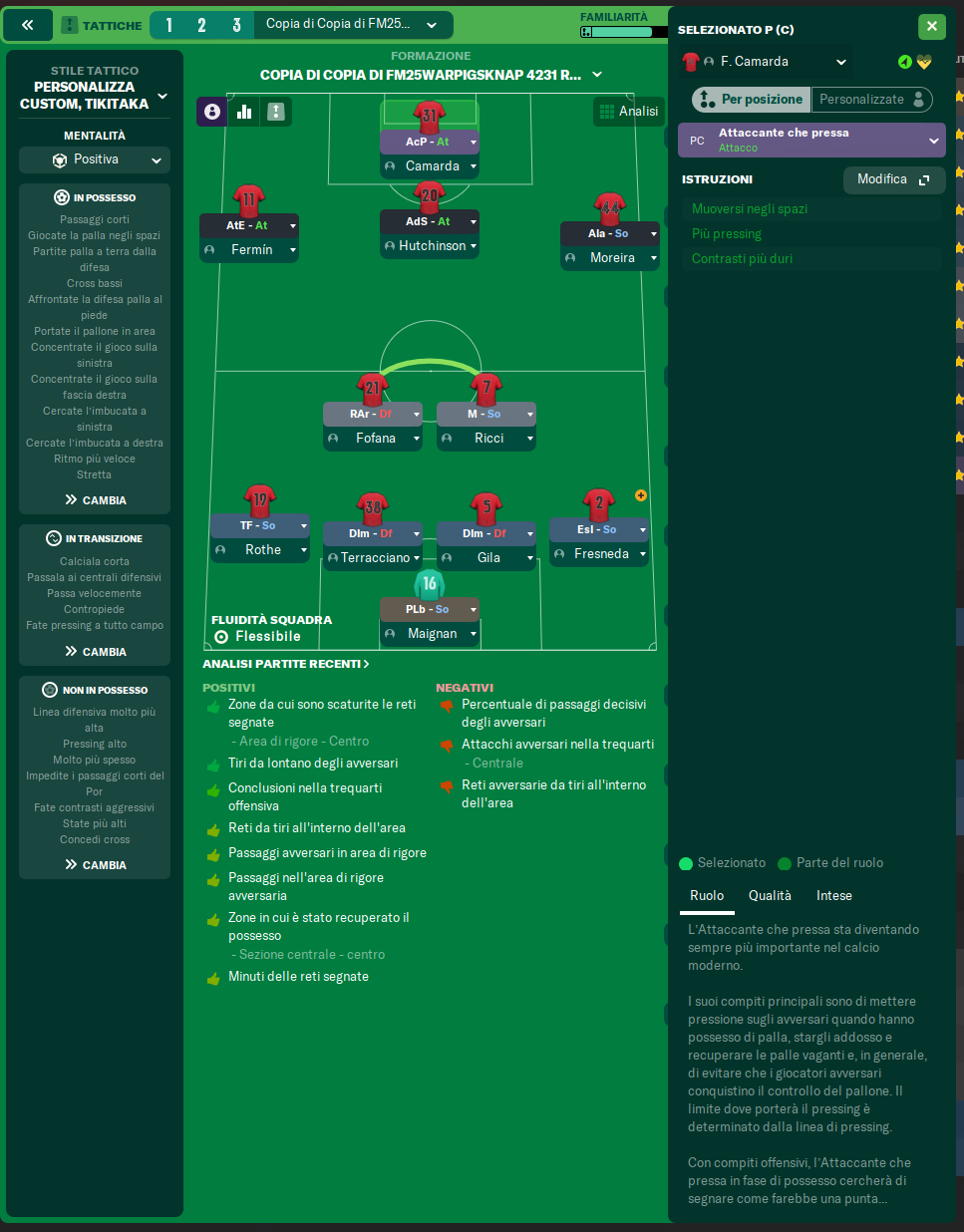
Guides for this formation
The tactical theory behind the 5-2-2-1 Eng: roles, instructions, and the trade-offs that decide whether the system holds up.