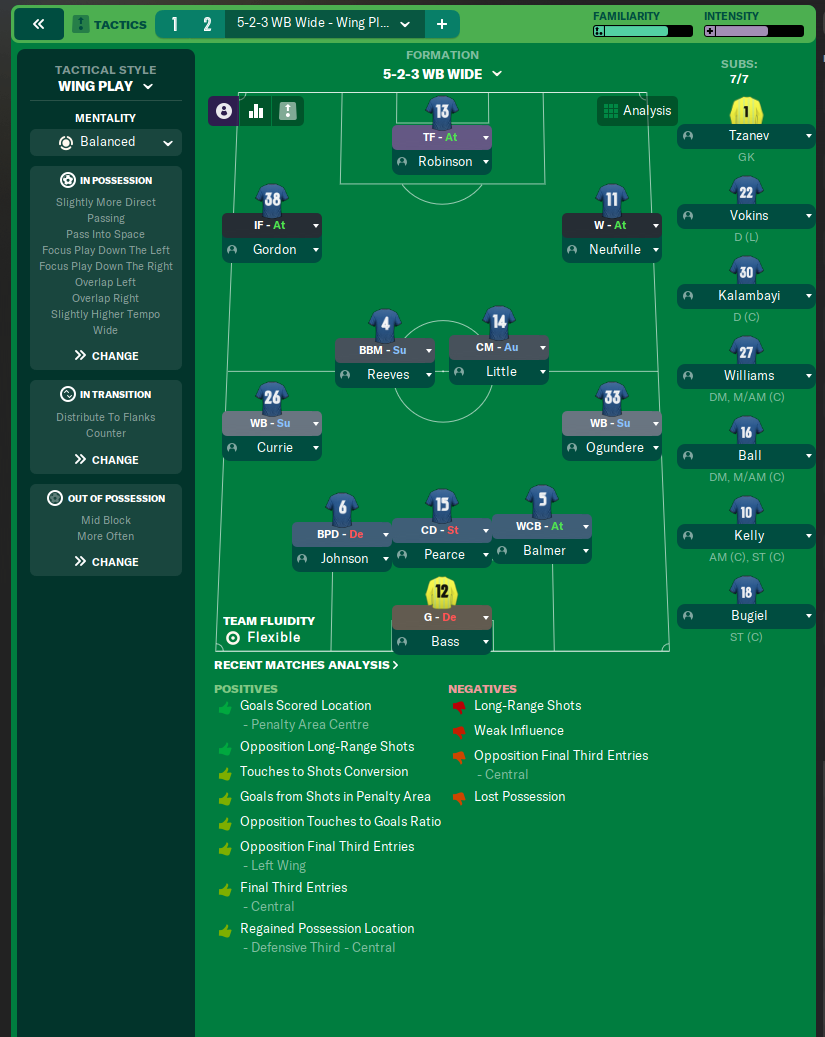
Uploaded Tactic
Formation & Style
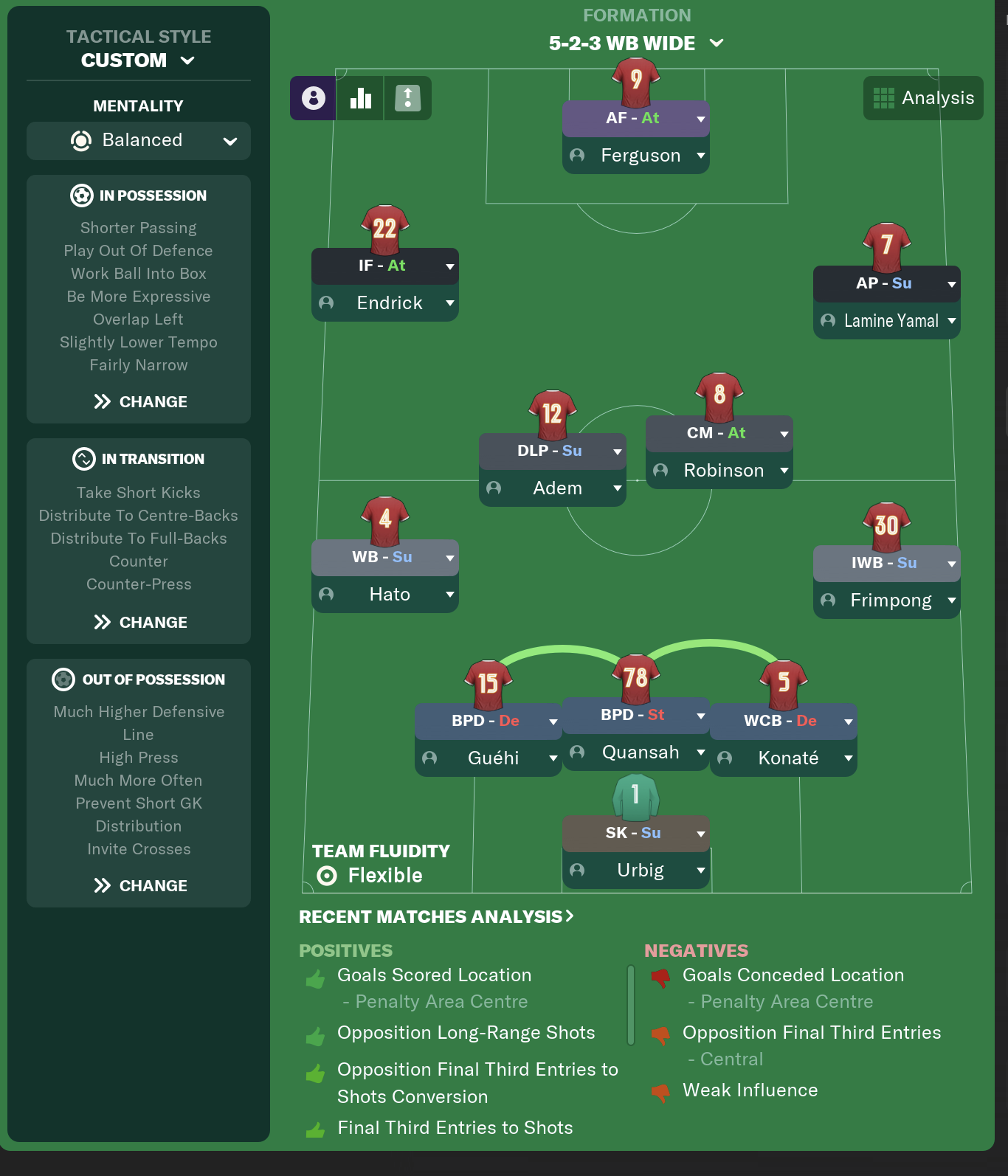
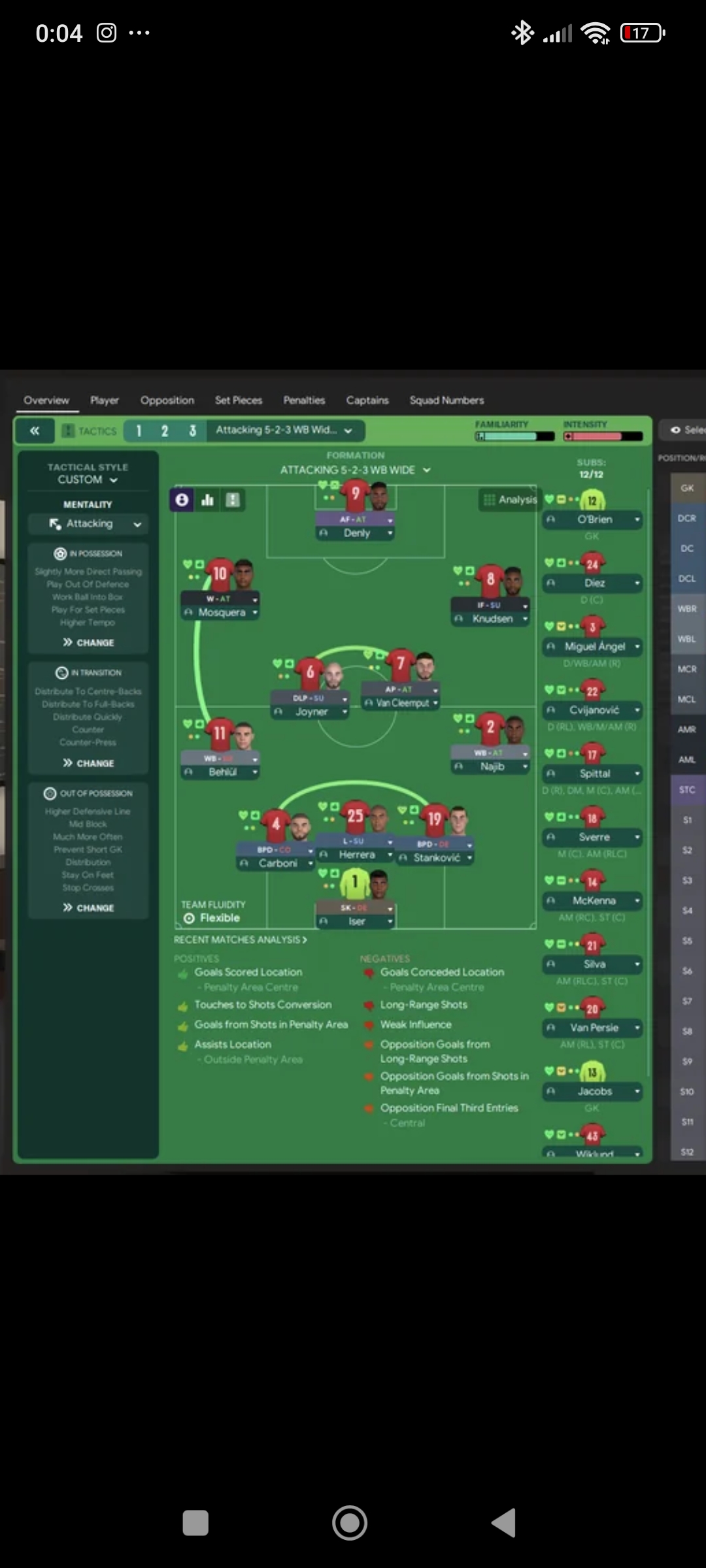
Tactical Style:Custom
Mentality:Balanced
Formation:5-2-3 WB Wide
Team Fluidity:Flexible
In Possession
Shorter Passing
Play Out Of Defence
Work Ball Into Box
Be More Expressive
Overlap Left
Slightly Lower Tempo
In Transition
Take Short Kicks
Distribute To Centre-Backs
Distribute To Full-Backs
Counter
Counter-Press
Out of Possession
Much Higher Defensive Line
High Press
Much More Often Prevent Short GK Distribution
Invite Crosses
Team Shape Without Ball
Shape:5-2-3
Description:A compact and higher defensive line with an emphasis on pressing from the front and cutting passing lanes.
Evidence:BPD-De at [2,3], WCB-De at [2,4], and wide defenders pushing up to support in higher blocks.
Team Shape With Ball
Shape:3-2-3-2
Description:Balanced attacking shape leveraging width and through balls made possible by DLP and the wing-backs.
Evidence:IF-A at [6,2] and WBs providing width in offensive phases.
Phase Description
Attacking Play
Fluid attacking play with an emphasis on short, controlled passes and working the ball into the box. Overlapping runs from wing-backs provide width.
Defensive Transition
Transition to a high press after losing the ball, aiming to quickly regain possession.
Main Focus
Utilizing width and overlapping runs while maintaining midfield control.
Key Strengths
Possession Play
The DLP's role ensures smooth transitions from defense to midfield, facilitating ball retention.
Wing Play
Utilization of wing-backs and inside forward provides width and options for attack.
High Pressing
The team’s pressing set-up ensures high recovery rates when possession is lost.
Conflicting Directions
Higher Defensive Line vs. Counterattacks
The higher defensive line can expose the team to quick counter-attacks if midfielders are bypassed.
Fluidity vs. Positional Discipline
The flexible shape can lead to players occupying unnecessary positions, disrupting overall team shape.
Over-reliance on Wing Play
Heavy use of wing-backs and inside forwards may be predictable, leading to difficulties against well-organized defenses.
Tactical Suggestions
Adjust Defensive Line
Consider lowering the defensive line to reduce vulnerability to counter-attacks.
Balance Midfield Roles
A more defensive option in midfield could provide needed stability.
Increase Central Fluidity
Encourage central midfield interplay to diversify attacking options.
Ask Questions About Your Lineup
Related Tactics
Guides for this formation
The tactical theory behind the 5-2-3 WB Wide: roles, instructions, and the trade-offs that decide whether the system holds up.