Uploaded Tactic
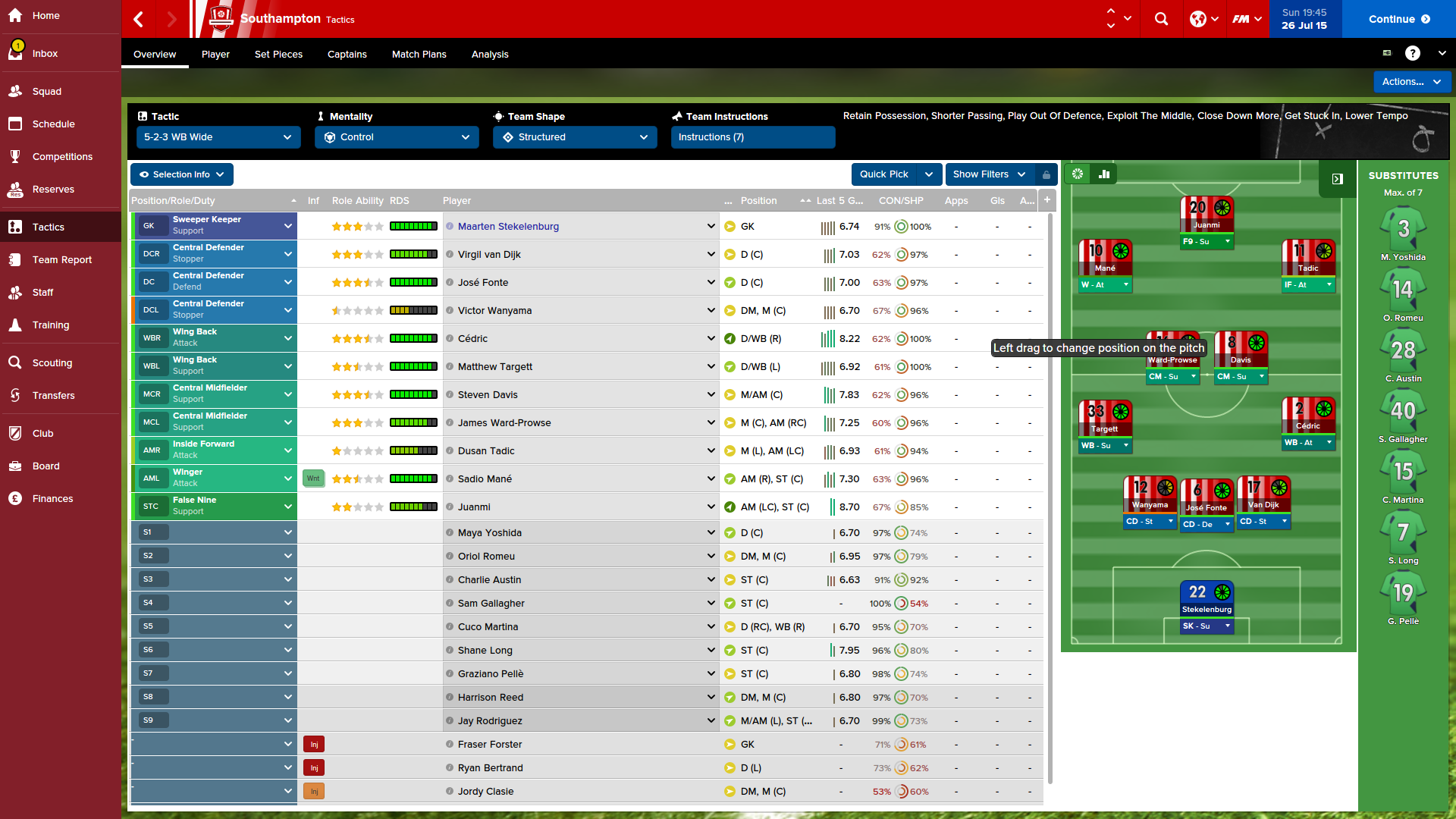
Formation & Style
Tactical Style:Controlled Possession
Mentality:Control
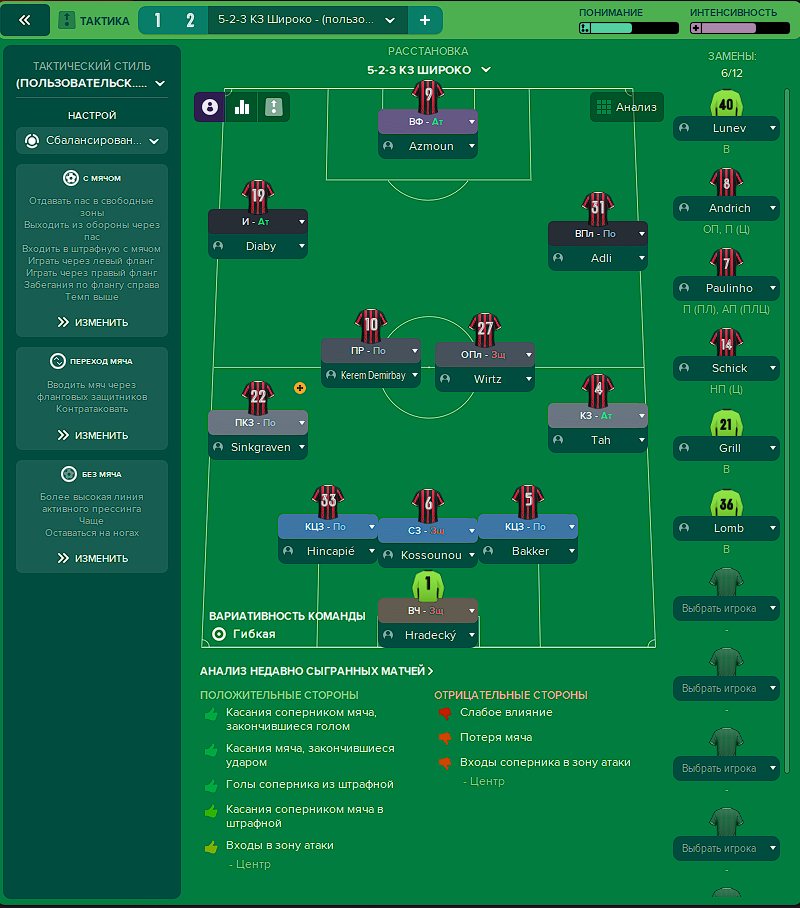
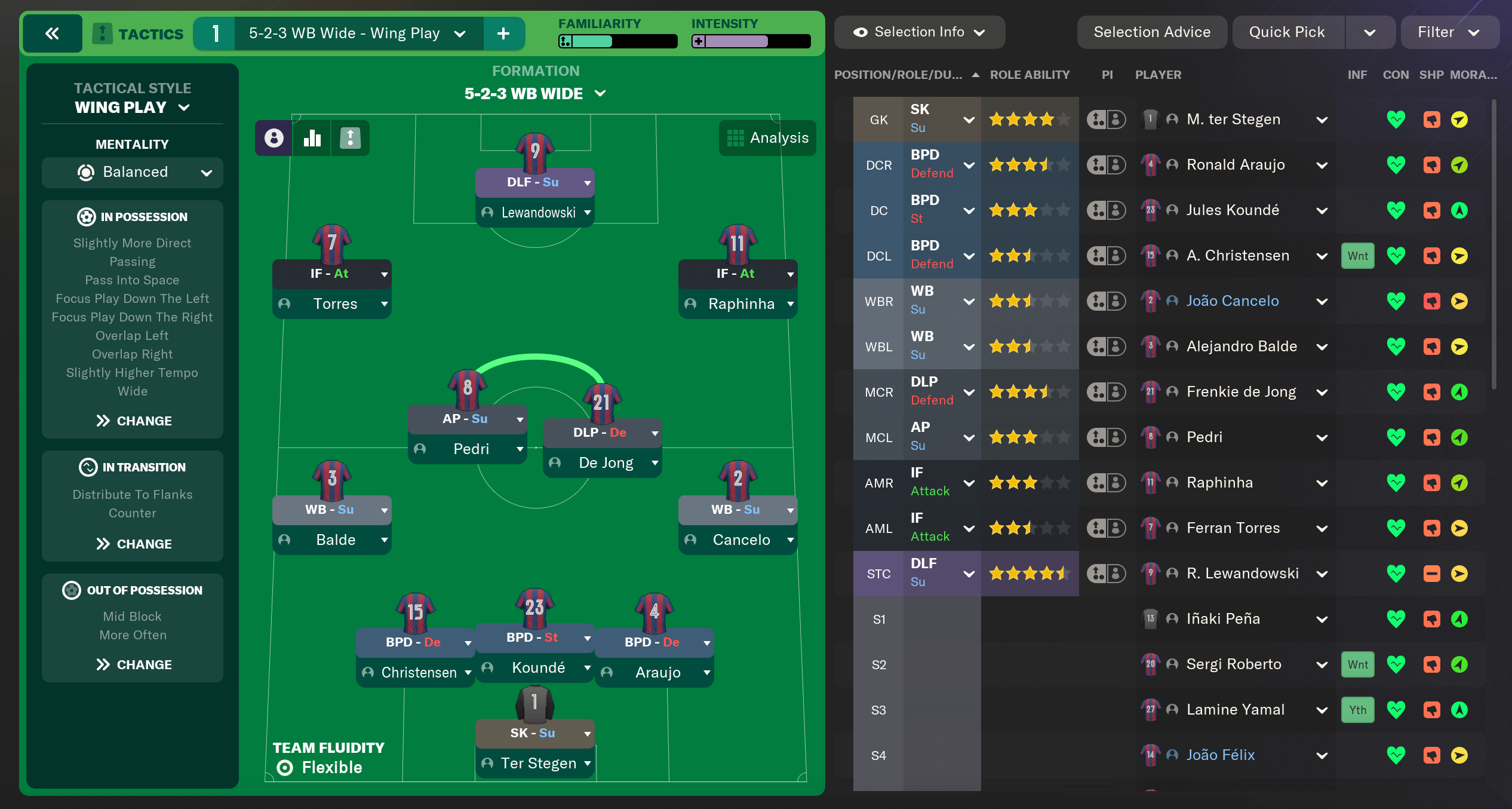
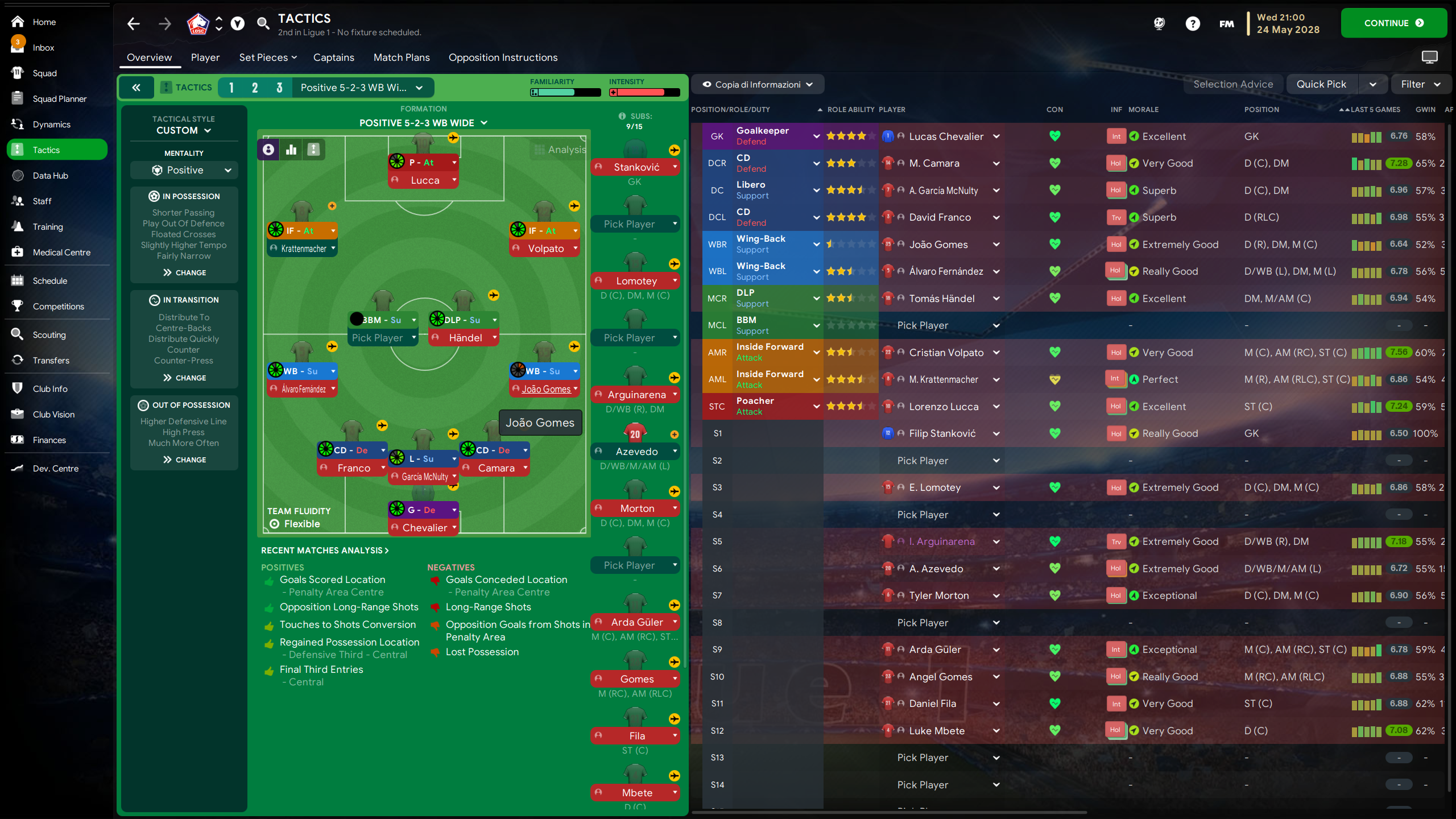
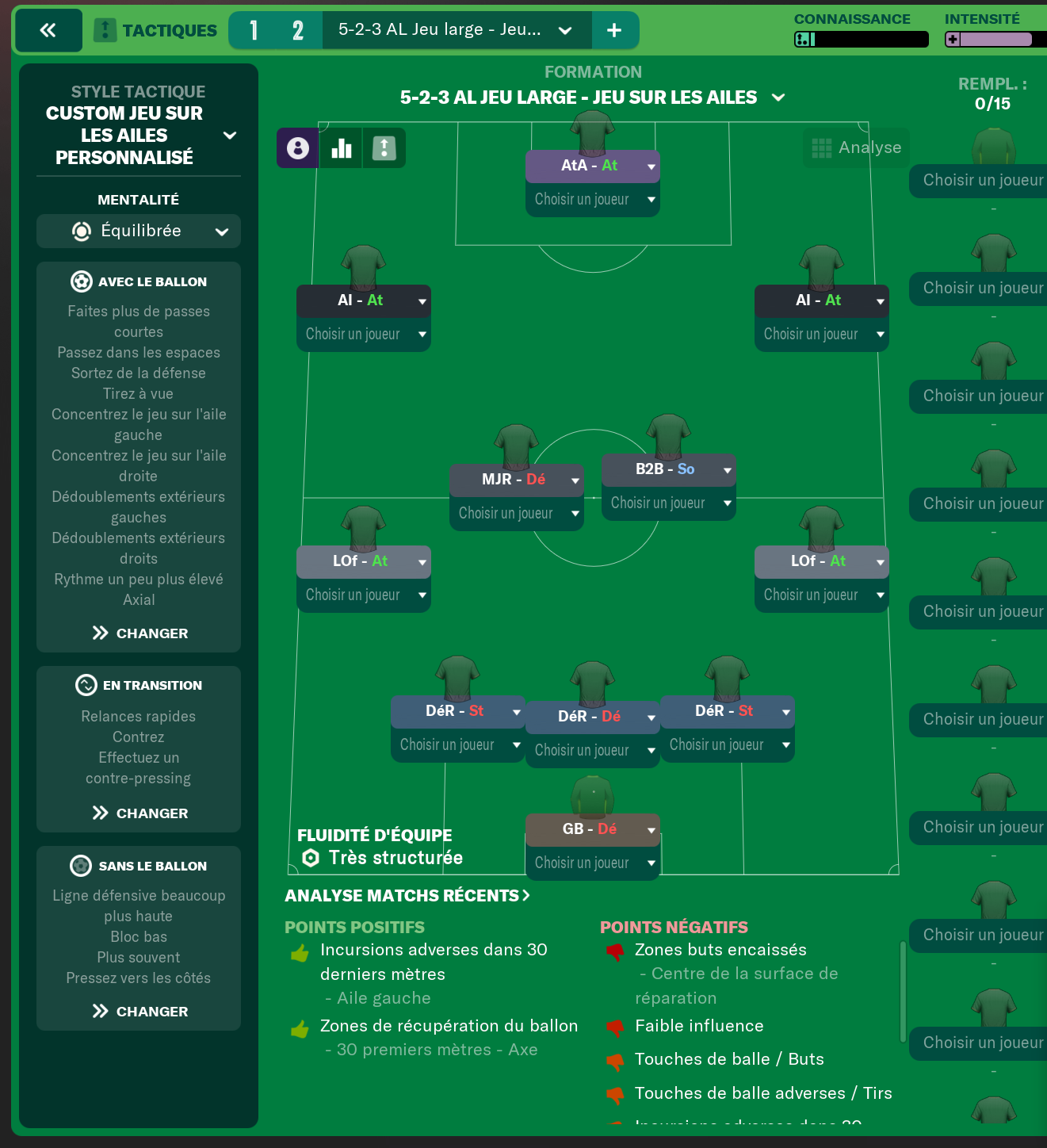
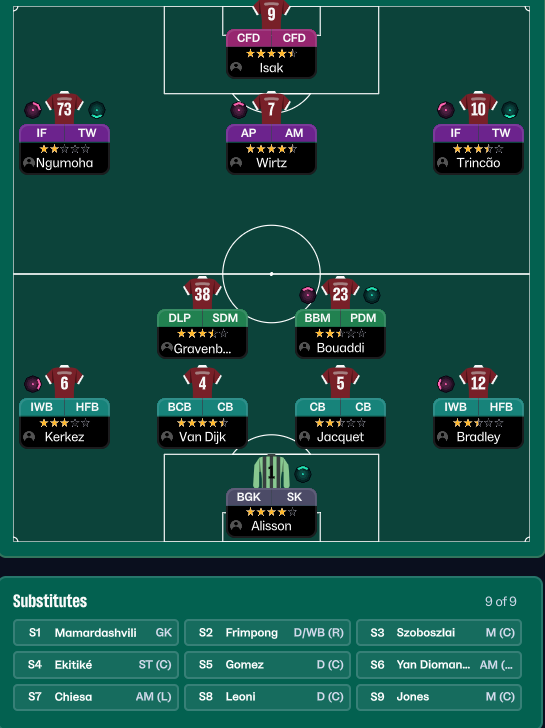
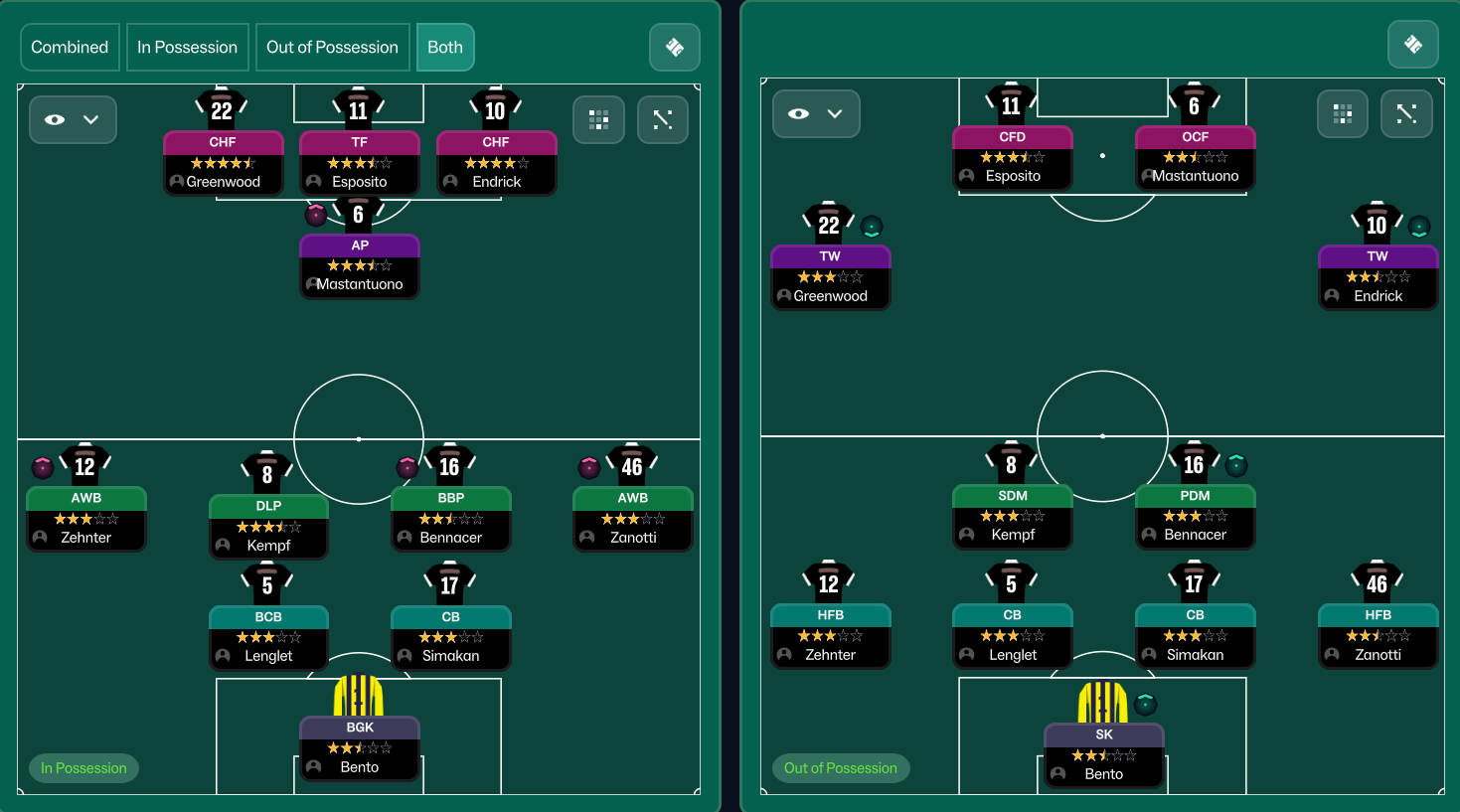
Formation:5-2-3 Wide
Team Fluidity:Structured
In Possession
Retain Possession
Shorter Passing
Exploit The Middle
In Transition
Play Out of Defence
Get Stuck In
Out of Possession
Close Down More
Lower Tempo
Team Shape Without Ball
Shape:Deep Defensive Line
Description:The three central defenders maintain a disciplined shape, supported by wing backs, allowing for limited space in the defense.
Evidence:Three DCs at [2,2], [2,3], [2,4] with 'Get Stuck In' applied.
Team Shape With Ball
Shape:Wide and Fluid Attack
Description:The wing backs and wingers stretch the play wide while the false nine creates fluid movement in central areas.
Evidence:Wing Back (WB) presence at [2,1] and [2,5] with wingers occupying [5,2] and [6,3].
Phase Description
Attacking Play
Focus on building possession through short passes while utilizing the width provided by wing backs and wingers to stretch the opponent's defense.
Defensive Transition
Upon losing possession, the team looks to regain the ball quickly through applied pressure, supported by a solid defensive base.
Main Focus
Creating goal-scoring opportunities through controlled possession and exploiting space in the final third.
Key Strengths
Solid Defensive Structure
The three central defenders provide stability and strength in defense.
Width in Attack
Utilizing wing backs effectively stretches the opponent, allowing for inside runs from forwards.
Fluid Movement from Forwards
The False Nine draws defenders and creates gaps for wingers to exploit.
Conflicting Directions
Potential Over-Reliance on Wing Play
While using width can be effective, it may make the team predictable and allow opponents to focus on wing defense.
Vulnerability to Counter-Attacks
The attacking commitment from wing backs may expose the defense to counters if possession is lost.
Midfield Overcrowding
Two central midfielders could lead to congested areas, making it difficult to transition effectively.
Tactical Suggestions
Consider a More Attacking Duty for One CM
This can help enhance the attacking threat and relieve pressure on the forwards.
Introduce a More Dynamic Forward
Changing the False Nine to a more traditional forward may increase goal-scoring opportunities.
Ensure Cover for Wing Backs
Position a full-back in advanced wide areas when wing backs push forward to maintain defensive solidity.
Ask Questions About Your Lineup
Related Tactics
More Controlled Possession tactics
Guides for this formation
The tactical theory behind the 5-2-3 Wide: roles, instructions, and the trade-offs that decide whether the system holds up.