Uploaded Tactic
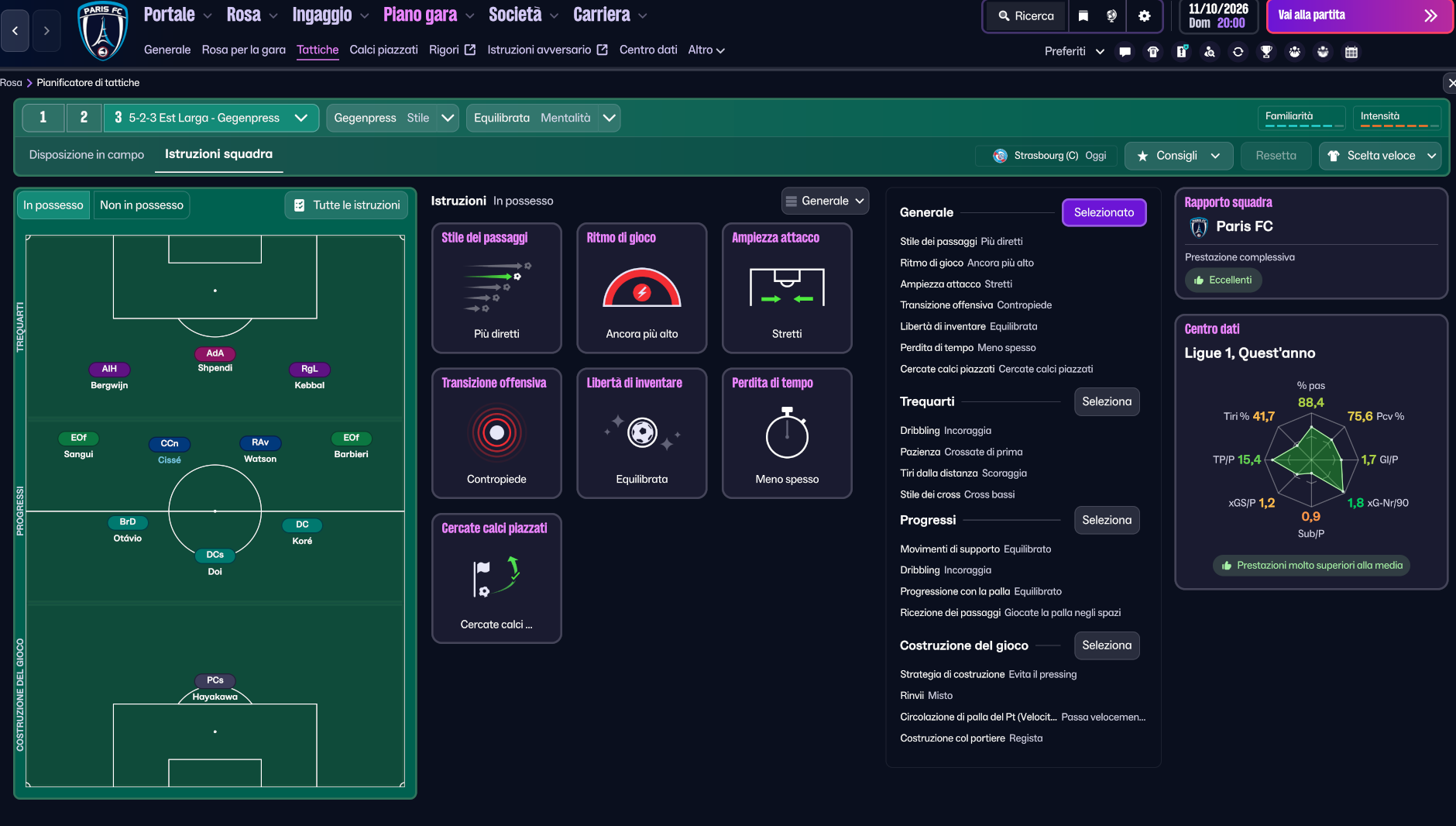
Formation & Style
Tactical Style:Gegenpress
Mentality:Attacking
Formation:5-2-3 Wide
Team Fluidity:Balanced
In Possession
Direct Passing
Higher Tempo
Narrow Width
In Transition
Counter-Press
Balanced
Out of Possession
Higher Defensive Line
Higher Line of Engagement
Trigger Press More Often
Team Shape Without Ball
Shape:5-3-2
Description:Compact structure with a focus on blocking passing lanes and limiting space.
Evidence:DCs at [2,1], [2,3], [2,5] maintaining a strong backline.
Team Shape With Ball
Shape:5-2-3
Description:Wide formation allowing inside forwards to cut inside while wing-backs overlap.
Evidence:Wing-Backs (WB-A) at [2,1] and [2,5] providing width.
Phase Description
Attacking Play
Utilizes direct passing and quick transitions to exploit the opposition's defensive structure.
Defensive Transition
Immediately counter-pressing upon losing possession to regain control of the ball quickly.
Main Focus
Maximizing wing play through attacking wing-backs and inside forwards.
Key Strengths
Effective Counter-Pressing
The team's ability to quickly regain possession after losing it can disrupt the opponent's rhythm.
Wing Play Utilization
Attacking width is created by wing-backs leading to more options in the final third.
Dynamic Forward Line
Three forwards provide diverse attacking threats through their positioning and movement.
Conflicting Directions
Inconsistent Defensive Structure
While pressing is emphasized, the 5-2-3 shape can become disjointed if players are caught out of position.
Transition Vulnerability
Quick transitions can be exploited if the team is not organized during defensive transitions.
Dependency on Wing-Backs
Heavy reliance on wing-backs for width might render the team predictable if they are contained.
Tactical Suggestions
Enhance Midfield Compactness
Ensure central midfielders are more connected to provide defensive cover and assist in transitions.
Adjust Wing-Back Duties
Consider alternating between attacking and supporting duties based on opposition strengths.
Review Pressing Triggers
Customizing pressing triggers based on opponent's strengths can improve defensive stability.
Ask Questions About Your Lineup
Related Tactics
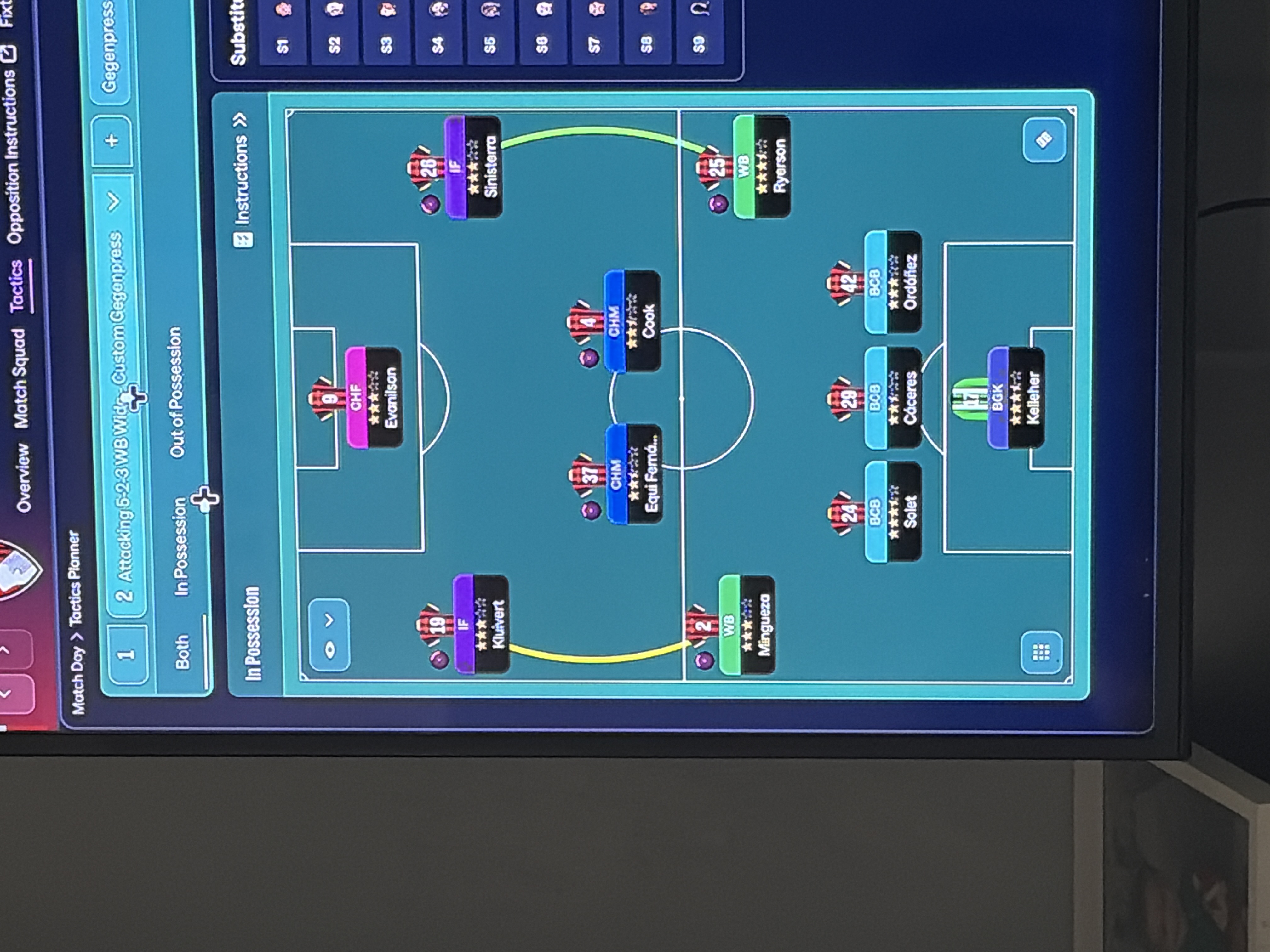
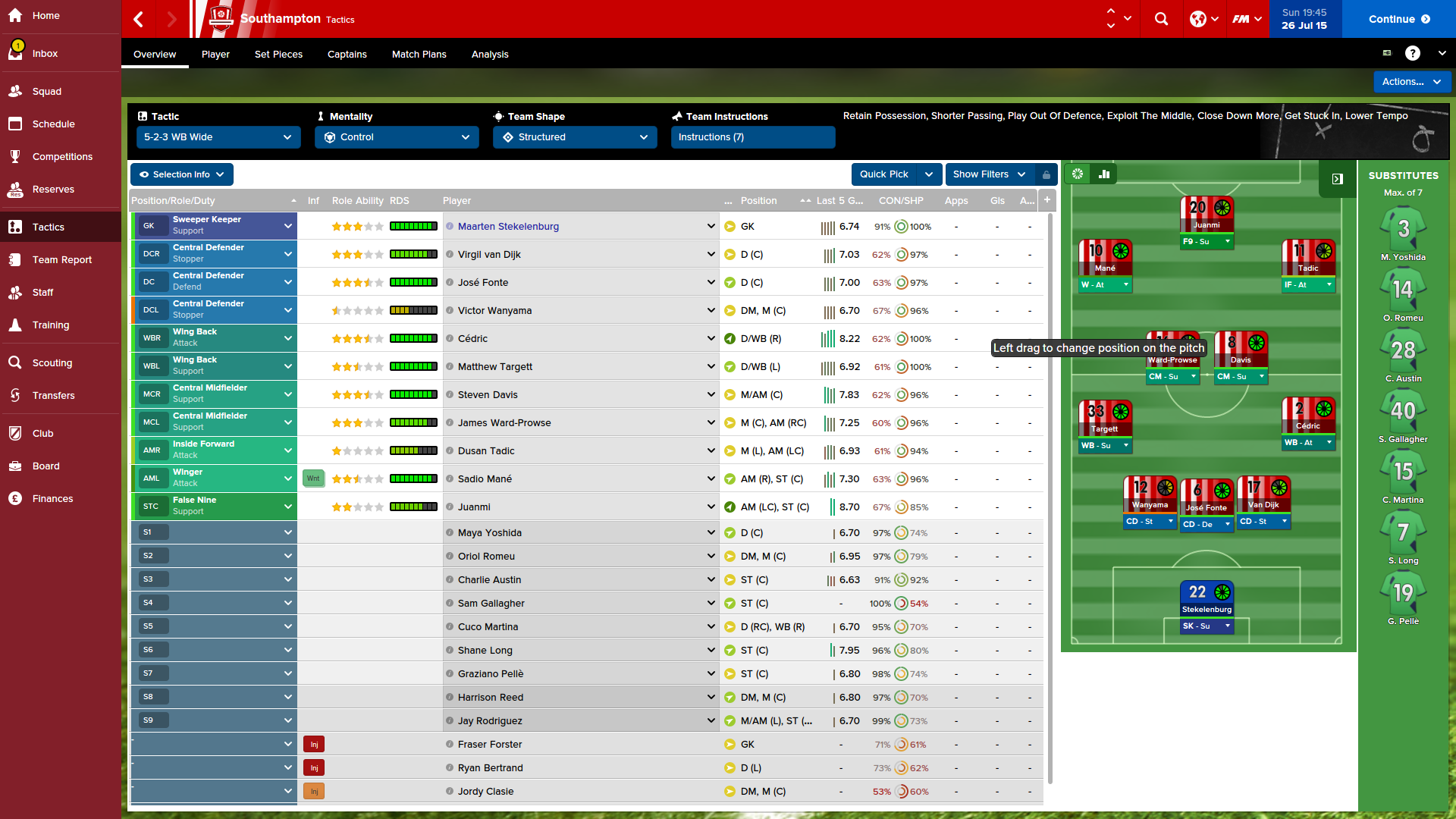
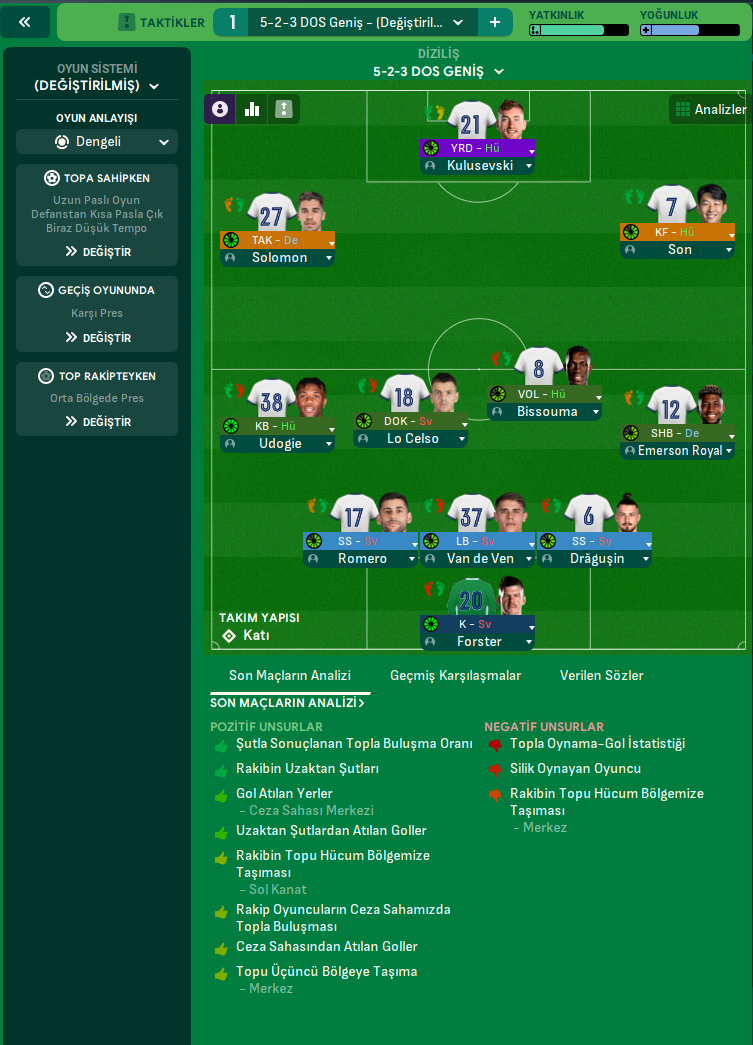
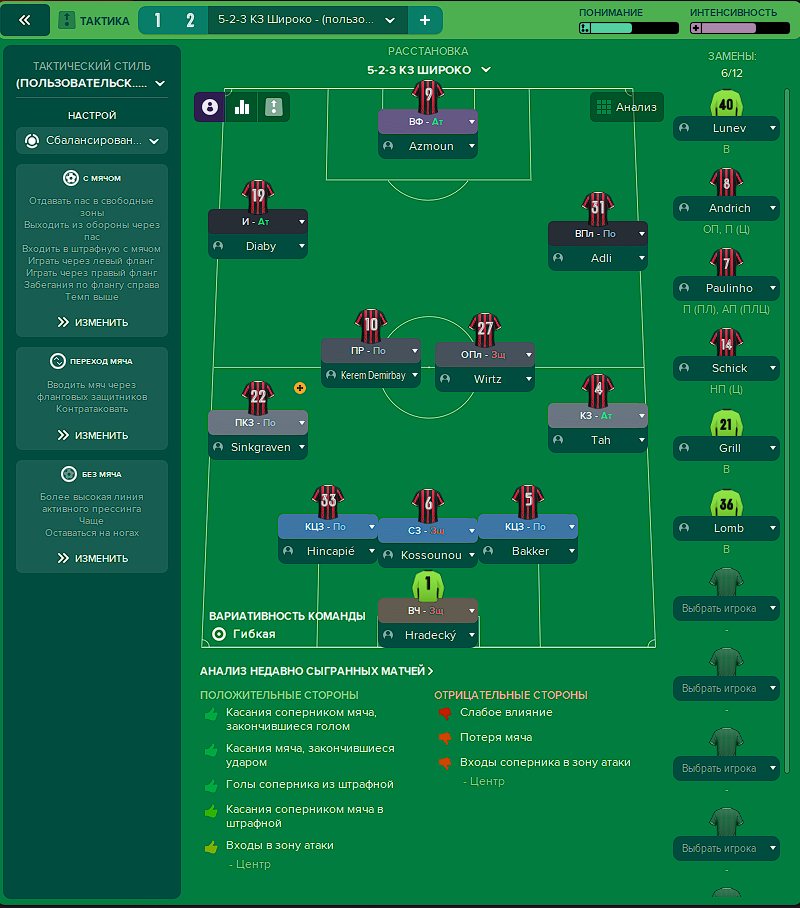
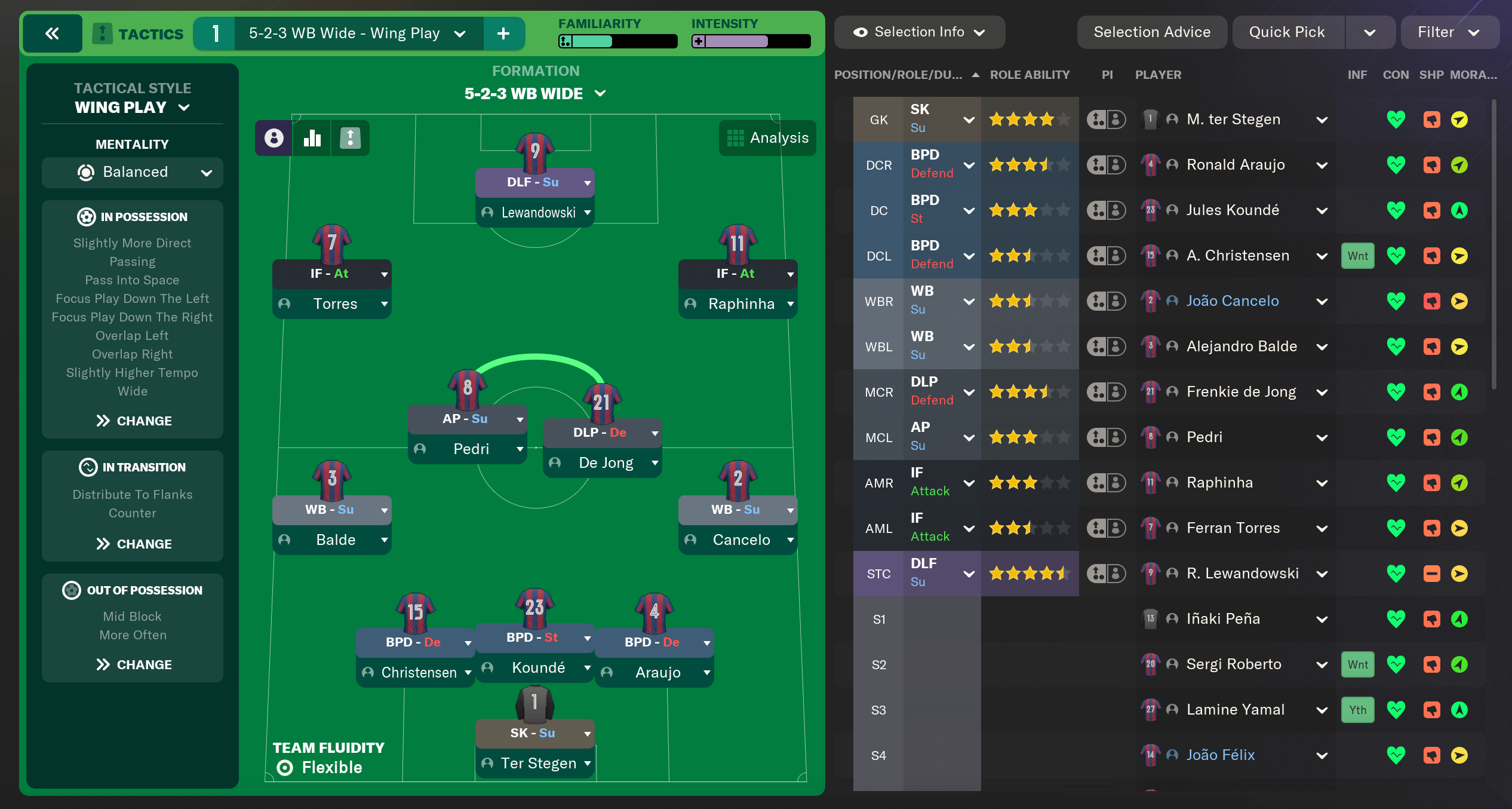
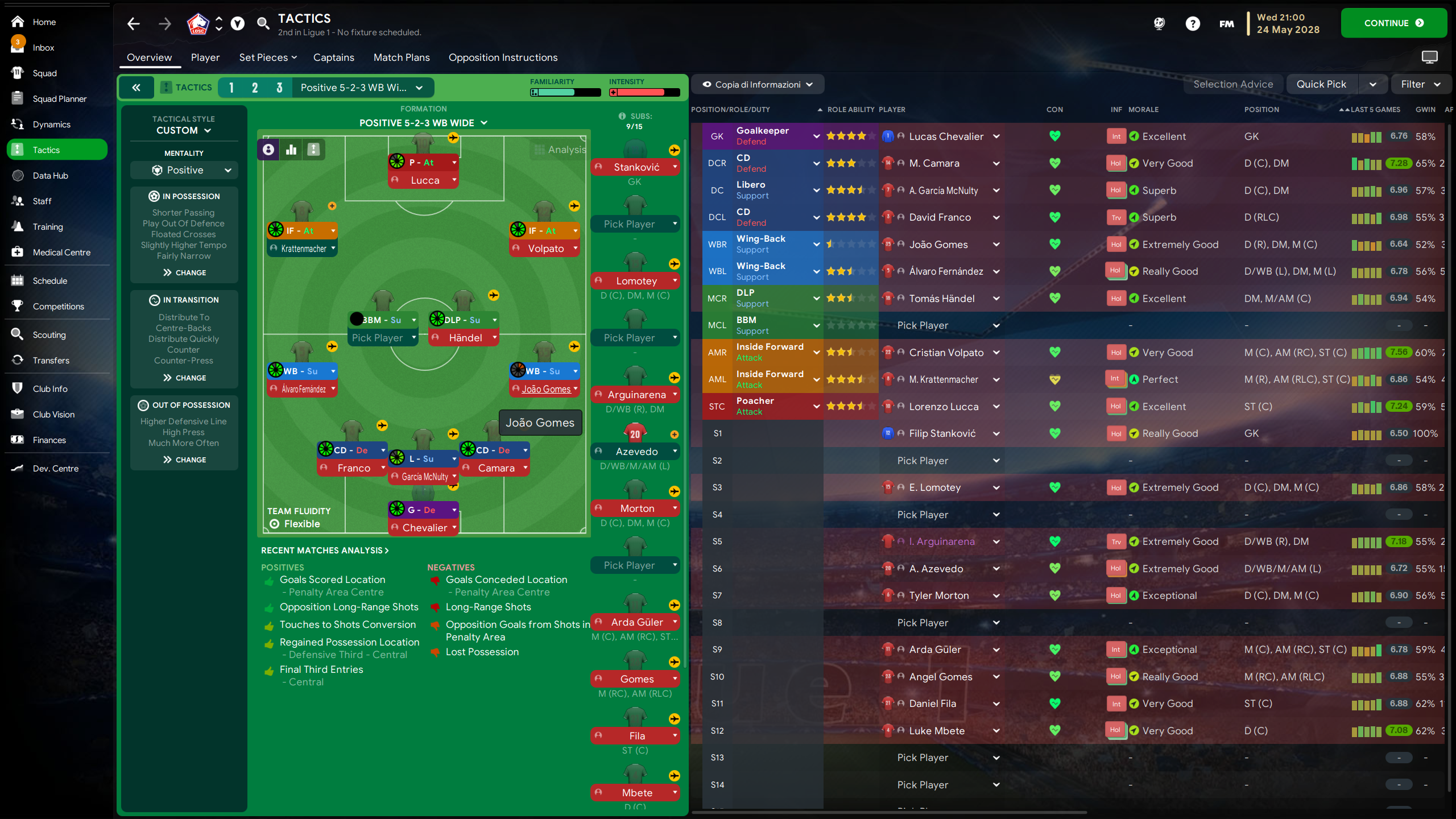
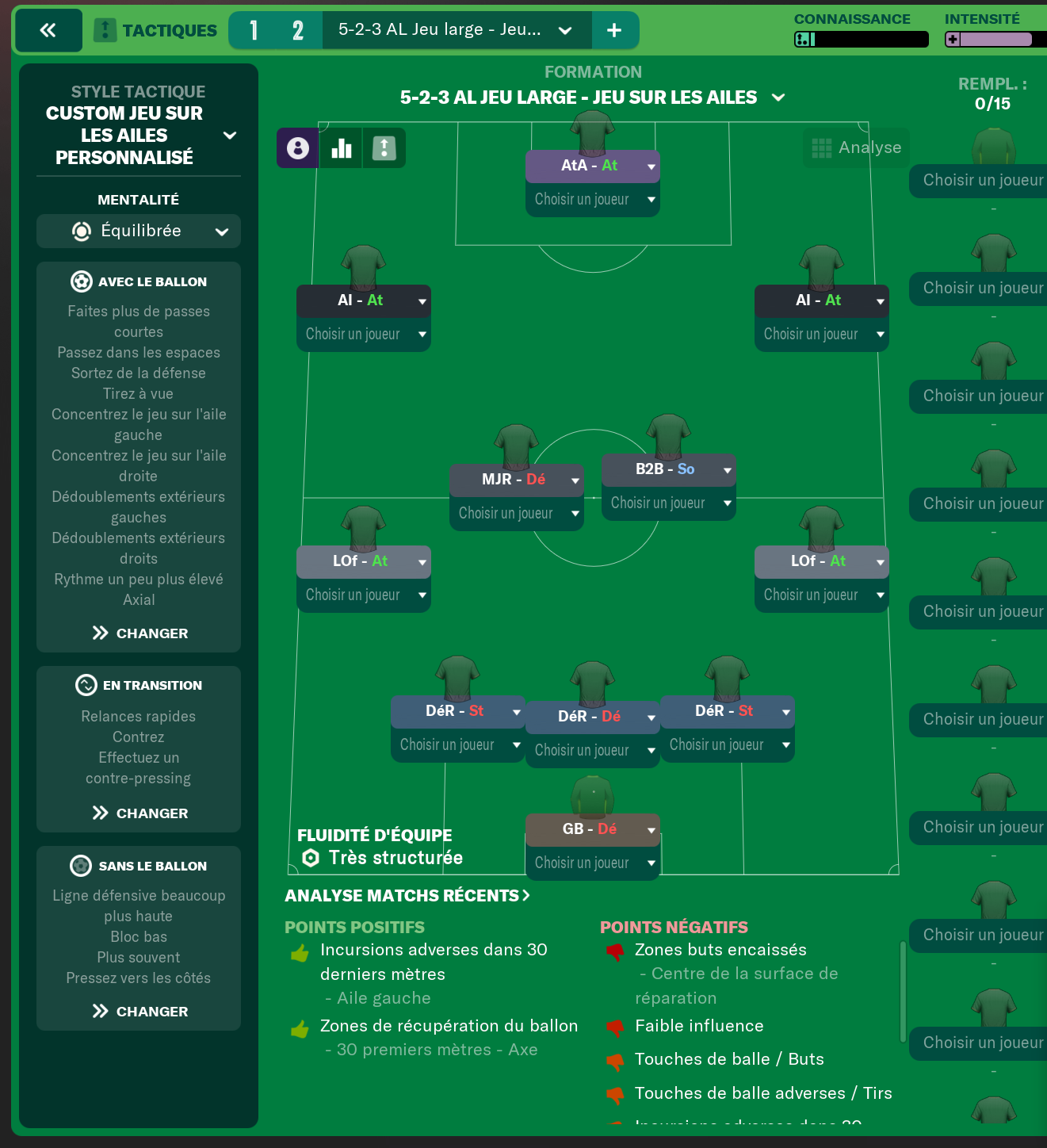
More Gegenpress tactics
Guides for this formation
The tactical theory behind the 5-2-3 Wide: roles, instructions, and the trade-offs that decide whether the system holds up.