Uploaded Tactic
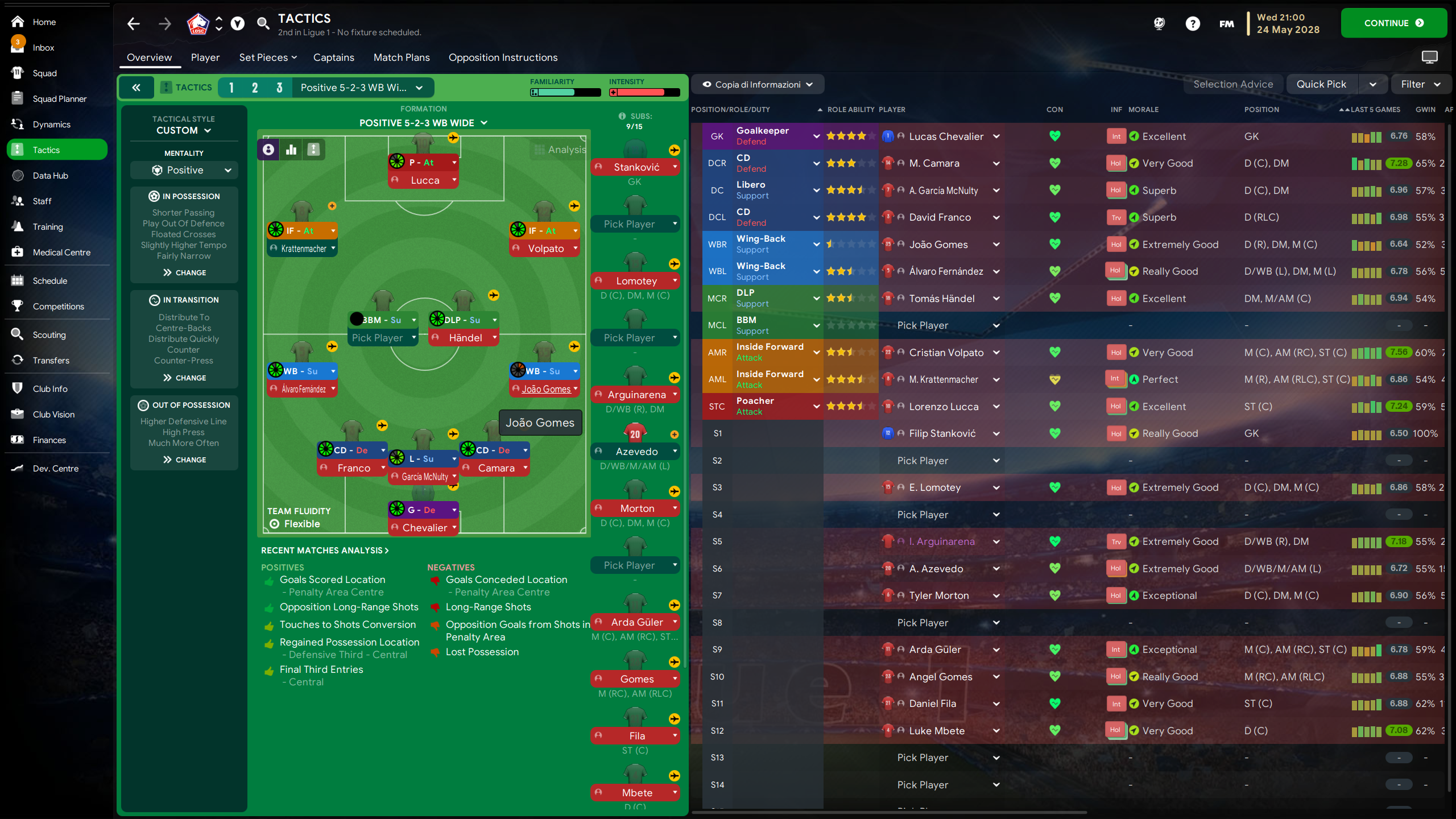
Formation & Style
Tactical Style:Custom
Mentality:Positive
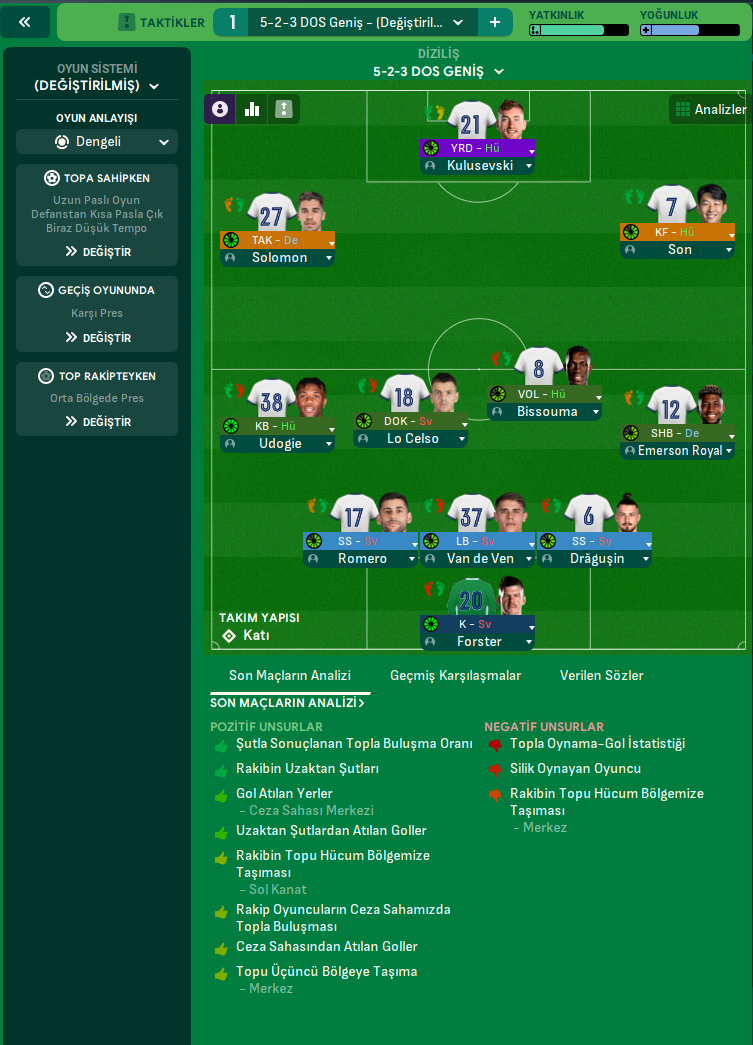
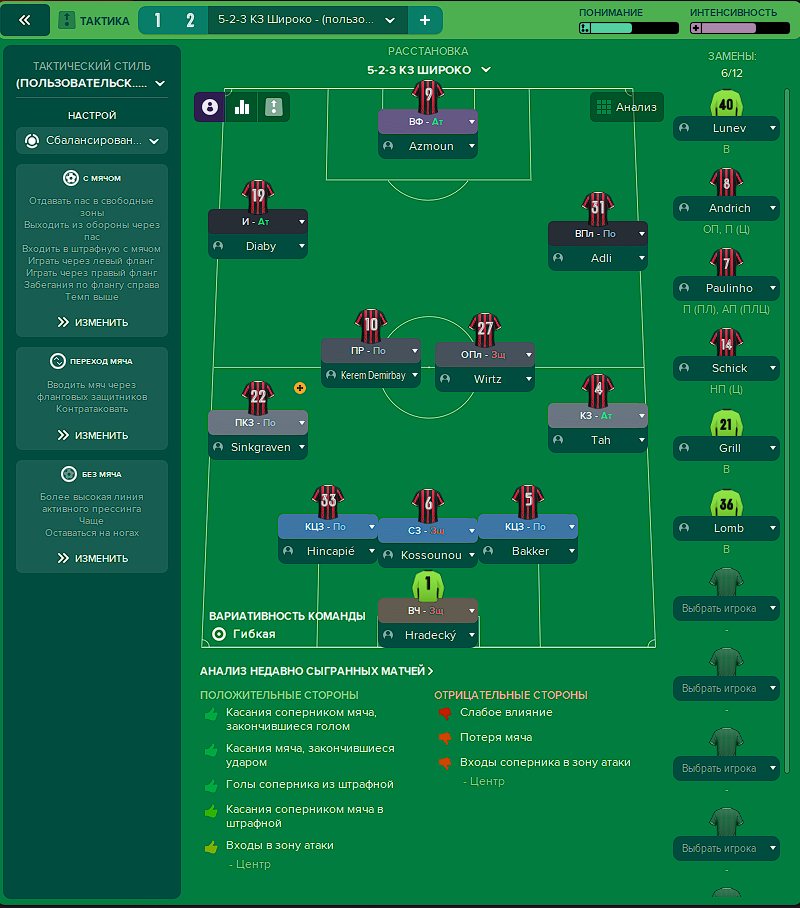
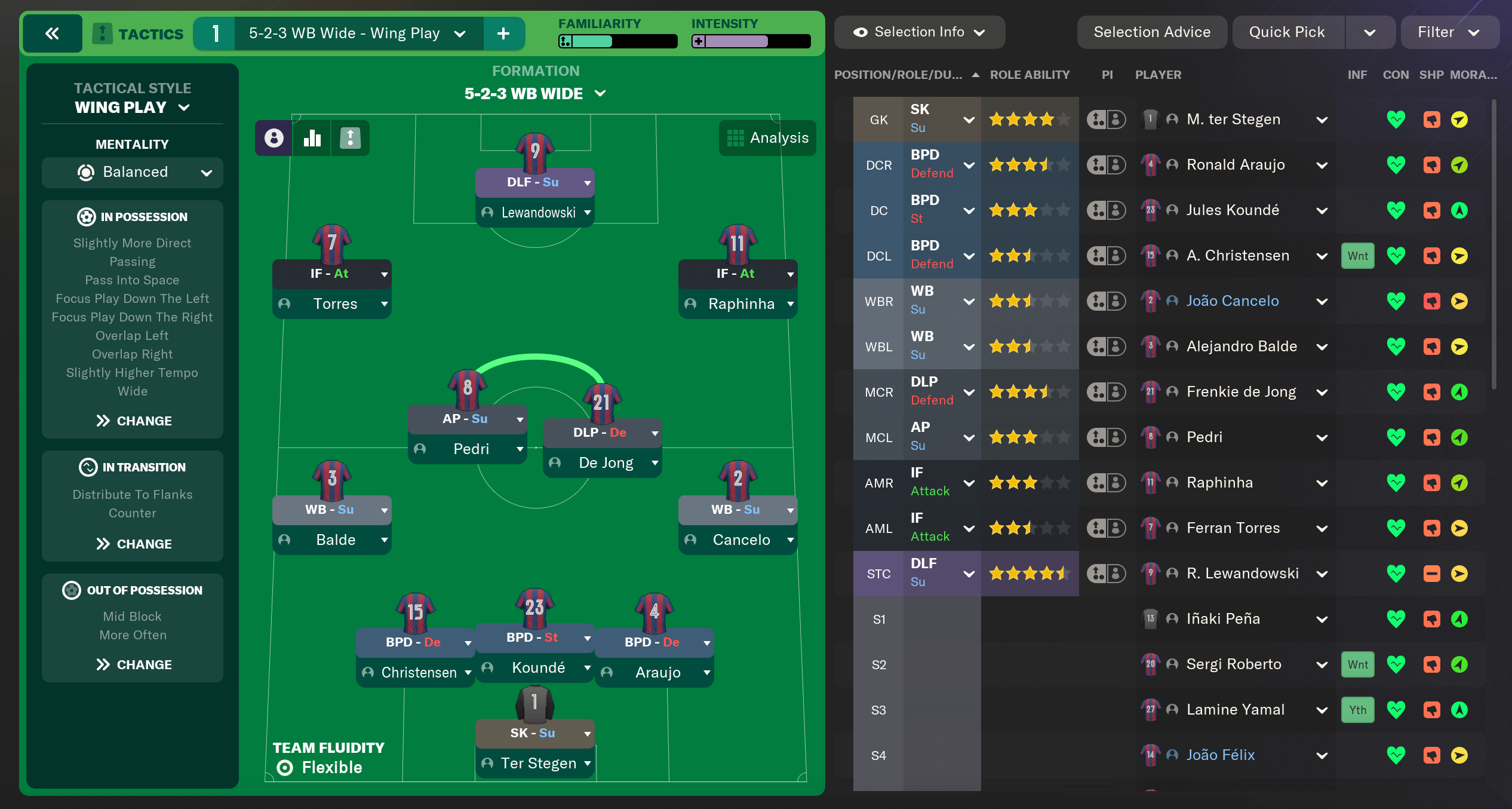
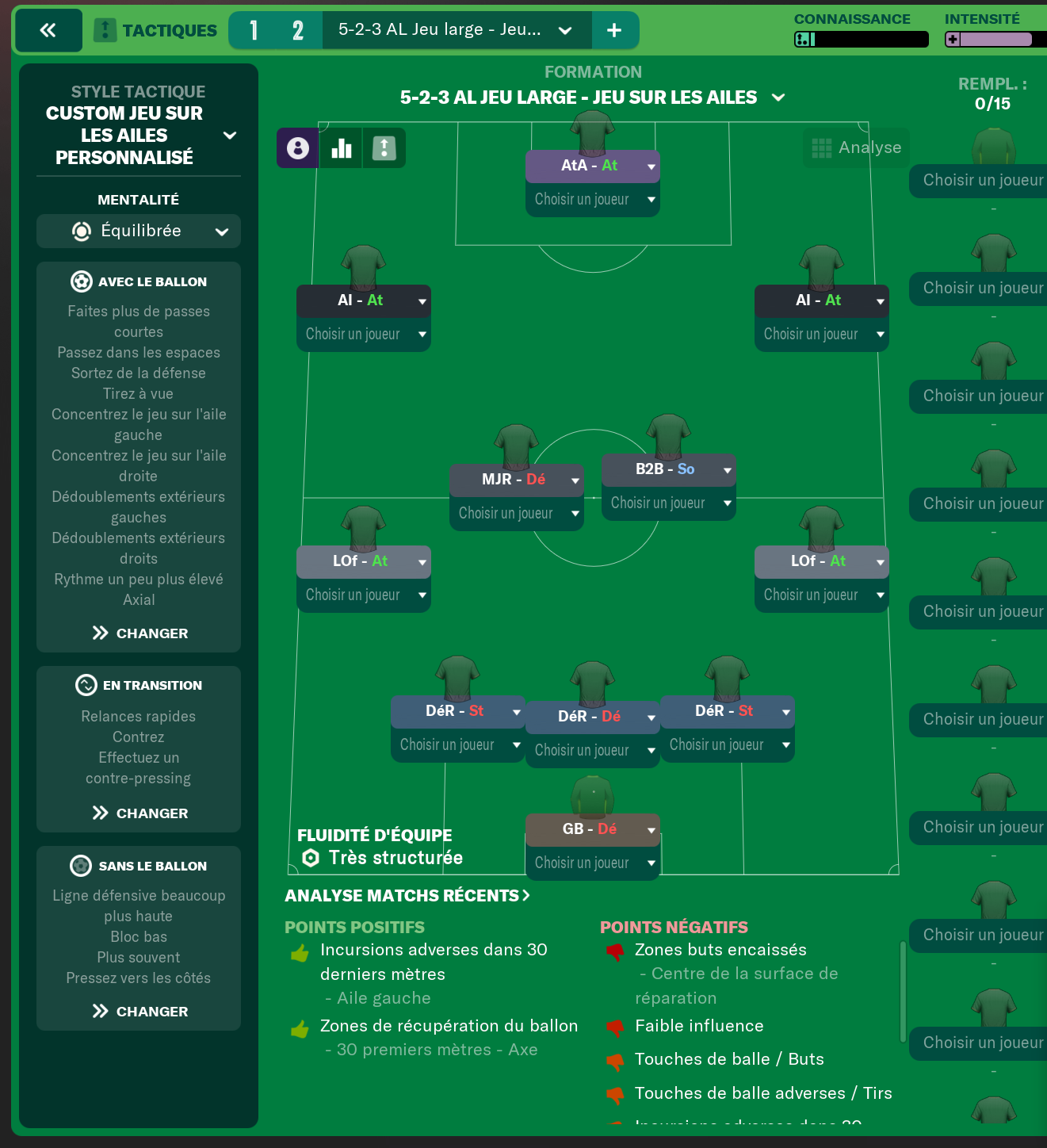
Formation:5-2-3 Wide
Team Fluidity:Flexible
In Possession
Shorter Passing
Play Out Of Defence
Floated Crosses
Slightly Higher Tempo
Fairly Narrow
In Transition
Distribute To Centre-Backs
Distribute Quickly
Counter-Press
Out of Possession
Higher Defensive Line
High Press
Much More Often
Team Shape Without Ball
Shape:5-2-3
Description:A strong defensive shape that prioritizes compactness and numerical advantage in defense.
Evidence:Three DCs and two WBs at [2,1], [2,3], [2,5], [1,2], and [1,4] provide solidity.
Team Shape With Ball
Shape:5-2-3
Description:Offers attacking width and versatility with overlapping wing-backs and inside forwards who cut in.
Evidence:IB Wingers at [6,2] and [6,4] along with a central poacher at [6,3] create multiple attacking lanes.
Phase Description
Attacking Play
Utilizes width from wing-backs and inside forwards to penetrate opposition defenses while maintaining a flexible midfield structure.
Defensive Transition
Quick transitions emphasize regaining possession high up the pitch with a focused counter-press approach.
Main Focus
The main focus is on creating goal-scoring opportunities through quick movements and utilizing the width provided by wing-backs.
Key Strengths
Fluid Midfield Play
The combination of a DLP and BBM allows for a continuous flow of ball progression.
Defensive Stability
The presence of a libero enhances defensive adaptability and helps initiate attacks from the back.
Dynamic Attack Options
Multiple attacking roles can exploit spaces effectively against a disorganized defense.
Conflicting Directions
Potential Overreliance on Wing-Backs
If wing-backs are pinned down, the attack may become overly reliant on central options, which could be nullified.
High Defensive Line Risks
Playing a high defensive line may expose the team to through balls and fast counter-attacks.
Central Midfield Balance
The two central midfielders could leave gaps if not adequately managed, particularly against pressing opponents.
Tactical Suggestions
Adjust Width Settings
Consider adjusting the attacking width to provide more flexibility depending on opposition tactics.
Explore Alternative Roles
Experimenting with roles for inside forwards or the poacher could help adapt to different defensive setups.
Monitor Defensive Shape
Ensure defenders maintain a compact shape to mitigate against fast counters.
Ask Questions About Your Lineup
Related Tactics
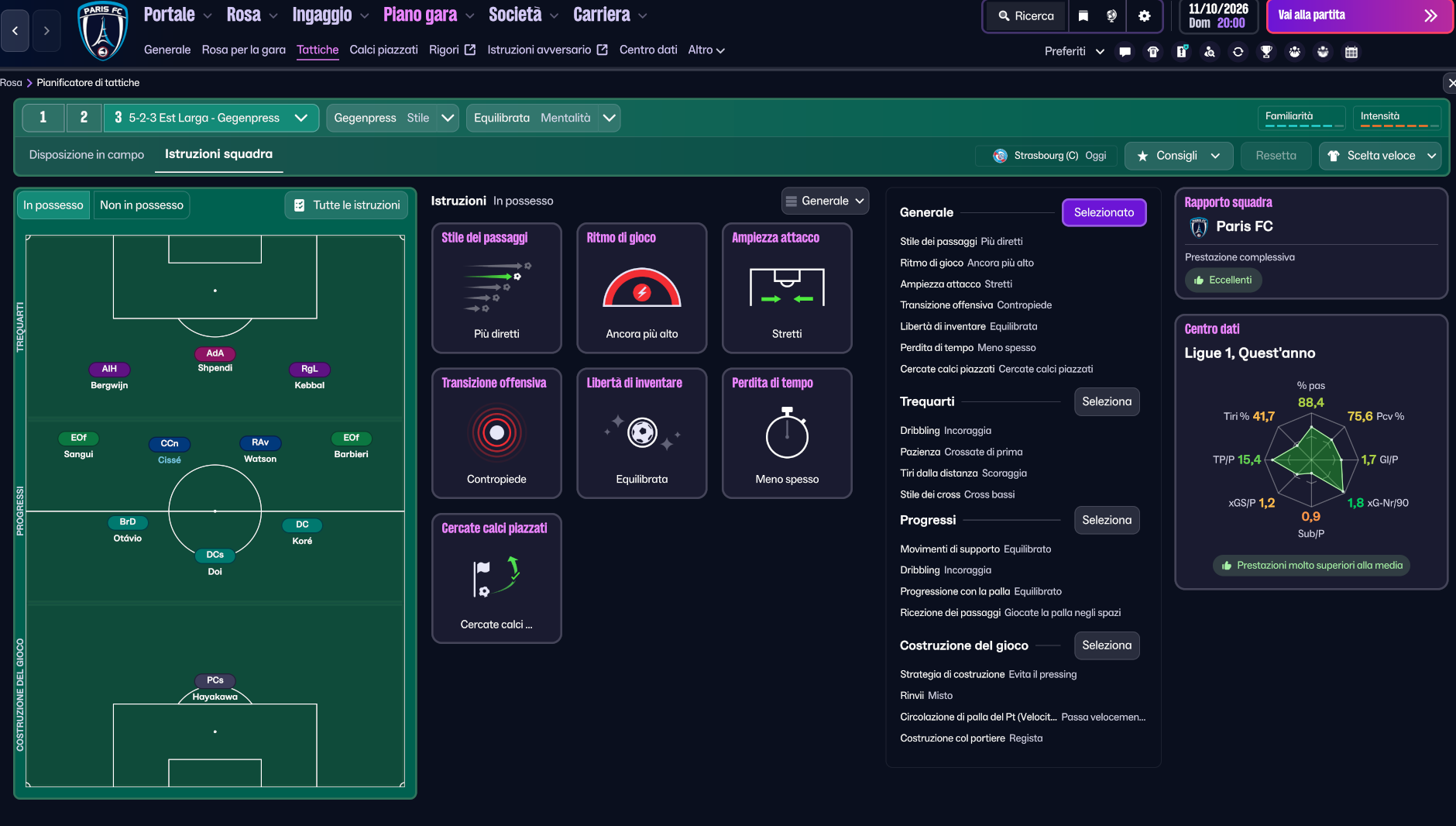
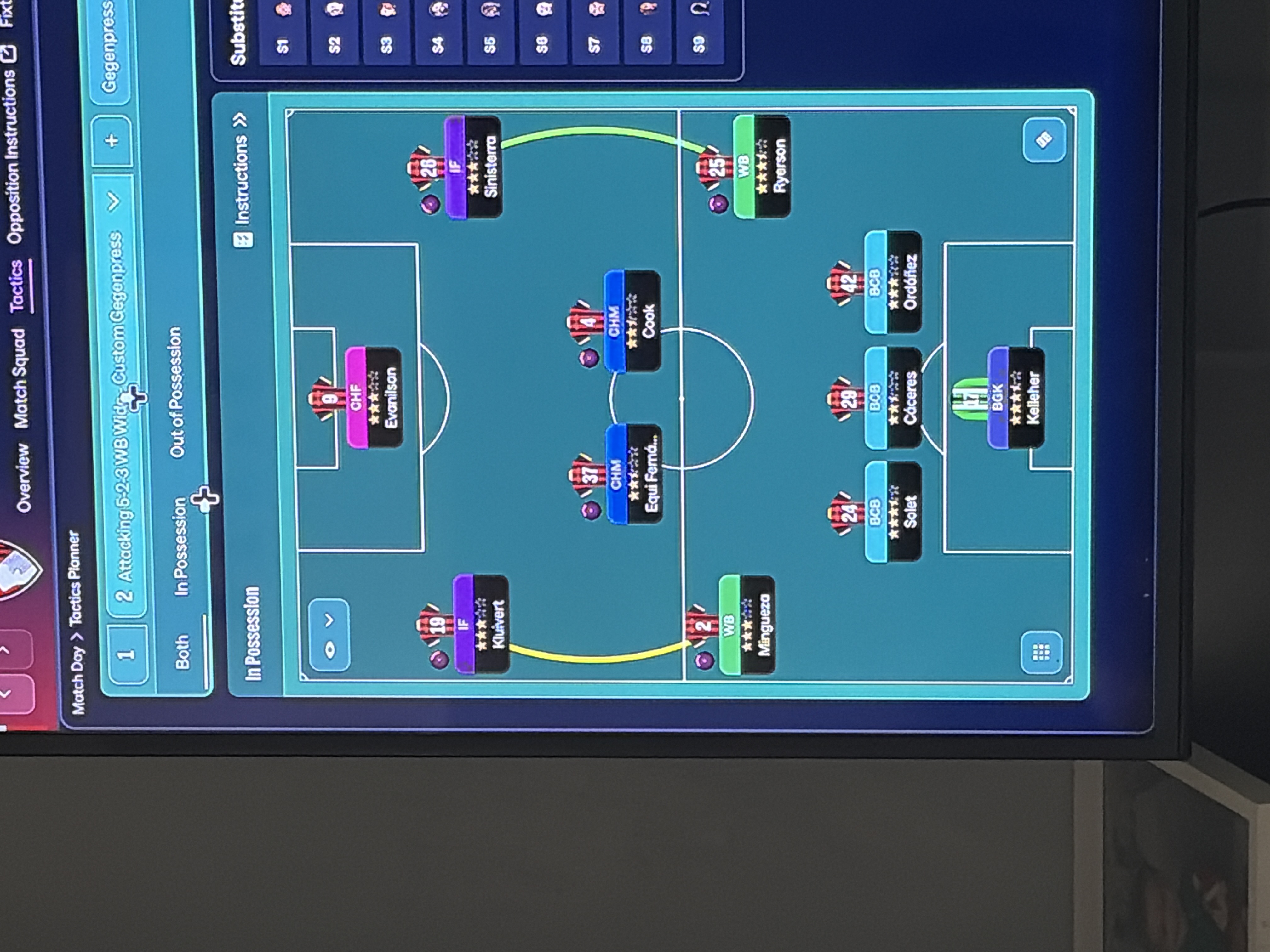
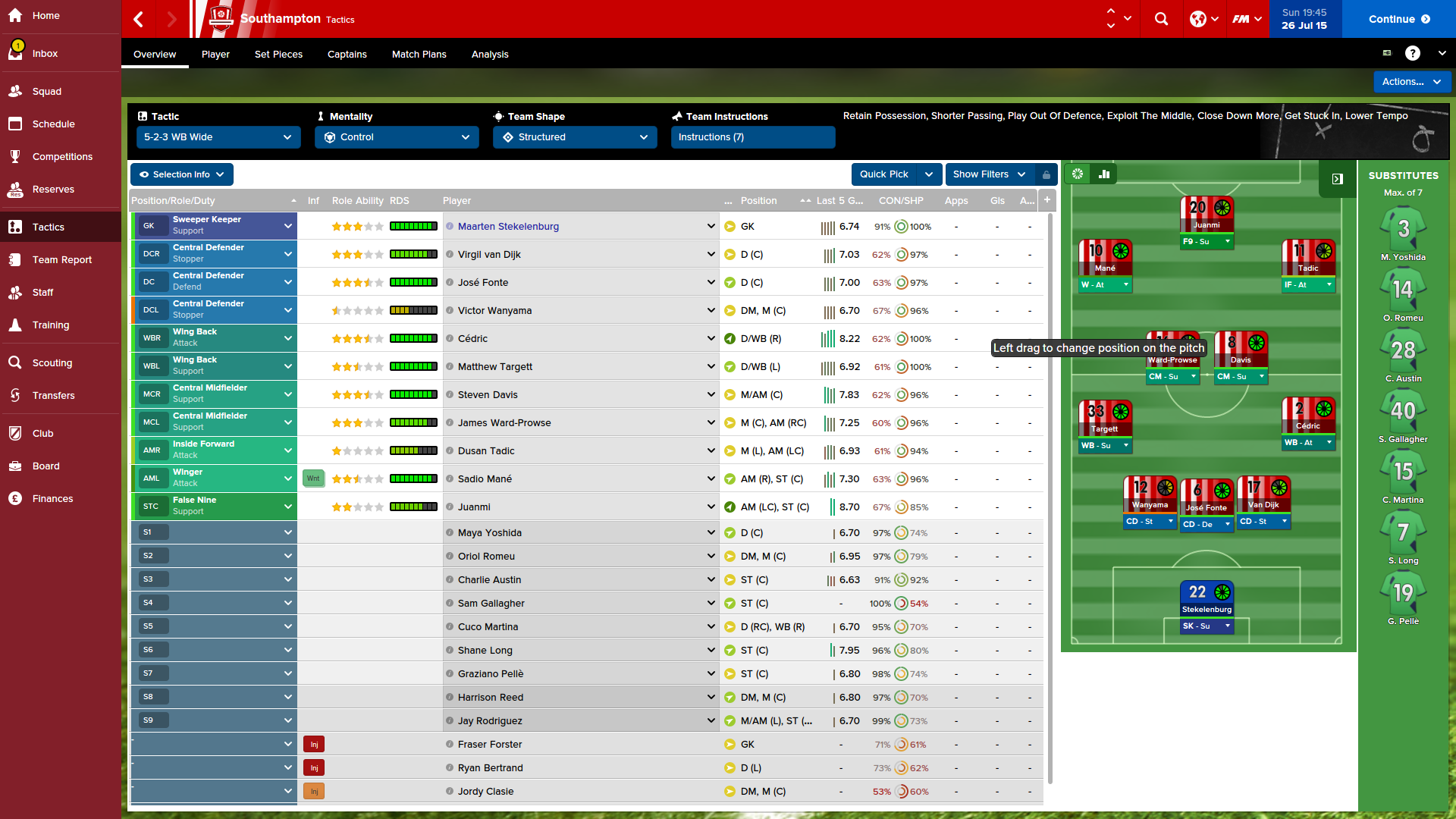
Guides for this formation
The tactical theory behind the 5-2-3 Wide: roles, instructions, and the trade-offs that decide whether the system holds up.