Uploaded Tactic
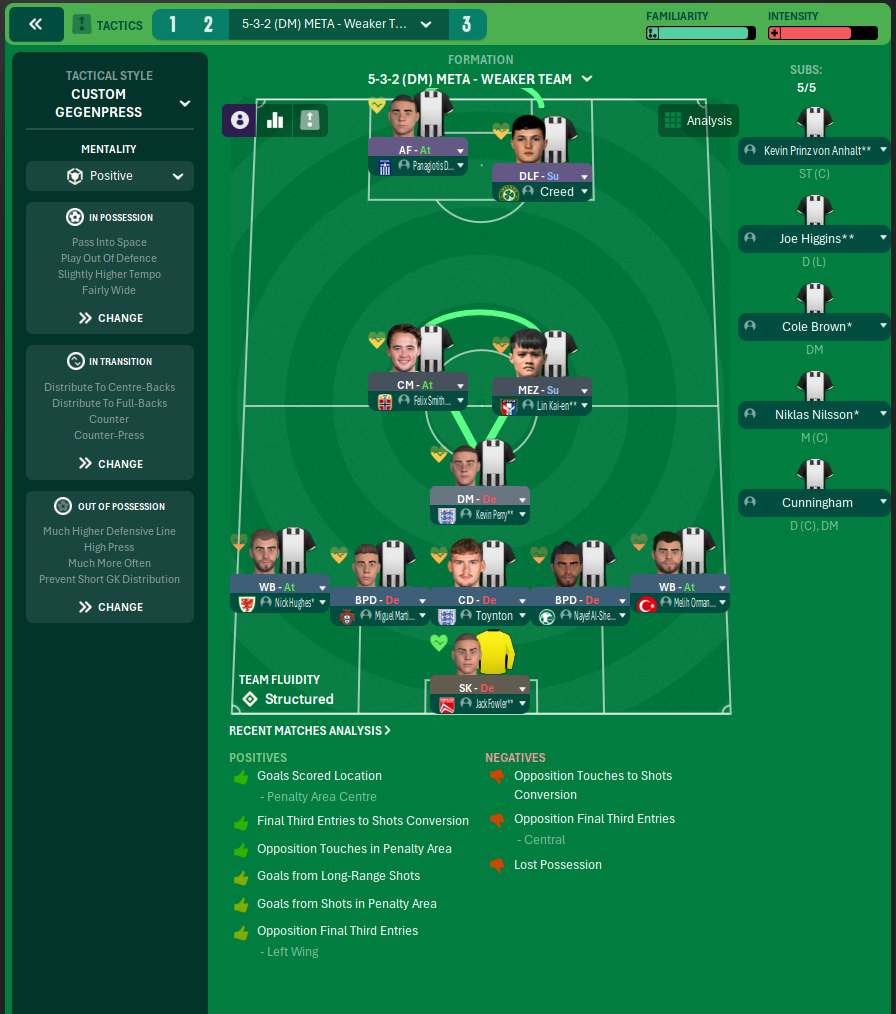
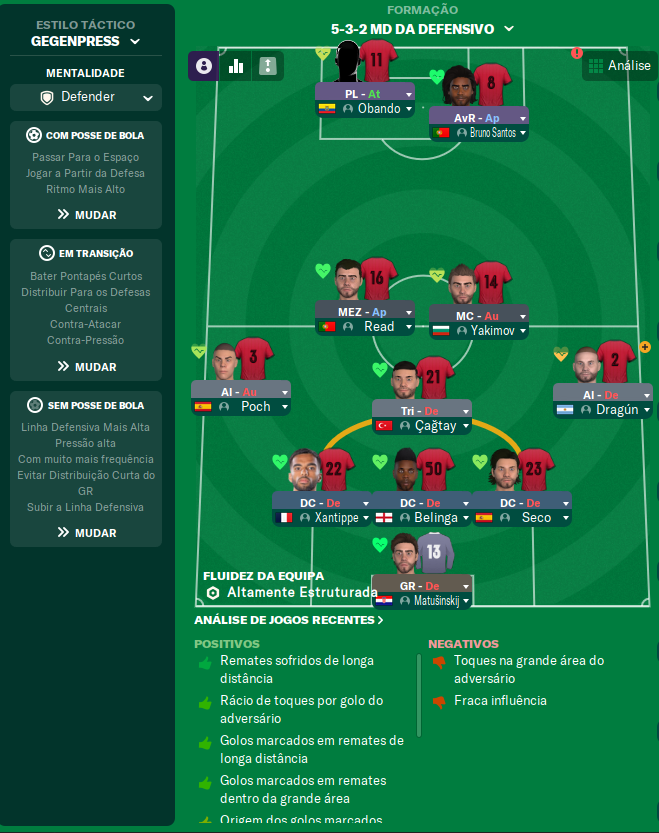
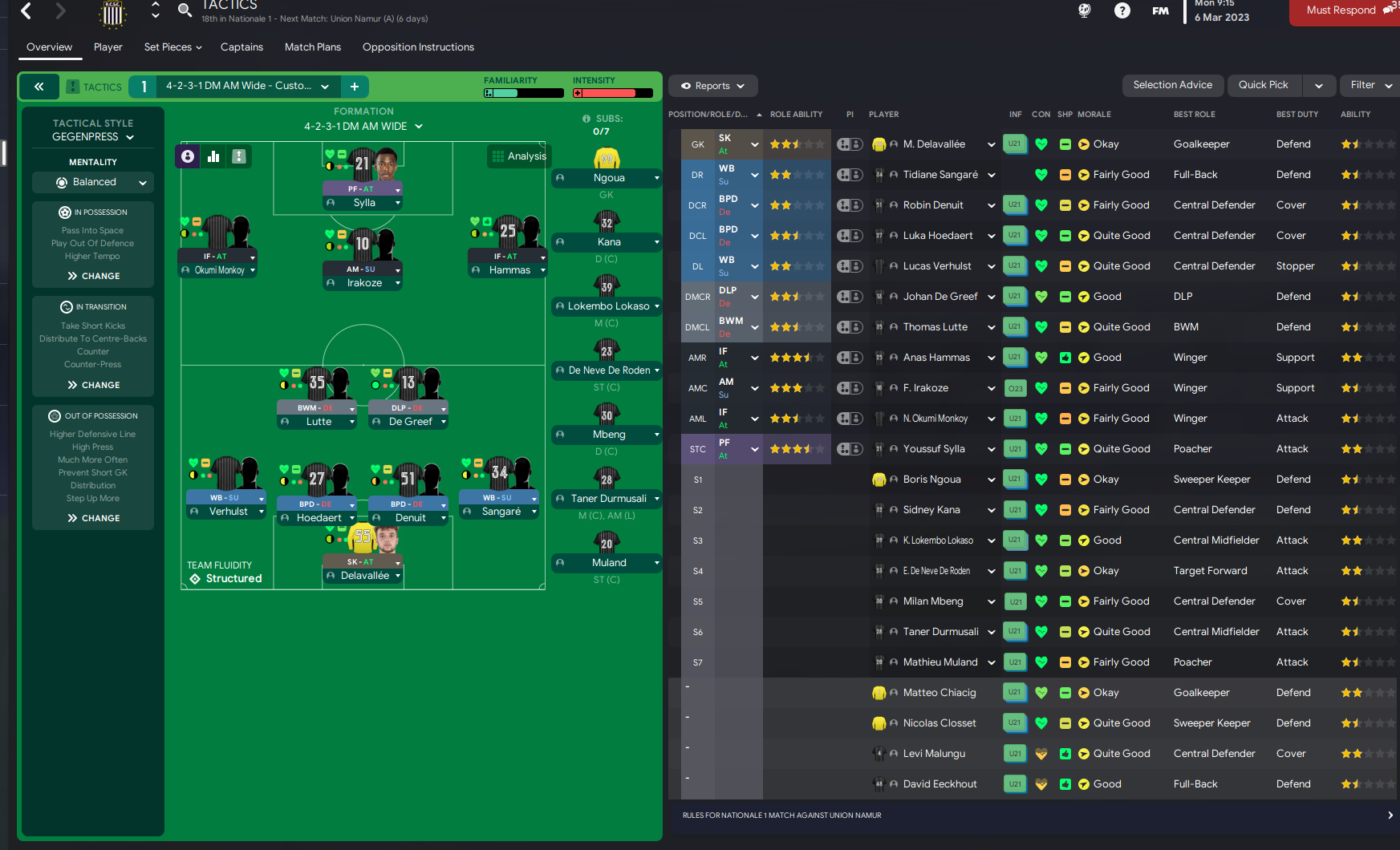
Formation & Style
Tactical Style:Gegenpress
Mentality:Positive
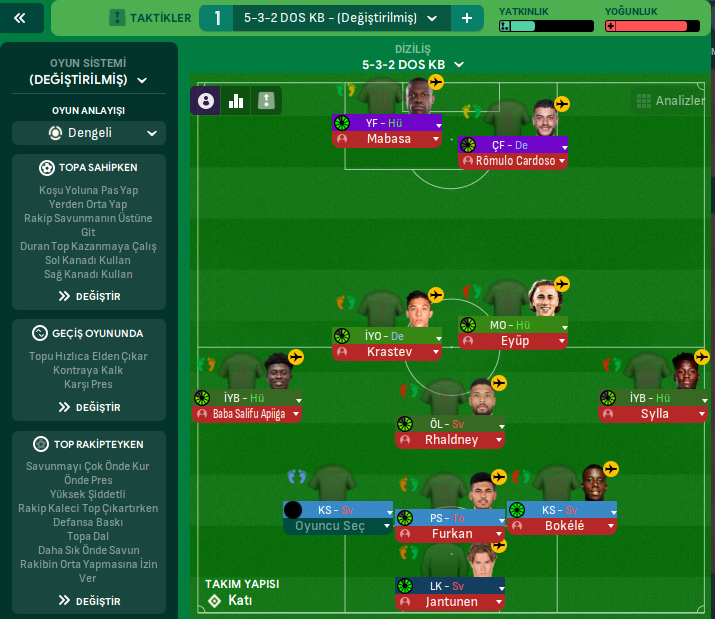
Formation:5-3-2
Team Fluidity:Structured
In Possession
Pass Into Space
Play Out Of Defence
Slightly Higher Tempo
Fairly Wide
In Transition
Distribute To Centre-Backs
Distribute To Full-Backs
Counter
Counter-Press
Out of Possession
Much Higher Defensive Line
High Press
Prevent Short GK Distribution
Team Shape Without Ball
No team shape without ball data available
Team Shape With Ball
No team shape with ball data available
Key Strengths
Strong Defensive Setup
The 5-3-2 formation provides a solid defensive structure with three center-backs and a defensive midfielder, making it difficult for opponents to penetrate.
Effective in Counter-Attacks
The tactical style of Gegenpress allows quick transitions from defense to attack, capitalizing on opposition mistakes.
Utilization of Width
With Wing-Backs on both flanks, the tactic can stretch the play and create space for central attacking players.
Good Penalty Area Presence
The configuration promotes goals from penetrative entries into the penalty box and a strong presence during set-pieces.
Conflicting Directions
High Press vs. Defensive Stability
While pressing high is effective, it might lead to gaps in defense if players are caught out of position when pressing.
Slightly Higher Tempo with Deep-Lying Forward
A higher tempo may require the DLF to operate more consistently in the final third, which can conflict with his support duties.
Much Higher Defensive Line with Increased Occupancy
A high defensive line invites potential counter-attacks from speedy forwards, potentially compromising the defensive stability.
Built for Counter but Favors Controlled Play
The structured team fluidity may limit the spontaneous transition play that the Gegenpress style needs.
Tactical Suggestions
Adjust Defensive Line
Consider lowering the defensive line slightly to reduce the risk of being caught by through balls against fast attackers.
Refine Pressing Triggers
Practice more defined pressing triggers to maintain defensive structure without compromising team's integrity.
Enhance DLF Role
Adjust the Deep-Lying Forward’s duty to attack to better fit the counter-press philosophy and create more offensive threat.
Consider a Midfield Anchor
Introduce a more defensive role in midfield to protect the back line against counter-attacks while maintaining offensive shape.
Ask Questions About Your Lineup
Related Tactics
More Gegenpress tactics
Guides for this formation
The tactical theory behind the 5-3-2: roles, instructions, and the trade-offs that decide whether the system holds up.