Uploaded Tactic
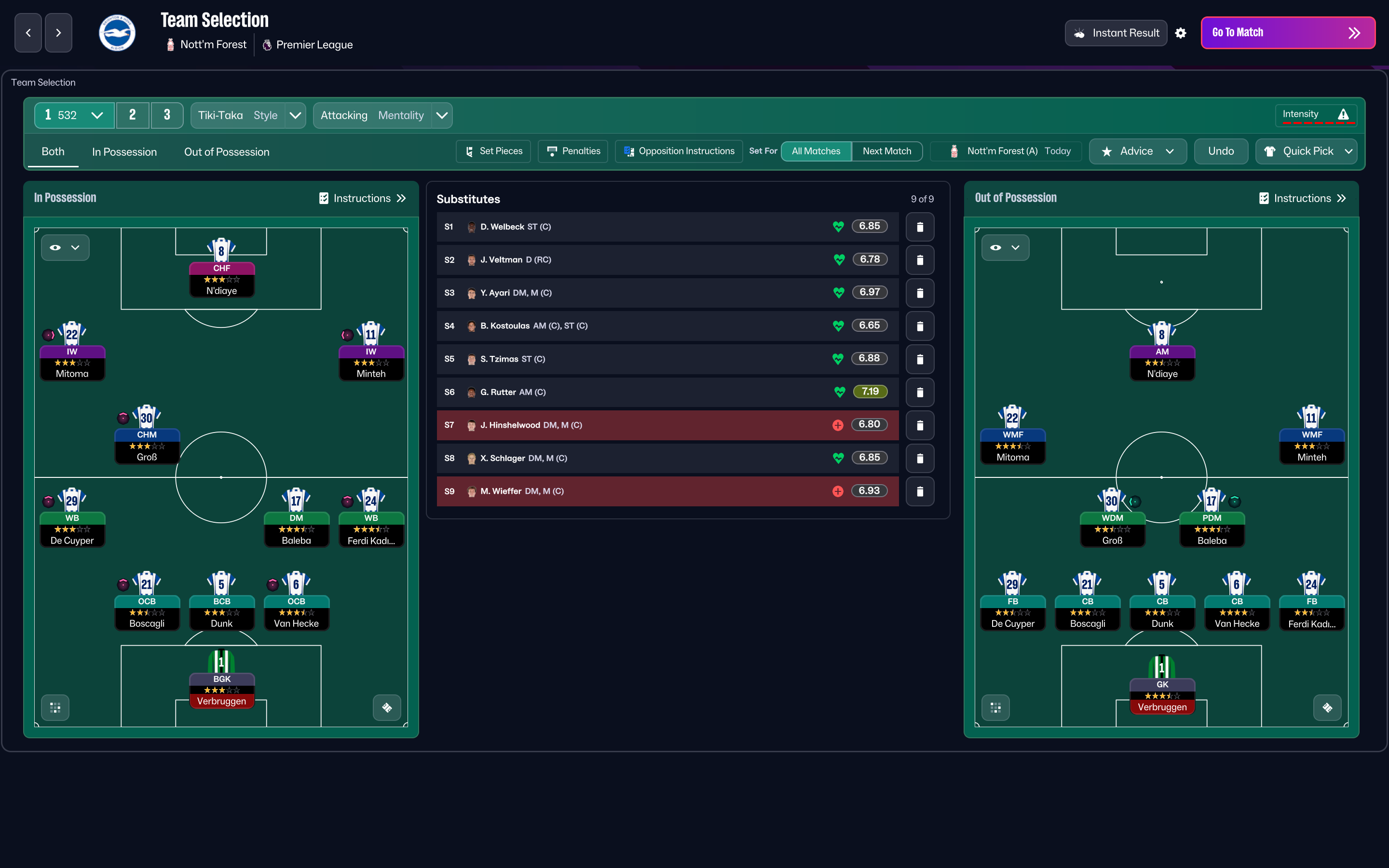
Formation & Style
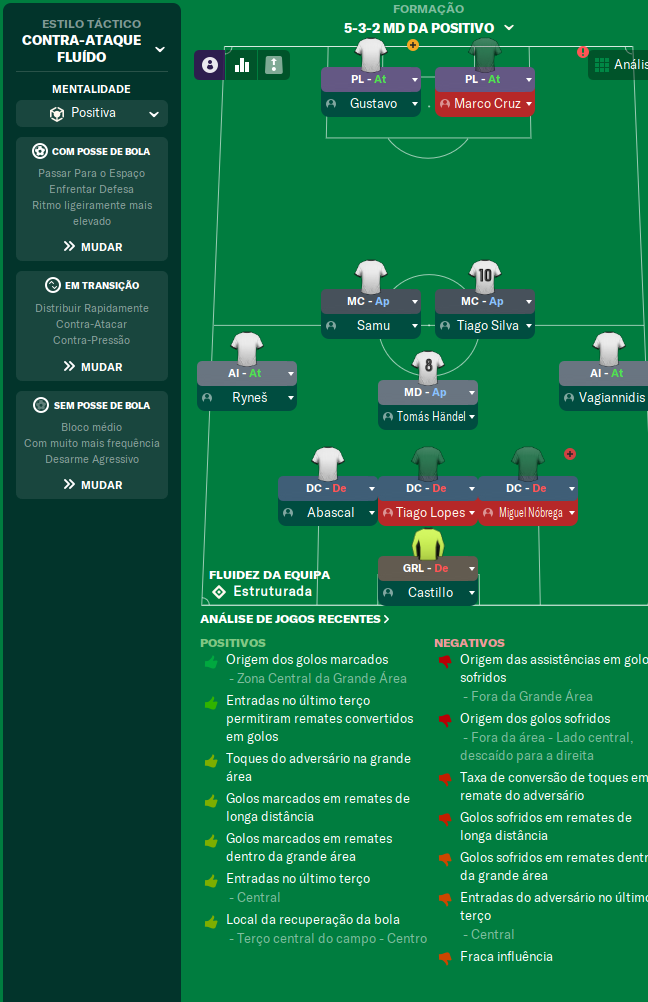
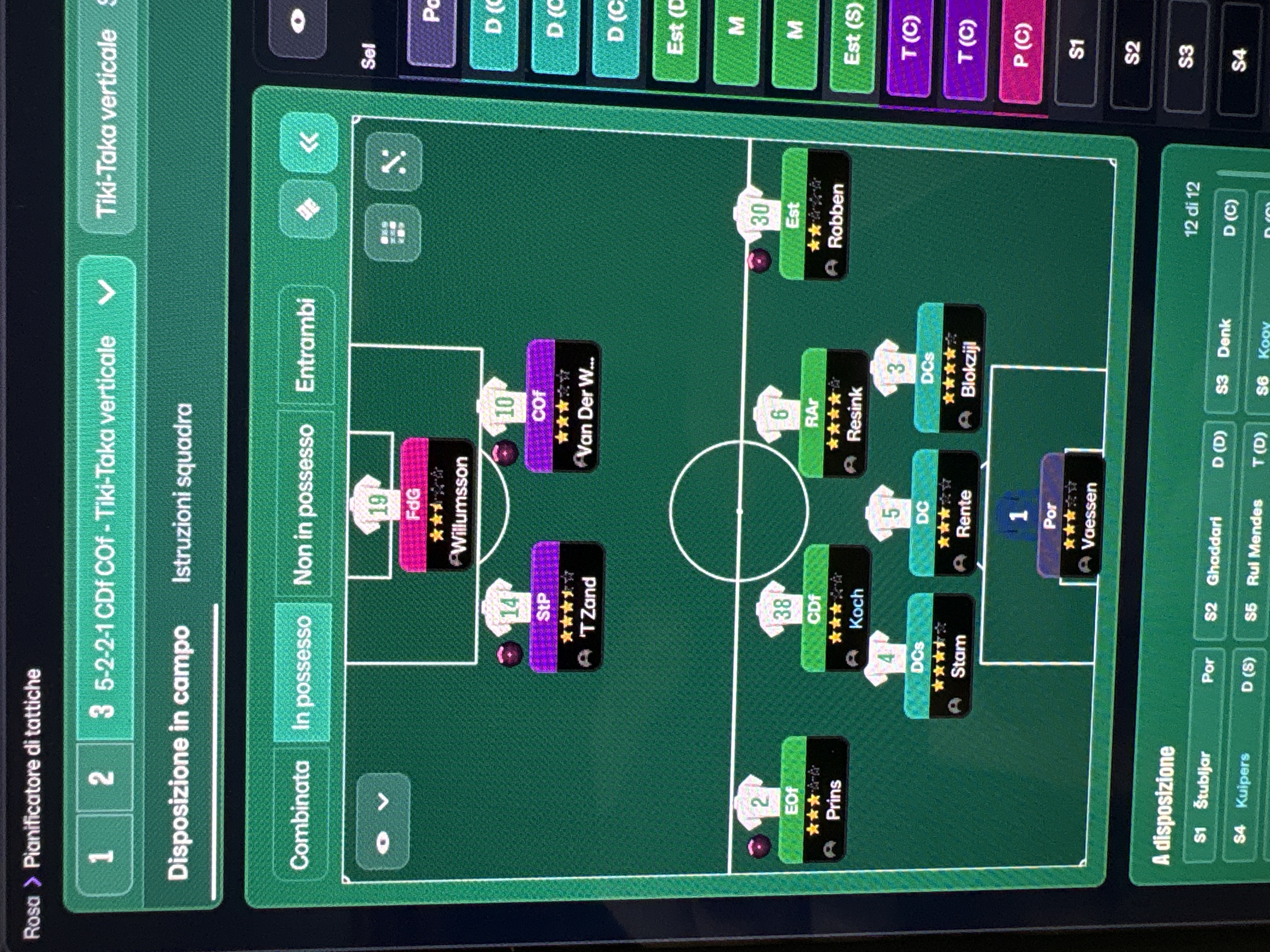
Tactical Style:Tiki-Taka
Mentality:Attacking
Formation:5-3-2
Team Fluidity:Structured
In Possession
Play Out of Defence
Work Ball Into Box
Be More Expressive
In Transition
Counter-Press
Counter
Out of Possession
Higher Defensive Line
Higher Line of Engagement
Prevent Short GK Distribution
Team Shape Without Ball
Shape:Compact
Description:A compact shape in defense, with three centre backs and a midfield duo, makes it difficult for opponents to penetrate.
Evidence:CBs at [2,2], [2,3], [2,4] support a compact defensive shape.
Team Shape With Ball
Shape:Wide Play
Description:Wing-backs provide width, allowing central players to exploit spaces created.
Evidence:WB at [2,1] and [2,5] push high giving width.
Phase Description
Attacking Play
Utilize wing-backs for width while playing short, patient passes to create openings.
Defensive Transition
Press immediately to regain possession when losing the ball, focusing on high intensity.
Main Focus
Maintain possession while creating chances through quick combinations in the final third.
Key Strengths
Strong Width Provided by Wing-Backs
The wing-backs' attacking duties allow them to create width and stretch opposing defenses.
Solid Defensive Foundation
Three centre backs offer resilience against counter-attacks and maintain a strong defensive block.
Dynamic Midfield Duo
The combination of a deep-lying playmaker and a wide midfielder allows for effective transitions and ball retention.
Conflicting Directions
Overcommitment of Wing-Backs
While pushing the wing-backs forward can create width, it may leave gaps defensively if possession is lost.
High Defensive Line Vulnerability
A high defensive line may be susceptible to quick counter-attacks if the ball is lost.
Reliance on Wing Play
Depending heavily on wing-backs might limit central attacking options and create predictability.
Tactical Suggestions
Adjust Defensive Line
Consider lowering the defensive line to mitigate risks of being exploited by fast attackers.
Diversify Attack Strategy
Introduce more central penetration through midfield to avoid over-reliance on wing play.
Utilize Substitutions Strategically
Make use of fresh legs from the bench to maintain intensity in attack and defense, especially late in the match.
Ask Questions About Your Lineup
Related Tactics
More Tiki-Taka tactics
Guides for this formation
The tactical theory behind the 5-3-2: roles, instructions, and the trade-offs that decide whether the system holds up.