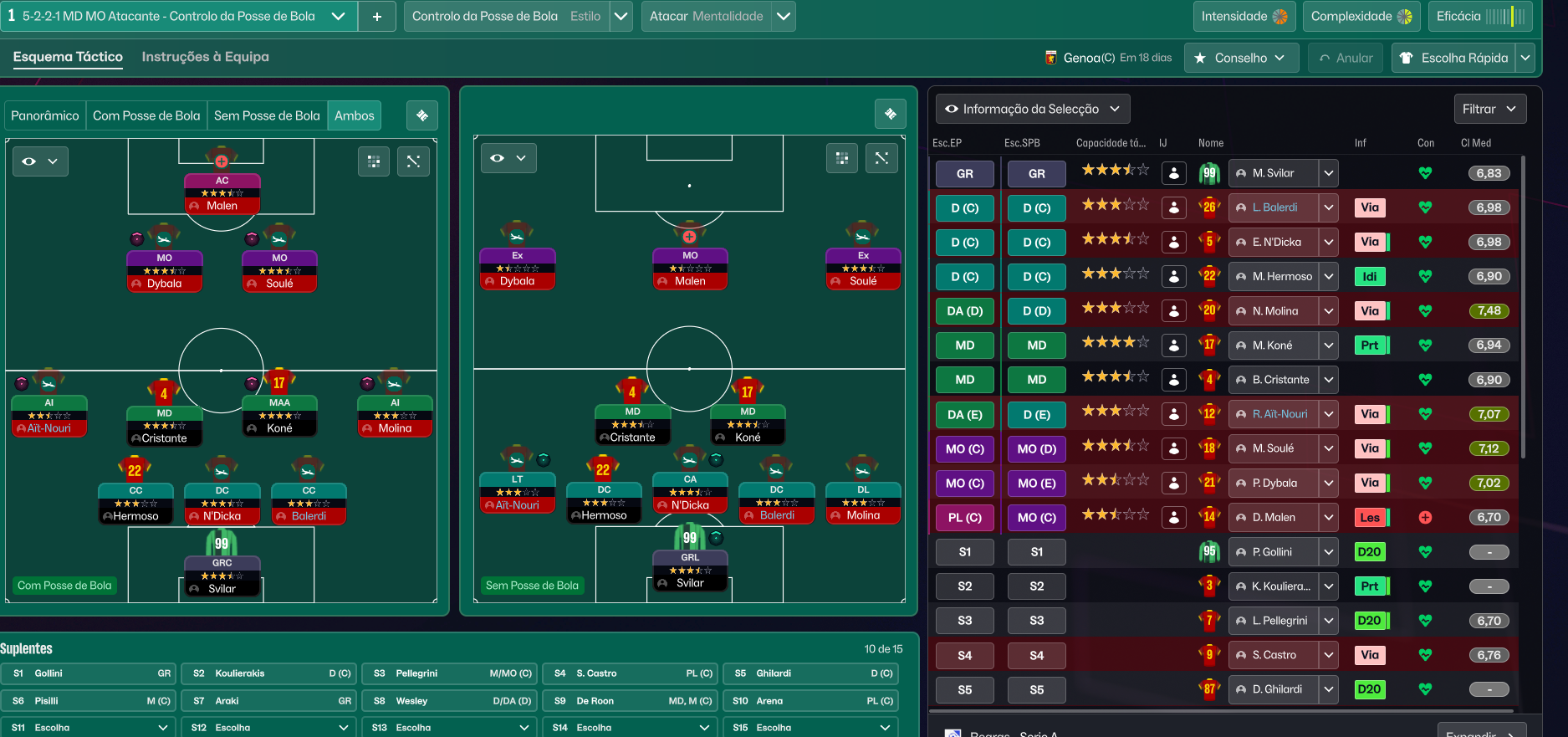
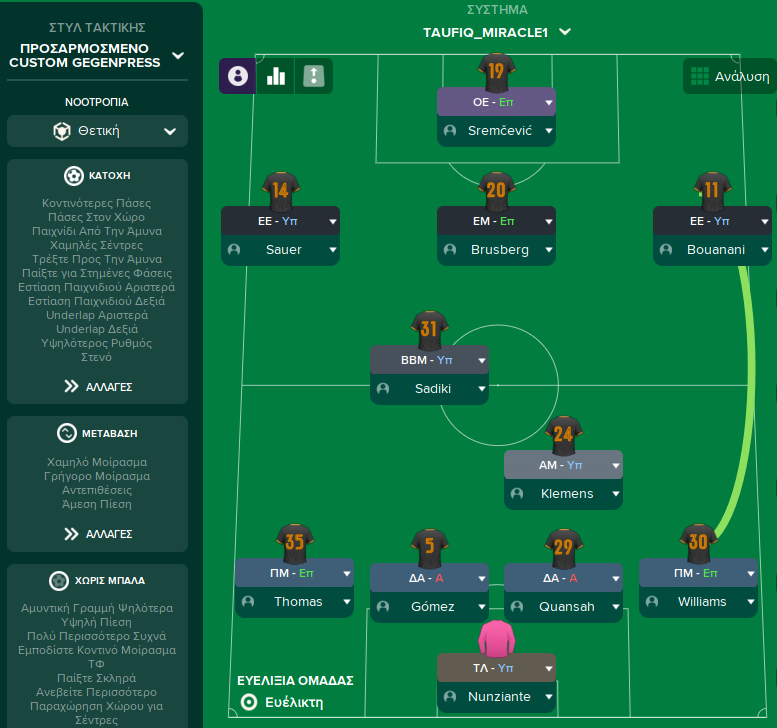
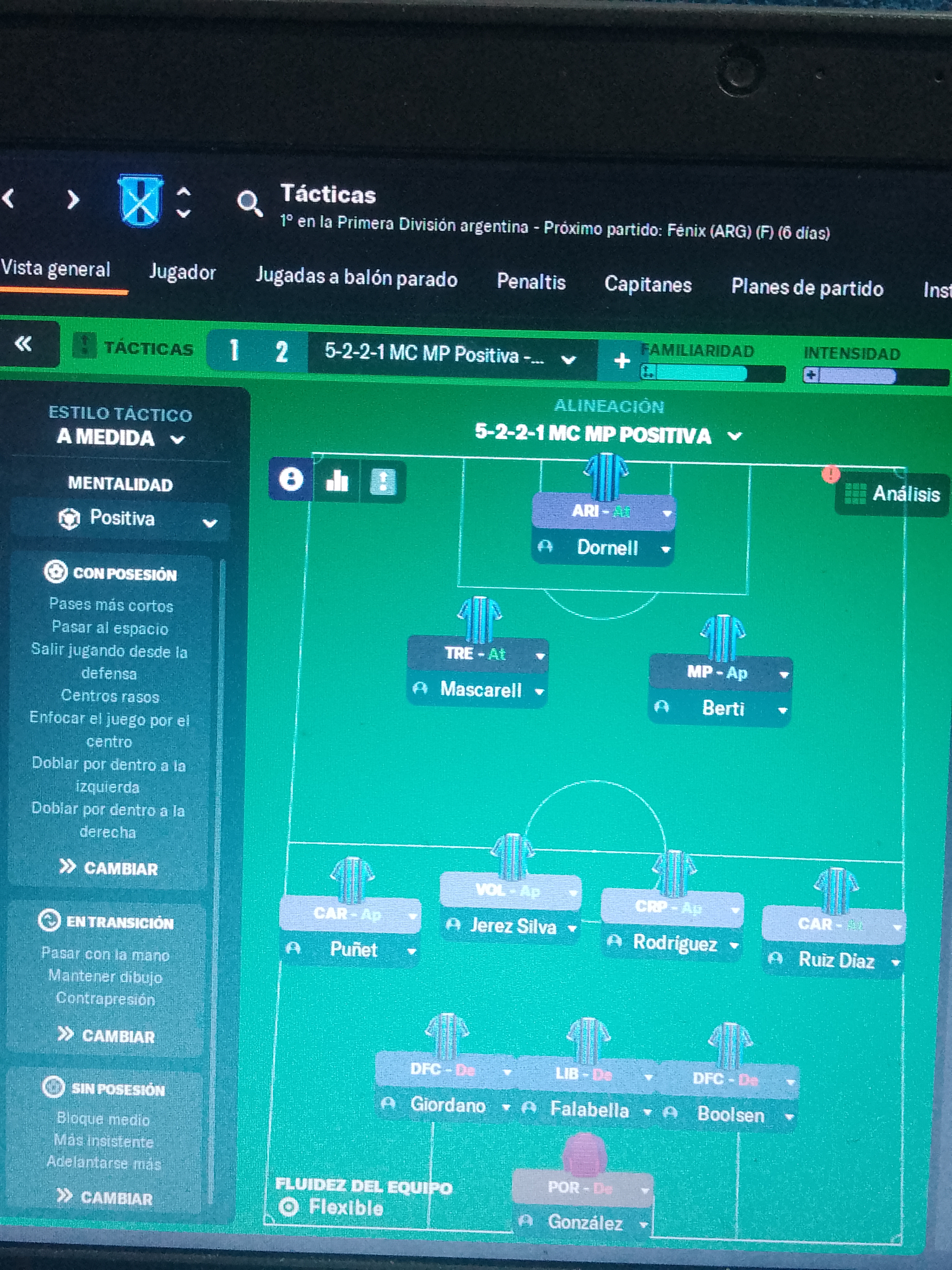
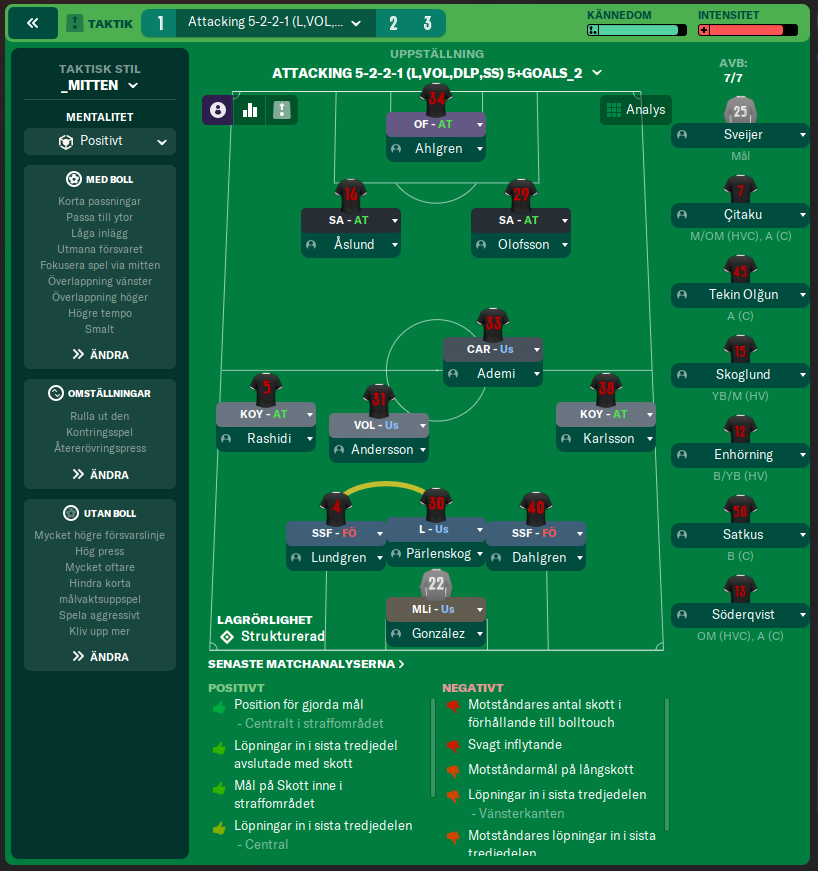
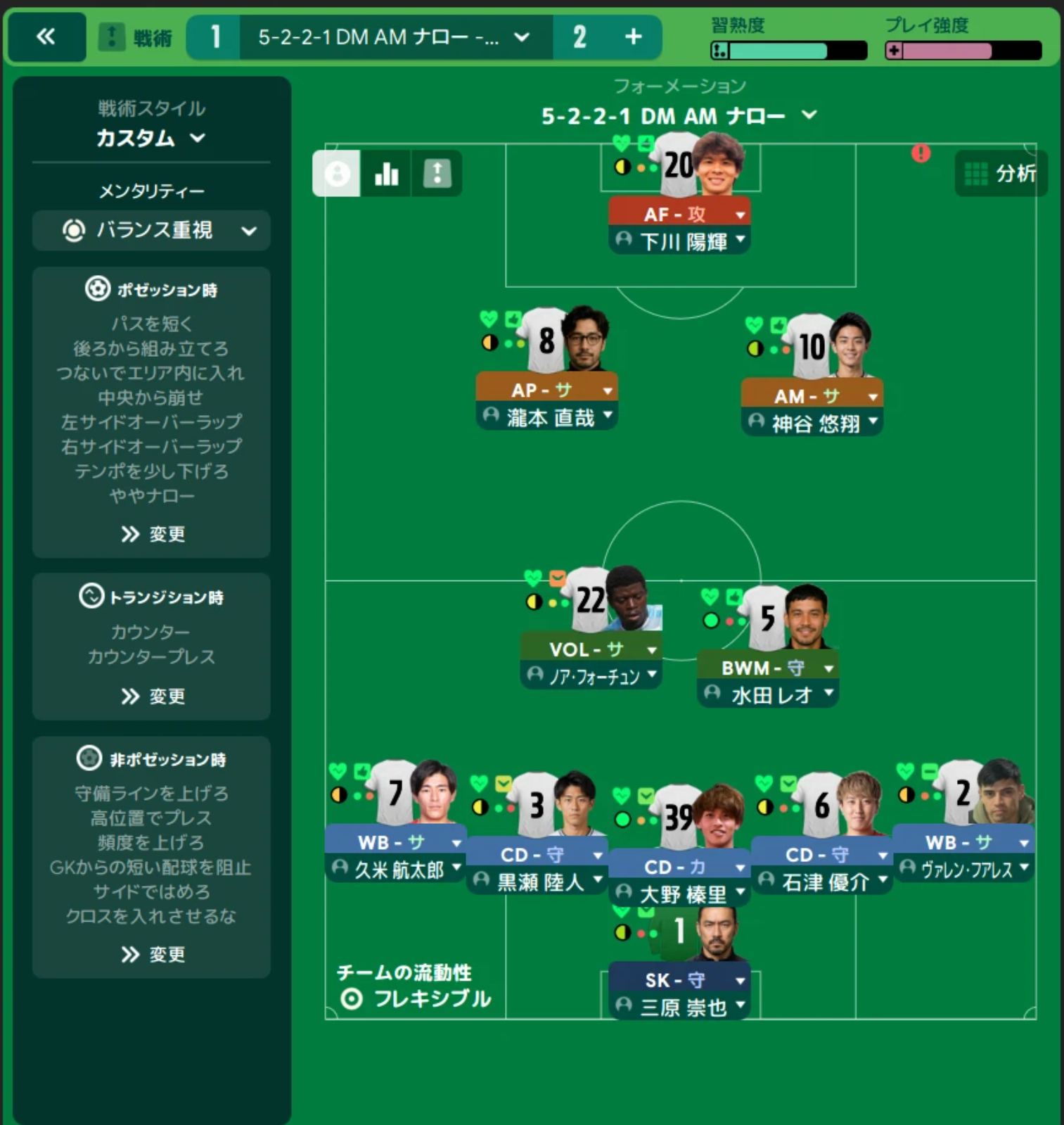
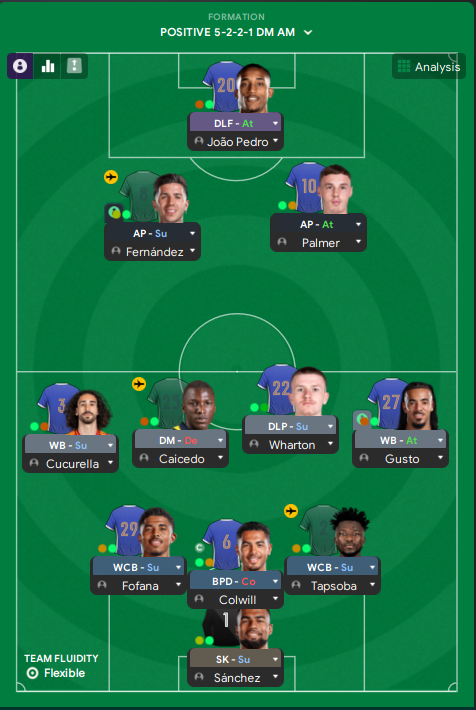
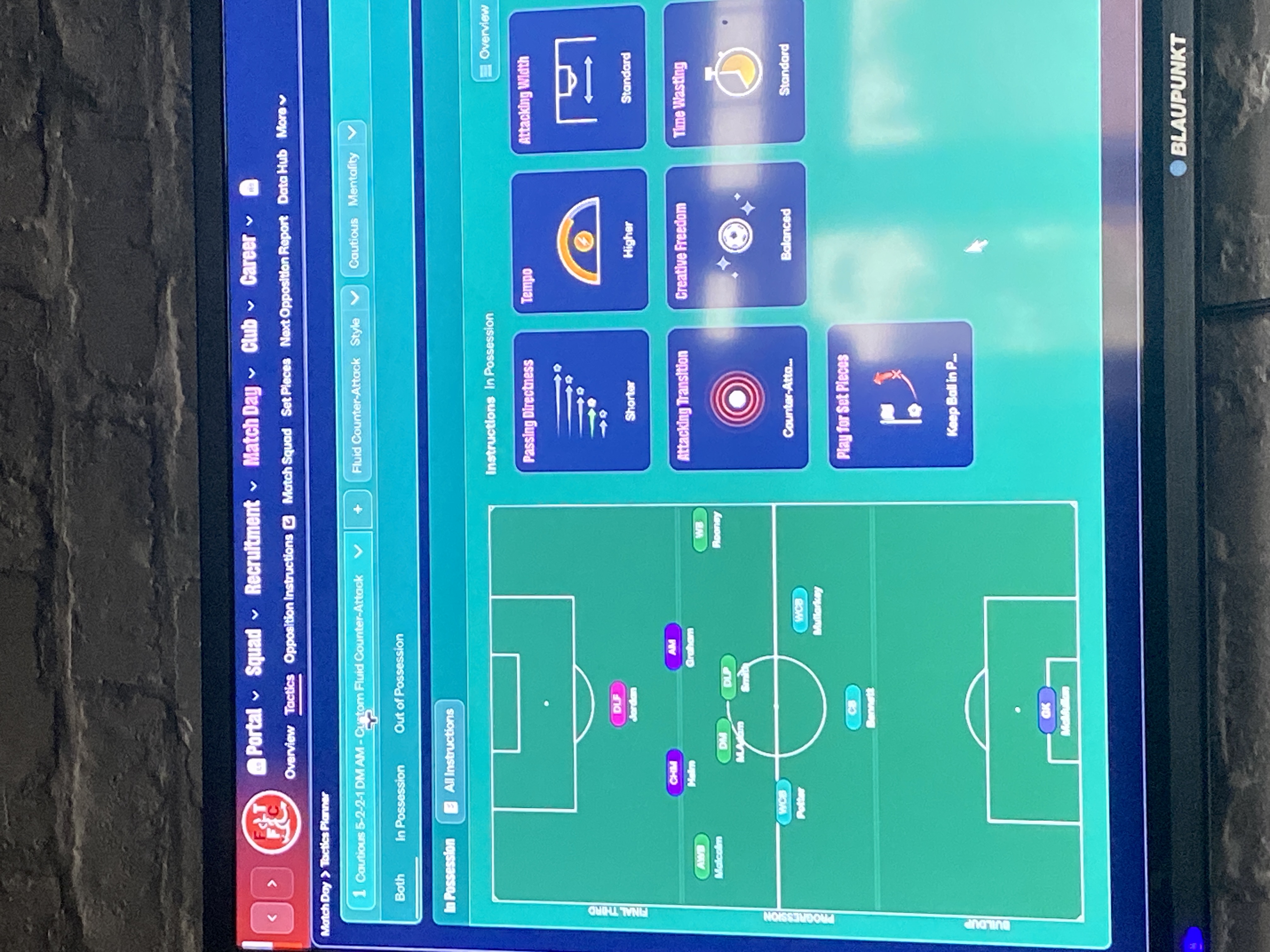
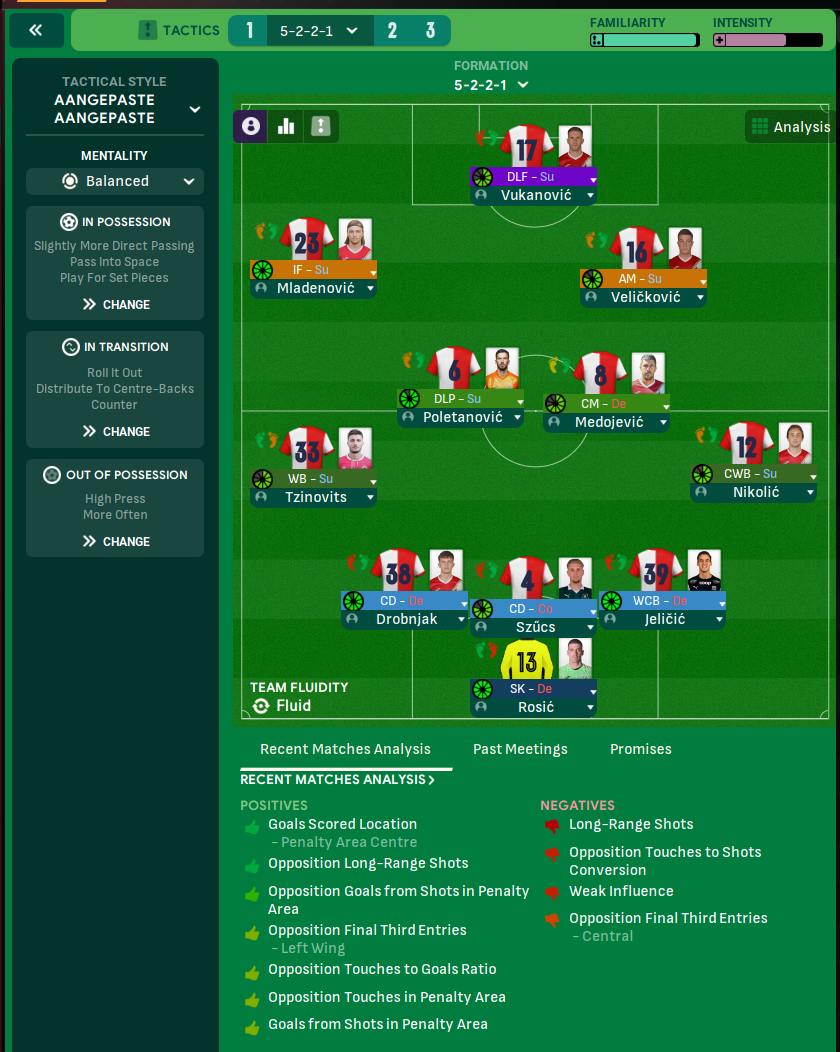
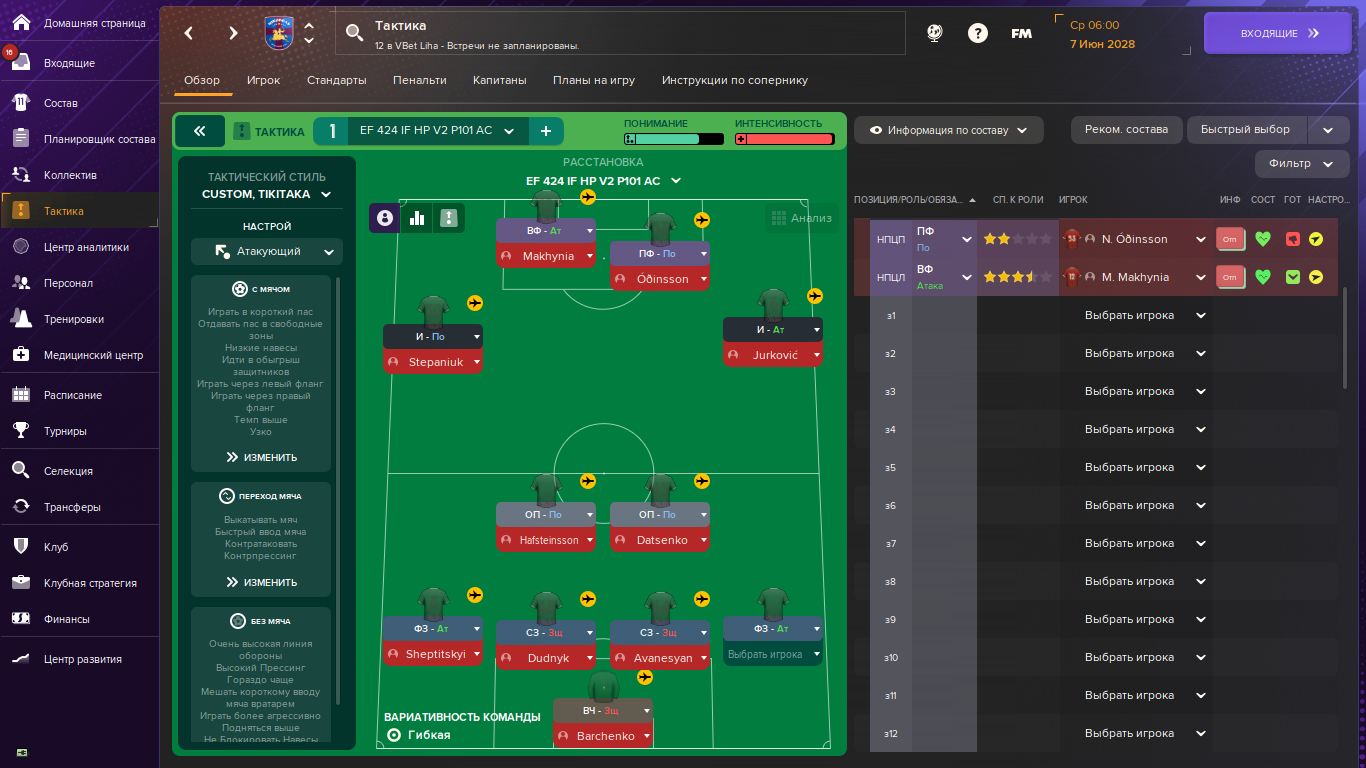
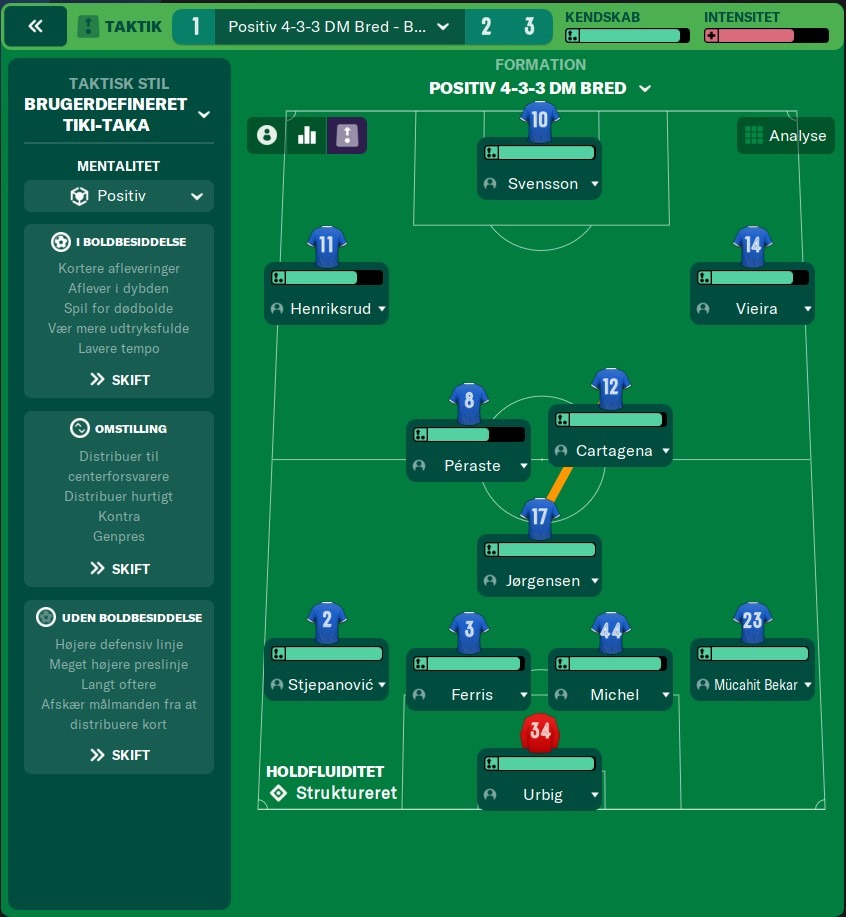
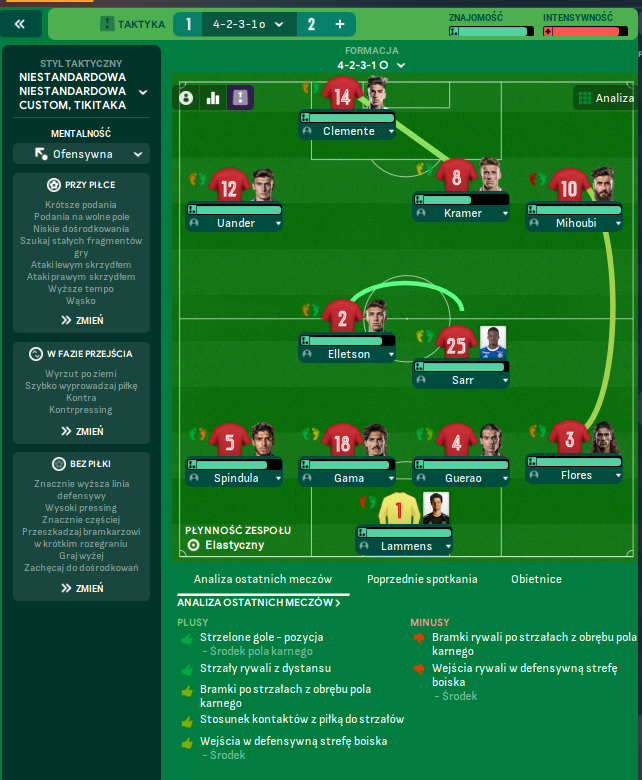
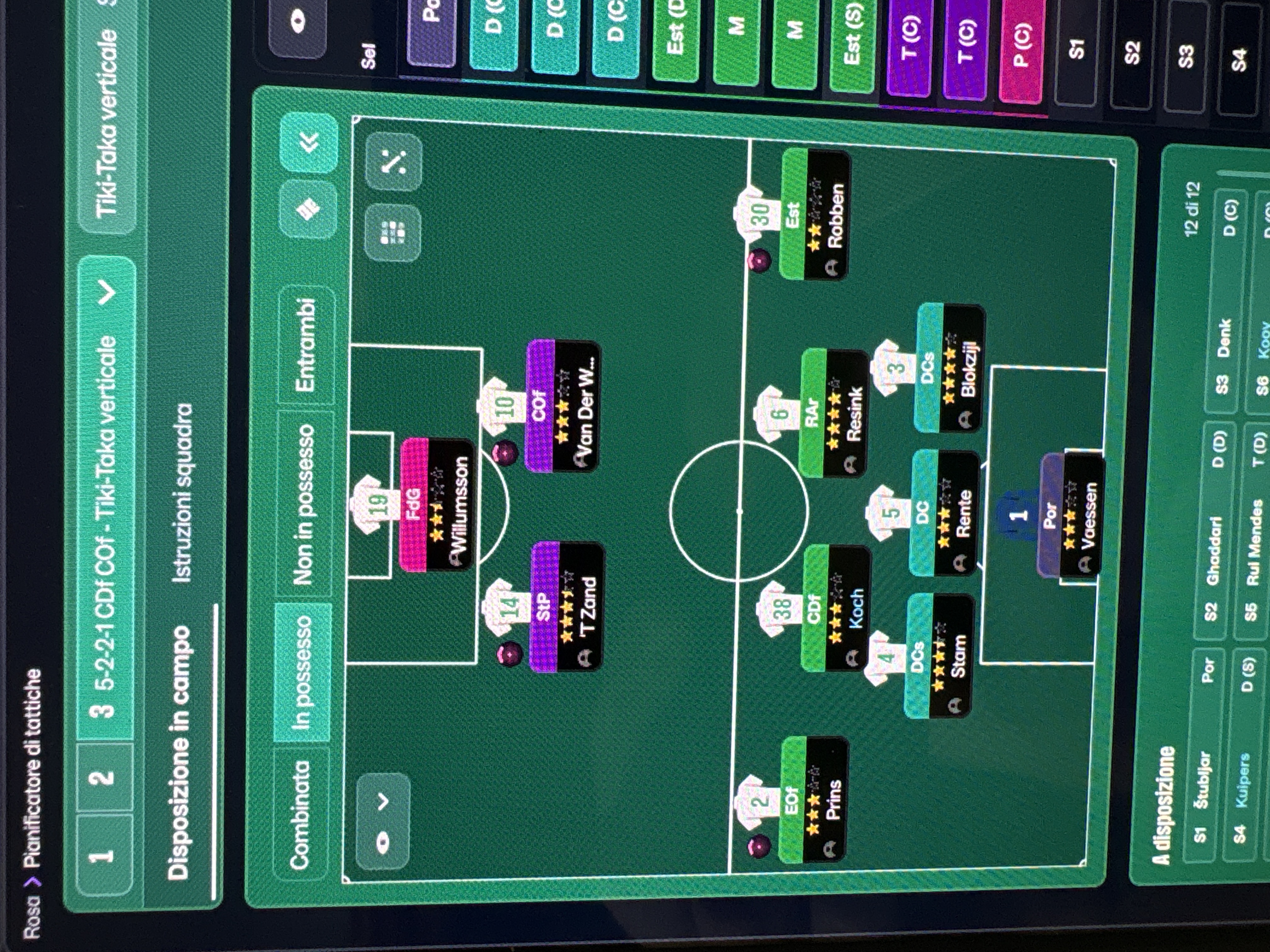
5-2-2-1
Controlling the game through possession and exploiting spaces in opposition setups. Three centre-backs strengthen defense against aerial threats while…
Loading tactical analysis...
Tiki-Taka
Cautious
5-2-2-1
Structured
Shorter Passing
Work Ball into Box
Higher Tempo
Counter-Press
Hold Shape
Low Defensive Line
Lower Line of Engagement
Prevent Short GK Distribution
GK
Goalkeeper
Defend
DC
No-Nonsense Centre-Back
Defend
DC
Centre-Back
Defend
DC
Ball-Playing Defender
Defend
DMC
Deep-Lying Playmaker
Support
MCR
Central Midfielder
Support
MCL
Central Midfielder
Support
AMR
Wide Playmaker
Support
AML
Wide Playmaker
Support
ST
Complete Forward
Attack
Focus on short passing sequences to maintain possession and wear down the opponent's defense.
Speedily regain possession through counter-pressing to disrupt the opponent's transition.
Controlling the game through possession and exploiting spaces in opposition setups.
5-4-1
When out of possession, the formation turns into a deep 5-4-1 structure, ensuring solid defensive coverage.
The presence of five defenders and two central midfielders (DMC + MCR/MCL) aids in compactness.
5-2-3
The formation shifts when in possession with wing-backs joining the attack, providing width.
Wide playmakers with support roles push up, allowing the central forward to navigate through open lanes.
Three centre-backs strengthen defense against aerial threats while maintaining a sturdy backline.
NNC at [2,2], CB at [2,3], and BPD at [2,4] provide a structured defense.
The Tiki-Taka style encourages controlled, short passing, minimizing turnovers.
Instructions such as 'Work Ball into Box' highlight the intent to manage possession sustainably.
Opponents with high pressing can exploit gaps left by attacking wing-backs when countering.
The width provided by the wing-backs at [5,1] and [5,5] may leave space in transitions.
Defensive vulnerabilities may arise against speedster forwards exploiting the space behind.
Low defensive line strategy can create issues when countered, especially with rapid transitions.
Defensive Transitions
Exploitable gaps may appear during quick counter situations if possession is lost.
The central position of DMC at [3,3] may leave gaps for swift attacks.
Wide Spaces
Playing with wing backs may leave full-backs vulnerable to counter-attacks.
Resink at [3,5] may be drawn out of position when the team is pushed forward.
DLP and CM synergy
The interplay between DLP at [3,3] and the two CMs at [4,2] and [4,3] can enhance ball circulation.
The DLP's deep play can create openings for central movements with supporting roles.
Wide Playmakers complementing ST
The wide playmakers can stretch the opposition, creating central channels for the Complete Forward.
With the ST position at [6,3] depending on the space provided by WM roles.
How can I further enhance the attacking threat while maintaining defensive stability?
What adjustments can be made to adapt when trailing in a match?
Are there specific player roles that might improve play in tight encounters?
The tactical theory behind the 5-2-2-1: roles, instructions, and the trade-offs that decide whether the system holds up.
The deliberate underdog tactic in FM: formation choices, duty distribution, and why Counter-Press is exactly wrong inside a low block.
FM27 keeps FM26's tactic system. Here is what stays the same, the small changes that can catch you out, and what the new Tactical Effectiveness system asks of you.
How Mentality, Duty, and Role interact in FM, why duty trumps mentality every time, and the role-on-top-of-duty composition rules.