Uploaded Tactic
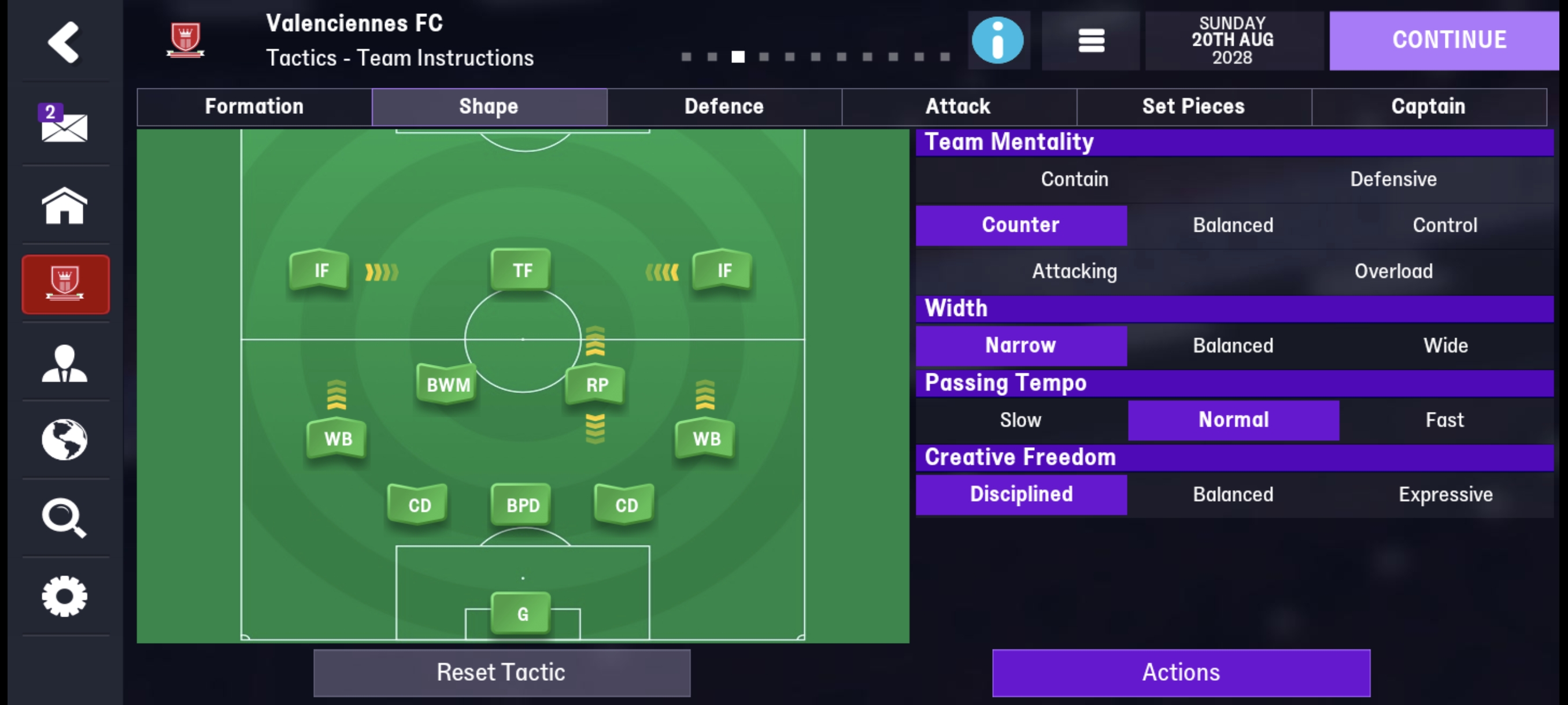
Formation & Style
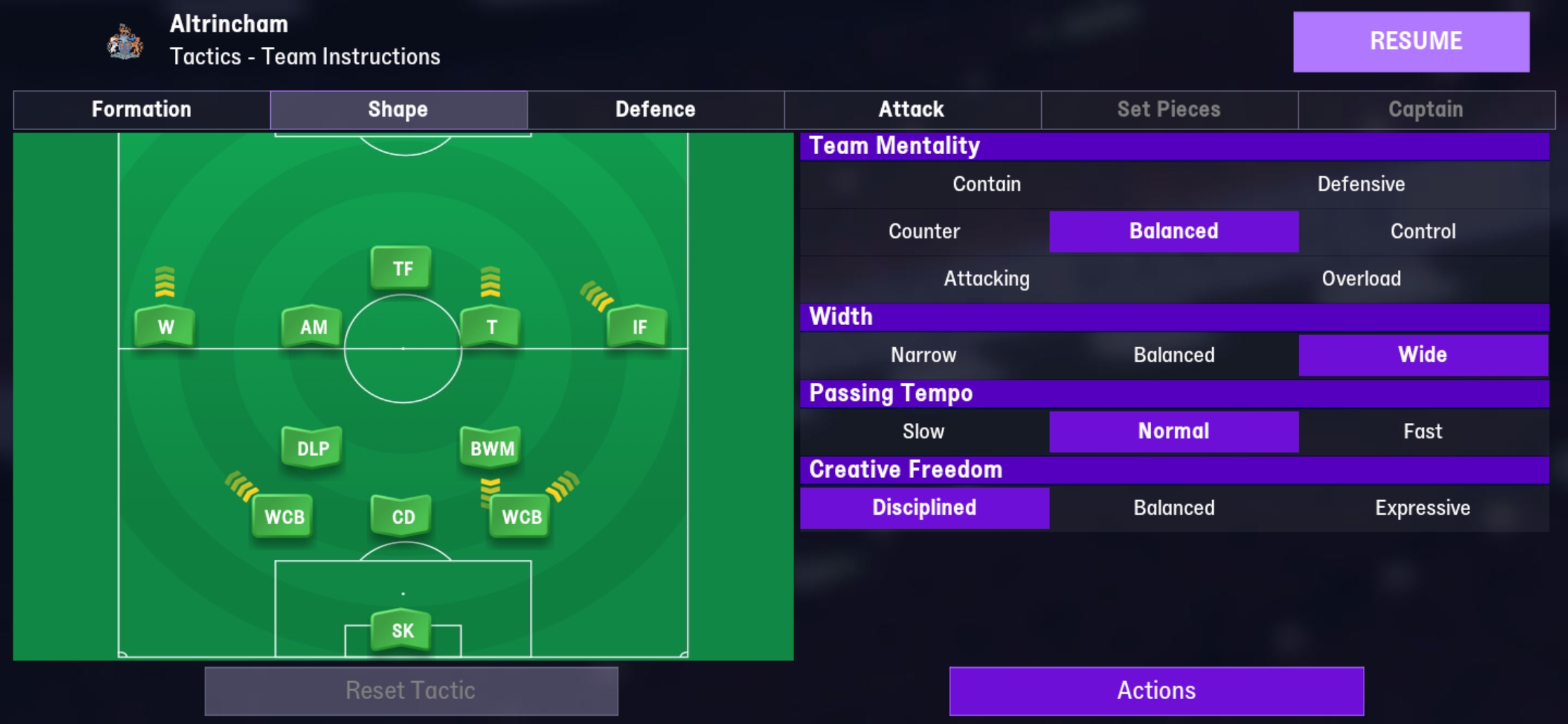
Tactical Style:Counter
Mentality:Contain
Formation:4-3-3
Team Fluidity:Balanced
In Possession
Focus Play Through the Middle
Work Ball Into Box
Distribute to Centre-Backs
In Transition
Counter
Regroup
Out of Possession
Higher Line of Engagement
Normal Defensive Line
Prevent Short GK Distribution
Team Shape Without Ball
Shape:Compact
Description:The team maintains a compact shape, with a focus on central defensive organization supported by wing-backs during opposition attacks.
Evidence:The use of a BWM at [4,2] ensures that central areas are protected while wing-backs provide width.
Team Shape With Ball
Shape:Vertical
Description:Attacking shape focuses on utilizing width from the wing-backs while creating overloads with inside forwards.
Evidence:Inside Forwards at [6,1] and [6,5] look to exploit spaces alongside the Target Forward at [6,3].
Phase Description
Attacking Play
Organized build-up with emphasis on working the ball into the box, utilizing the roaming playmaker as a key link.
Defensive Transition
Immediate transition to defensive shape, aiming to regroup quickly after losing possession.
Main Focus
Utilize width from the wing-back and inside forwards to create goal-scoring opportunities.
Key Strengths
Compact Defense
A solid and compact defensive structure allows for effective counter-attacks.
Dynamic Midfield
The midfield trio provides both defensive solidity and creativity.
Wide Play Options
Ability to stretch the opposition using wing-backs and inside forwards.
Conflicting Directions
Inconsistent Width
Narrow width might conflict with the use of wing-backs who thrive in wider areas.
Slow Tempo
The slow tempo might hinder the counter-attacking strategy.
Contain Mentality
Contain mentality may limit attacking potential despite a strong forward line.
Tactical Suggestions
Increase Width
Expanding the width would allow wing-backs to operate effectively and create space.
Adjust Tempo
Consider increasing the passing tempo to facilitate faster transitions.
Change Mentality
Explore a more aggressive mentality to take advantage of attacking talent.
Ask Questions About Your Lineup
Related Tactics
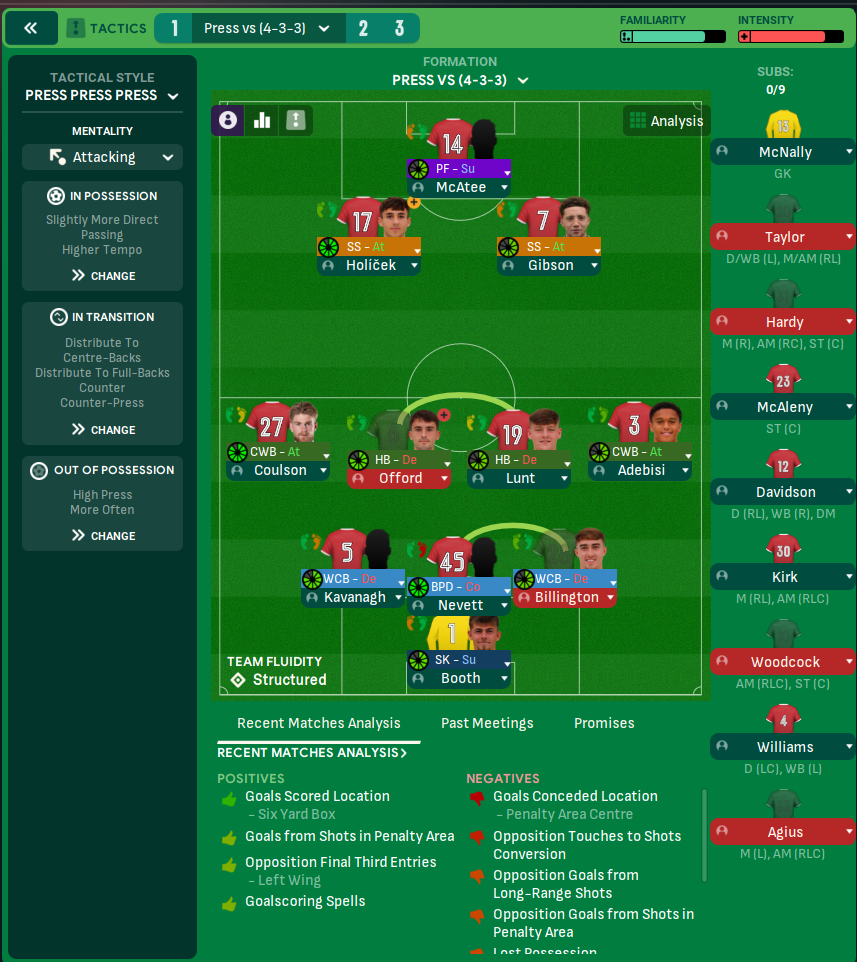
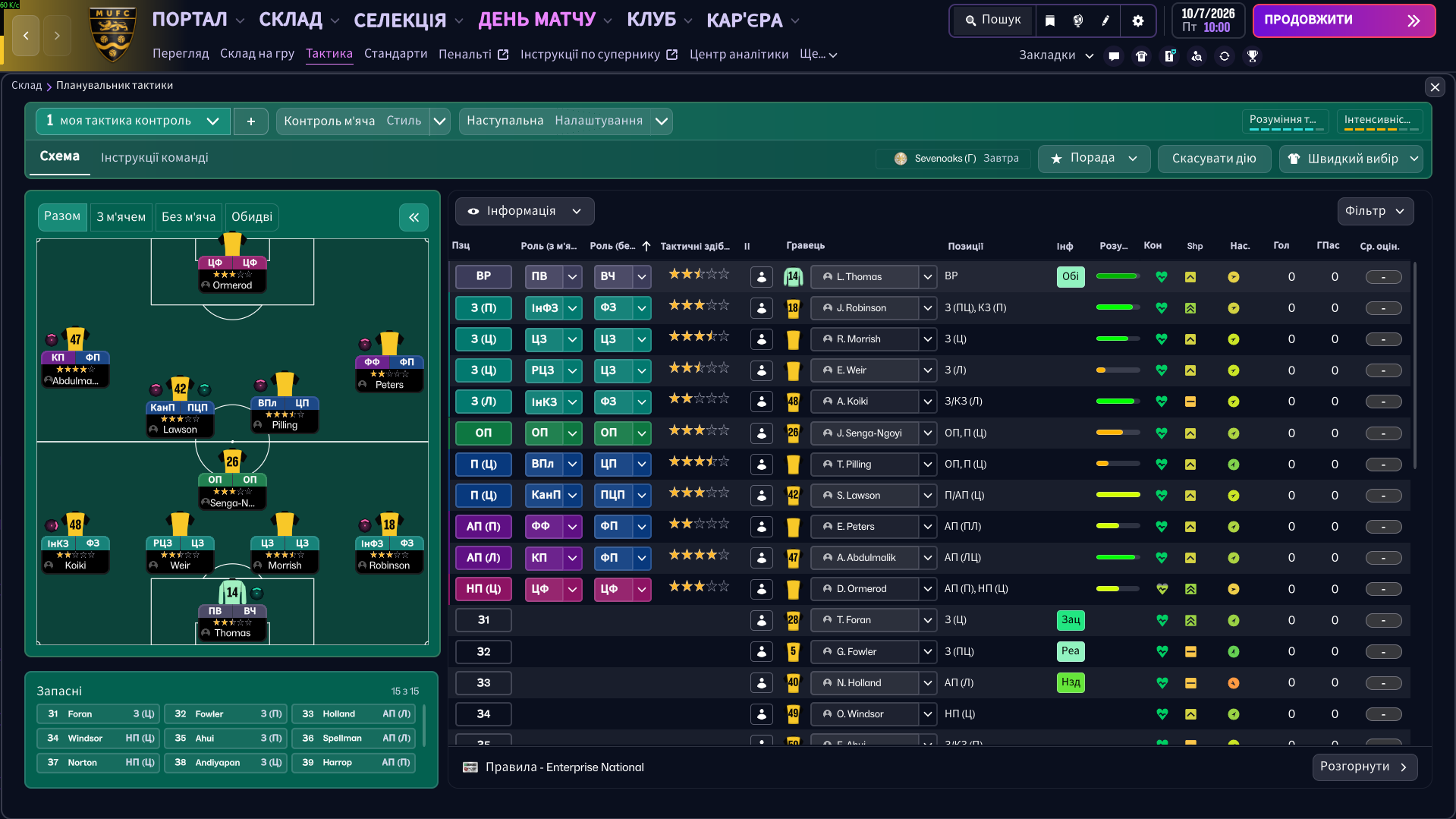
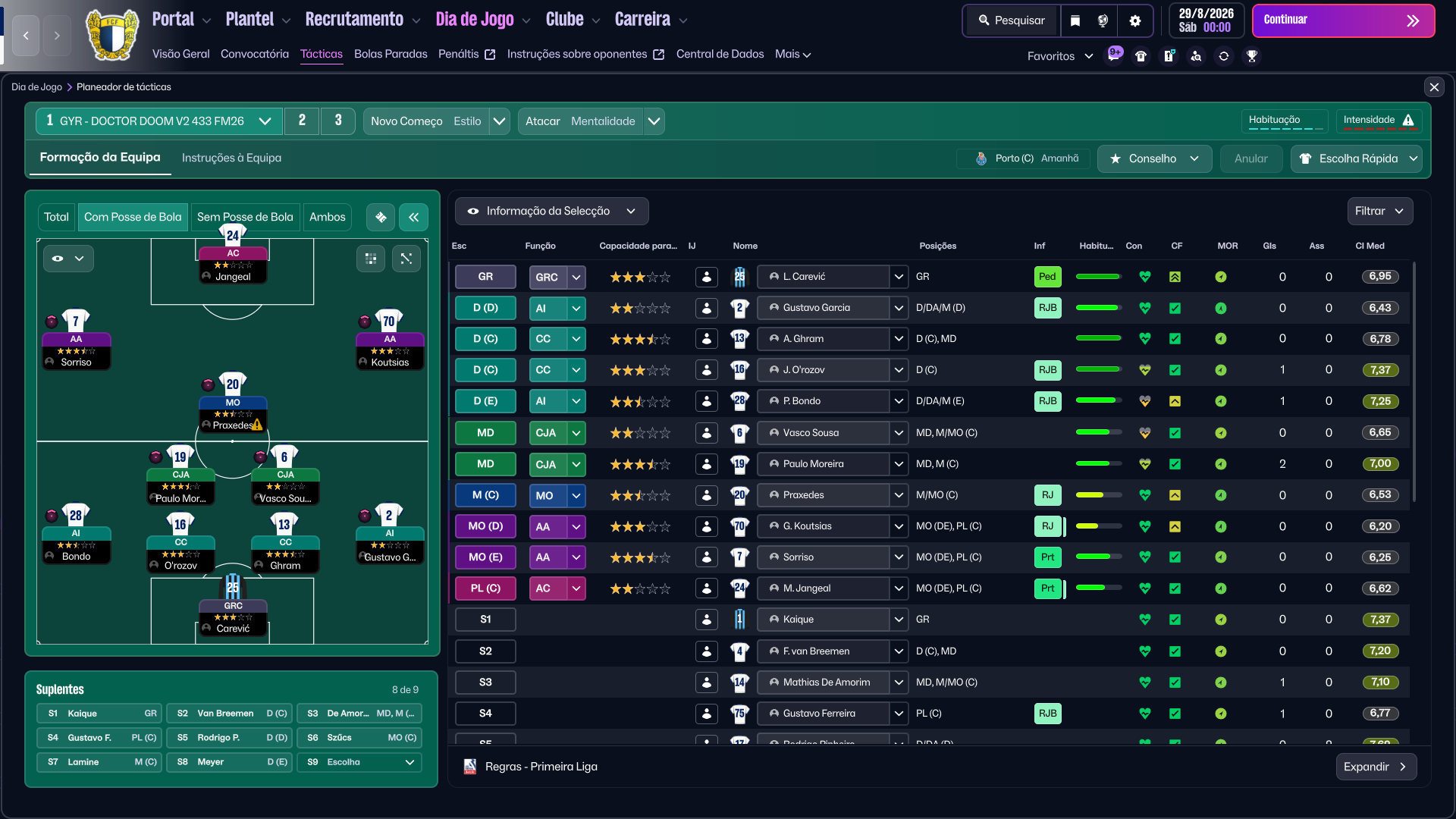
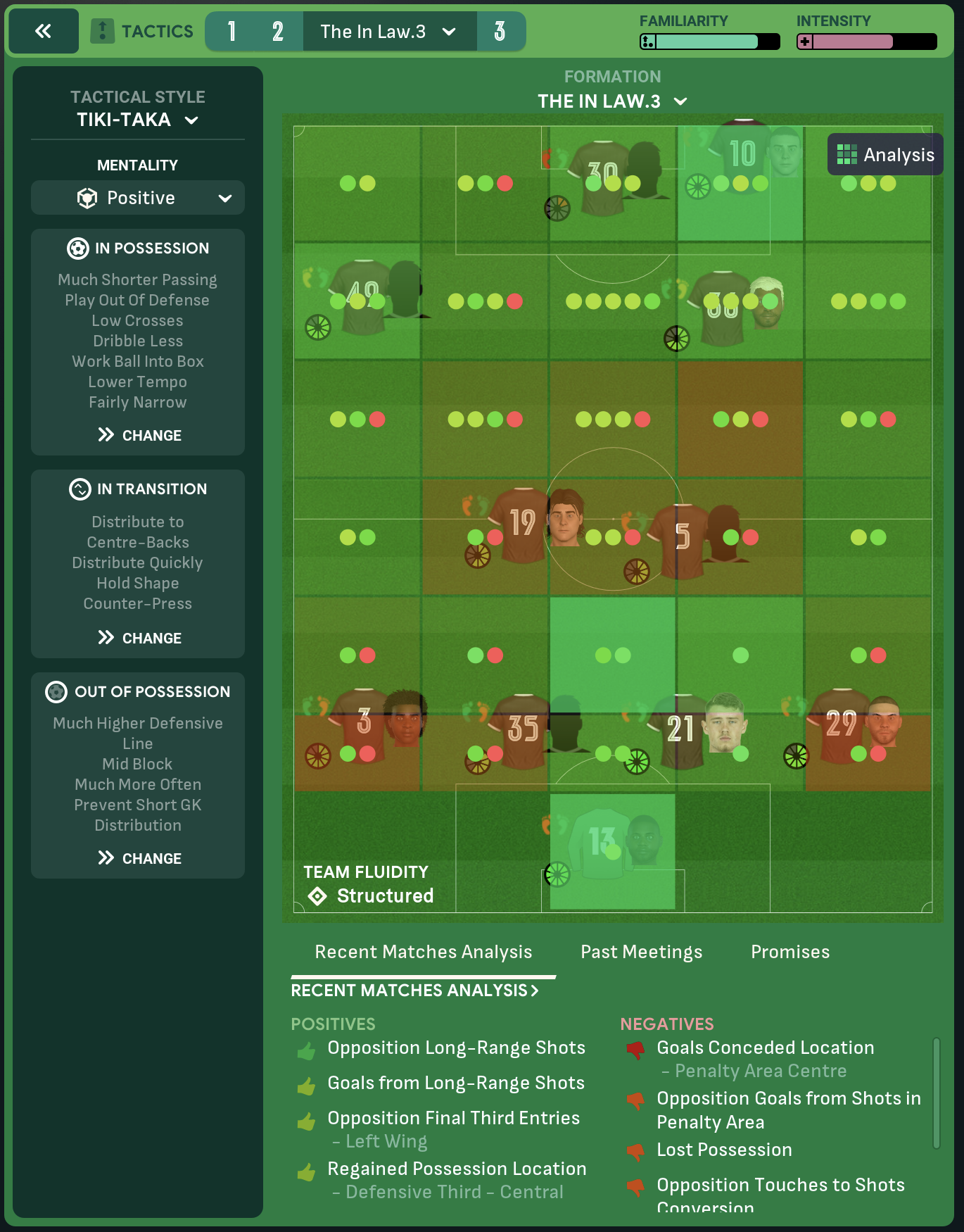
More Counter tactics
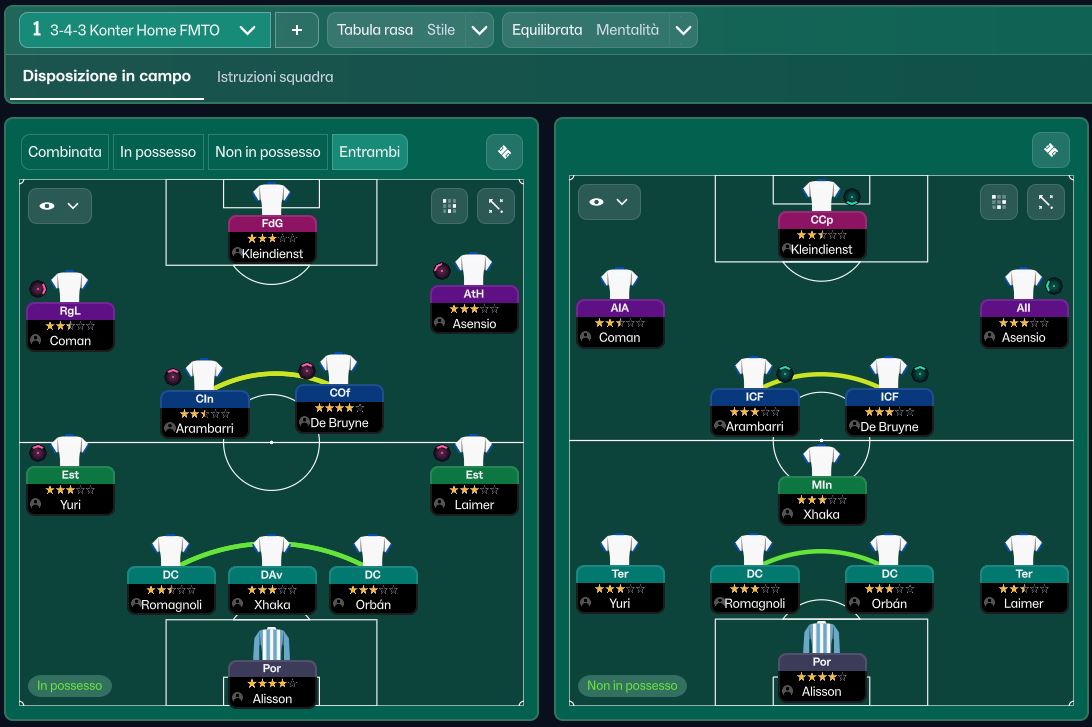
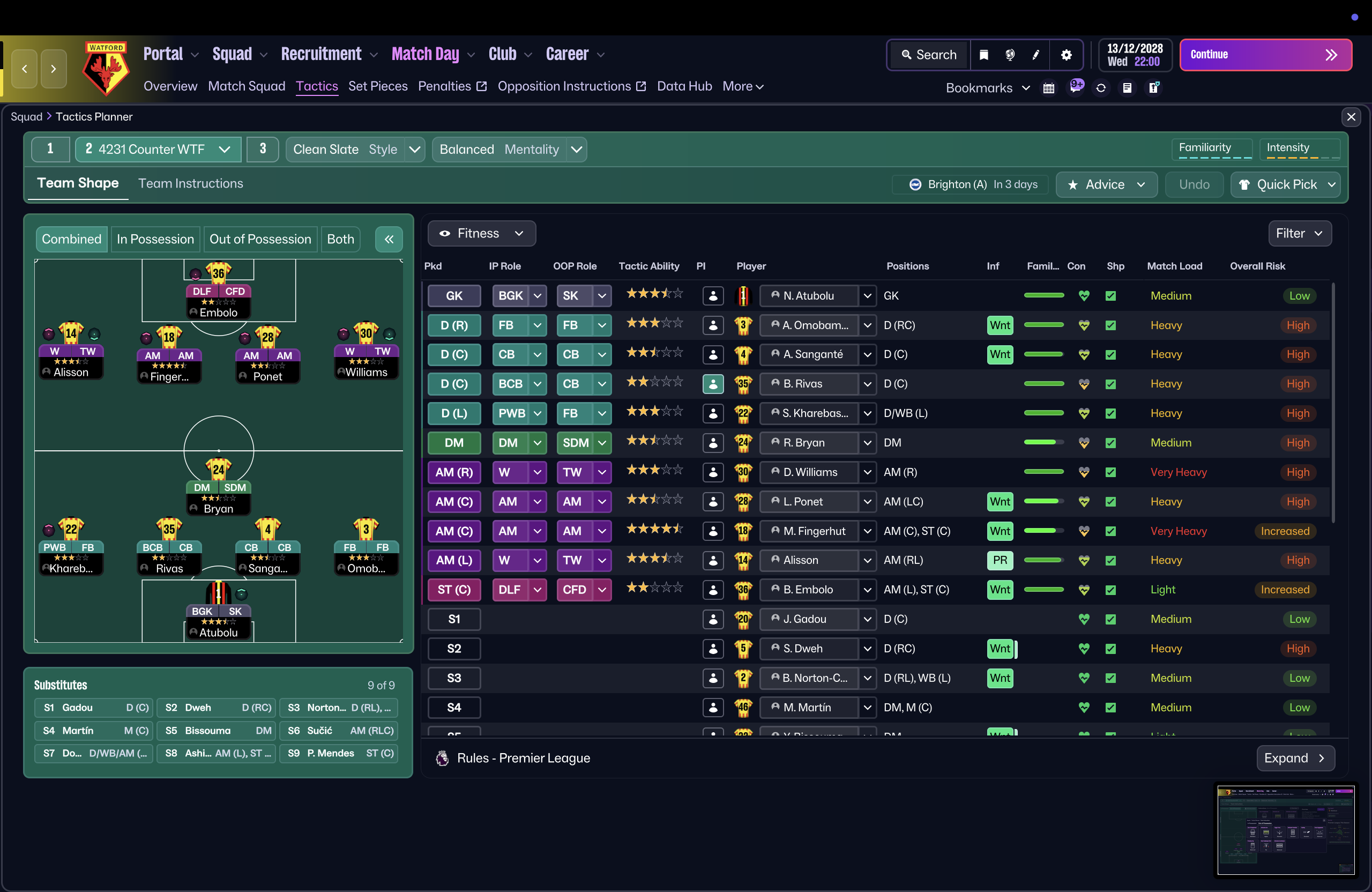
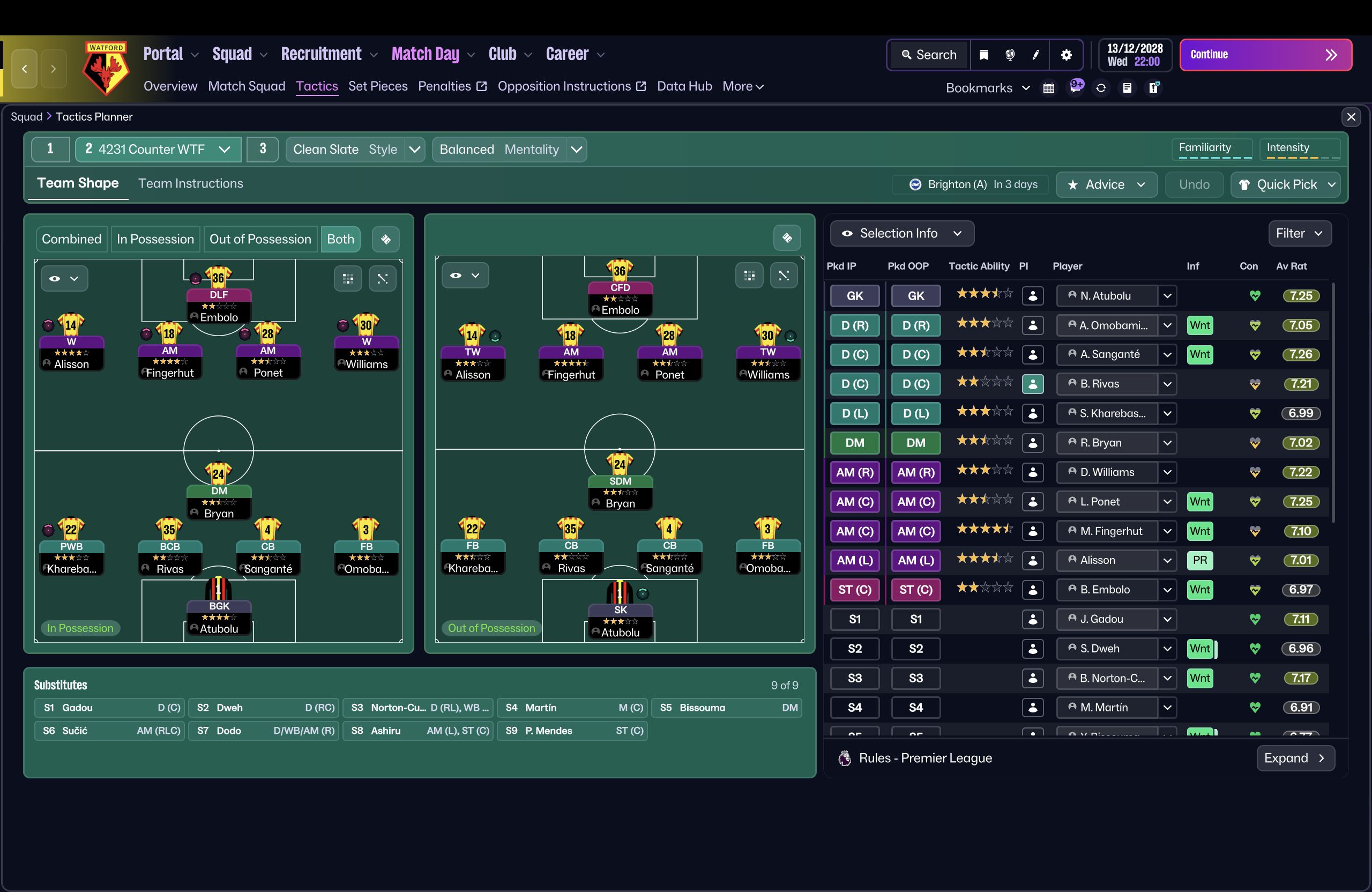
Guides for this formation
The tactical theory behind the 4-3-3: roles, instructions, and the trade-offs that decide whether the system holds up.
Foundations
Understanding the 4-3-3 Formation
Master the classic 4-3-3: player roles, tactical variations, and the trade-offs that decide whether it sings or stalls.
Read guide
Player pairings
Midfield Trios
Holder, runner, creator: the role distribution rule for three-man midfields, the AMC variants, and the antipatterns that break them.
Read guide
Playing styles
Gegenpressing: A Full Guide
Klopp-style gegenpressing in FM, including squad profile, line-and-press pairing, sustainable workload, and the antipatterns to avoid.
Read guide