Uploaded Tactic
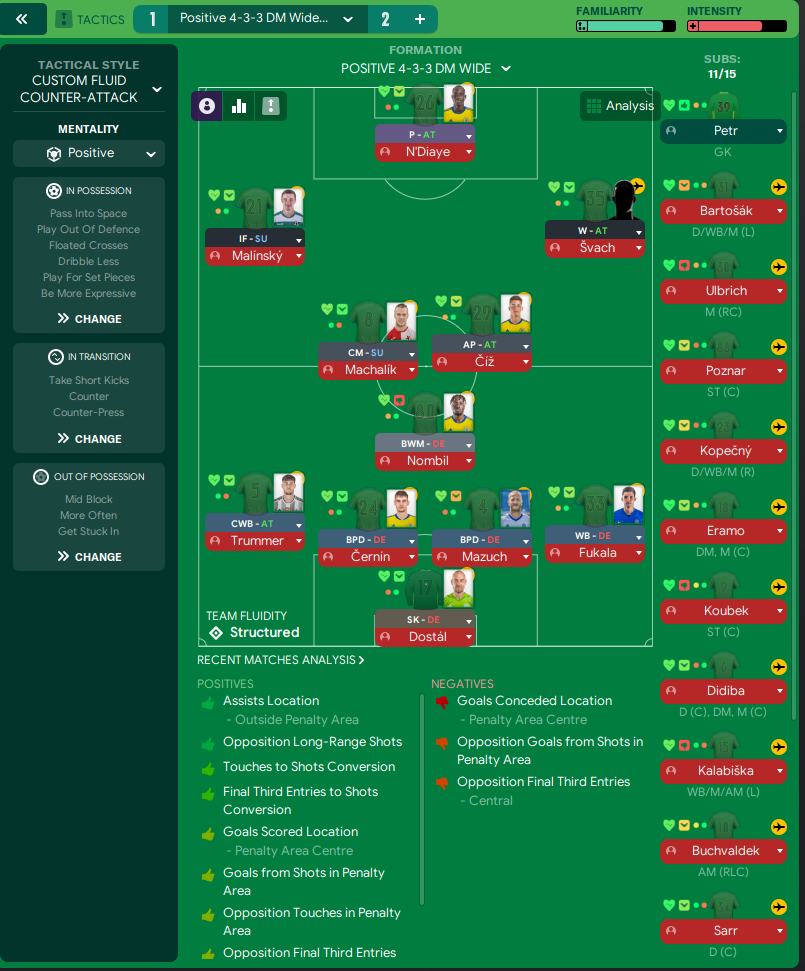
Formation & Style
Tactical Style:Custom Fluid
Mentality:Positive
Formation:4-3-3 DM Wide
Team Fluidity:Structured
In Possession
Pass Into Space
Play Out Of Defence
Floated Crosses
Dribble Less
Be More Expressive
In Transition
Take Short Kicks
Counter-Press
Counter
Out of Possession
Mid Block
Get Stuck In
Team Shape Without Ball
Shape:Mid Block
Description:Defensive line holds a compact shape to reduce space while remaining aggressive.
Evidence:Mid Block instruction combined with Get Stuck In for defensive intensity.
Team Shape With Ball
Shape:Fluid Width
Description:Wide players pull defenders wide while central players aim to exploit gaps.
Evidence:Instructions such as Pass Into Space and the presence of a Complete Wing-Back.
Phase Description
Attacking Play
Utilizes width through wing-backs and inside forwards, emphasizing quick transitions and ball control.
Defensive Transition
Focuses on immediate counter-press to regain possession while maintaining a mid block.
Main Focus
Creating goal-scoring opportunities through width and controlled build-up.
Key Strengths
Versatile Offensive Structure
The combination of inside forwards and wingers creates attacking unpredictability.
Strong Build-up Play
Ball-Playing Defenders facilitate quick, progressive passing from the back.
Effective Defensive Midfield
The Ball-Winning Midfielder protects the defense while aiding transitions.
Conflicting Directions
Vulnerability to Central Attacks
The shape may be exposed to central attacks between the CBs and DM.
Pressure on Full-Backs
High reliance on CWB may lead to vulnerability if opponents exploit spaces left behind.
Inconsistent Forward Press
Counter-Pressing may not be effective if players are not compact post-attack.
Tactical Suggestions
Adjust Midfield Roles
Consider a more defensive role in midfield to add stability against stronger opponents.
Increase Width in Attack
Encouraging wider play from both wing-backs could stretch opposition defenses more effectively.
Alternatives in Counter-Pressing
Fine-tune pressing triggers based on opposition strengths to avoid being caught on the break.
Ask Questions About Your Lineup
Related Tactics
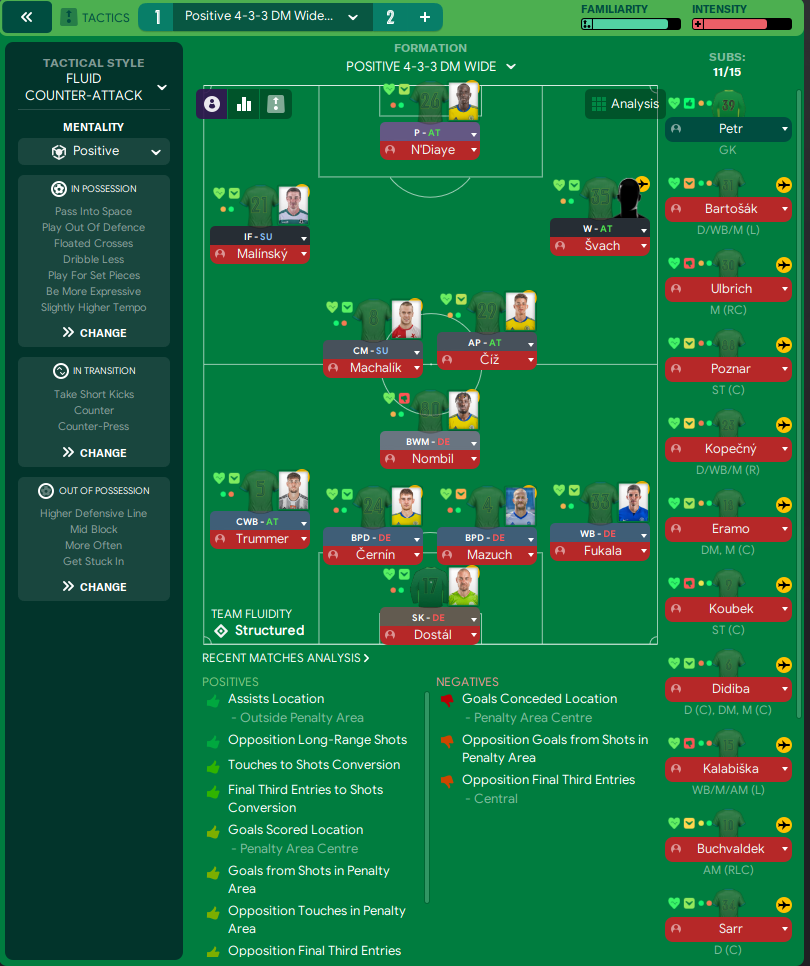
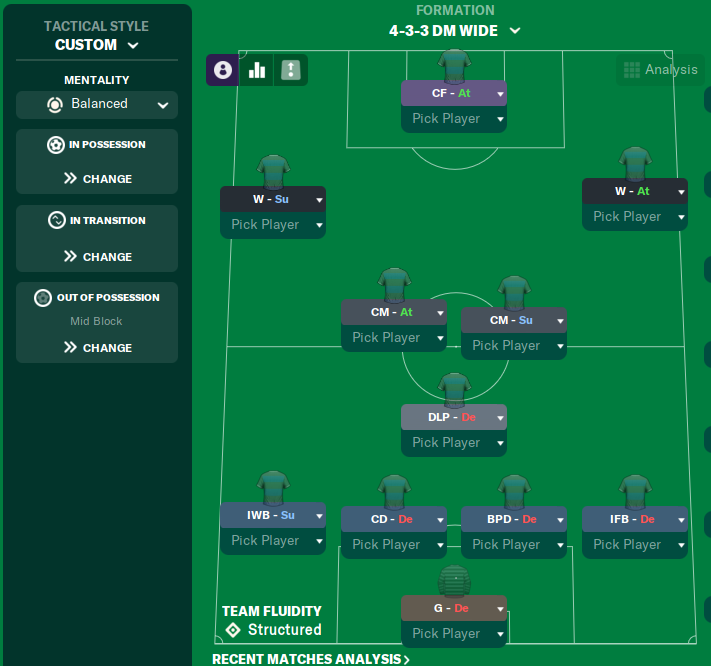
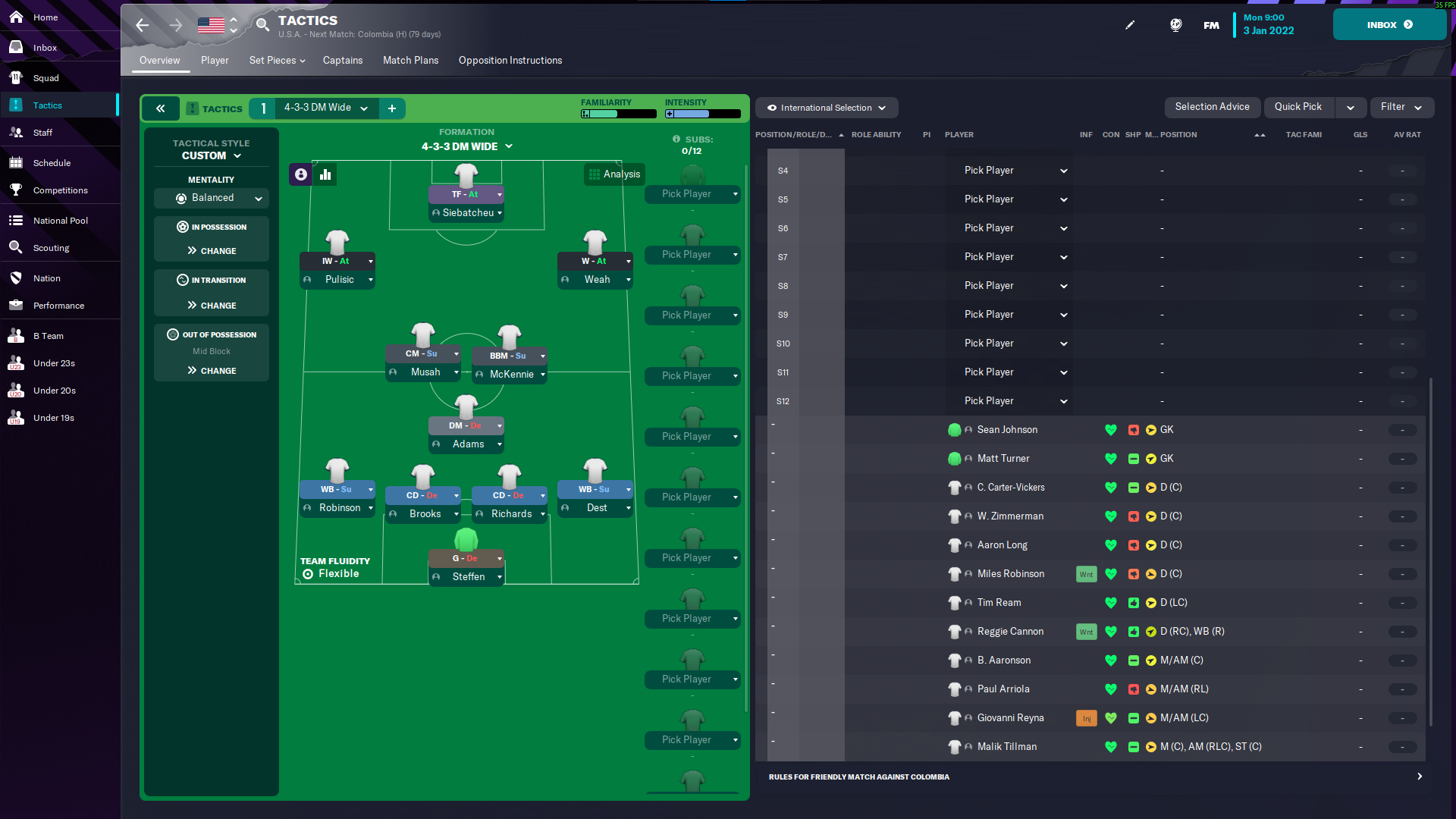
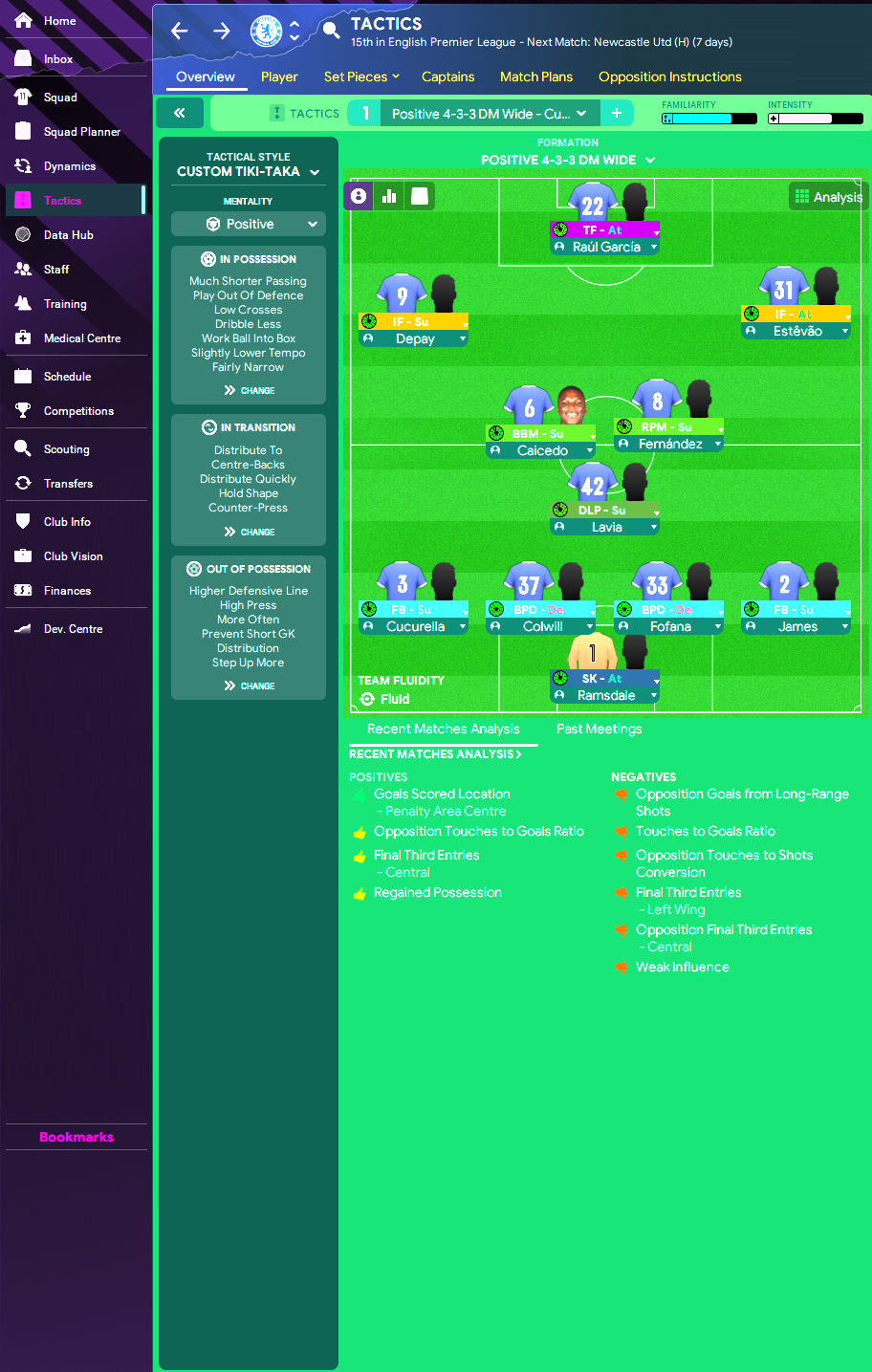
More Custom Fluid tactics
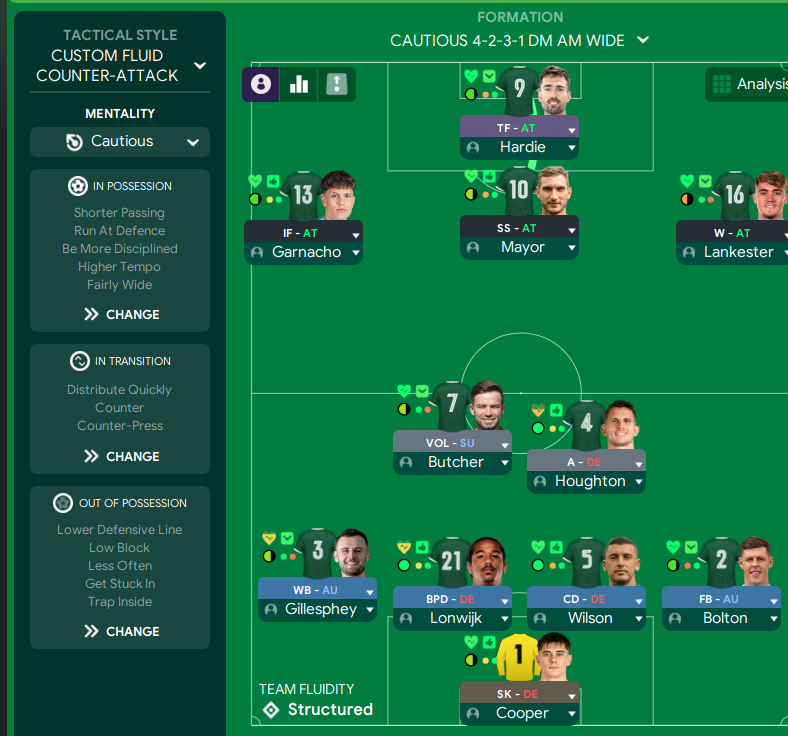
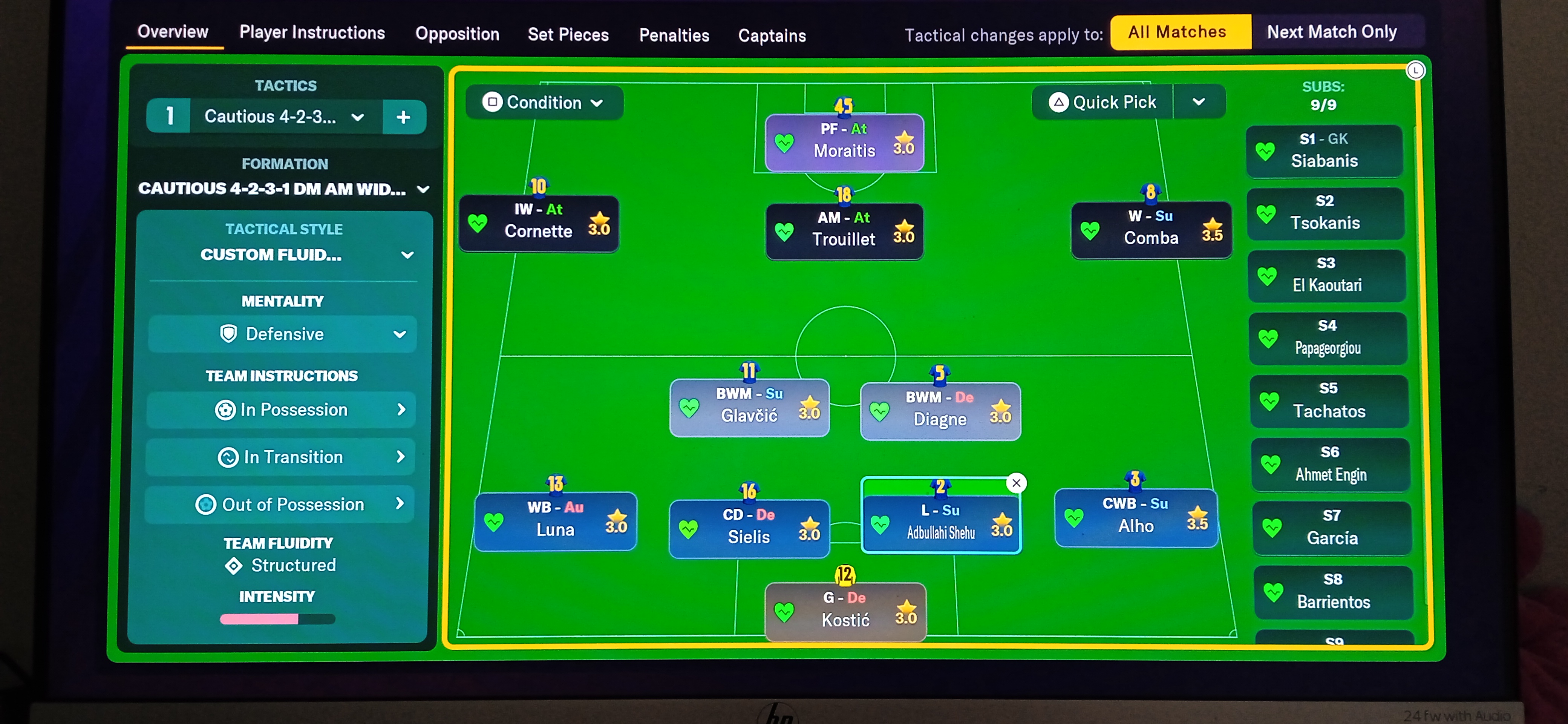
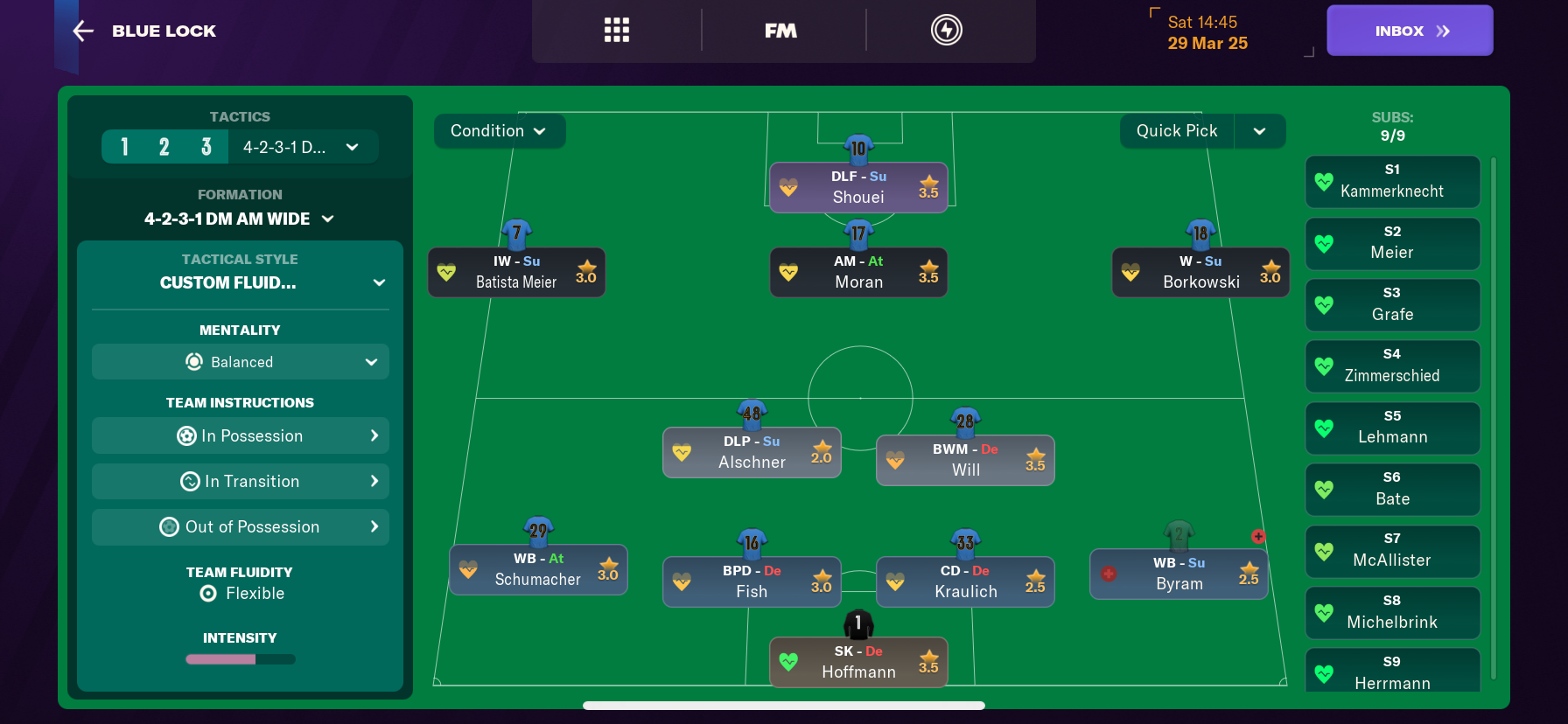
Guides for this formation
The tactical theory behind the 4-3-3 DM Wide: roles, instructions, and the trade-offs that decide whether the system holds up.
Foundations
Understanding the 4-3-3 Formation
Master the classic 4-3-3: player roles, tactical variations, and the trade-offs that decide whether it sings or stalls.
Read guide
Player pairings
Midfield Trios
Holder, runner, creator: the role distribution rule for three-man midfields, the AMC variants, and the antipatterns that break them.
Read guide
Playing styles
Gegenpressing: A Full Guide
Klopp-style gegenpressing in FM, including squad profile, line-and-press pairing, sustainable workload, and the antipatterns to avoid.
Read guide