Uploaded Tactic
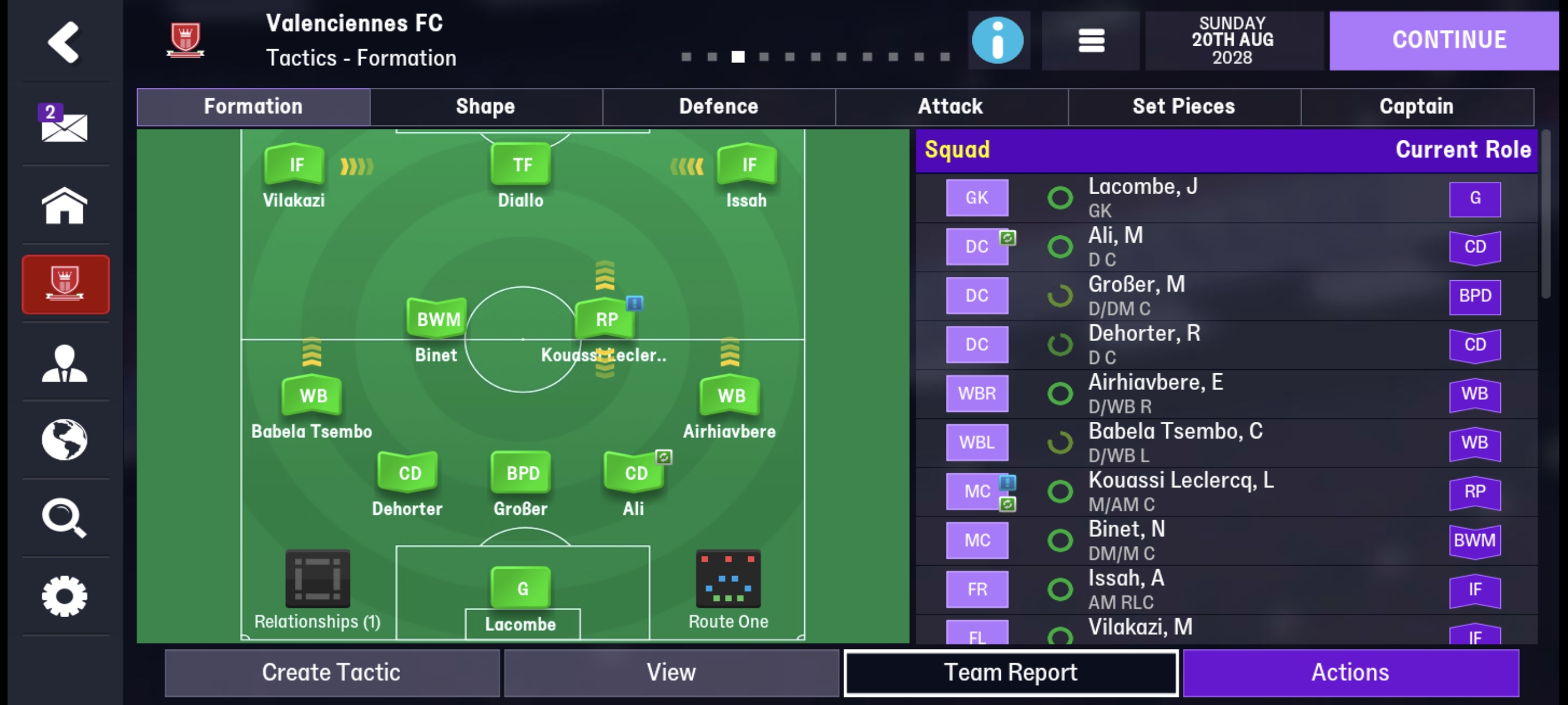
Formation & Style
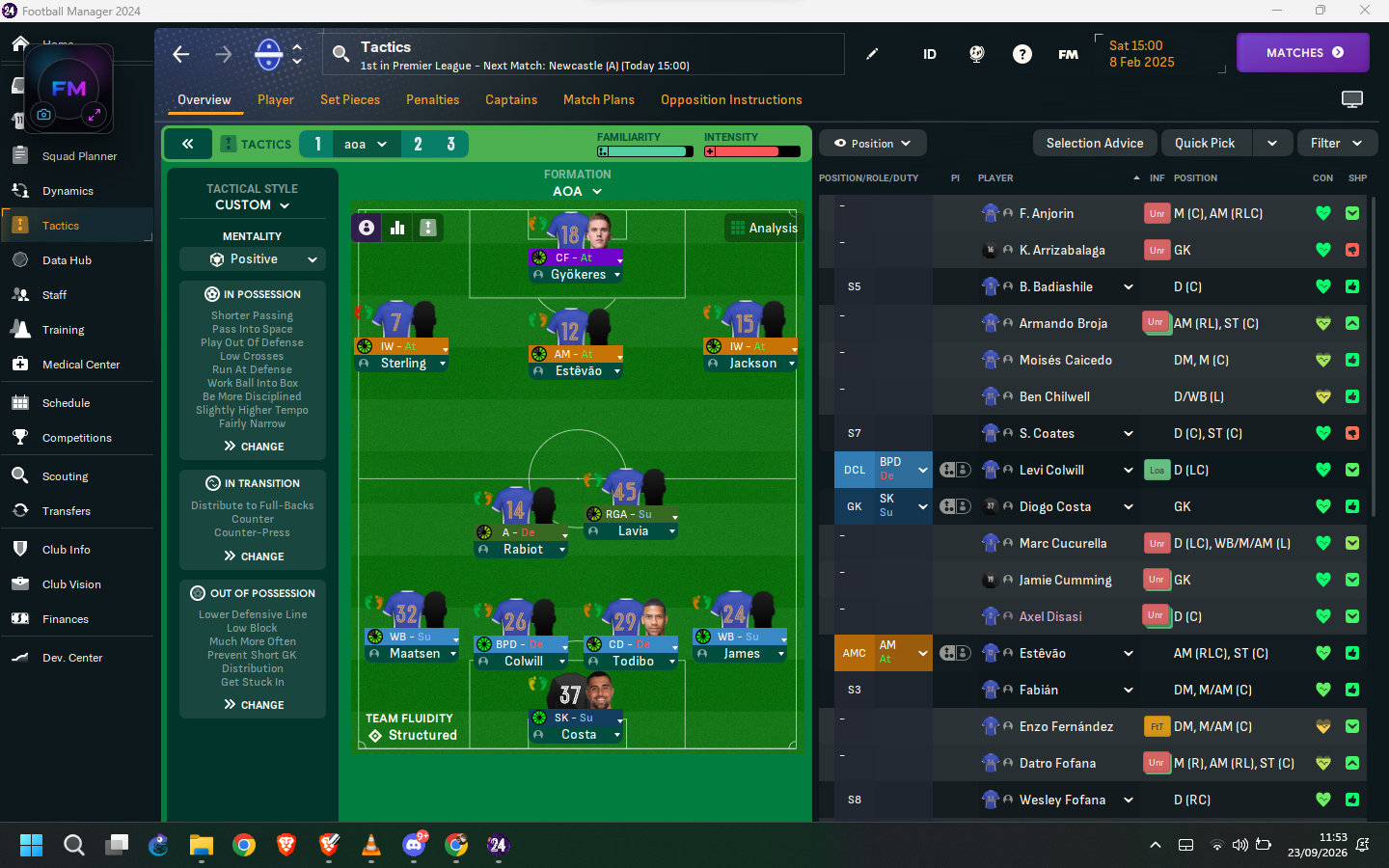
Tactical Style:Possession
Mentality:Attacking
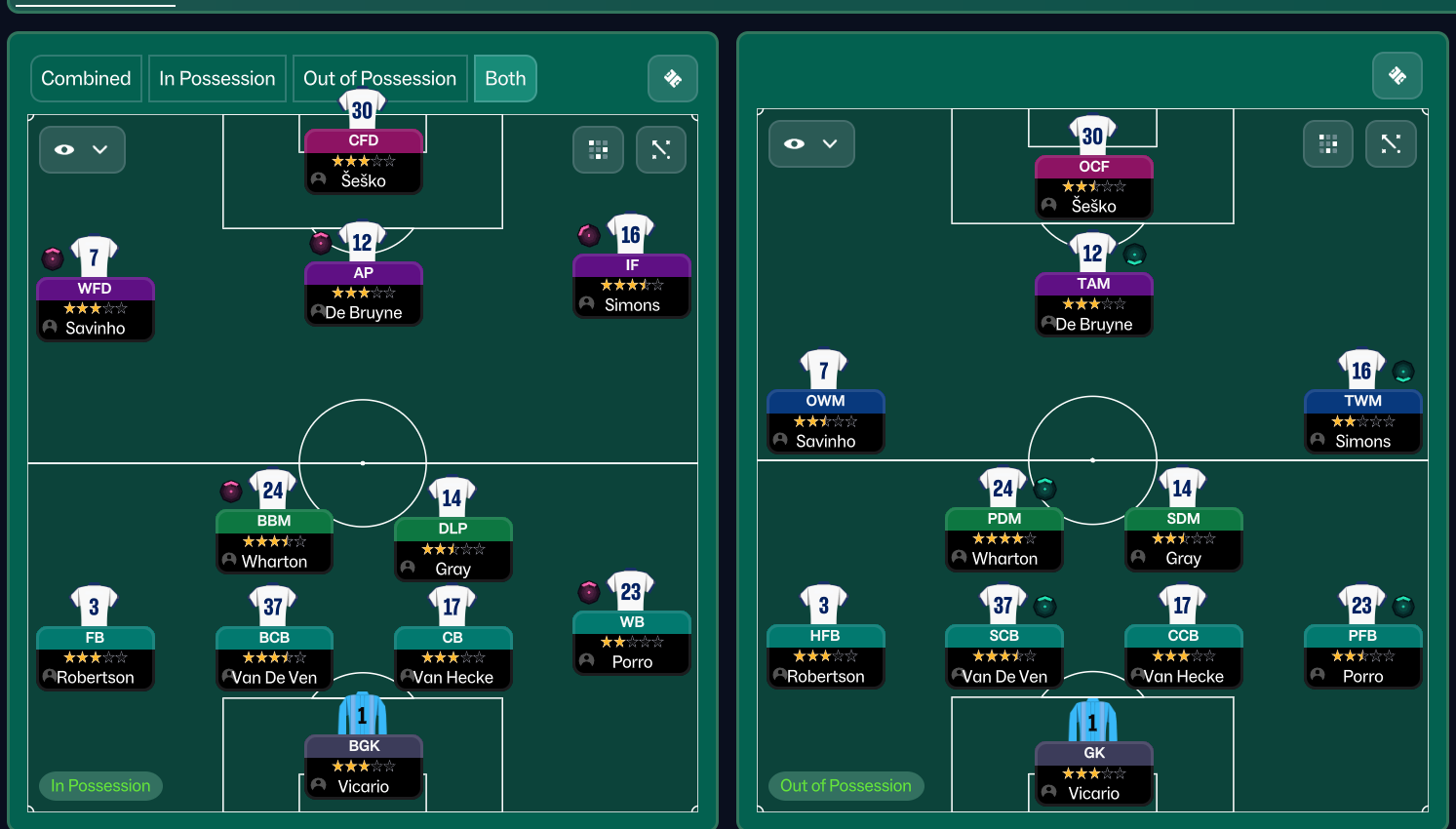
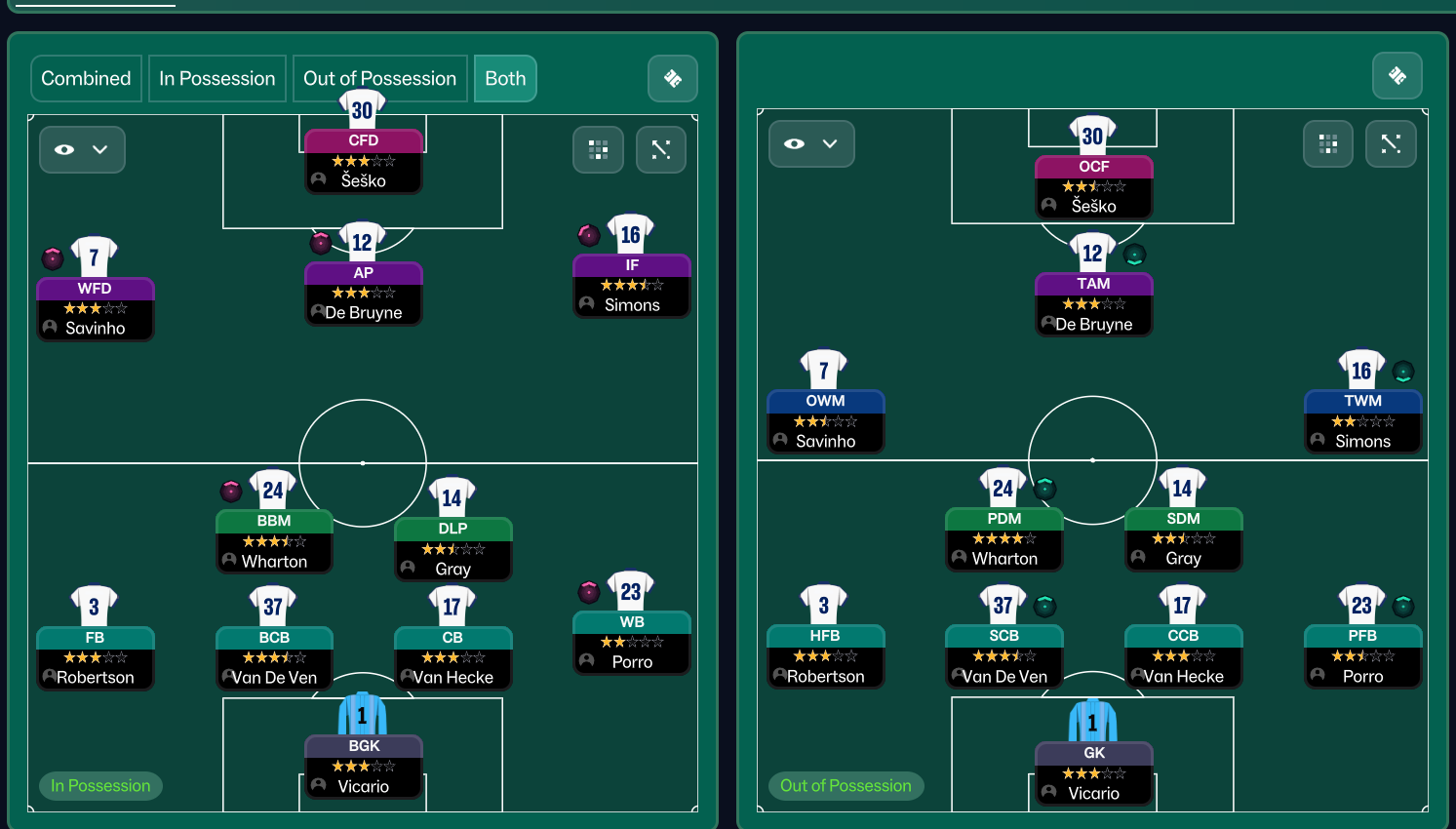
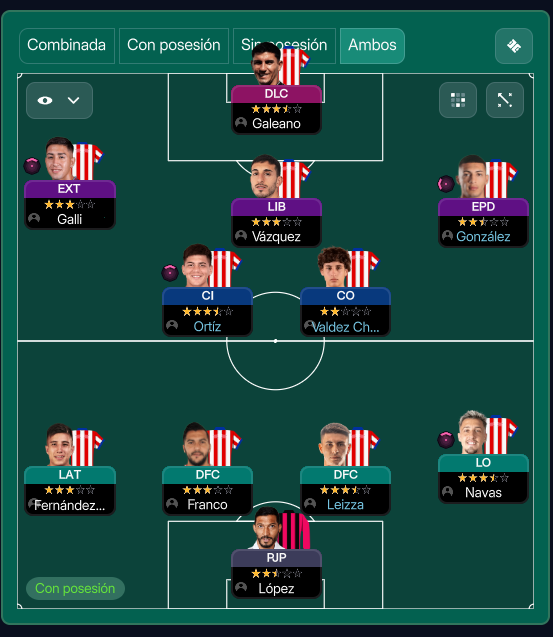
Formation:3-4-3
Team Fluidity:Fluid
In Possession
Play Out of Defence
Pass Into Space
Overlap on the flanks
In Transition
Counter
Counter Press
Out of Possession
Higher Defensive Line
Higher Line of Engagement
Trigger Press More Often
Team Shape Without Ball
Shape:Compact
Description:The team maintains a compact shape to limit spaces for the opponent.
Evidence:Three central defenders at [2,2], [2,3], [2,4] supporting a strong defensive block.
Team Shape With Ball
Shape:Fluid
Description:Wingers stretch the pitch, creating space for central players to exploit.
Evidence:Several attacking options positioned high, including two inside forwards at [5,2] and [5,4] and a target forward at [6,3].
Phase Description
Attacking Play
Focus on using width through wing-backs while maintaining possession and utilizing the inside forwards for scoring.
Defensive Transition
Quickly regroup to counter-press, aiming to regain possession high up the pitch.
Main Focus
Ball retention and exploiting spaces in the opponent’s defence.
Key Strengths
Width and Depth in Attack
The use of wing-backs and inside forwards creates multiple avenues for attacking play.
Control in Midfield
Ball-winning midfielders support both defensive stability and attacking transitions.
Possession Retention
Possession-based tactical style allows for gradual buildup and controlled attacking.
Conflicting Directions
Overcommitting Wing-Backs
Wing-backs might leave gaps when attacking, exposing the flanks during counterattacks.
Vulnerability to Long Balls
Three central defenders may be vulnerable to direct long balls behind them.
Transition Issues
Quick transitions can leave players out of position if possession is lost.
Tactical Suggestions
Adjust Wing-Back Roles
Consider switching one wing-back to a more defensive duty to reduce vulnerability.
Incorporate Midfield Rotation
Introduce a rotational system among midfielders to adapt to different phases.
Strengthen Central Defense
Consider a more robust defensive midfielder to shield the back line.
Ask Questions About Your Lineup
Related Tactics
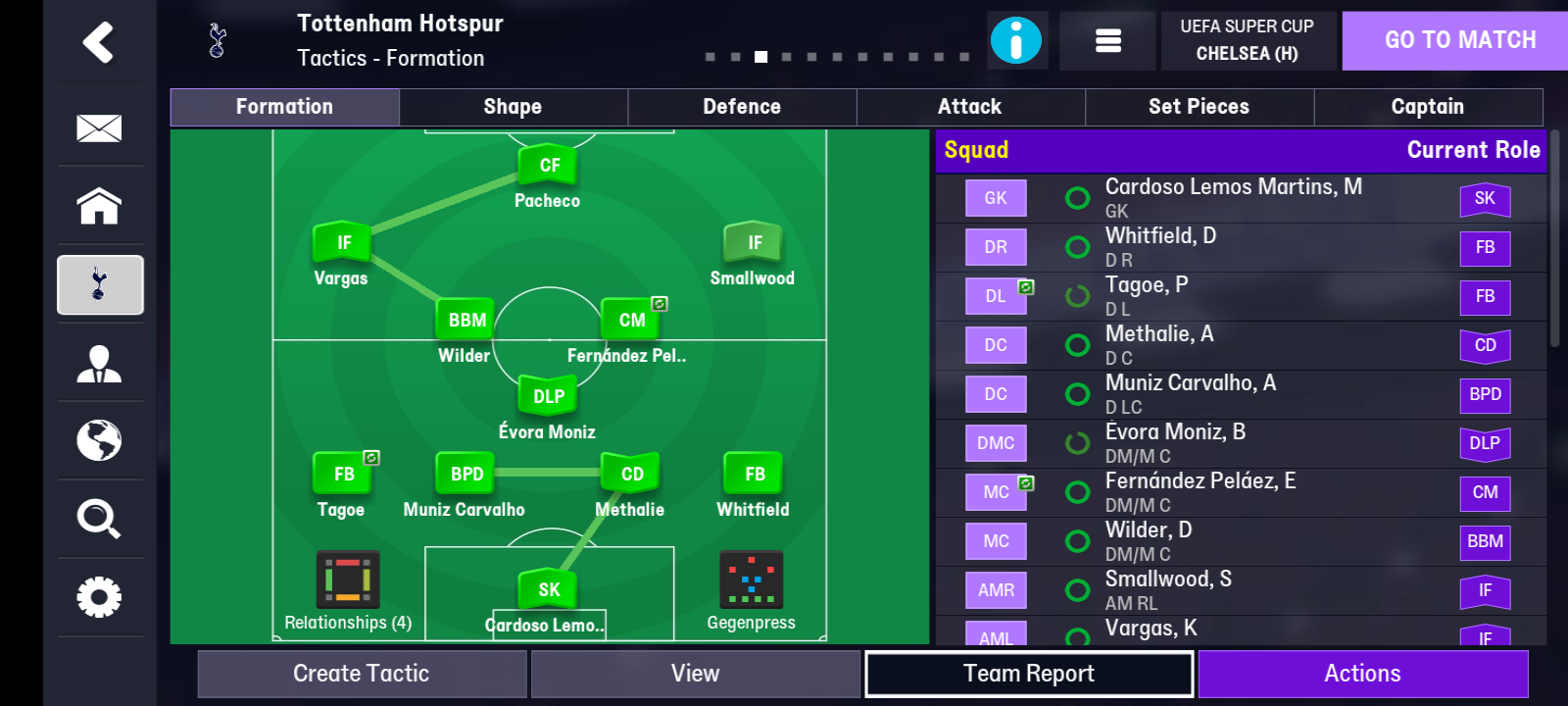
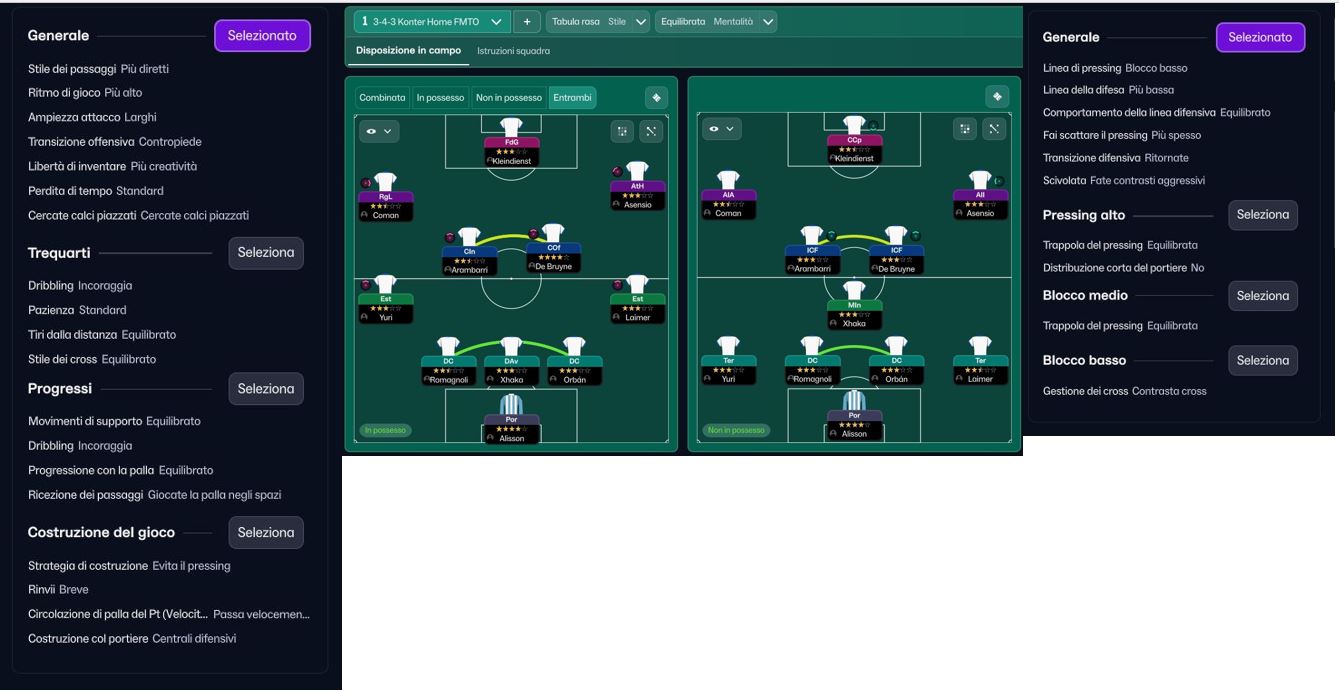
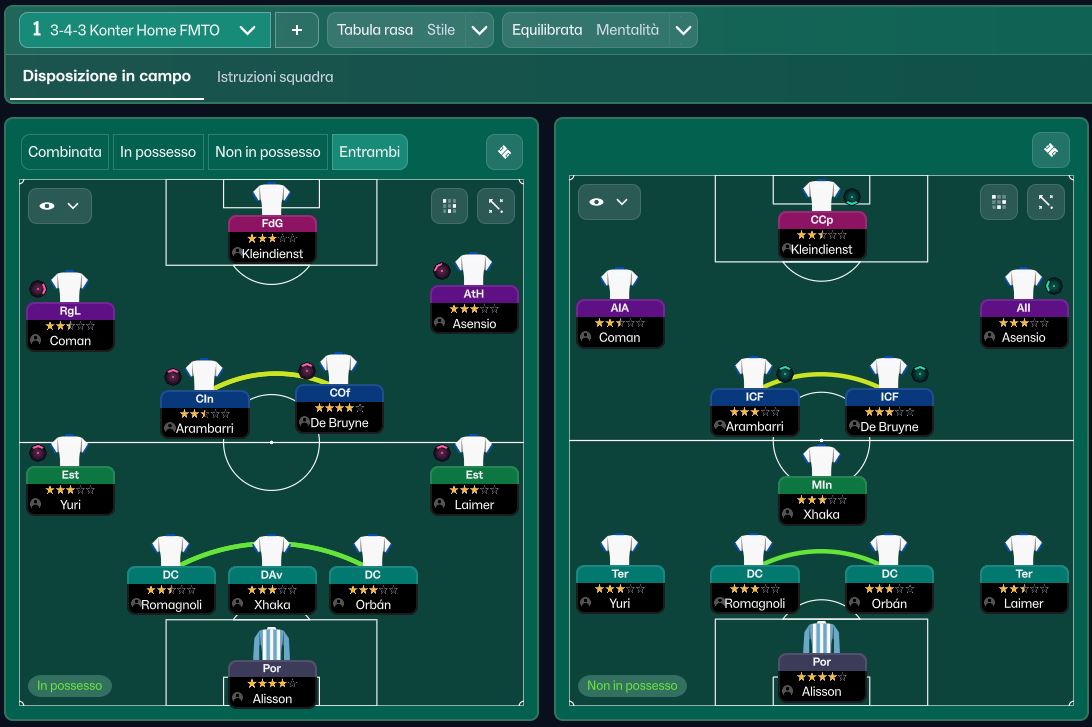
More Possession tactics
Guides for this formation
The tactical theory behind the 3-4-3: roles, instructions, and the trade-offs that decide whether the system holds up.
Playing styles
Direct, Vertical Football
Long-ball football done well in FM. When direct, vertical play is the right choice, and what the Direct Passing TI actually changes.
Read guide
Playing styles
Possession-Based Tactics in Football Manager
Build the patient, control-the-tempo style without watching your opponents counter through the gaps you leave behind.
Read guide