Uploaded Tactic
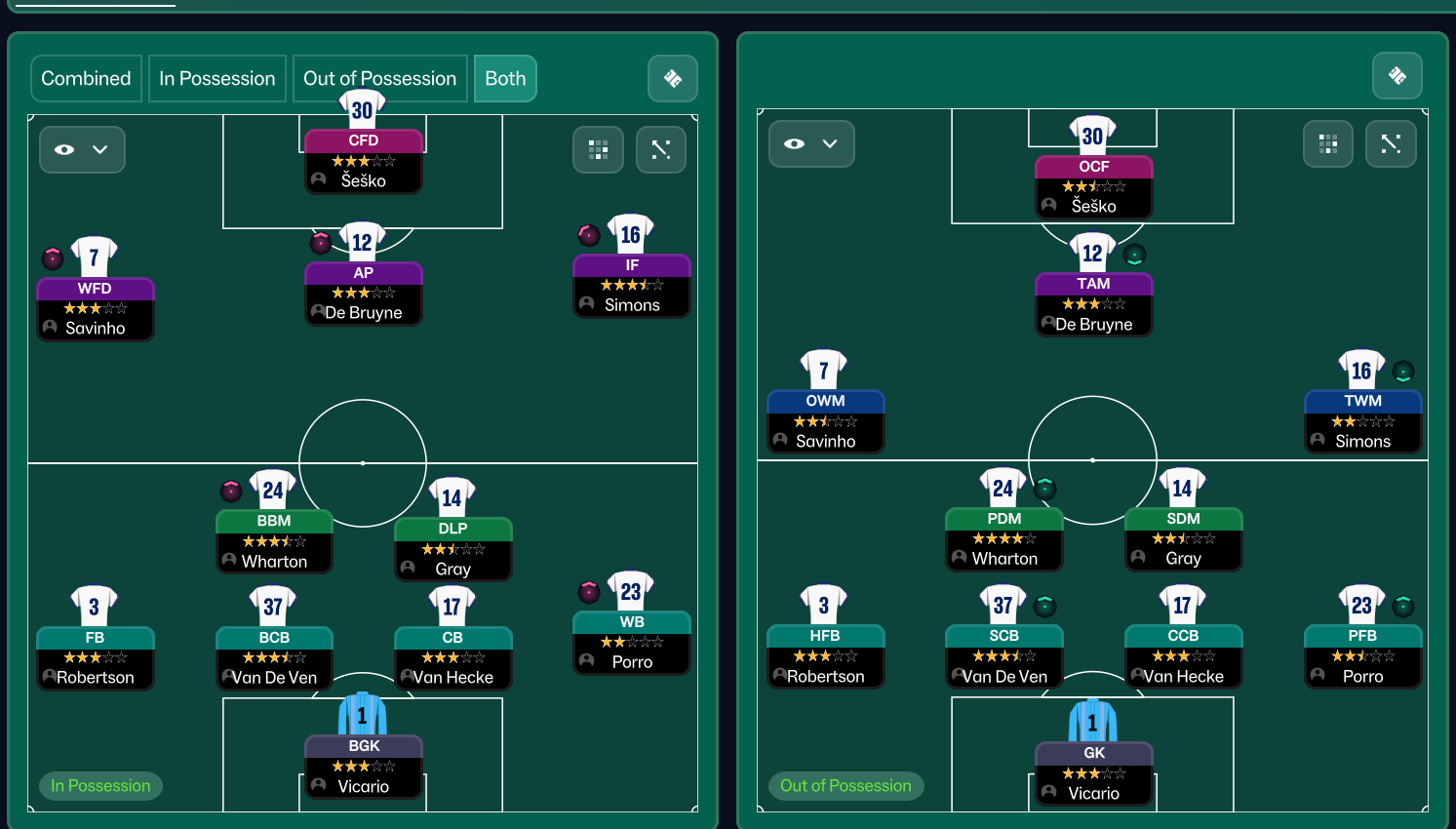
Formation & Style
Tactical Style:Possession
Mentality:Attacking
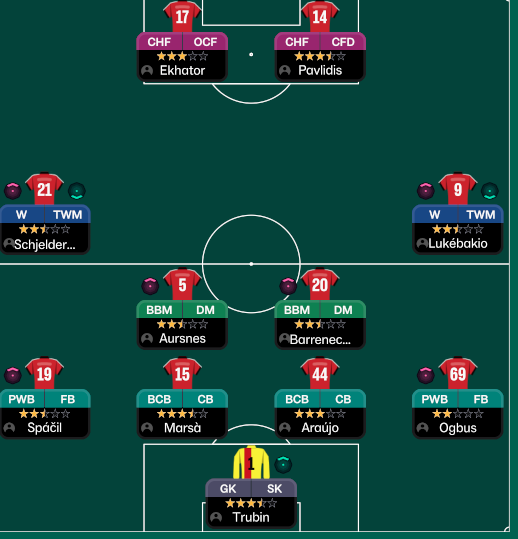
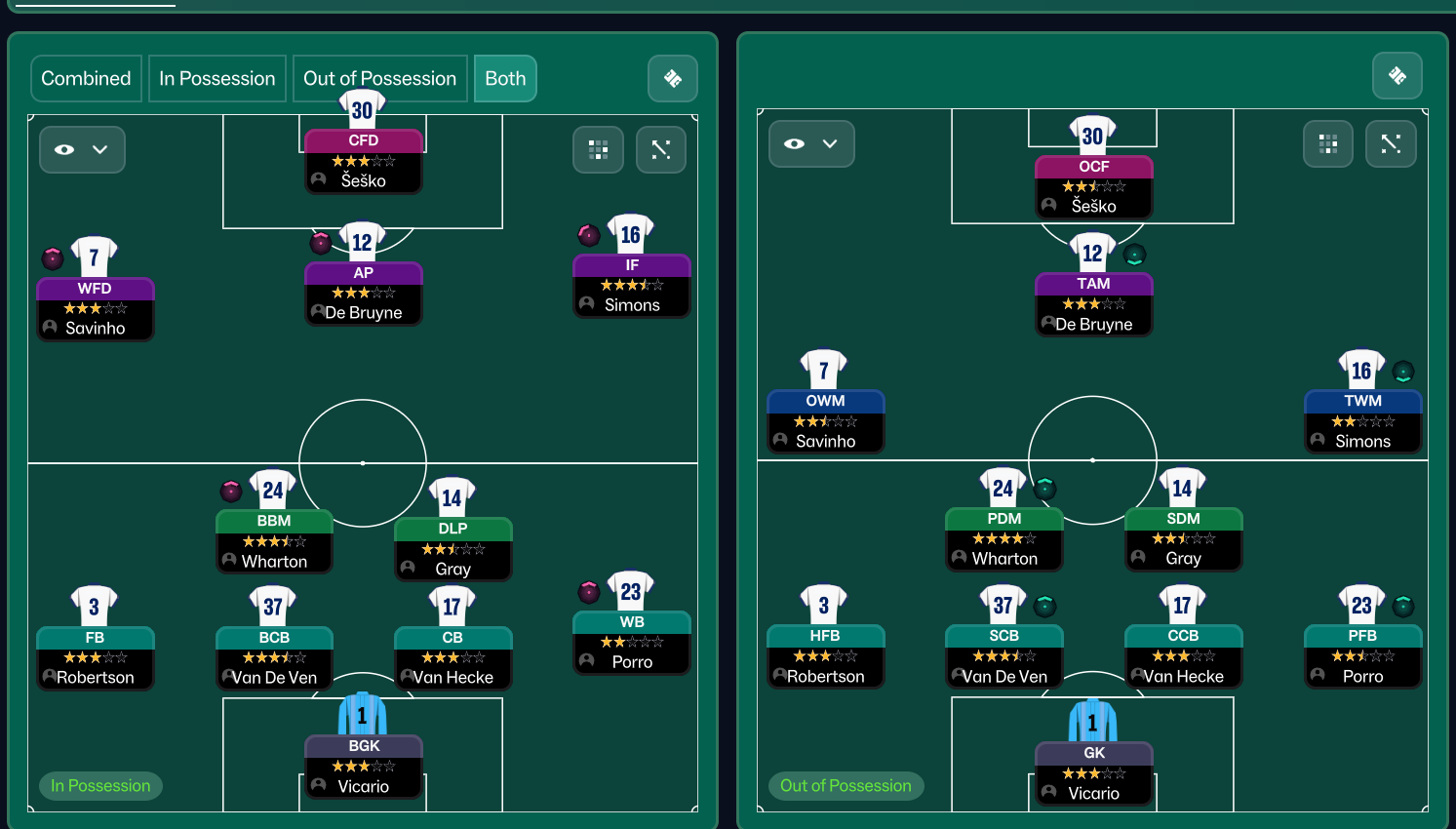
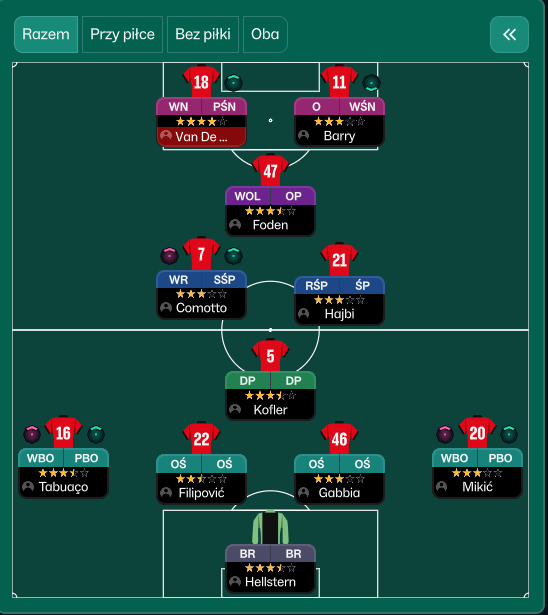
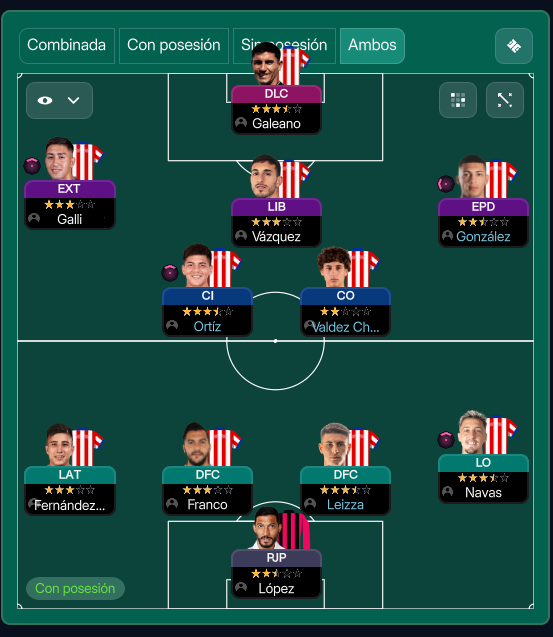
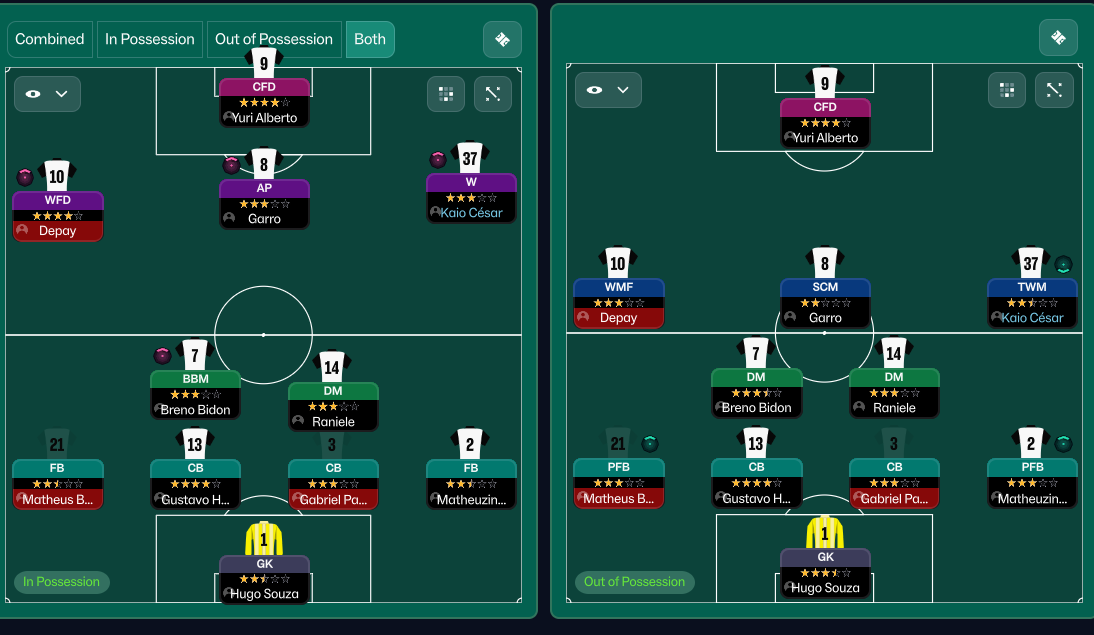
Formation:3-2-2-3
Team Fluidity:Fluid
In Possession
Work Ball Into Box
Higher Tempo
Play Out Of Defence
In Transition
Counter-Press
Counter
Out of Possession
Higher Defensive Line
Higher Line of Engagement
Prevent Short GK Distribution
Team Shape Without Ball
Shape:3-Defender Structure
Description:Maintains a compact shape with three central defenders, providing coverage against through-balls.
Evidence:3 CBs at rows 2 and solid defensive support from WBs.
Team Shape With Ball
Shape:Fluid Front Three
Description:A varied attack with vertical movements and inside-forward runs to exploit spaces behind defenses.
Evidence:CD-F, TAM, and IF positions creating attacking triangles.
Phase Description
Attacking Play
Utilizes width through wing-backs and looks to create deliberate passing sequences to unlock defenses.
Defensive Transition
Quickly reorganizes into a 3-4-3 setup during transitions, emphasizing counter-pressing to regain possession.
Main Focus
Control the midfield and sustain attacking pressure while limiting opposition breaches.
Key Strengths
Strong Midfield Control
The presence of a Deep-Lying Playmaker (DLP) alongside a Box-to-Box Midfielder (BBM) creates a balanced midfield that can dominate possession and transition effectively.
Versatile Wing Play
Utilization of wing-backs allows for width and overlaps, stretching opposition defenses and creating crossing opportunities.
Dynamic Attack
The attacking players possess roles that enhance fluid movement and adaptability in the final third, leading to various goal-scoring opportunities.
Conflicting Directions
High Defensive Line Risks
While pressing high can win the ball back quickly, it leaves the team vulnerable to fast breaks, especially against speedy forwards.
Dependence on Wing-backs
Heavy reliance on wing-backs for width could be problematic if they are caught upfield during transitions, exposing the wings.
Potential for Overcrowding Midfield
The combination of roles in midfield may lead to a lack of space, potentially limiting forward passing options.
Tactical Suggestions
Adjust Defensive Line Height
Consider lowering the defensive line to mitigate the risk of being countered by pacey attackers.
Utilize Central Playmaker More
With an Advanced Playmaker in central areas, ensure instructions focus on exploiting central runs or through balls.
Rotate Wing-backs and Wide Players
Encourage wing-backs and wingers to switch flanks during matches to confuse opposition marking and create space.
Ask Questions About Your Lineup
Related Tactics
More Possession tactics
Guides for this formation
The tactical theory behind the 3-2-2-3: roles, instructions, and the trade-offs that decide whether the system holds up.