Uploaded Tactic
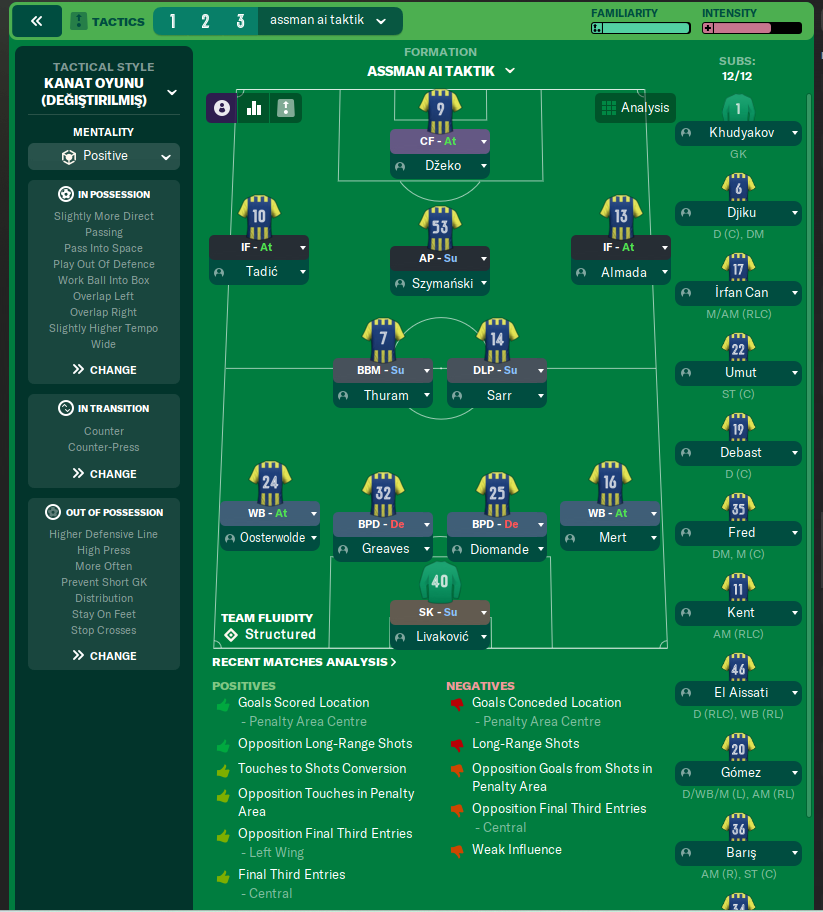
Formation & Style
Tactical Style:Kanat Oyunu (Değiştirilmiş)
Mentality:Positive
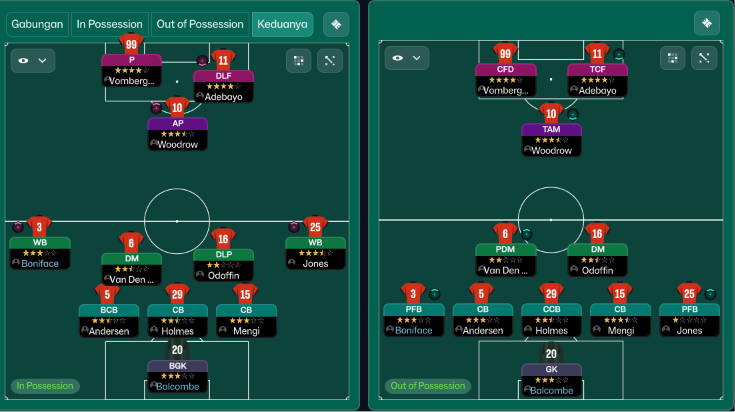
Formation:3-2-2-3
Team Fluidity:Structured
In Possession
Slightly More Direct Passing
Pass Into Space
Work Ball Into Box
Overlap Right
Slightly Higher Tempo
In Transition
Counter
Counter-Press
Out of Possession
Higher Defensive Line
High Press
More Often
Prevent Short GK Distribution
Stay On Feet
Stop Crosses
Team Shape Without Ball
Shape:3-2-2-3
Description:A mixture of attacking and defensive responsibilities, with wing-backs providing width and midfielders covering central positions.
Evidence:BPD-De at [2,2] and [2,3] ensure defensive solidity, while the higher line of engagement places pressure on opposing players.
Team Shape With Ball
Shape:Fluid and Flexible
Description:The attacking phase is facilitated by quick, creative movements from forwards and overlapping runs from wing-backs.
Evidence:IF-At roles at [5,2] and [5,4] alongside the CF at [6,3] create space for the AM at [6,3] and allow for varied attacking options.
Phase Description
Attacking Play
Focus on combination play and quick transitions through the wings, utilizing the width provided by the wing-backs and inside forwards.
Defensive Transition
Quick recovery into a compact defending shape, looking to execute a counter-press immediately after losing the ball.
Main Focus
Utilizing overloads on the wings while maintaining support in central areas through midfield.
Key Strengths
Effective Width Utilization
The wing-backs and inside forwards stretch the play effectively, creating space for central players.
Strong Attacking Triangles
The combination of forwards and the advanced playmaker creates multiple passing lanes.
Solid Defensive Shape
The three defenders and two central midfielders provide a compact formation defensively.
Conflicting Directions
Higher Defensive Line Risks
While effective for pressing high, it may expose the backline to counter-attacks.
Overlapping Wing-Backs Vulnerability
Aggressive advancing of wing-backs can create space in the defensive area if possession is lost.
Dependence on Width
Heavy reliance on wing play means that if smothered, creativity in the midfield suffers.
Tactical Suggestions
Adjust Defensive Line Height
Consider lowering the defensive line to protect against fast counter-attacks.
Incorporate a Ball-Winning Midfielder
Adding a BWM could improve ball recovery in midfield and add protection to the defense.
Encourage Central Penetration
In addition to wide play, integrating more central runs can diversify the attacking threat.
Ask Questions About Your Lineup
Related Tactics
Guides for this formation
The tactical theory behind the 3-2-2-3: roles, instructions, and the trade-offs that decide whether the system holds up.