Uploaded Tactic
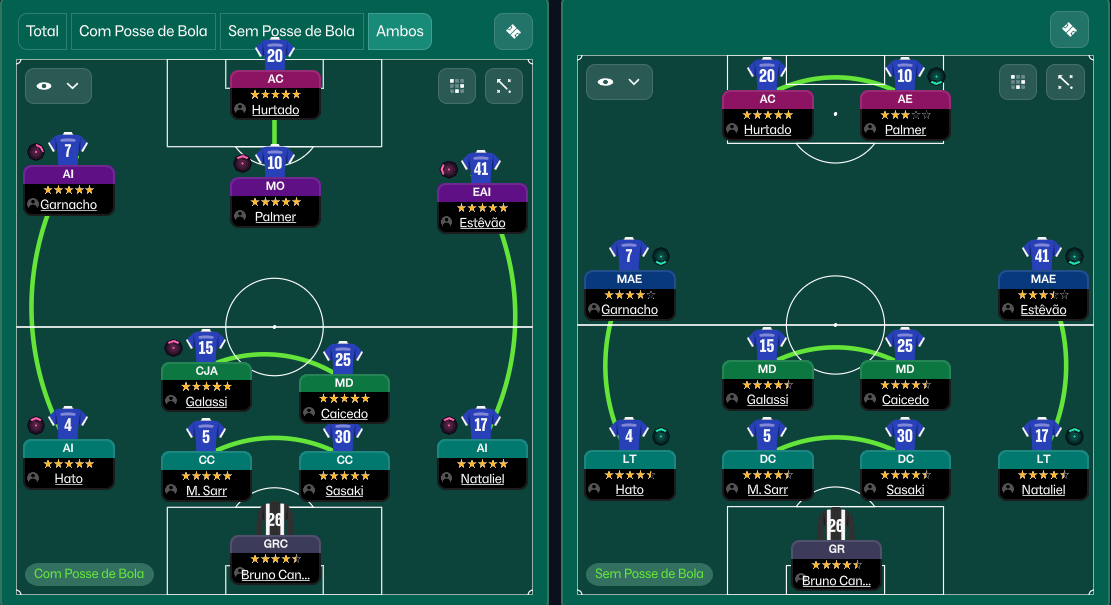
Formation & Style
Tactical Style:Balanced
Mentality:Positive
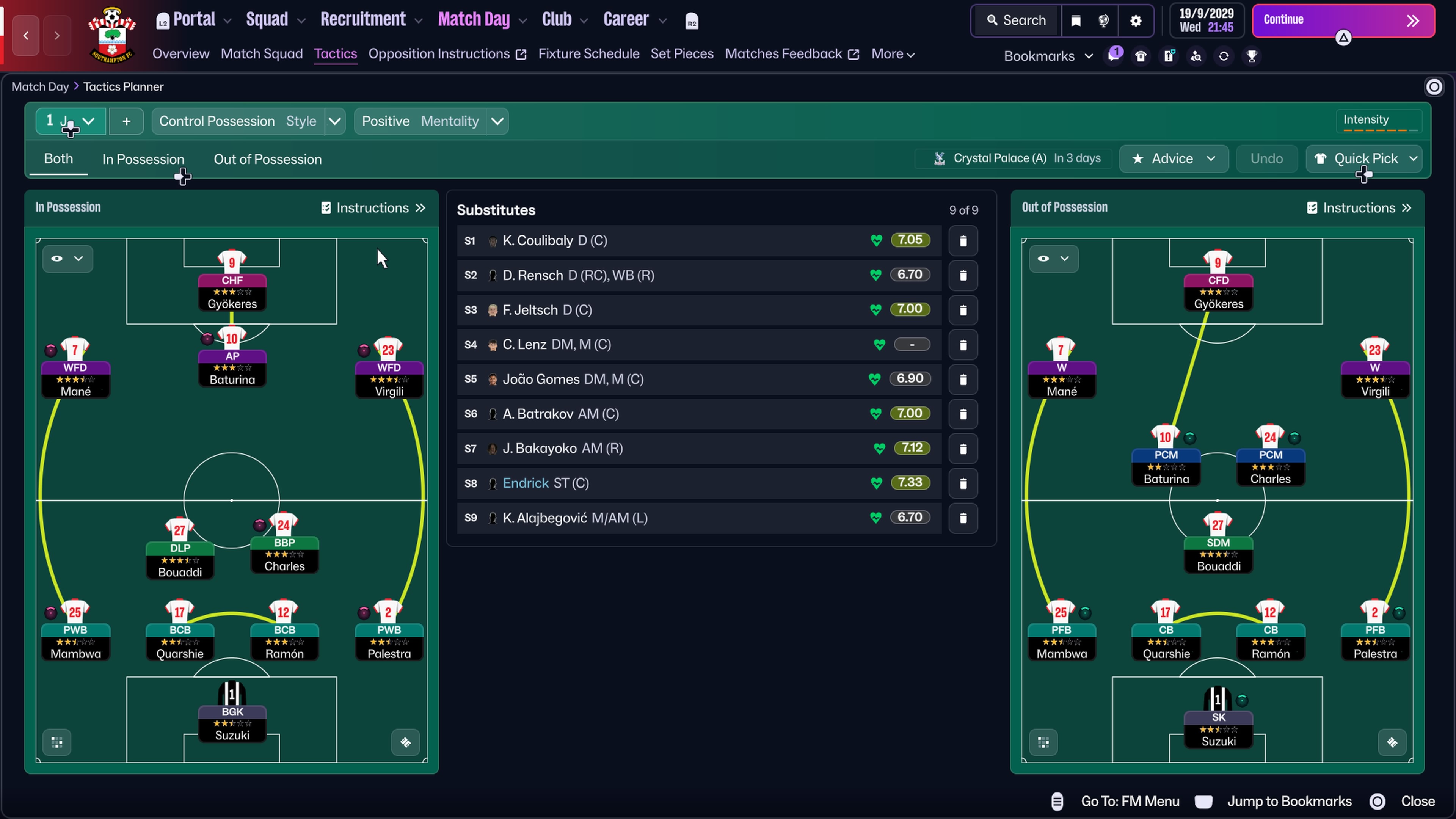
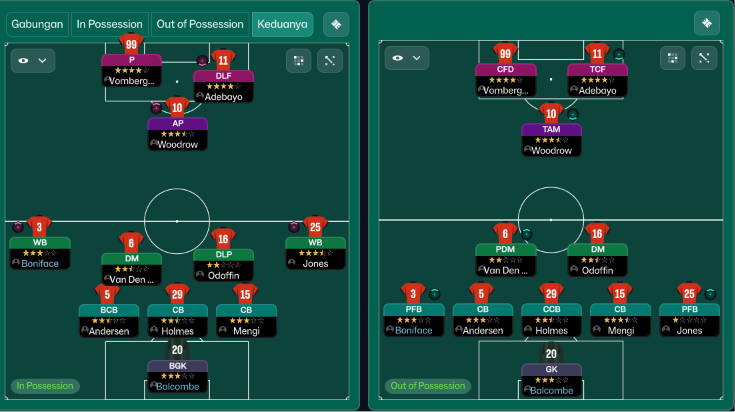
Formation:3-2-2-3
Team Fluidity:Structured
In Possession
Play Out of Defence
Focus Play Down the Left
Work Ball Into Box
In Transition
Counter
Counter Press
Out of Possession
Higher Defensive Line
Much Higher Line of Engagement
Prevent Short GK Distribution
Team Shape Without Ball
Shape:Compact
Description:A compact structure with three defenders and two midfielders providing cover.
Evidence:No-Nonsense Centre-Back at [2,1] to win headers and clear threats.
Team Shape With Ball
Shape:Fluid
Description:Fluid attacking shape with inside forwards and an advanced forward creating movement.
Evidence:Inside Forwards at [6,2] and [6,4] supported by an Advanced Forward at [6,3].
Phase Description
Attacking Play
Utilizing width through inside forwards and overlapping play from the wing-backs while maintaining a playmaker to create chances.
Defensive Transition
Counter-press to regain possession quickly and exploit gaps left by opponents.
Main Focus
Creating goalscoring opportunities through the use of width and quick transitions.
Key Strengths
Defensive Solidity
The compact defence with three central defenders provides a strong backbone, making it difficult for the opposition to break through.
Attacking Width
Inside forwards operating in wide areas stretch the opposition and create space for the central players.
Playmaker Contribution
The Deep-Lying Playmaker provides stability and creativity from deep, helping to transition play.
Conflicting Directions
Overreliance on Wings
This setup could become predictable by constantly using the wings, making it easy for opposition to anticipate play.
Defensive Vulnerability During Transitions
Quick counter-attacks could expose defensive transitions if players are caught out of position.
Midfield Overload
With only two midfielders against a traditional three, it could become hard to dominate central areas.
Tactical Suggestions
Consider Modifying Width
Adjusting the width of attacking play could alleviate some predictability in play.
Integrate More Midfield Support
Introducing an additional midfielder could help in dominant central areas.
Condition Adaptation for Transitions
Ensure players are conditioned to quickly fall into shape during transitions to mitigate counter threats.
Ask Questions About Your Lineup
Related Tactics
Guides for this formation
The tactical theory behind the 3-2-2-3: roles, instructions, and the trade-offs that decide whether the system holds up.