Uploaded Tactic
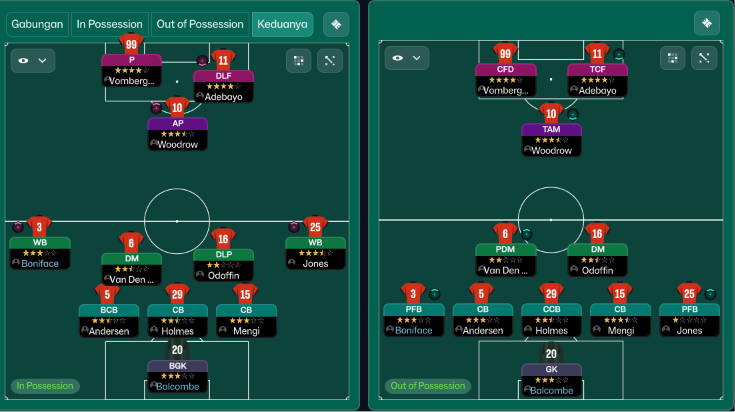
Formation & Style
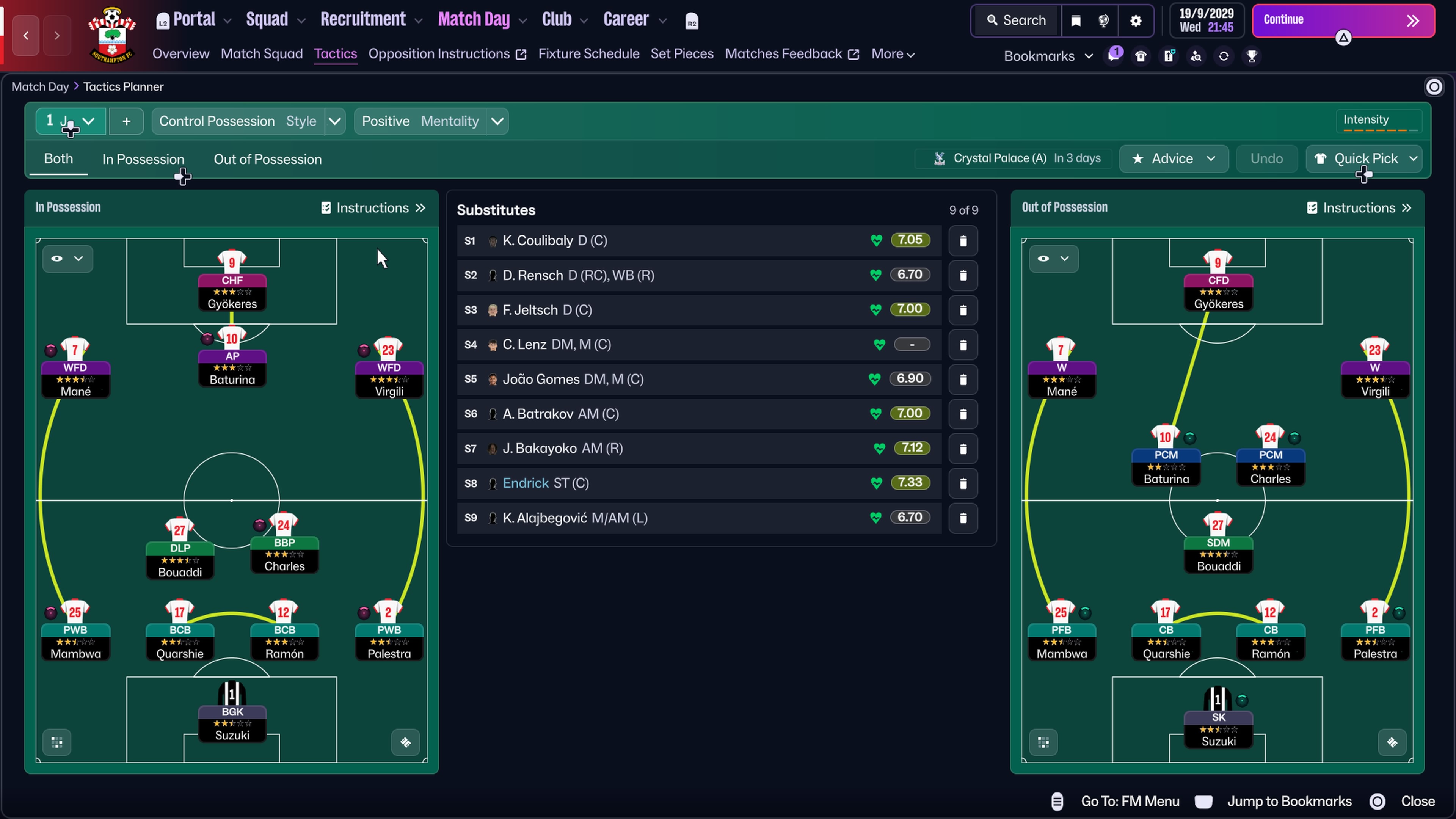
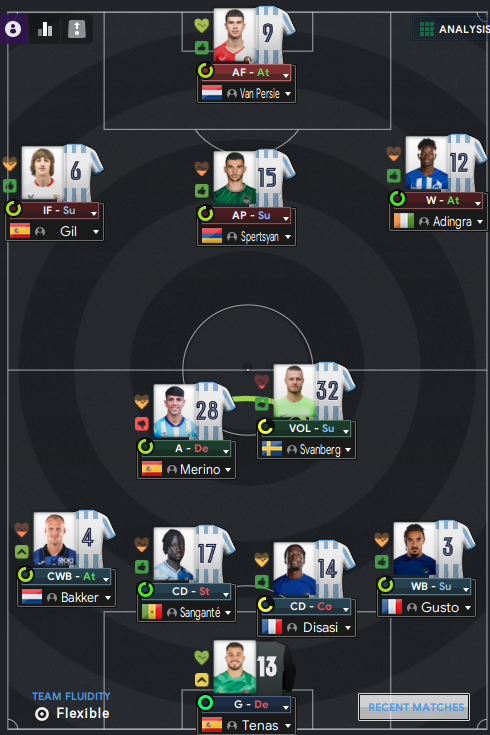
Tactical Style:Fluid Counter-Attack
Mentality:Positive
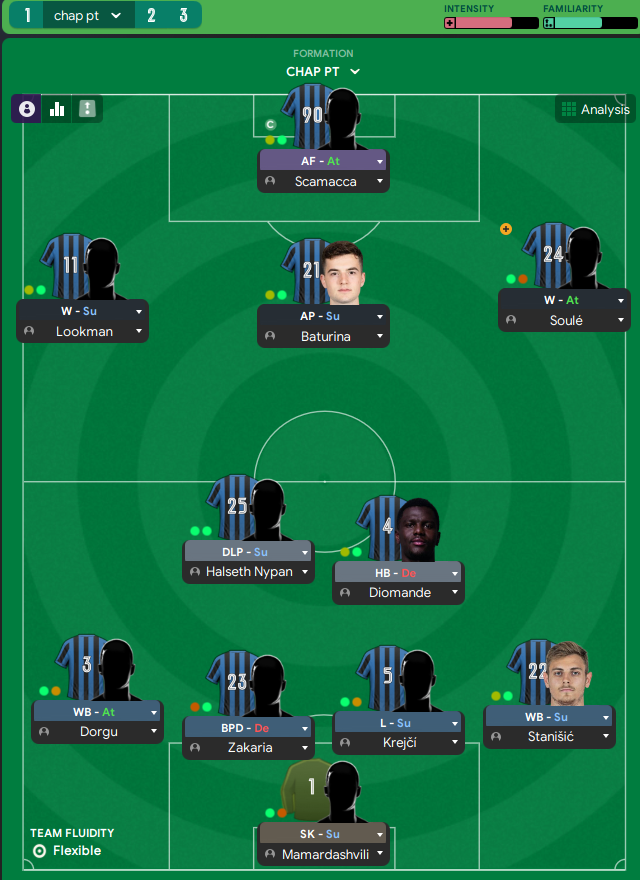
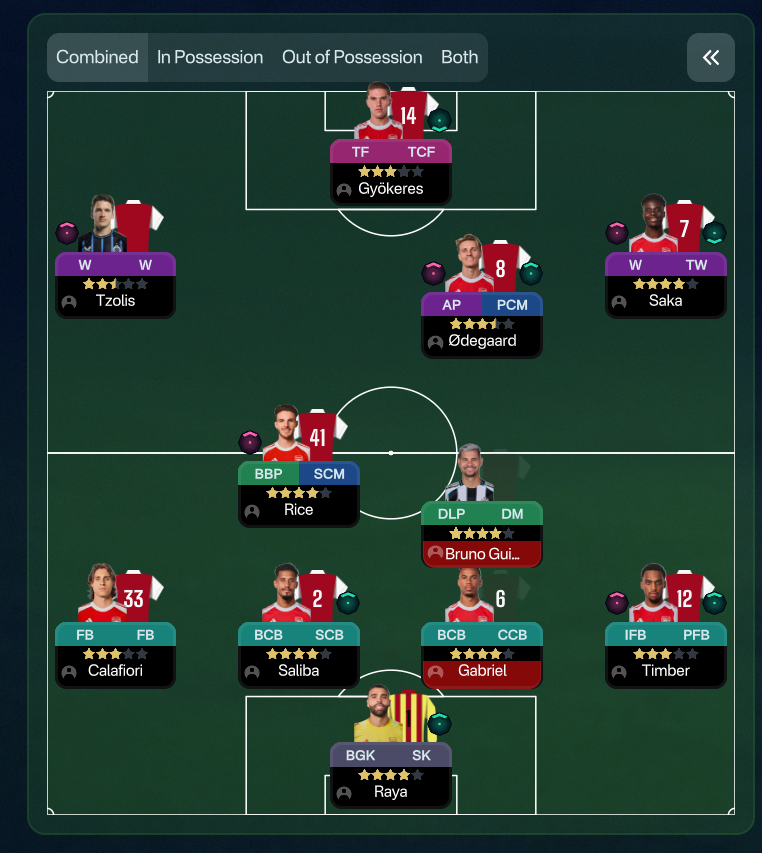
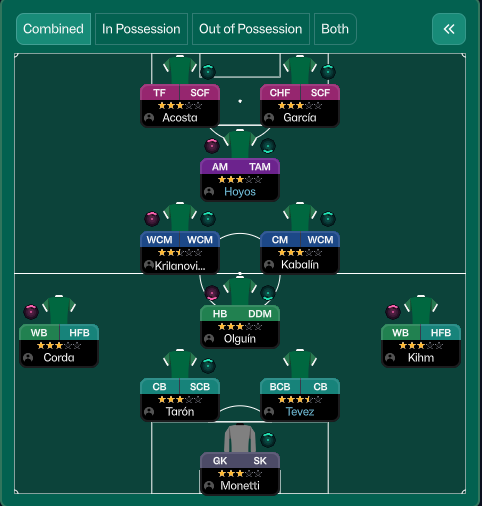
Formation:3-2-2-3
Team Fluidity:Balanced
In Possession
Work Ball Into Box
Play Out of Defence
Overlap Left
Overlap Right
In Transition
Counter
Counter-Press
Out of Possession
Higher Defensive Line
Higher Line of Engagement
Prevent Short GK Distribution
Team Shape Without Ball
Shape:3-2
Description:With a compact three-at-the-back system supported by a double pivot, this setup is structured to repel attacks effectively.
Evidence:Three CBs at [2,1], [2,3], [2,5] with DM roles providing cover.
Team Shape With Ball
Shape:3-2-2-3
Description:The structure allows for fluid attacking options, leveraging the width and the advanced roles in the midfield.
Evidence:Wing-backs providing width, with an advanced playmaker supporting the forwards.
Phase Description
Attacking Play
The team looks to exploit the width provided by the wing-backs while the advanced playmaker facilitates creativity.
Defensive Transition
Upon losing possession, the team quickly transitions into pressing, aiming to regain the ball immediately.
Main Focus
Utilizing wing-backs for width and quick counter-attacks.
Key Strengths
Width Utilization
The presence of attacking wing-backs allows for consistent width in attacking phases.
Defensive Stability
The three CBs create a solid defensive line which is hard to penetrate.
Counter-Attacking Potential
Quick transitions to counter-attack can exploit opposition weaknesses.
Conflicting Directions
Aggressive Pressing
A more aggressive pressing strategy could leave the backline exposed.
High Defensive Line
While pressing higher engages the opponent, it risks vulnerability to counter-attacks.
Fluidity vs Structure
Balancing fluidity in attack with a structured defense is critical for this setup.
Tactical Suggestions
Adjust Defensive Line
Consider a slightly lower defensive line to avoid vulnerabilities to fast attackers.
Incorporate More Defensive Width
Adding more cover from the wide defenders could strengthen defence against overlapping wingers.
Utilize a Playmaker Role in Attack
Introducing a more forward-thinking playmaker can enhance creativity in the final third.
Ask Questions About Your Lineup
Related Tactics
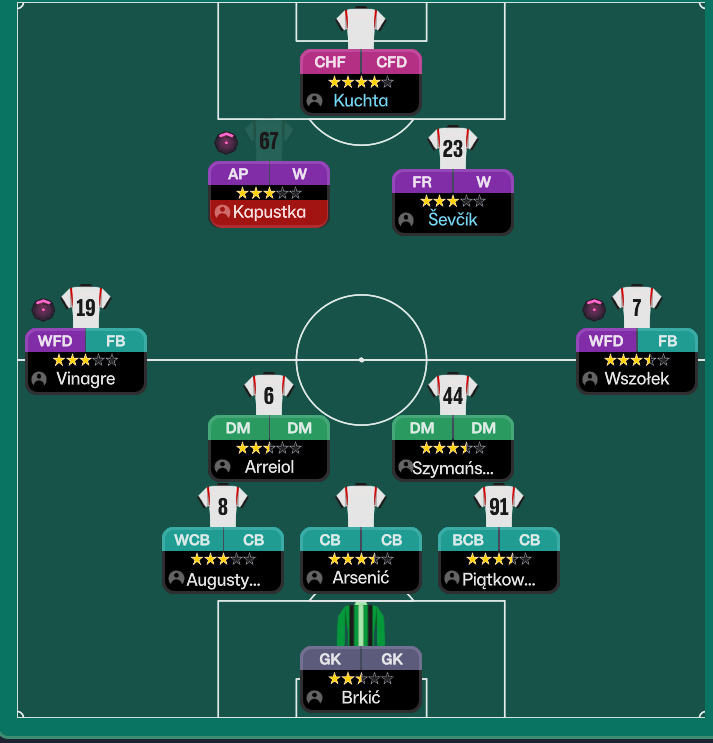
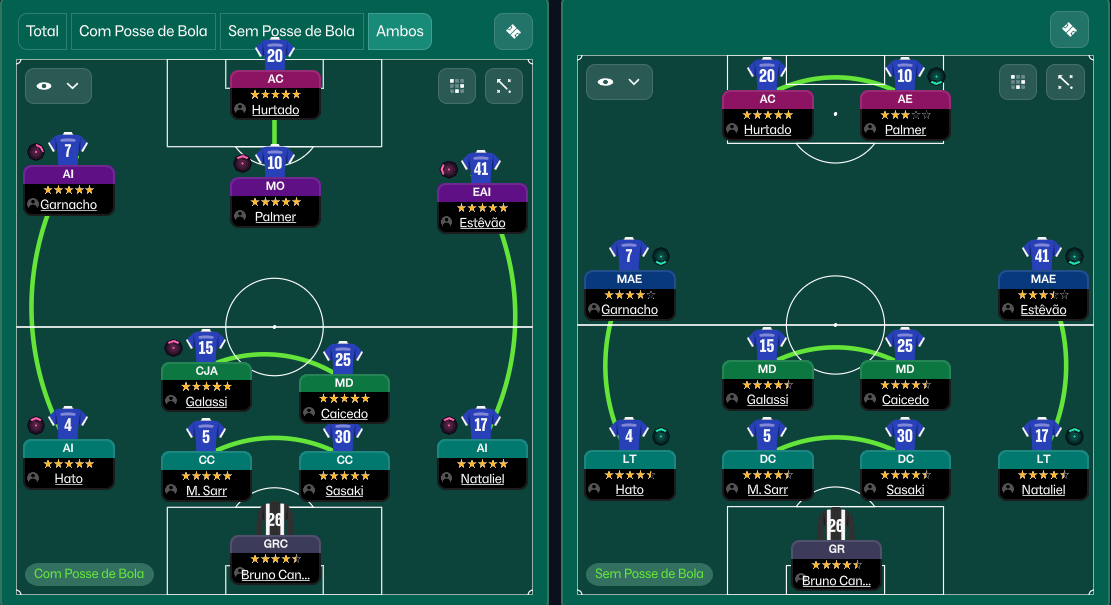
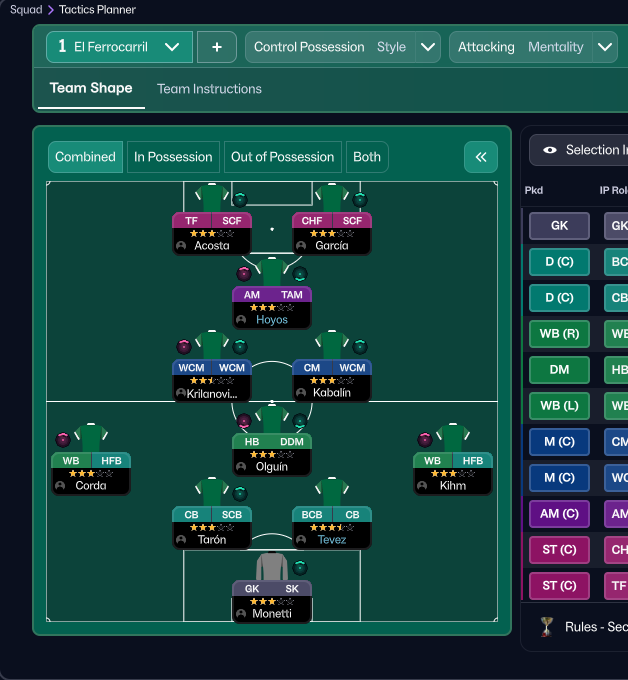
More Fluid Counter-Attack tactics
Guides for this formation
The tactical theory behind the 3-2-2-3: roles, instructions, and the trade-offs that decide whether the system holds up.