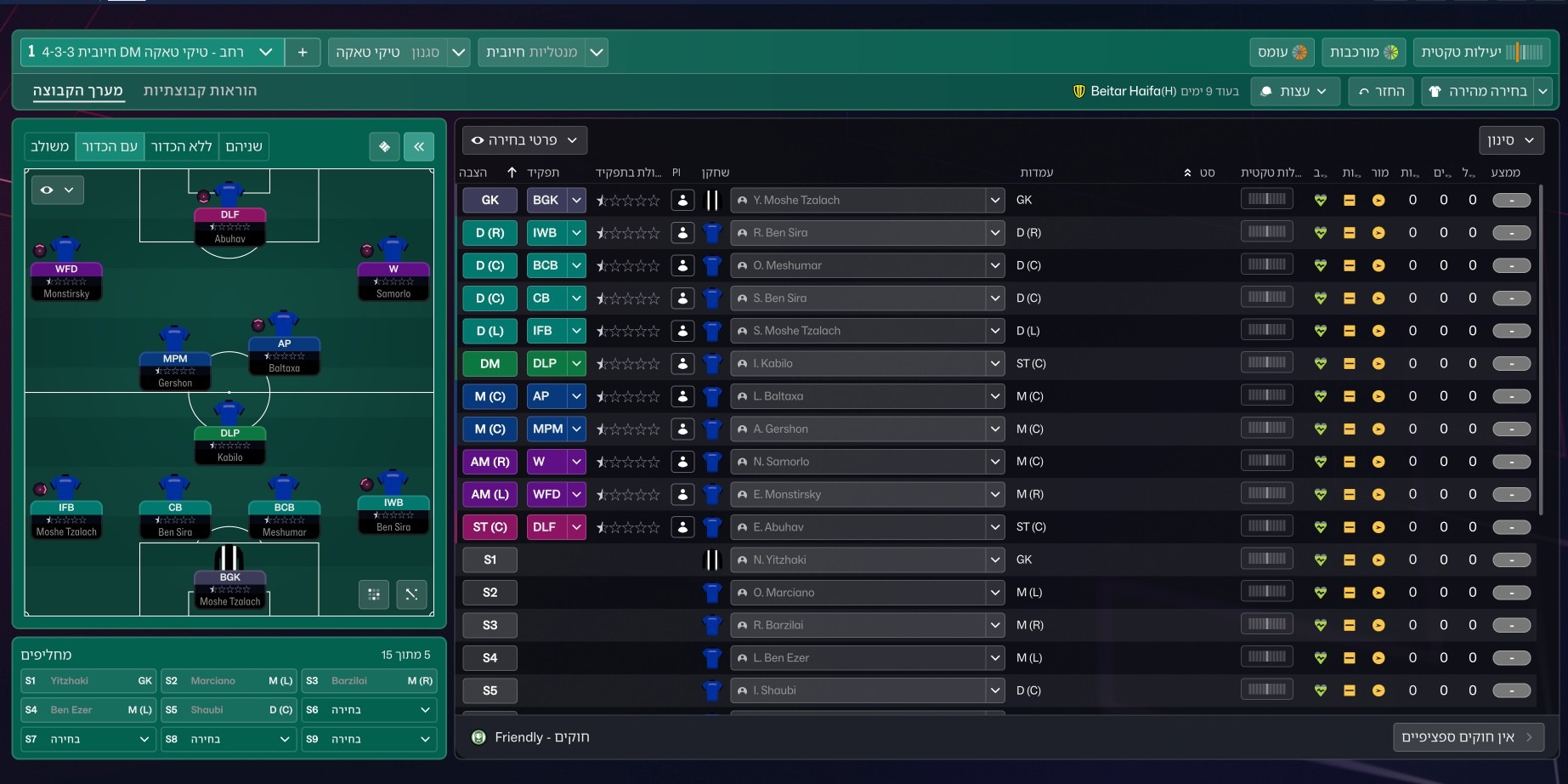
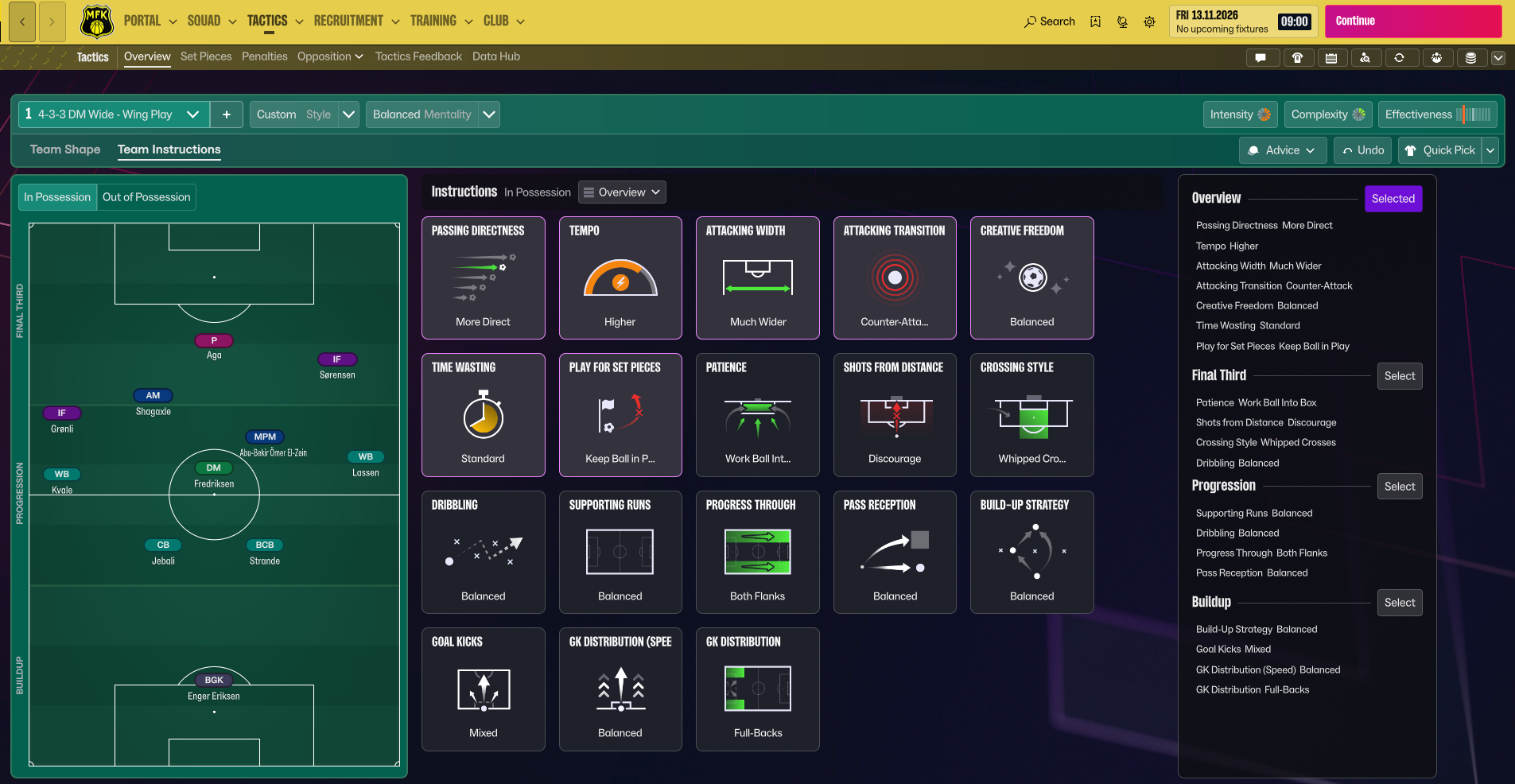
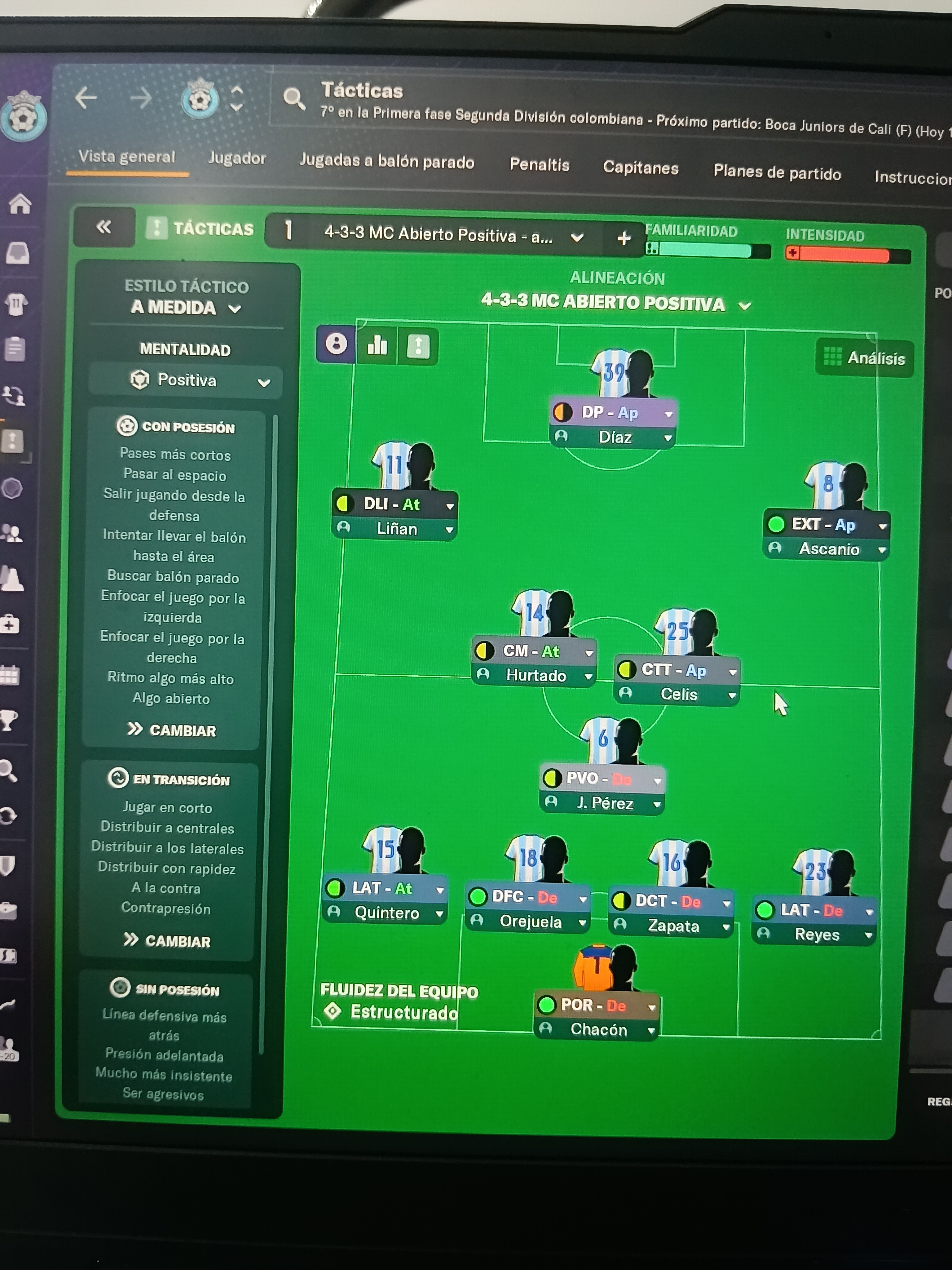
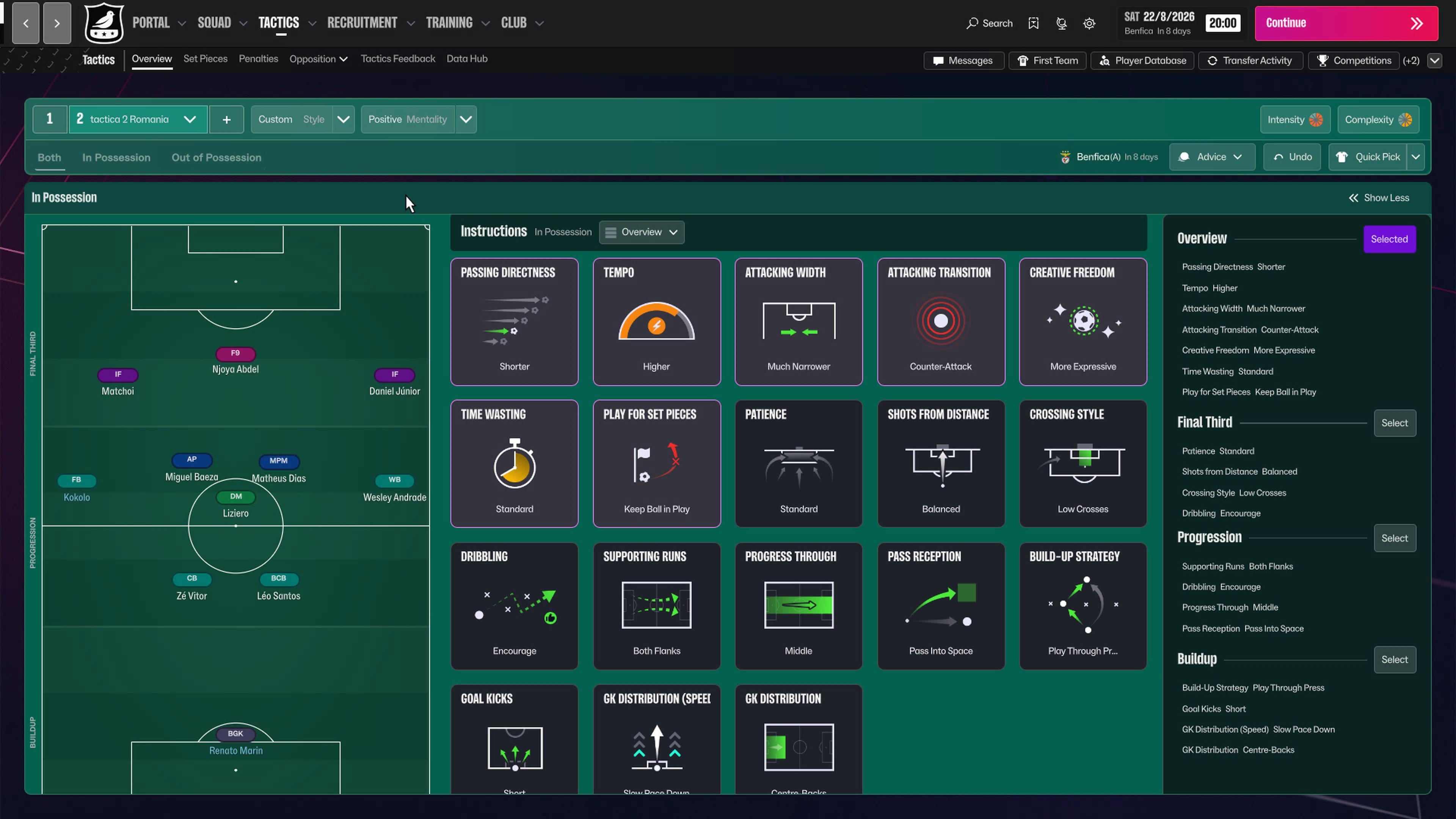
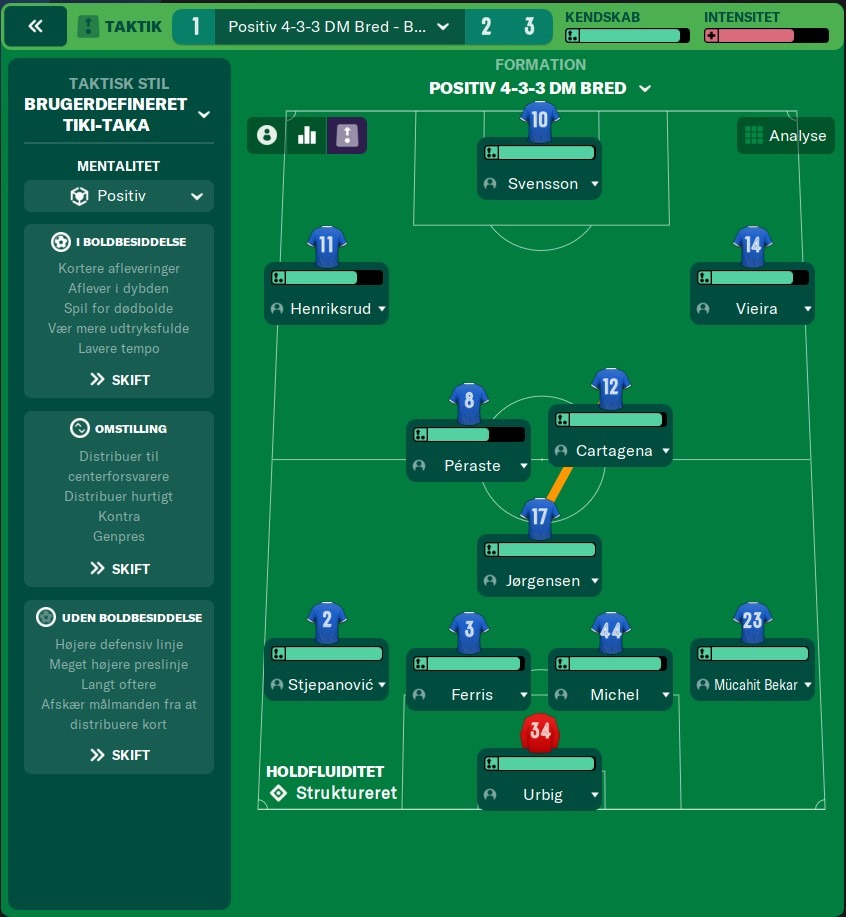
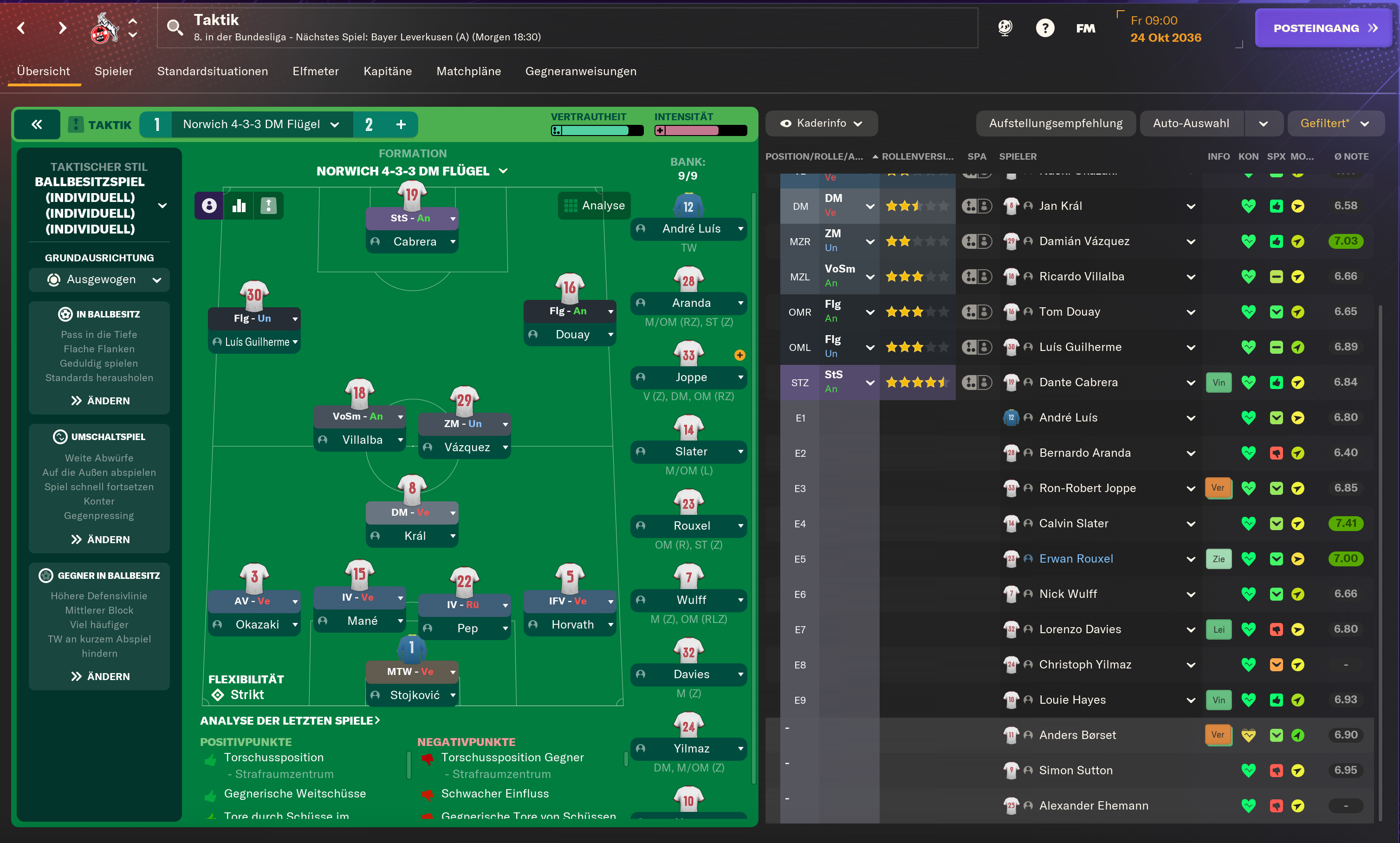
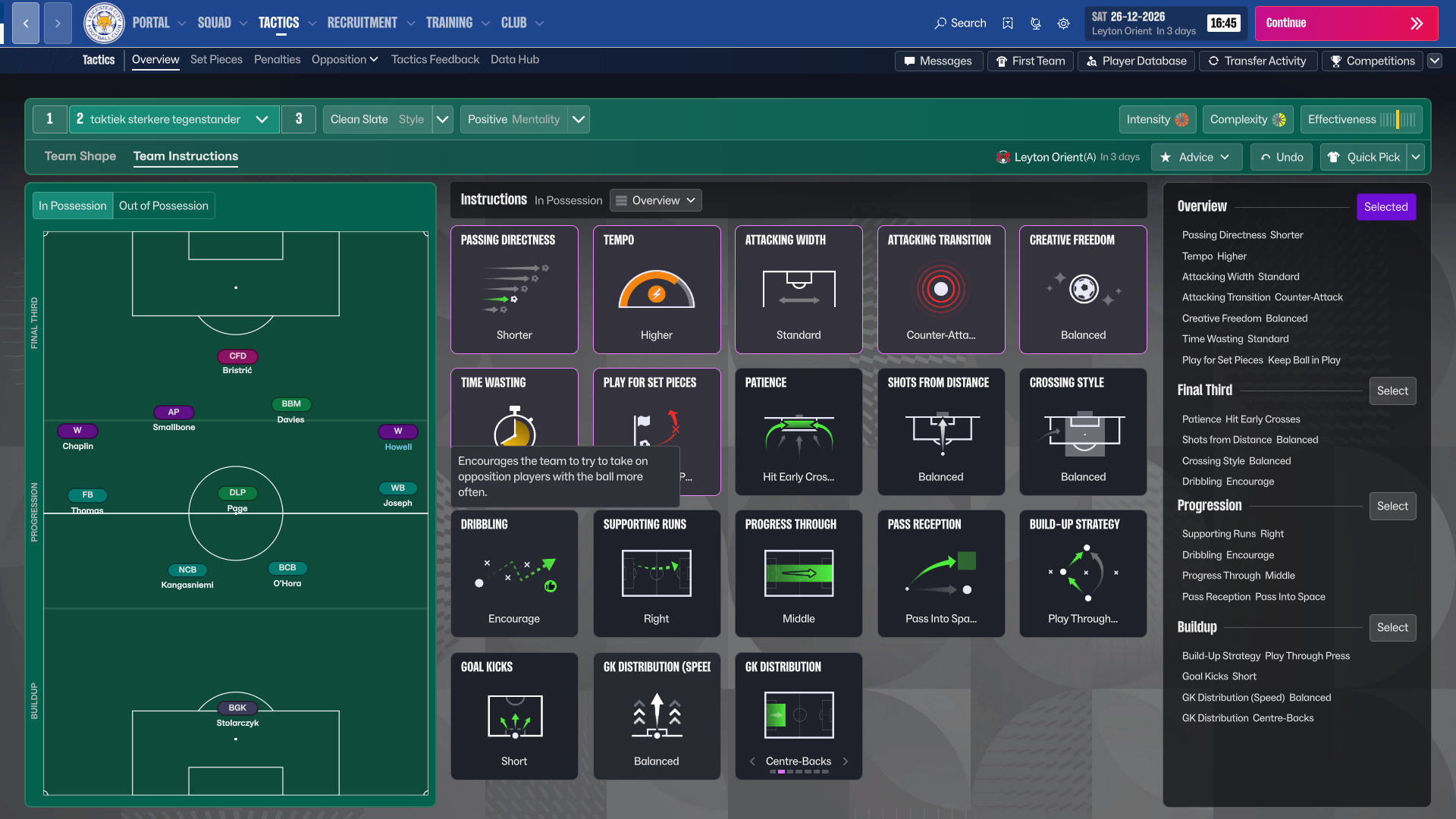
4-3-3 DM Wide
Central combination play and possession, with wide attackers as outlets; the main structural issue to monitor is balancing the concentration of playmakers…
Loading tactical analysis...
4-3-3 DM Wide
4-3-3 DM Wide
Positive
Tiki-Taka
1
3
Ball-Playing Goalkeeper
Holding Full-Back
2
1
Inside Full-Back
Sweeper Keeper
2
2
Centre-Back
Centre-Back
2
4
Ball-Playing Center-Back
Centre-Back
2
5
Inside Wing-Back
Pressing Full-Back
4
2
Midfield Playmaker
Central Midfielder
4
4
Advanced Playmaker
Pressing Central Midfielder
5
1
Wide Forward
Winger
5
5
Winger
Winger
6
3
Deep-Lying Forward
Tracking Centre Forward
3
3
Deep-Lying Playmaker
Defensive Midfielder
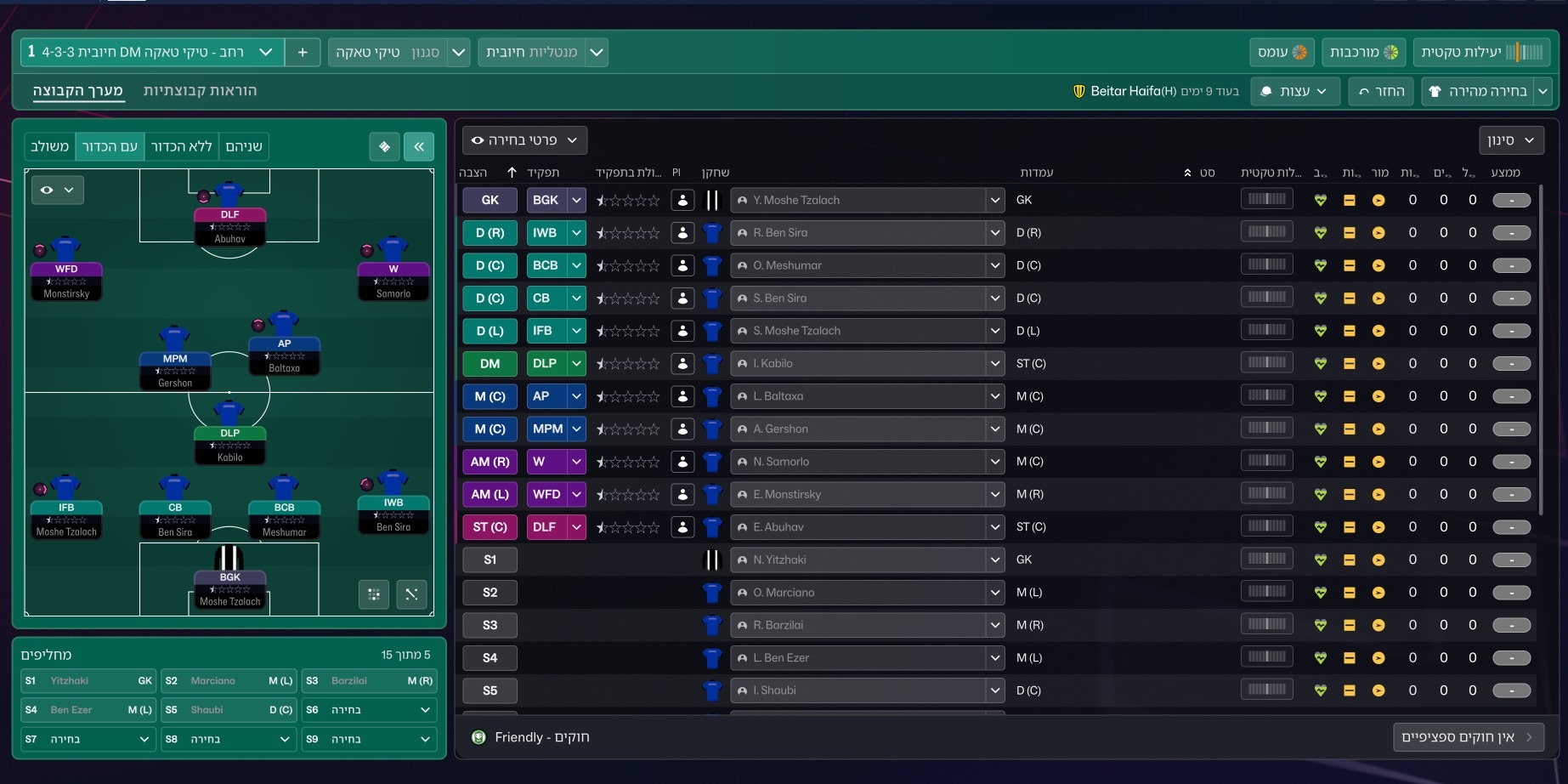
The Tiki-Taka style and Positive mentality are paired with a Deep-Lying Playmaker, Midfield Playmaker and Advanced Playmaker, giving the shape several designated central creators.
[3,3] Deep-Lying Playmaker, [4,2] Midfield Playmaker and [4,4] Advanced Playmaker form a concentrated playmaking unit.
A Deep-Lying Forward can link play while the Wide Forward and Winger offer wide attacking roles, giving the midfield creators different targets.
[6,3] Deep-Lying Forward links with [5,1] Wide Forward and [5,5] Winger.
Three playmaking roles occupy the DM and two central-midfield slots. This can concentrate possession in the middle and leave fewer complementary midfield runs beyond the ball.
[3,3] Deep-Lying Playmaker, [4,2] Midfield Playmaker and [4,4] Advanced Playmaker all provide central playmaking.
The possession roles include an Inside Full-Back and Inside Wing-Back, while the central midfielders are playmakers. If possession turns over, this setup may be slow to cover wide channels and protect the back line.
[2,1] Inside Full-Back, [2,5] Inside Wing-Back, [4,2] Midfield Playmaker and [4,4] Advanced Playmaker.
Defensive transition and wide-channel coverage
Both full-back roles move inside in possession, and the listed midfield roles emphasize playmaking rather than obvious ball-winning cover. A turnover could expose the flanks before the team recovers its defensive shape.
[2,1] Inside Full-Back, [2,5] Inside Wing-Back, [3,3] Deep-Lying Playmaker
medium
Attacking support and penetration
The midfield has three playmaking roles and the centre-forward is a Deep-Lying Forward. Without team instructions or more role information indicating frequent runs beyond the ball, attacks could lack direct penetration.
[3,3] Deep-Lying Playmaker, [4,2] Midfield Playmaker, [4,4] Advanced Playmaker and [6,3] Deep-Lying Forward
medium
Central creators feeding a linking forward
The three midfield playmakers can supply a Deep-Lying Forward who links with the wide attackers, supporting short combinations through the middle and into the front line.
[3,3] Deep-Lying Playmaker, [4,2] Midfield Playmaker, [4,4] Advanced Playmaker and [6,3] Deep-Lying Forward.
Wide attackers provide flank outlets
The Wide Forward and Winger give the central playmakers wide options, while the roles offer different attacking profiles on the two sides.
[5,1] Wide Forward and [5,5] Winger.
How can I add more runs beyond my Deep-Lying Forward without losing the short-passing approach?
How should I protect the wide channels when my Inside Full-Back and Inside Wing-Back move inside in possession?
What should I look for in players for my three central playmaking roles?
This is a possession-oriented 4-3-3 with a Positive mentality and a strong concentration of central playmaking, plus a Deep-Lying Forward and two wide attackers to connect with. Its main concern is balance: three playmaking roles may duplicate responsibilities, while both full-back roles move inside in possession and the extraction provides no team-instruction values to confirm how transitions or defensive coverage are managed. I would first stabilize turnovers and consider a more balanced midfield structure, then assess whether the attack needs more direct runs beyond the forward.
Tiki-Taka with Positive mentality suggests a possession-minded approach. The role setup offers several central playmakers, a Deep-Lying Forward for link play and two wide attacking outlets; no detailed team instructions are supplied.
Not specified in the extraction. The possession roles show both full-backs moving inside, which may leave wide areas vulnerable immediately after a turnover.
Central combination play and possession, with wide attackers as outlets; the main structural issue to monitor is balancing the concentration of playmakers with penetration and transition cover.
The tactical theory behind the 4-3-3 DM Wide: roles, instructions, and the trade-offs that decide whether the system holds up.
Klopp-style gegenpressing in FM, including squad profile, line-and-press pairing, sustainable workload, and the antipatterns to avoid.
Why circulation density and zonal occupation aren't the same thing in FM, and the half-space occupation rule that decides build-up.
Counter-Press, Regroup, Stand Off, Trigger Press: what each pressing instruction does in FM and how to pair them without contradicting.