Uploaded Tactic
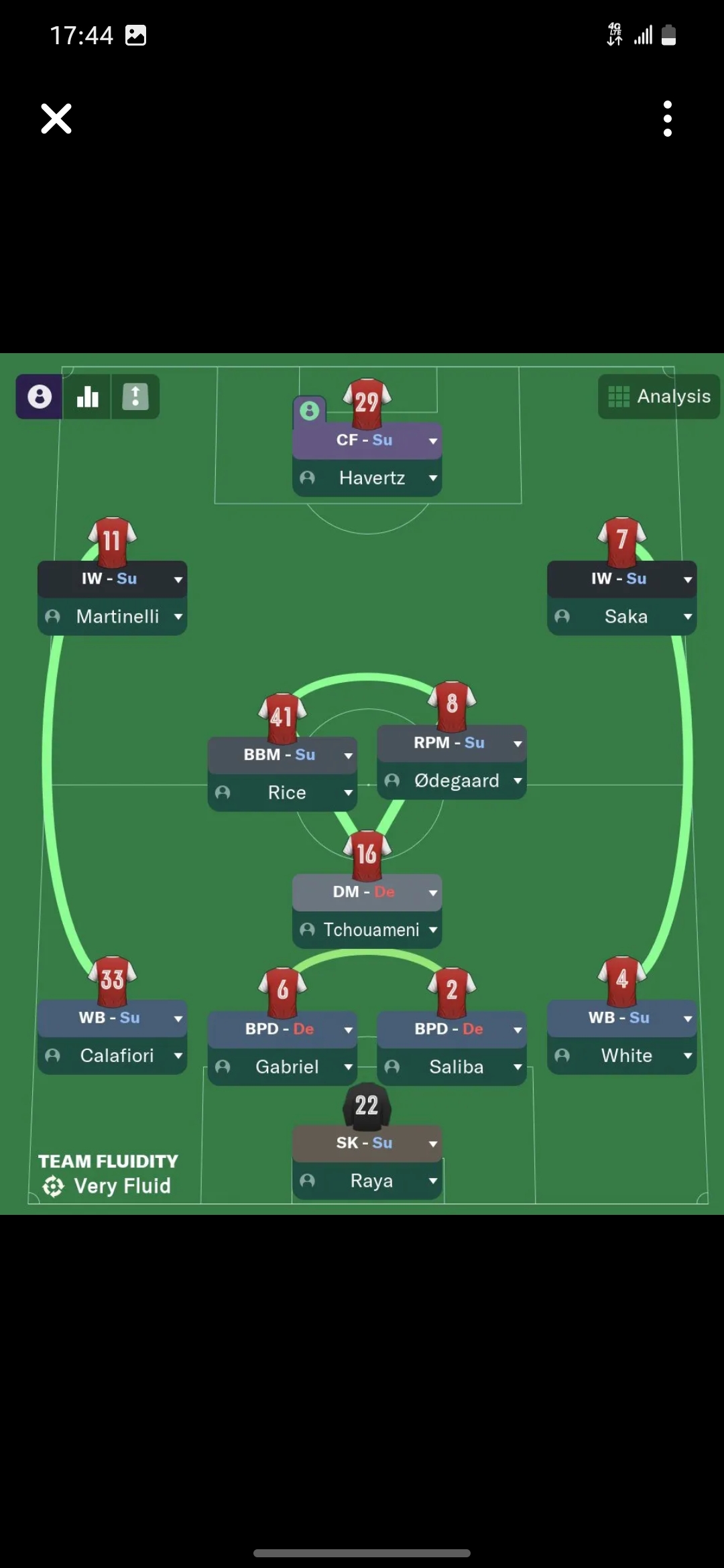
Formation & Style
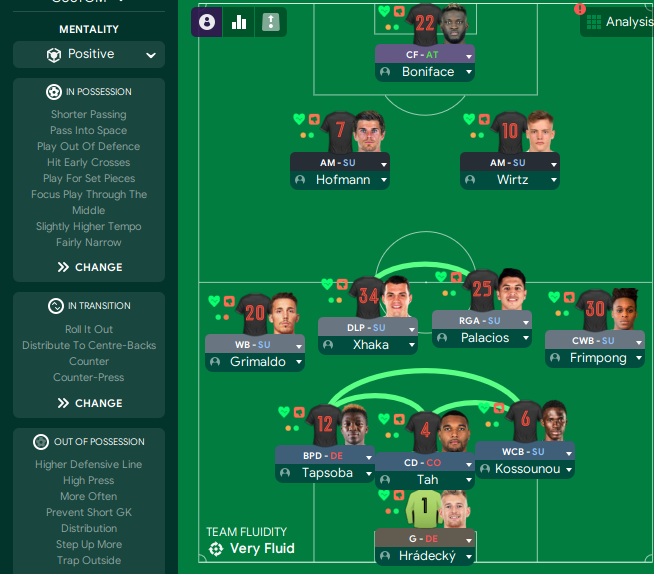
Tactical Style:Very Fluid
Mentality:Positive
Formation:3-2-2-3
Team Fluidity:Very Fluid
In Possession
Short Passing
Higher Tempo
Play Out Of Defence
Work Ball Into Box
In Transition
Counter-Press
Counter
Out of Possession
Higher Defensive Line
More Urgent Pressing
Team Shape Without Ball
Shape:3-2-2
Description:The three central defenders provide a solid base, with a defensive midfielder sitting in front to shield the back line.
Evidence:3 BPD-D at [2,2], [2,3], [2,4] with 1 DM-D at [3,3].
Team Shape With Ball
Shape:3-2-3
Description:Attacking players spread out across the front line, utilizing width and central presence.
Evidence:3 attacking players at [6,2], [6,3], [6,4] with 2 support players behind them.
Phase Description
Attacking Play
Focus on creating space through quick interchanges in midfield and using width from wing-backs.
Defensive Transition
Pressing immediately after losing possession to regain control and force errors.
Main Focus
Maintain possession and create high-quality chances through short passing and movement.
Key Strengths
Solid Defensive Structure
Three ball-playing defenders provide stability and reduce the likelihood of conceding.
Fluid Midfield
The combination of a box-to-box midfielder and a roaming playmaker offers versatility.
Effective Wing Play
Wing-backs becoming involved in attacks aids width and stretching opposition defenses.
Conflicting Directions
Lack of Defensive Cover on Flanks
Wing-backs might become isolated defensively against teams with strong width.
Dependence on Wing-Backs
Heavy reliance on wing-backs for width may leave the team vulnerable to counter-attacks.
Midfield Overload Risk
Too many players in midfield could lead to difficulty maintaining positional balance.
Tactical Suggestions
Consider Narrowing Midfield
Reducing midfield players could increase width and depth in attack.
Add Counter Strategies
Incorporating a counter strategy can help exploit gaps from opponents during transitions.
Reinforce Flanks
Utilizing an extra wide midfielder can balance the wing-backs' advanced positions.
Ask Questions About Your Lineup
Related Tactics
More Very Fluid tactics
Guides for this formation
The tactical theory behind the 3-2-2-3: roles, instructions, and the trade-offs that decide whether the system holds up.