Uploaded Tactic
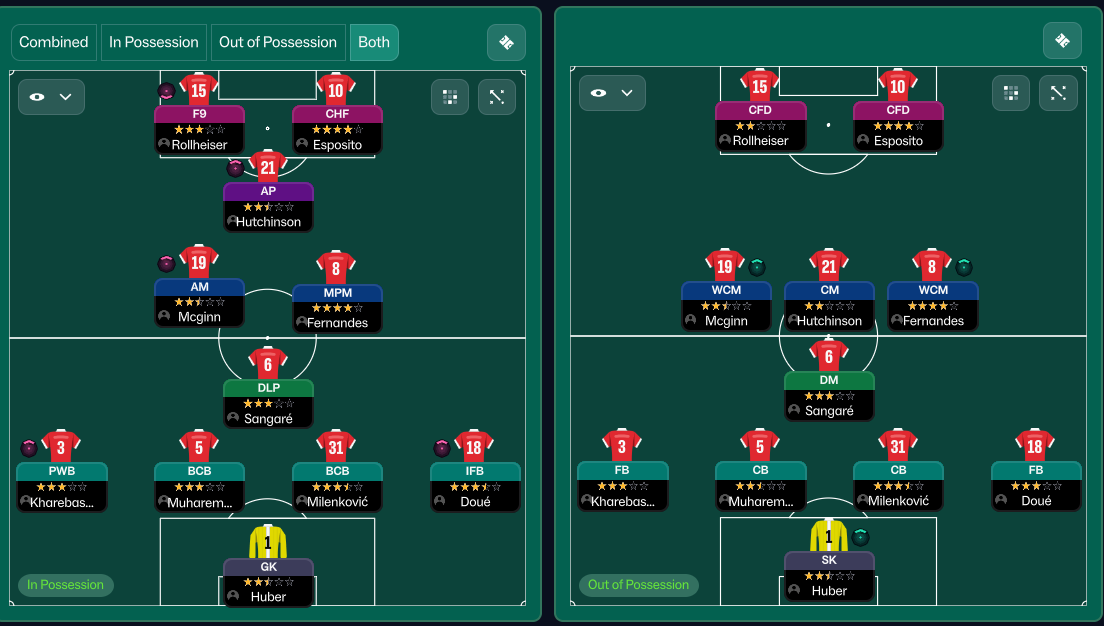
Formation & Style
Tactical Style:Possession
Mentality:Attacking
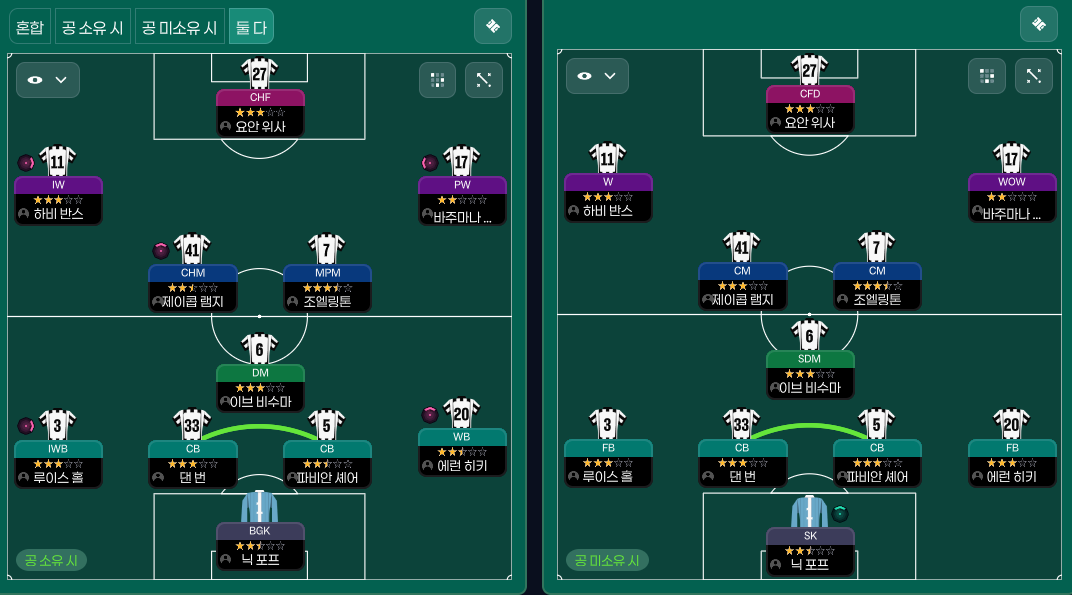
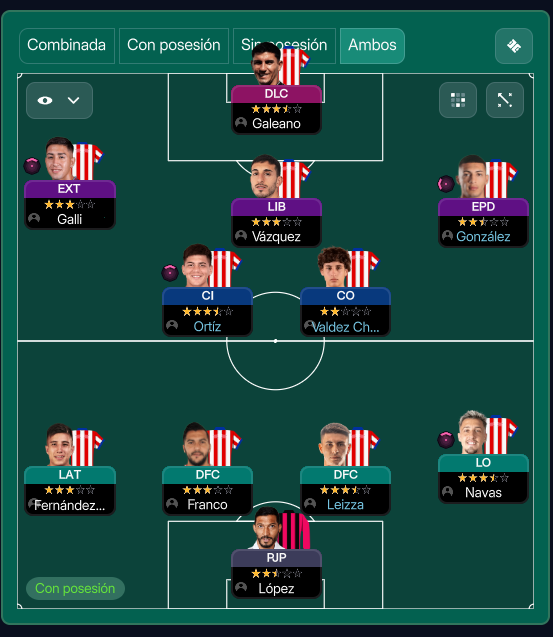
Formation:3-2-4-1
Team Fluidity:Fluid
In Possession
Play Out of Defence
Focus Play Down Left
Shorter Passing
Exploit the Flanks
Be More Expressive
In Transition
Counter-Press
Counter
Out of Possession
Higher Defensive Line
Much Higher Line of Engagement
Trigger Press More Often
Team Shape Without Ball
Shape:Compact 3-2-4-1
Description:Defensive shape remains compact with a clear five-man midfield to stifle opposing attacks.
Evidence:Three centre-backs at [2,2] and [2,3], supported by a DM at [3,3].
Team Shape With Ball
Shape:Fluid with Width
Description:Attacking shape maintains width with wing-backs and midfielders providing support to the forwards through open spaces.
Evidence:WCMs positioned at [4,1] and [4,5], supporting the False Nine and Complete Forward.
Phase Description
Attacking Play
Utilizes short passing and width to create openings, looking to combine through the advanced playmaker and full backs.
Defensive Transition
Aggressive counter-press to regain possession quickly, transitioning into attacks.
Main Focus
Possession-based play, aiming to dominate the midfield and create chances through quick interchanges.
Key Strengths
Effective Ball Progression
With DLP-S at [3,3] and CM-S roles aiding in build-up play, the team progresses the ball effectively.
Interchangeable Forward Line
The combination of F9 and CHF allows for fluid attacking movements, creating confusion for defenders.
Numerical Advantage in Midfield
Utilization of three central midfielders creates control over the midfield battles.
Conflicting Directions
Risk of Over-Reliance on Width
Excessive focus on wing play could lead to isolation of central attacking options.
High Defensive Line Vulnerability
A high defensive line could expose defenders to quick counter-attacks from pacey opponents.
Transition Phase Risk
Counter-pressing might leave the back line exposed if the press is beaten.
Tactical Suggestions
Balance Wing Play with Central Options
Incorporating more central penetration strategies could create variety in attacking play.
Adjust Defensive Line Based on Opponent
Modifying the defensive line according to the opponent's pace ensures better coverage and control.
Enhance Counter-Press Effectiveness
Monitoring player positioning during transitions could improve recovery situations.
Ask Questions About Your Lineup
Related Tactics
More Possession tactics
Guides for this formation
The tactical theory behind the 3-2-4-1: roles, instructions, and the trade-offs that decide whether the system holds up.