Uploaded Tactic
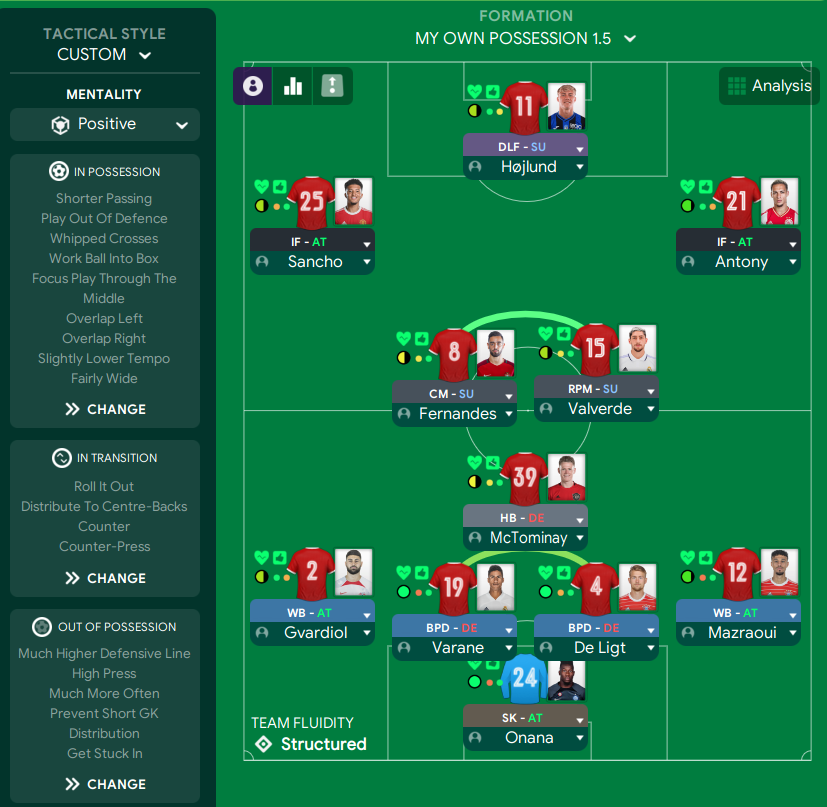
Formation & Style
Tactical Style:Custom
Mentality:Positive
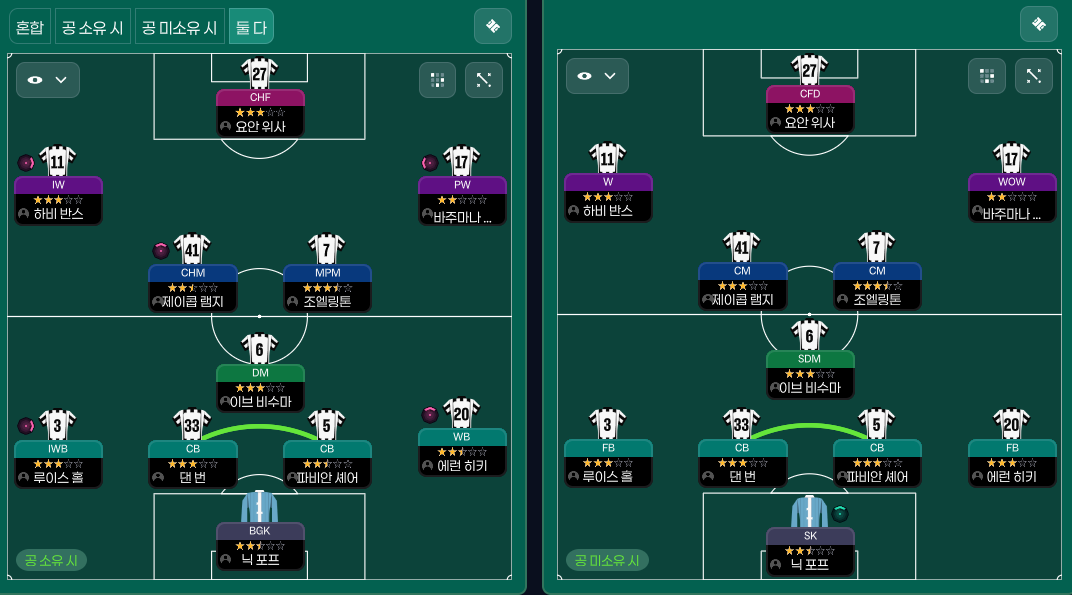
Formation:3-2-4-1
Team Fluidity:Structured
In Possession
Shorter Passing
Play Out Of Defence
Whipped Crosses
Work Ball Into Box
Focus Play Through The Middle
Overlap Left
Overlap Right
Slightly Lower Tempo
Fairly Wide
In Transition
Roll It Out
Distribute To Centre-Backs
Counter
Counter-Press
Out of Possession
Much Higher Defensive Line
Much More Often Prevent Short GK Distribution
Get Stuck In
Team Shape Without Ball
Shape:Compact 3-2 shape
Description:A compact formation during defensive phases, making it harder for opponents to penetrate the central areas.
Evidence:3 BPDs at [2,1], [2,3], [2,5], Half Back at [3,2]
Team Shape With Ball
Shape:Fluid attacking shape
Description:Utilizes width and depth, allowing for multiple players in advanced positions with overlapping support.
Evidence:3 AMs at [5,1], [5,3], [5,5] with DLF providing support at [6,3]
Phase Description
Attacking Play
Focuses on retaining possession with short passing and fluid ball movement, primarily attacking down the wings and through the middle.
Defensive Transition
Counter-press on losing the ball and quickly regain possession through aggressive pressing.
Main Focus
Maximizing width and utilizing overlaps to create goal-scoring opportunities.
Key Strengths
Effective Width
Utilization of inside forwards and overlapping wing-backs creates space and stretches the opposition.
Midfield Control
The presence of a roaming playmaker adds creativity in the midfield, allowing for fluid transitions.
Strong Defensive Base
Three CBs and a half-back ensure defensive stability and quick distribution from the back.
Conflicting Directions
Higher Defensive Line vs Counter-attacks
While a high defensive line increases pressing efficiency, it risks vulnerability to quick counter-attacks.
Complexity of Play vs Simplicity
Overlapping wingers and multiple instructions risk complicating play, potentially leading to turnovers.
Attacking Full-Backs vs Defensive Stability
While attacking full-backs enhance width, their advance could leave defensive gaps if possession is lost.
Tactical Suggestions
Consider Player Roles
Evaluate having a more defensive-minded midfielder instead of a roaming playmaker for better balance.
Adjust Defensive Line Based On Opposition
Adjust the defensive line based on the opponent’s attacking style to mitigate counter-attack risks.
Simplify Out Of Possession Strategy
Streamlining defensive instructions could reduce confusion and increase efficiency.
Ask Questions About Your Lineup
Related Tactics
Guides for this formation
The tactical theory behind the 3-2-4-1: roles, instructions, and the trade-offs that decide whether the system holds up.