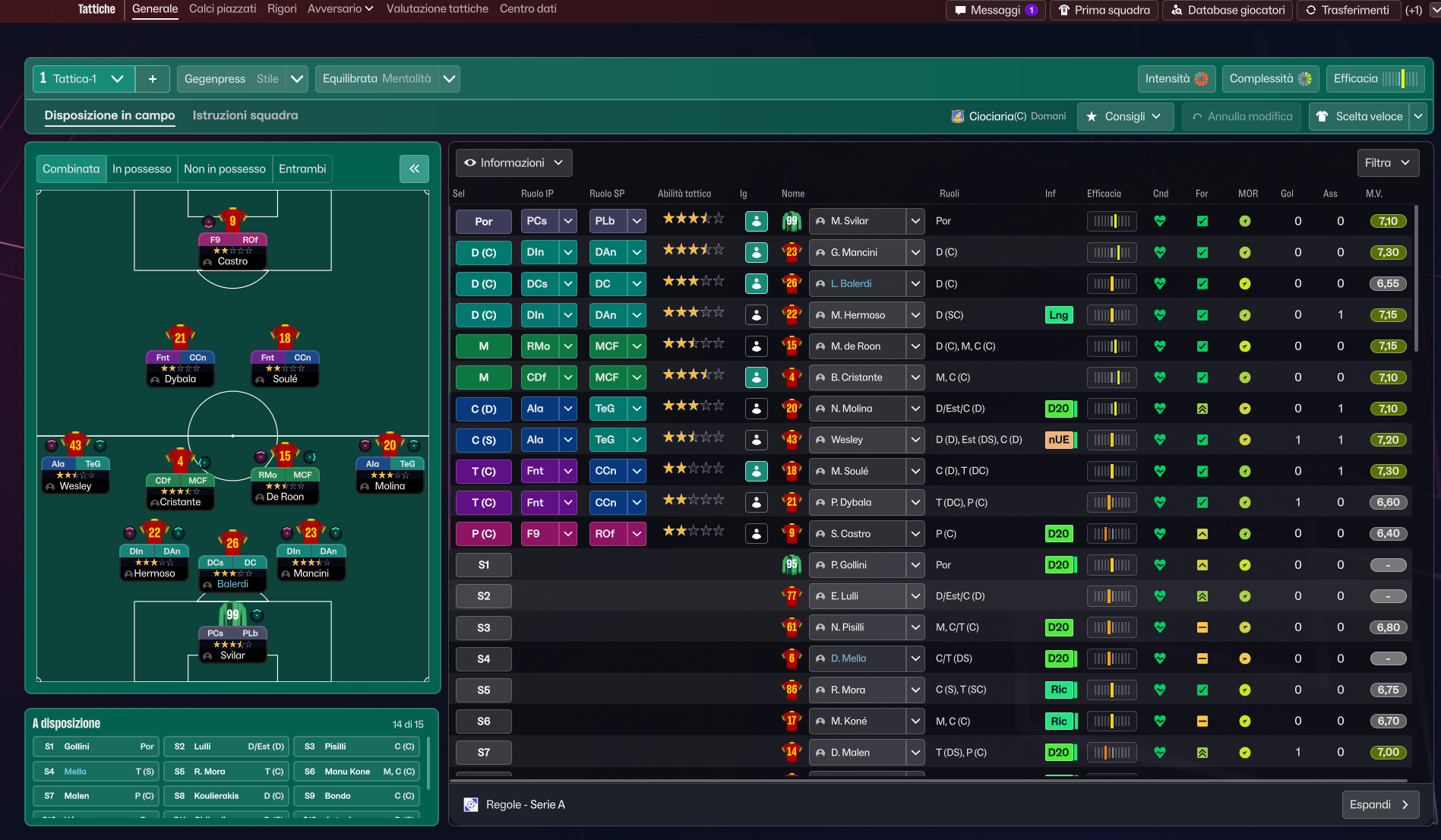
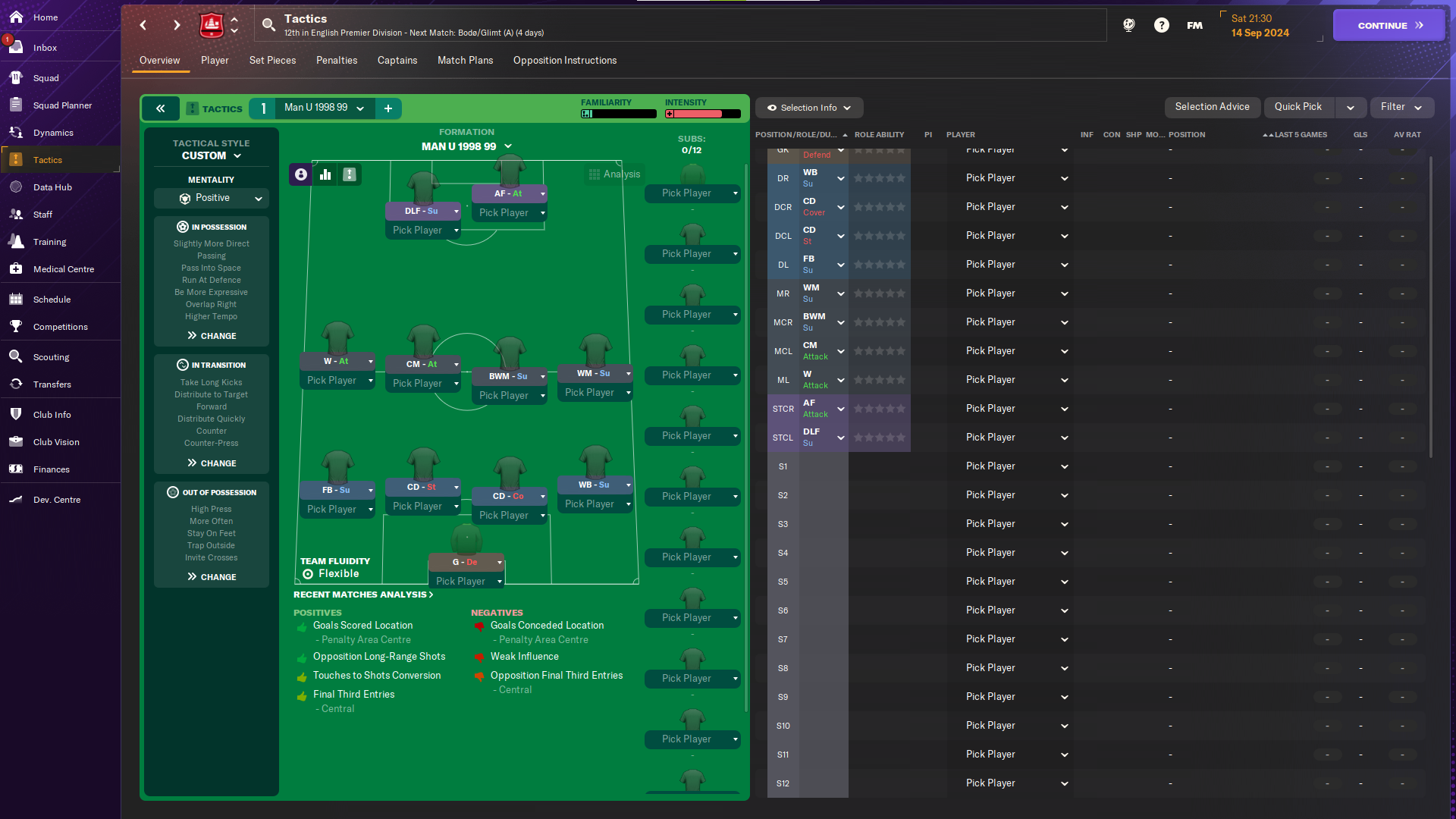
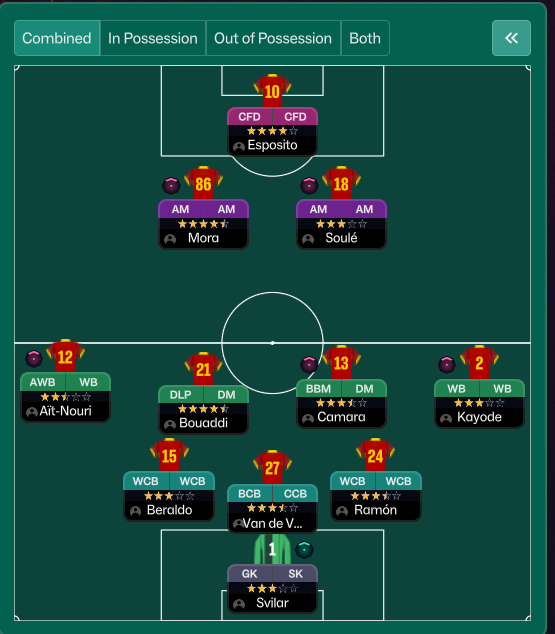
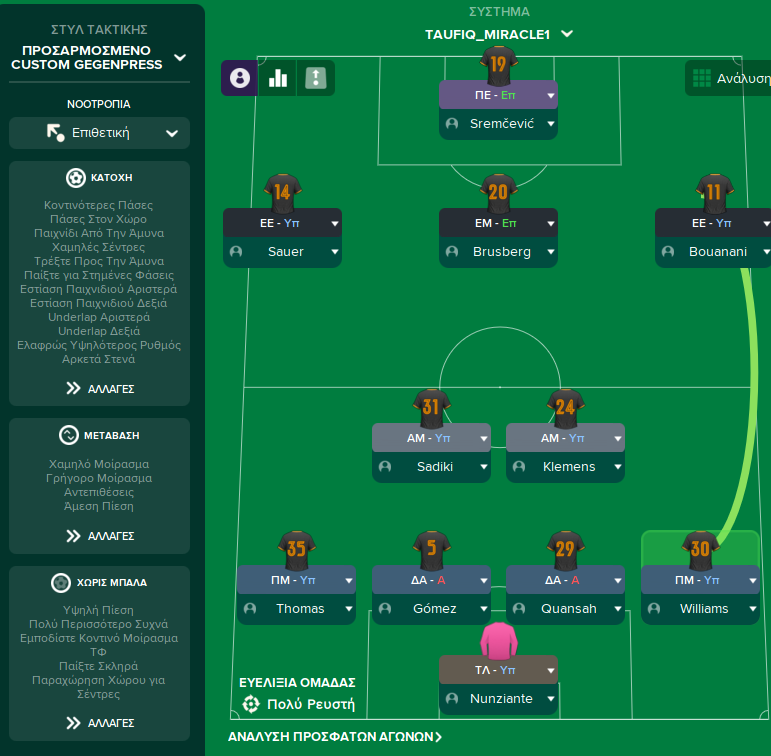
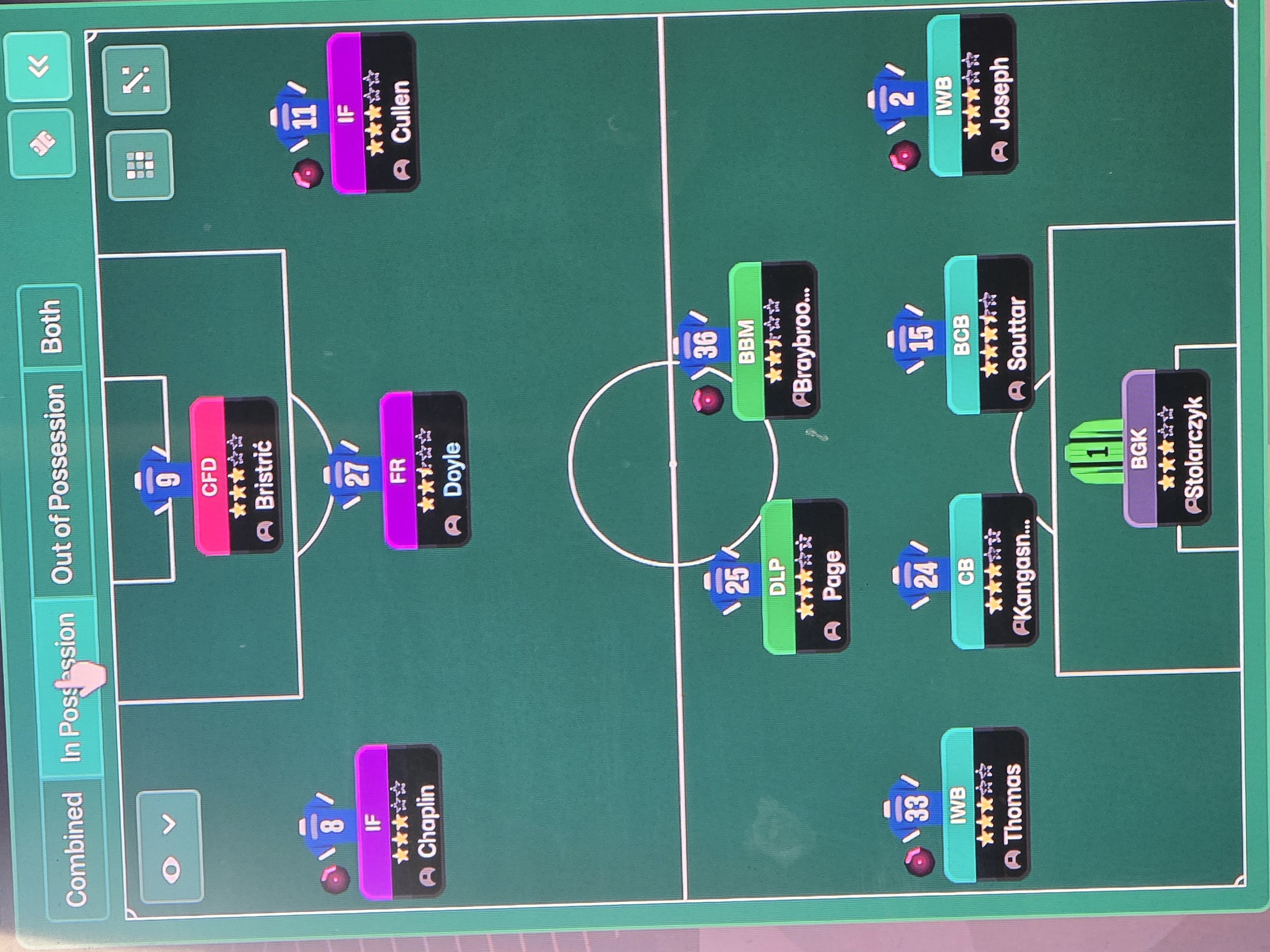
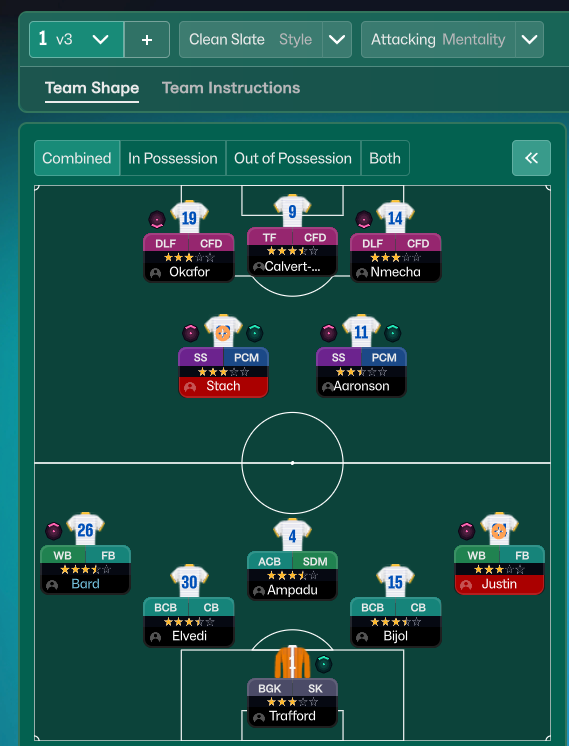
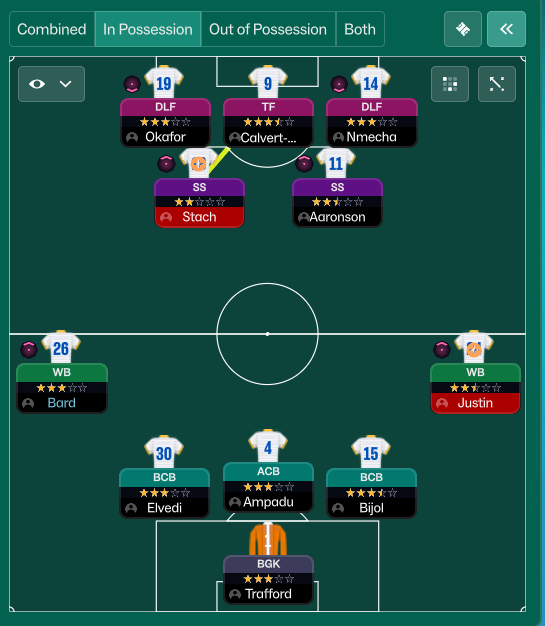
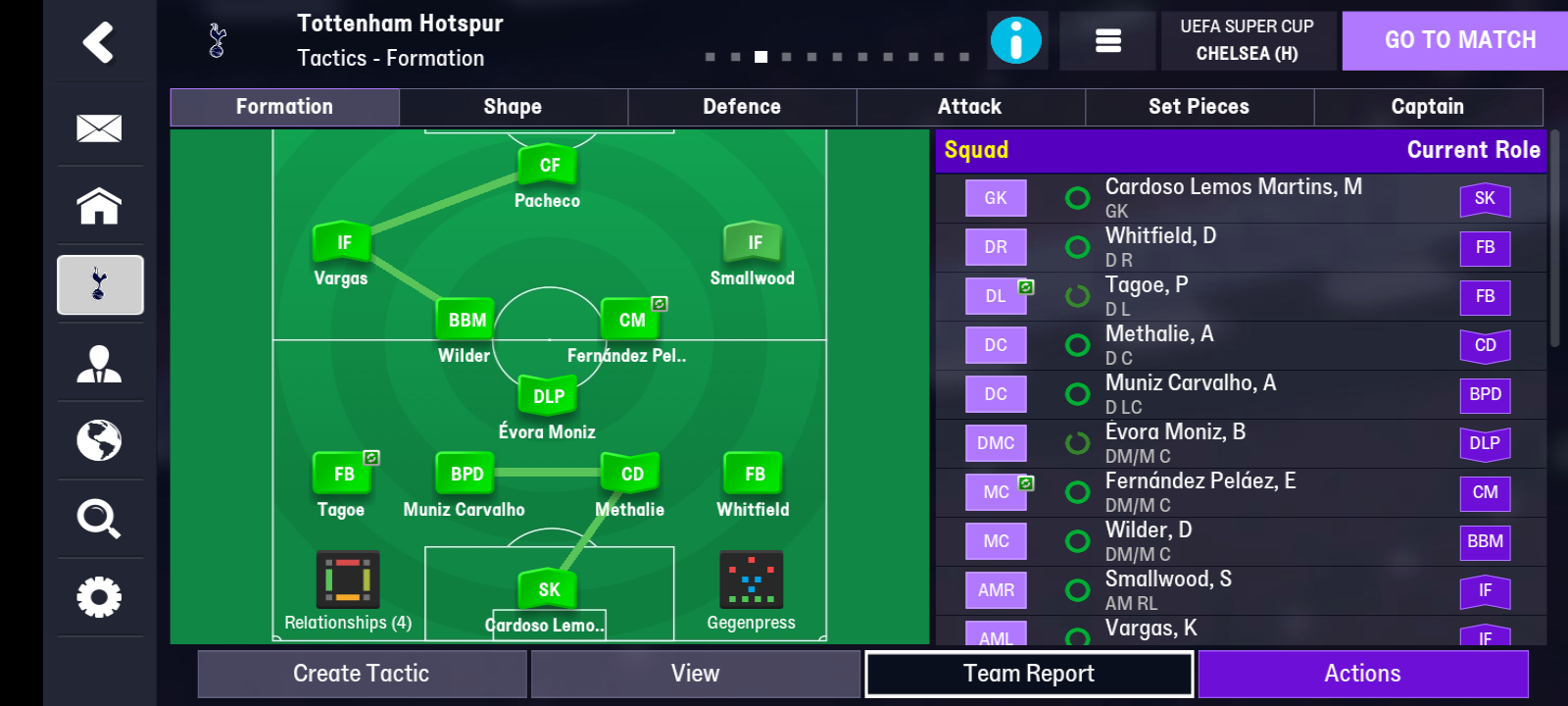
3-4-3
Leveraging the pace of wingers and forwards while maintaining structure through the midfield. The presence of both a Deep-Lying Playmaker and an Advanced…
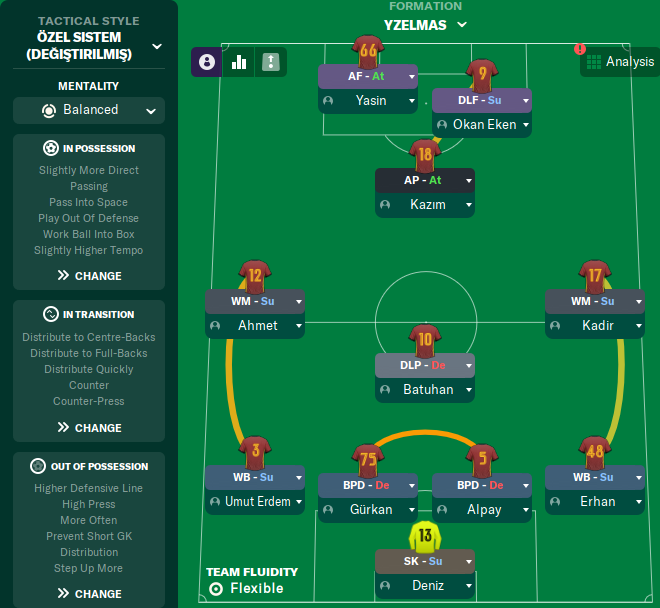
Loading tactical analysis...
ÖZEL SİSTEM (DEĞİŞTİRİLMİŞ)
Balanced
3-4-3
Flexible
Slightly More Direct Passing
Pass Into Space
Play Out Of Defence
Work Ball Into Box
Slightly Higher Tempo
Distribute to Centre-Backs
Distribute to Full-Backs
Distribute Quickly
Counter-Press
Higher Defensive Line
High Press
More Often
Prevent Short GK Distribution
GK
Sweeper Keeper
Support
CB
Ball-Playing Defender
Defend
CB
Ball-Playing Defender
Defend
CB
Ball-Playing Defender
Defend
WB
Wing-Back
Support
CM
Deep-Lying Playmaker
Defend
CM
Advanced Playmaker
Attack
WM
Winger
Support
WM
Winger
Support
ST
Advanced Forward
Attack
ST
Deep-Lying Forward
Support
Focus on quick transitions and exploiting space with direct passing and advanced movement from the forward line.
Utilize a high press to regain possession quickly, disrupting opponents' build-up play.
Leveraging the pace of wingers and forwards while maintaining structure through the midfield.
Compact and Structured
Maintains shape through coordinated movements between the three central defenders and two wing-backs.
Three Ball-Playing Defenders at [2,2],[2,3],[2,4] ensure support from the back.
Dynamic Front Three
Quick interchanges of positions between the Advanced Forward, Deep-Lying Forward, and Advanced Playmaker, supported by wingers.
Advanced Playmaker at [4,3], with wingers at [5,2] and [5,4], creates depth in opposing defences.
The presence of both a Deep-Lying Playmaker and an Advanced Playmaker allows for controlled possession.
DLP-De at [4,3] alongside AP-At at [4,4] increases ball retention and transition quality.
Wingers are well-positioned to create width and stretch the opposition.
Wingers at [5,2] and [5,4] provide outlets and crossing opportunities.
Higher defensive line could be exposed when defending against fast break counters.
Higher Defensive Line setup, which may lead to vulnerabilities against teams with pace on the counter.
With two distinct playmaker roles in midfield, could be congested against well-structured defenses.
DLP-De and AP-At could stagnate play if not supported effectively by wingers.
Defensive Transition
High defensive line creates spaces that can be exploited by quick attackers.
Higher Defensive Line set at risk of counter-attacks.
Midfield Overload
Opponents may overload midfield areas, targeting the space between wingers and central midfielders.
DLP-De and AP-At may become ineffective if congested.
Deep-Lying Playmaker and Advanced Playmaker
Optimal ball distribution and creative freedom, allowing for varied attacking options.
DLP-De at [4,3] combined with AP-At at [4,4] facilitates quick transitions.
Wingers with Central Forwards
Wingers stretching play create space for forwards to exploit defensive gaps.
WM-Su positions at [5,2] and [5,4] aiding AF-At moving into central spaces.
How effective is the current balance between defensive solidity and attacking creativity?
What adjustments can be made to solidify the team's response to counter-attacks?
Is the midfield providing enough dynamism, or does it need more fluidity?
The tactical theory behind the 3-4-3: roles, instructions, and the trade-offs that decide whether the system holds up.
Build the patient, control-the-tempo style without watching your opponents counter through the gaps you leave behind.
Long-ball football done well in FM. When direct, vertical play is the right choice, and what the Direct Passing TI actually changes.
Build through the wide areas or through the middle? A working framework for picking the right one for your squad.