Uploaded Tactic
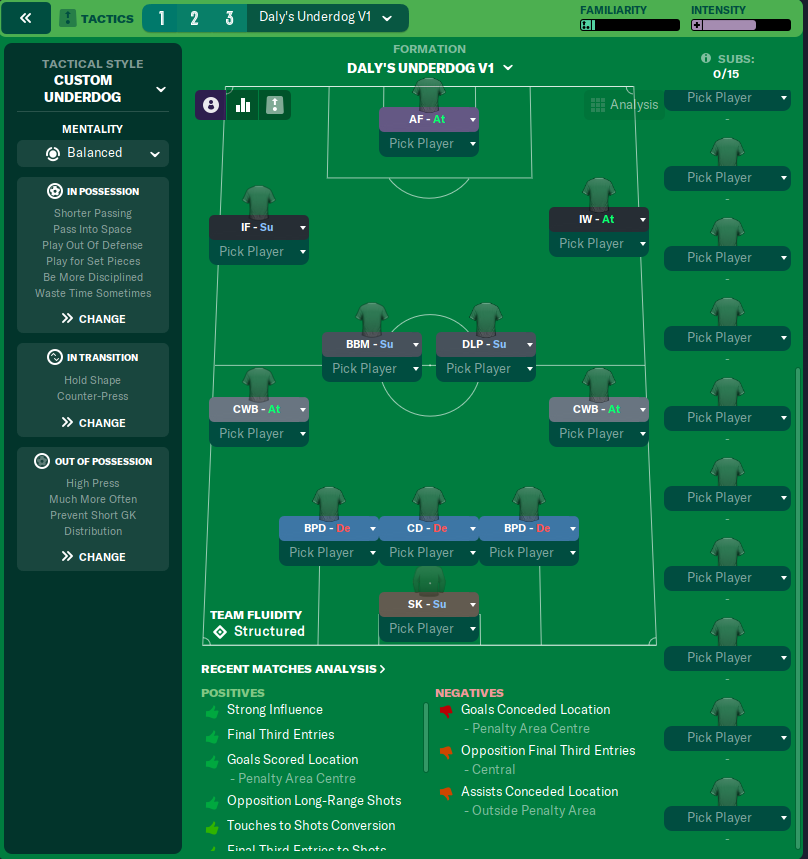
Formation & Style
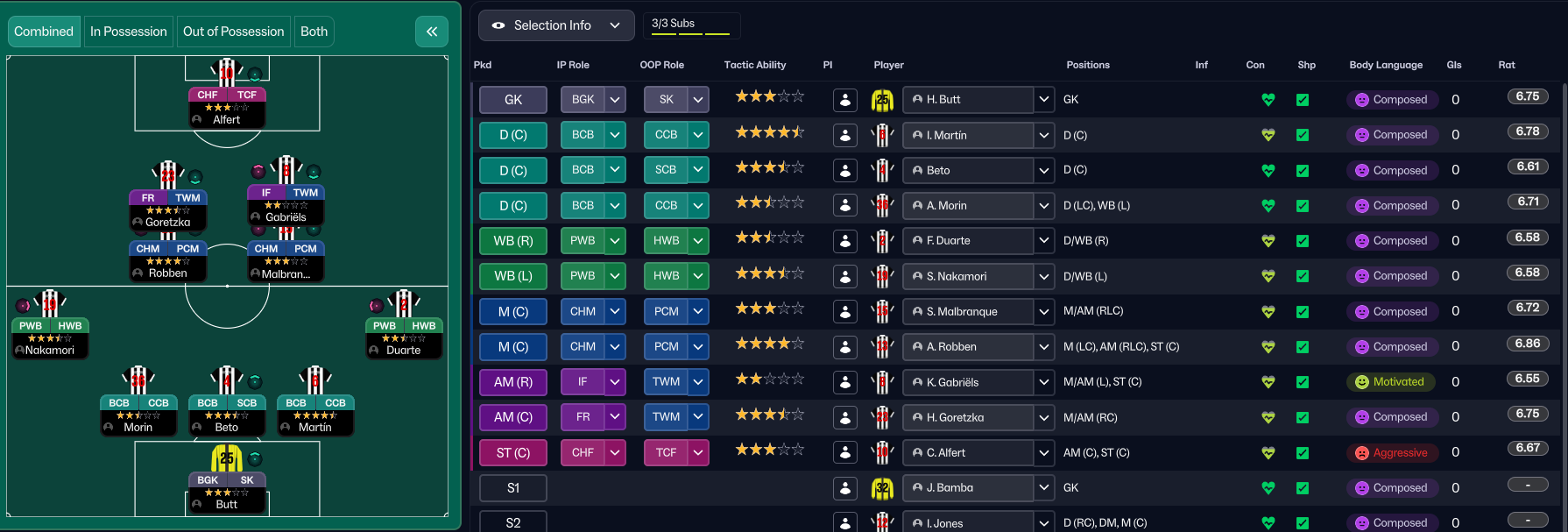
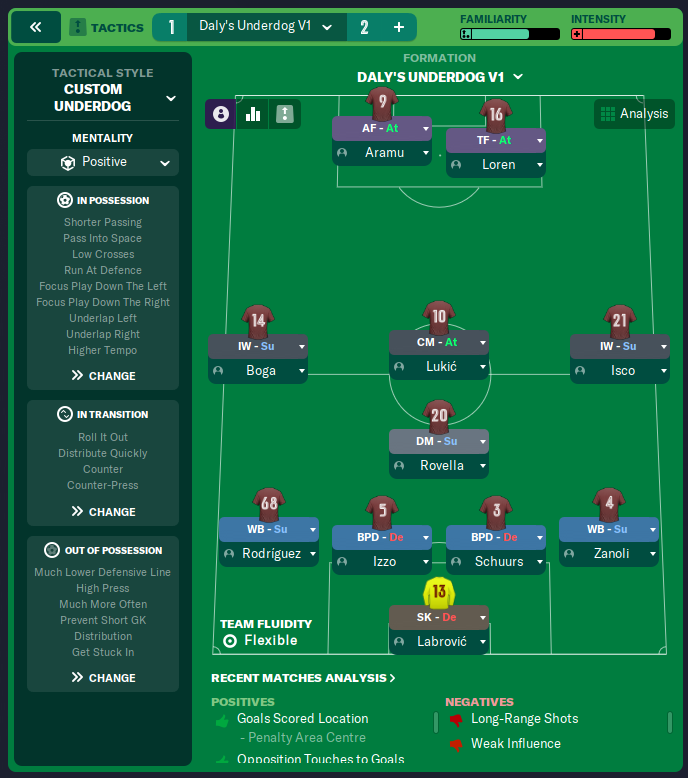
Tactical Style:Custom Underdog
Mentality:Balanced
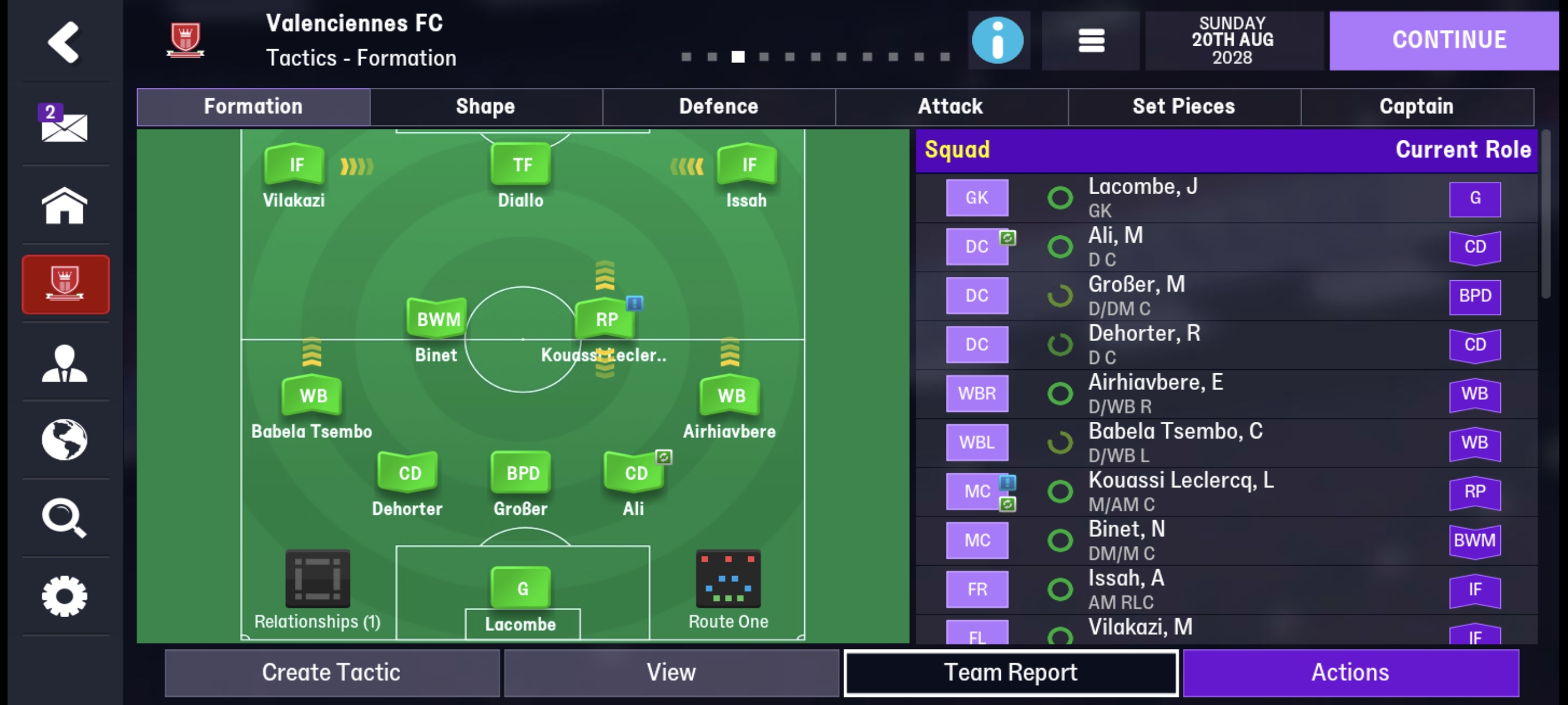
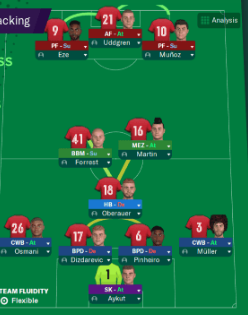
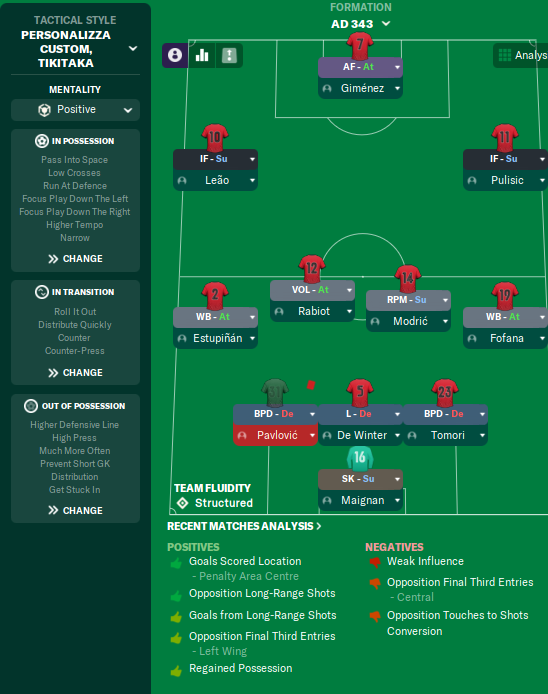
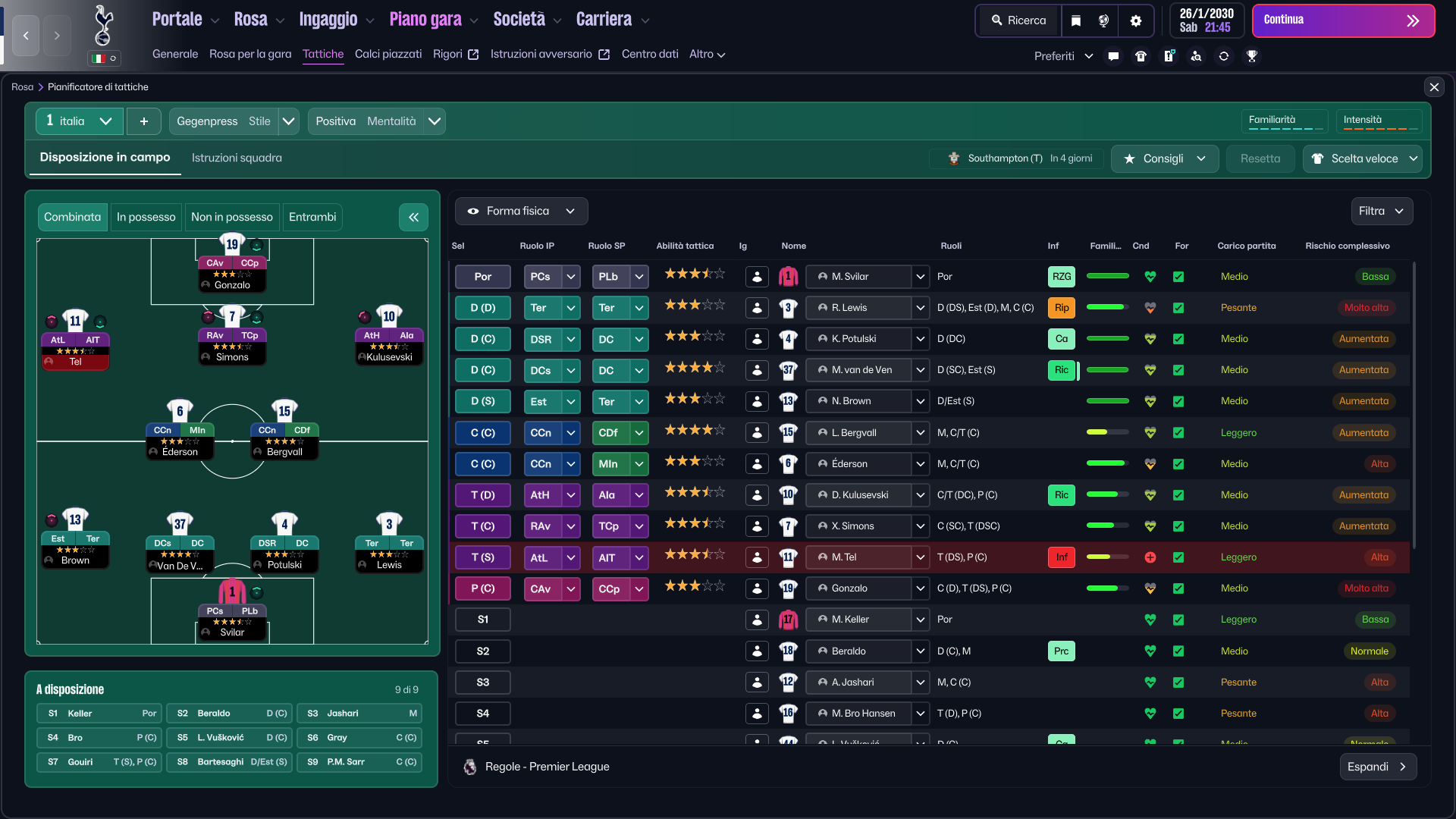
Formation:3-4-3
Team Fluidity:Structured
In Possession
Shorter Passing
Pass Into Space
Play Out Of Defence
Be More Disciplined
Waste Time Sometimes
In Transition
Hold Shape
Counter-Press
Out of Possession
High Press
Much More Often
Prevent Short GK Distribution
Team Shape Without Ball
Shape:Compact Defensive Shape
Description:The team maintains a tight structure to limit space in the defensive third, leaning on the high press when possession is lost.
Evidence:High Press instruction to disrupt opponents immediately after losing the ball.
Team Shape With Ball
Shape:Widened Shape with Forward Runs
Description:Utilizing wing-backs for overlapping runs while inside forwards cut inside to create shooting opportunities.
Evidence:Complete Wing-Backs at [2,1] and [2,5] offering width and dynamic play.
Phase Description
Attacking Play
Utilizing width from the wing-backs and inside forwards creates dynamic attacking options. The ball-playing defenders aid in transitioning the play forward.
Defensive Transition
A counter-press system that relies on immediate pressure from the forwards and wing-backs upon losing possession.
Main Focus
Maximizing wing play and quick transitions while maintaining a balanced structure.
Key Strengths
Strong Influence
Players can effectively control midfield and dictate tempo with support from the Box-to-Box Midfielder.
Final Third Entries
Consistent access to the opponent's final third through both central and wide areas.
Goals Scored Location
Effective attack strategy focusing on getting shots from penalty area center.
Conflicting Directions
Vulnerability to Central Attacks
With three central defenders, a high press might leave space centrally for quick transitions against strong teams.
Potential Overreliance on Wing Play
With reliance on wing-backs and inside forwards, teams can become predictable and vulnerable to counter-attacks.
Pressure on Wing-Back Fitness
High demands on wing-backs may result in early fatigue, decreasing effectiveness later in the match.
Tactical Suggestions
Consider Rotational Midfield
Incorporating a more fluid midfield can help in closing gaps when pressing and countering.
Tactical Variation Against Strong Opponents
Use a more conservative approach against stronger sides could provide better results.
Enhance Support to Wing-Backs
Adding a Central Midfielder who can drift wide may alleviate pressure on wing-backs during transitions.
Ask Questions About Your Lineup
Related Tactics
More Custom Underdog tactics
Guides for this formation
The tactical theory behind the 3-4-3: roles, instructions, and the trade-offs that decide whether the system holds up.
Playing styles
Direct, Vertical Football
Long-ball football done well in FM. When direct, vertical play is the right choice, and what the Direct Passing TI actually changes.
Read guide
Playing styles
Possession-Based Tactics in Football Manager
Build the patient, control-the-tempo style without watching your opponents counter through the gaps you leave behind.
Read guide