Uploaded Tactic
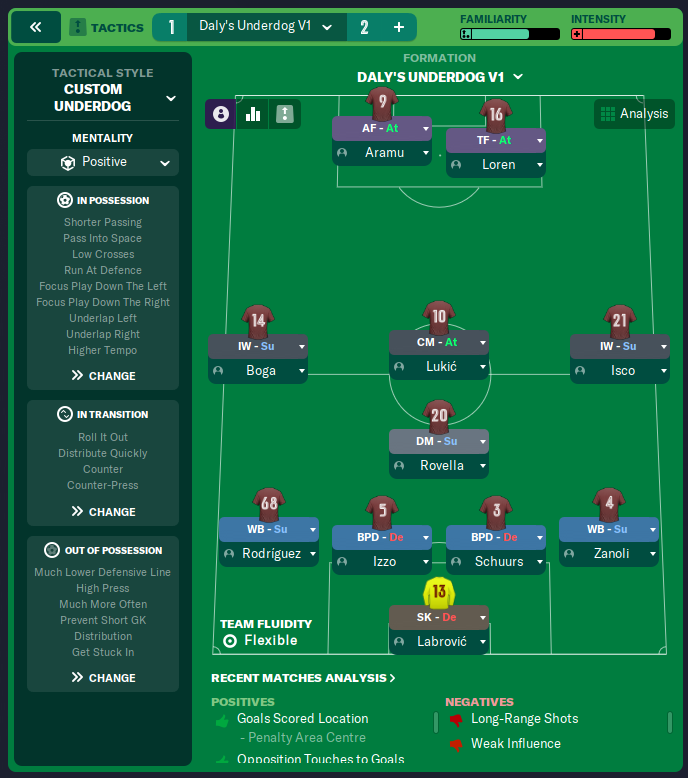
Formation & Style
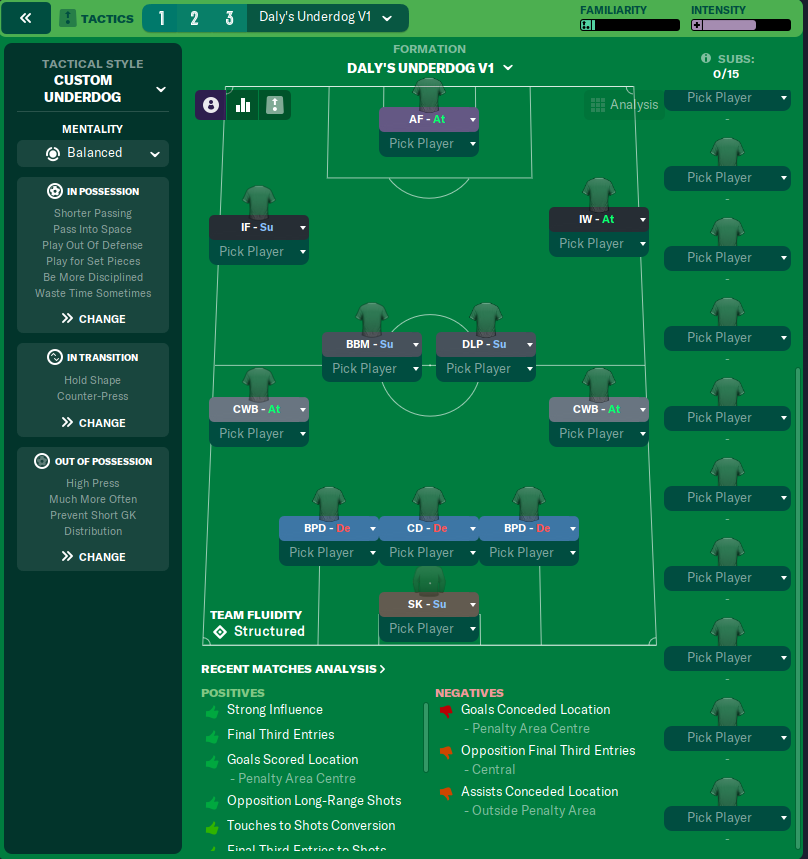
Tactical Style:Custom Underdog
Mentality:Positive
Formation:4-2-3-1 Wide
Team Fluidity:Flexible
In Possession
Shorter Passing
Pass Into Space
Low Crosses
Run At Defence
Focus Play Down The Left
Focus Play Down The Right
Underlap Left
Underlap Right
Higher Tempo
In Transition
Roll It Out
Counter
Counter-Press
Out of Possession
Much Lower Defensive Line
Much More Often
Prevent Short GK Distribution
Get Stuck In
Team Shape Without Ball
Shape:4-2-3-1
Description:Compact defensive shape with two banks of four, providing support to the back line and limiting depth.
Evidence:BPD-D at [2,2] and [2,3] anchoring the defensive setup while the DM supports from [3,3].
Team Shape With Ball
Shape:4-2-3-1
Description:Fluid attacking shape where wing play is essential, allowing creative players to exploit space.
Evidence:IW-S at [6,1] and [6,5] cutting inside while AF-A and TF-A position between defenders.
Phase Description
Attacking Play
Focus on creating overloads on the flanks with overlapping wing-backs and inside forwards, utilizing quick transitions to penetrate central areas.
Defensive Transition
Immediately press after losing possession to regain control, particularly targeting opposition's weaker links.
Main Focus
Utilize width to stretch the opposition and break down defensive setups while maintaining a solid midfield presence.
Key Strengths
Width Utilization
The use of inside wingers and overlapping wing-backs creates unpredictability and stretches opposition defenses.
Counter-Attacking
The 'Counter' approach enables quick transitions, capitalizing on spaces left by opposing teams.
Midfield Stability
Two midfielders (DM-S and CM-A) provide balance for attacking transitions and help maintain possession.
Conflicting Directions
Long-Range Shots Vulnerability
With a lower defensive line and pressing approach, opponents might exploit gaps outside the penalty area.
Insufficient Control Against Strong Midfields
Against teams with powerful central midfielders, the tactical shape may struggle to maintain possession.
Over-reliance on Wingers
Heavy use of wingers could lead to predictability if not supported by central players effectively.
Tactical Suggestions
Consider a Defensive Midfielder Role
Switching the DM to a more defensive role could help absorb pressure better.
Experiment with Transition Styles
Adjusting transitions to focus on 'Regroup' when losing the ball may enhance control.
Strengthen Central Play
Focusing on central overloads may balance the attack and offer more diverse options.
Ask Questions About Your Lineup
Related Tactics
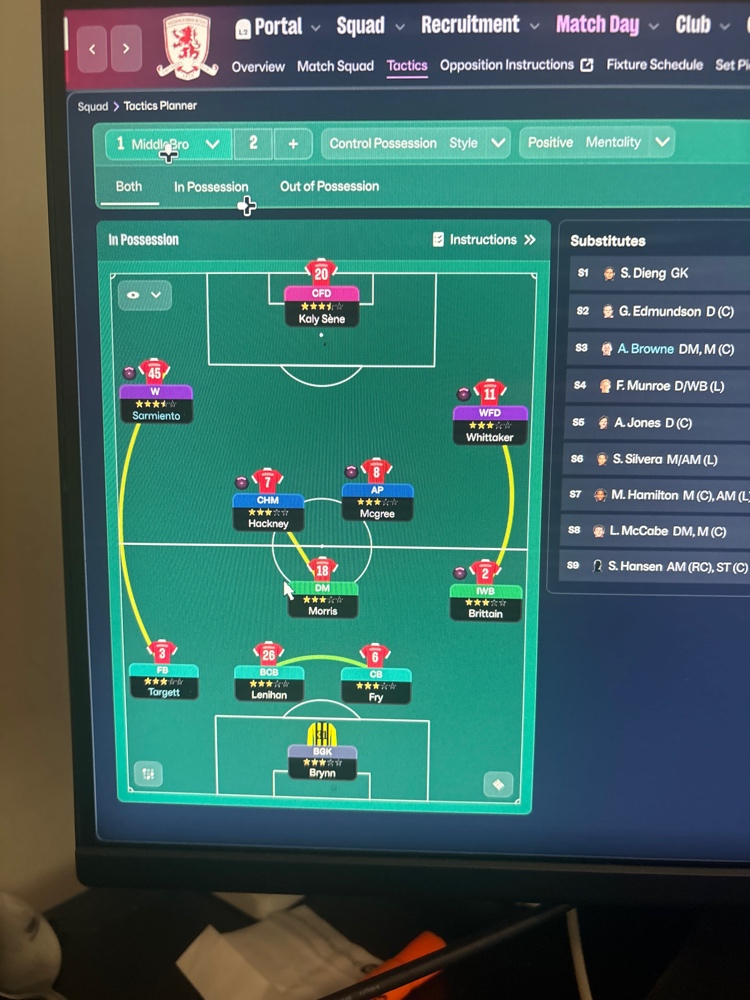
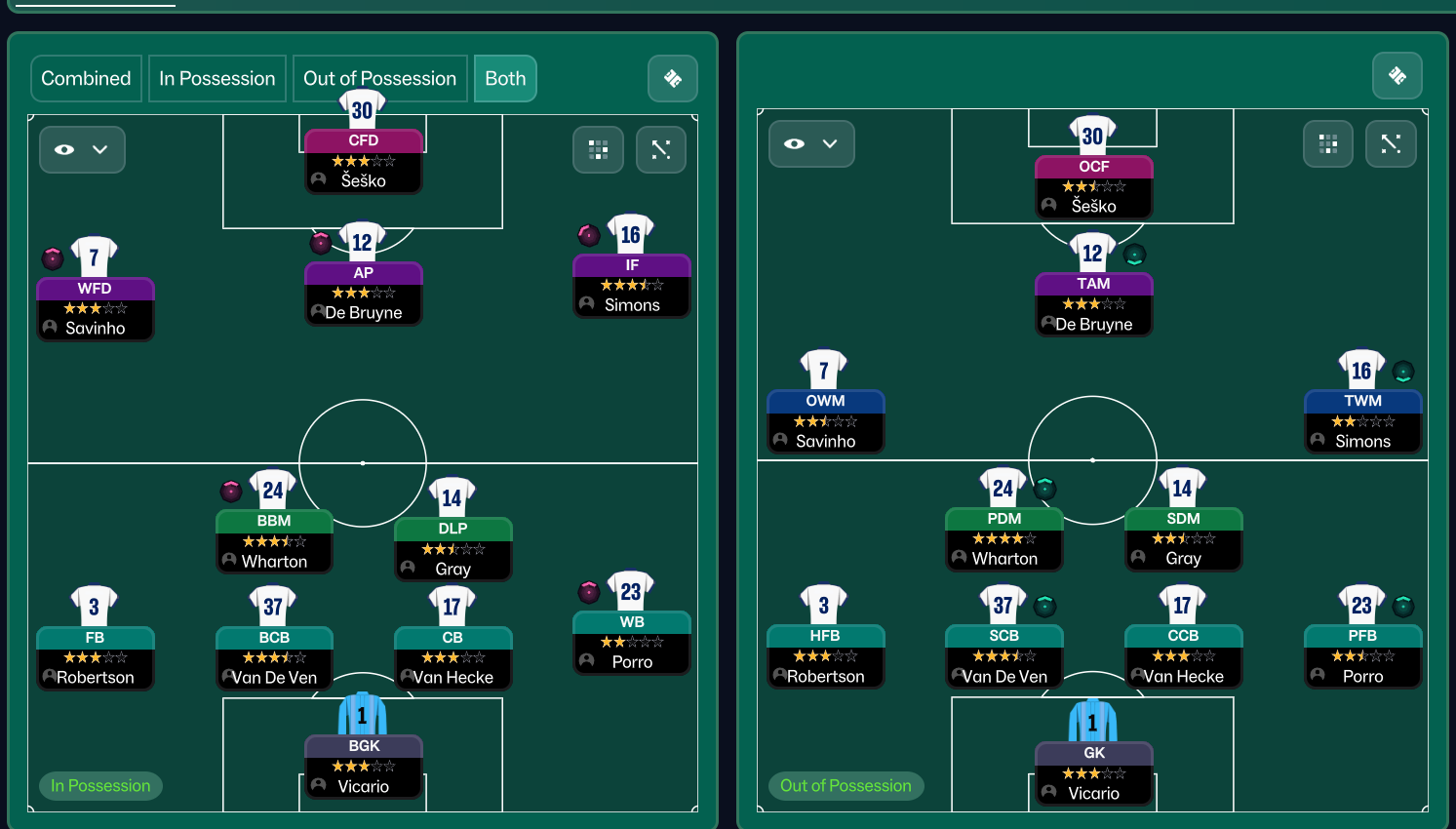
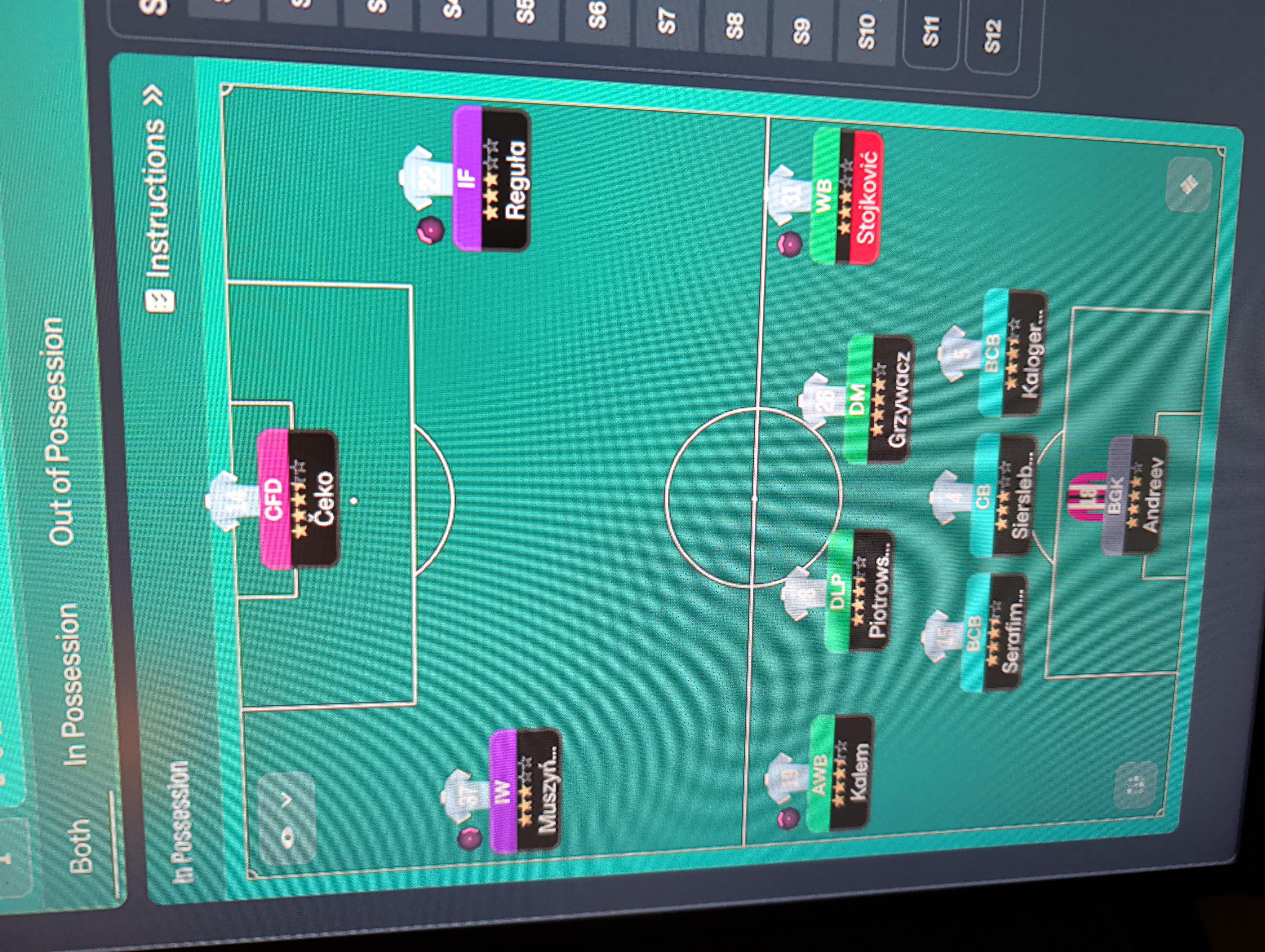
More Custom Underdog tactics
Guides for this formation
The tactical theory behind the 4-2-3-1 Wide: roles, instructions, and the trade-offs that decide whether the system holds up.
Player pairings
Midfield Pairs in 4-2-3-1 and 4-4-2
Double pivots and flat pairs in 4-2-3-1 and 4-4-2: when each pairing works, when it collapses, and the AMC unicorn that rescues both.
Read guide
Playing styles
Gegenpressing: A Full Guide
Klopp-style gegenpressing in FM, including squad profile, line-and-press pairing, sustainable workload, and the antipatterns to avoid.
Read guide