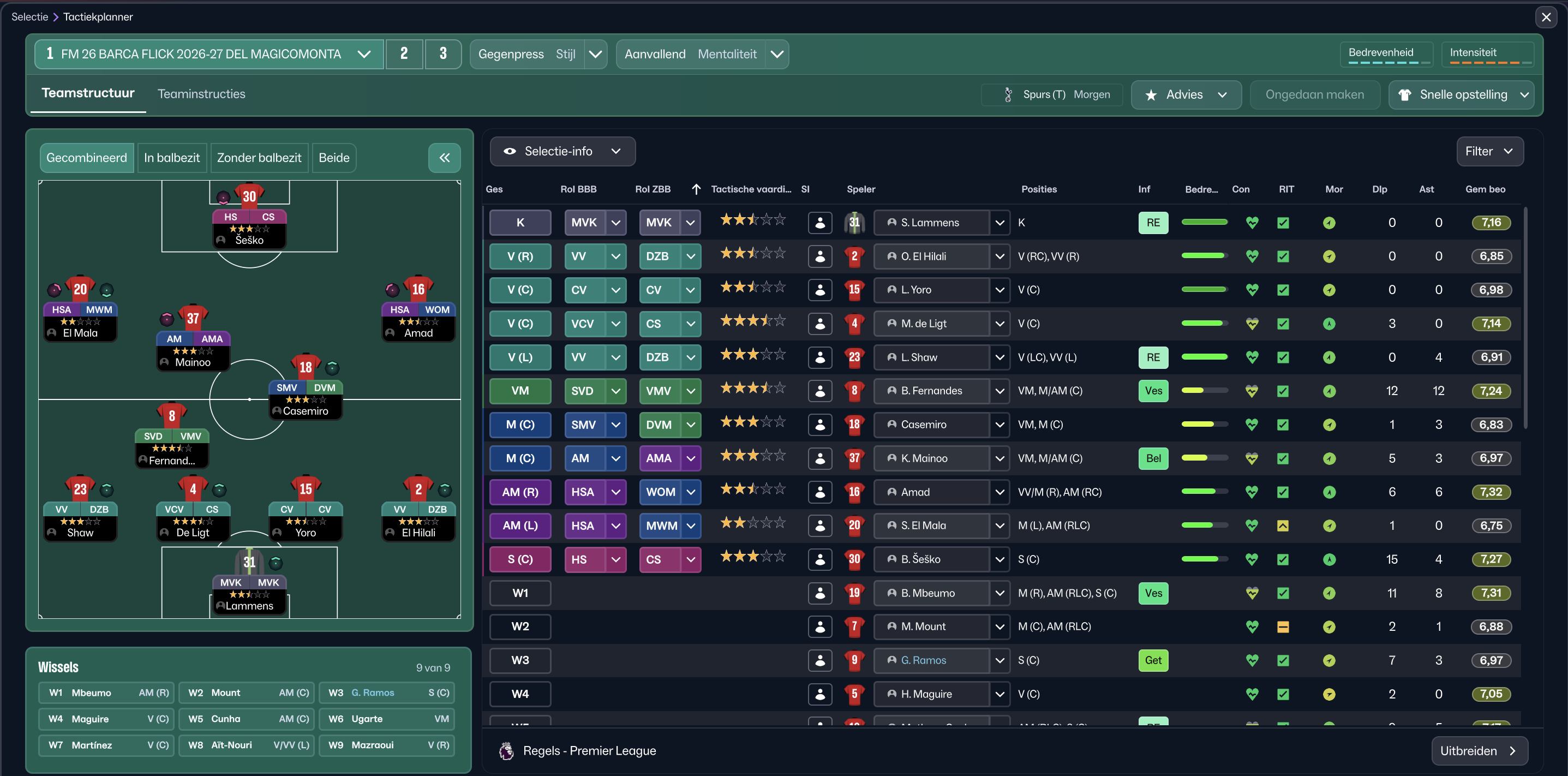
Uploaded Tactic
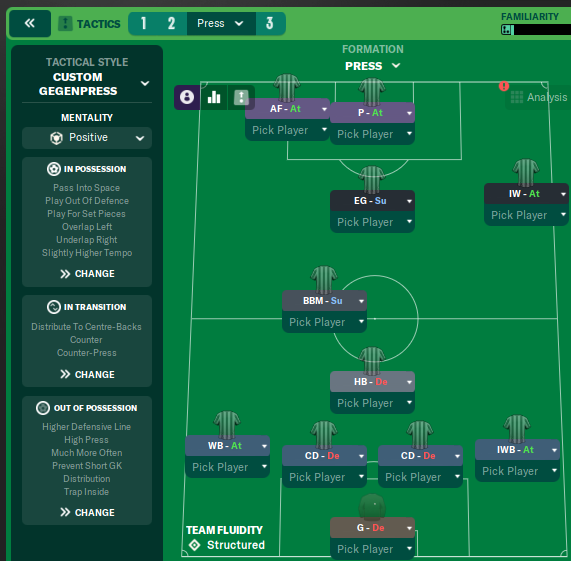
Formation & Style
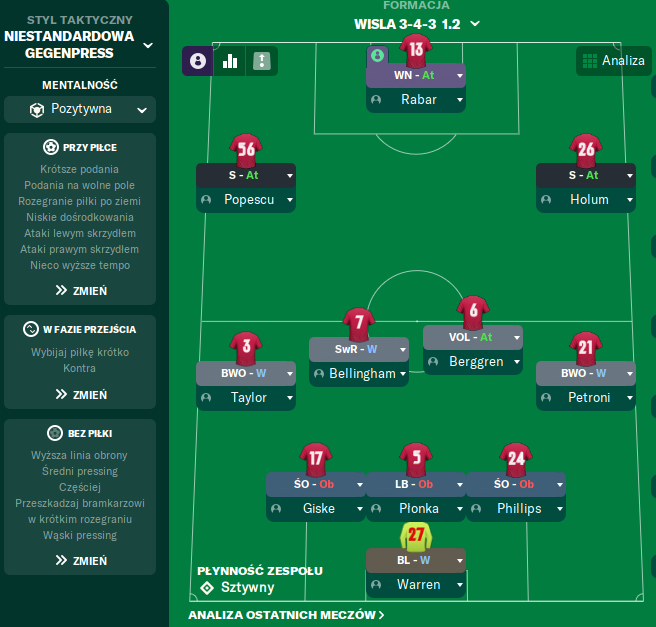
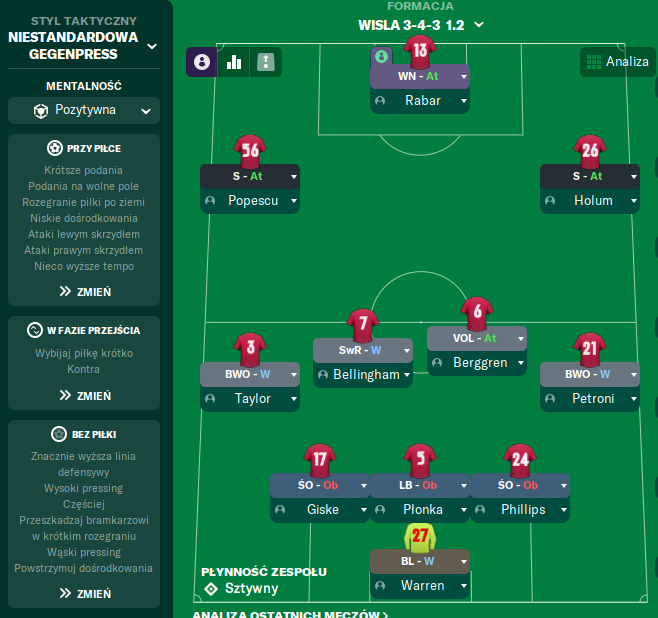
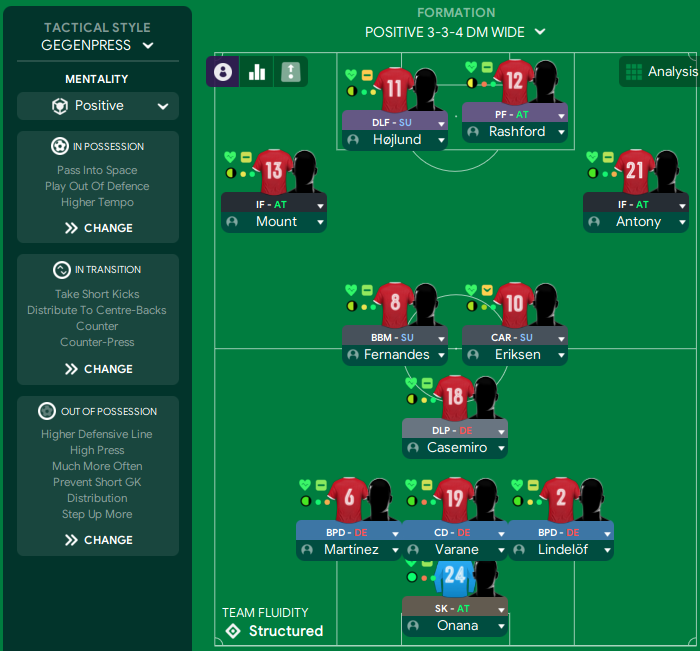
Tactical Style:Gegenpress
Mentality:Positive
Formation:3-4-3
Team Fluidity:Structured
In Possession
Pass Into Space
Play Out Of Defence
Play For Set Pieces
Overlap Left
Underlap Right
Slightly Higher Tempo
In Transition
Distribute To Centre-Backs
Counter
Counter-Press
Out of Possession
Higher Defensive Line
High Press
Much More Often Prevent Short GK Distribution
Prevent Short GK Distribution
Trap Inside
Team Shape Without Ball
Shape:Compact shape with high defensive line
Description:The higher defensive line aims to compress space and initiate pressing when the opponent has the ball, allowing for quick interceptions.
Evidence:Higher Defensive Line + High Press
Team Shape With Ball
Shape:Fluid attacking movement
Description:In possession, players interchange positions with an emphasis on attacking through the flanks and utilizing quick combinations in the final third.
Evidence:Overlap Left + Underlap Right
Phase Description
Attacking Play
Focus on rapid transitions with short passing, aiming to exploit space left by opposing defenders using the pace of wingers and forwards.
Defensive Transition
Immediately press to regain possession after losing the ball, shifting quickly into a compact defensive shape.
Main Focus
Utilize high pressing to disrupt the opponent's build-up play while maintaining attacking threats through width and direct runs.
Key Strengths
High Pressing Game
The team's high pressing can disrupt opponent build-up, forcing errors in dangerous areas.
Wing Play
Usage of wing-backs and inside wingers creates width, stretching opponents and creating more space centrally.
Dynamic Midfield
Box-to-Box Midfielder contributes to both defense and attack, supporting counter-pressing and quick transitions.
Conflicting Directions
Excessive High Line
While a high defensive line can press effectively, it may lead to vulnerabilities against quick counter-attacks from the opposition.
Overcommitment in Attack
With three forwards and aggressive wing-backs, there may be a lack of cover during transitions.
Shifting Defensive Shape
The compactness may break during rapid defensive transitions if players fail to fall back quickly.
Tactical Suggestions
Adjust Defensive Line
Consider lowering the defensive line to prevent exploitation of space behind the defenders by fast opponents.
Incorporate More Midfield Support
Increase the depth in midfield to better cope with counter-attacks and regain possession more effectively.
Flexibility in Wing-Back Roles
Consider adjusting the duty of one wing-back to defensive to maintain balance and stability in transition phases.
Ask Questions About Your Lineup
Related Tactics
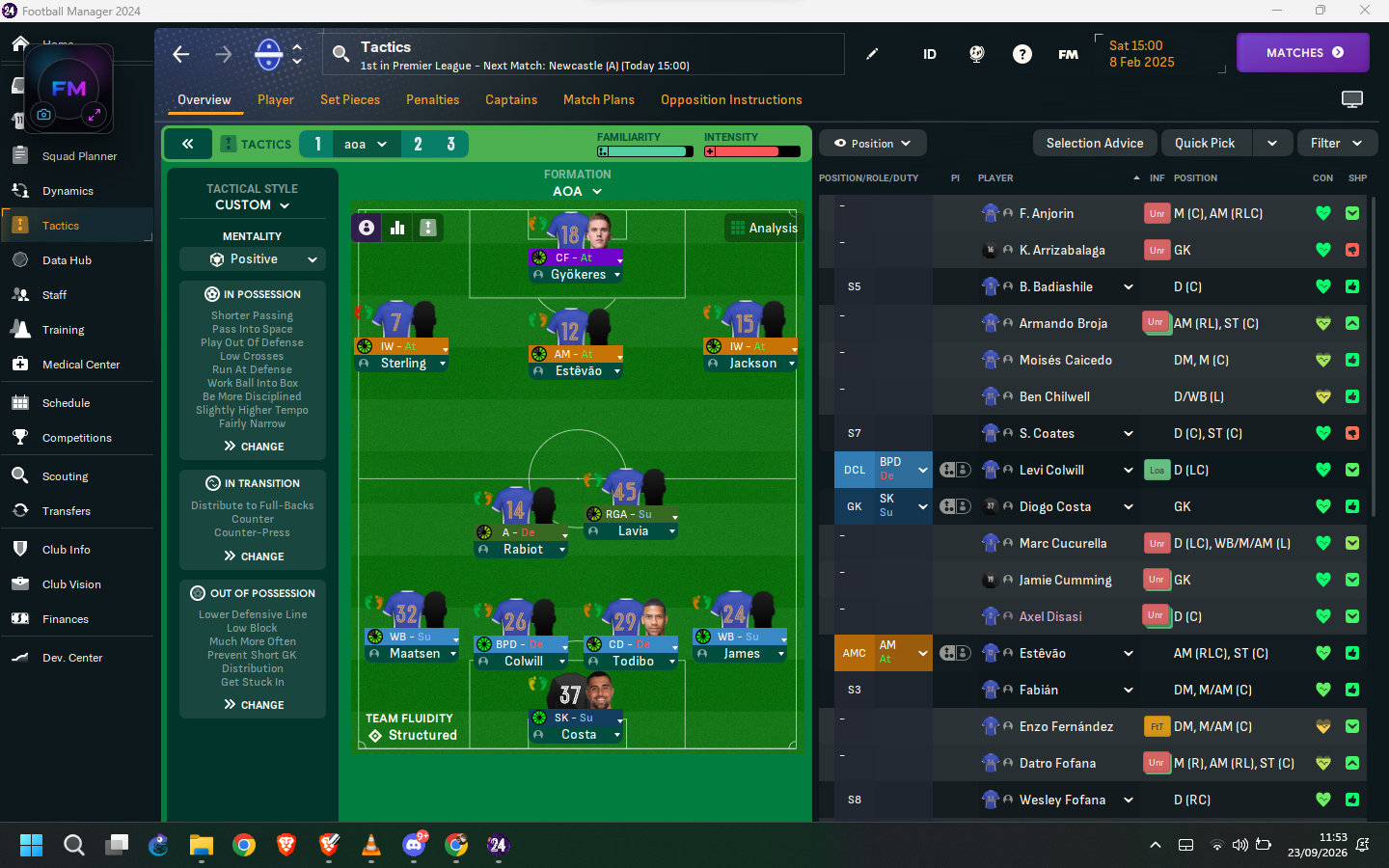
More Gegenpress tactics
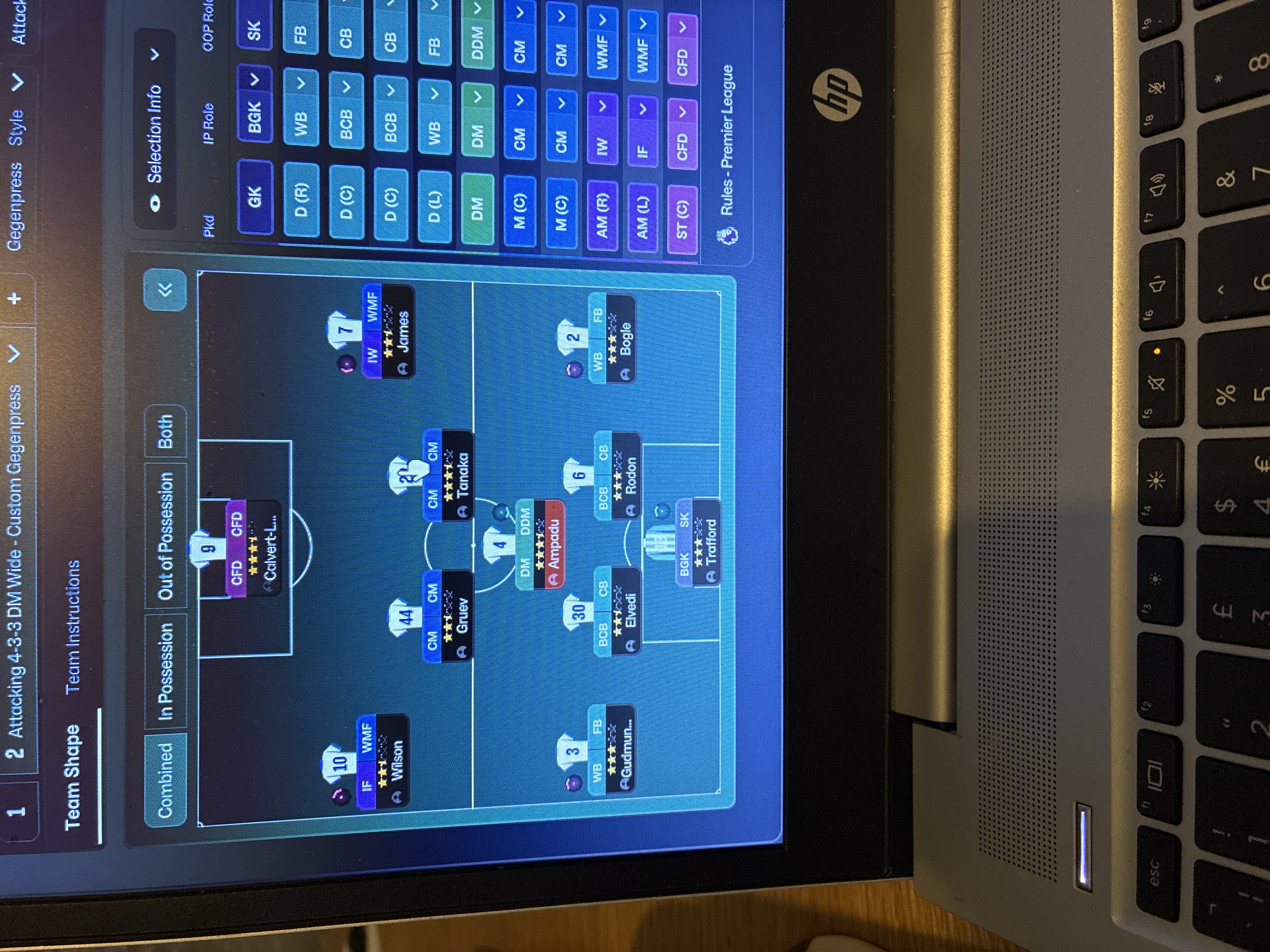
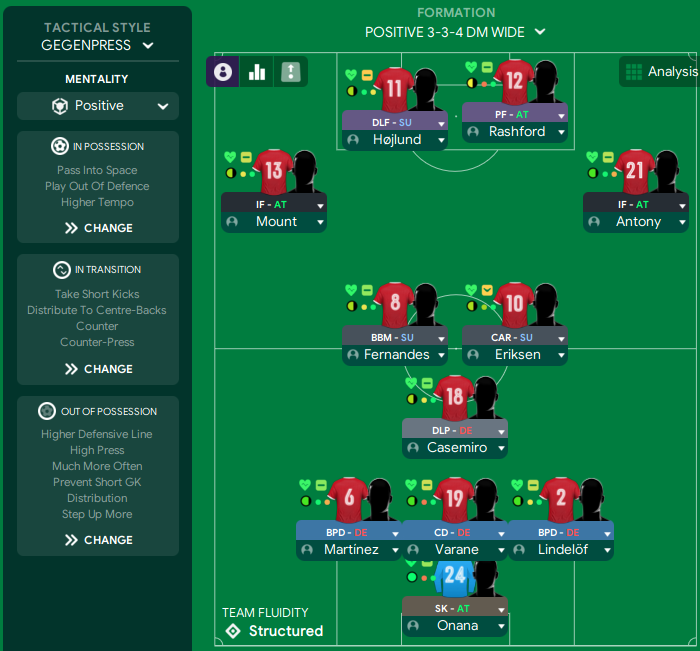
Guides for this formation
The tactical theory behind the 3-4-3: roles, instructions, and the trade-offs that decide whether the system holds up.
Playing styles
Direct, Vertical Football
Long-ball football done well in FM. When direct, vertical play is the right choice, and what the Direct Passing TI actually changes.
Read guide
Playing styles
Possession-Based Tactics in Football Manager
Build the patient, control-the-tempo style without watching your opponents counter through the gaps you leave behind.
Read guide