Uploaded Tactic
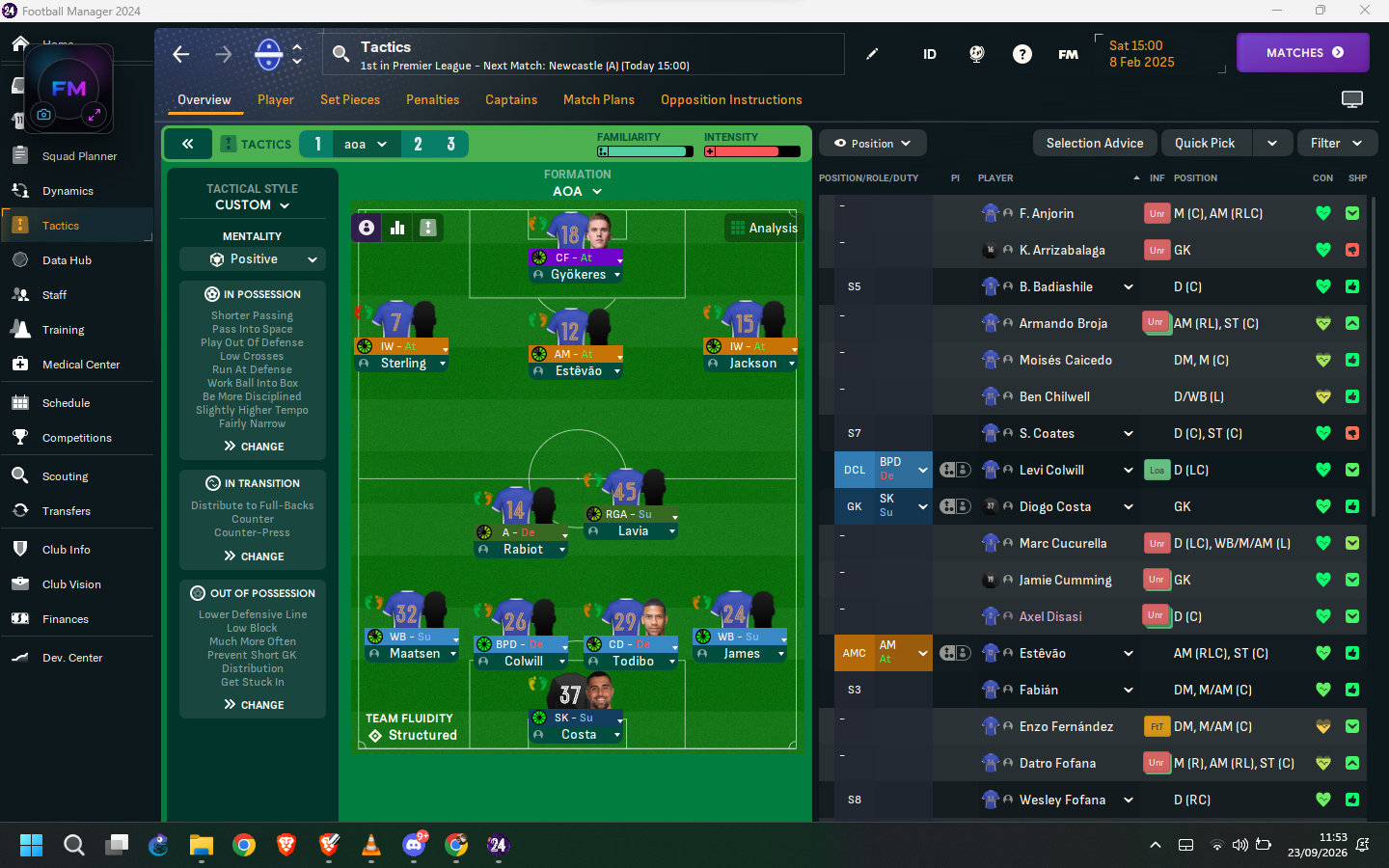
Formation & Style
Tactical Style:Attacking
Mentality:Positive
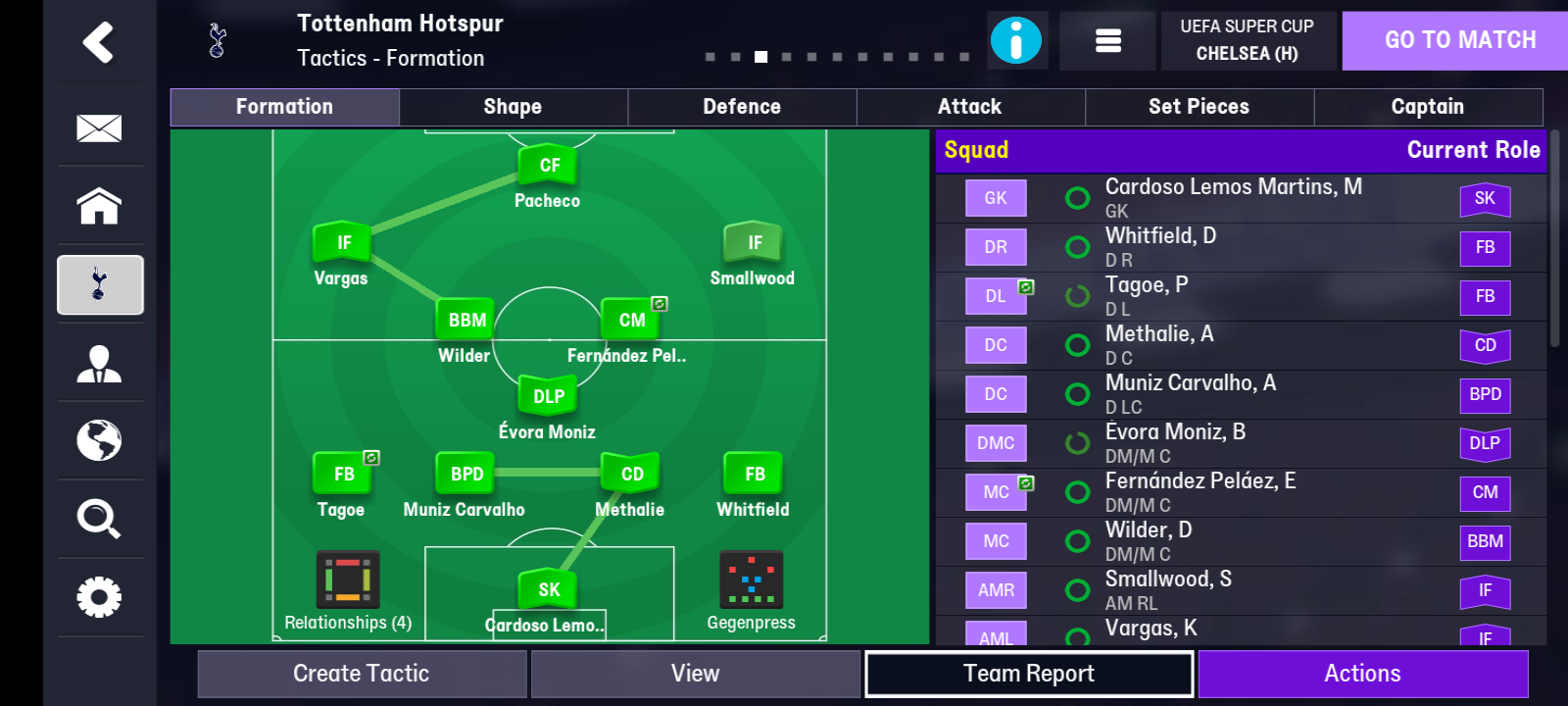
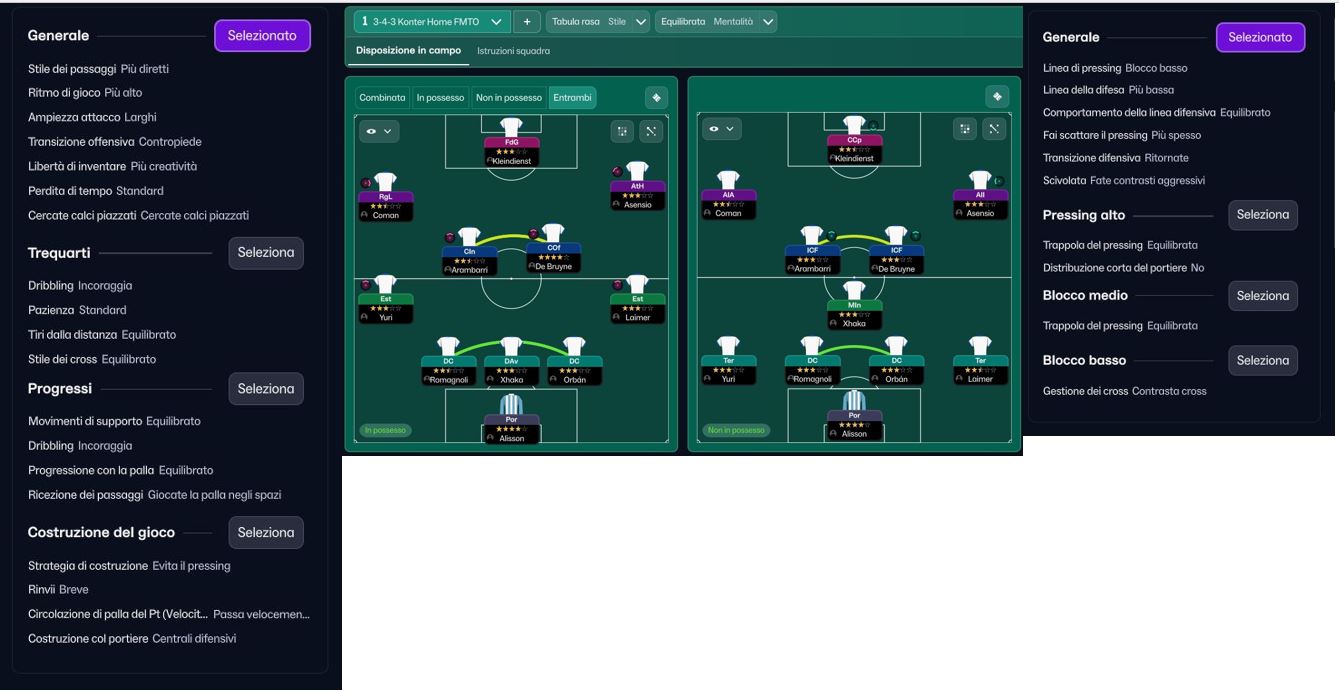
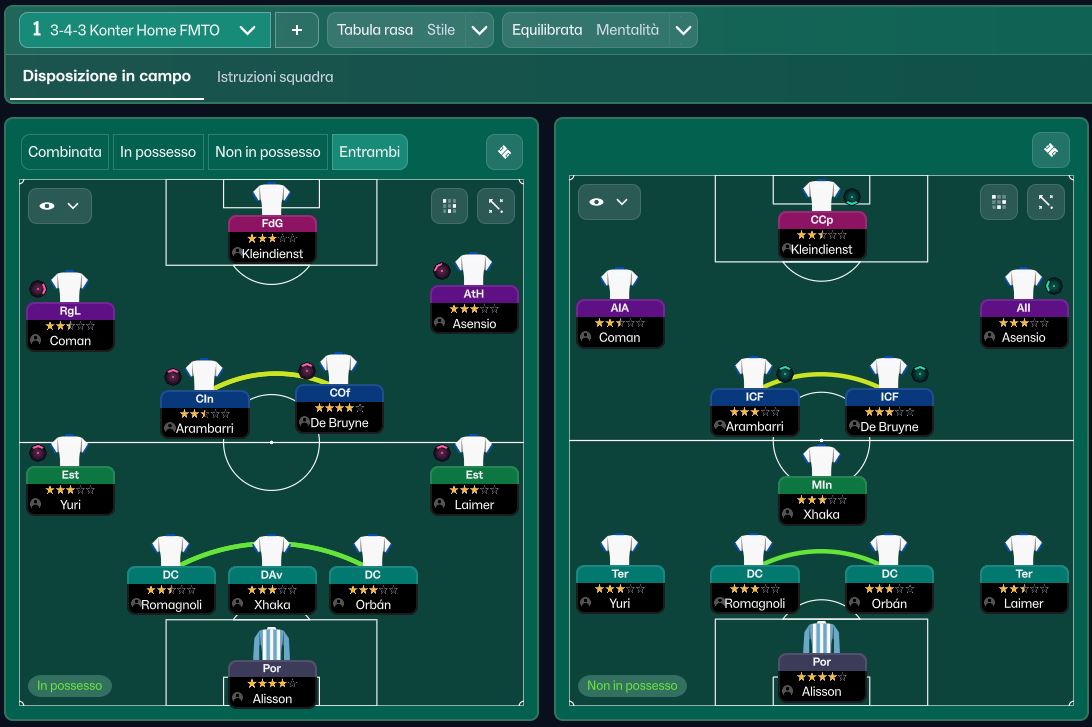
Formation:3-4-3
Team Fluidity:Fluid
In Possession
Attack through the wings
Play out of defense
Use overlapping full-backs
Exploit space behind the defense
In Transition
Counter-press when losing the ball
Counter-attack quickly
Out of Possession
High defensive line
Press aggressively
Compact midfield
Team Shape Without Ball
No team shape without ball data available
Team Shape With Ball
No team shape with ball data available
Key Strengths
Wide Play
Utilizes the pace of wingers to stretch defenses and create opportunities from wide areas.
Attacking Flexibility
Flexibility in attack to vary between crosses and through balls depending on opponent's weaknesses.
High Pressing
Maintains pressure on the opponent's defenders and midfielders to win the ball back quickly.
Dynamic Midfield
Midfielders provide balance between support and defensive duties, allowing for effective transitions.
Conflicting Directions
Defensive Stability
Three central defenders can leave gaps if the wing-backs push too high, requiring more discipline to avoid being caught on the counter.
Over-reliance on Wingers
Heavy emphasis on width can cause issues if the opponent effectively narrows the play, simplifying their defensive structure.
Overlapping Risk
While overlapping full-backs enhance width, it may lead to vulnerability in wide areas during quick counters.
Midfield Overload
Potential imbalanced midfield if attacking play is focused through one side, causing disconnection in build-up.
Tactical Suggestions
Adjust Wing-Back Duties
Consider changing one wing-back to a Support duty for added defensive stability.
Utilize Central Options
Encourage central midfielders to make more advanced runs to provide additional options in the final third.
Incorporate a Defensive Midfielder
Introduce a holding midfielder to shield the defense and maintain balance, especially against counter-attacks.
Variable Mentality
Adjust tactical mentality based on opponent strength to enhance flexibility in various match situations.
Ask Questions About Your Lineup
Related Tactics
More Attacking tactics


Guides for this formation
The tactical theory behind the 3-4-3: roles, instructions, and the trade-offs that decide whether the system holds up.
Playing styles
Direct, Vertical Football
Long-ball football done well in FM. When direct, vertical play is the right choice, and what the Direct Passing TI actually changes.
Read guide
Playing styles
Possession-Based Tactics in Football Manager
Build the patient, control-the-tempo style without watching your opponents counter through the gaps you leave behind.
Read guide