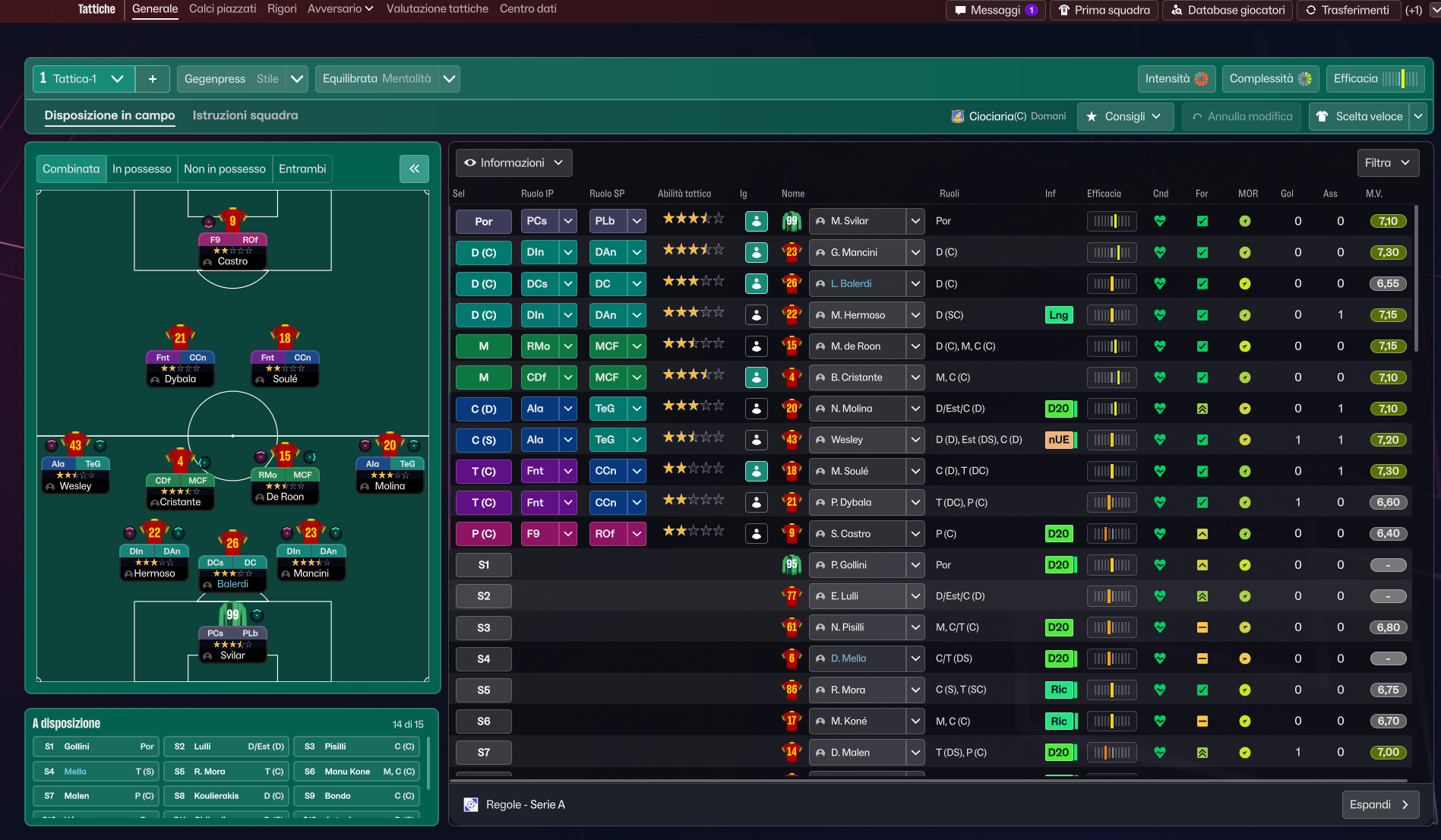
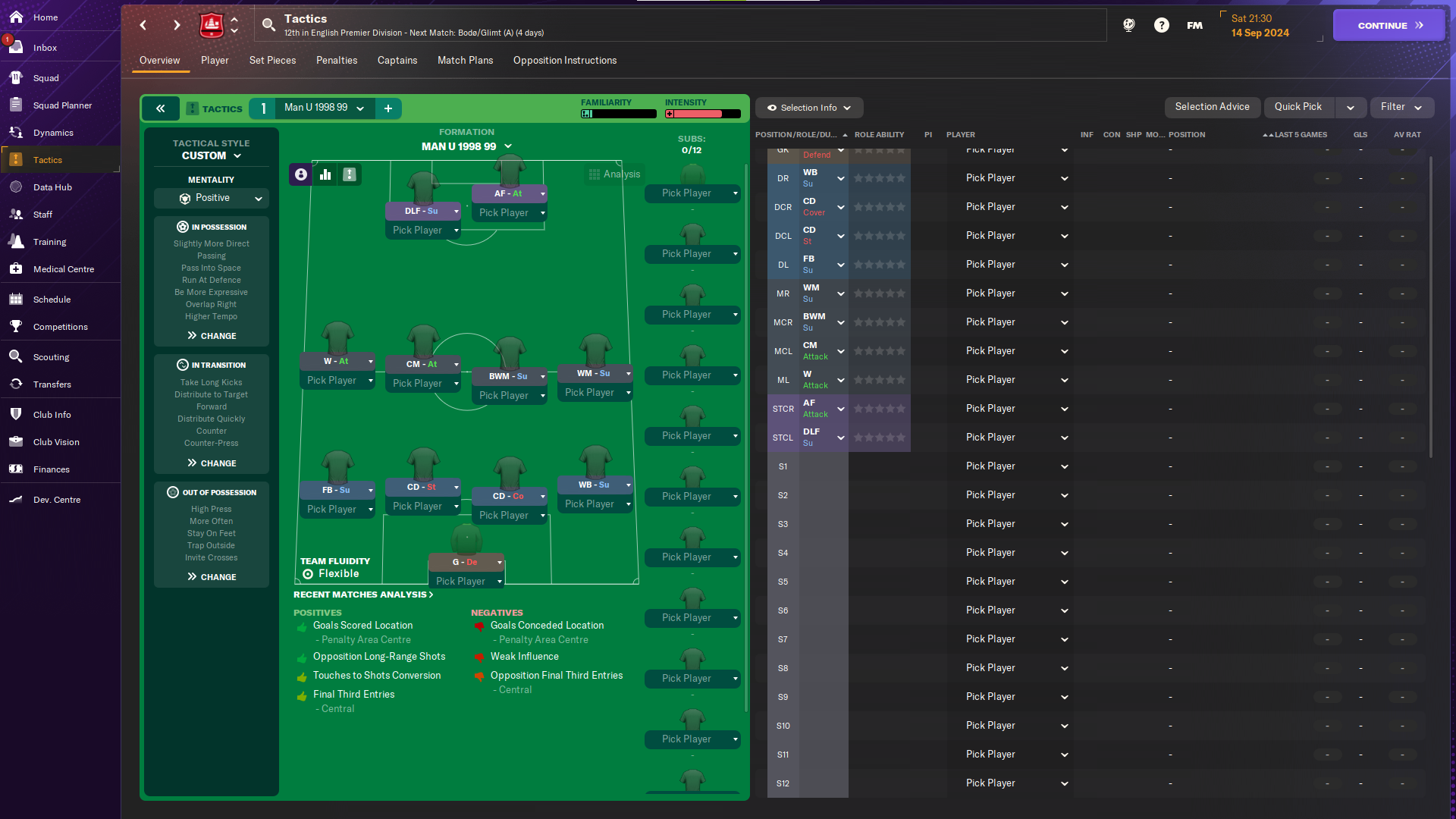
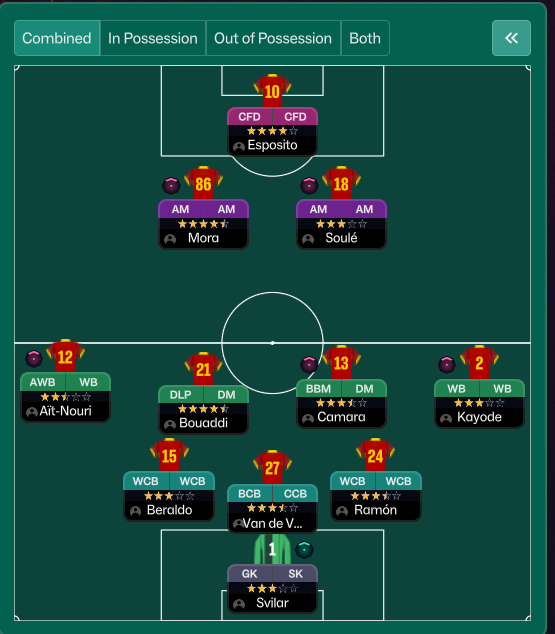
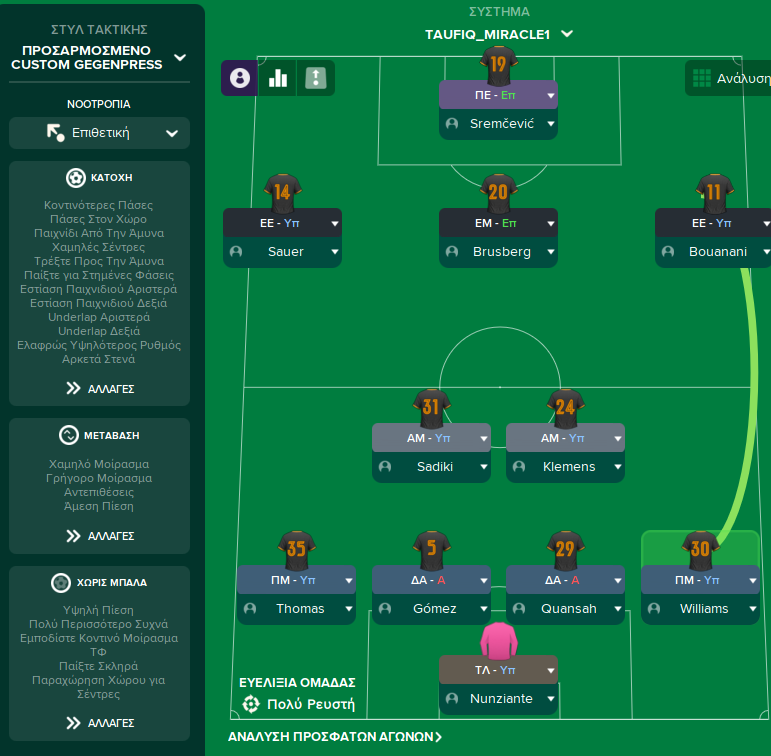
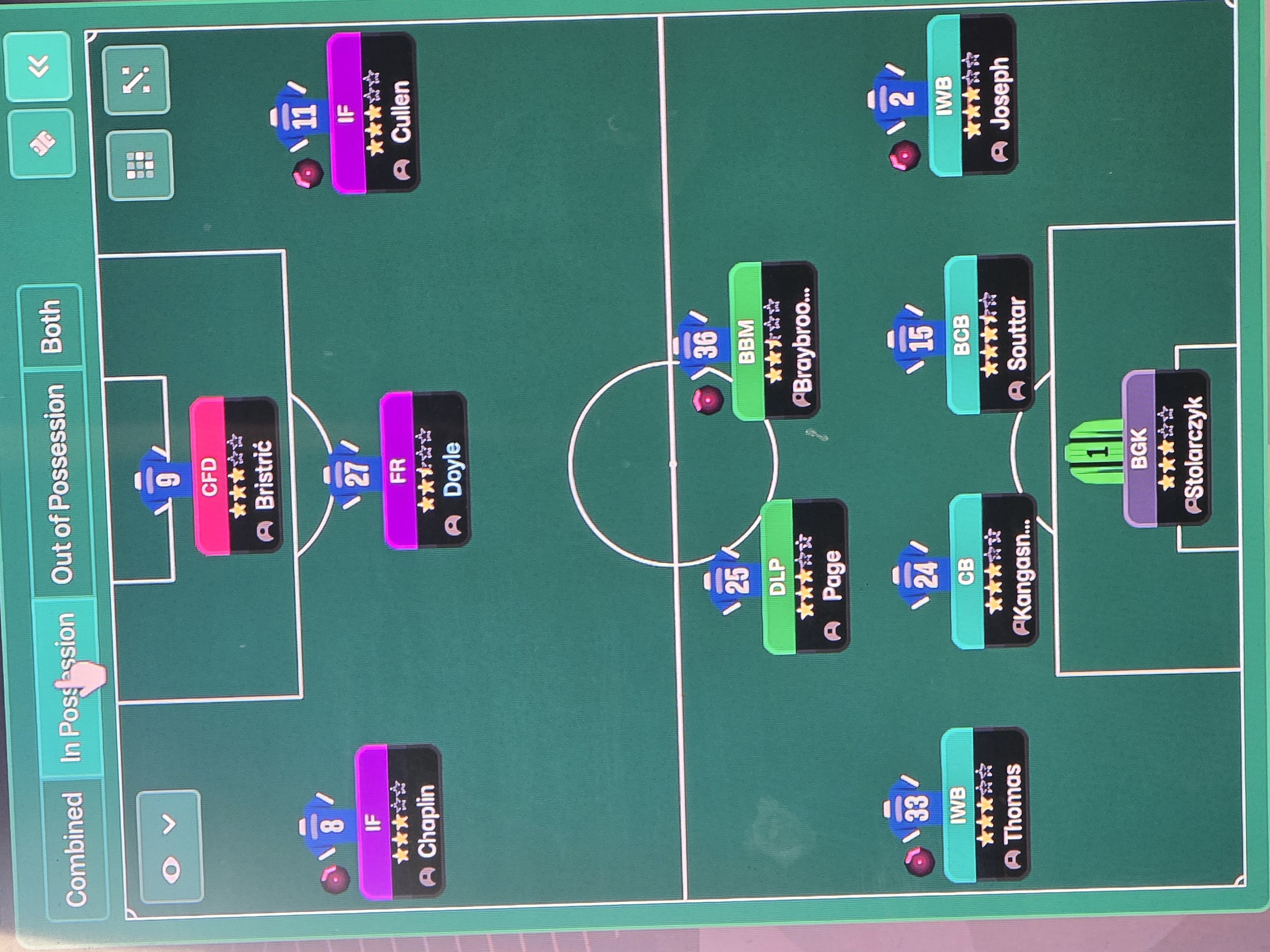
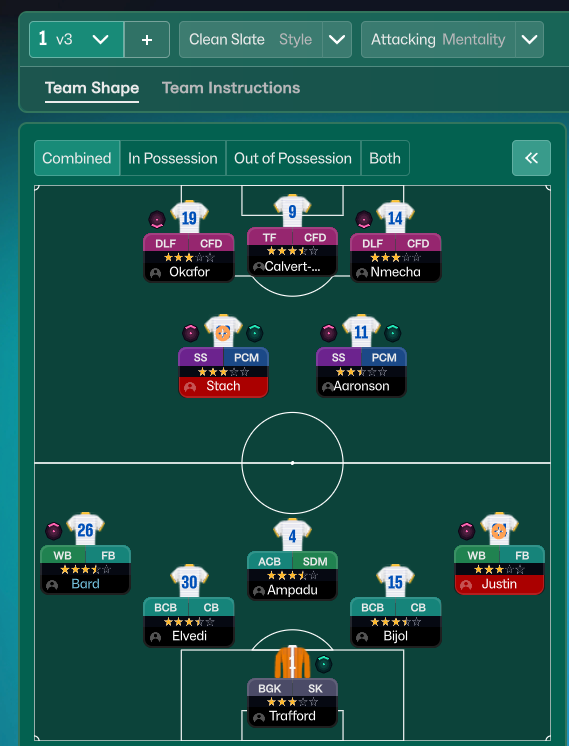
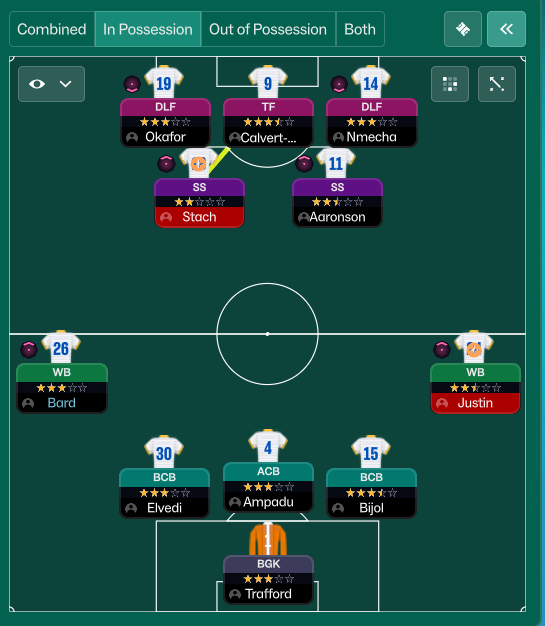
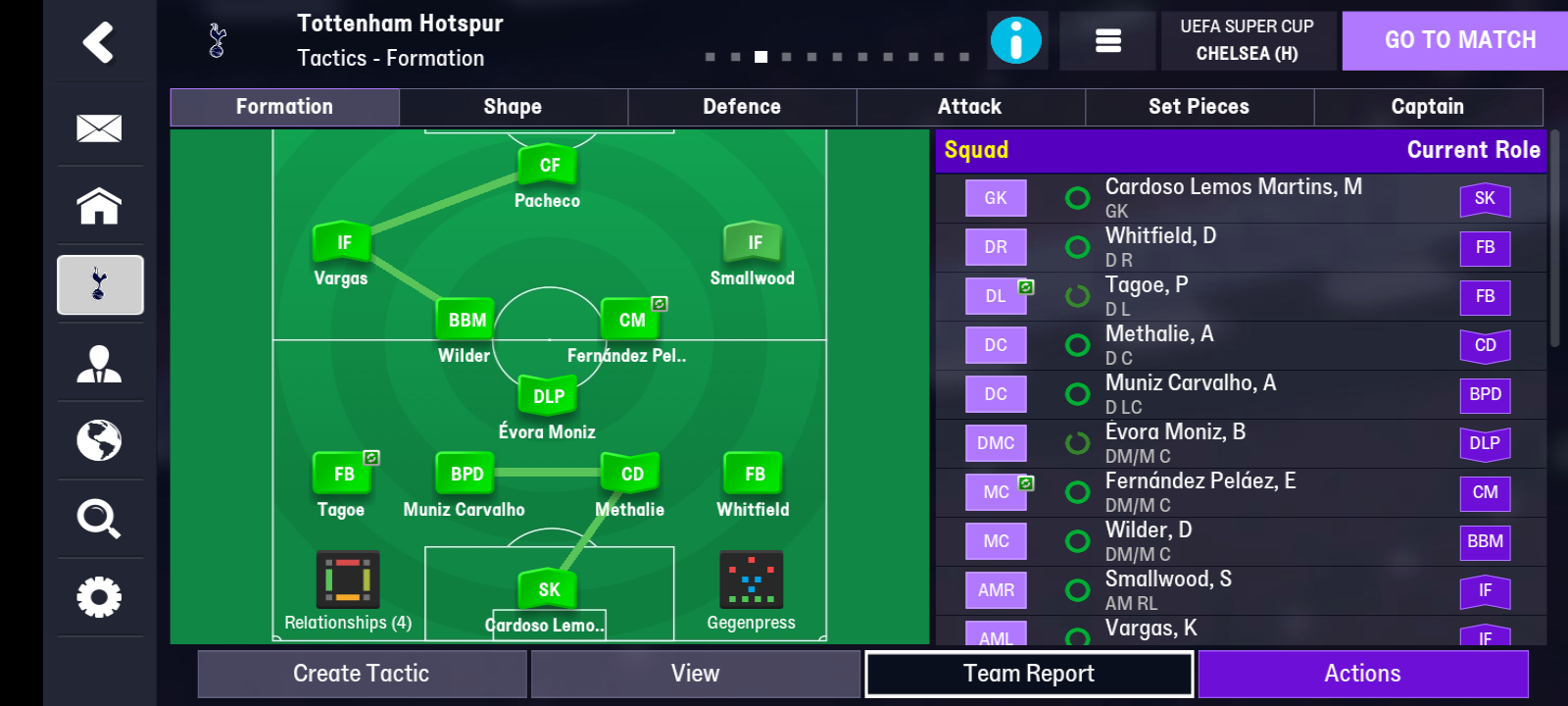
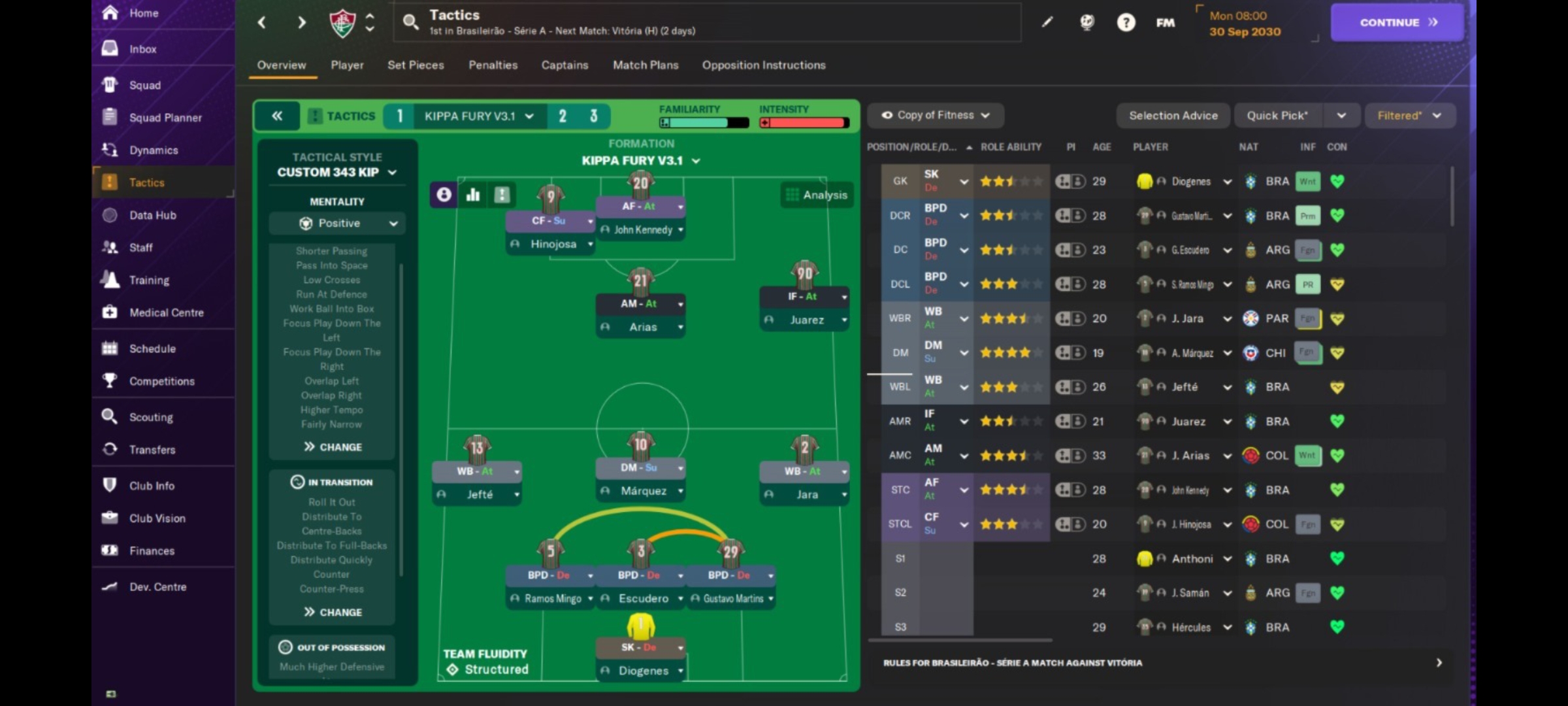
3-4-3
The 3-4-3 formation provides excellent width with overlapping wing-backs, allowing for dynamic flank play and exploitation of defensive gaps.
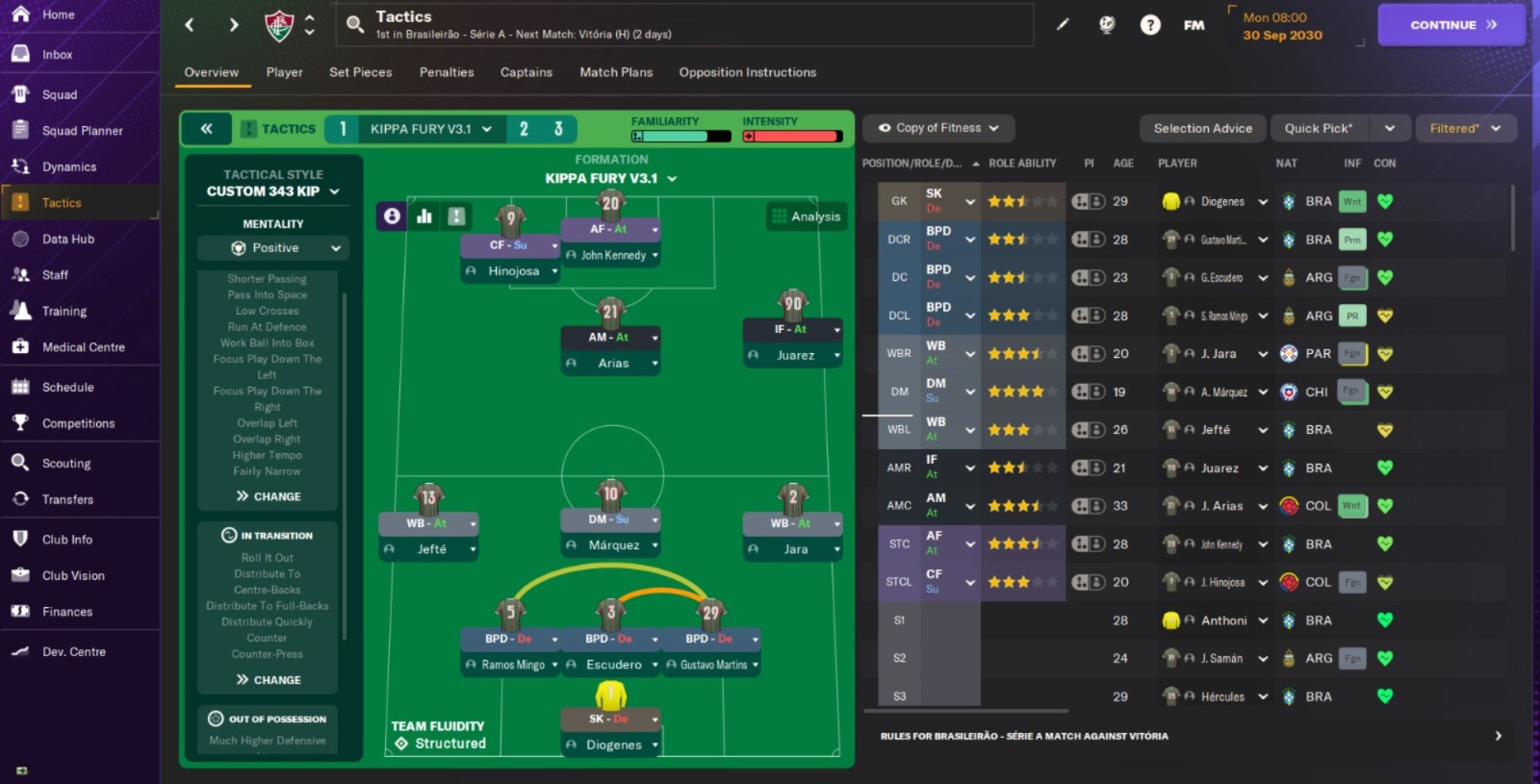
Loading tactical analysis...
Custom 343 KIP
Positive
3-4-3
Structured
Shorter Passing
Pass Into Space
Low Crosses
Higher Tempo
Focus Play Down the Left
Overlapping Full-Backs
Counter
Counter-Press
Distribute to Full-Backs
Much Higher Defensive Line
Pressing Triggers on First Touch
Urgent Pressing
GK
Sweeper Keeper
Defend
DC
Ball Playing Defender
Defend
WB
Wing Back
Attack
DM
Deep Lying Playmaker
Support
AM
Advanced Playmaker
Attack
IF
Inverted Forward
Attack
CF
Complete Forward
Support
The 3-4-3 formation provides excellent width with overlapping wing-backs, allowing for dynamic flank play and exploitation of defensive gaps.
The team is set up to apply pressure high up the pitch, aimed at winning the ball back quickly and disrupting the opponent's rhythm.
A much higher defensive line may leave the team vulnerable to fast counter-attacks, especially if the pressing fails to win the ball back quickly.
The blend of roles such as Wing Backs and Inverted Forward can create conflicting movement patterns, particularly if the Wing Backs push too high, leaving the team exposed.
How can we ensure that our high defensive line doesn't compromise our defensive stability?
Are the wing-backs consistently providing the width we need in attack?
Is the team maintaining enough balance between offensive and defensive duties?
What adjustments can we make to improve our midfield control during high-pressure situations?
Are our pressing triggers effective, or do we need to tweak our pressing strategy?
How can we optimize the movement of our forwards to create more chances?
The tactical theory behind the 3-4-3: roles, instructions, and the trade-offs that decide whether the system holds up.
Long-ball football done well in FM. When direct, vertical play is the right choice, and what the Direct Passing TI actually changes.
Build the patient, control-the-tempo style without watching your opponents counter through the gaps you leave behind.
How Mentality, Duty, and Role interact in FM, why duty trumps mentality every time, and the role-on-top-of-duty composition rules.