Uploaded Tactic
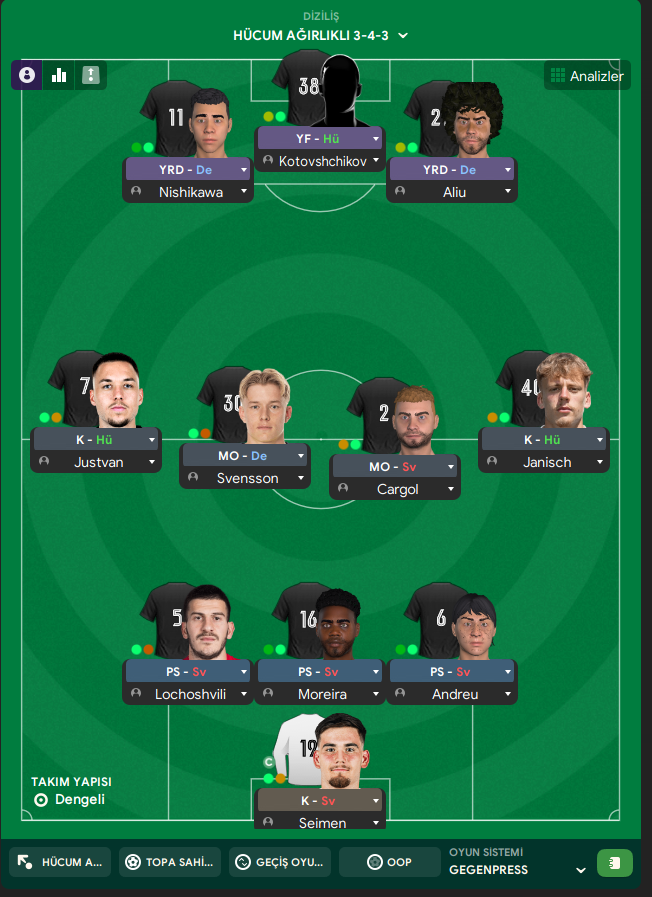
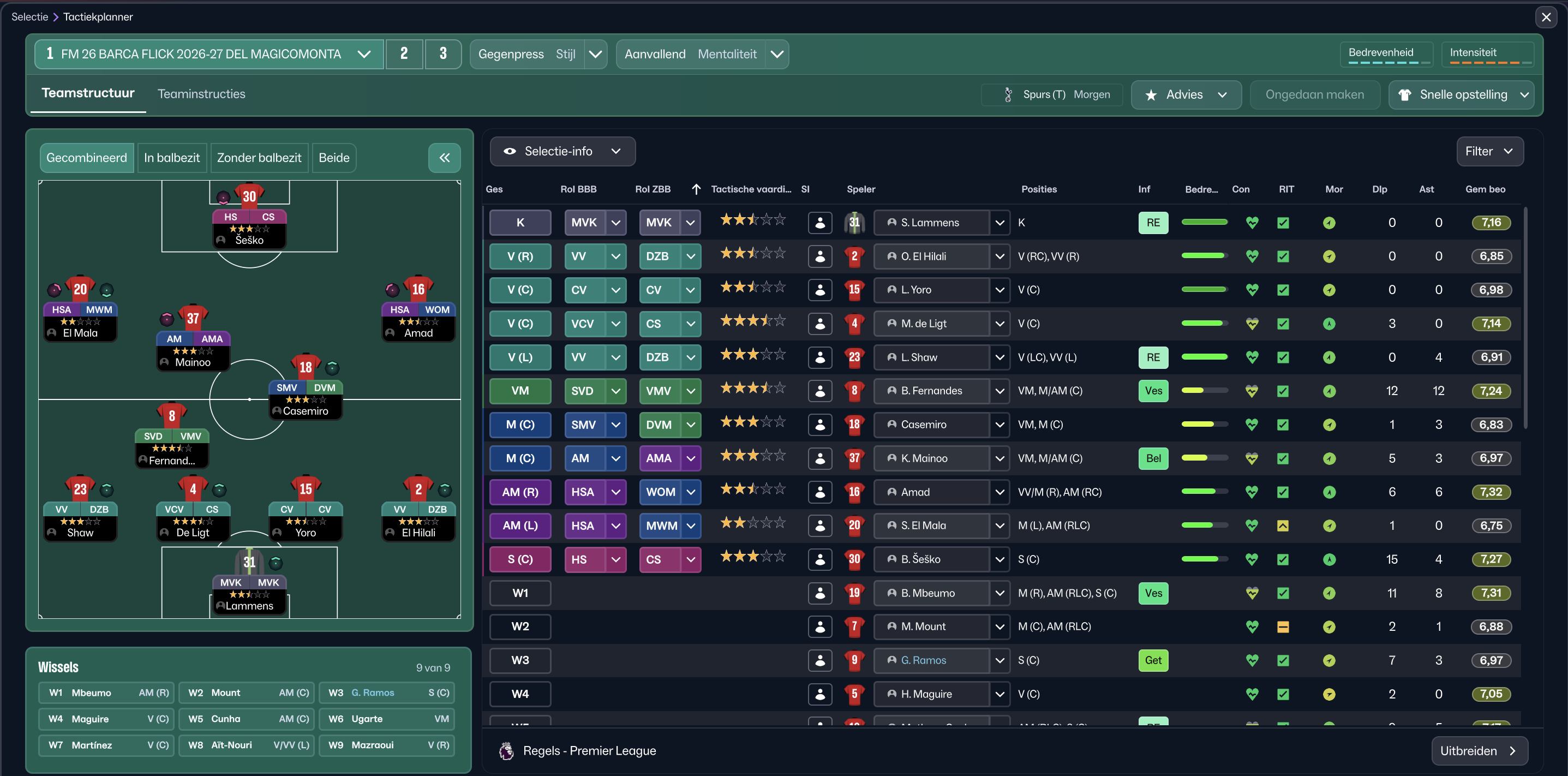
Formation & Style
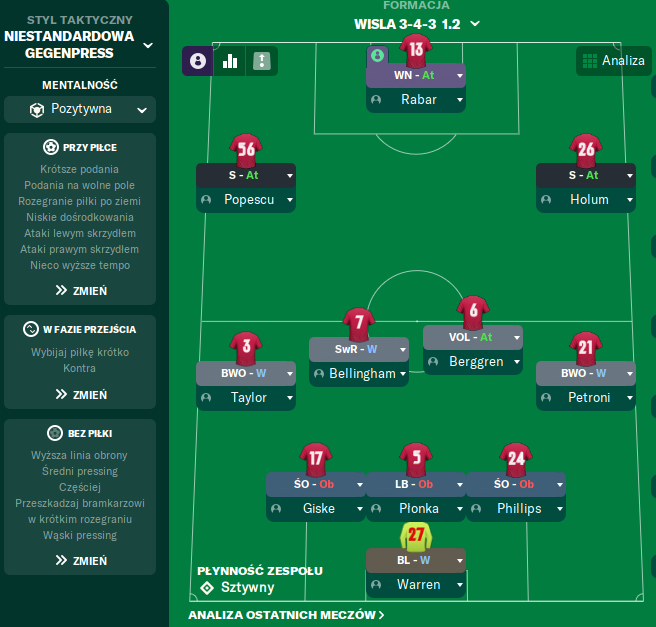
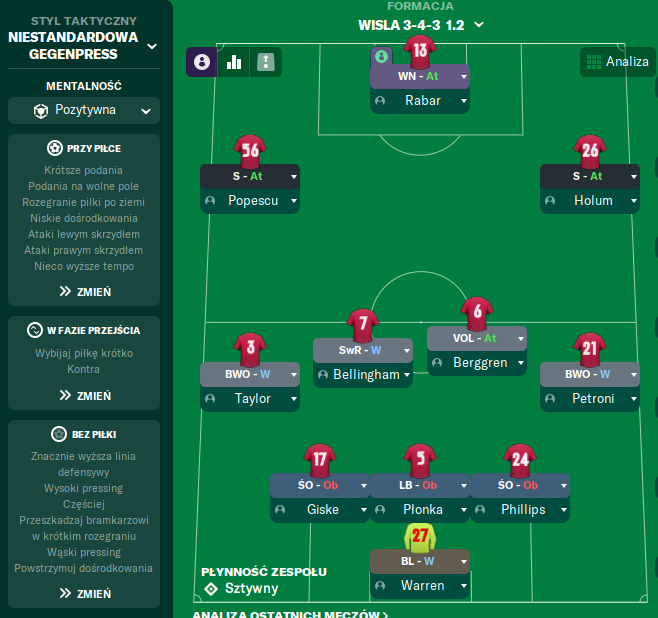
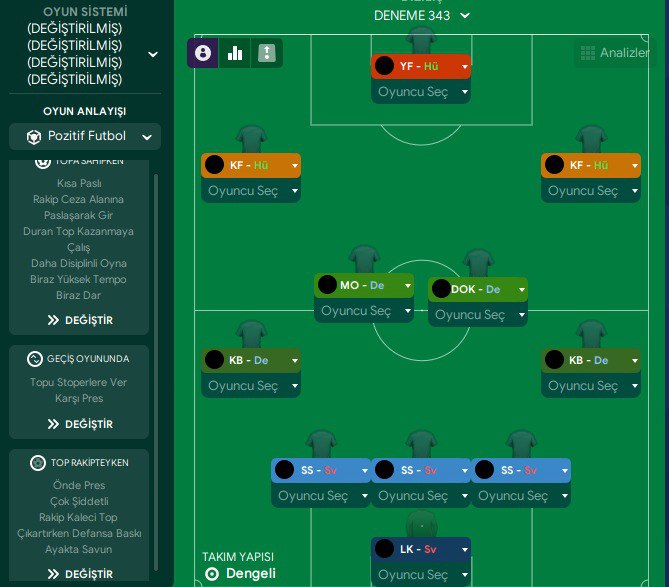
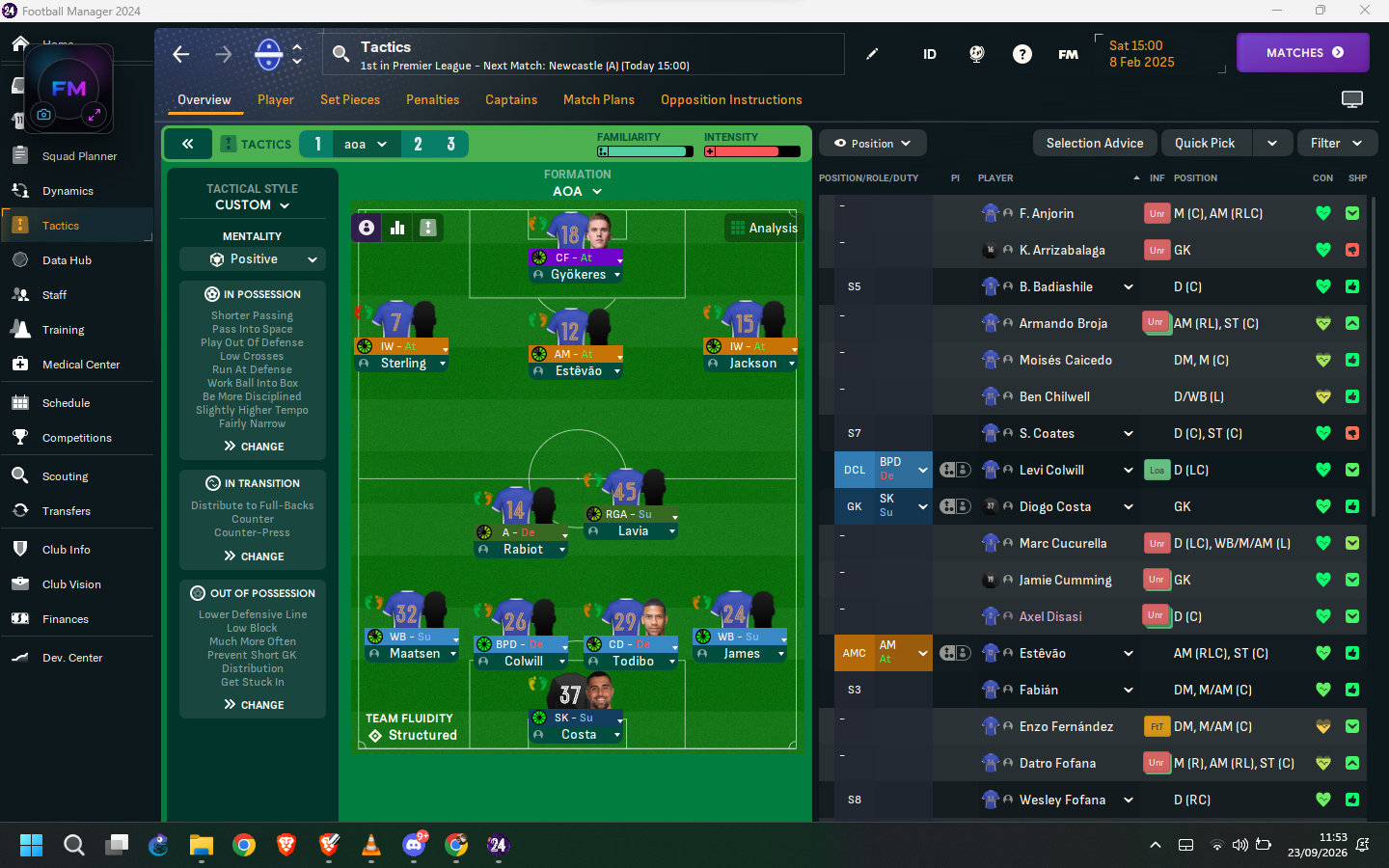
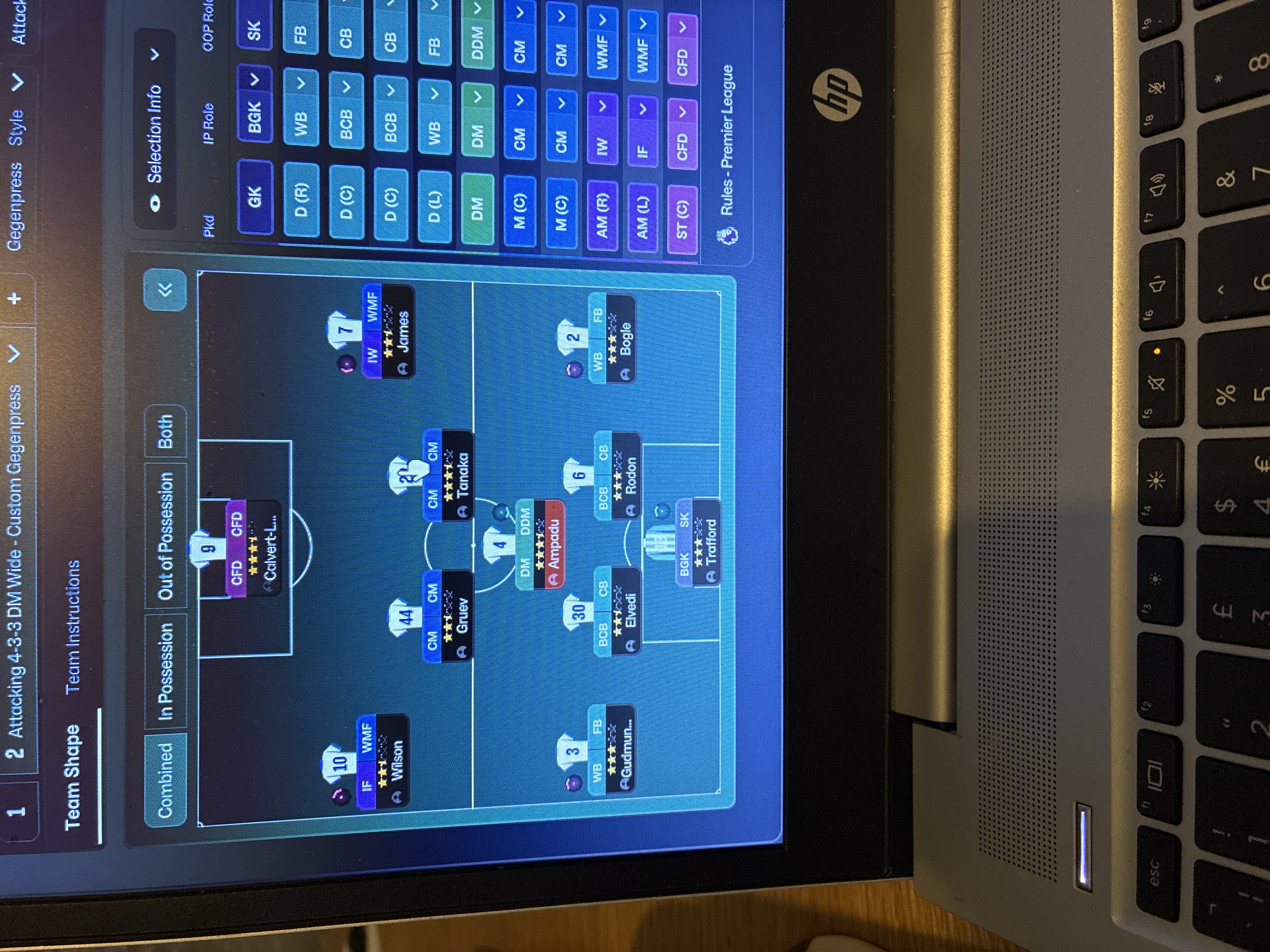
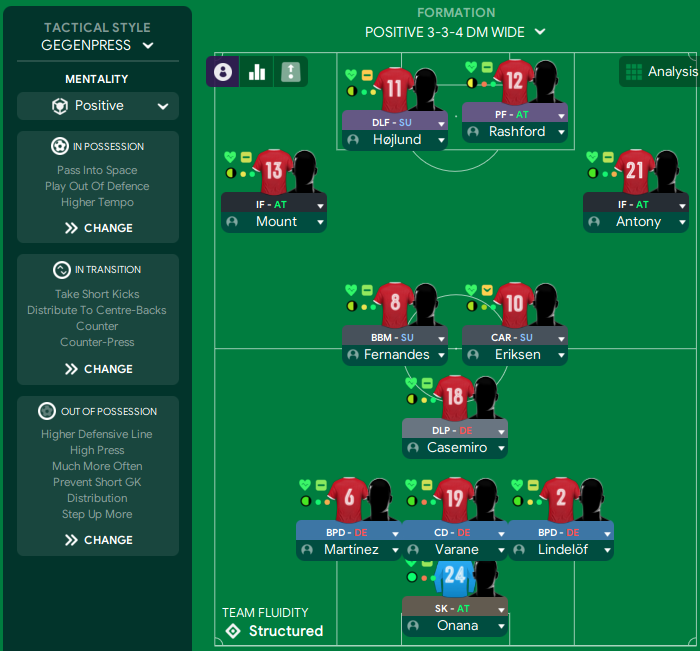
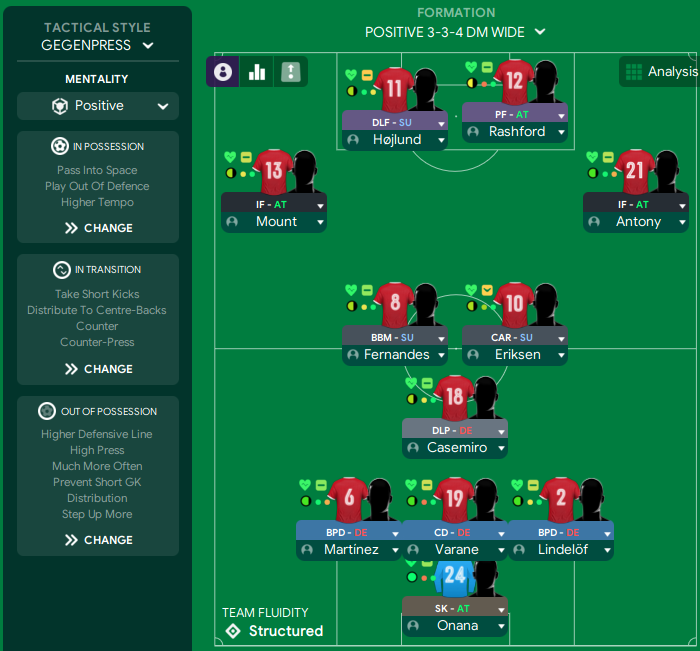
Tactical Style:Gegenpress
Mentality:Attack
Formation:3-4-3
Team Fluidity:Balanced
In Possession
Focus play through the middle
Explore wide areas
Play out of defence
Be more expressive
In Transition
Counter-press
Counter
Out of Possession
Higher defensive line
Use offside trap
Press intensely
Team Shape Without Ball
No team shape without ball data available
Team Shape With Ball
No team shape with ball data available
Key Strengths
Dynamic Width
The 3-4-3 formation allows for effective width through the wing backs, creating space for inside forwards to exploit.
Pressing Ability
The Gegenpress style maximizes the team's ability to recover possession quickly, disrupting opponent build-up.
Fluid Attack
The forward trio can interchange positions, creating unpredictability in attack and confusing defenses.
Midfield Support
The combination of a deep lying playmaker and a box-to-box midfielder offers both defensive cover and attacking support.
Conflicting Directions
Defensive Solidity
With only three center-backs, additional defensive cover could strengthen the back line, especially against counter-attacks.
Wing Back Vulnerability
Aggressive wing back duties may leave the flanks exposed during opposing counter-attacks, risking overloads on the defensive wings.
High Risk, High Reward
The pressing style can be risky if opponents break the press, leaving the team vulnerable to quick attacks.
Central Dominance
Focusing play through the midfield may limit the use of the wing backs, undermining their attacking potential.
Tactical Suggestions
Consider a 4-3-3 Alternative
Transitioning to a 4-3-3 can provide more defensive stability while allowing for wing play.
Adjust Wing Back Duties
Switching one wing back to a support duty could create greater balance in attack and defense.
Implement a Sweeper Keeper Role
Utilizing a sweeper keeper can help deal with spaces left open by high defensive lines and enhance distribution.
Enhance Set Piece Strategies
Focusing on set pieces can add additional scoring threats, especially with taller players in the team.
Ask Questions About Your Lineup
Related Tactics
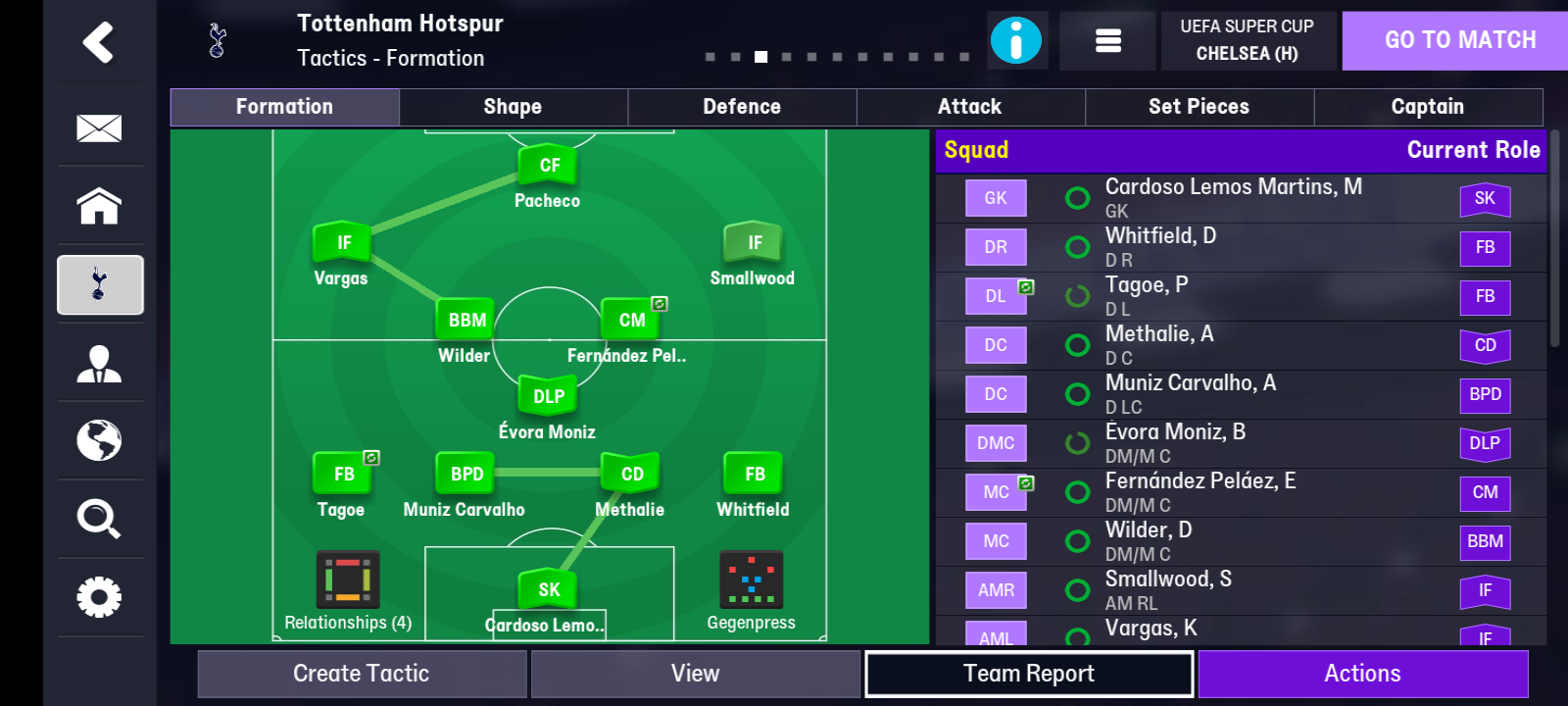
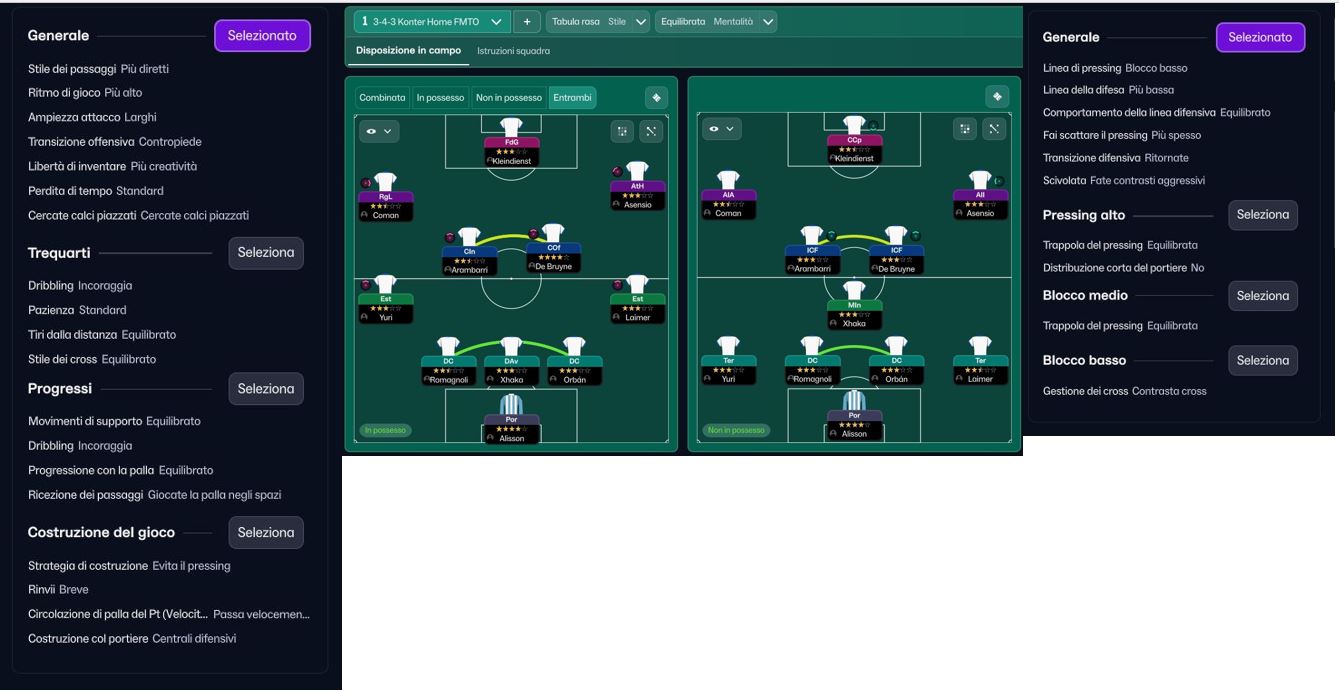
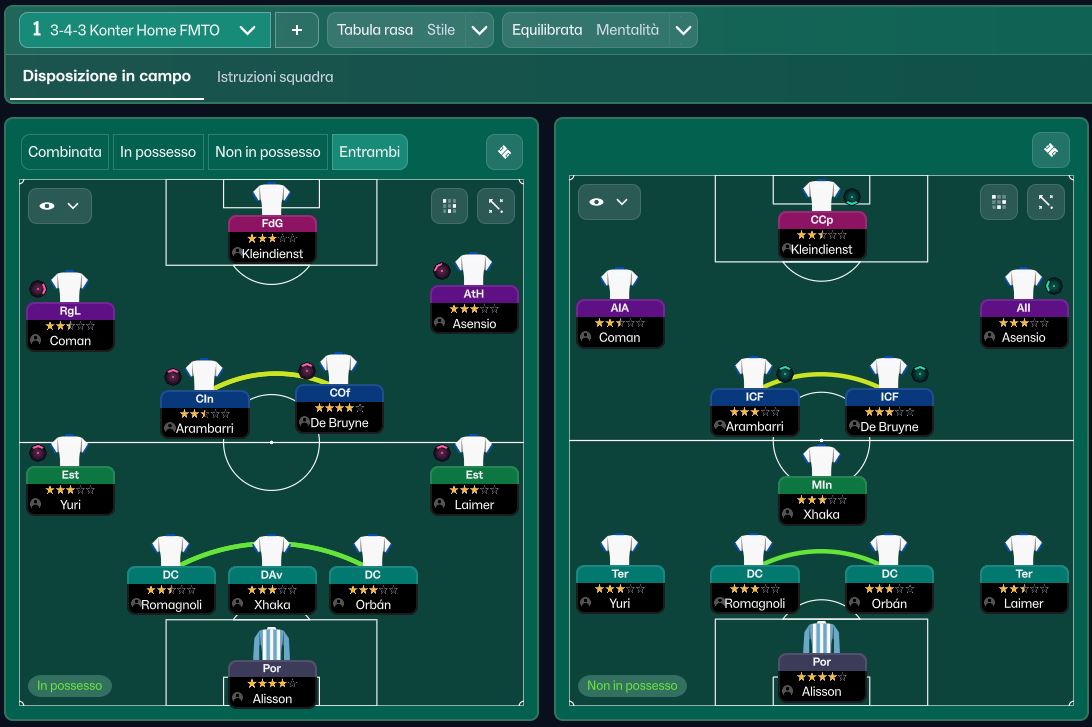
More Gegenpress tactics
Guides for this formation
The tactical theory behind the 3-4-3: roles, instructions, and the trade-offs that decide whether the system holds up.
Playing styles
Direct, Vertical Football
Long-ball football done well in FM. When direct, vertical play is the right choice, and what the Direct Passing TI actually changes.
Read guide
Playing styles
Possession-Based Tactics in Football Manager
Build the patient, control-the-tempo style without watching your opponents counter through the gaps you leave behind.
Read guide