Uploaded Tactic
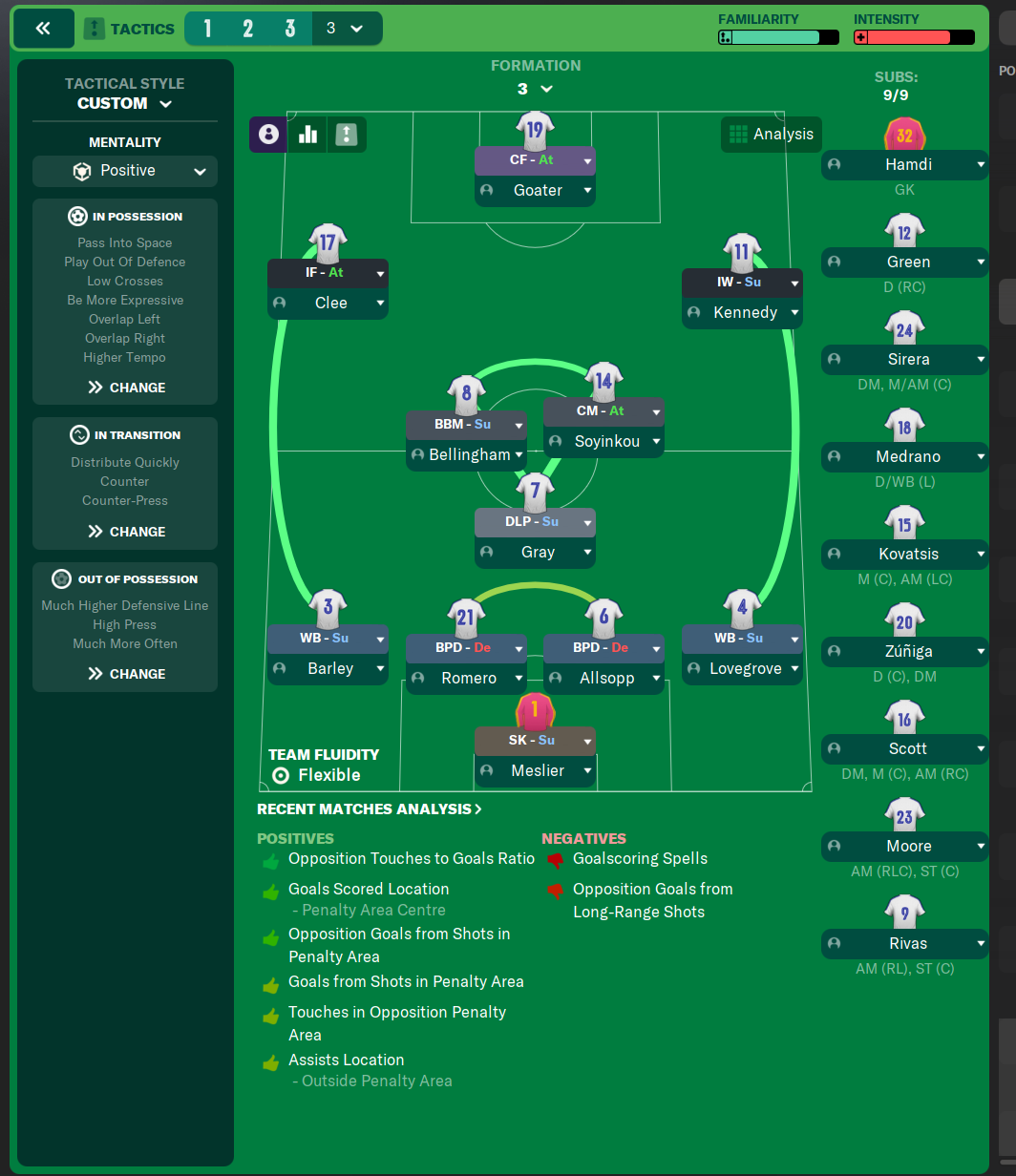
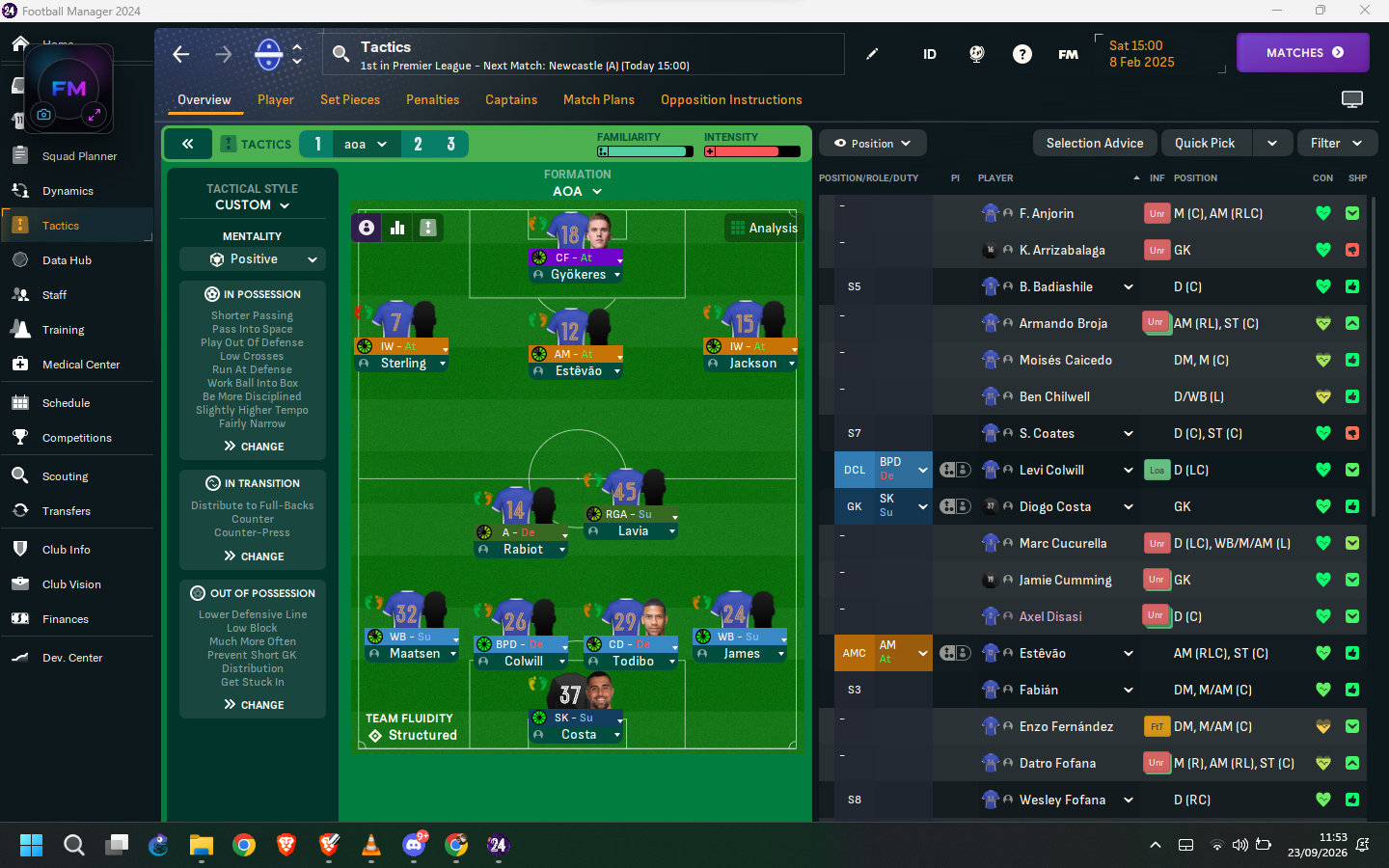
Formation & Style
Tactical Style:Custom
Mentality:Positive
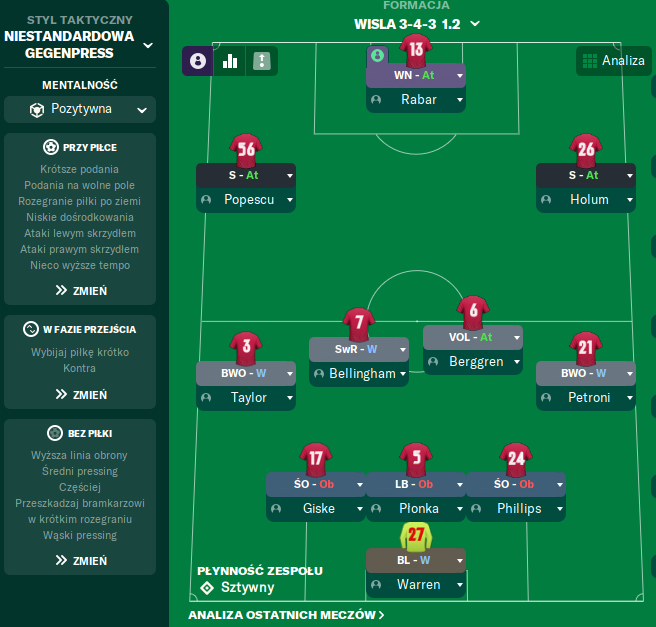
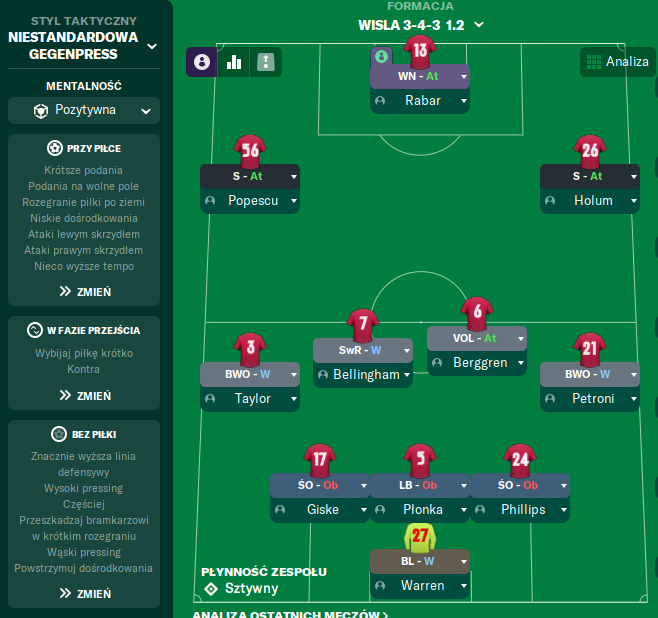
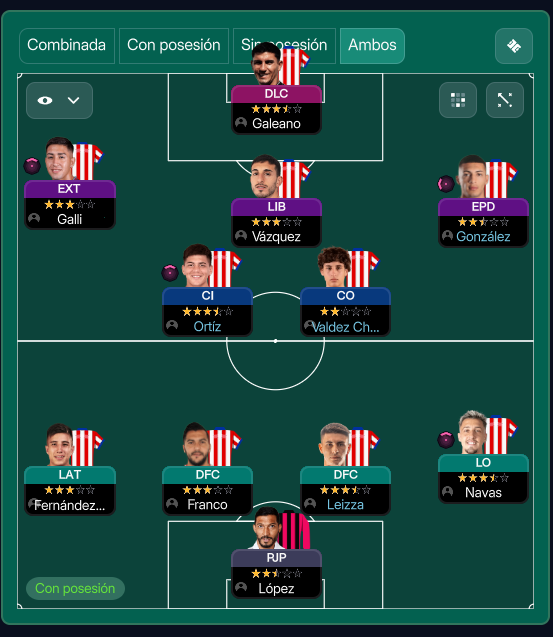
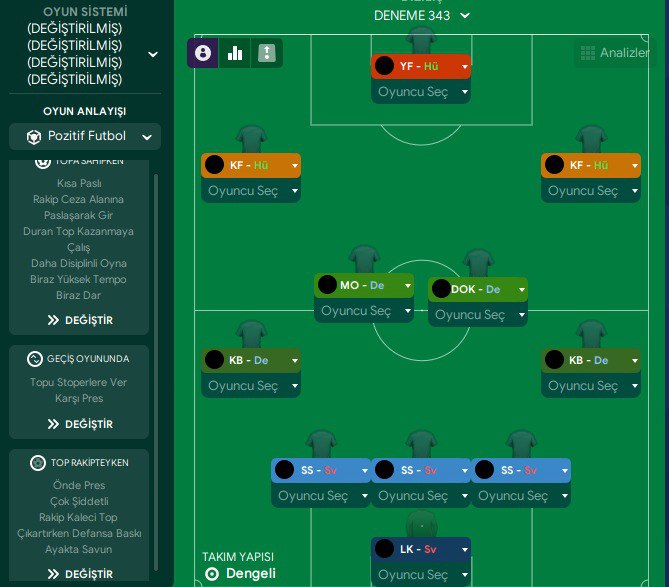
Formation:3-4-3
Team Fluidity:Flexible
In Possession
Pass Into Space
Play Out Of Defence
Low Crosses
Overlap Left
Be More Expressive
Higher Tempo
In Transition
Distribute Quickly
Counter
Out of Possession
Much Higher Defensive Line
High Press
Much More Often
Team Shape Without Ball
No team shape without ball data available
Team Shape With Ball
No team shape with ball data available
Key Strengths
Fluid Attack
The use of Inside Forwards and a Complete Forward creates varied attacking options, making it difficult for defenses to predict movements.
High Pressing
Employing a high press with a much higher defensive line forces opponents into mistakes in their own half.
Versatile Midfield
The midfield roles provide balance between offensive thrust and defensive cover, allowing for transitions to be effective both ways.
Utilization of Width
Using Wing-Backs and Wingers ensures that the team can stretch opponents, creating spaces for attacks through the center.
Conflicting Directions
Defensive Vulnerability
The high defensive line combined with a positive mentality can leave gaps at the back, especially against teams with quick counter-attacks.
Midfield Overload
Using two central midfielders and a DLP can sometimes lead to congestion in the midfield, impeding effective ball progression.
Wide Play Issues
Wingers and Wing-Backs can stretch play, but may also expose the flanks defensively, especially if the team loses possession.
Goalkeeping Distribution
The Sweeper Keeper role may conflict with a 'Distribute Quickly' instruction, leading to indecisive goalkeeping in transitions.
Tactical Suggestions
Adjust Defensive Line
Consider lowering the defensive line to mitigate vulnerability against fast attackers and counter-press situations.
Introduce a Holding Midfielder
Switch one CM role to a more defensive setup like a 'Ball-Winning Midfielder' to reinforce defensive stability.
Vary Player Instructions
Tailor player instructions to reduce the risk of wide players being isolated, particularly if counter-pressing is ineffective.
Refine Counter Attack Strategy
Clarify player roles during transitions to ensure maximum efficiency when counter-attacking with added pace.
Ask Questions About Your Lineup
Related Tactics
Guides for this formation
The tactical theory behind the 3-4-3: roles, instructions, and the trade-offs that decide whether the system holds up.
Playing styles
Direct, Vertical Football
Long-ball football done well in FM. When direct, vertical play is the right choice, and what the Direct Passing TI actually changes.
Read guide
Playing styles
Possession-Based Tactics in Football Manager
Build the patient, control-the-tempo style without watching your opponents counter through the gaps you leave behind.
Read guide