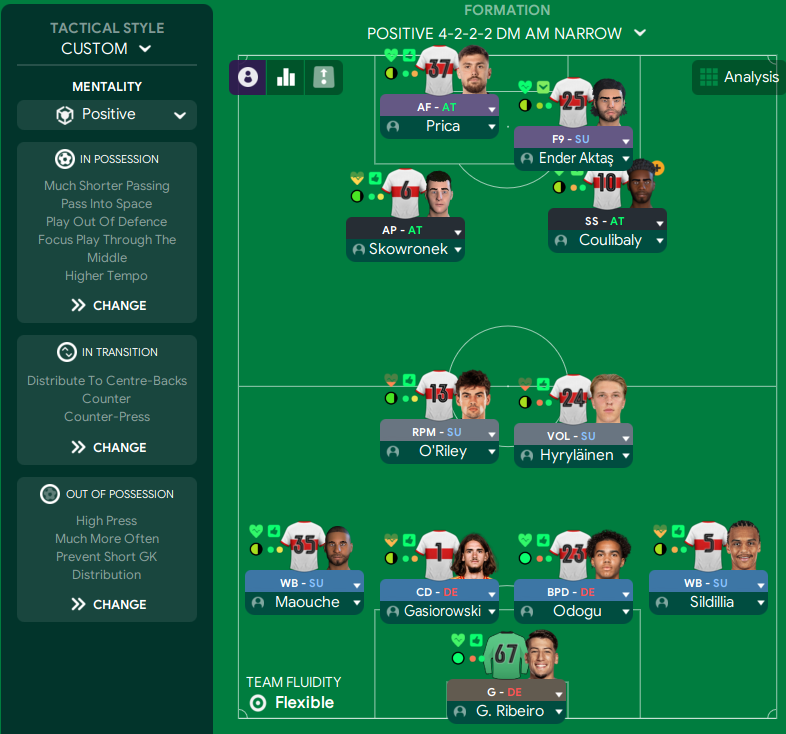
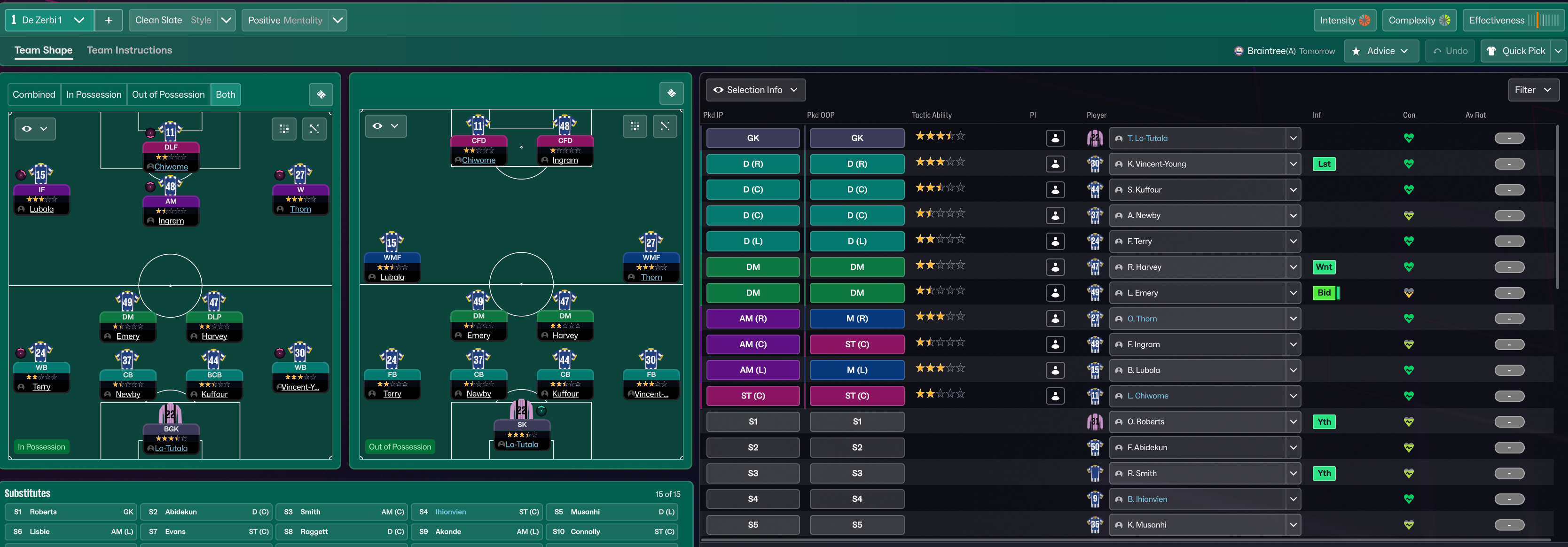
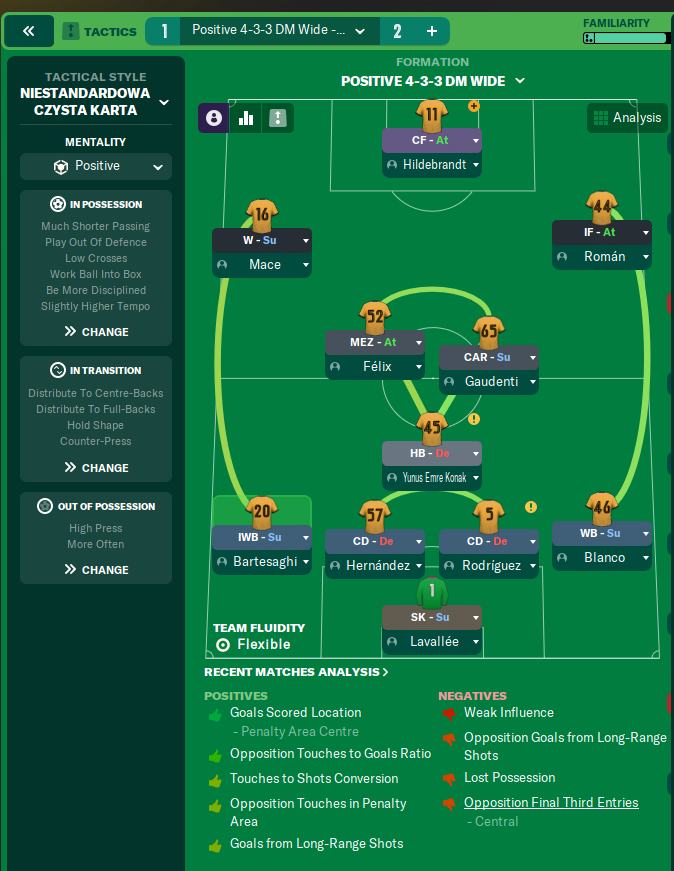
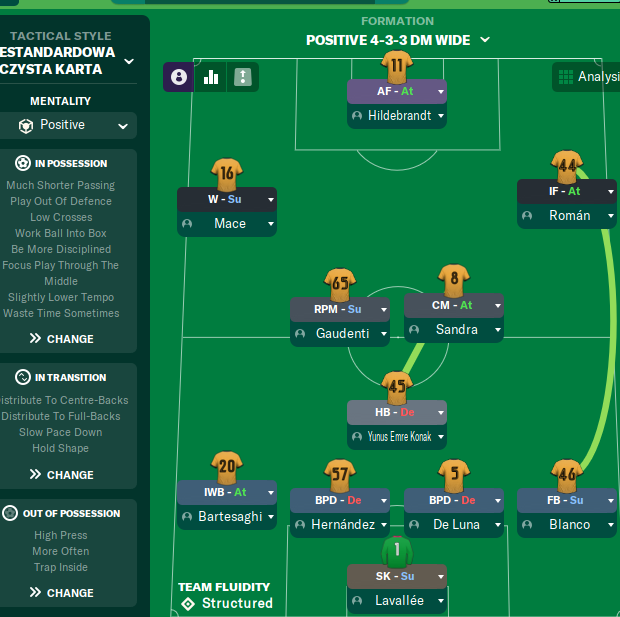
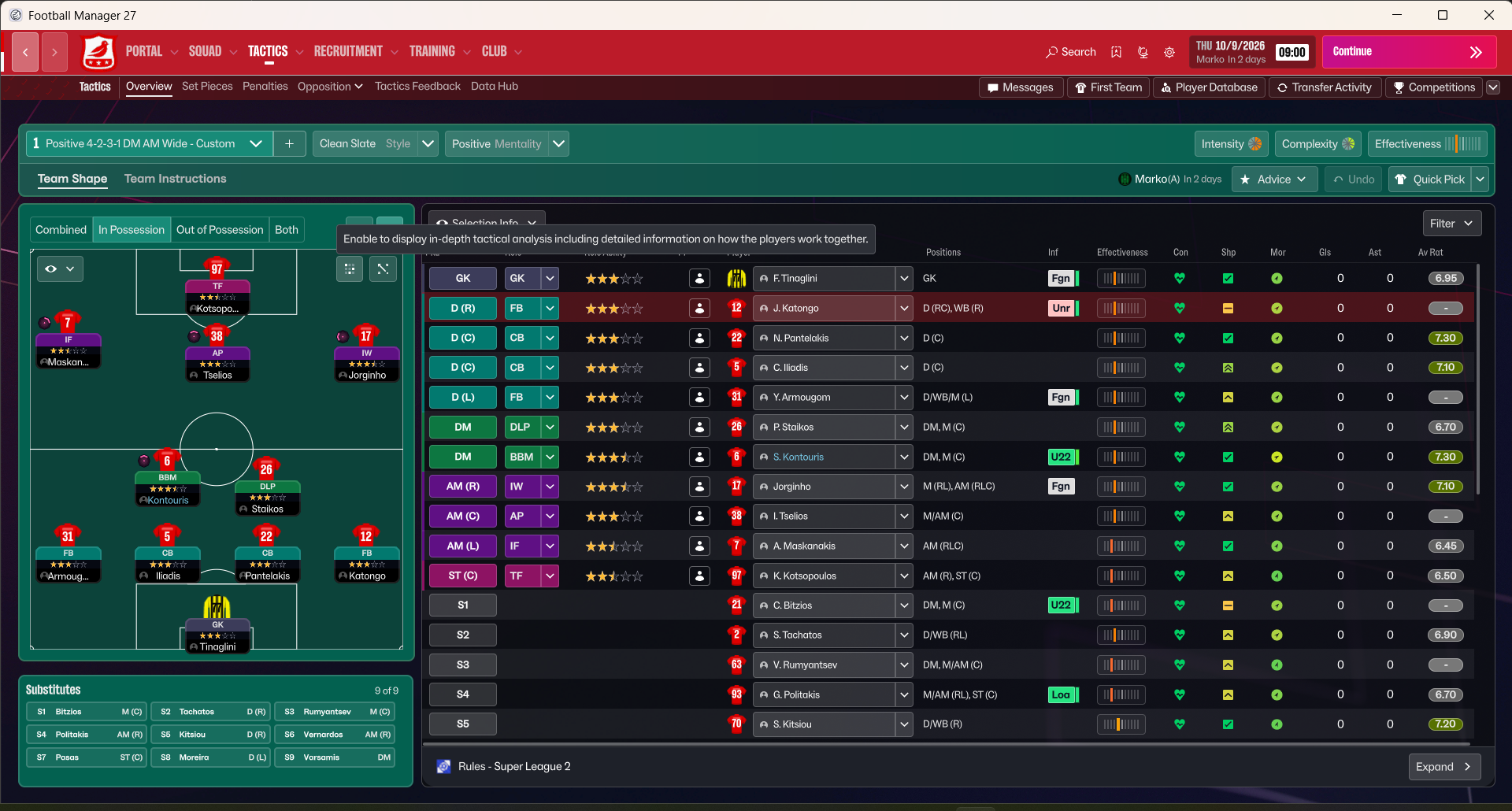
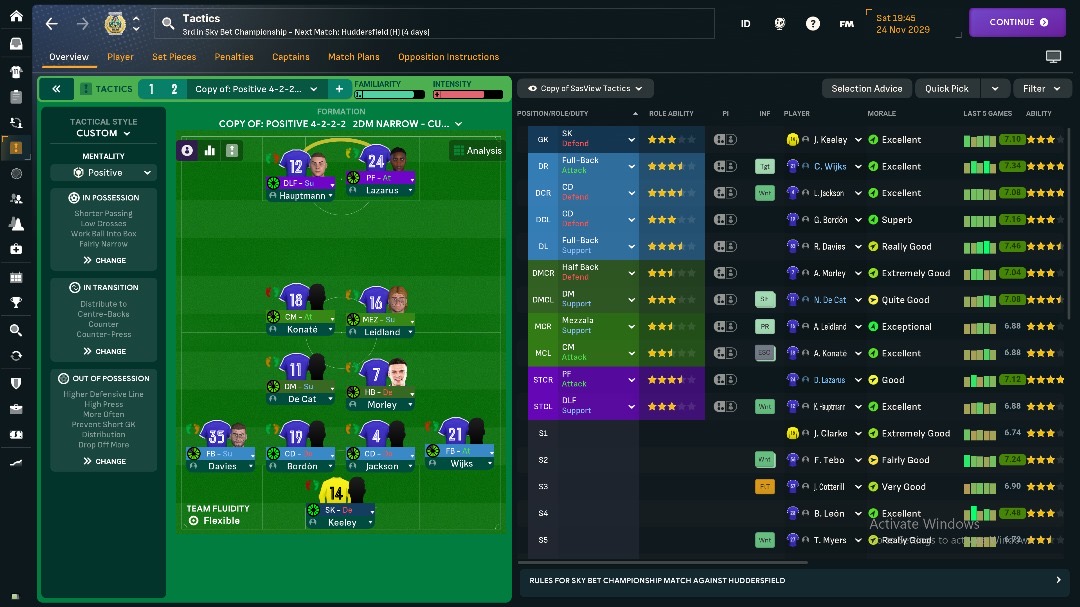
4-2-2-2 Narrow
The two central defenders provide stability and support from behind, allowing a solid foundation for attack.
Loading tactical analysis...
Positive
Positive
4-2-2-2 Narrow
Flexible
Shorter Passing
Work Ball Into Box
Pass Into Space
Distribute to Centre-Backs
Counter-Press
Counter
Higher Defensive Line
Lower Line of Engagement
Prevent Goalkeeper Distribution
STC
Deep Lying Forward
Support
STC
Poacher
Attack
MCL
Mezzala
Support
MCR
Box to Box Midfielder
Support
CD
Ball Playing Defender
Defend
CD
Central Defender
Defend
FB
Full Back
Support
FB
Wing Back
Attack
The two central defenders provide stability and support from behind, allowing a solid foundation for attack.
The combination of a Mezzala and a Box to Box Midfielder allows for fluid movement and effective support in both defense and attack.
The flexible approach may lead to a lack of structure, especially when transitions occur quickly. More defined roles might enhance team cohesion.
Playing a higher line can leave gaps behind, particularly against faster counter-attacking teams that can exploit these spaces.
How do the player's individual roles suit their strengths in this formation?
What strategies can be employed to exploit the opponent's weaknesses?
How can the team maintain shape during transitions?
Are the full backs providing enough width in attacking play?
What improvements can be made to increase goal scoring opportunities?
How effective is the current pressing system against different formations?
The tactical theory behind the 4-2-2-2 Narrow: roles, instructions, and the trade-offs that decide whether the system holds up.
Routines, takers, and target picks. How to turn corners and free-kicks into a reliable third of your goal output.
Protect a 1-0, chase a 1-0, hold a draw away. How to manage game state in FM through duties and roles, not by lurching to Defensive.
Mentality, duty, role, instruction, sub. The change hierarchy from lightest to heaviest intervention, and 60th-minute patterns by game state.