Uploaded Tactic
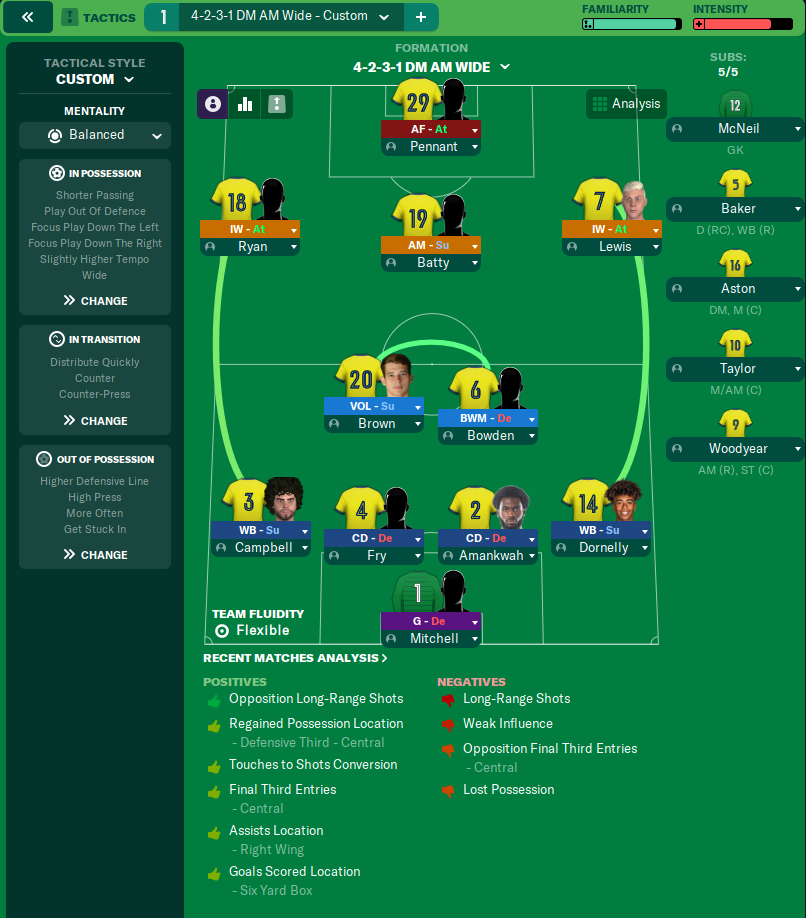
Formation & Style
Tactical Style:Custom
Mentality:Balanced
Formation:4-2-3-1 DM AM Wide
Team Fluidity:Flexible
In Possession
Shorter Passing
Play Out Of Defence
Focus Play Down The Left
Focus Play Down The Right
Slightly Higher Tempo Wide
In Transition
Distribute Quickly
Counter
Counter-Press
Out of Possession
Higher Defensive Line
High Press
More Often
Get Stuck In
Team Shape Without Ball
Shape:4-2
Description:A compact defensive shape with three players joining the defence during transitional phases.
Evidence:CD at [2,2] and [2,3] support a BWM at [3,2] to ensure cover while pushing up.
Team Shape With Ball
Shape:4-3
Description:A dynamic attacking formation with flexibility provided by wingers and an Advanced Forward.
Evidence:Inside Wingers at [5,1] and [5,5] with an AF at [6,3] create constant opportunities.
Phase Description
Attacking Play
The team aims to create chances through the wings, utilizing quick passing and the width offered by wingers and wing-backs.
Defensive Transition
Upon losing possession, the team employs a quick counter-pressing tactic while maintaining a high defensive line to limit opposition space.
Main Focus
Creating opportunities via the flanks and transitioning rapidly from defence to attack.
Key Strengths
Fluid Wing Play
Utilizing Inside Wingers and Wing-Backs for overlapping runs creates space and options.
Central Midfield Control
A combination of BWM and Volante provides stability and support during transitions.
High Pressing Ability
The team can apply pressure effectively, winning back possession high up the pitch.
Conflicting Directions
Counter-Press vs. Negative Influence on Possession
Aggressive pressing may lead to leaving spaces in behind, affecting overall possession.
Shorter Passing in High Press
Short passing may conflict with the need for quick transitions in a high-pressure scenario.
High Line vs. Vulnerability to Long Balls
The high defensive line could be vulnerable to long balls, especially against faster opposition.
Tactical Suggestions
Consider Lower Defensive Line
A lower line could mitigate risks against counter-attacks, especially under high pressing.
Adjust Tempo to Accommodate Transition Play
Moderate tempo may allow for smoother transitions between defence and attack.
Explore Alternative Roles in Midfield
Incorporating playmakers could enhance creative options in the centre.
Ask Questions About Your Lineup
Related Tactics
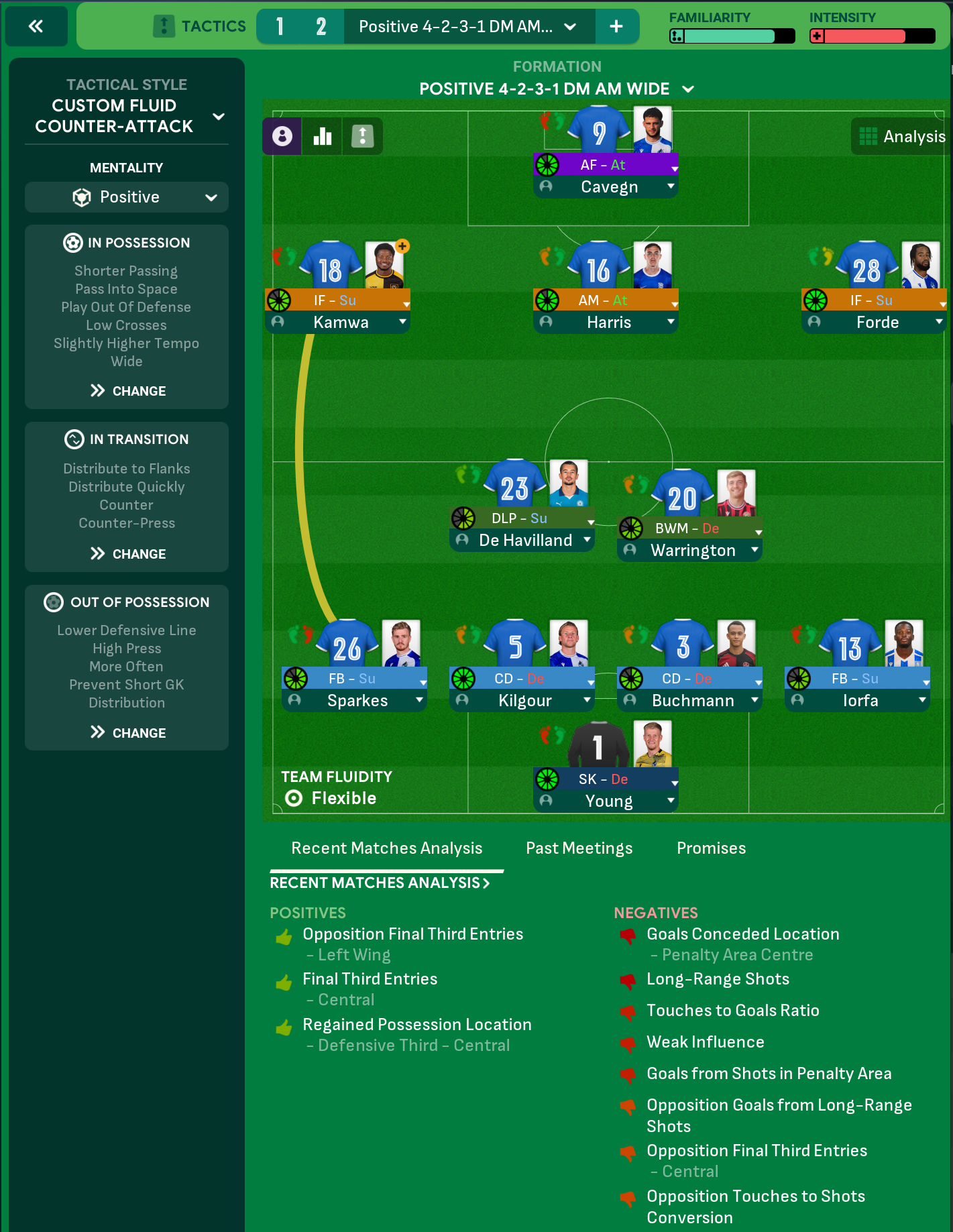
Fluid Counter-Attack 4-2-3-1 DM AM Wide
Custom Fluid Counter-Attack
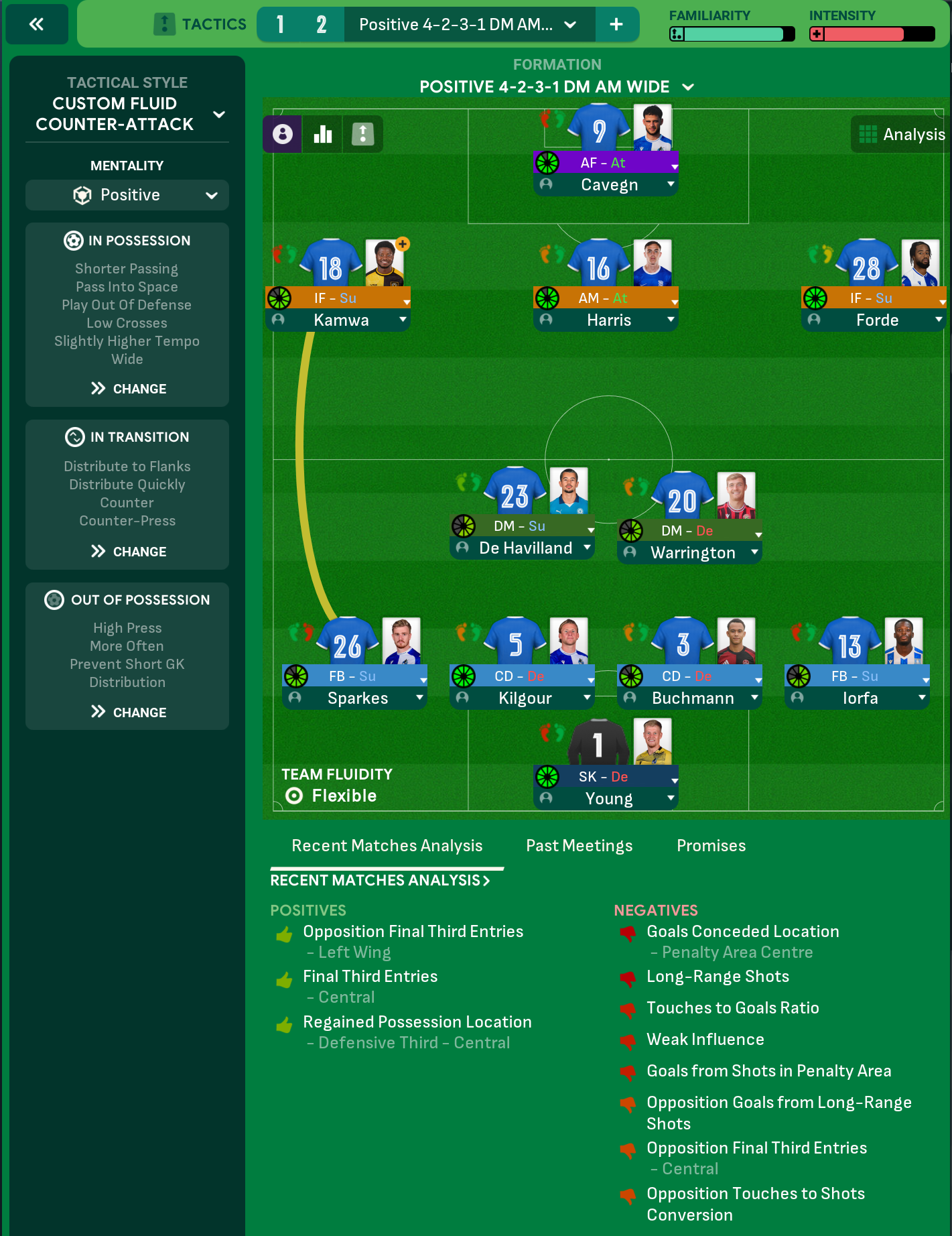
Fluid Counter-Attack 4-2-3-1 DM AM Wide
Custom Fluid Counter-Attack
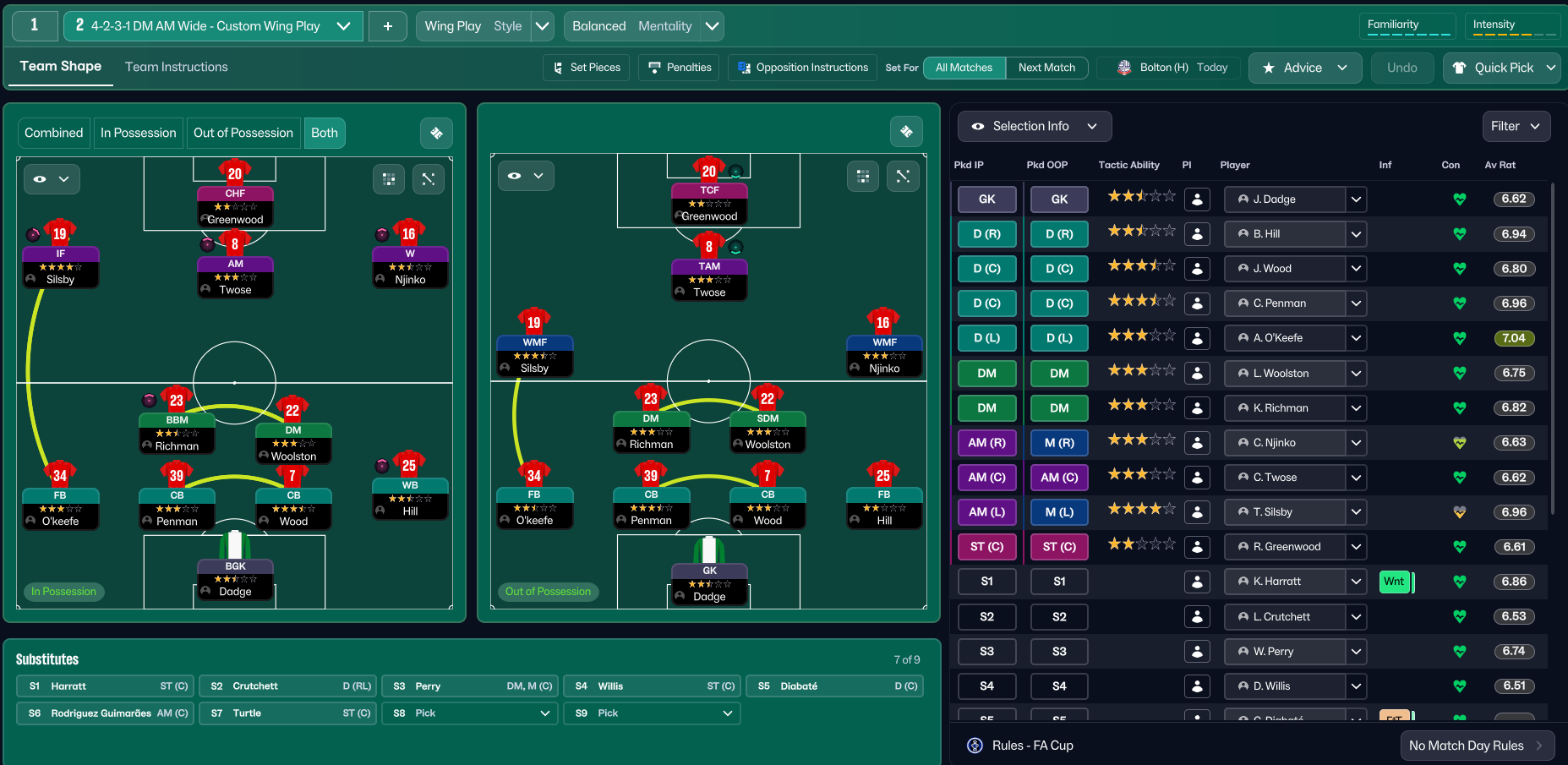
Wing Play 4-2-3-1 DM AM Wide
Wing Play
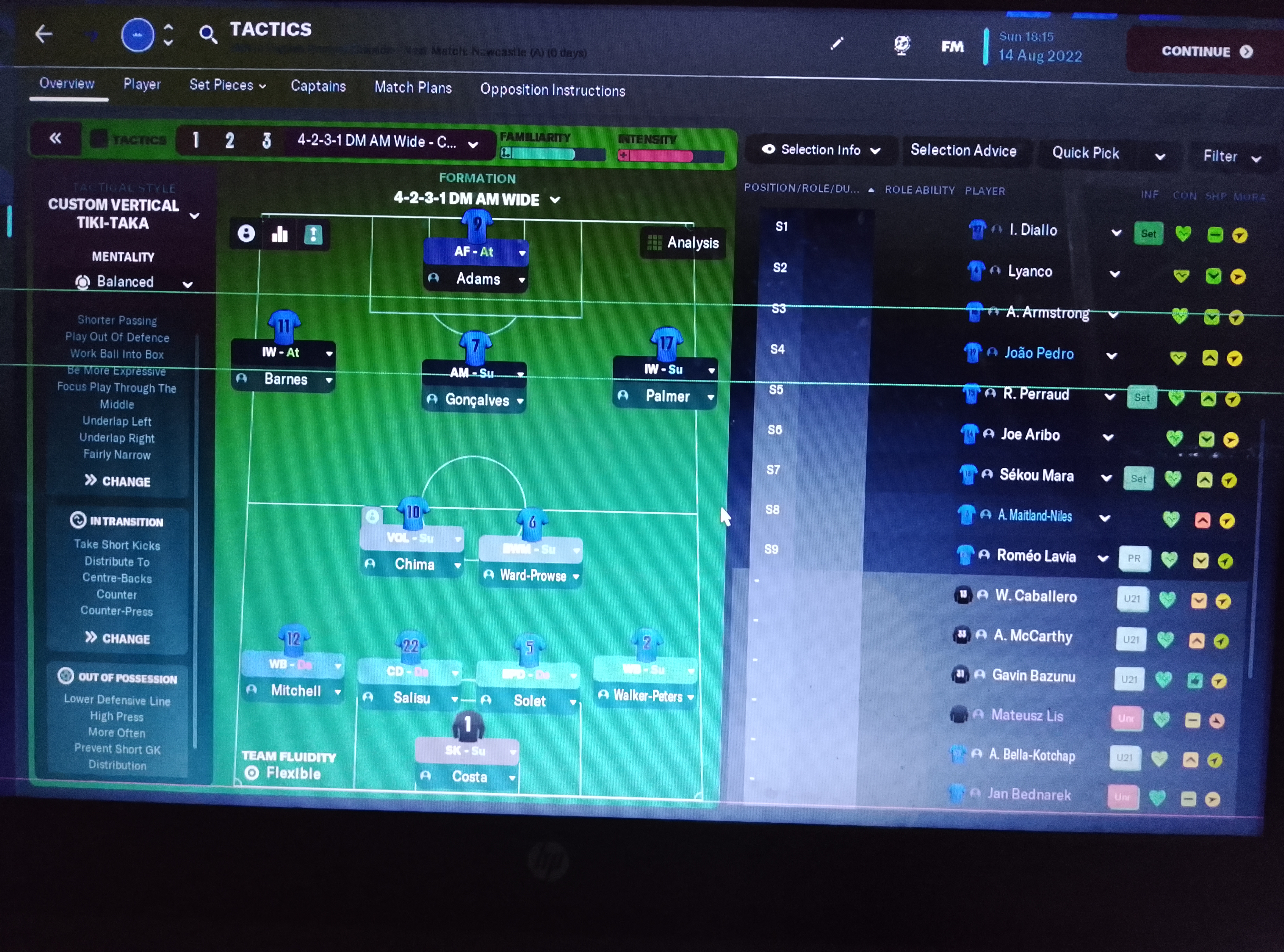
Vertical Tiki-Taka 4-2-3-1 DM AM Wide
Custom Vertical Tiki-Taka
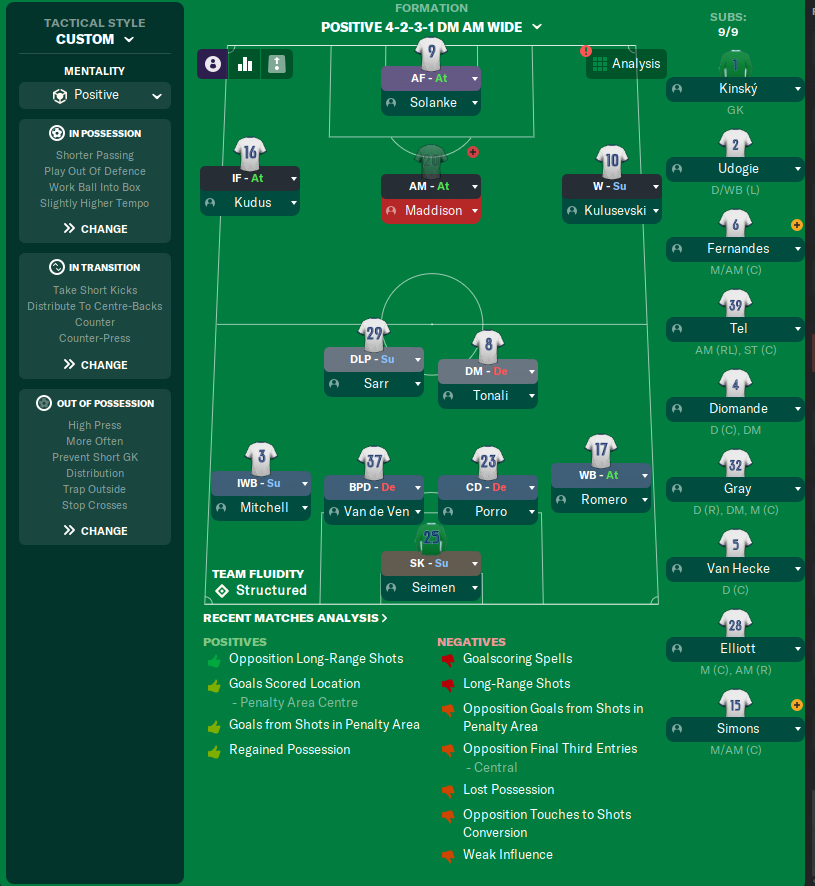
4-2-3-1 DM AM Wide Formation
Custom
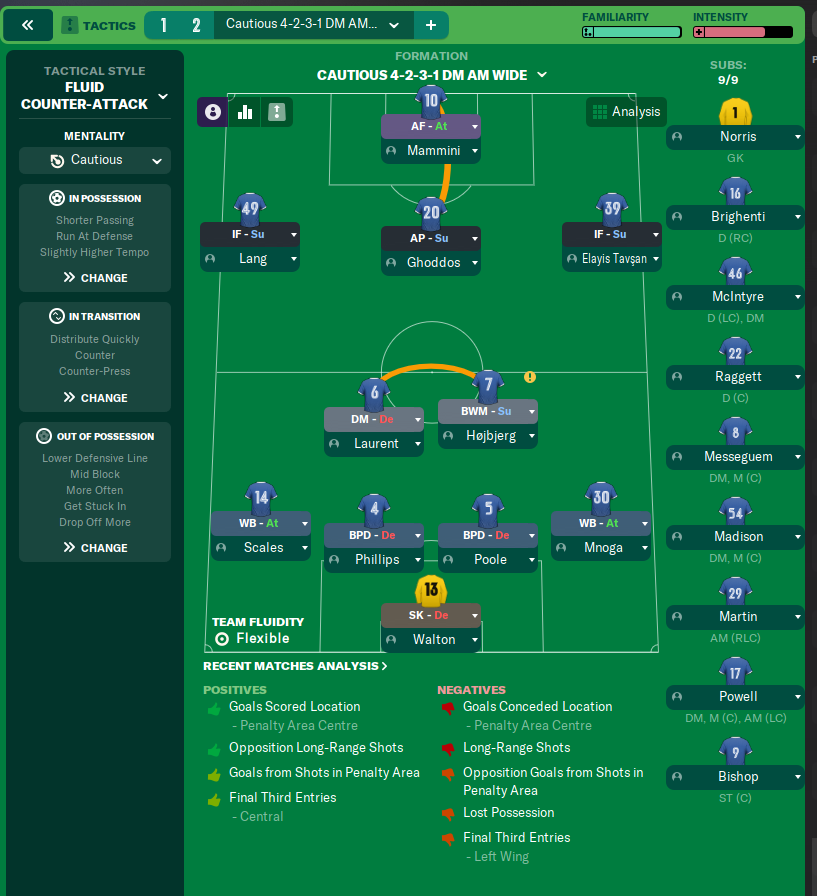
Fluid 4-2-3-1 DM AM Wide
Fluid
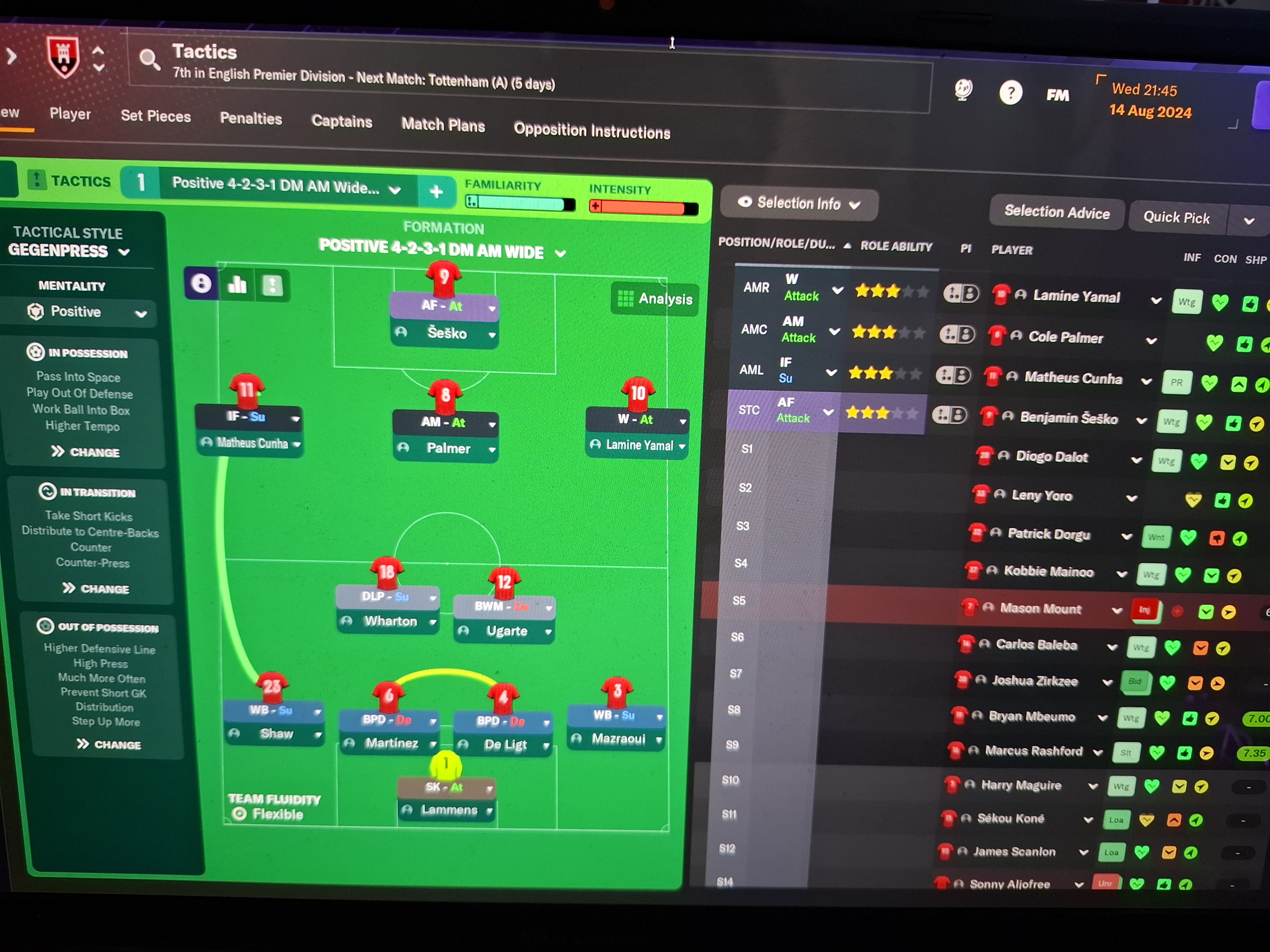
Gegenpress 4-2-3-1 DM AM Wide
Gegenpress
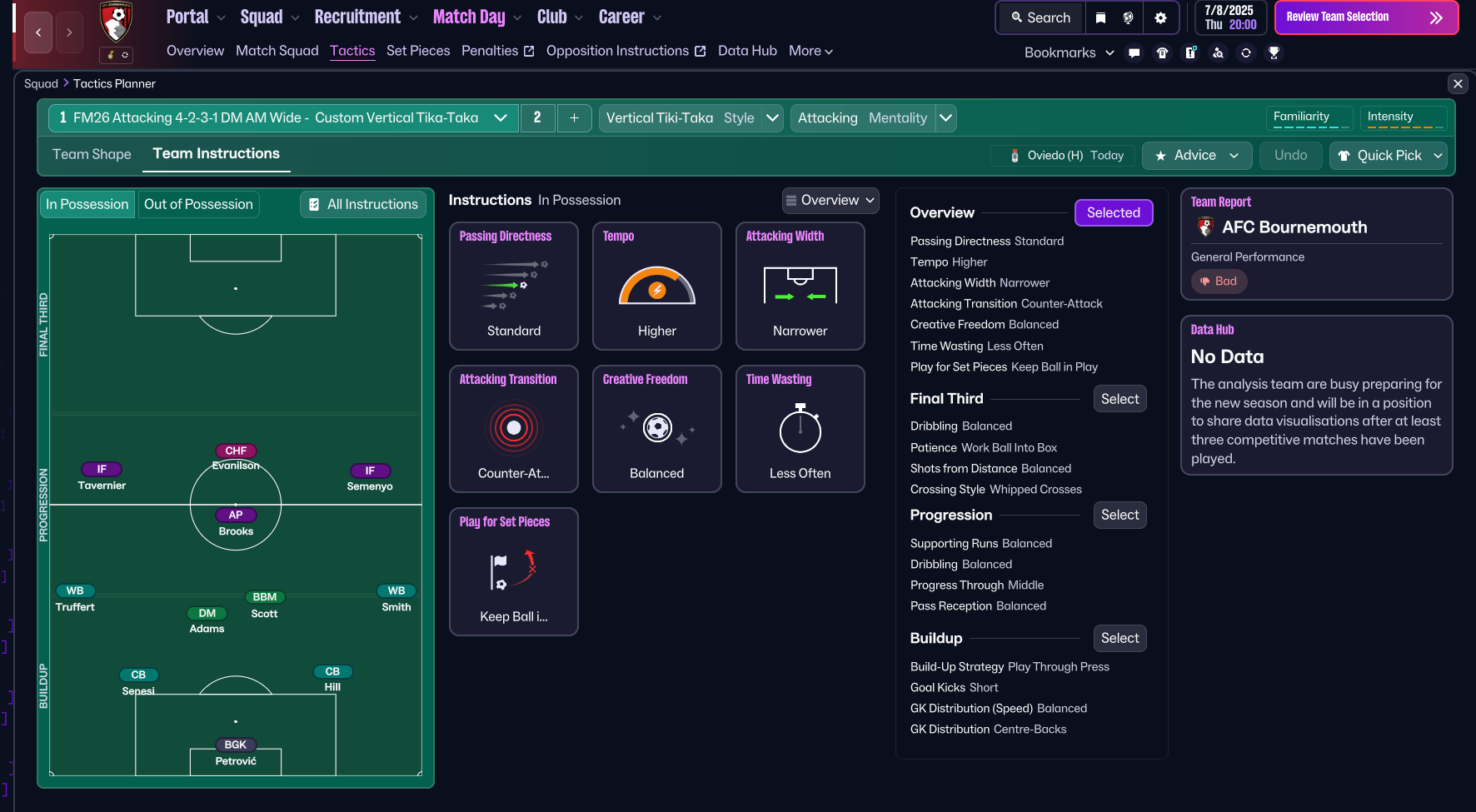
Vertical Tiki-Taka 4-2-3-1 DM AM Wide
Vertical Tiki-Taka
Guides for this formation
The tactical theory behind the 4-2-3-1 DM AM Wide: roles, instructions, and the trade-offs that decide whether the system holds up.
Player pairings
Midfield Pairs in 4-2-3-1 and 4-4-2
Double pivots and flat pairs in 4-2-3-1 and 4-4-2: when each pairing works, when it collapses, and the AMC unicorn that rescues both.
Read guide
Playing styles
Gegenpressing: A Full Guide
Klopp-style gegenpressing in FM, including squad profile, line-and-press pairing, sustainable workload, and the antipatterns to avoid.
Read guide