
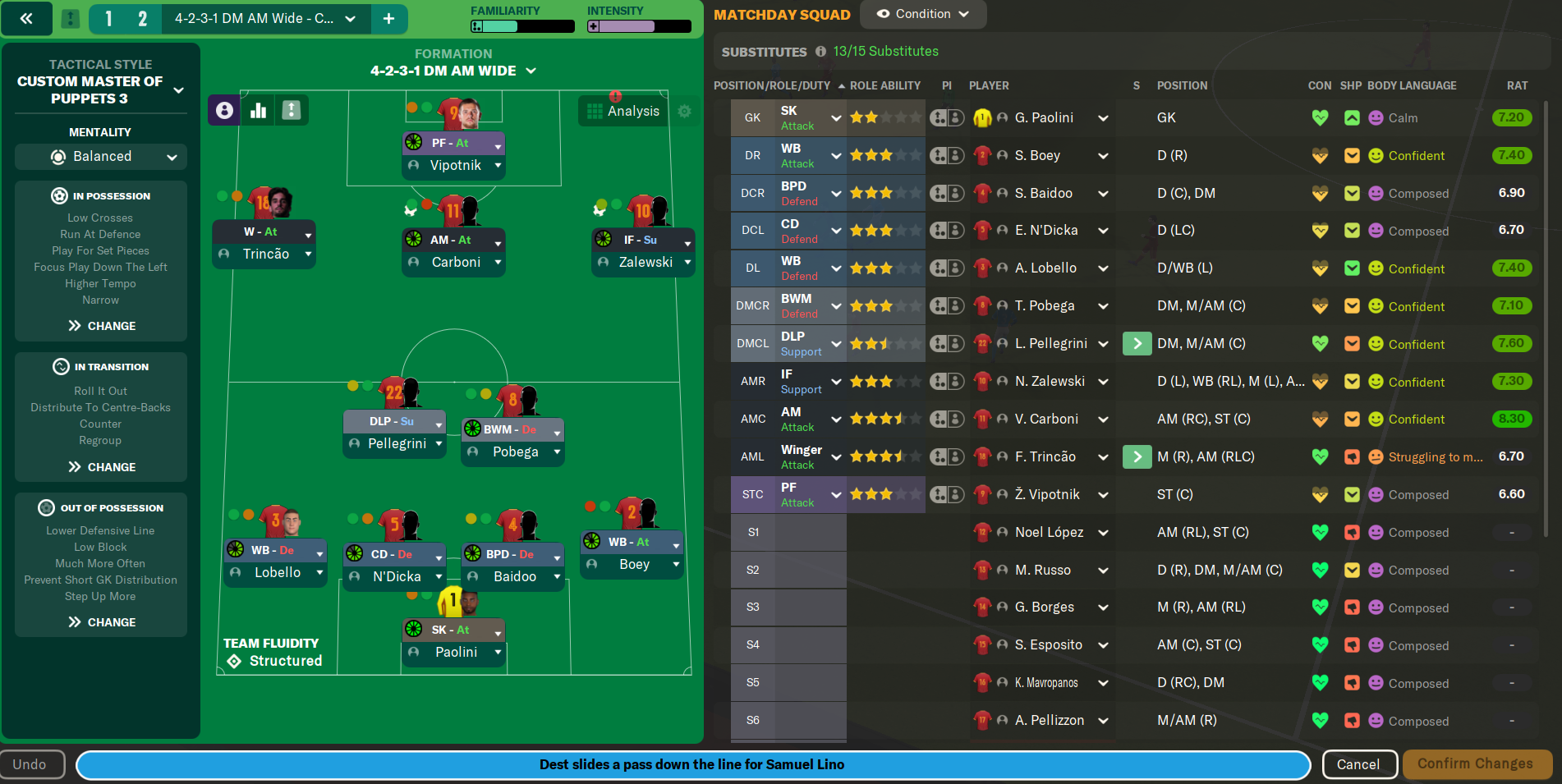
4-2-3-1 DM AM Wide
The presence of wing backs and wide players provides both width and depth in attacking plays, allowing for stretching of the opposition's defense.
Loading tactical analysis...
Custom Master of Puppets 3
Balanced
4-2-3-1 DM AM Wide
Structured
Low Crosses
Run At Defence
Set Pieces
Focus Play Down The Left
Higher Tempo
Narrow
Roll It Out
Distribute To Centre-Backs
Counter
Regroup
Lower Defensive Line
Low Block
Much More Often
Prevent Short GK Distribution
Step Up More
GK
Sweeper Keeper
Attack
DR
Wing Back
Attack
DCR
Ball Playing Defender
Defend
CD
Central Defender
Defend
DL
Wing Back
Defend
DMCR
Box to Box Midfielder
Defend
DMCL
Deep Lying Playmaker
Support
AMR
Inside Forward
Support
AMC
Attacking Midfielder
Attack
AML
Winger
Attack
STC
Pressing Forward
Attack
The presence of wing backs and wide players provides both width and depth in attacking plays, allowing for stretching of the opposition's defense.
The combination of a deep lying playmaker and a box-to-box midfielder allows for good control and transition in the midfield area.
The attacking mentality of the player roles may conflict with the balanced overall mentality, potentially leading to imbalance during matches.
A lower defensive line tends to invite pressure, which can be at odds with a higher tempo in attack, leading to gaps when transitioning.
Is the current squad depth sufficient for a balanced playing style?
How do opposing teams react to narrower formations?
Is there a need for adjusting player roles based on opponent strengths?
How effective are the set pieces in recent matches?
Are there injuries affecting the performance of key players?
Can the tackling intensity be increased without risking too many fouls?
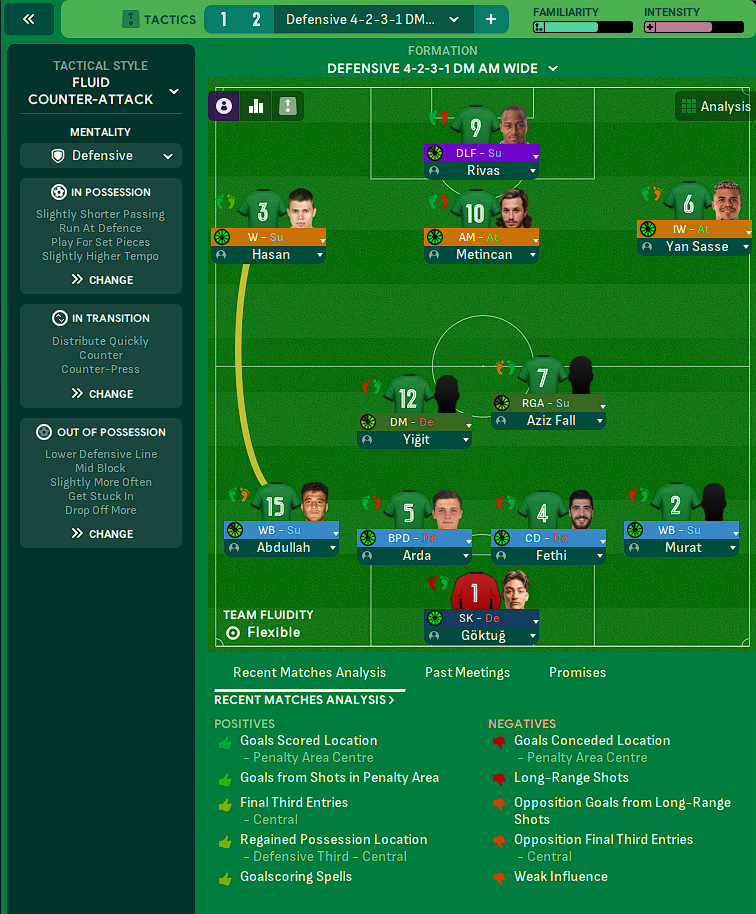
Fluid
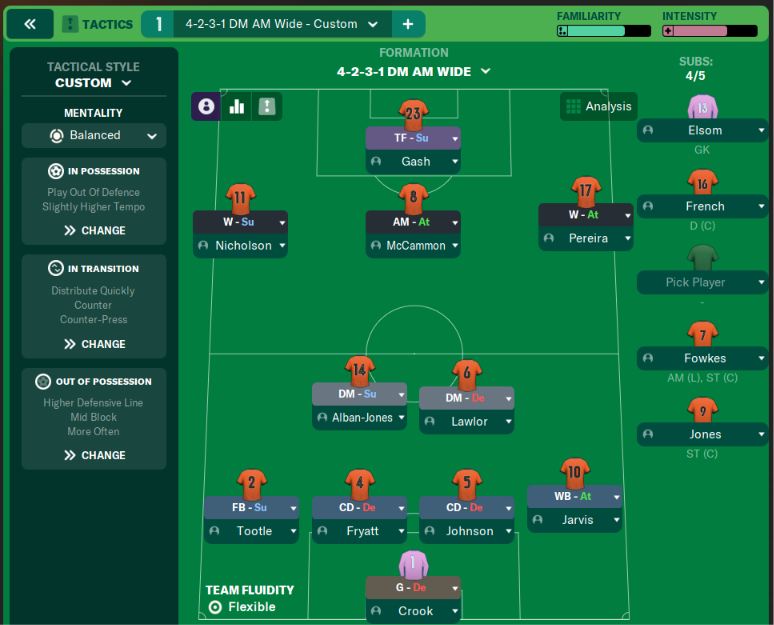
Custom
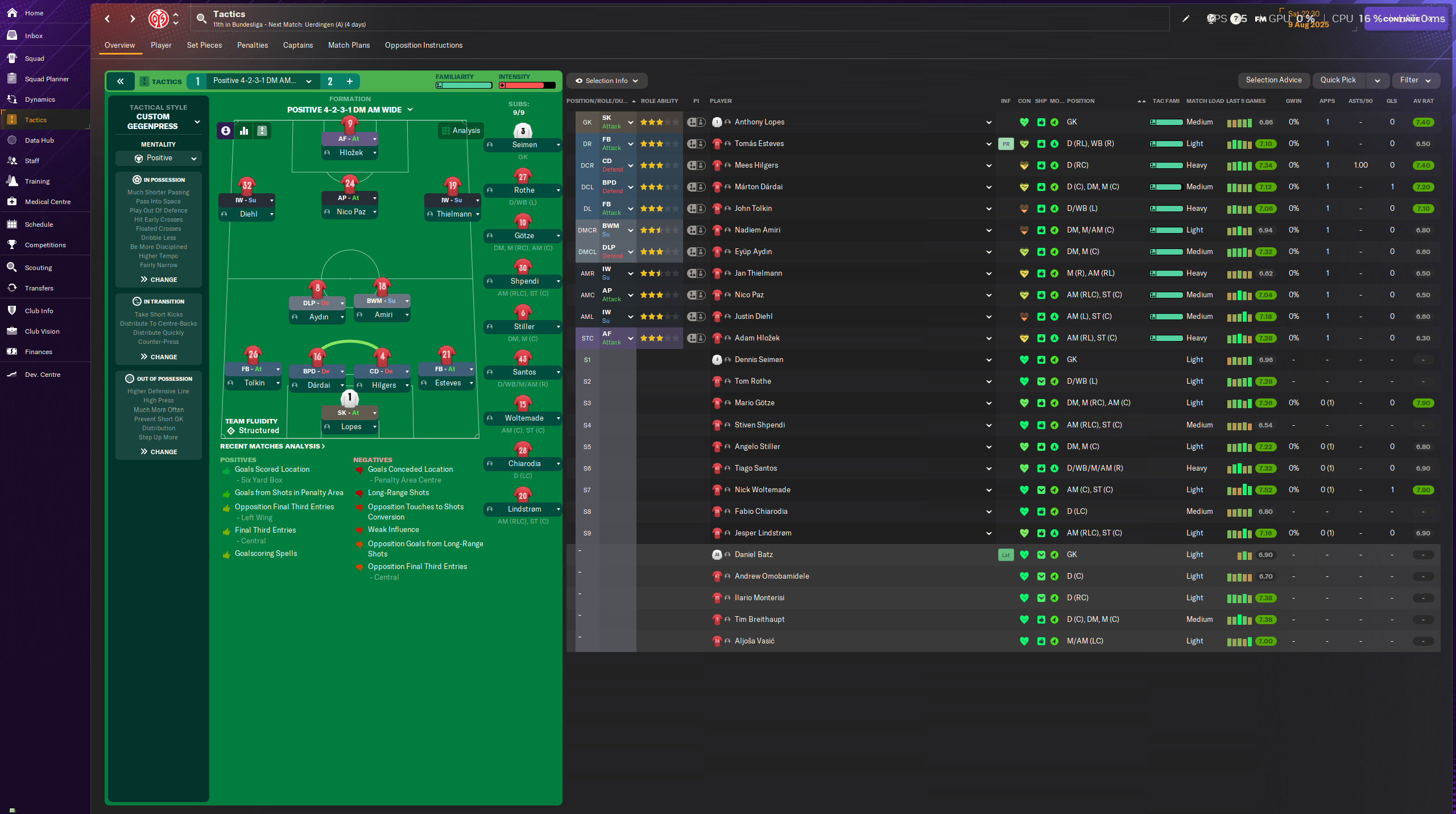
Positive
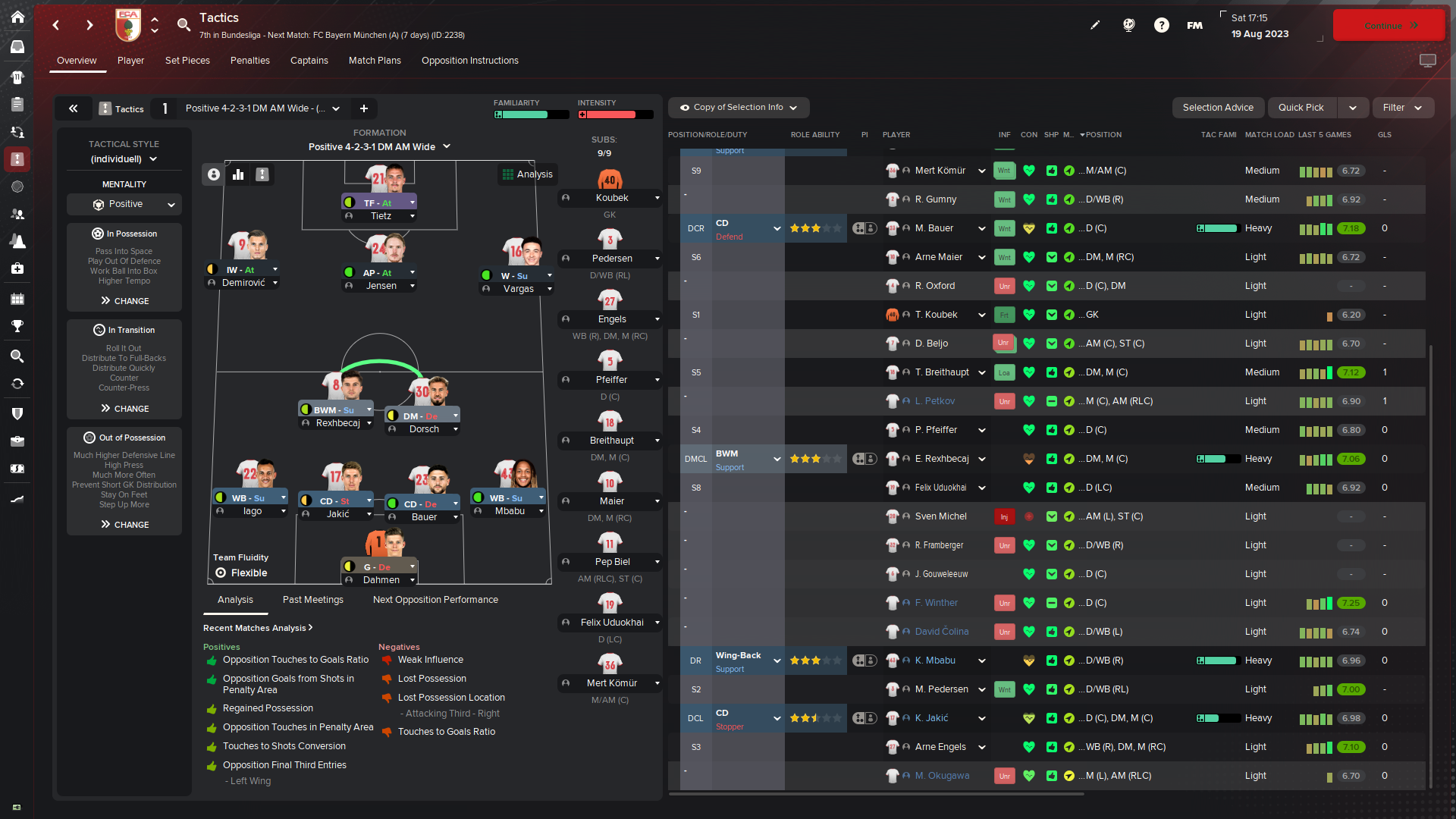
Positive
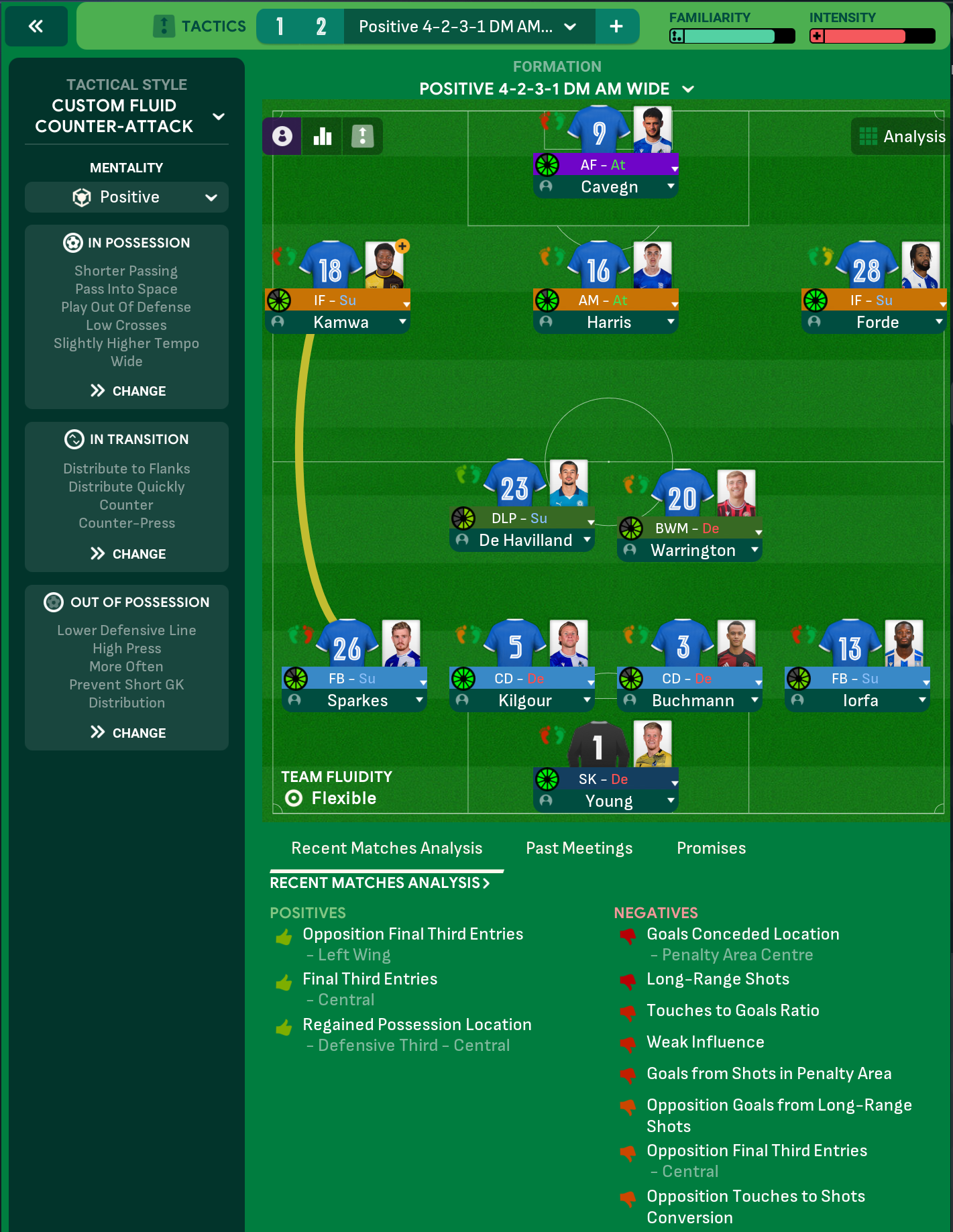
Custom Fluid Counter-Attack
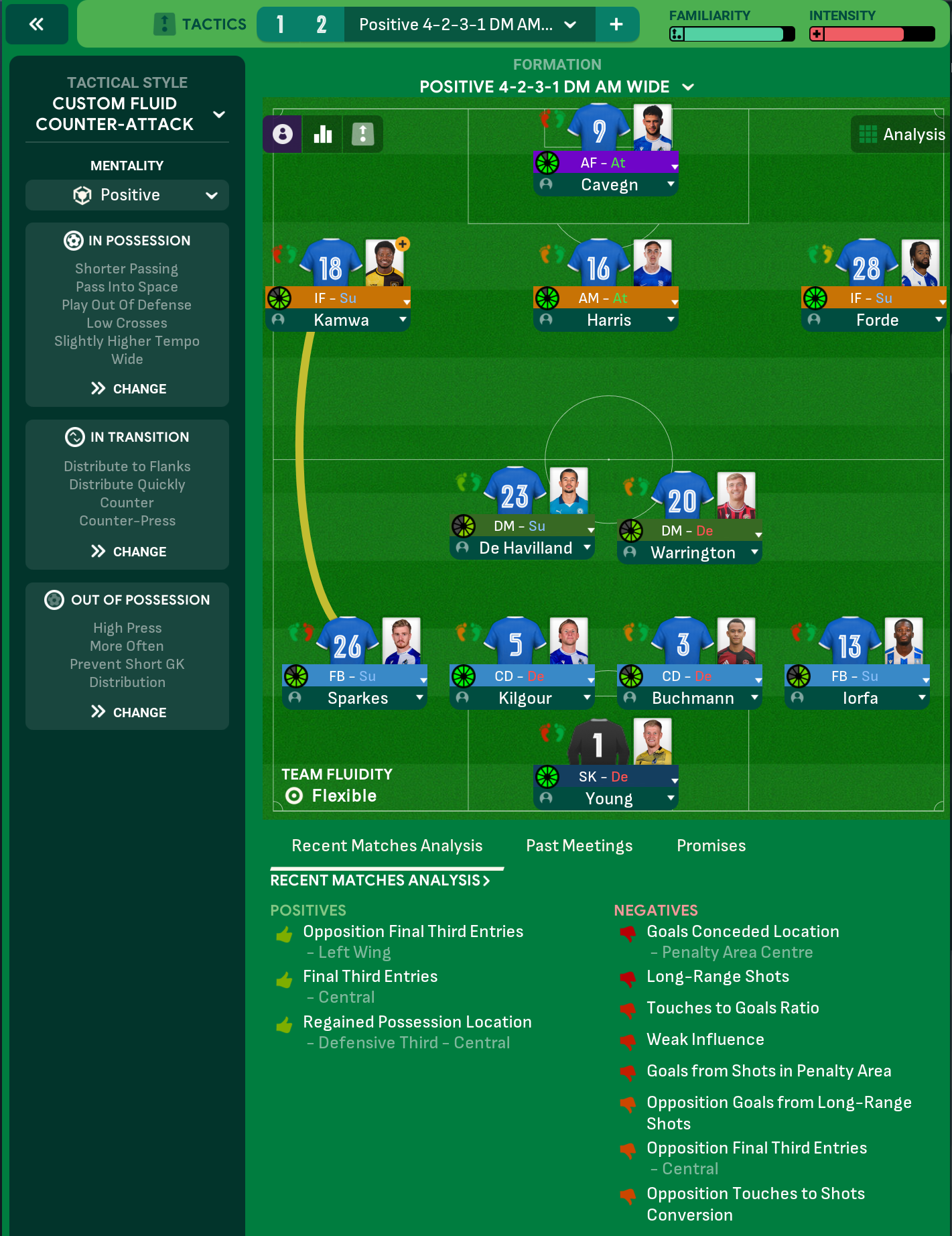
Custom Fluid Counter-Attack
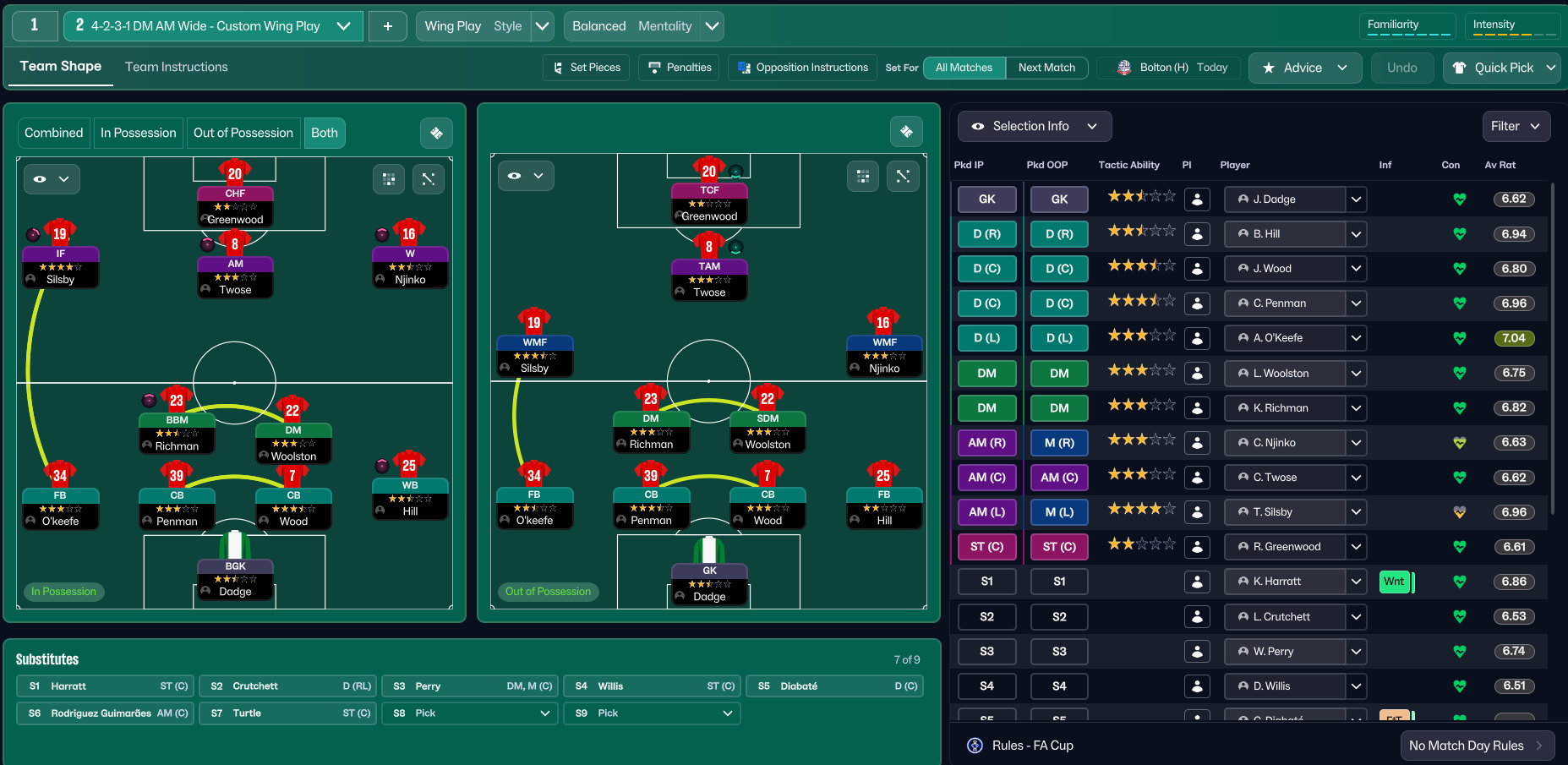
Wing Play
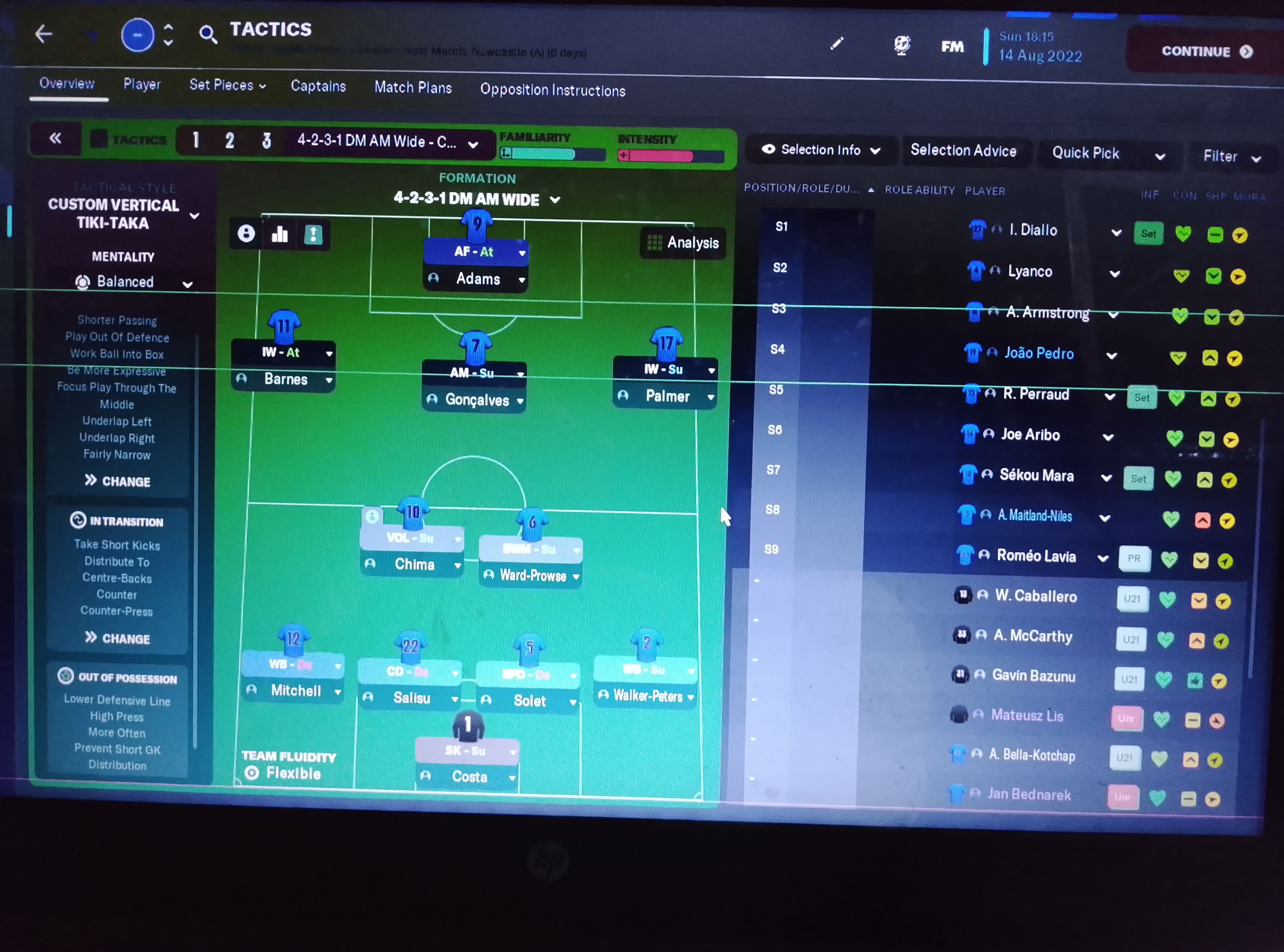
Custom Vertical Tiki-Taka
The tactical theory behind the 4-2-3-1 DM AM Wide: roles, instructions, and the trade-offs that decide whether the system holds up.
Klopp-style gegenpressing in FM, including squad profile, line-and-press pairing, sustainable workload, and the antipatterns to avoid.
Double pivots and flat pairs in 4-2-3-1 and 4-4-2: when each pairing works, when it collapses, and the AMC unicorn that rescues both.
FM27 keeps FM26's tactic system. Here is what stays the same, the small changes that can catch you out, and what the new Tactical Effectiveness system asks of you.