Uploaded Tactic
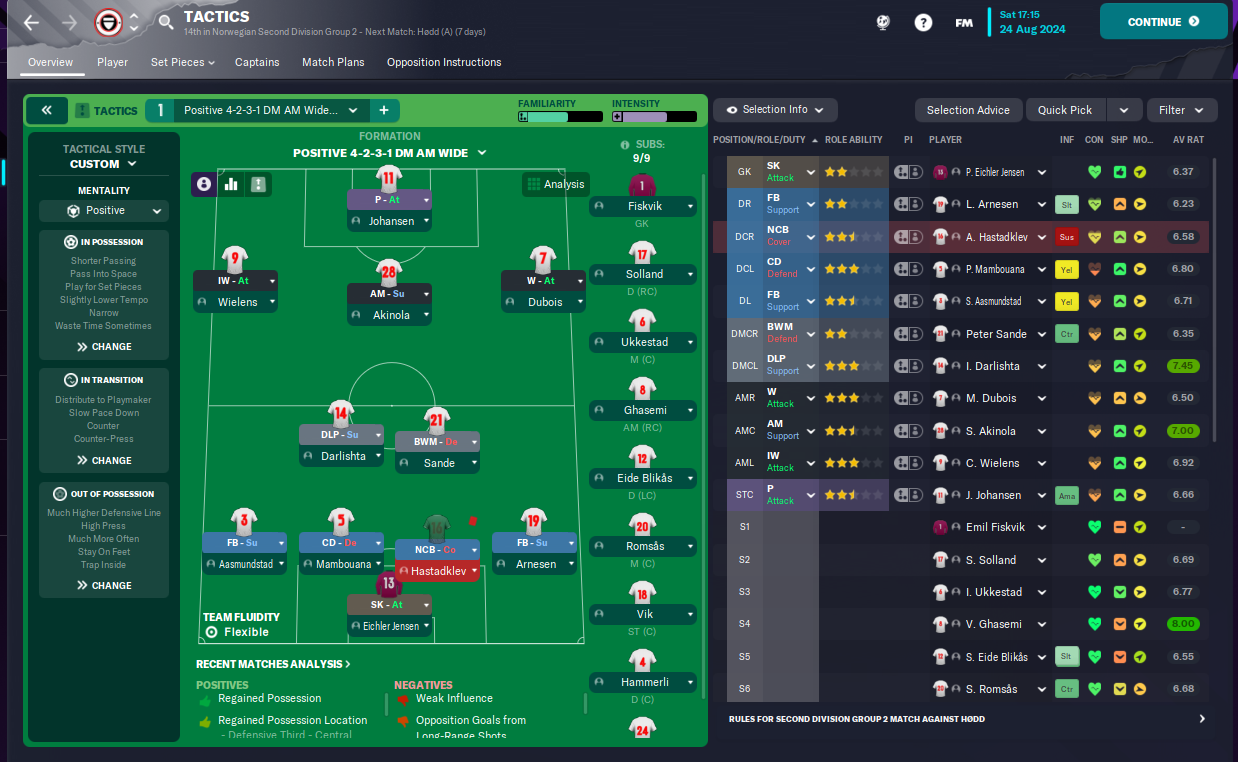
Formation & Style
Tactical Style:Custom
Mentality:Positive
Formation:4-2-3-1 DM AM Wide
Team Fluidity:Flexible
In Possession
Shorter Passing
Pass Into Space
Play For Set Pieces
Slightly Lower Tempo
Narrow
Waste Time Sometimes
In Transition
Distribute to Playmaker
Slow Pace Down
Counter
Counter-Press
Out of Possession
Much Higher Defensive Line
High Press
Much More Often Stay On Feet
Trap Inside
Team Shape Without Ball
Shape:Compact
Description:The team maintains a structured formation, pressing aggressively in advanced areas to regain possession quickly.
Evidence:Much Higher Defensive Line + High Press
Team Shape With Ball
Shape:Wide Formation
Description:The formation employs wide players to exploit flanks and deliver crosses, complemented by a central link-up through the AMC.
Evidence:Winger at [6,1] + Inverted Winger at [6,5] + Attacking Midfielder at [5,3]
Phase Description
Attacking Play
Utilizes width from wingers and overlapping full-backs to stretch opposition defenses, facilitating quick transitions and penetrating passes into the attacking third.
Defensive Transition
Focus on maintaining shape and organization, transitioning into a compact formation to neutralize counter-attacks.
Main Focus
Create chances through wide play and cohesive midfield interplay while pressing effectively.
Key Strengths
Versatile Attack
The front three roles (Winger, Inverted Winger, Attacking Midfielder) can interchange positions, creating unpredictability.
Solid Midfield Control
The combination of BWM and DLP provides both defensive solidity and creativity in midfield.
Aggressive Pressing
The pressing forward can initiate pressure high up the pitch, helping to disrupt opposition play.
Conflicting Directions
Defensive Vulnerability on Counters
Despite a high pressing approach, the team's higher defensive line could expose them to quick counter-attacks.
Possible Overcommitment
With the emphasis on width and attacking movement, players may be drawn out of position, leading to gaps in midfield.
Set Piece Weakness
Short corner and set-piece routines can backfire if players are not adequately positioned to counter opposing threats.
Tactical Suggestions
Consider a More Balanced Midfield
Adding a Box-to-Box Midfielder could enhance both defensive support and provide additional attacking options.
Adjust Defensive Line Based on Opponent
Monitor opposition pace and adjust the defensive line to prevent easy access to space behind.
Review Set-Piece Strategies
Focus on enhancing set-piece routines to mitigate risks and make use of the aerial advantage where possible.
Ask Questions About Your Lineup
Related Tactics
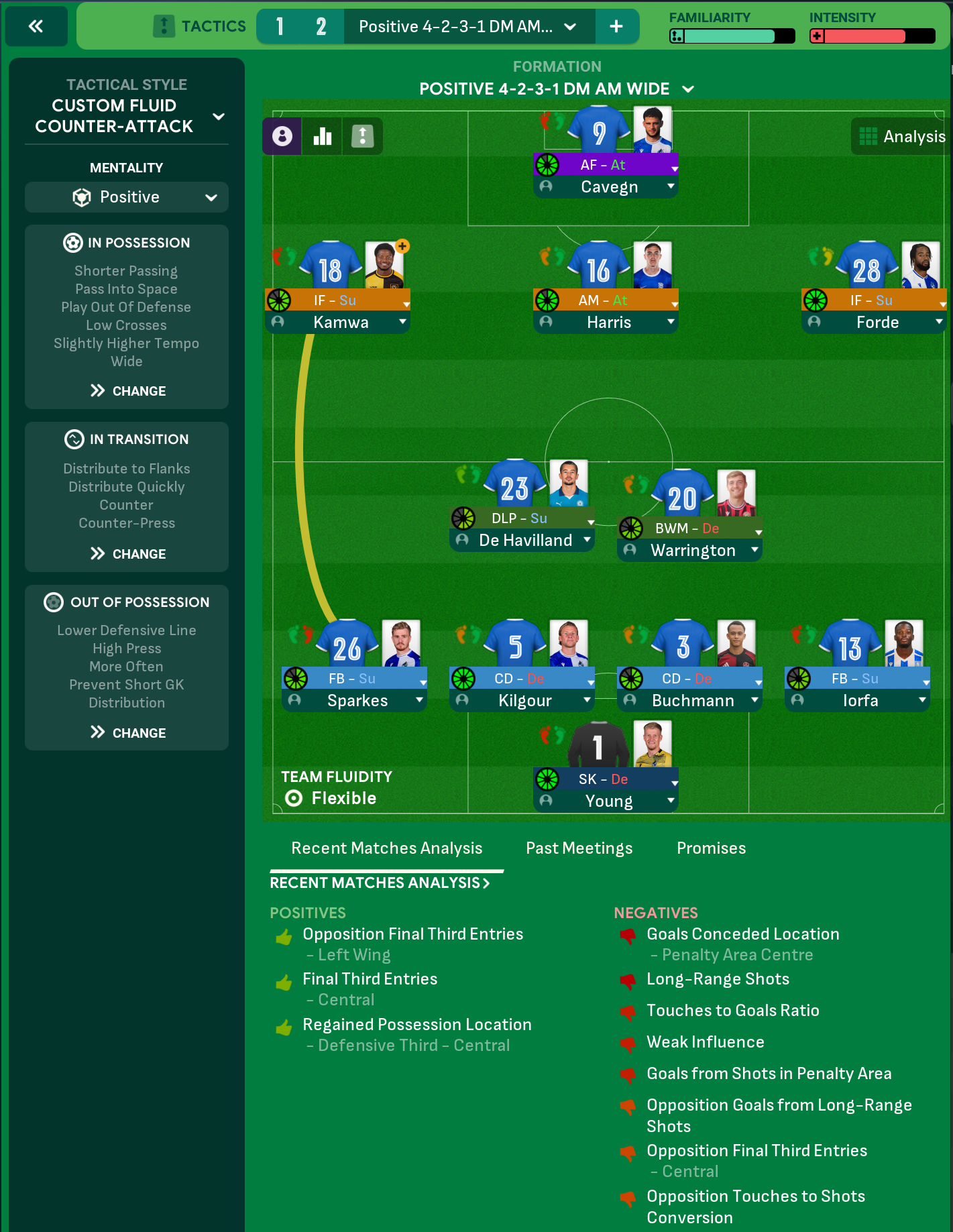
Fluid Counter-Attack 4-2-3-1 DM AM Wide
Custom Fluid Counter-Attack
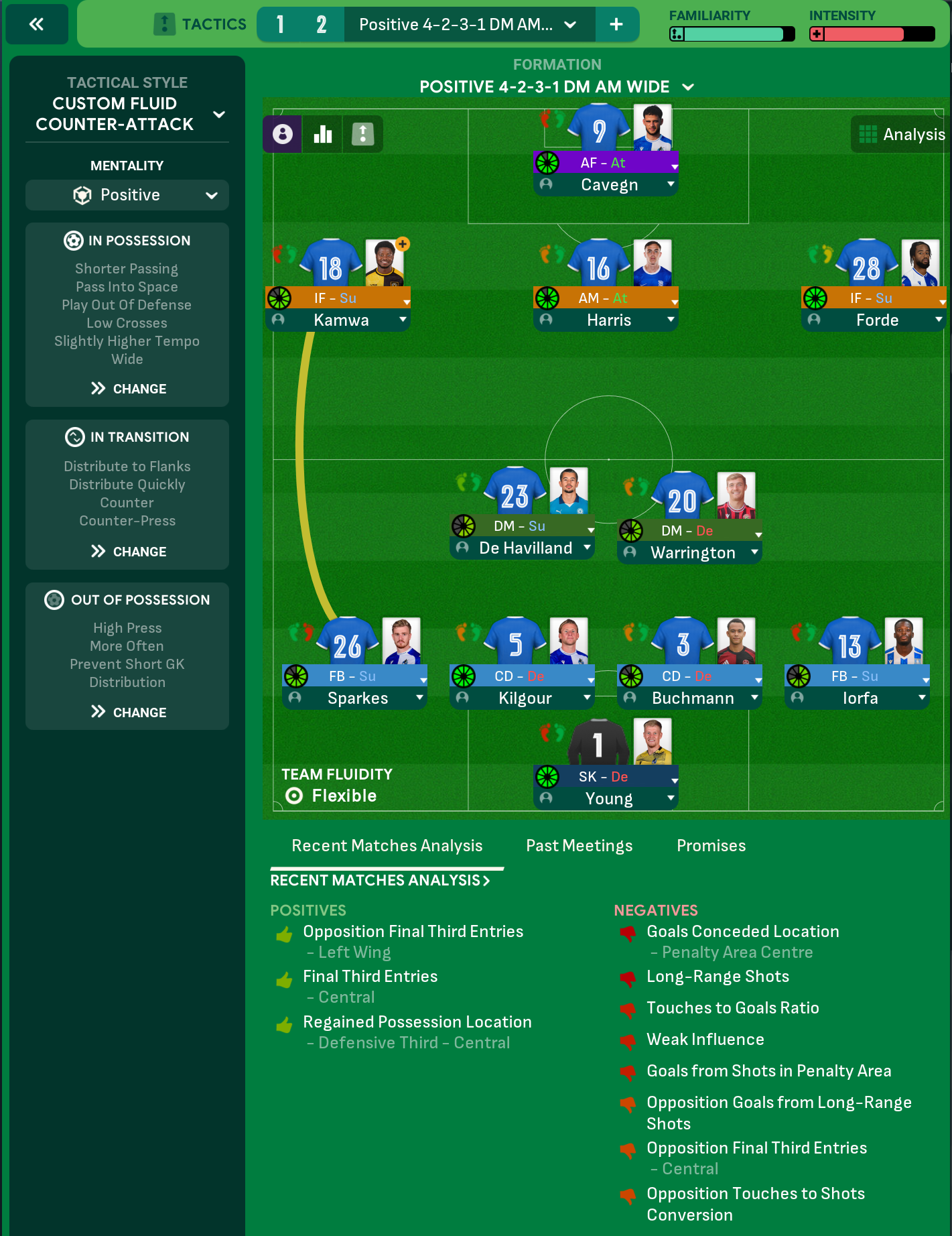
Fluid Counter-Attack 4-2-3-1 DM AM Wide
Custom Fluid Counter-Attack
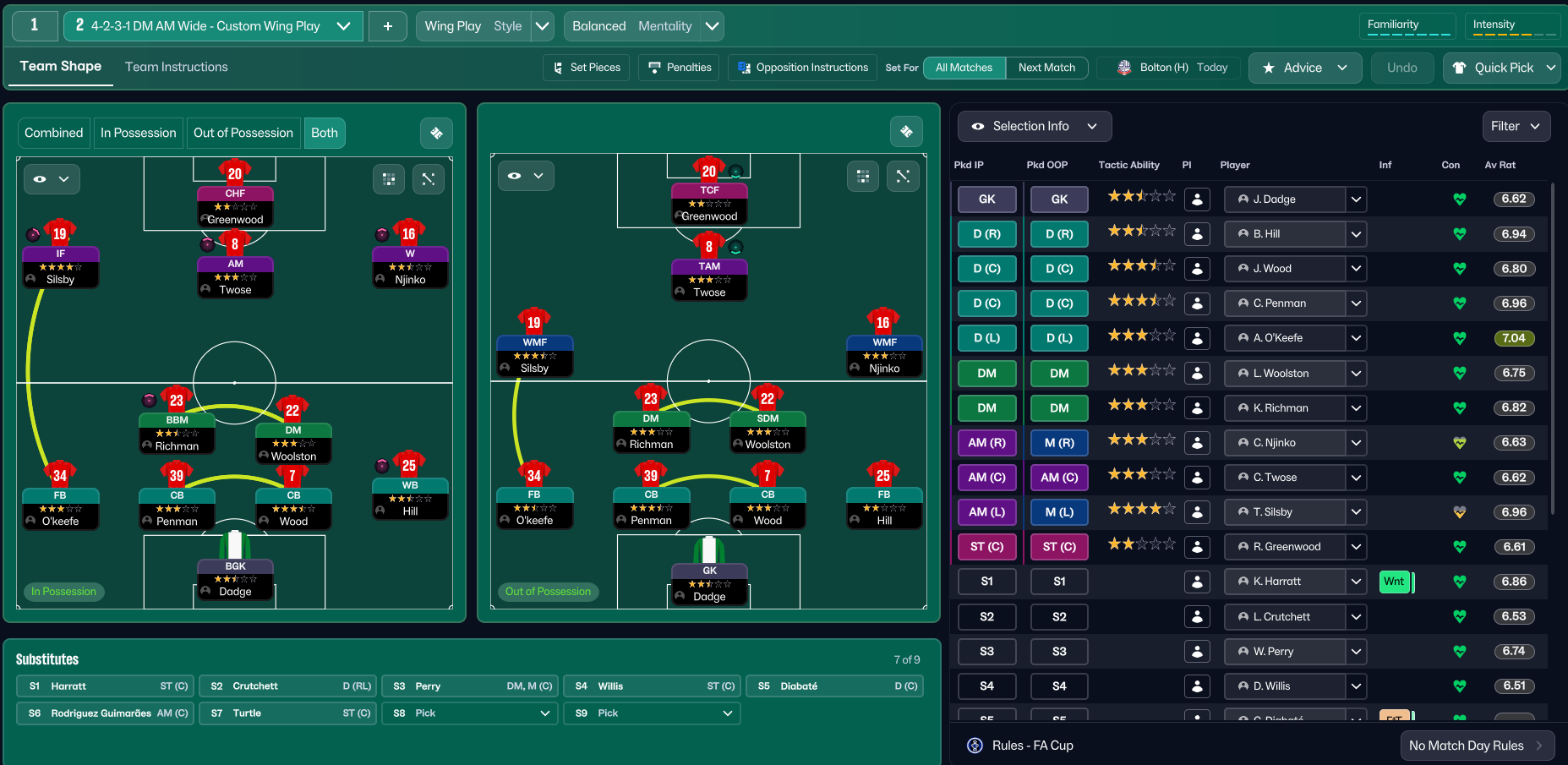
Wing Play 4-2-3-1 DM AM Wide
Wing Play
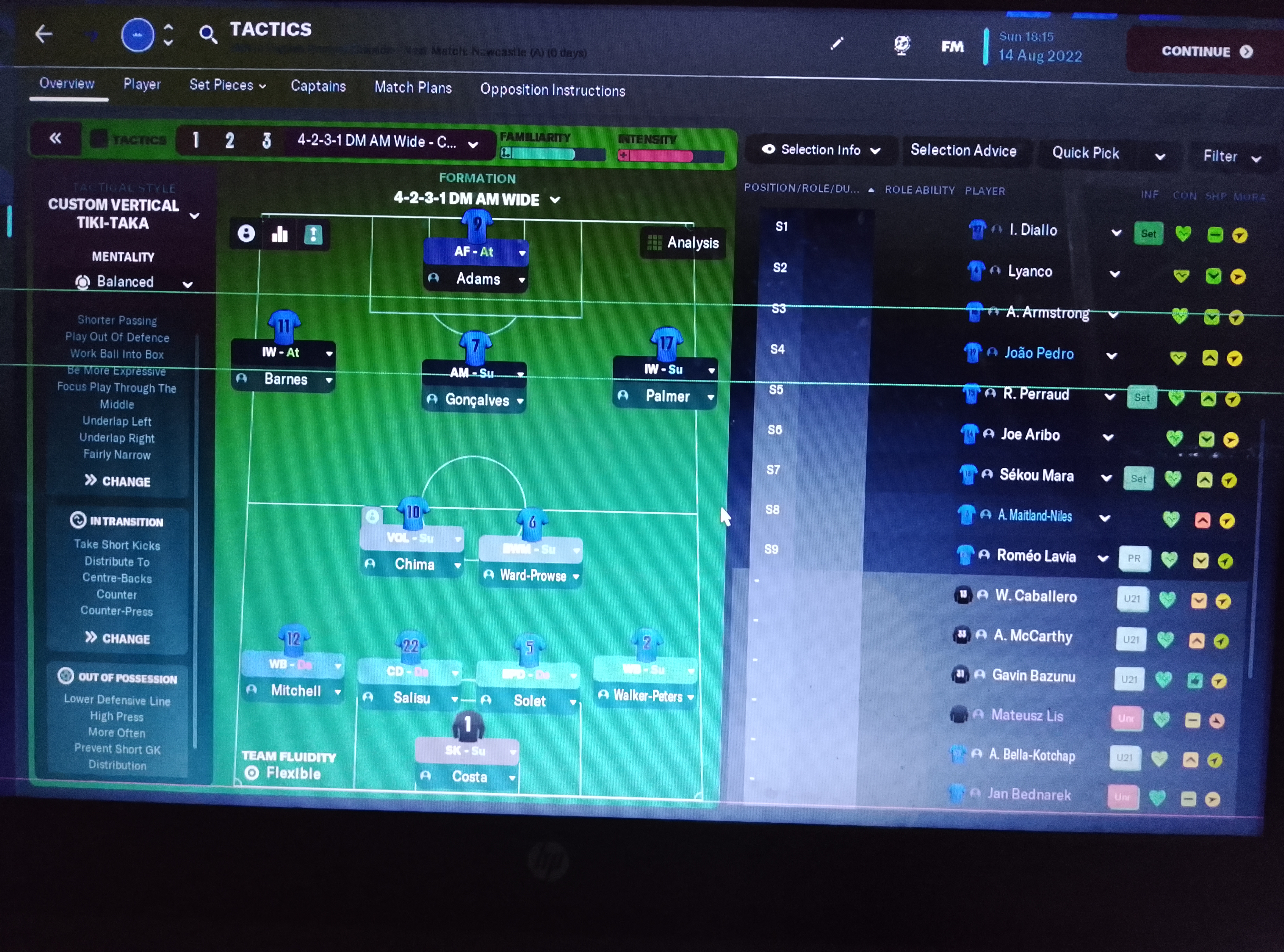
Vertical Tiki-Taka 4-2-3-1 DM AM Wide
Custom Vertical Tiki-Taka
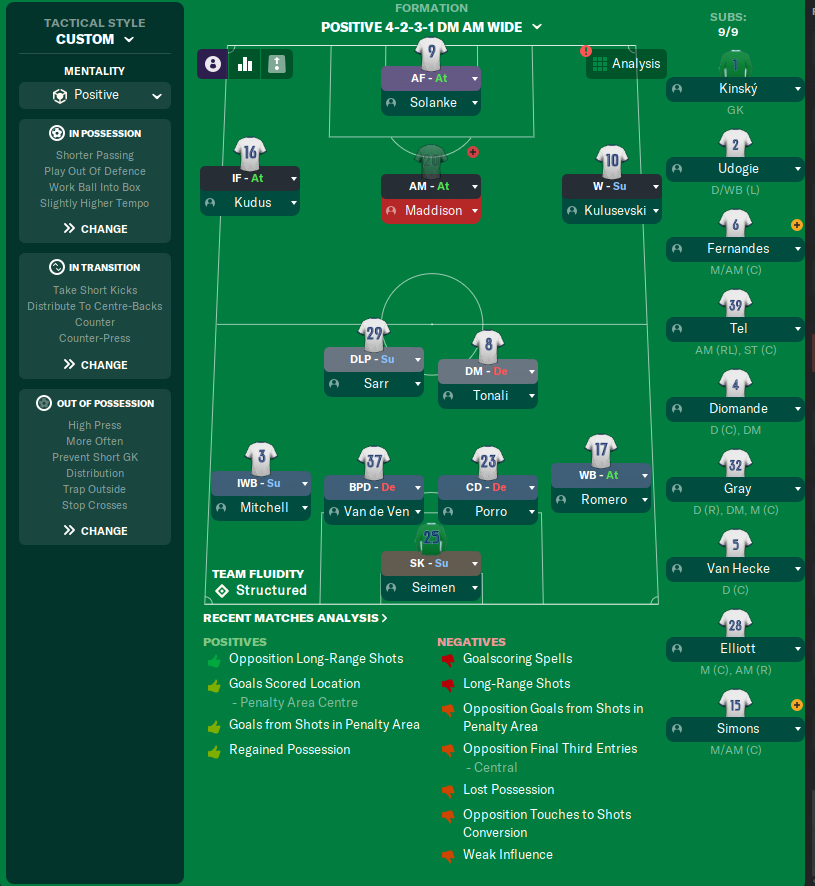
4-2-3-1 DM AM Wide Formation
Custom
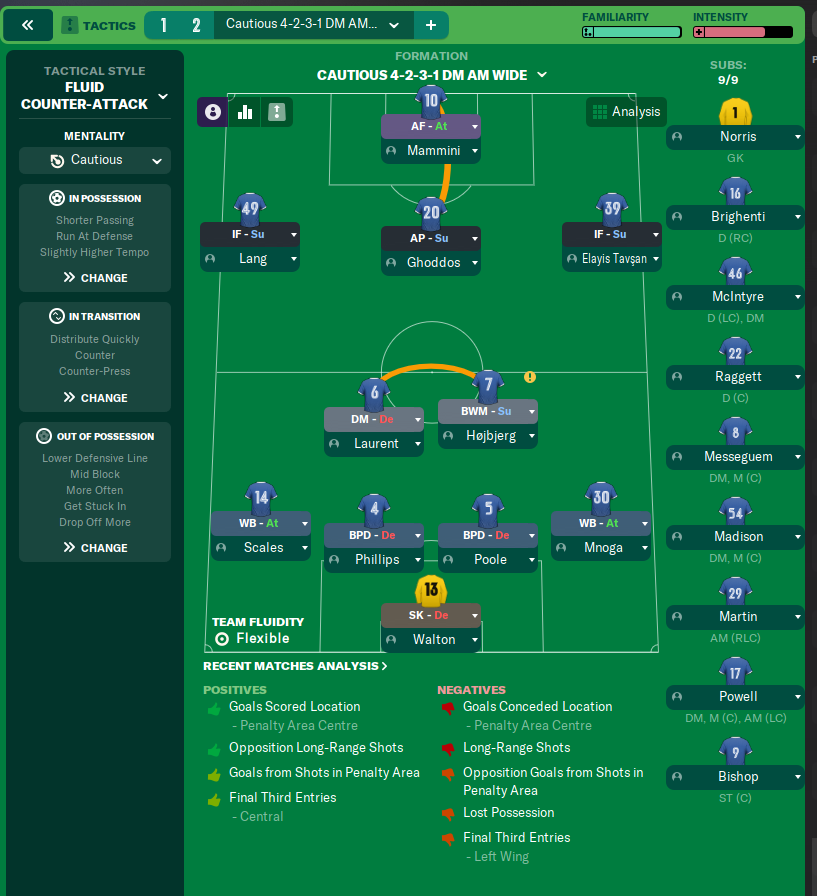
Fluid 4-2-3-1 DM AM Wide
Fluid
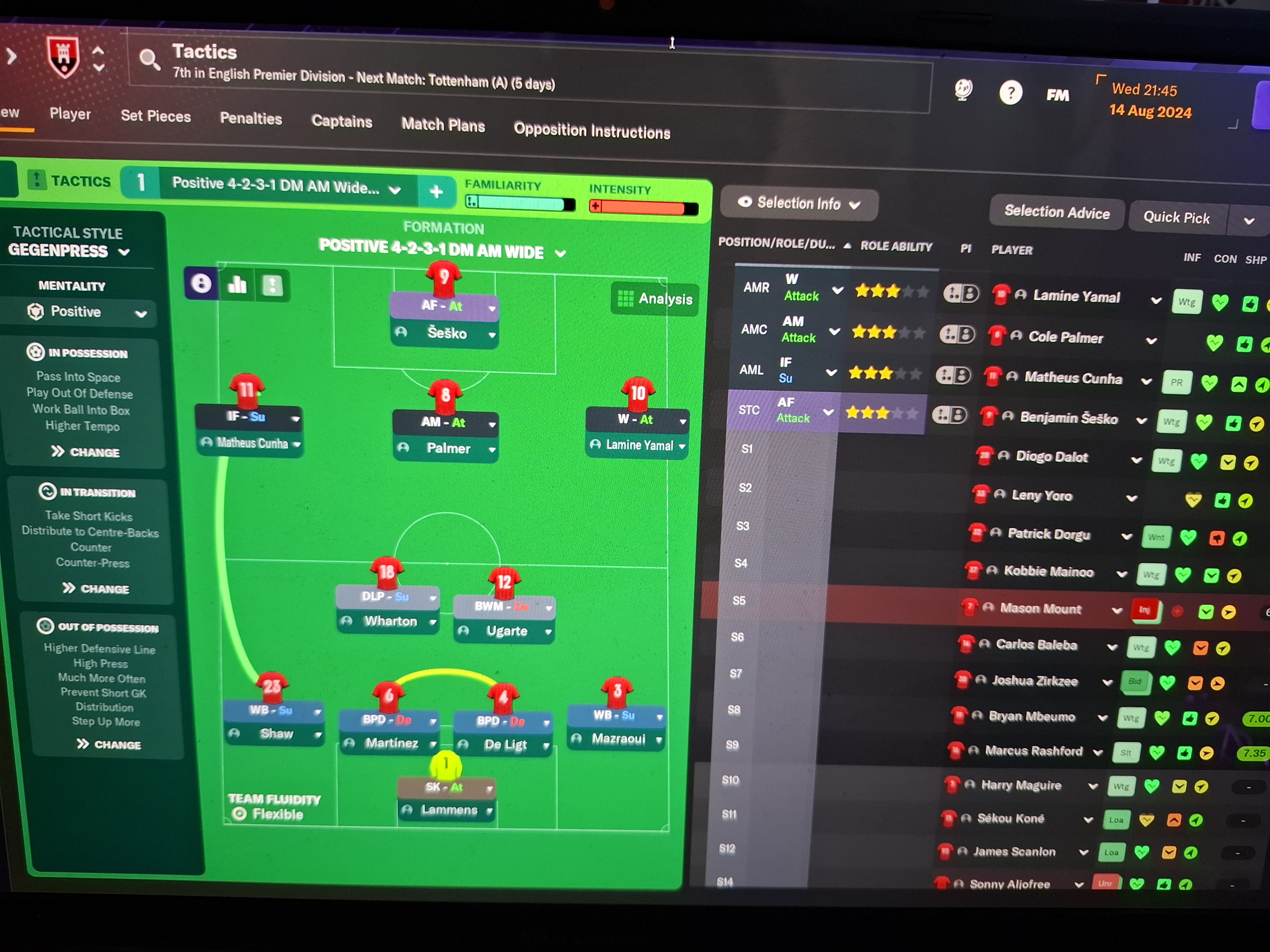
Gegenpress 4-2-3-1 DM AM Wide
Gegenpress
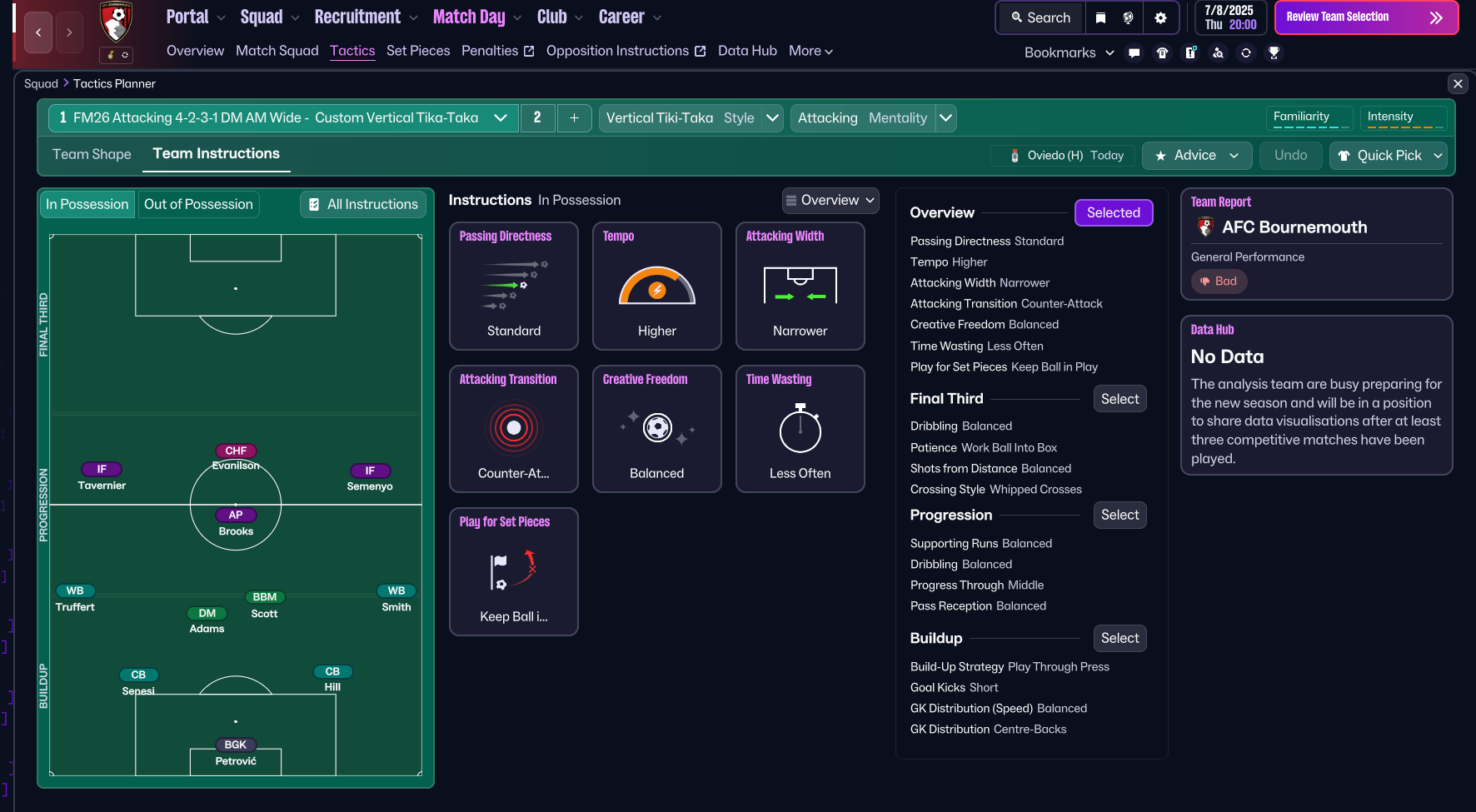
Vertical Tiki-Taka 4-2-3-1 DM AM Wide
Vertical Tiki-Taka
Guides for this formation
The tactical theory behind the 4-2-3-1 DM AM Wide: roles, instructions, and the trade-offs that decide whether the system holds up.
Player pairings
Midfield Pairs in 4-2-3-1 and 4-4-2
Double pivots and flat pairs in 4-2-3-1 and 4-4-2: when each pairing works, when it collapses, and the AMC unicorn that rescues both.
Read guide
Playing styles
Gegenpressing: A Full Guide
Klopp-style gegenpressing in FM, including squad profile, line-and-press pairing, sustainable workload, and the antipatterns to avoid.
Read guide