Uploaded Tactic
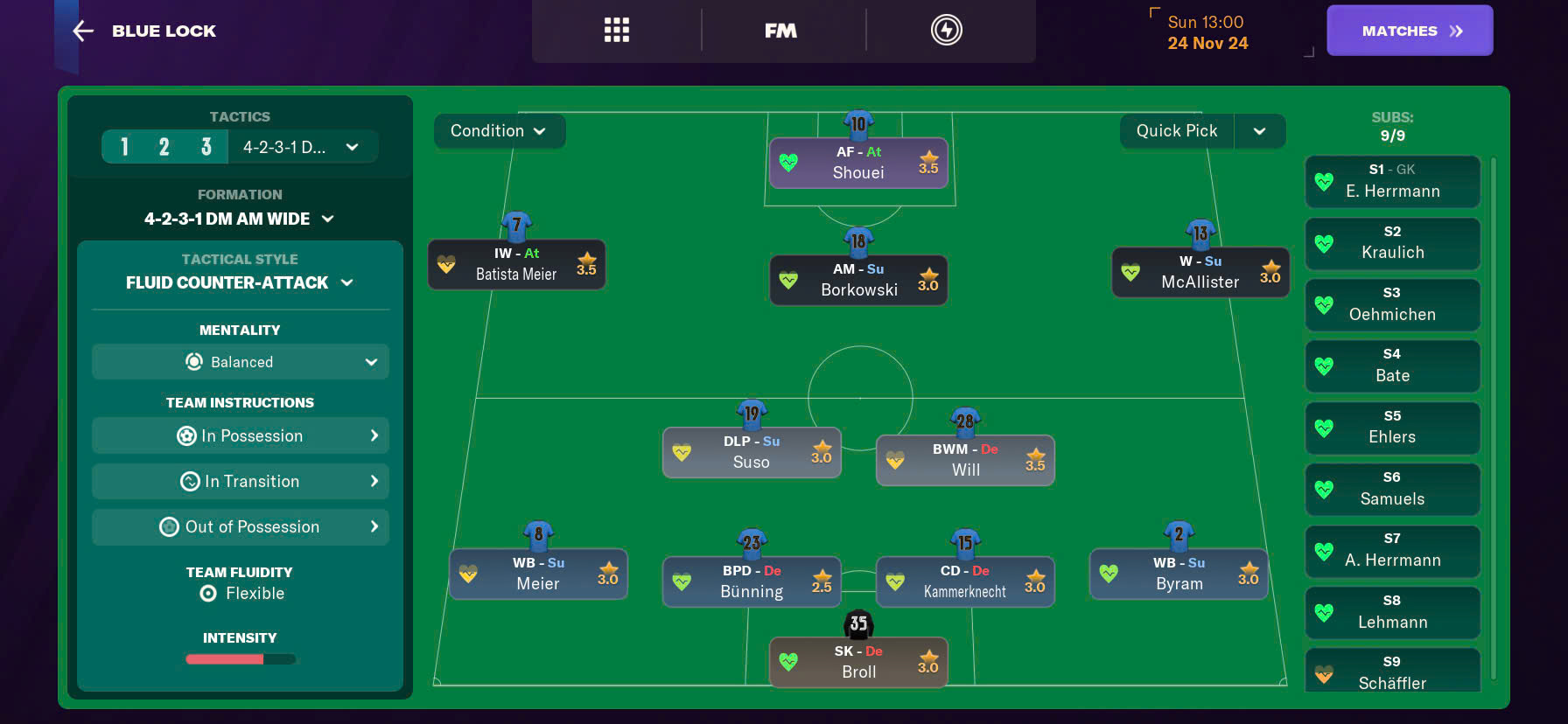
Formation & Style
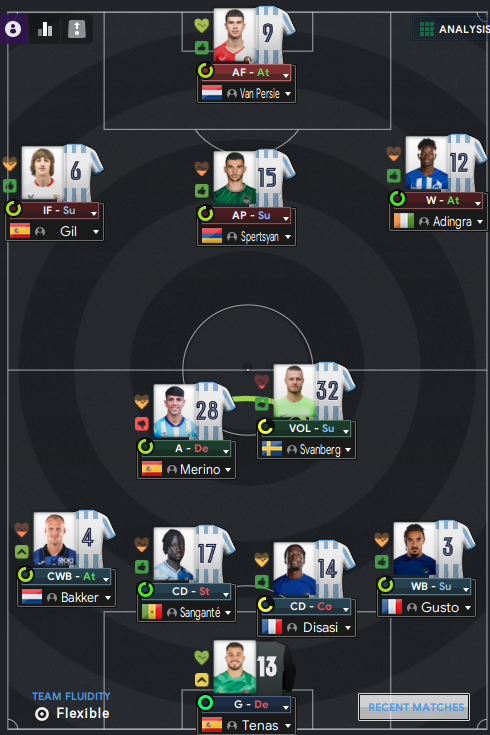
Tactical Style:Fluid Counter-Attack
Mentality:Balanced
Formation:4-2-3-1 DM AM Wide
Team Fluidity:Flexible
In Possession
Shorter Passing
Work Ball into Box
Play out of Defense
In Transition
Counter-Press
Counter
Out of Possession
Higher Defensive Line
Prevent Short Goalkeeper Distribution
Team Shape Without Ball
No team shape without ball data available
Team Shape With Ball
No team shape with ball data available
Key Strengths
Strong Transition Play
The setup leverages quick transitions due to the Counter-Press and Counter instructions, making it effective against teams that overcommit.
Width and Versatility
Using Wing Backs and an Inside Forward creates width, allowing for diverse attacking options and stretching the opposition's defense.
Creative Midfield
The combination of a Deep Lying Playmaker and an Attacking Midfielder enhances creativity and support for forwards, leading to more goal-scoring opportunities.
Solid Defensive Structure
The use of a Balanced mentality with a higher defensive line allows for organized pressing and recovery, minimizing spaces for opponents.
Conflicting Directions
Wide Player vs Inside Forward Dynamics
The Inside Forward's instructions to cut inside may conflict with the Wide Player's role, potentially leading to congested space on the left flank.
Defensive Responsibilities
Having both a Box to Box Midfielder and a Defensive Midfielder could lead to overlaps in roles, causing confusion during defensive transitions.
Fluidity versus Rigidity
A Flexible team fluidity may contradict with the defined roles of player responsibilities, affecting team coherence during phases of play.
Limited Depth on the Flanks
While Wing Backs provide width, their support role can lead to vulnerabilities if they venture too far forward, leaving gaps in defense.
Tactical Suggestions
Adjust Flank Roles
Consider changing the Inside Forward to a Winger role to maintain width without congesting the attack.
Utilize Player Instructions
Adding specific player instructions such as 'Stay Wider' for the Wide Player and 'Cut Inside' for the Inside Forward may alleviate positional overlap.
Reassess Defensive Structure
Experiment with a more conservative setup for the Defensive Midfielder to ensure coverage when the team transitions forward.
Increase Pressing Intensity
Increasing the intensity setting could further enhance pressing effectiveness, leading to better ball recovery rates.
Ask Questions About Your Lineup
Related Tactics
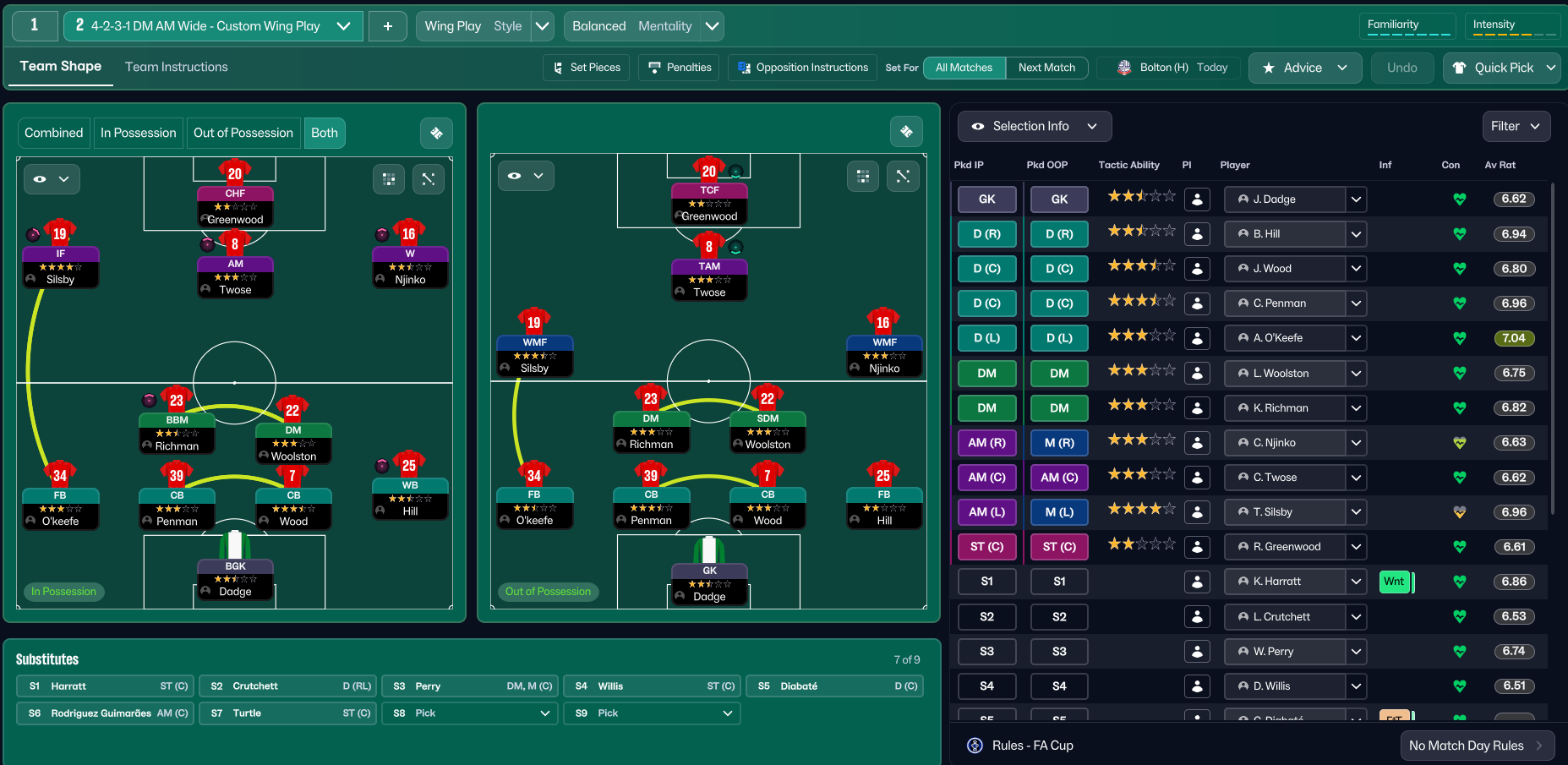
Wing Play 4-2-3-1 DM AM Wide
Wing Play
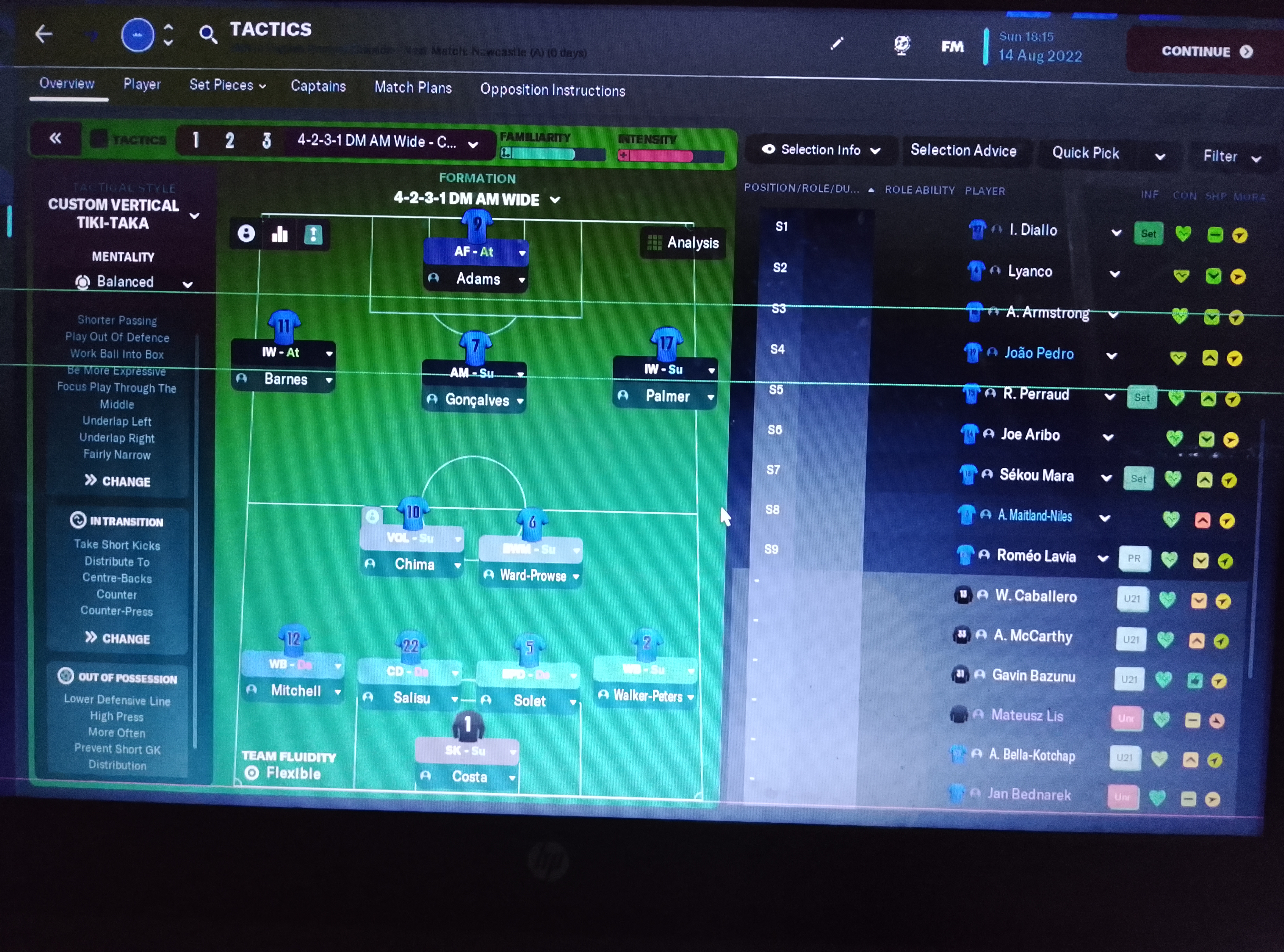
Vertical Tiki-Taka 4-2-3-1 DM AM Wide
Custom Vertical Tiki-Taka
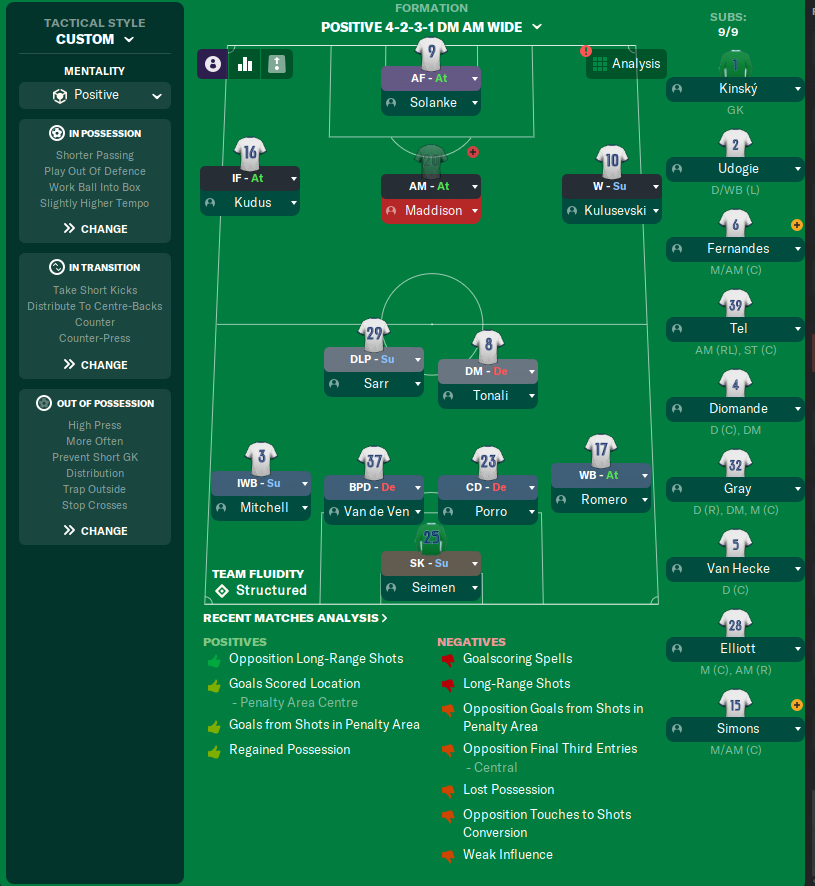
4-2-3-1 DM AM Wide Formation
Custom
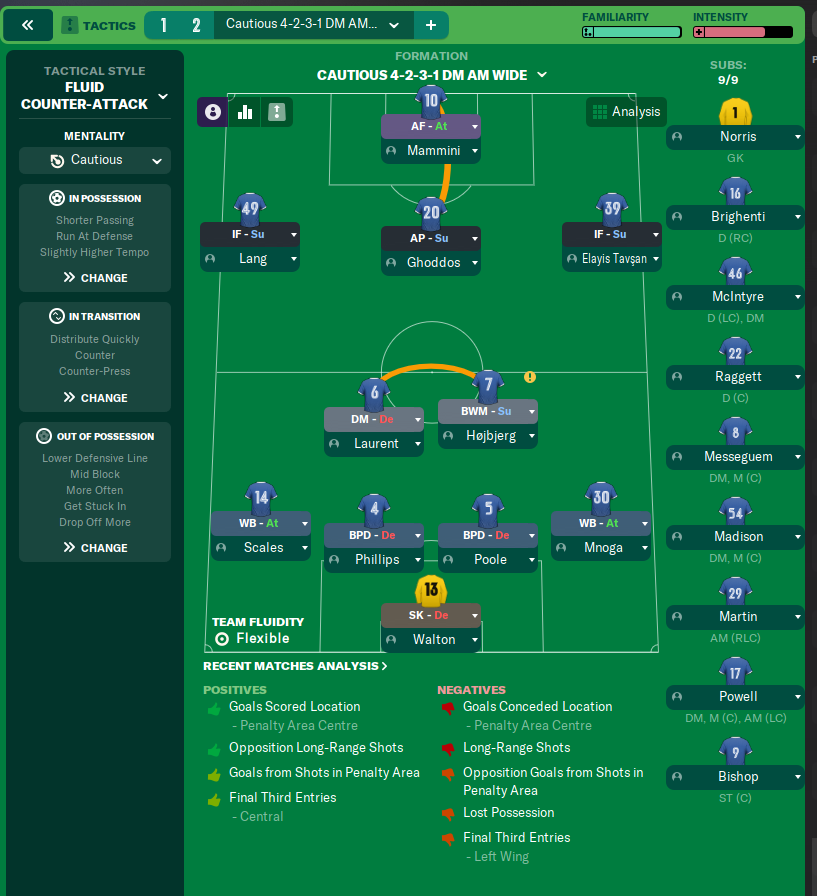
Fluid 4-2-3-1 DM AM Wide
Fluid
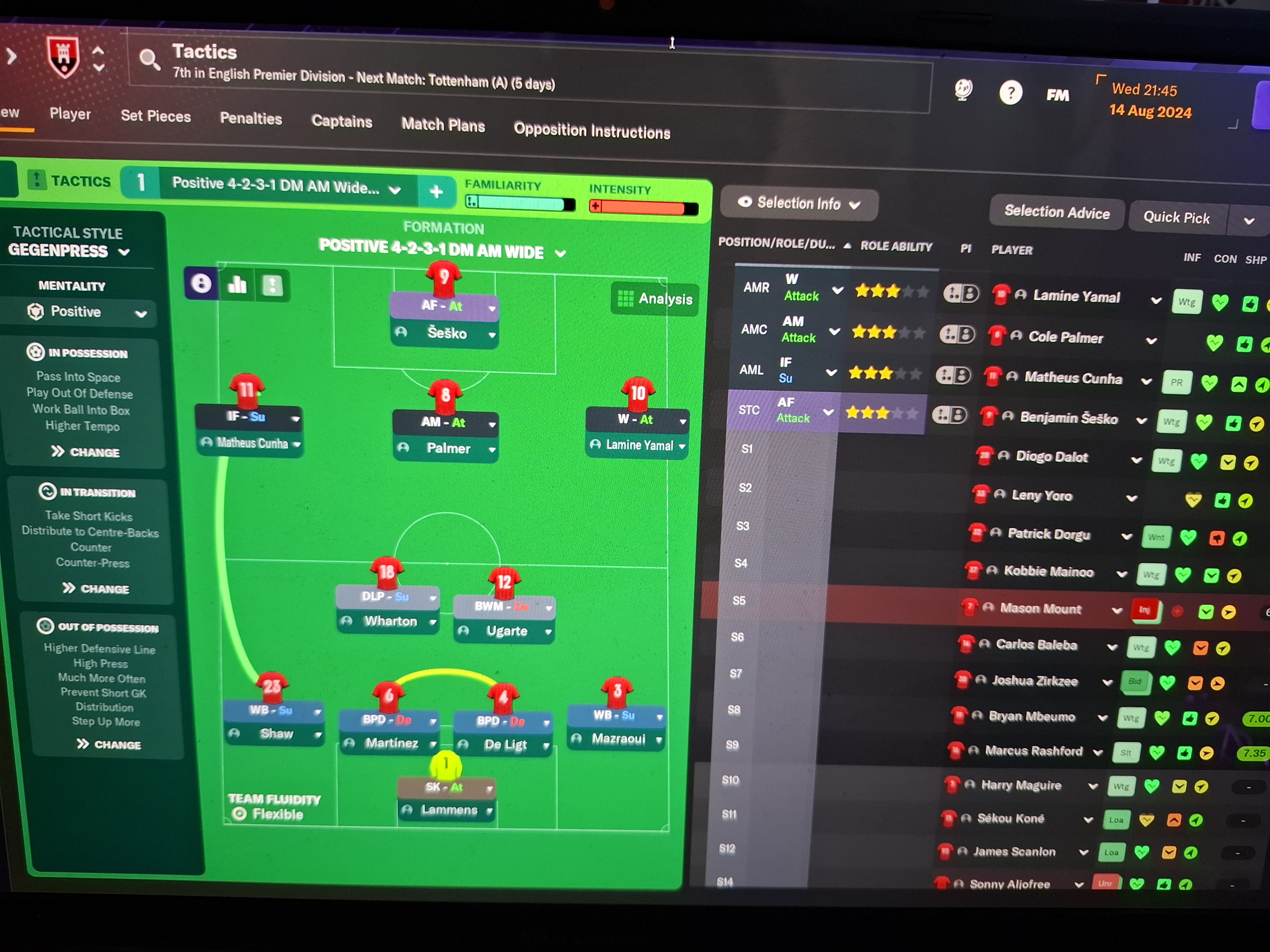
Gegenpress 4-2-3-1 DM AM Wide
Gegenpress
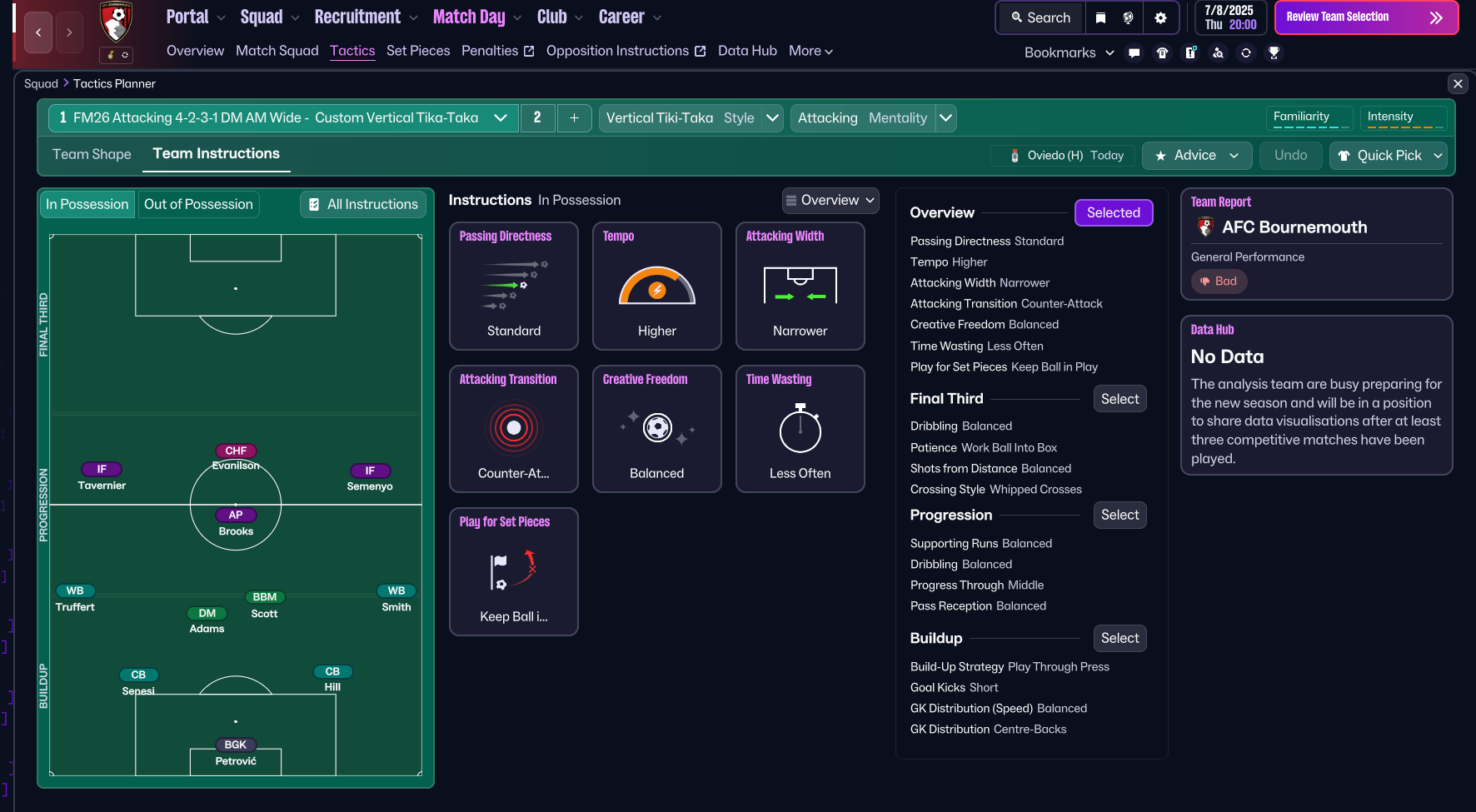
Vertical Tiki-Taka 4-2-3-1 DM AM Wide
Vertical Tiki-Taka
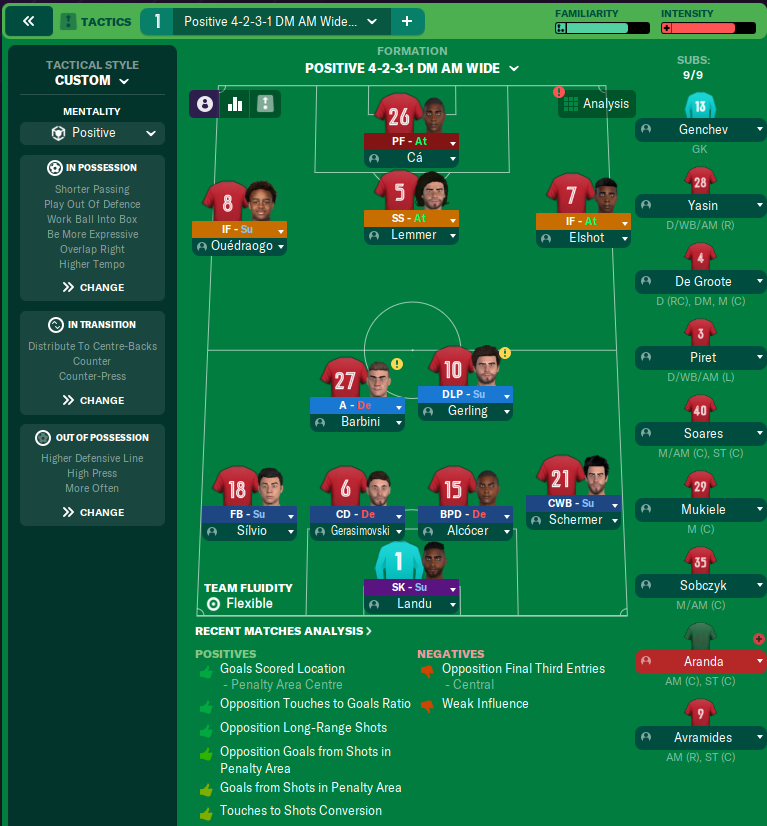
4-2-3-1 DM AM Wide Formation
Custom
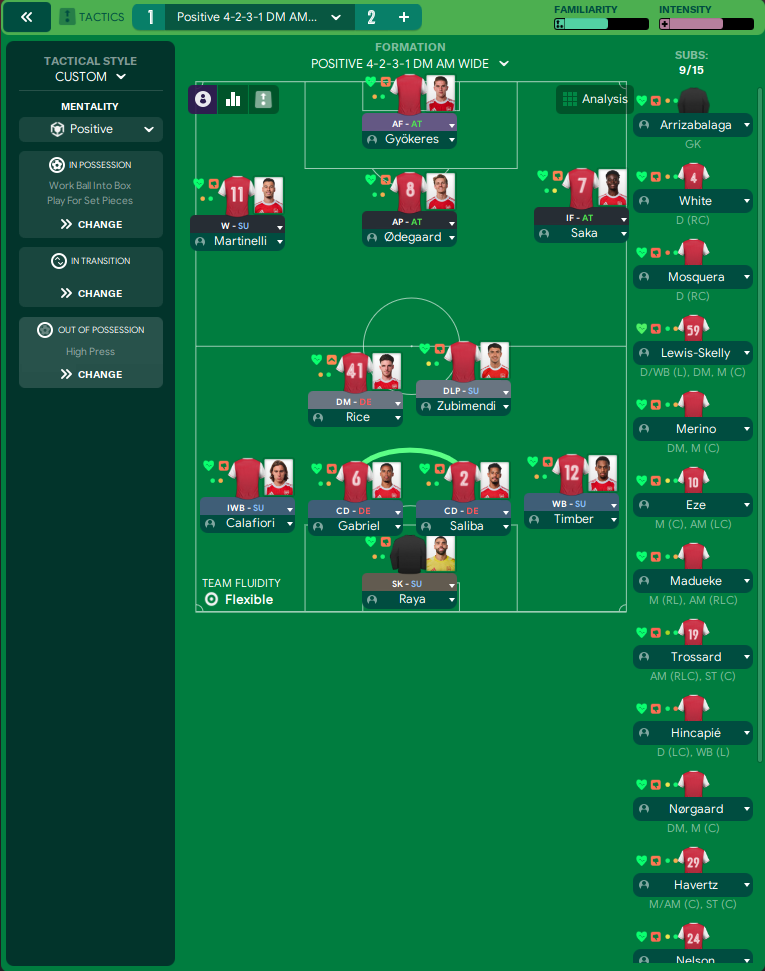
4-2-3-1 DM AM Wide Formation
Custom
More Fluid Counter-Attack tactics
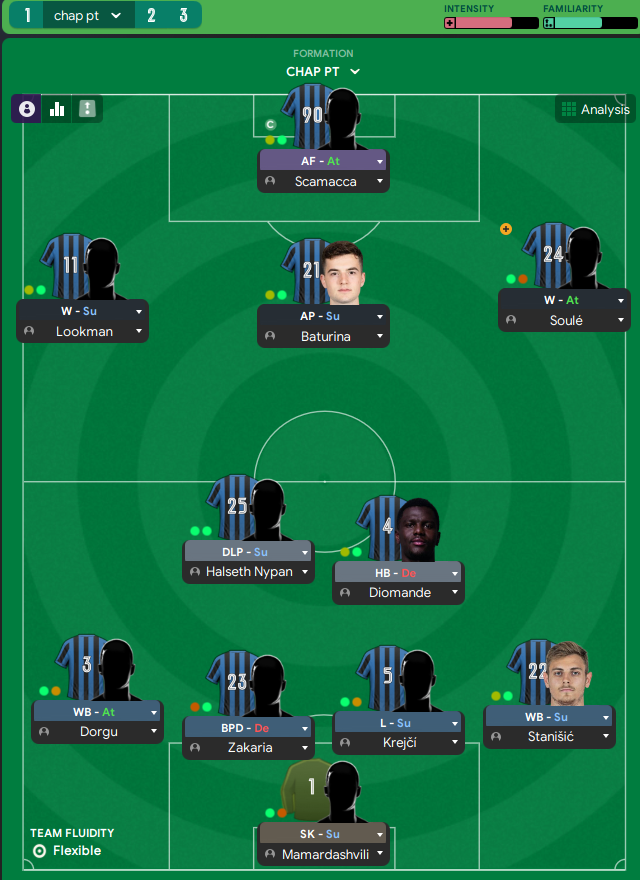
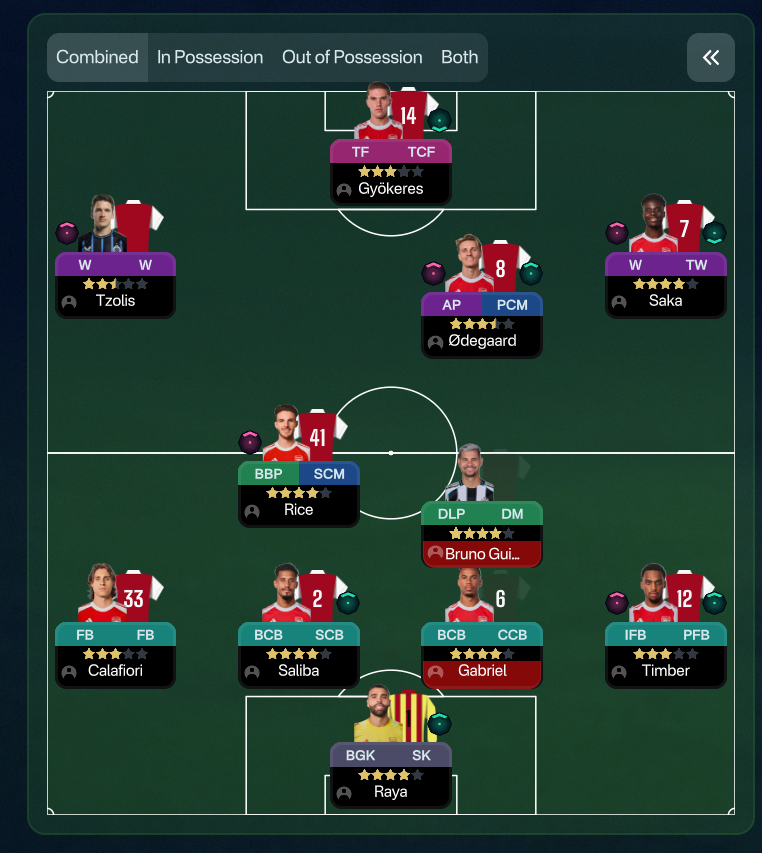
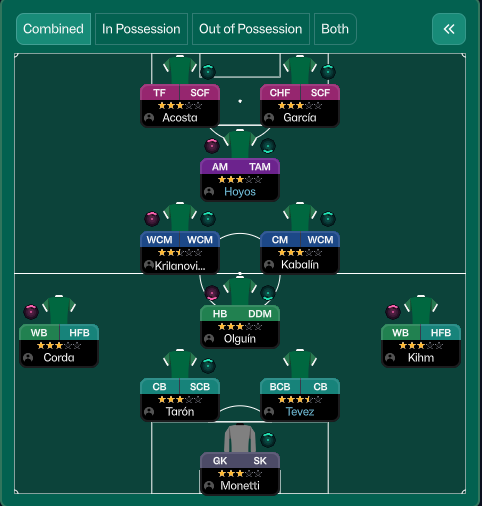
Guides for this formation
The tactical theory behind the 4-2-3-1 DM AM Wide: roles, instructions, and the trade-offs that decide whether the system holds up.
Player pairings
Midfield Pairs in 4-2-3-1 and 4-4-2
Double pivots and flat pairs in 4-2-3-1 and 4-4-2: when each pairing works, when it collapses, and the AMC unicorn that rescues both.
Read guide
Playing styles
Gegenpressing: A Full Guide
Klopp-style gegenpressing in FM, including squad profile, line-and-press pairing, sustainable workload, and the antipatterns to avoid.
Read guide