Uploaded Tactic
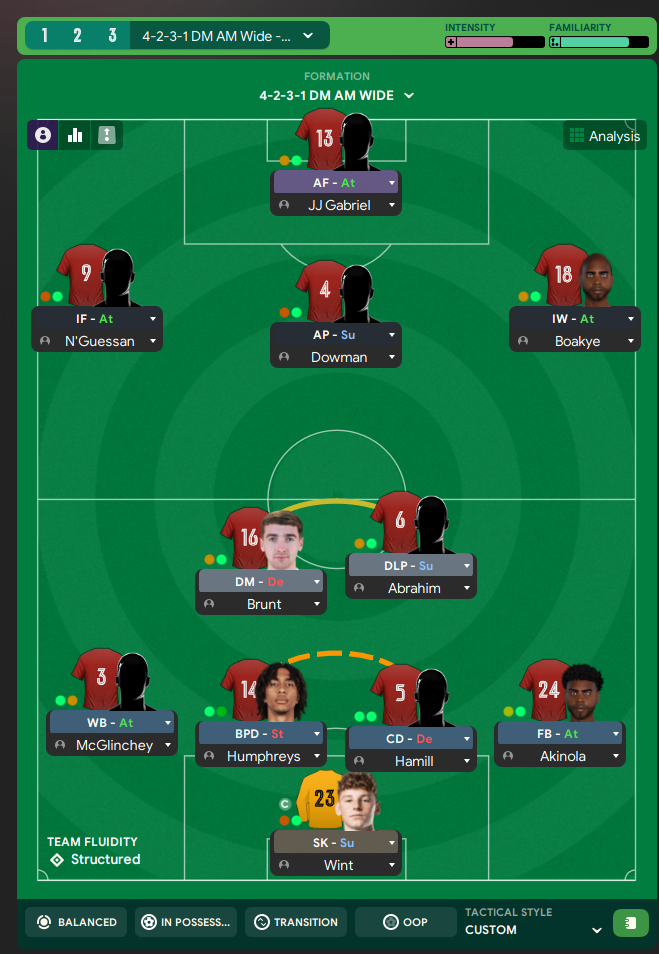
Formation & Style
Tactical Style:Custom
Mentality:Balanced
Formation:4-2-3-1 DM AM Wide
Team Fluidity:Structured
In Possession
Use wider attacking width
Focus play down the left
Exploit flanks
In Transition
Counter-Press
Counter
Out of Possession
Higher Defensive Line
Higher Line of Engagement
Prevent Short GK Distribution
Team Shape Without Ball
Shape:4-2
Description:A compact shape with the midfielders dropping back to support the defensive line, maintaining numerical superiority.
Evidence:DM - De at [3,3] and DLP - Su at [4,3] provide cover and transition support.
Team Shape With Ball
Shape:4-3
Description:Intended to stretch the opposition by using the width provided by the wing-backs and inside forward.
Evidence:FB - At at [2,5] and WB - At at [2,4] provide width while AF - At is central.
Phase Description
Attacking Play
The team looks to spread the play wide, utilizing the wing-backs and inside forward to create space and exploit defensive weaknesses.
Defensive Transition
Upon losing possession, quick counter-pressing is employed to reclaim the ball while maintaining defensive shape.
Main Focus
To control the midfield with a solid double pivot while utilizing wide players for distribution.
Key Strengths
Strong Midfield Control
With a double pivot setup of DM and DLP, the team can control the game and dictate play.
Utilization of Width
Using wing-backs and an inside forward allows the exploitation of defensive spaces.
Dynamic Attack Options
The presence of an advanced forward and advanced playmaker offers multiple attacking avenues.
Conflicting Directions
Vulnerability to Central Penetration
The team relies on wide play, potentially leaving central areas exposed.
Dependence on Wing-Backs
Heavy reliance on wing-backs for offensive width can be exposed if overrun.
Risk of Counter-Attacks
Higher defensive line can be exploited by quick counter-attacks.
Tactical Suggestions
Cover Central Areas
Introduce a third midfielder to provide additional support against central attacks.
Adjust Defensive Line
Consider dropping the defensive line to mitigate counter-attack risks.
Utilize Target Forward
Incorporate a target forward to enhance physical presence in attack and provide aerial threat.
Ask Questions About Your Lineup
Related Tactics
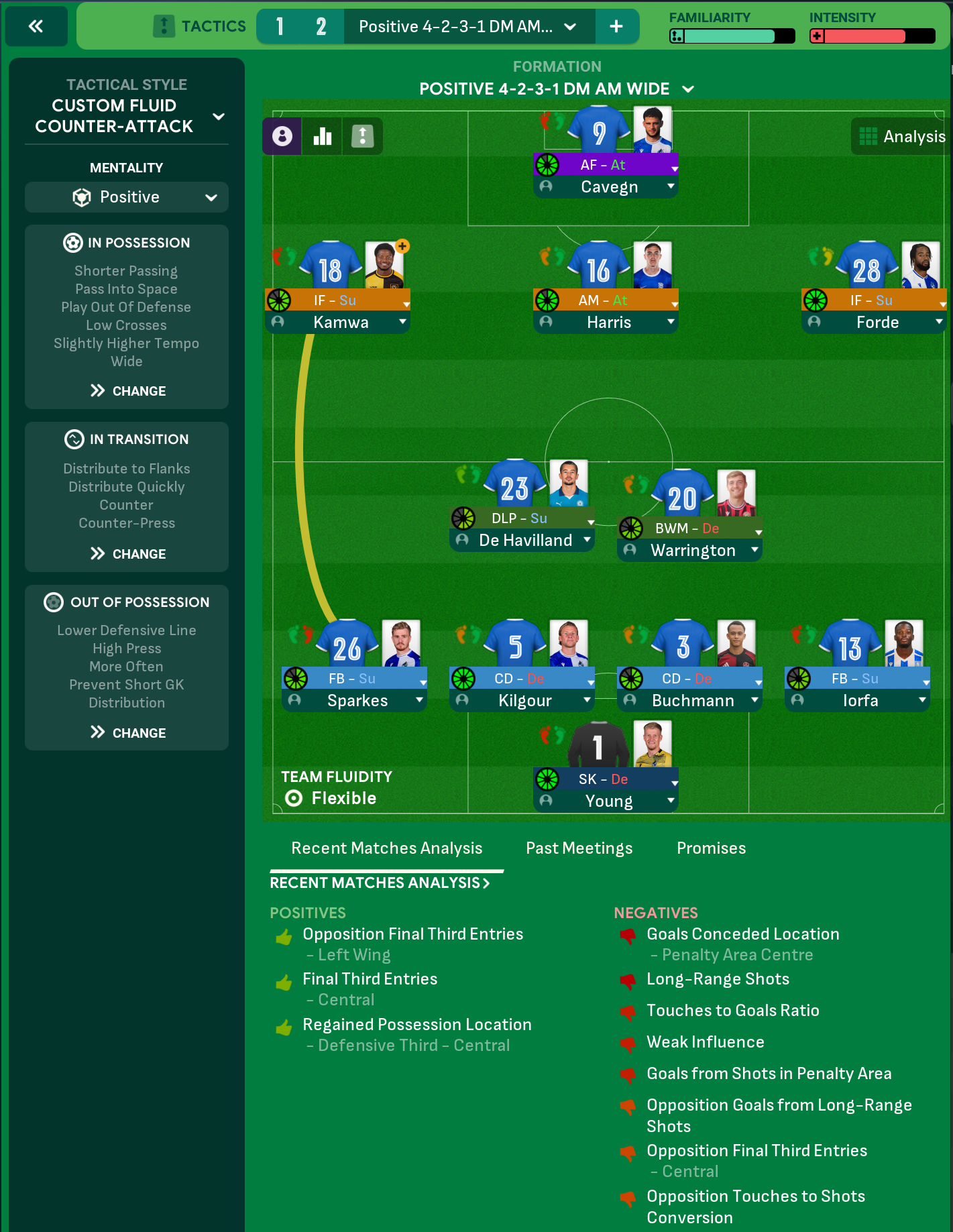
Fluid Counter-Attack 4-2-3-1 DM AM Wide
Custom Fluid Counter-Attack
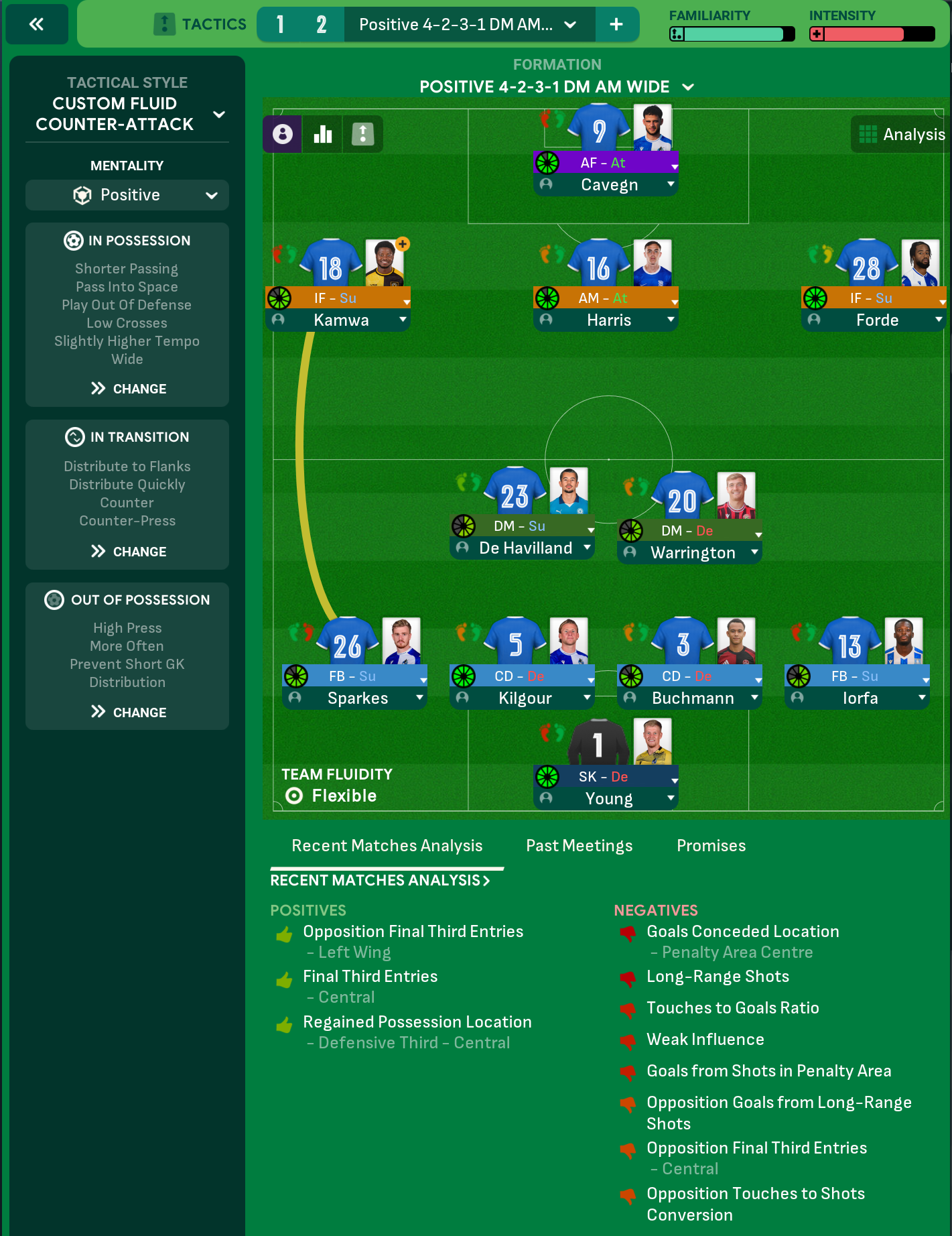
Fluid Counter-Attack 4-2-3-1 DM AM Wide
Custom Fluid Counter-Attack
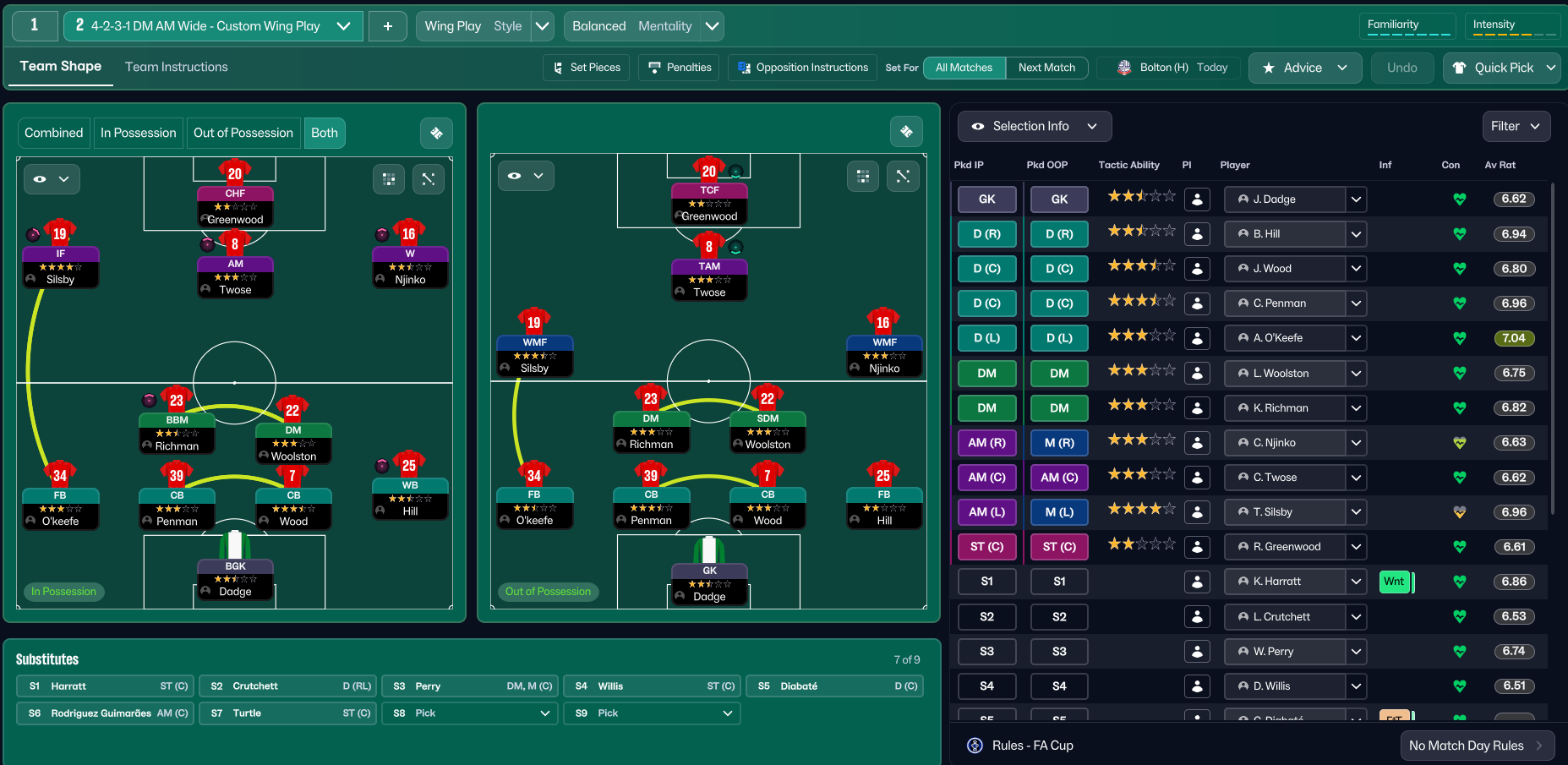
Wing Play 4-2-3-1 DM AM Wide
Wing Play
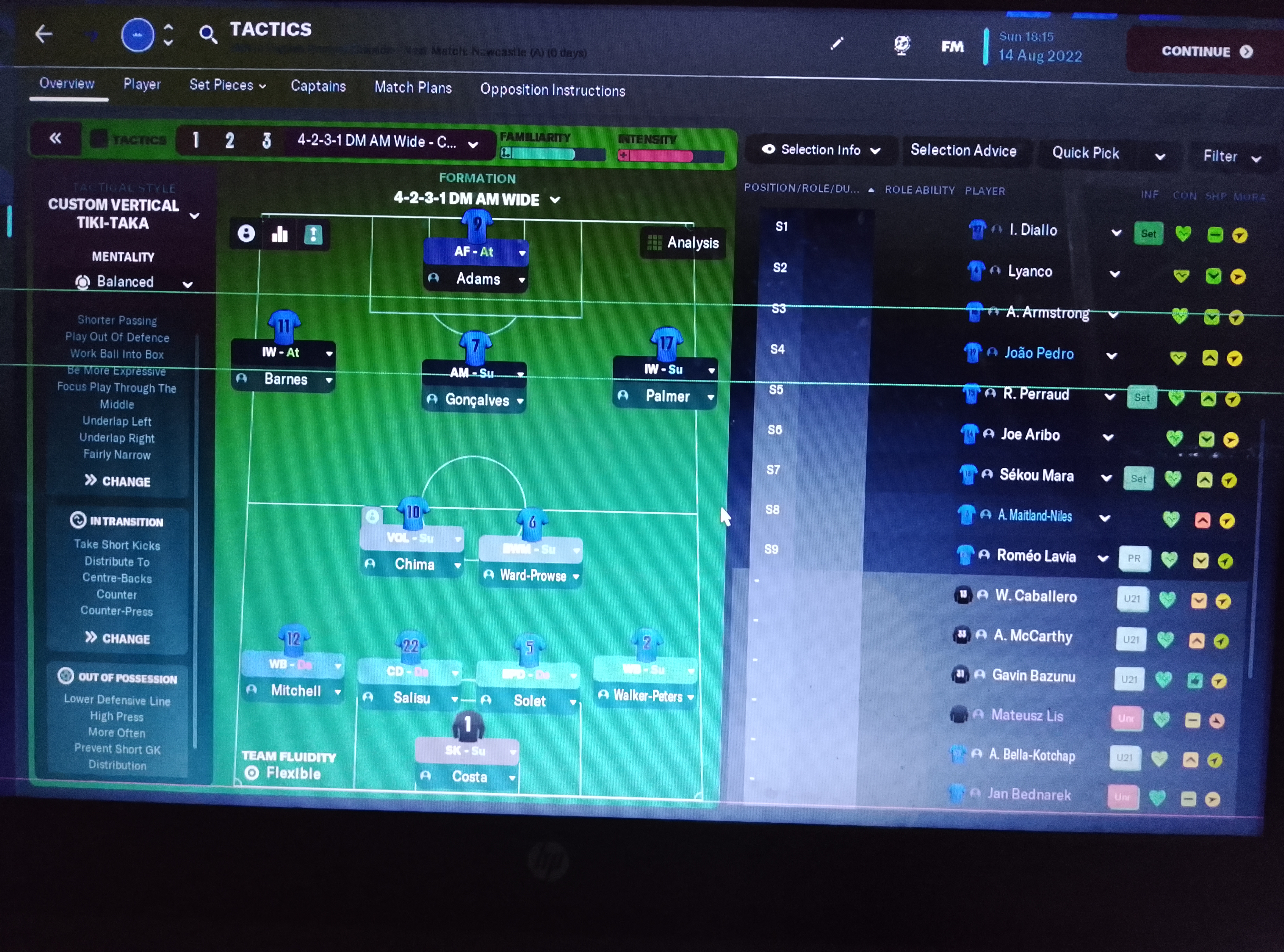
Vertical Tiki-Taka 4-2-3-1 DM AM Wide
Custom Vertical Tiki-Taka
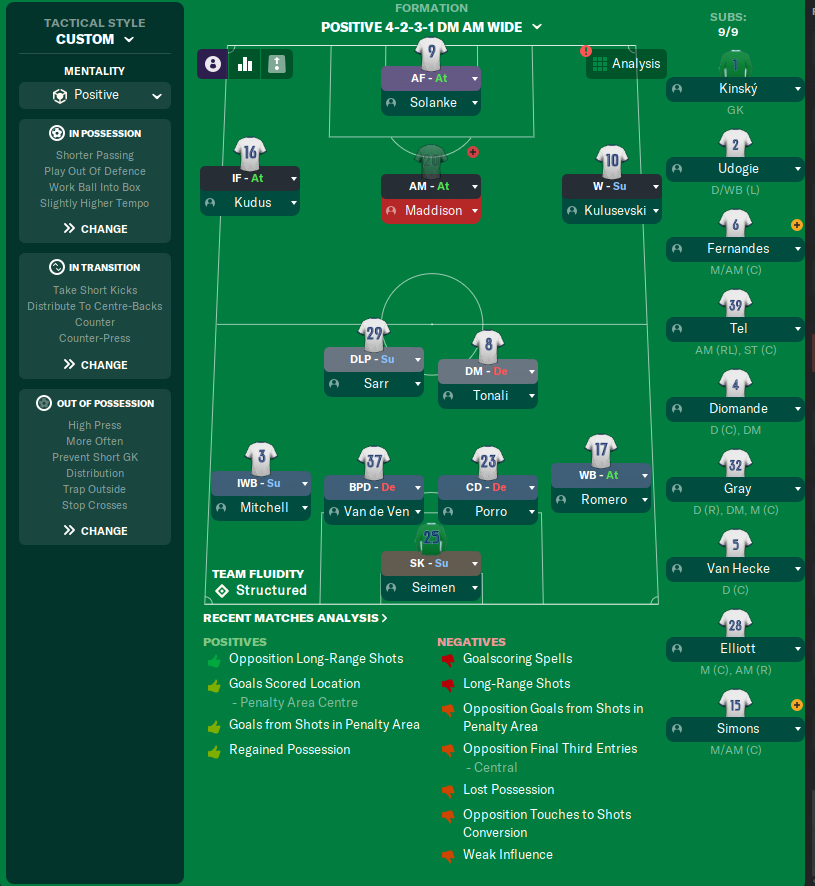
4-2-3-1 DM AM Wide Formation
Custom
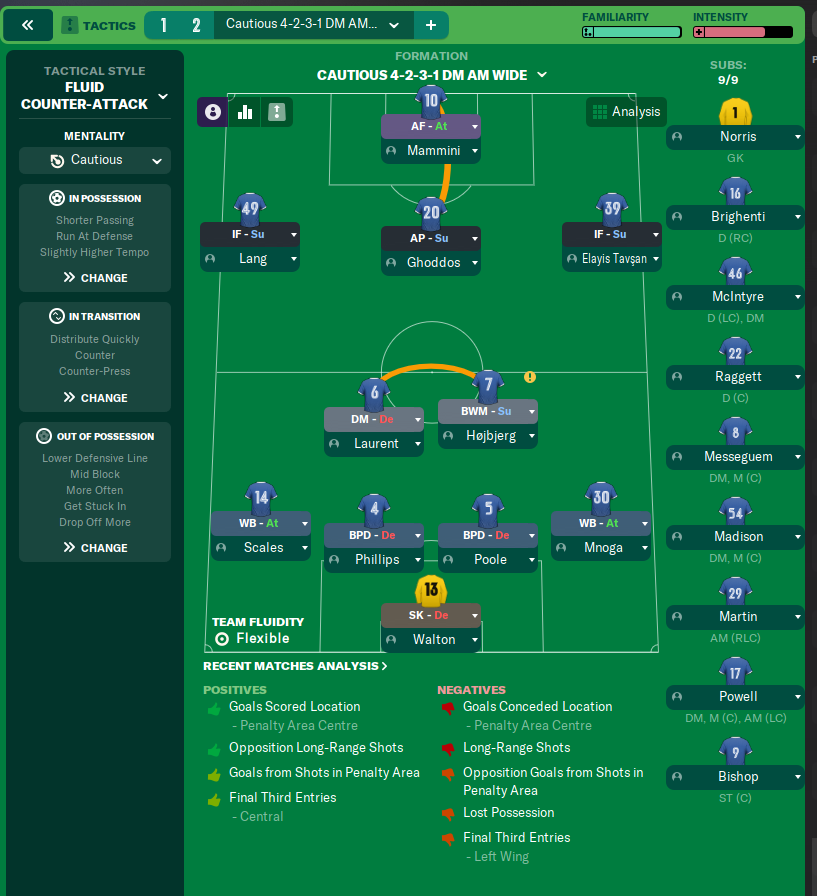
Fluid 4-2-3-1 DM AM Wide
Fluid
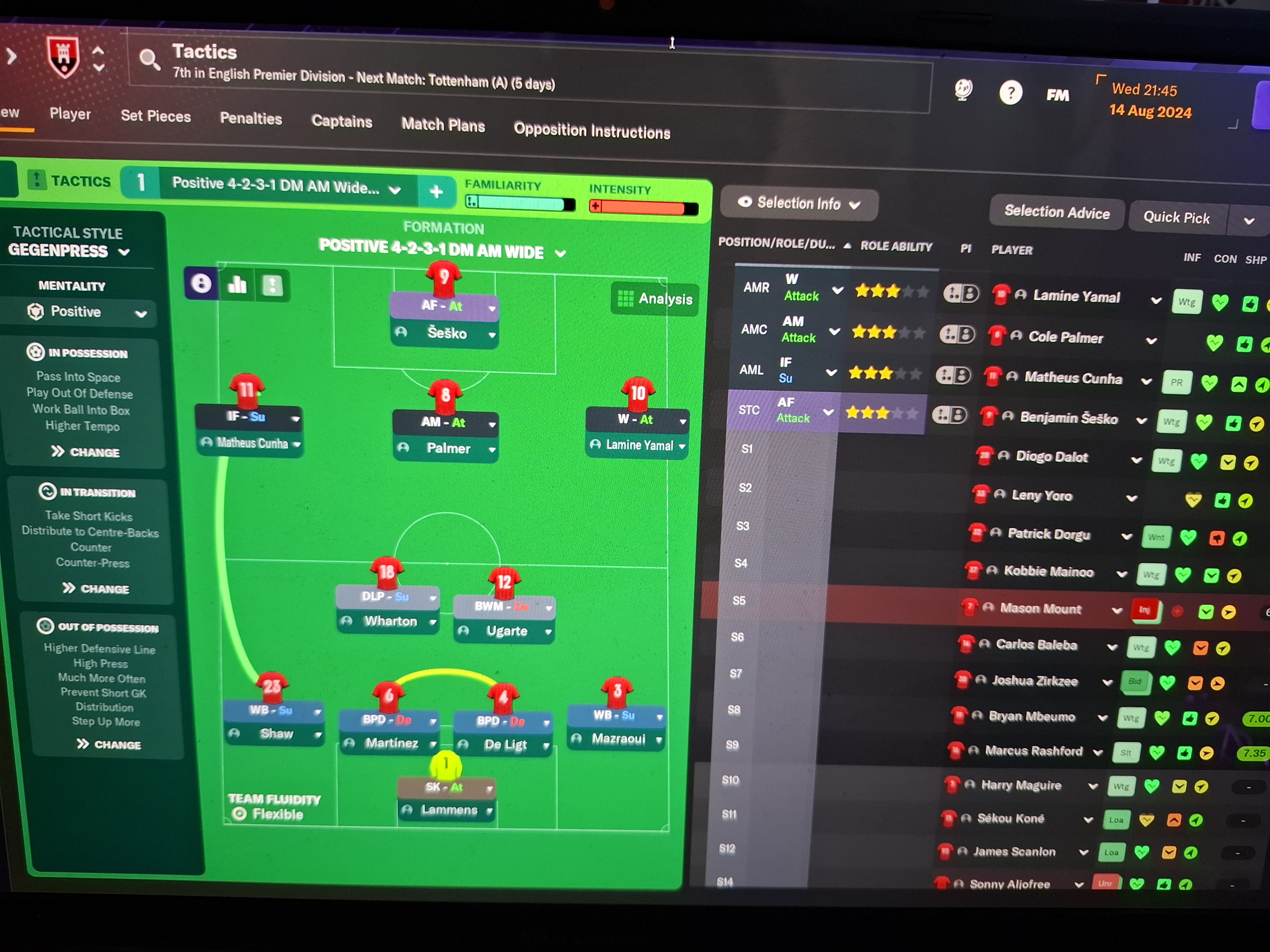
Gegenpress 4-2-3-1 DM AM Wide
Gegenpress
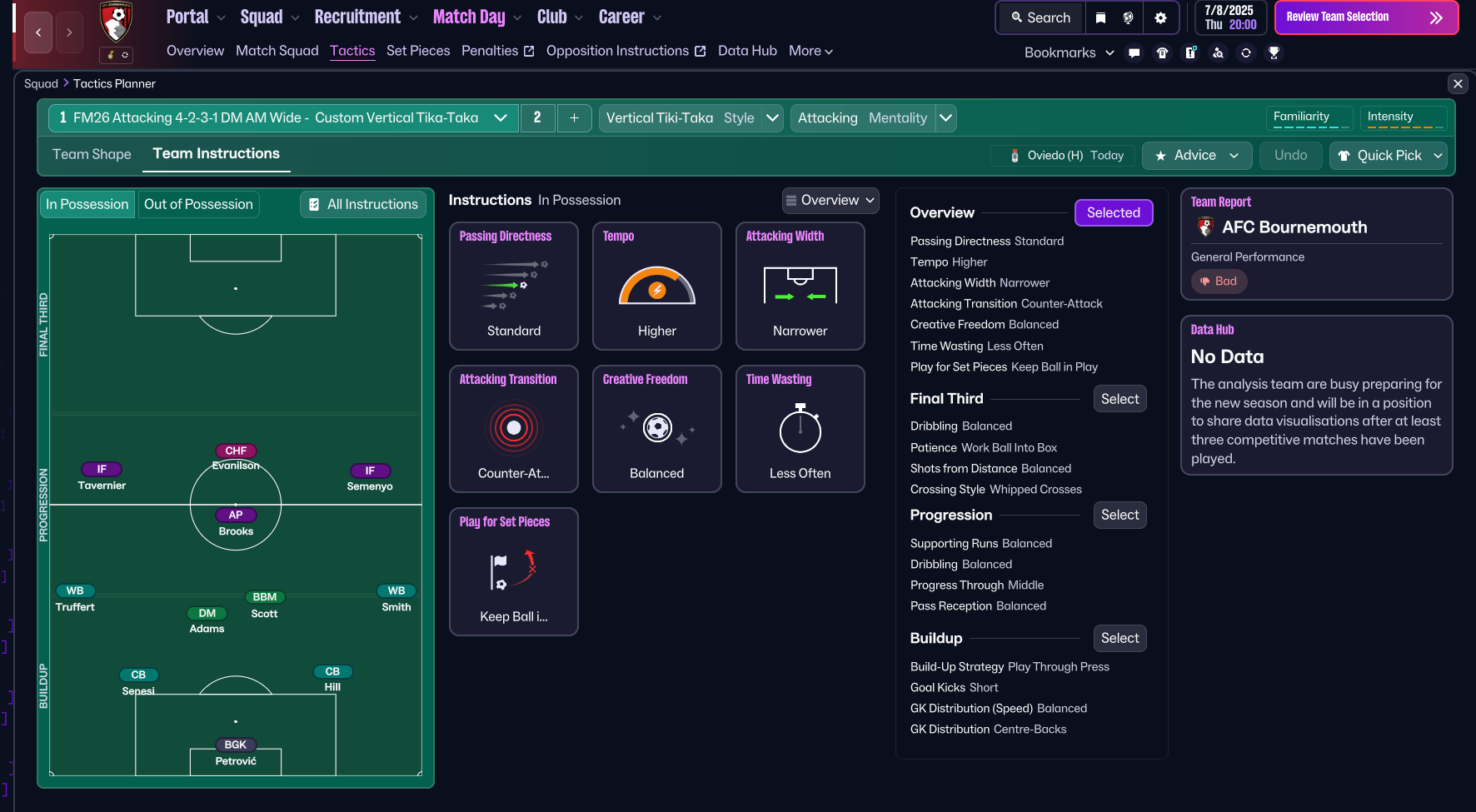
Vertical Tiki-Taka 4-2-3-1 DM AM Wide
Vertical Tiki-Taka
Guides for this formation
The tactical theory behind the 4-2-3-1 DM AM Wide: roles, instructions, and the trade-offs that decide whether the system holds up.
Player pairings
Midfield Pairs in 4-2-3-1 and 4-4-2
Double pivots and flat pairs in 4-2-3-1 and 4-4-2: when each pairing works, when it collapses, and the AMC unicorn that rescues both.
Read guide
Playing styles
Gegenpressing: A Full Guide
Klopp-style gegenpressing in FM, including squad profile, line-and-press pairing, sustainable workload, and the antipatterns to avoid.
Read guide