Uploaded Tactic
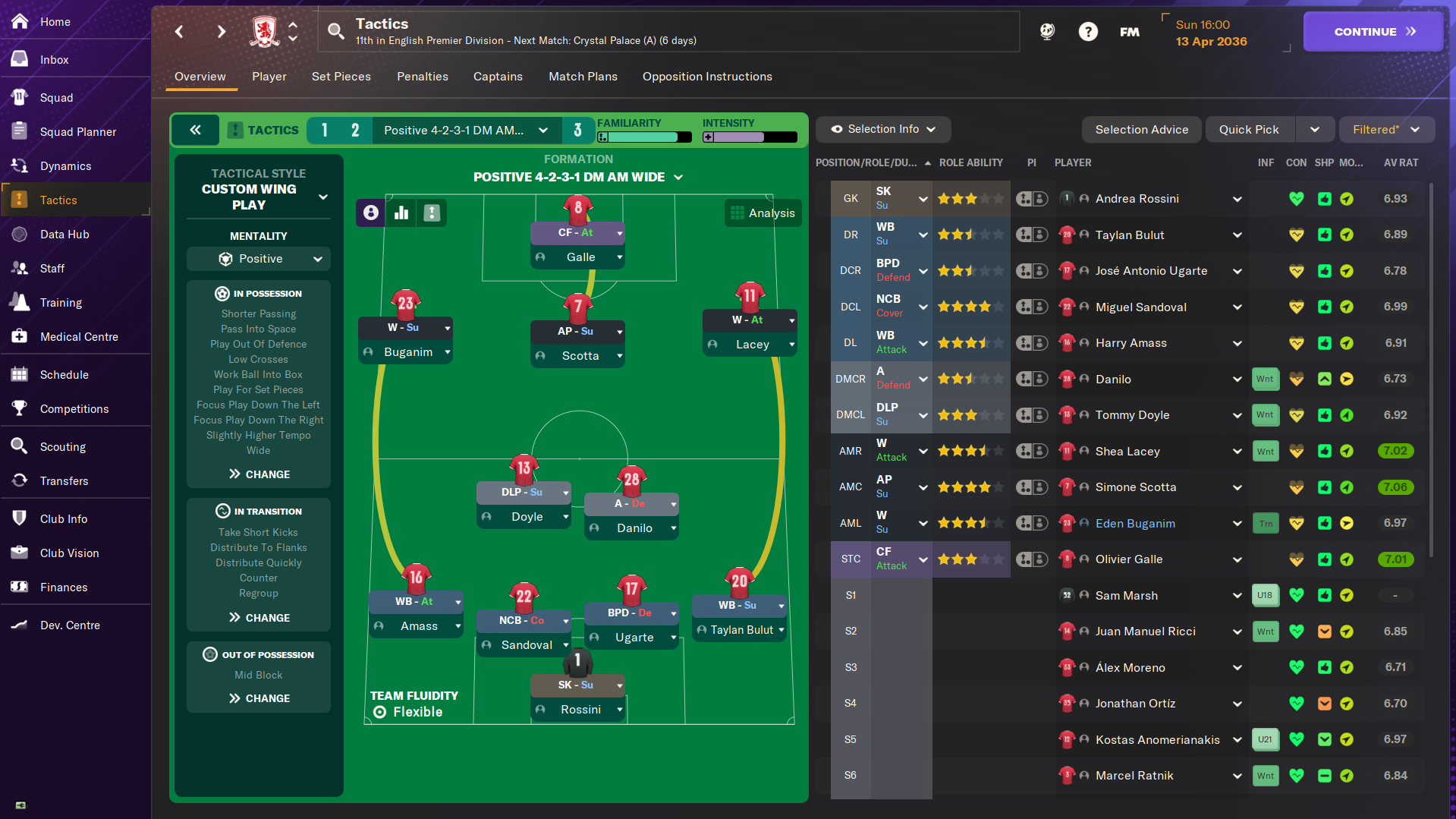
Formation & Style
Tactical Style:Custom Wing Play
Mentality:Positive
Formation:4-2-3-1 DM AM Wide
Team Fluidity:Flexible
In Possession
Shorter Passing
Pass Into Space
Play Out Of Defence
Low Crosses
Work Ball Into Box
Play For Set Pieces
Focus Play Down The Left
Focus Play Down The Right
Slightly Higher Tempo
Wide
In Transition
Take Short Kicks
Distribute To Flanks
Distribute Quickly
Counter
Regroup
Out of Possession
Mid Block
Team Shape Without Ball
Shape:Mid Block
Description:The team maintains a compact formation when out of possession, typically inviting opponents into the midfield before pressing.
Evidence:Utilizing the 'Mid Block' setup and the 'Anchor' role at [3,3] to solidify defensive structure.
Team Shape With Ball
Shape:Balanced Width
Description:Using the Wing Backs and advanced roles to stretch the pitch, allowing the team to create space and passing lanes.
Evidence:Wingers at [6,1] and [6,5] along with the 'AM-R' at [5,3] ensures that there are options on the wings.
Phase Description
Attacking Play
The team tries to exploit width through the Wing Backs while incorporating short passing to build up play.
Defensive Transition
Quick regrouping after losing possession, looking to press and win the ball back.
Main Focus
Leveraging width in attack and maintaining solid defensive integrity.
Key Strengths
Width in Attack
The Wing Backs provide wide options, helping to stretch the opposition's defensive line.
Midfield Control
The combination of an Anchor and Deep-Lying Playmaker offers stability and playmaking options in the midfield.
Fluid Attacking Structure
The interchanging roles in the attacking line create uncertainty for defenders.
Conflicting Directions
Defensive Vulnerabilities
High attacking duties of full-backs can lead to gaps in defence during transitions.
Counter-Attack Risk
The emphasis on shorter passing could hinder rapid transitions when losing possession.
Limited Central Presence
The focus on wing play might limit options in the center, making it easier for opponents to defend.
Tactical Suggestions
Adjust Full-Back Duties
Consider changing at least one full-back to a support duty to maintain defensive solidity.
Increase Central Midfield Transition Play
Using a more aggressive central option could facilitate transitions better.
Enhance Counter Options
Incorporating 'More Direct Passing' could improve counter-attack effectiveness.
Ask Questions About Your Lineup
Related Tactics
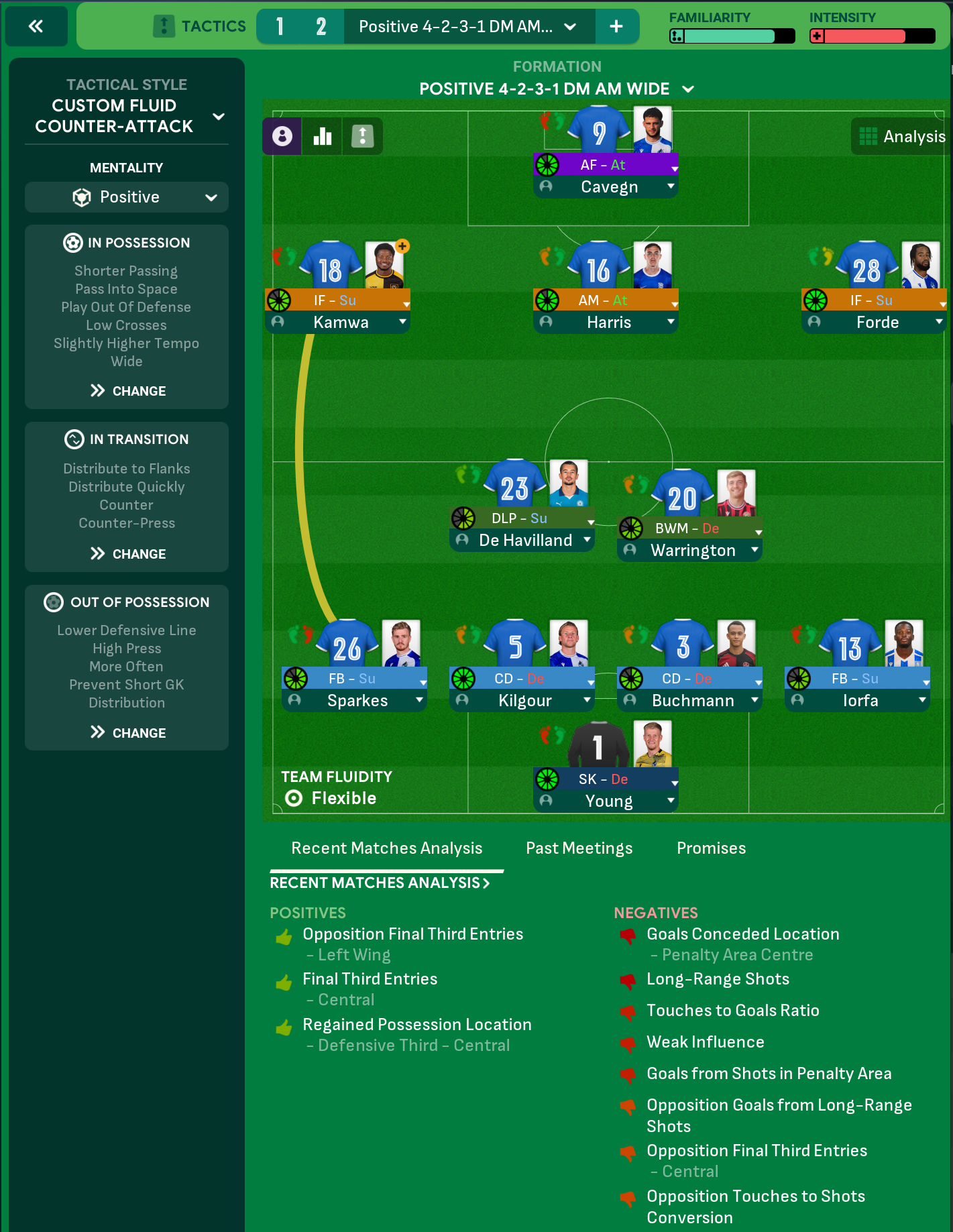
Fluid Counter-Attack 4-2-3-1 DM AM Wide
Custom Fluid Counter-Attack
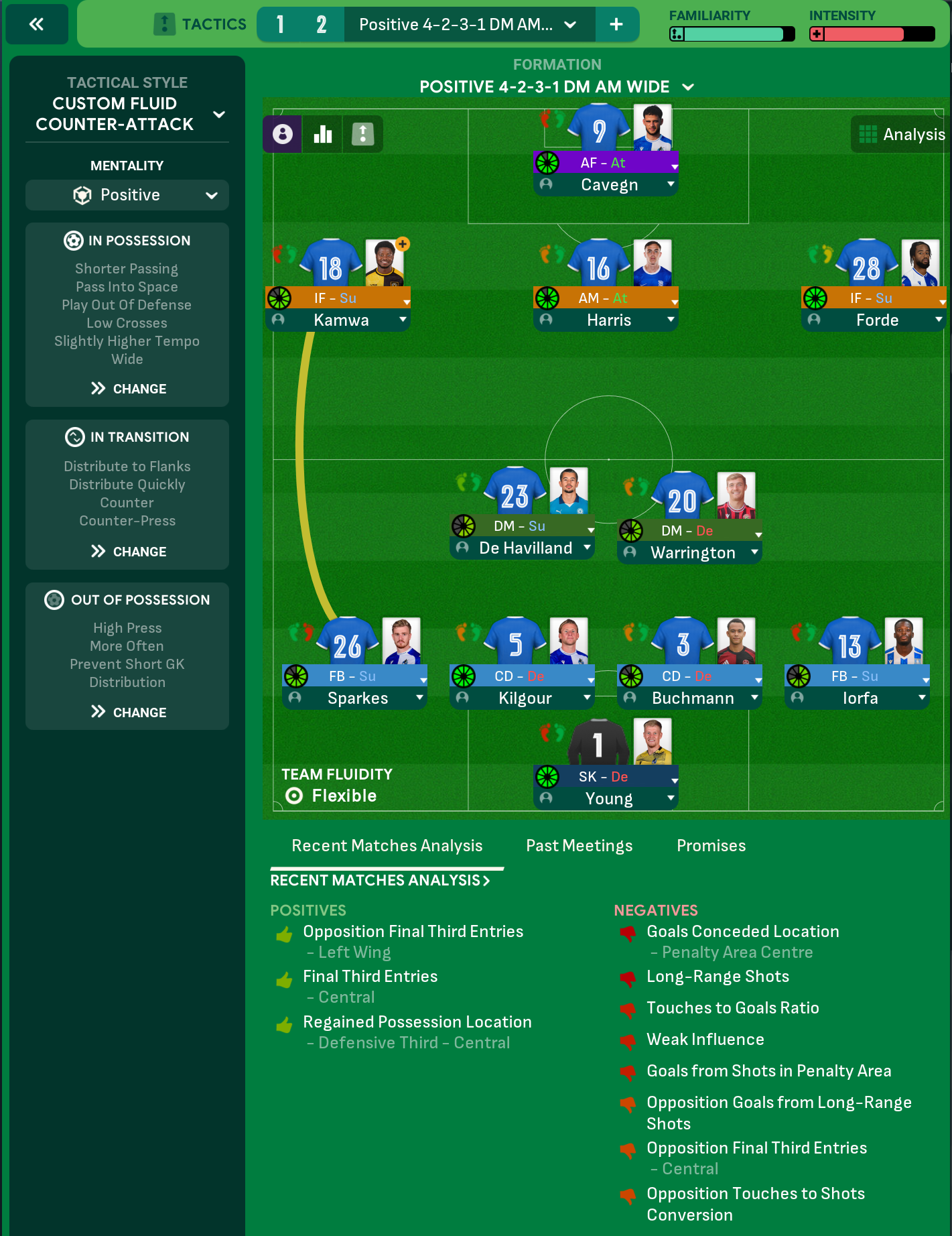
Fluid Counter-Attack 4-2-3-1 DM AM Wide
Custom Fluid Counter-Attack
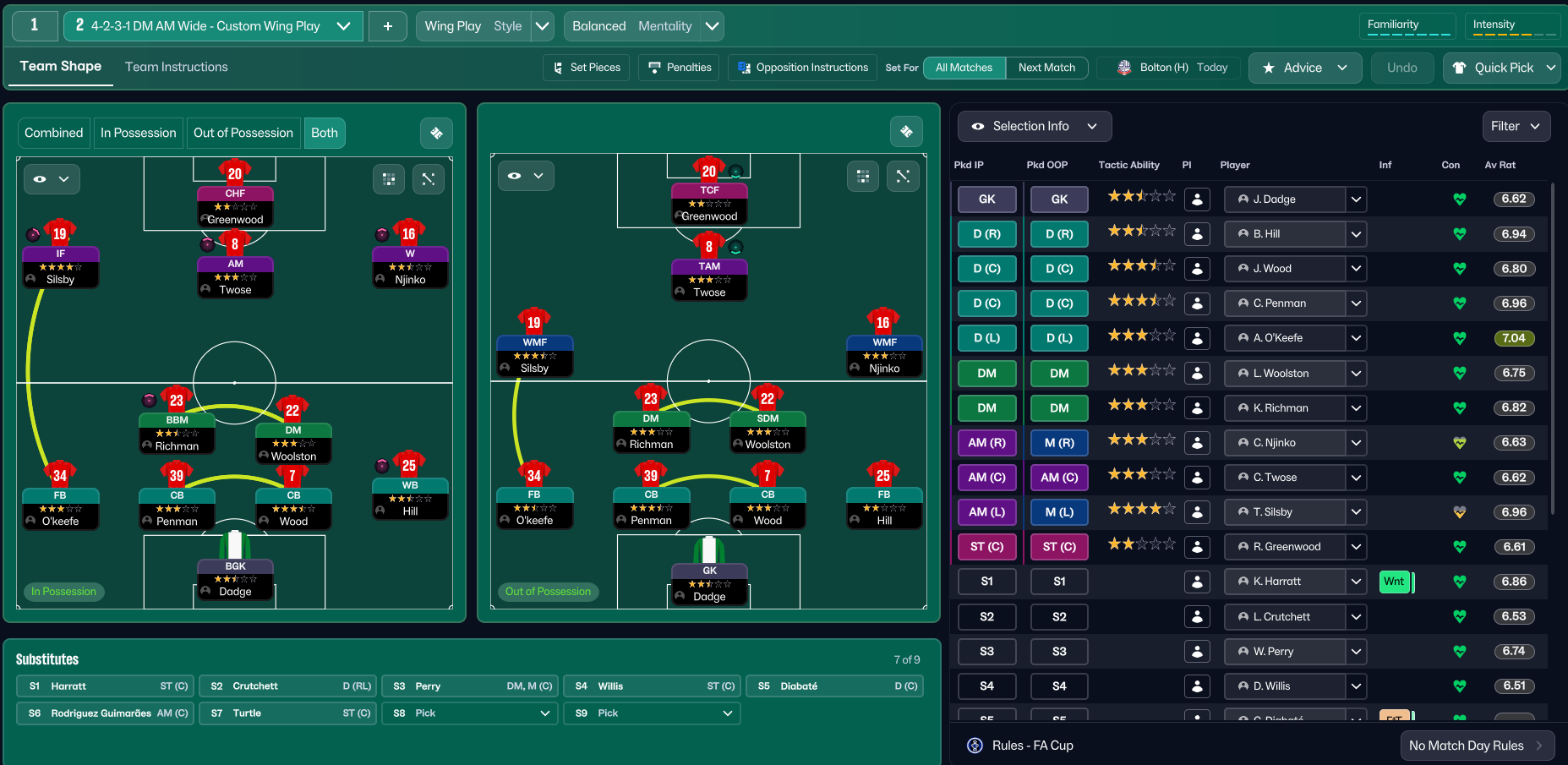
Wing Play 4-2-3-1 DM AM Wide
Wing Play
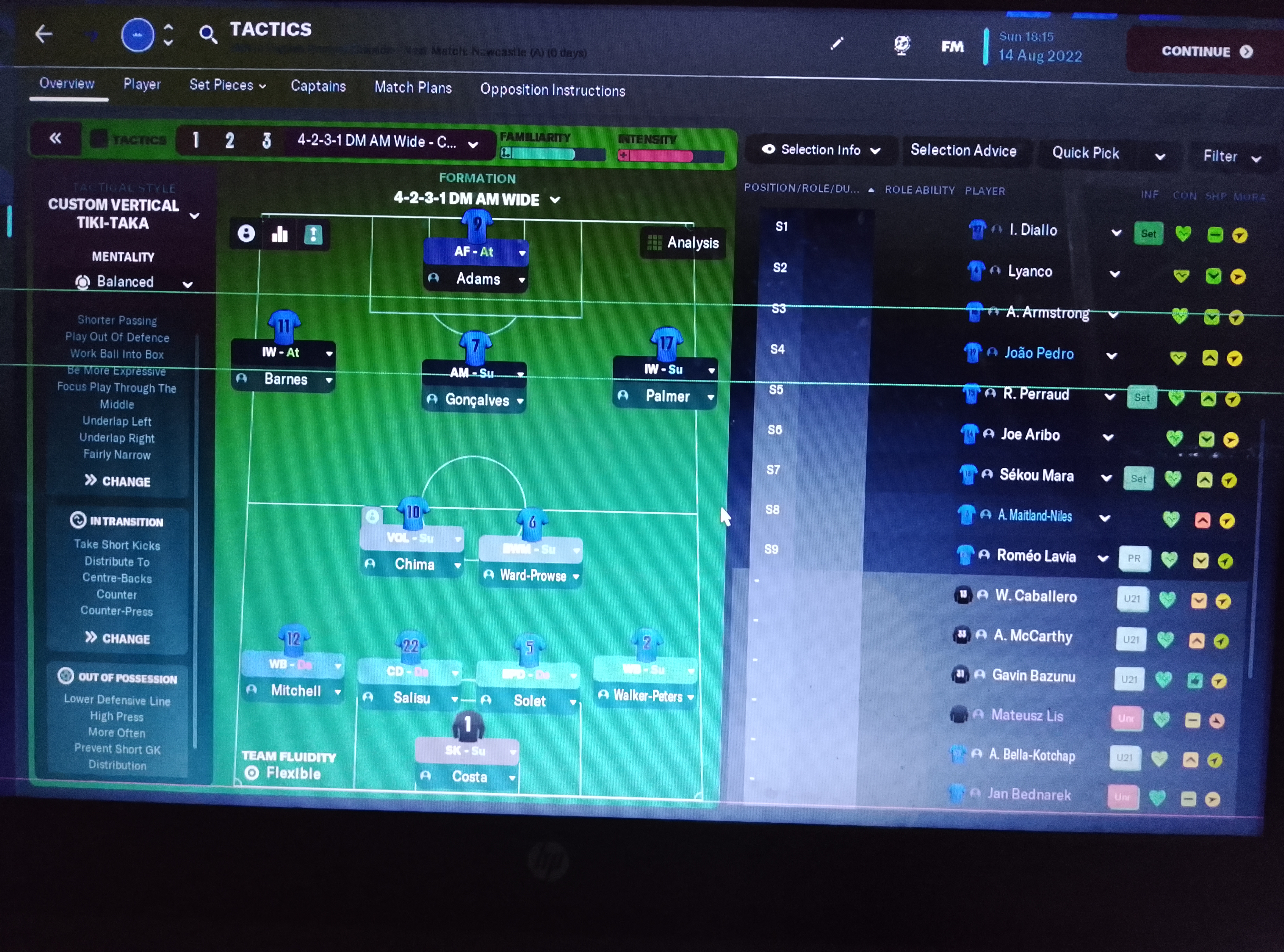
Vertical Tiki-Taka 4-2-3-1 DM AM Wide
Custom Vertical Tiki-Taka
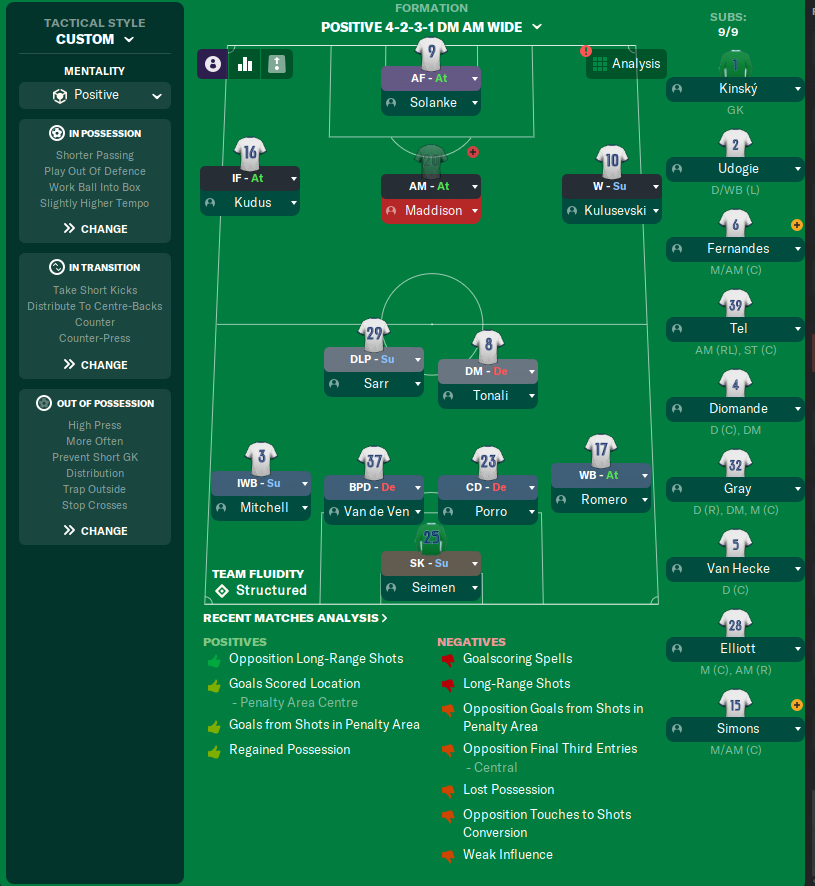
4-2-3-1 DM AM Wide Formation
Custom
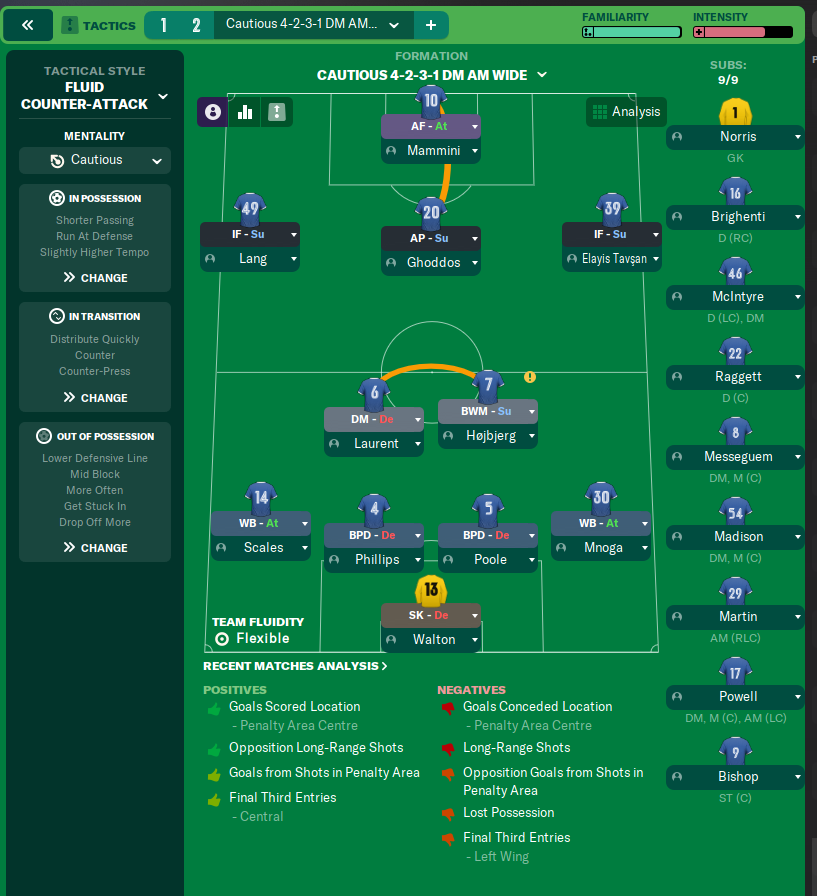
Fluid 4-2-3-1 DM AM Wide
Fluid
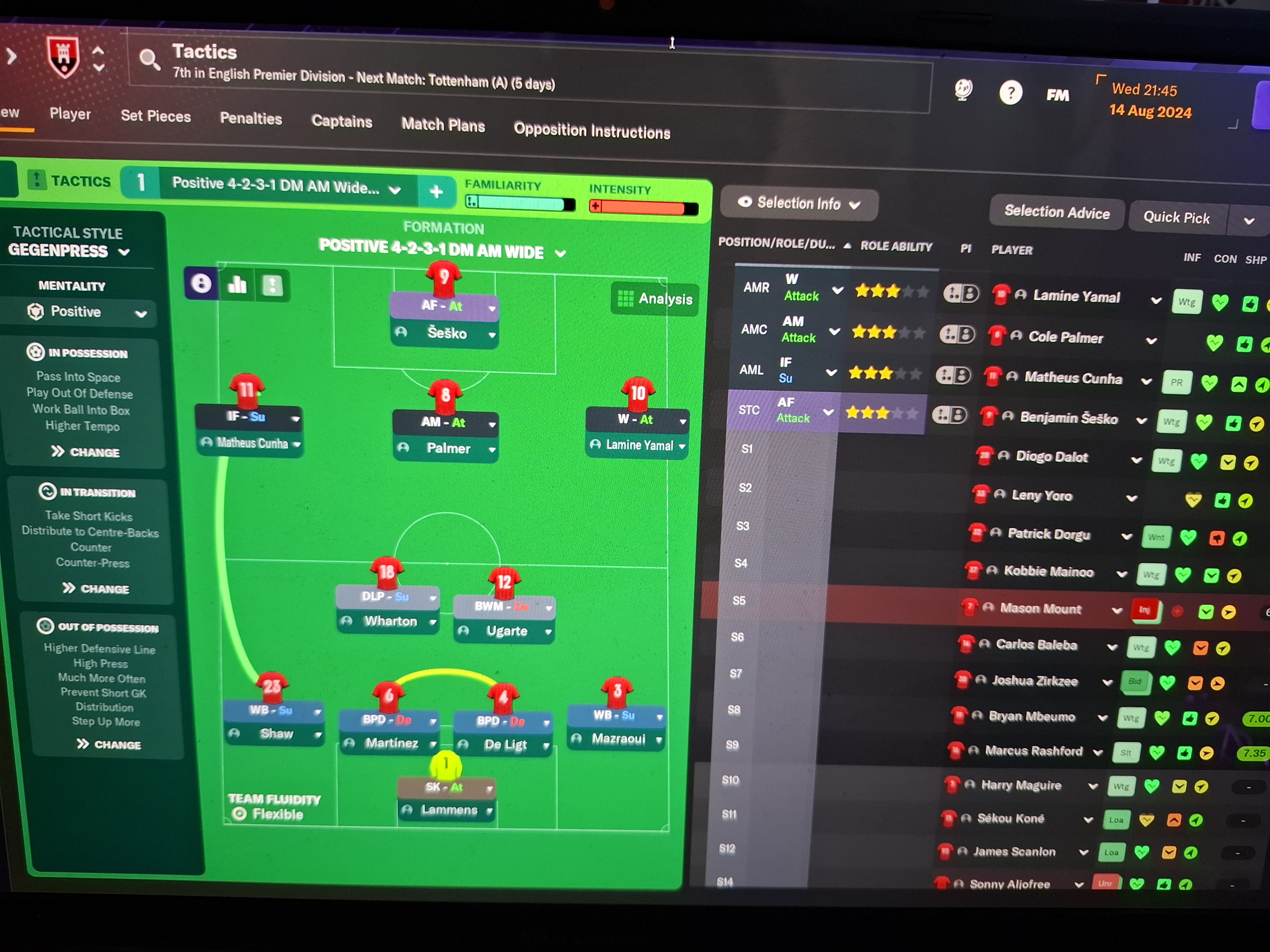
Gegenpress 4-2-3-1 DM AM Wide
Gegenpress
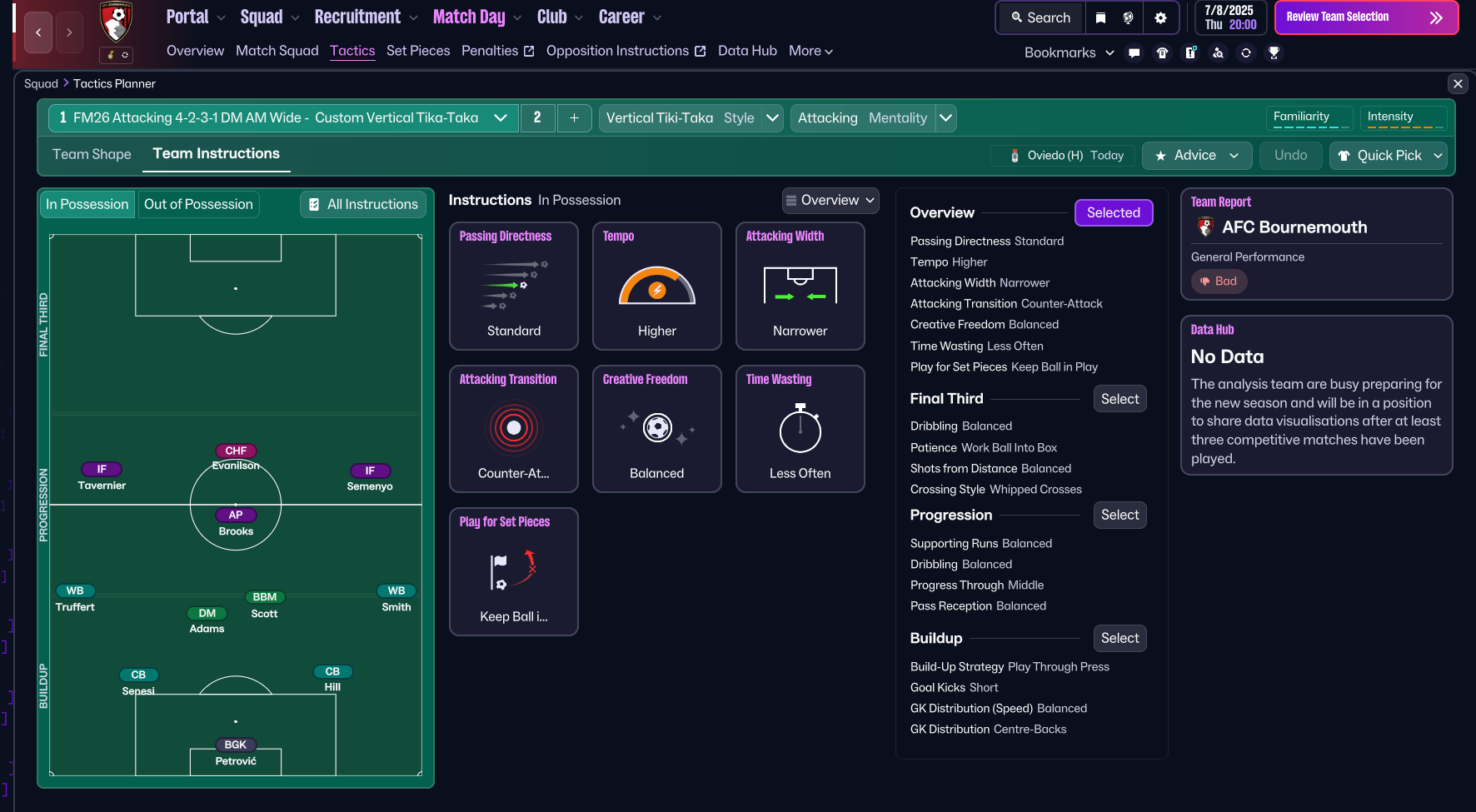
Vertical Tiki-Taka 4-2-3-1 DM AM Wide
Vertical Tiki-Taka
More Custom Wing Play tactics
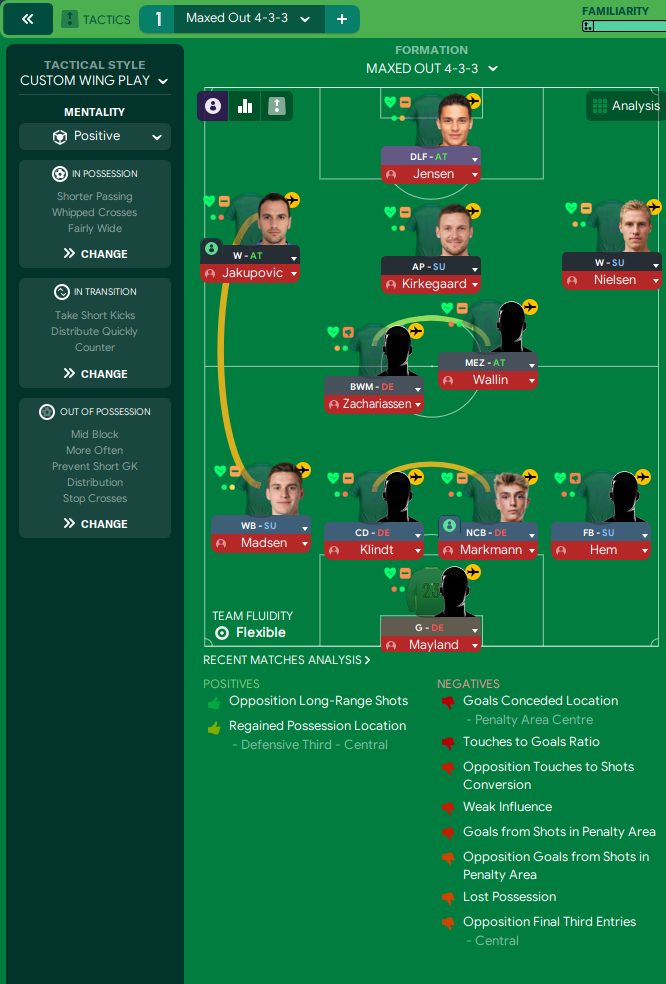
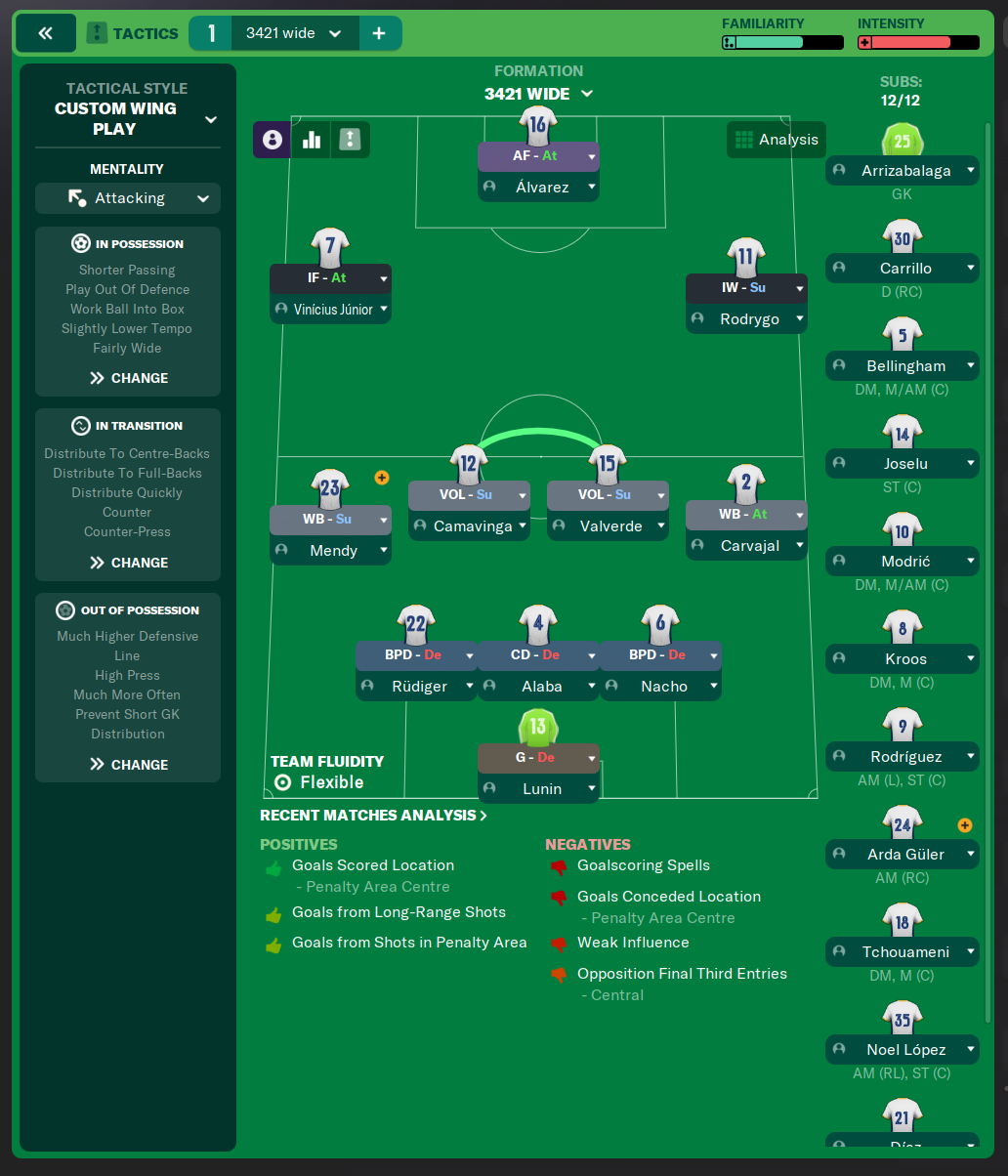
Guides for this formation
The tactical theory behind the 4-2-3-1 DM AM Wide: roles, instructions, and the trade-offs that decide whether the system holds up.
Player pairings
Midfield Pairs in 4-2-3-1 and 4-4-2
Double pivots and flat pairs in 4-2-3-1 and 4-4-2: when each pairing works, when it collapses, and the AMC unicorn that rescues both.
Read guide
Playing styles
Gegenpressing: A Full Guide
Klopp-style gegenpressing in FM, including squad profile, line-and-press pairing, sustainable workload, and the antipatterns to avoid.
Read guide